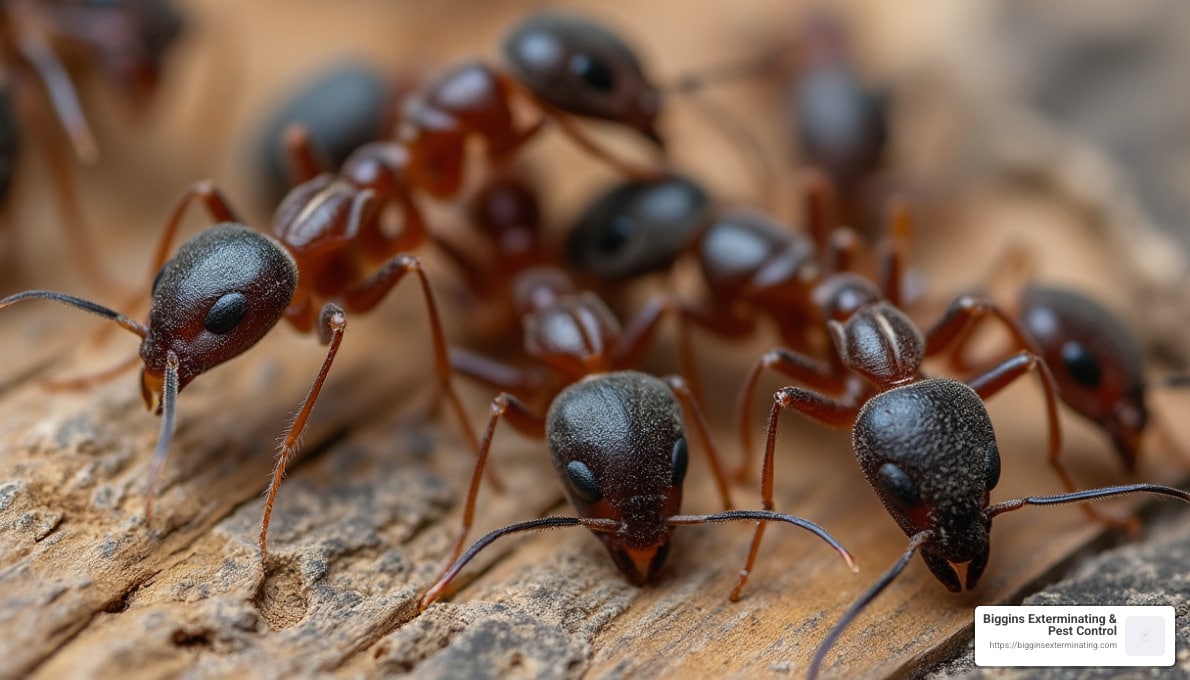
Carpenter ant infestation in house is an issue homeowners dread due to the quiet yet relentless damage these pests can cause. Unlike termites, carpenter ants do not eat wood; instead, they excavate it to build their nests. This results in structural damage that you may not notice until significant harm is done. Here are key signs to watch for if you suspect a carpenter ant infestation:
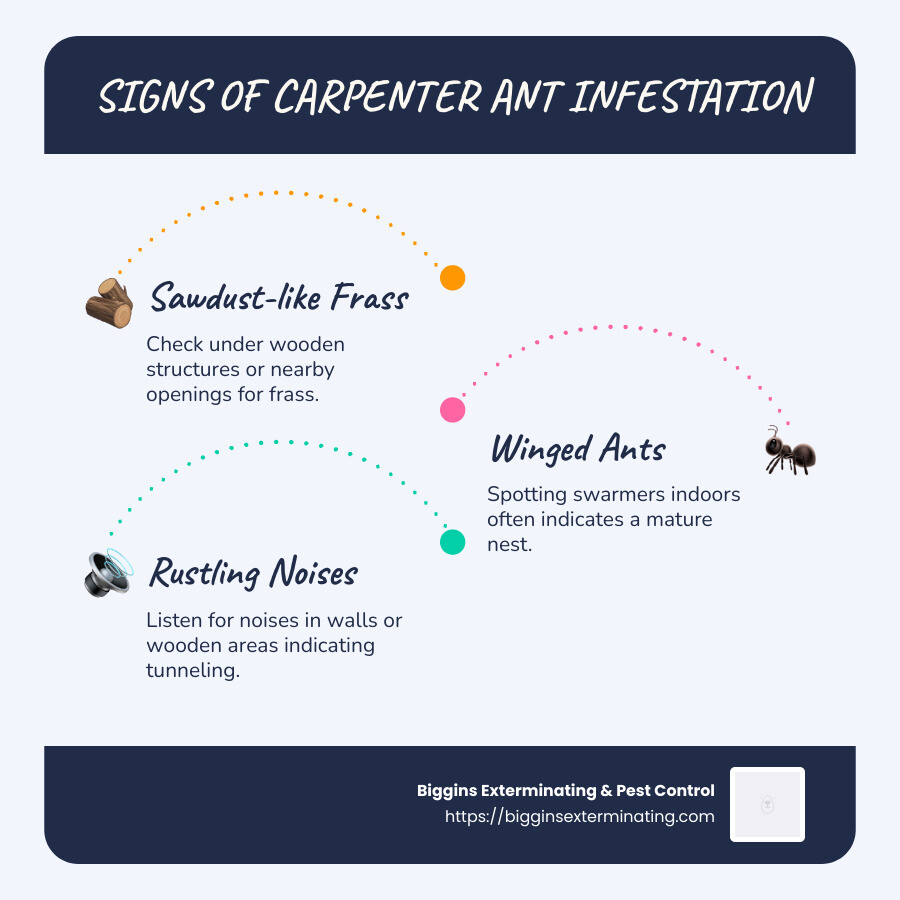
- Sawdust-like frass: Check under wooden structures or nearby openings.
- Winged ants: Spotting these swarmers indoors often indicates a mature nest.
- Rustling noises: Listen for them within walls or wooden areas, indicating active tunneling.
As someone who has been involved in pest control for over four decades, I know how detrimental a carpenter ant infestation in house can be. My name is Stephen Biggins, owner of Biggins Exterminating Co. My expertise in tackling these issues can help safeguard your home and bring peace of mind. Let’s dive deeper into how to identify and address these pesky intruders.
Terms related to carpenter ant infestation in house:
Signs of Carpenter Ant Infestation in House
Carpenter ant infestation in house is a sneaky problem. These ants don’t eat wood like termites, but they do hollow it out to make their nests. This can lead to serious damage over time. Here’s how to spot an infestation:
-
Piles of Sawdust (Frass): One of the most obvious signs is finding small piles of sawdust near wooden structures. This sawdust, known as frass, is pushed out by the ants as they excavate their tunnels. It often resembles pencil shavings and can vary in size and shape.
-
Rustling Noises: If you hear faint rustling or scratching sounds coming from your walls or wooden surfaces, it might be carpenter ants at work. They make these noises as they move through their tunnels.
-
Winged Ants: Seeing winged ants inside your home is a red flag. These are reproductive ants, and their presence often means there’s a mature nest nearby. Unlike termites, carpenter ants have elbowed antennae and a constricted waist.
Identifying Carpenter Ants
Carpenter ants are distinct due to their:
-
Black Color: They are usually black, but can also be a mix of red and black.
-
Large Size: They are among the largest ants, typically measuring between ½ inch to ⅝ inch long.
-
Single Node: Look for a single node between their thorax and abdomen. This feature helps differentiate them from other ant species.
Differences Between Carpenter Ants and Termites
It’s crucial to distinguish carpenter ants from termites, as they cause different types of damage:
-
Wood Damage: Carpenter ants create smooth galleries in the wood, which look sanded and polished. Termites, on the other hand, leave behind rough, soil-filled tunnels.
-
Termite Frass vs. Carpenter Ant Frass: Termite frass consists of tiny, uniform pellets, while carpenter ant frass is irregular, with varying shapes and sizes.
Identifying these signs early can save you from extensive repairs. If you suspect a carpenter ant infestation in house, it’s wise to contact a professional like Biggins Exterminating & Pest Control to assess and address the problem.