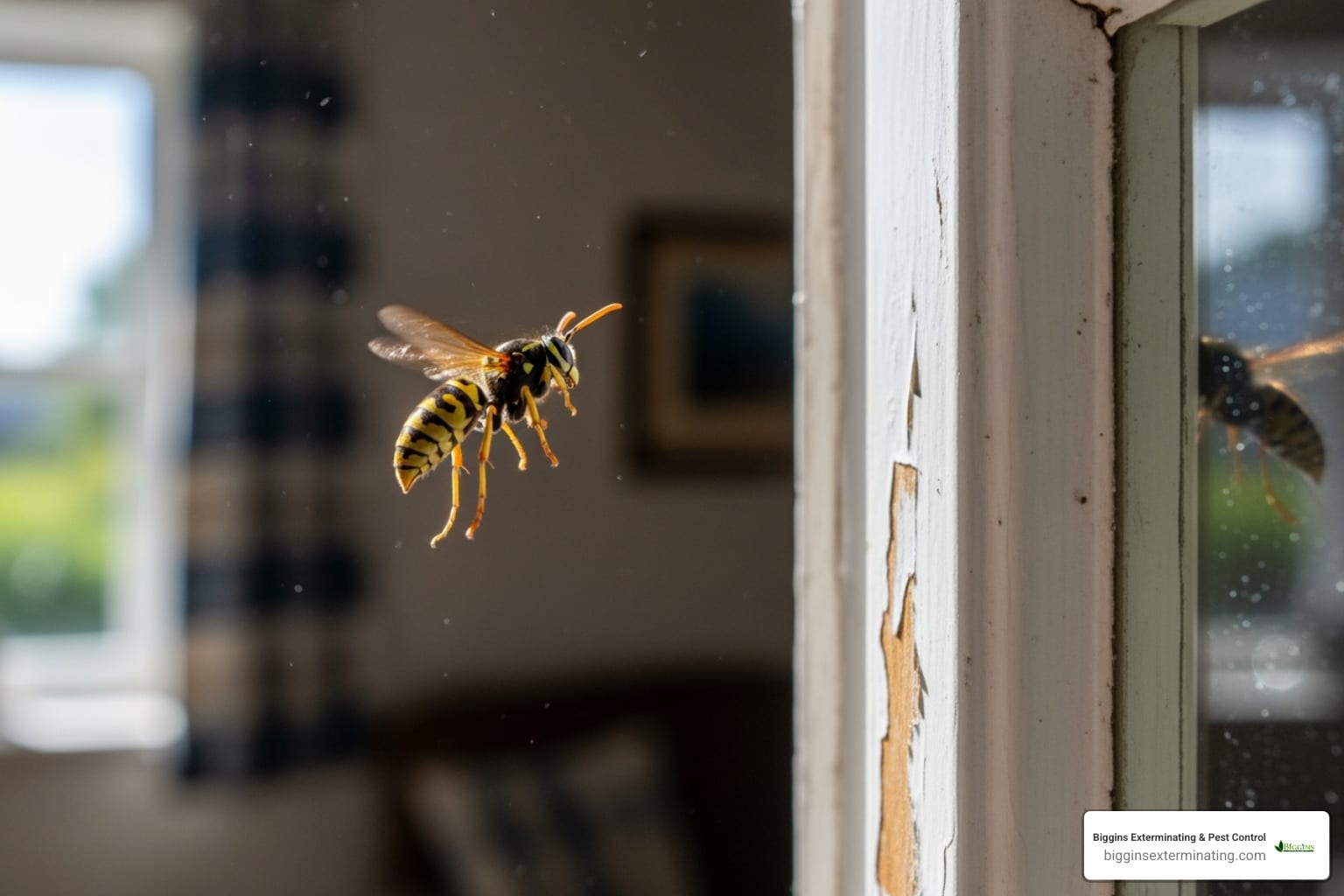
An Unwanted Houseguest That Demands Immediate Action
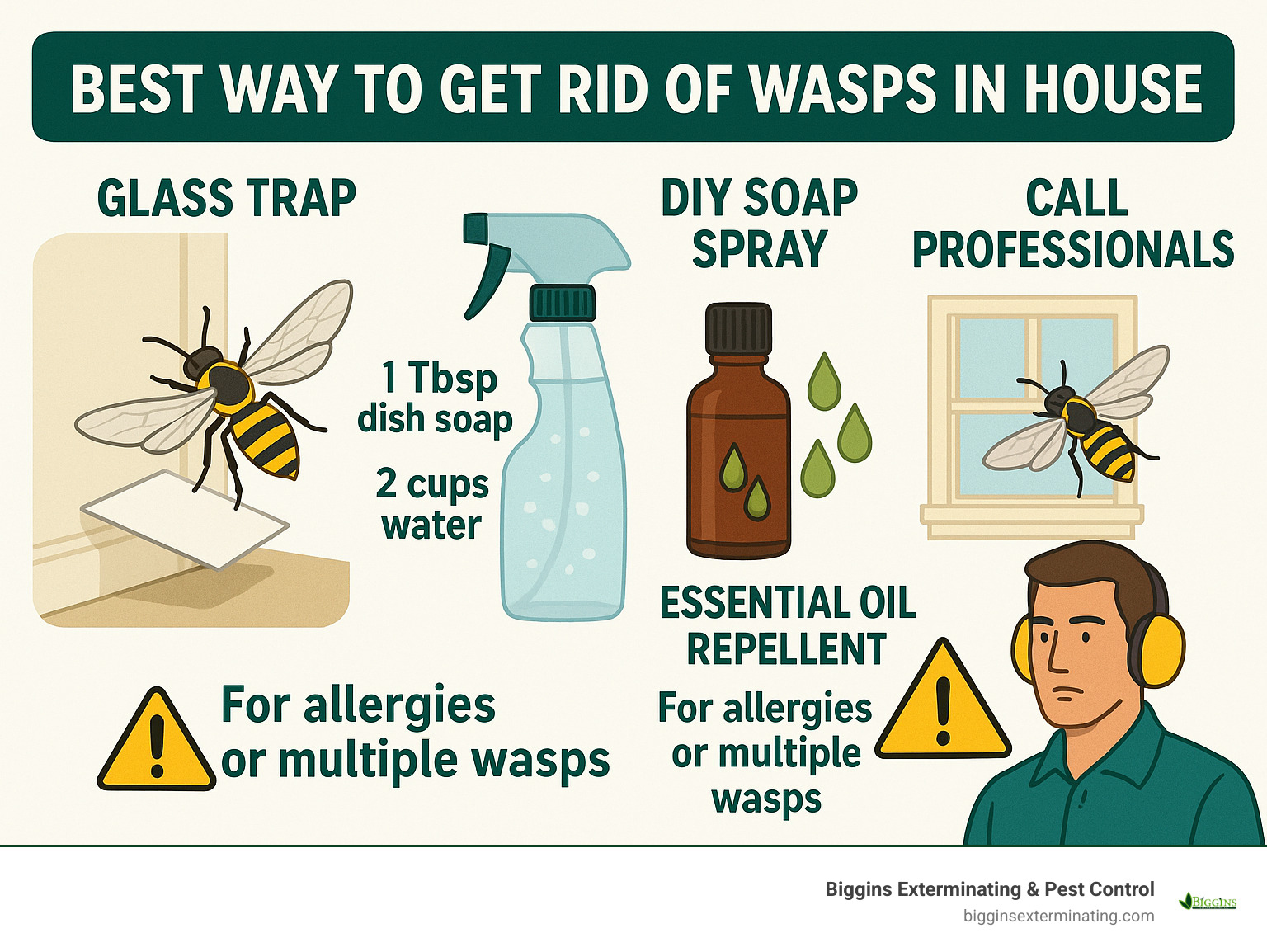
The best way to get rid of wasps in house starts with staying calm and acting quickly. Here are the most effective methods:
- Non-lethal removal: Open windows, turn off indoor lights, and guide the wasp toward outdoor light
- Glass and paper method: Trap the wasp against a wall with a glass and slide paper underneath
- DIY soap spray: Mix 1 tablespoon dish soap with 2 cups water – kills wasps in 10-15 minutes
- Natural repellents: Use peppermint, clove, or lemongrass essential oils to deter wasps
- Call professionals: For multiple wasps, nests, or if anyone has allergies
Finding a wasp buzzing around your living room can be an unsettling experience. As one pest control expert noted, “once a wasp has gotten inside of your house, it often buzzes around frustrated and angry” – putting you at risk of painful stings.
Safety comes first when dealing with indoor wasps. Unlike bees, wasps can sting multiple times and release alarm pheromones when threatened that attract other nearby wasps. For individuals with allergies, a wasp sting can be life-threatening.
The key is calm, methodical removal rather than panicked swatting, which only makes wasps more aggressive.
I’m Stephen Biggins, and I’ve been helping Massachusetts families safely remove wasps from their homes for over four decades through our family-owned pest control business. Understanding the best way to get rid of wasps in house situations has been essential to protecting countless families from dangerous encounters with these aggressive insects.
Best way to get rid of wasps in house terms explained:
First Steps: Identifying and Handling a Lone Wasp
When you spot a yellow and black insect buzzing in your living room, the first step is to identify it. Is it a wasp, or a lost bee? This identification is crucial for safety and our environment. Bees are vital pollinators we should protect, while wasps require a different approach.
Wasp or Bee? Know Your Intruder
While both can be yellow and black, wasps and bees have distinct differences.
| Feature | Wasps | Bees |
|---|---|---|
| Body Shape | Slender, smooth, shiny, with a distinct, narrow “waist.” | Robust, rounded, and fuzzy. |
| Hairiness | Generally hairless or with very fine hairs. | Covered in dense, fuzzy hairs, especially on their bodies and legs, which help them collect pollen. |
| Coloration | Often brightly colored with distinct yellow and black or white and black patterns. | Typically duller, with fuzzy yellow and black or brown and black patterns. |
| Stinger | Can sting multiple times because their stingers are smooth and do not barb. | Most bees (like honeybees) can only sting once, as their barbed stinger gets left behind, leading to their demise. |
| Diet | Omnivores, feeding on insects, nectar, and sugary substances. Some are predatory. | Primarily vegetarians, feeding on nectar and pollen. |
| Nest Material | Nests are typically papery, made from chewed wood fibers mixed with saliva. | Nests (honeycombs) are waxy structures. |
| Aggression | Can be quite aggressive, especially when their nest is disturbed or they feel threatened. | Generally less aggressive, stinging only when provoked or defending their hive. |
Wasps have a classic “pinched waist” look and a smooth, shiny body. Bees, in contrast, are fuzzy and robust, covered in hair that helps them collect pollen.
If you’ve identified your visitor as a bee, please be gentle. These insects are essential for our ecosystem. Try the non-lethal methods below or contact a local beekeeper to safely relocate it.
For wasps, we can be more direct while staying safe. You can find more info about identifying stinging insects if you need additional help.
Non-Lethal Methods: The Best Way to Get Rid of Wasps in House Without Harming Them
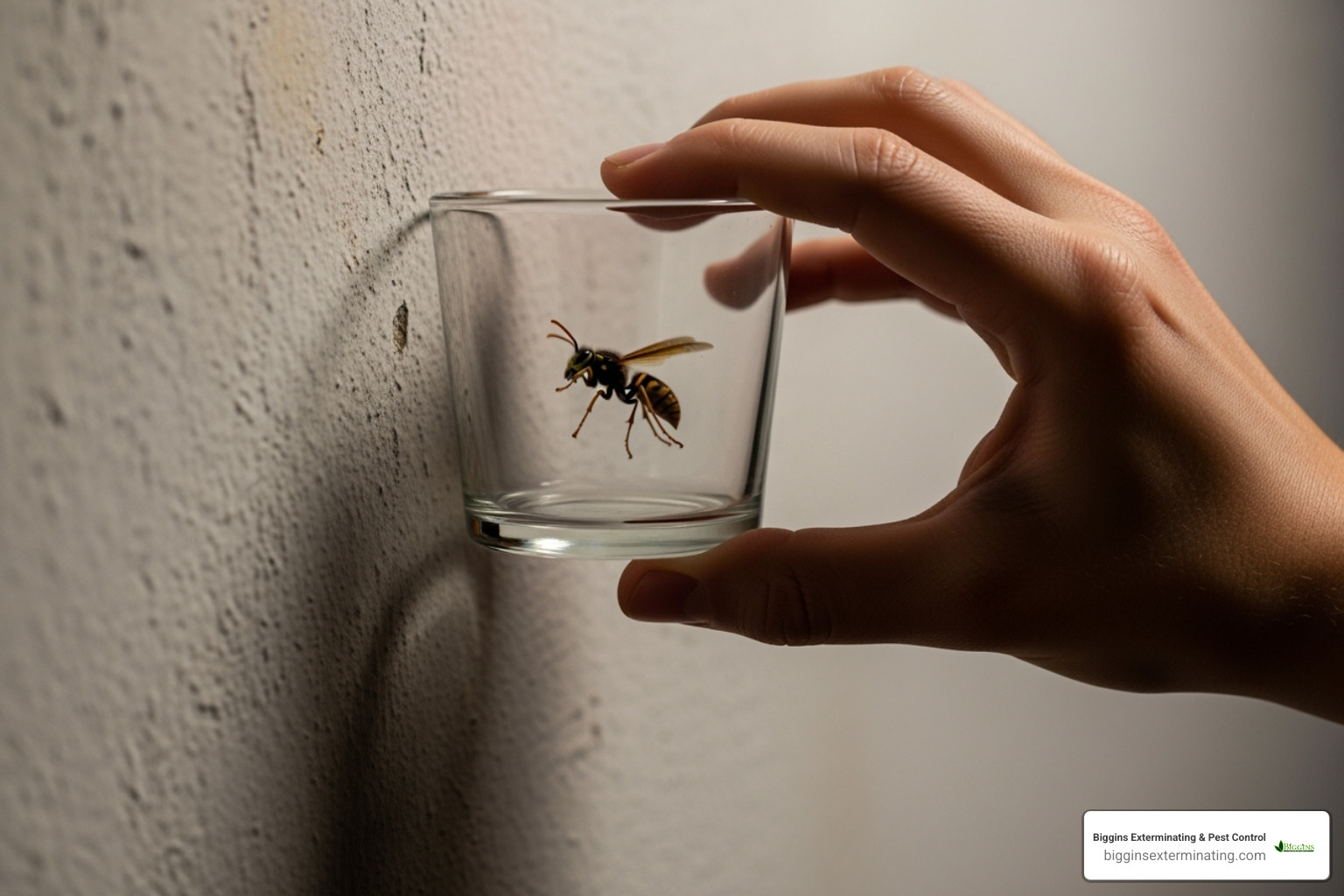
For a single wasp, the best way to get rid of wasps in house is often the gentlest approach.
The glass and paper method is a go-to technique for wasps on walls or windows. Approach the wasp slowly with a large glass or clear container. When it settles, carefully place the glass over it. Slide a piece of stiff paper underneath the opening to seal it inside. Walk outside and release it at least 20 feet from your home.
Light can be your best friend when dealing with indoor wasps. These insects are naturally drawn to bright light. Open the nearest window or door, then turn off all indoor lights. During the day, natural sunlight will draw the wasp out. At night, an outdoor light near the open exit will achieve the same result.
Whatever you do, resist the urge to swat. Swatting or crushing a wasp can cause it to release alarm pheromones—chemical signals that alert other wasps in the area to a threat. This can quickly turn a single wasp problem into a swarm.
Stay calm and move deliberately. Most wasps that wander indoors are just as eager to get back outside as you are to have them leave.
DIY Solutions for Indoor Wasp Removal
When a wasp won’t cooperate or non-lethal methods aren’t feasible, it’s time for more direct solutions that still prioritize household safety.
DIY Killing Solutions: The Best Way to Get Rid of Wasps in House for Good
To eliminate a wasp quickly, your kitchen cabinet holds powerful allies. The best way to get rid of wasps in house often involves simple, family-safe household ingredients.

A soapy water spray is a go-to recommendation. Wasps breathe through spiracles on their bodies, and a soap solution clogs these pores, suffocating the wasp in 10-15 minutes.
To make it, mix one tablespoon of liquid dish soap with two cups of water in a spray bottle. Aim directly at the wasp and spray thoroughly. The wasp’s flight will become impaired almost immediately. This method is safe around kids and pets when used as directed, but avoid spraying food surfaces.
Vinegar traps are another household solution, especially if wasps keep entering the same area. The effectiveness of acetic acid traps is documented, as wasps are attracted to the acetic acid in vinegar.
Create a trap by mixing apple cider vinegar with a bit of sugar in a shallow dish. Add a drop of dish soap to break the surface tension, which will drown any wasp that lands. Place this near the entry point but away from main living areas.
Other household sprays like glass cleaner or hairspray can also work by coating the wasp’s wings, making flight impossible. While less clean than soap spray, they can immobilize a wasp for easier removal.
Natural Wasp Repellents to Use Indoors
Prevention is the best way to avoid a stressful encounter. Nature provides scents that humans find pleasant but wasps despise.
Essential oils are a secret weapon. Peppermint oil is highly effective, and its use as a repellent is backed by scientific research on essential oil repellents. Clove, lemongrass, and geranium oils also work well.
Create a natural spray by mixing 10-15 drops of essential oil with two cups of water and a teaspoon of rubbing alcohol (to help the oil mix). Lightly mist around windows, doorways, and other potential entry points to create an invisible barrier.
For a targeted approach, soak cotton balls with undiluted essential oil and place them on windowsills or near vents. Refresh them every few days as the scent fades.
Wasp-repelling plants like mint, thyme, and eucalyptus on your windowsills can act as natural fortresses, releasing their deterrent scents and adding a fresh fragrance to your home.
The Best Way to Get Rid of Wasps in House: Prevention and Professional Help
Dealing with a single wasp is one thing, but understanding why it’s there is the real challenge. With four decades of experience, I’ve learned that prevention is the best way to get rid of wasps in house.
Every wasp that gets inside is a clue about your home. It could be a tiny gap they’re using or an attractant inside. Let’s explore what draws them in and when their presence signals a bigger problem.
What Attracts Wasps and How to Prevent Them
Wasps enter homes for two reasons: food and shelter. Understanding this is your first line of defense.
Food is their primary motivator. In spring and early summer, they hunt protein for their larvae. In late summer and fall, they crave sugar as natural food sources dwindle. Sugary drinks, uncovered trash, and fallen fruit are all wasp magnets.
The solution is simple: cover everything. Secure garbage bins, clean spills immediately, and don’t let fruit rot on the ground.
Shelter seeking is a more serious concern. Wasps can squeeze through tiny cracks in foundations, gaps around windows, torn screens, and unsealed vents. Sealing entry points is crucial. Walk around your home with caulk or sealant and fill every crack you find. Regularly check and repair window screens and foundation cracks. This maintenance protects against many pests. For more guidance, explore our residential pest prevention services.
Signs of an Infestation: When One Wasp Is a Warning
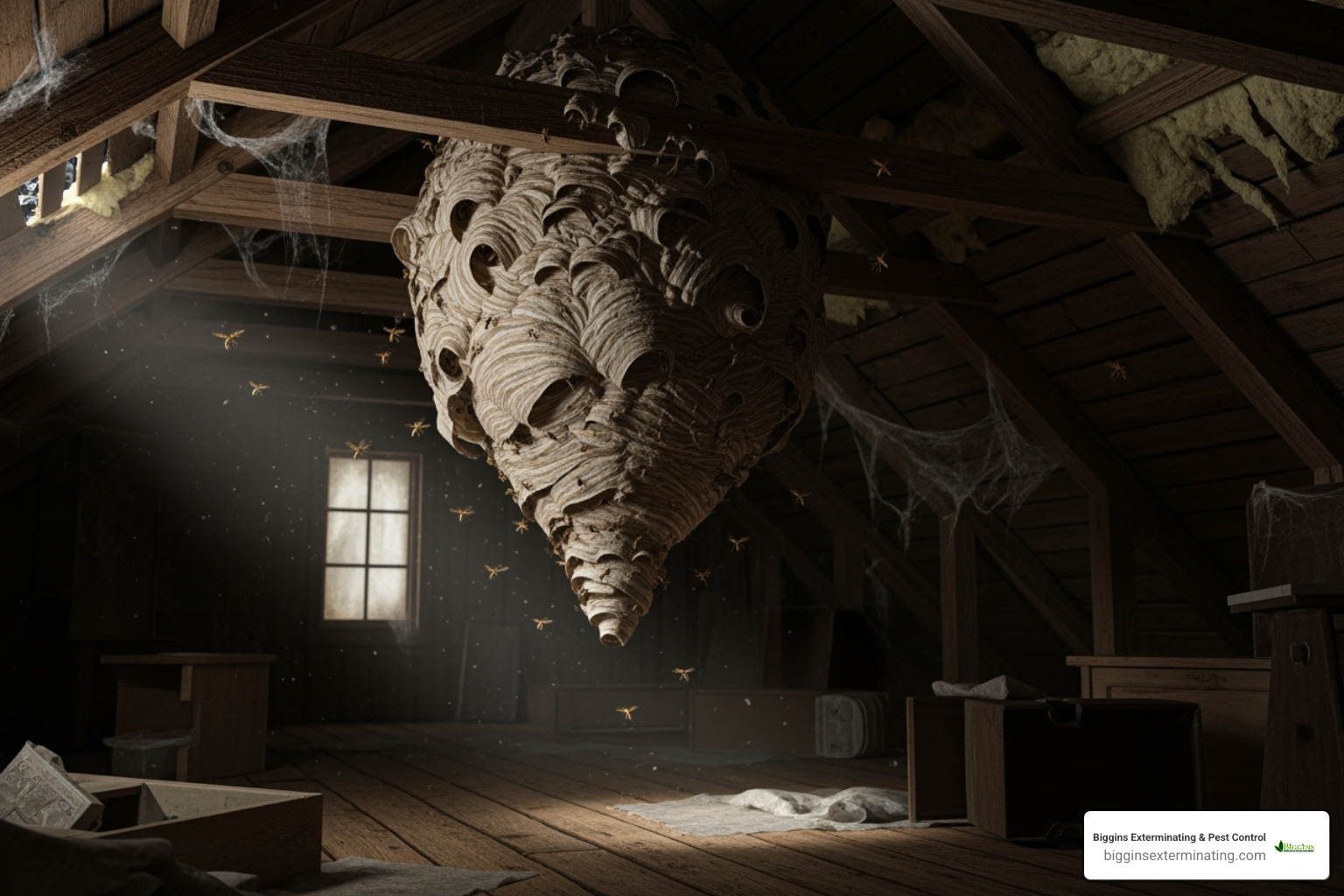
A single wasp might be lost, but frequent wasp sightings almost always mean a nest is nearby. Visible nests are an obvious red flag, appearing as papery structures under eaves, large orbs in trees, or busy underground entrances.
Chewed wood damage on fences or decks can indicate paper wasps harvesting fibers for their nests. The most unsettling sign is buzzing sounds in walls or ceilings, which often points to a hidden nest. An unusual indicator is frequent skunk activity, as they dig up and eat underground yellowjacket nests.
If you notice these signs, especially visible nests or frequent indoor activity, it’s time to call professionals. Understanding why professional nest removal is essential can prevent dangerous mistakes.
When to Call a Professional Exterminator
Some situations are too dangerous for DIY methods. Call a professional for:
- Multiple wasps appearing daily, which signals a nearby nest.
- Nests inside walls, attics, or other inaccessible areas. Sealing these can force wasps to chew through drywall into your living space. We have the tools for safely removing nests from soffits and other tricky spots.
- Known allergies in the household. A wasp sting can trigger life-threatening anaphylaxis, making professional help non-negotiable.
- Aggressive wasp species like yellowjackets and hornets, which attack in groups.
- Large nests that can contain thousands of wasps.
- Difficult-to-reach nests that require proper safety equipment and training.
As a family-owned business serving Wilmington, MA, and surrounding areas for over 40 years, we offer emergency wasp removal services for urgent threats. We provide reliable service with warranties and no contracts, ensuring your satisfaction. When wasps threaten your family, you need experienced professionals.
Frequently Asked Questions about Indoor Wasps
Over four decades of helping Massachusetts families, I’ve heard almost every question about these intruders. Here are the most common concerns.
What should I avoid doing when a wasp is in my house?
Your first instinct might be to swat the wasp—please don’t! This is one of the worst things you can do.
- Avoid swatting or crushing the wasp. When threatened, wasps release alarm pheromones that attract other wasps and make them more aggressive.
- Don’t spray harsh chemical insecticides indoors. These are designed for outdoor use and can fill your home with fumes dangerous to your family and pets.
- Never seal a nest inside a wall. Trapped wasps will chew through drywall to escape, often emerging directly into your living space and turning an outdoor problem into an indoor nightmare.
Why do I keep finding wasps in my house?
An occasional wasp may be bad luck, but regular sightings indicate a nearby nest, possibly within your home’s structure. Wasps repeatedly use entry points like cracks in window frames, torn screens, unsealed vents, or foundation gaps.
They enter for three reasons: food, shelter, and warmth. They are drawn to sugary spills, uncovered food, and pet bowls. As weather cools, queen wasps seek protected areas to survive the winter.
The location where you find them offers clues. Wasps near a window may indicate a nest in the eaves. If they appear in the basement, check for foundation cracks. Addressing the root cause is the best way to get rid of wasps in house for good.
How much does professional wasp removal cost?
This is a common question, but the cost varies dramatically based on the situation.
Several factors influence the final cost. The nest’s location is the biggest factor; a simple nest on a porch eave is easier to remove than a large colony inside a wall. The size and species also matter. A small paper wasp nest is a quick job, while a mature yellowjacket nest with thousands of aggressive wasps is a major challenge.
Based on internet data, professional wasp removal costs can range from $100 to over $1,000. Some sources suggest an average around $375, but complex situations can be much costlier. It’s important to note these are internet-based averages and not actual costs for Biggins Exterminating services.
Every situation is unique, so we conduct a thorough inspection before providing a price. For more details on pricing factors, you can learn about the average cost of an exterminator on our website. The investment in professional removal prevents property damage and protects your family.
Secure Your Home from Wasps Today
Finding a wasp buzzing around your living room doesn’t have to send you into a panic. Throughout this guide, we’ve walked through the best way to get rid of wasps in house situations, from the gentle glass-and-paper method to effective DIY soap sprays that work in minutes.
The key takeaway? Stay calm and choose the right approach for your specific situation. A single lost wasp calls for patience and non-lethal removal, while multiple wasps or visible nests require immediate professional attention.
Prevention remains your strongest defense against future wasp encounters. By sealing those sneaky entry points around windows and doors, keeping food covered, and using natural repellents like peppermint oil, you’re creating an unwelcoming environment for these buzzing intruders.
But let’s be honest – some situations are simply too dangerous to handle alone. When wasps have built a nest in your walls, when you’re seeing multiple wasps daily, or when anyone in your family has allergies, it’s time to call in the experts. Your safety is worth far more than the cost of professional removal.
As a family-owned business serving Massachusetts families for over four decades, we at Biggins Exterminating & Pest Control understand the stress and concern that comes with wasp problems. We’ve helped countless homeowners in Wilmington, Andover, Bedford, Billerica, Burlington, Lexington, North Reading, Tewksbury, and Woburn reclaim their homes from these aggressive pests.
We believe in doing the job right the first time – no contracts required, warranties provided, and your complete satisfaction guaranteed. Because when it comes to protecting your family from potentially dangerous wasp encounters, experience and reliability matter.
Don’t let wasps rob you of the peace and comfort your home should provide. Whether you’re dealing with a persistent wasp problem or you’ve finded a nest on your property, professional intervention is the safest and most effective solution. Contact our experts at Biggins Exterminating for reliable wasp control in the Wilmington, MA area.
Your home should be your sanctuary – let us help keep it that way.