
Why Finding the Best Way to Get Rid of Wasps Around House Matters
The best way to get rid of wasps around house starts with understanding the threat and acting before small problems become dangerous. Summer should be for enjoying your backyard, not dodging angry wasps.
Quick Solutions for Wasp Problems:
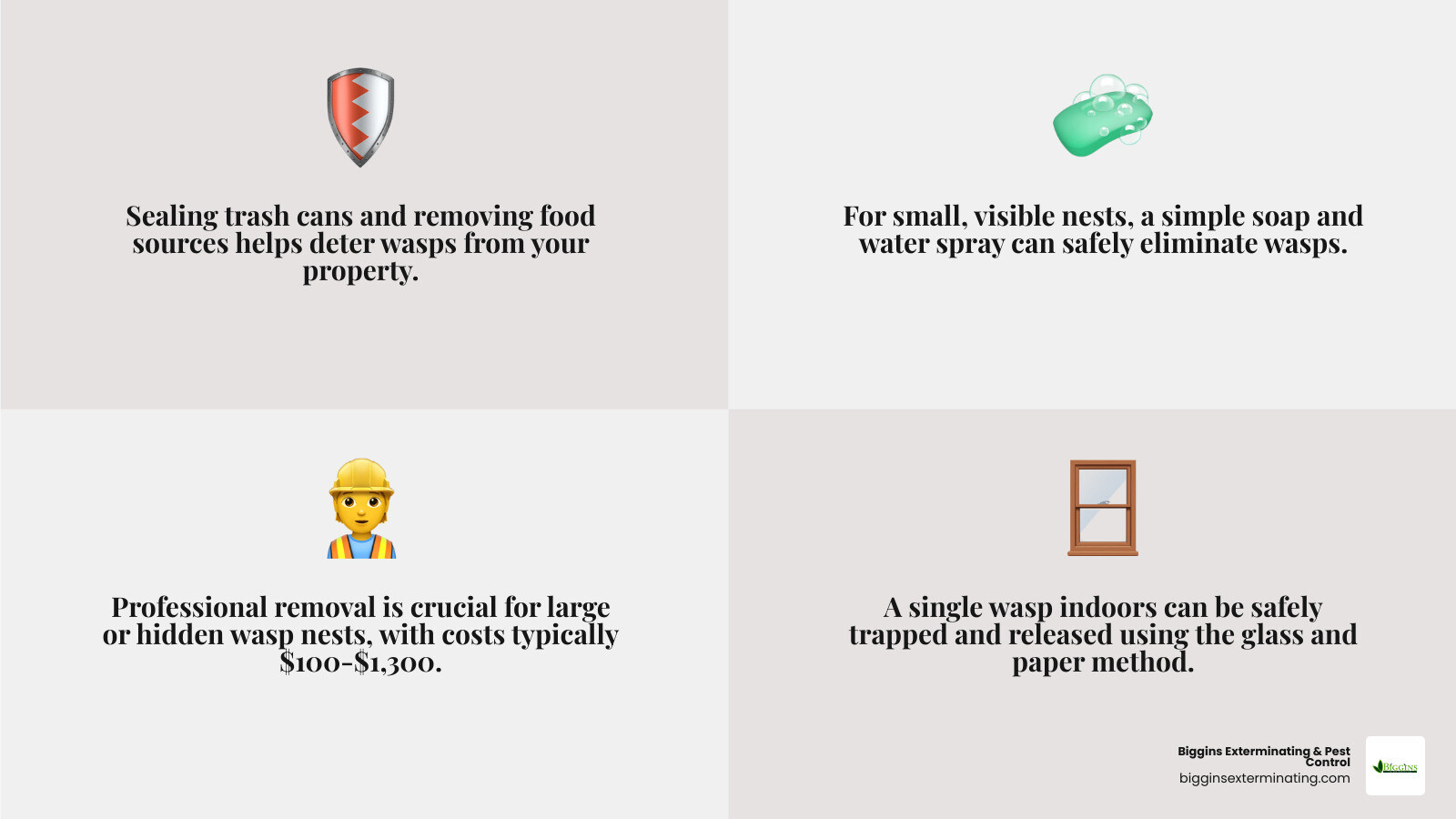
- Prevention – Seal trash cans, remove food sources, plant repellent herbs like mint
- Small Issues – Use soap spray on visible nests, set up DIY traps with sugar water
- Large Nests – Call professionals for safe removal (costs typically $100-$1,300)
- Emergency – Single wasp indoors can be trapped with glass and paper method
Wasps are most active and aggressive in late summer and early fall when colonies peak. A few wasps in spring can become hundreds by August, turning your yard into a danger zone.
Success lies in timing and approach. Unlike generally docile bees, wasps like yellow jackets and hornets are territorial and will defend their nests aggressively. Wasps can sting multiple times and release pheromones that call for backup.
I’m Stephen Biggins, and in over 40 years of pest control experience, I’ve seen how the best way to get rid of wasps around house combines prevention with professional intervention when needed. At Biggins Exterminating, we’ve helped countless Massachusetts families reclaim their outdoor spaces safely and effectively.
Learn more about best way to get rid of wasps around house:
- average cost of exterminator for wasps
- can i remove a wasps nest in winter
- remove wasp nest from soffit
Know Your Enemy: Identifying Common Wasps and Nests
To effectively tackle a wasp problem, you must know what you’re dealing with. Wasp types, nesting habits, and aggression levels vary, and understanding these differences is the first step in finding the best way to get rid of wasps around house.
Signs of a wasp infestation range from subtle to obvious. Constant buzzing near walls or in attics can indicate a hidden nest. Chewed wood is another tell-tale sign, as wasps use it to build their nests. The most obvious signs are seeing wasps frequently entering or exiting a specific area or spotting a visible nest.
Common Stinging Pests in Massachusetts
In our area, we typically encounter a few common types of stinging insects that are often mistaken for each other. Let’s get to know them:
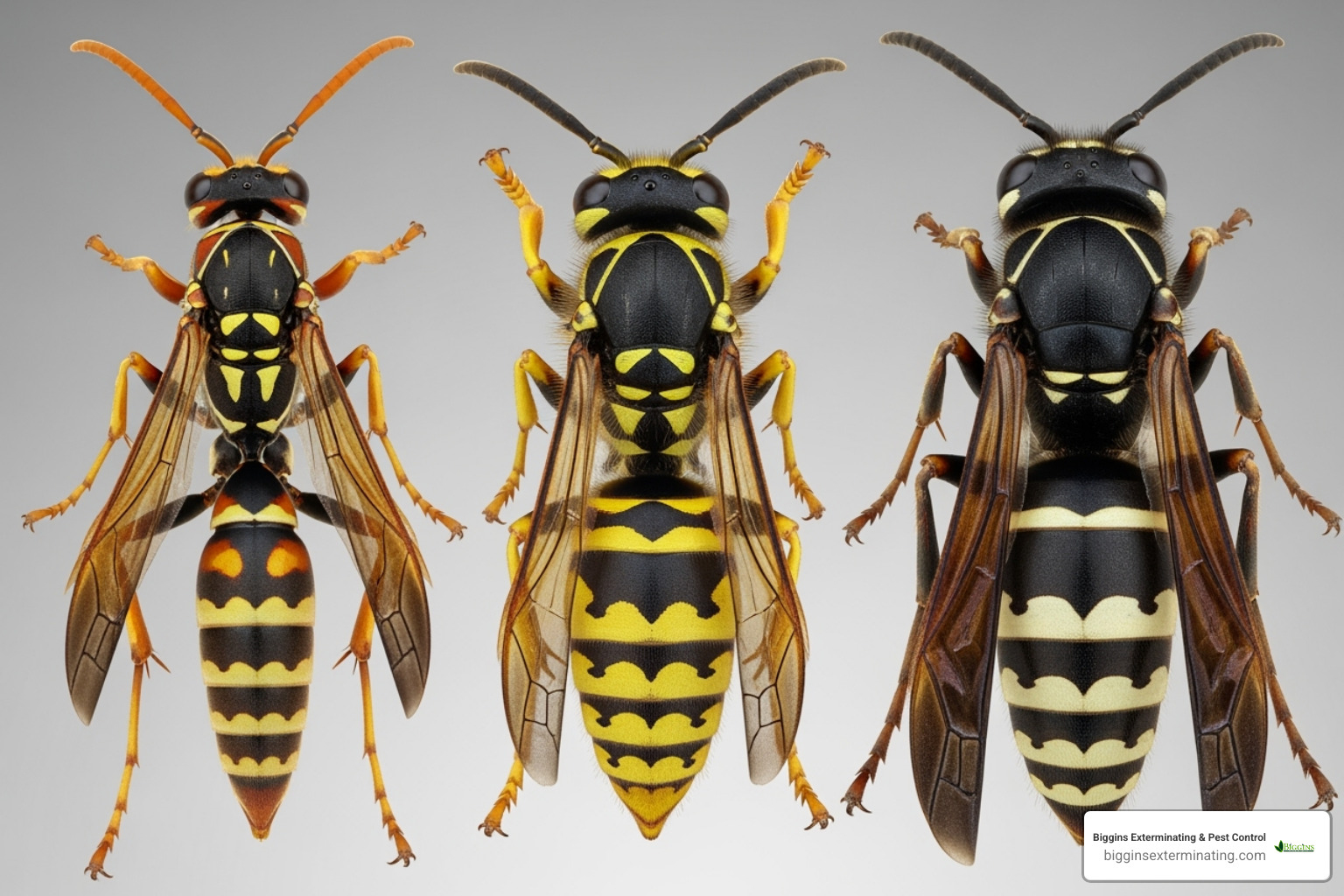
- Paper Wasps: These wasps build umbrella-like, paper nests with open, hexagon-shaped cells. You’ll often find their nests hanging from eaves, overhangs, or inside sheds. Paper wasps are generally less aggressive than yellow jackets or hornets but will sting if their nest is disturbed. They have slender bodies and a distinct “waist.”
- Yellow Jackets: Known for their aggressive behavior, especially in late summer, yellow jackets build nests with a paper envelope and a single entrance. You might find their nests underground, in wall cavities, or dense bushes. If you notice heavy wasp traffic or a nest near your home, professional help is the safest option—especially for families or businesses.
- Bald-Faced Hornets: A type of yellow jacket, these are larger with black bodies and white facial markings. Bald-faced hornets build large, grey, pear-shaped paper nests, often hanging from trees, shrubs, or buildings. They are highly territorial and will defend their nests vigorously.
For more detailed information on identifying nests and ensuring safety, you can visit our guide: More info about hornets and wasps
Wasp, Hornet, or Bee?
It’s a common misconception that all stinging insects are the same. Distinguishing between wasps, hornets, and bees is vital for safety and understanding their role in our ecosystem. Bees, for instance, are crucial pollinators and generally much more docile than wasps.
Here’s a quick comparison to help you tell them apart:
| Feature | Wasps | Hornets | Bees |
|---|---|---|---|
| Body Shape | Slender, distinct “waist” | Stout, more rounded than wasps | Hairy, more robust |
| Hairiness | Not hairy | Not hairy | Typically hairy |
| Nest Material | Paper (chewed wood fibers) | Paper (chewed wood fibers) | Wax (secreted from abdomen) |
| Diet | Protein (spring/early summer), sugar (late summer/fall) | Protein (spring/early summer), sugar (late summer/fall) | Nectar and pollen |
| Aggressiveness | Can be aggressive, especially if nest is threatened | Can be very aggressive if provoked | Generally docile, sting only if threatened |
Most outdoor bee colonies can be ignored without ever becoming an issue. If you find a nest, do not try treating it on your own! This requires the expertise of a pest management professional for safe and effective removal.
What Attracts Wasps to Your Yard?
Understanding what draws wasps to your property is the foundation of the best way to get rid of wasps around house – prevention. Think of wasps like unwelcome party crashers who show up wherever there’s good food, shelter, and the right atmosphere.
Food is the biggest magnet for these buzzing visitors. Wasps have quite the sweet tooth, especially in late summer when their colonies are at peak size. That innocent can of soda left on your patio table? It’s like a neon sign advertising “Free Buffet!” to every wasp in the neighborhood. Sugary drinks, fruit juices, and even that sticky residue on recycling containers can turn your backyard into wasp central.
If you have fruit trees, you’ve probably noticed wasps love fallen apples, peaches, and berries. The fermenting sugars in overripe fruit are irresistible to them. It’s like they’re having their own little happy hour under your apple tree.
Uncovered trash cans are another huge attraction. Wasps aren’t picky – they’ll dive into garbage looking for food scraps, sticky containers, and anything that smells remotely edible. Your compost pile, while great for the garden, can also be a wasp magnet if it contains fruit peels and other organic matter.
Don’t forget about pet food left outside. Wasps need protein, especially in spring and early summer when they’re feeding their larvae. That bowl of kibble on your deck looks pretty appetizing to a hungry wasp.
Your beautiful garden might be part of the problem too. Sweet-smelling flowers produce nectar that wasps crave. While you can’t eliminate all flowers (and wouldn’t want to), knowing this helps explain why wasps seem to patrol certain areas of your yard more than others.
Finally, wasps are always on the hunt for shelter and building materials. They chew wood fibers from fences, deck railings, and outdoor furniture to create their papery nests. If your property offers cozy, undisturbed spots like eaves, wall gaps, or dense shrubs, wasps might decide to set up permanent residence.
The good news? Once you know what attracts them, you can start making your yard less appealing without turning it into a sterile wasteland.
The Best Way to Get Rid of Wasps Around House: A Proactive Approach
The truth about wasp control is that prevention is the best way to get rid of wasps around house. Think of it as putting up a “No Vacancy” sign before they move in.
Prevention beats confrontation. A proactive approach focuses on making your property uninviting by eliminating attractants and blocking nesting spots before wasps can settle in. Prevention is safer, more cost-effective, and provides long-term peace of mind. It avoids the need for protective gear, risky ladder climbing, or emergency calls to pest control.
Natural Wasp Deterrents and Repellents
If you prefer keeping harsh chemicals away from your family and pets, nature has your back. Several natural methods can effectively discourage wasps from making themselves at home.
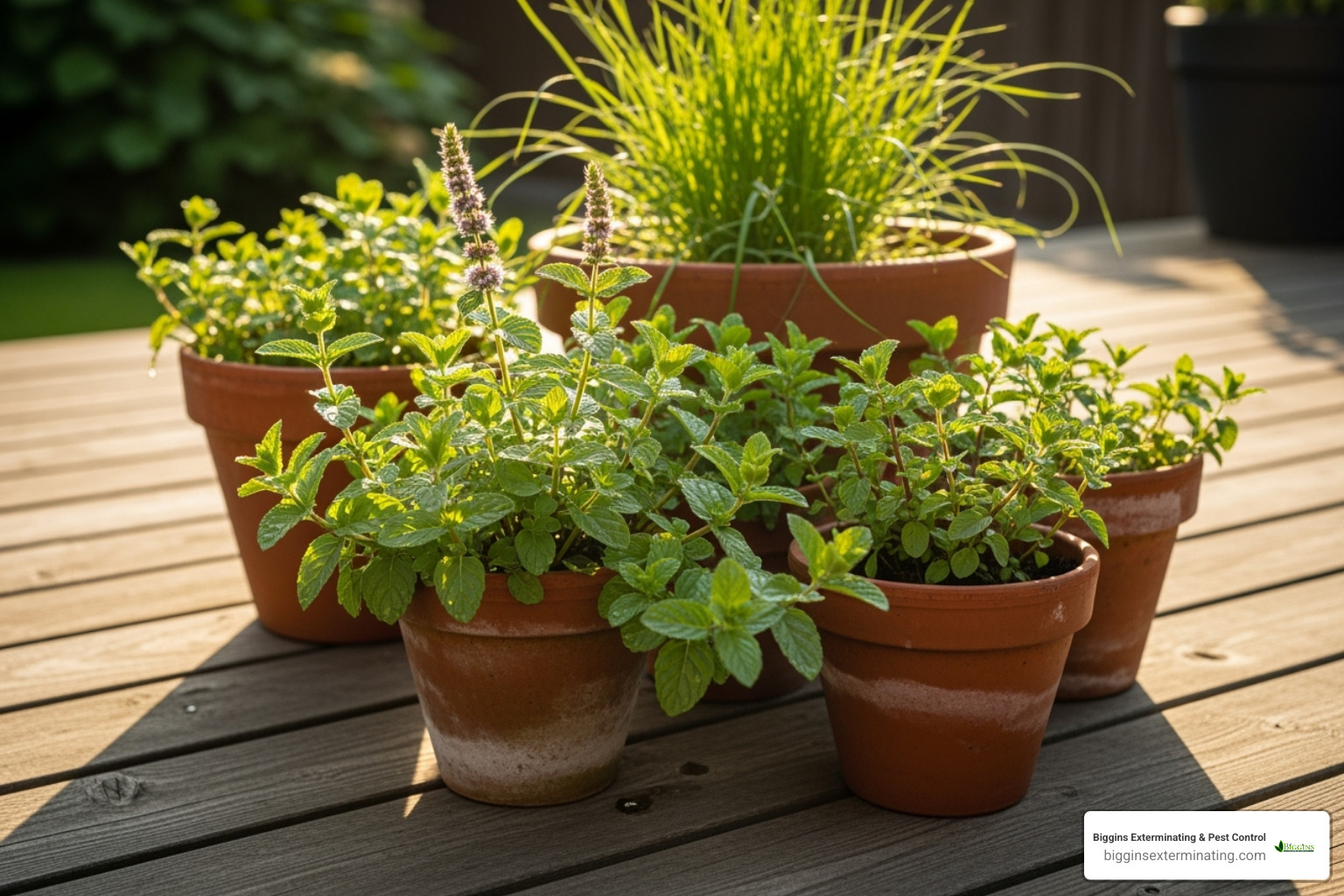
Plant-based repellents work because wasps have sensitive smell receptors that certain scents overwhelm. Mint is particularly effective; its strong fragrance keeps wasps and hornets away. Remember to plant mint in containers since it spreads aggressively.
Citronella repels both mosquitoes and wasps with its lemony scent. Thyme, eucalyptus, and wormwood are other excellent choices to place around patios, decks, and entryways.
Essential oils offer concentrated wasp-repelling power. Peppermint oil mixed with water in a spray bottle creates an effective natural deterrent for outdoor furniture and railings. A blend of clove and lemongrass oil works similarly well, and scientific research supports the effectiveness of essential oils as insect repellents.
One surprisingly effective trick involves decoy wasp nests. Wasps are territorial and typically avoid areas where they think another colony has claimed territory. Hanging a fake nest can convince scout wasps to look elsewhere.
Making Your Property Uninviting
Simple changes to your habits and property maintenance can dramatically reduce your wasp appeal. These adjustments require minimal effort but deliver maximum results.
Securing your trash cans with tight-fitting lids eliminates a huge wasp magnet. The combination of food scraps and sweet residues in garbage creates an irresistible buffet.
Cleaning up fallen fruit promptly removes another major attraction. The fermenting sugars in overripe apples, peaches, or berries are like wasp candy. A quick daily sweep under fruit trees can prevent a small problem from becoming a major one.
When eating outdoors, keep food covered and transfer canned drinks into cups. Wasps love crawling into open soda cans, creating a dangerous surprise. This simple habit protects you from unwanted encounters.
Sealing cracks in your home’s exterior and repairing torn window screens prevents wasps from finding winter hiding spots or indoor access. Pay attention to where power lines enter your house and gaps around siding.
Changing your outdoor lighting to yellow or sodium vapor bulbs makes your property less attractive to wasps and other insects, as they emit wavelengths less visible to most flying insects.
For comprehensive prevention strategies, check out our detailed guide on the Top 5 Ways to Prevent Hornet and Wasp Nests on Your Property
Dealing with an Active Wasp Infestation
When prevention hasn’t worked and you’re dealing with wasps that have already moved in, safety first isn’t just good advice—it’s absolutely critical. I’ve seen too many homeowners end up in the emergency room because they underestimated these little warriors.
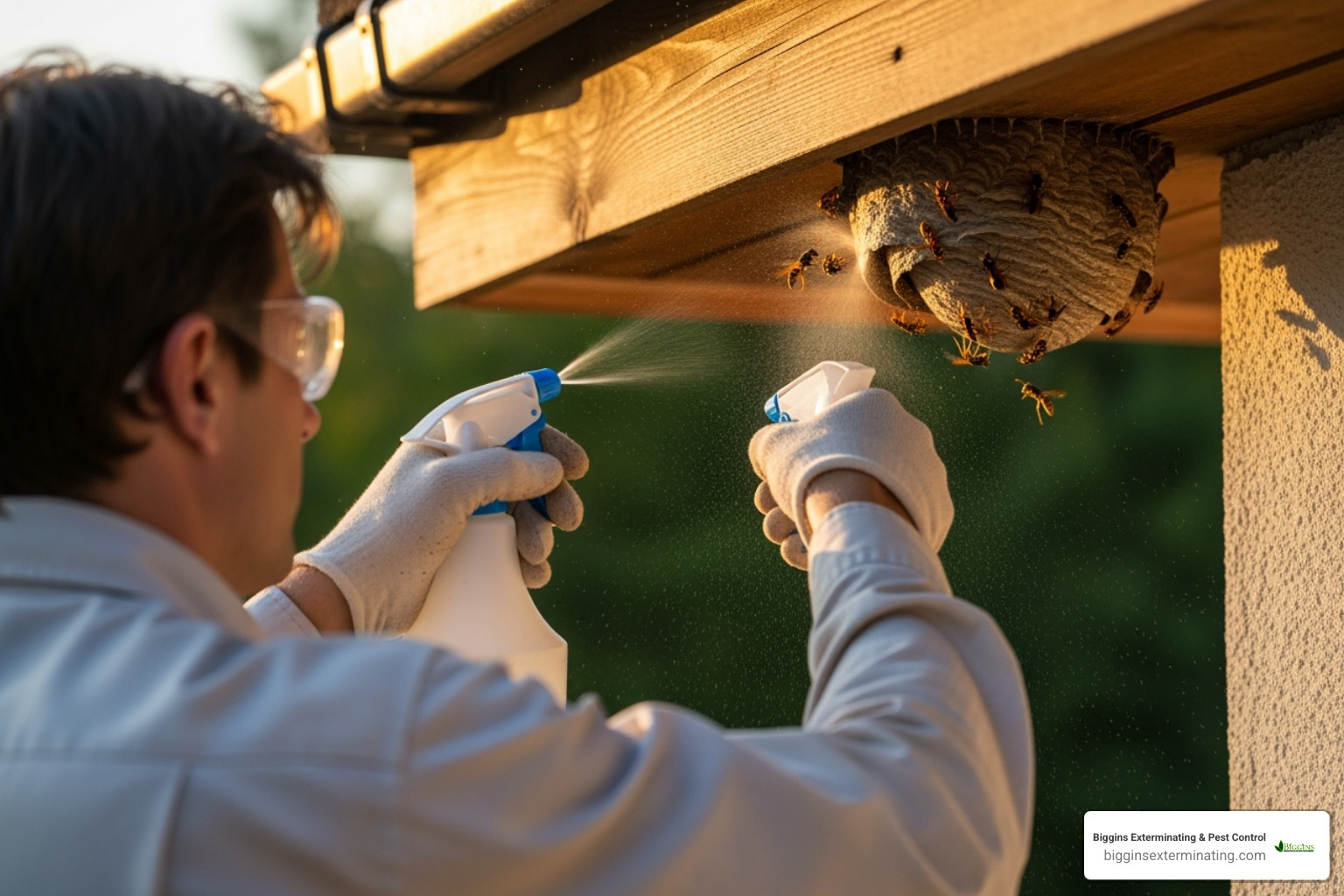
Safety first means understanding that wasps can become extremely aggressive when they feel their nest is threatened. If you’re going to attempt any DIY removal, you need proper protective clothing—we’re talking long sleeves, pants, gloves, a hat, and ideally a face shield. Think of it as suiting up for battle, because that’s essentially what you’re doing.
Timing matters when dealing with wasps. The best approach is to handle them at dusk or dawn when temperatures are cooler and the insects are less active. During these times, most wasps are back in their nest, making any treatment more effective and reducing your chances of encountering angry stragglers.
For anyone with allergic reactions to stings, attempting DIY removal is simply not worth the risk. A wasp sting can be life-threatening for allergic individuals, and even if you think you’re not allergic, you might find otherwise at the worst possible moment.
Know when to retreat—literally. If wasps become agitated or you start feeling uncomfortable or unsure, back away immediately and consider calling a professional. There’s no shame in admitting a situation is beyond your comfort zone.
One crucial mistake I see homeowners make: if you find wasps inside your house, never try to seal the nest inside the wall thinking they’ll just die off. Trust me, they’ll find their way out through vents or even chew through drywall, and then you’ll have an even bigger problem on your hands.
Safe DIY Methods for Small-Scale Problems
For a single wasp indoors or a very small, newly formed nest that’s easily accessible, you might be able to handle it yourself safely.
When you have a single wasp buzzing around indoors, the glass and paper trick is your best friend. Wait for the wasp to land on a flat surface, then gently place a glass over it. Slide a piece of paper under the glass to trap the wasp, then carry it outside and release it. It’s simple, effective, and nobody gets hurt.
You can also try opening a door or window to provide an exit route. Turn off indoor lights and open curtains to create a natural path toward outside light—wasps usually want to leave as much as you want them gone.
Soapy water spray is surprisingly effective for small, visible nests or individual wasps. Mix two tablespoons of dish soap with water in a spray bottle. How soap works is fascinating—it clogs the wasps’ breathing pores (called spiracles) and breaks down the nest material. They die almost instantly, and it also impairs their ability to fly.
DIY wasp traps can help reduce the population around your property. Cut the top third off a plastic bottle, invert it into the bottom section to create a funnel, add bait, and hang it away from areas where people gather. Wasps have poor long-term memory, so once they enter the funnel, they struggle to find their way back out.
DIY Wasp Trap Baits that work well include sugar water as a classic attractant, vinegar mixed with water (the acetic acid is particularly effective), and meat scraps for yellow jackets, especially in spring and early summer when they’re seeking protein. In late summer and fall, they switch to craving sweets, so adjust your bait accordingly.
Why Professionals Offer the Best Way to Get Rid of Wasps Around House Safely
While DIY methods have their place, when it comes to large nests, hidden nests, or dealing with aggressive species, professional help truly offers the best way to get rid of wasps around house safely and permanently.
Large nests can house hundreds or even thousands of wasps by late summer—some grow to the size of a watermelon. Attempting to tackle these established colonies yourself is extremely dangerous due to the sheer number of aggressive defenders that will swarm to protect their home.
Hidden nests present unique challenges that require professional expertise. Yellow jackets often build in underground locations or wall voids, making them nearly impossible for homeowners to access safely. If you suspect a nest inside a wall, don’t try sealing them in—they’ll find another way out, potentially right into your living space. We specialize in these tricky situations: Exterminate Yellow Jackets Underground.
The multiple stings risk is real and terrifying. When a wasp stings, it releases alarm pheromones that essentially send out a “help us fight” signal to other wasps. This can quickly escalate from one sting to dozens, which can be dangerous even for people without allergies.
If there are allergies in the household, attempting DIY removal puts lives at risk unnecessarily. Even if family members haven’t shown allergic reactions before, sensitivities can develop over time.
Professional equipment makes all the difference. We use specialized tools and protective gear that allow us to safely approach and treat nests from a distance, minimizing risk to everyone involved. With over 40 years of experience, we provide guaranteed removal with warranties, ensuring the problem is solved permanently.
For more detailed information on why professional intervention is often necessary, check out: Why Professional Hornet and Wasp Nest Removal Is Essential.
Frequently Asked Questions about Wasp Removal
After four decades in the pest control business, I’ve heard just about every wasp question imaginable. Let me share answers to the ones that come up most often during our service calls.
What is the average cost for professional wasp removal?
One of the first things homeowners want to know is what they’re looking at financially. It’s completely understandable – nobody likes surprises when it comes to their budget.
Please note that these are average costs based on internet data from various sources and are not actual costs for Biggins Exterminating & Pest Control services. I always encourage folks to call us directly for an accurate quote because every situation is unique.
Typical extermination costs range from $100 to over $1,300, with an average around $375. I know that’s quite a range, but several factors can dramatically affect the final price.
The location of the nest makes a huge difference. A paper wasp nest hanging from your deck railing is straightforward to handle. But yellow jackets buried three feet underground or hornets nested inside your wall cavity? That’s a different story entirely and requires specialized equipment and techniques.
The type of wasp also matters. Some species are more aggressive than others, requiring extra safety precautions and potentially multiple treatments. Infestation size is another big factor – a golf ball-sized nest finded in May is vastly different from a basketball-sized colony found in September.
For more detailed cost information, check out our guide: Average Cost of Exterminator for Wasps
Can I just leave a wasp nest alone?
This is probably the question I get asked most, and honestly, it depends entirely on what you’re dealing with and where it’s located.
Sometimes leaving a nest alone is perfectly fine. If you’ve got mud daubers – those solitary wasps that build small, tube-shaped mud nests – they’re actually doing you a favor by eating spiders. They’re not aggressive unless you’re literally poking at them, so a mud dauber nest tucked away in a corner of your garage isn’t worth worrying about.
Paper wasp nests in low-traffic areas might also be candidates for the “live and let live” approach, especially if they’re well away from doors, windows, and places where kids play.
But here’s where things get tricky with social wasp nests like yellow jackets and hornets. What starts as a few wasps in spring can explode into hundreds or even thousands by late summer. Colony growth happens fast, and with it comes increased aggression as the wasps become more territorial and desperate for food sources.
I’ve seen too many families get caught off guard by a “small” nest they decided to ignore, only to find themselves prisoners in their own backyard by August. If the nest is anywhere near your daily activities – patios, doorways, play areas – it’s not worth the risk.
Is it safe to remove a wasp nest in the winter?
Winter is actually the best time to remove old wasp nests, and yes, it’s generally very safe to do so.
Here’s what happens: by late fall, the worker wasps and males die off naturally. Only the queen overwinters, and she doesn’t stick around the old nest. Instead, she finds a cozy spot like a wall void or under tree bark to wait out the cold months.
This means those nests are completely inactive by winter – essentially just empty paper structures. The nest material becomes brittle in the cold, making removal much easier and safer than during active season.
I always tell homeowners that if they spot an old nest during winter cleanup, it’s the perfect time to knock it down. No protective gear needed, no angry wasps to worry about. Just make sure it’s actually an old nest and not a shelter being used by other creatures.
If you’re not certain whether a nest is truly inactive, or if it’s in a difficult location, don’t hesitate to call us. We can quickly assess the situation and handle removal safely. Learn more about winter nest removal: Can I Remove a Wasps Nest in Winter?
When it comes to finding the best way to get rid of wasps around house, there’s no shame in asking for professional help. Sometimes the safest approach is letting someone with the right experience and equipment handle the problem.
Reclaim Your Yard from Wasps for Good
Summer evenings on your deck shouldn’t come with the soundtrack of angry buzzing or the constant worry of getting stung. The best way to get rid of wasps around house isn’t just one magic solution—it’s a thoughtful combination of knowing your enemy, preventing problems before they start, and taking swift action when needed.
Throughout this guide, we’ve finded that identification is your first line of defense. Knowing whether you’re dealing with aggressive yellow jackets, territorial bald-faced hornets, or more docile paper wasps helps you choose the right approach. Not all buzzing insects are created equal—bees are generally beneficial pollinators that deserve our protection, while wasps can pose real safety risks to your family.
Prevention truly is the best medicine when it comes to wasp control. Simple changes like securing your trash cans, cleaning up fallen fruit promptly, and planting natural repellents like mint and citronella can transform your yard from a wasp magnet into a peaceful retreat. These small steps often prevent the need for more dramatic interventions later.
When you do encounter an active wasp problem, safety must always come first. While the glass-and-paper method works great for a single wasp indoors, and soapy water spray can handle very small, accessible nests, there’s no shame in calling for backup. In fact, it’s often the smartest choice.
For persistent or dangerous wasp problems, professional help is the safest and most effective solution. Large nests, hidden colonies in wall voids, or aggressive species like yellow jackets require specialized equipment and expertise. The risk of multiple stings or triggering a swarm simply isn’t worth taking on alone.
At Biggins Exterminating & Pest Control, we’ve been helping Massachusetts families reclaim their outdoor spaces for over 40 years. As a family-owned business, we understand how important it is to feel safe and comfortable in your own backyard. We provide reliable, warrantied service without the hassle of long-term contracts.
If you’re in the Wilmington, MA area and need help with a wasp problem, contact us for reliable and warrantied service. Whether it’s a small nest under your eaves or a more complex infestation, we have the experience and tools to handle it safely and effectively.
Your peaceful summer evenings are waiting—let’s help you get them back.
