
Why Safe Hornet Nest Removal Matters for Your Family
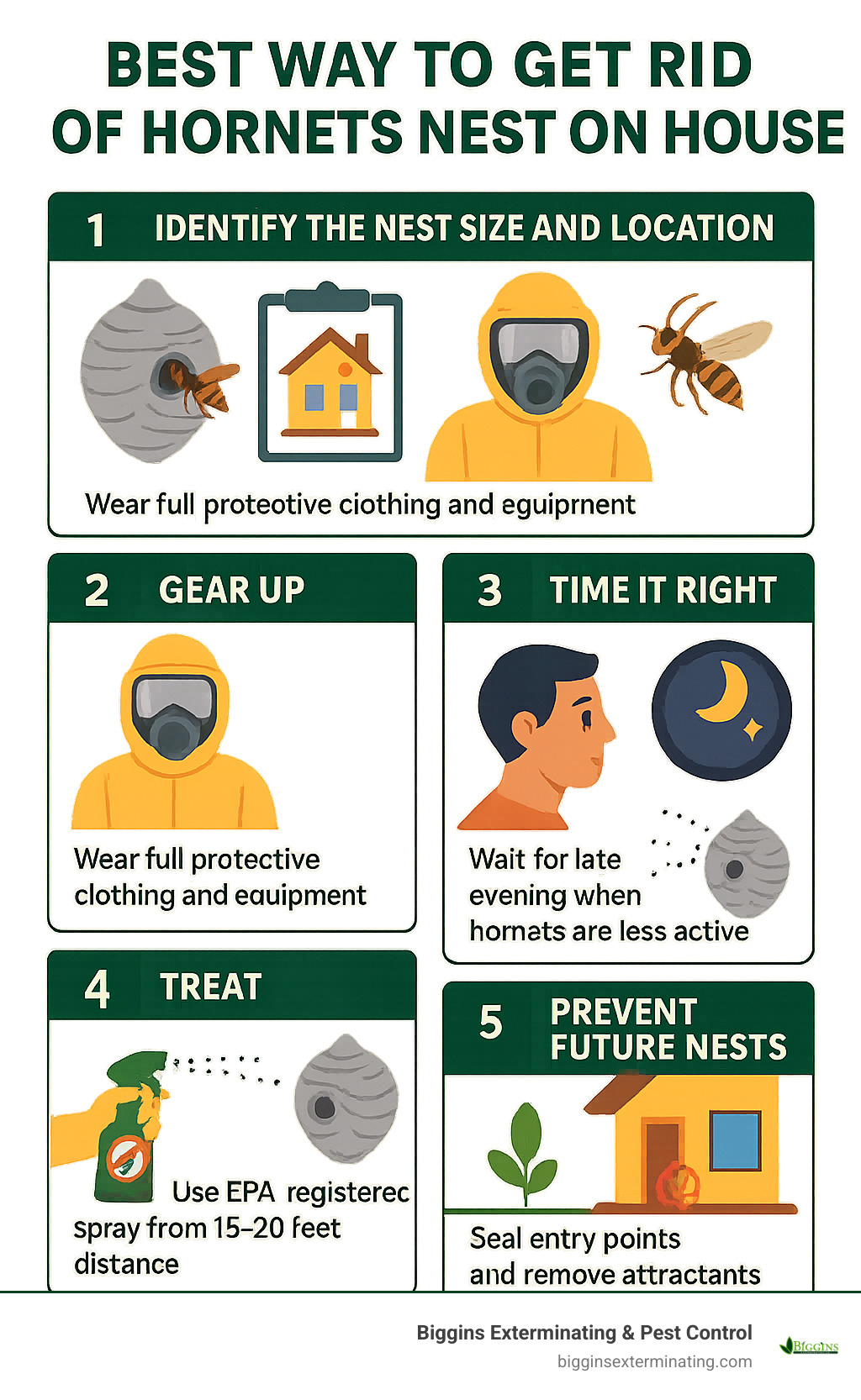
The best way to get rid of hornets nest on house involves careful planning, proper safety gear, and knowing when to call professionals. Here’s your quick action plan:
Safe Hornet Nest Removal Steps:
- Assess the threat – Check nest size (tennis ball = DIY possible, larger = call pros)
- Gear up completely – Thick clothing, goggles, gloves, face protection
- Time it right – Late evening when hornets are less active
- Use proper spray – EPA-registered hornet killer with 15-20 foot reach
- Wait 24 hours – Monitor for activity before nest removal
- Call professionals – For large nests, wall cavities, or allergic individuals
Finding a hornet’s nest on your house is alarming. These aggressive insects build paper-like nests in inconvenient places like eaves, soffits, or porch ceilings. Unlike bees, hornets can sting multiple times and will aggressively defend their territory.
Rushing into removal without proper preparation puts your family at serious risk. A single nest can house 100-700 workers, and disturbing them can result in multiple painful stings or dangerous allergic reactions.
Safety must always come first. While small, accessible nests might be manageable for careful DIY removal, larger nests or those in difficult locations require professional expertise.
I’m Stephen Biggins of Biggins Exterminating Co. With over four decades helping Massachusetts families, I know that the best way to get rid of hornets nest on house starts with knowing your limits and prioritizing safety.
Best way to get rid of hornets nest on house terms explained:
- average cost of exterminator for wasps
- can i remove a wasps nest in winter
- remove wasp nest from soffit
First, Identify the Threat: Signs of a Hornet’s Nest
The best way to get rid of hornets nest on house starts with properly identifying the threat.
What does a hornet’s nest look like? A typical hornet’s nest is a large, gray, paper-like structure with a teardrop or inverted pear shape. It can grow from the size of a golf ball to a basketball by late summer. Hornets create this durable material by chewing wood fibers from fences and decks and mixing it with their saliva.
Where do hornets build their nests? They prefer protected locations that offer shelter and easy access. Common spots include:
- Under the eaves, in soffits, or hidden in attics.
- Suspended from porch ceilings or shed roofs.
- In dense bushes or tree branches near your home.
The biggest clue is high traffic activity. A steady stream of large, buzzing insects flying to and from the same spot indicates a nest. Following their flight pattern will lead you to it.
For more on identifying nests safely, see our guide on Hornets and Wasps: Identifying Nests and Ensuring Safety.
Hornet Species Common in the US
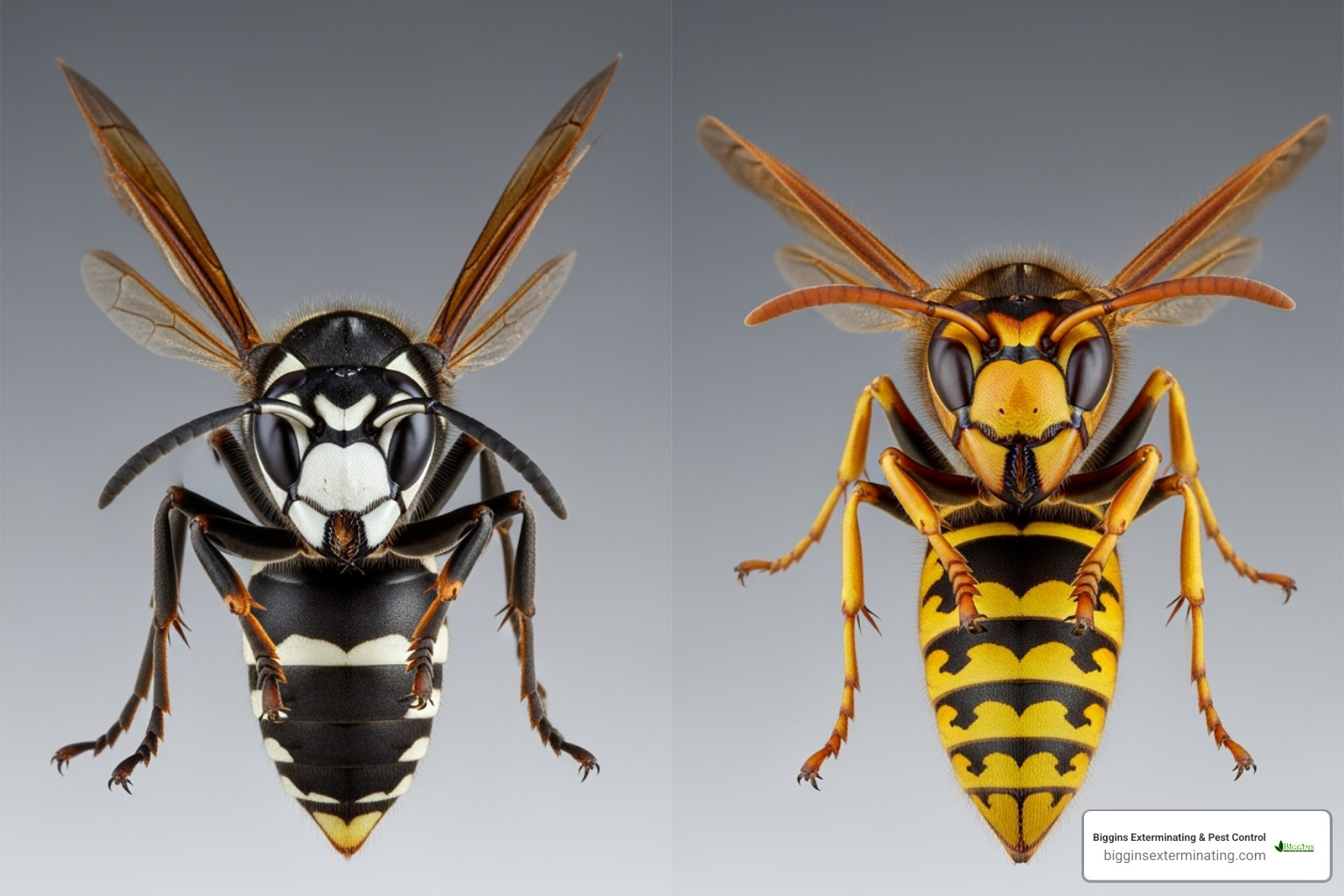
In the U.S., homeowners typically encounter two main “hornet” species.
European Hornets are the only true hornets in America. They are about an inch long with yellow and reddish-brown markings and are often active at night. They build nests in concealed areas like hollow trees, wall voids, and attics. They are generally less aggressive unless their nest is threatened.
Bald-Faced Hornets are technically a type of yellow jacket. These black-and-white insects are smaller but highly aggressive. They build the large, aerial nests you see hanging from tree limbs, bushes, or attached to buildings.
| Feature | European Hornet | Bald-Faced Hornet |
|---|---|---|
| Appearance | Largest true hornet (1 inch), yellow and reddish-brown markings | Technically a yellow jacket (0.5-0.75 inches), black with white face markings |
| Nest Location | Concealed areas: tree cavities, wall voids, attics | Aerial nests: tree branches, bushes, eaves, soffits |
| Aggressiveness | Less aggressive unless nest is threatened | Highly aggressive, will pursue threats |
Understanding the species helps determine the best way to get rid of hornets nest on house safely. Both can sting multiple times and require caution.
Gear Up for Safety: Essential Precautions Before You Start
When it comes to the best way to get rid of hornets nest on house, proper preparation is critical for your safety. A single misstep can lead to a painful emergency.

Your protective clothing is your armor. Cover all exposed skin to create a complete barrier. Wear thick fabric clothing, like heavy jeans and a sweatshirt, that stingers can’t easily penetrate.
Protect your face and eyes with goggles and a face mask; a bee veil is ideal. Wear heavy gloves that cover your wrists. Tuck pants into boots and tape any gaps at the wrists or ankles, as hornets can find any opening.
Before you start, plan and clear an escape route. Remove any obstacles like garden tools or toys that could trip you.
Now, let’s address allergic reactions. Hornet venom can trigger severe responses, including life-threatening anaphylactic shock. If you have any known allergies to insect stings, call a professional. Keep an EpiPen readily available if allergies are a concern, and have antihistamines like Benadryl on standby.
Even with perfect preparation, DIY hornet removal carries real risks. That’s why we’ve outlined 5 Compelling Arguments to Leave Hornet Nest Removal to Massachusetts Pest Control Experts. Sometimes the smartest move is knowing when not to DIY.
The Best Way to Get Rid of Hornets Nest on House: A Step-by-Step Guide
While I always encourage calling professionals, I understand some will try to tackle this themselves. If you’re dealing with a small nest (tennis ball size or smaller) in an easily accessible location, you might handle it safely. If you have any doubt, please call us.
Successful DIY hornet removal requires the right timing, approach, and respect for the insects.
Step 1: Timing is Everything
Hornets are least active at night. The best time of day to treat a nest is in the late evening or at dusk, when the hornets have returned to the nest and are less active. This ensures you’re targeting the entire colony when it’s most vulnerable.
The best time of year is late spring or early summer when nests are smaller. By late summer, a nest can be a basketball-sized fortress housing hundreds of hornets, a job best left to professionals.
Step 2: The DIY Method – The Best Way to Get Rid of a Hornets Nest on a House
First, use only EPA-registered wasp and hornet control products. Look for an aerosol spray with a long-distance reach of 15-20 feet. This distance is your safety buffer.
When you’re ready, approach cautiously with slow, deliberate movements. Aim the spray directly into the nest opening, usually at the bottom. Saturate the nest completely, using the entire can if necessary. This is not the time to be frugal.
Never use a ladder directly under the nest. A swarm can cause you to fall, which can be more dangerous than the stings. And please, do not use gasoline or fire. This is extremely dangerous and can cause significant property damage.
Step 3: Wait and Observe
After treatment, you must wait at least 24 hours for the insecticide to work. Resist the urge to get close too soon.
Monitor for activity from a safe distance. You should see little to no hornet traffic. If you still see active hornets after a full day, you may need to re-treat, following the same safety protocols. It’s important to ensure all hornets are eliminated before proceeding.
Step 4: Remove and Dispose
Once you are certain the nest is inactive (no activity for 24 hours), you can remove it. Wear your protective gear. Use a long pole to knock down the nest.
Immediately place the nest in a heavy-duty trash bag and seal it tightly. Double-bagging is a smart precaution. Dispose of the bag with your regular trash.
Finally, clean the area where the nest was attached with soap and water. This removes pheromones that attract new queens to the same spot, preventing future nests.
Know Your Limits: When to Call a Professional Exterminator
Sometimes the best way to get rid of hornets nest on house is to call a professional. Attempting removal yourself can be dangerous in certain situations.
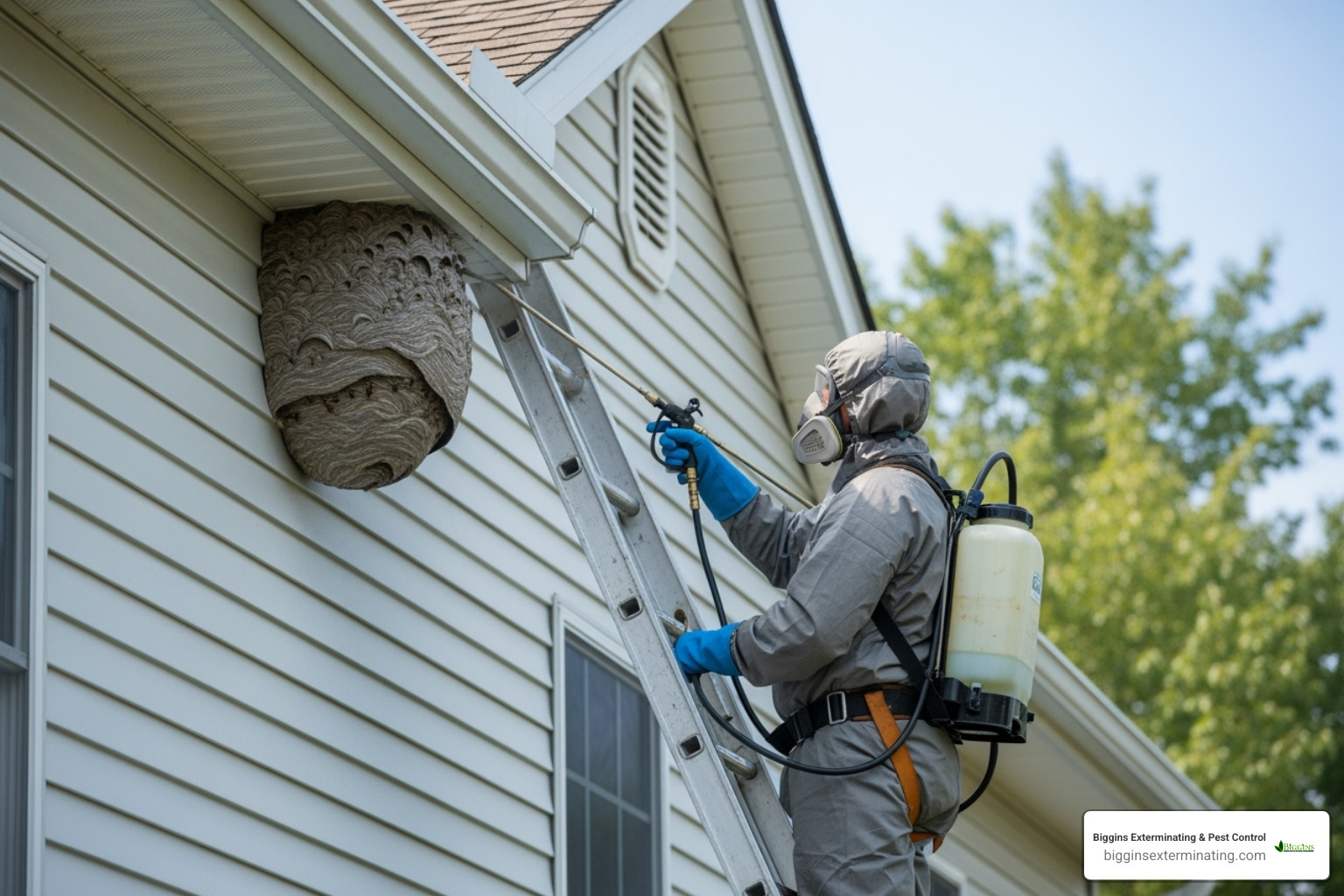
Over four decades, I’ve seen DIY attempts result in multiple painful stings, allergic reactions, and property damage. An angry swarm can quickly overwhelm anyone.
Call a professional for:
- Large nests: Anything bigger than a tennis ball likely holds hundreds of aggressive defenders.
- Nests inside walls or soffits: These require special techniques to reach the core of the colony without damaging your home. Learn more about how we Remove Wasp Nest From Soffit.
- Hard-to-reach locations: A nest on a second-story eave isn’t worth risking a fall.
- Household allergies: If anyone in your home has a known insect sting allergy, DIY removal is a life-threatening gamble.
- Failed DIY attempts: Once disturbed, hornets become more aggressive, making a second attempt even more dangerous.
When you hire a professional, you get specialized equipment, professional-grade products, and the experience to handle swarms safely and ensure complete elimination.
Internet data suggests that professional hornet nest removal costs typically range from $150 to over $750, depending on nest size and location. These are average costs based on internet data and not actual costs for Biggins Exterminating services. For more insight, read our article on the Average Cost to Remove Hornets Nest.
Your family’s safety is worth more than the cost of professional removal. Knowing when you’re in over your head is the smartest move.
Keeping Hornets Away for Good
After removing a nest, the next step is ensuring hornets don’t return. The best way to get rid of hornets nest on house permanently is to make your home unappealing to them.
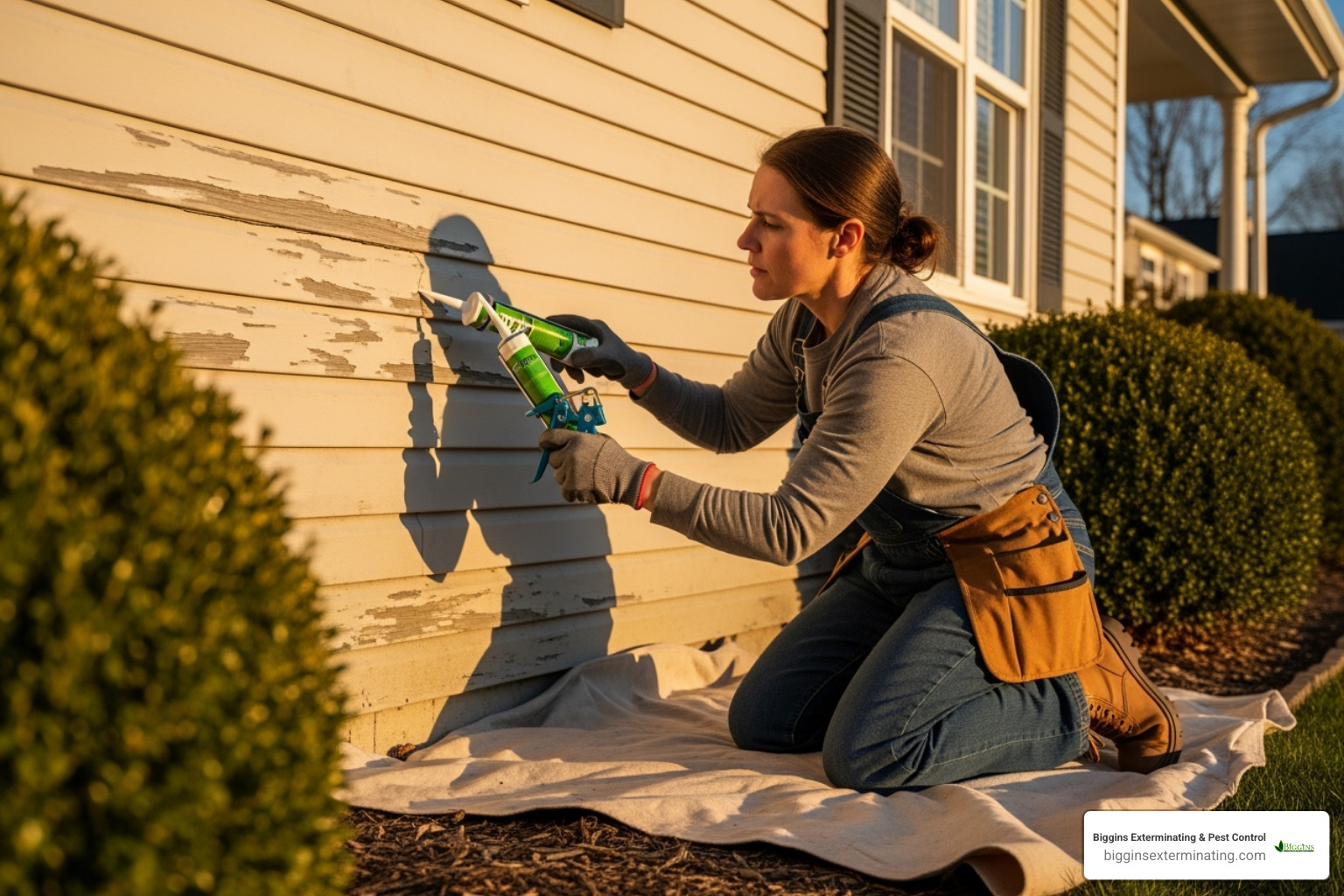
Step 5: Prevention – The Best Way to Get Rid of a Hornets Nest on a House for Good
Hornets seek sheltered spots with easy access to food. Removing these features makes your property less attractive.
- Regular inspections: In spring and early summer, walk around your home monthly, checking eaves, soffits, and window frames for small, golf ball-sized starter nests.
- Seal entry points: Use caulk and mesh screening to seal cracks in your foundation, gaps in siding, torn screens, and openings around utility lines to deny access to wall voids and attics.
- Manage food sources: Keep trash cans tightly covered, maintain compost bins, and clean up fallen fruit. Don’t leave pet food outdoors.
For more prevention strategies, see our guide on the Top 5 Ways to Prevent Hornet and Wasp Nests on Your Property.
Natural Hornet Deterrents
These methods can make your property less inviting to scouting hornets.
- Peppermint oil: Hornets dislike the strong scent. Place cotton balls soaked in peppermint oil or plant fresh mint near potential nesting spots.
- Cinnamon and cloves: The powerful aromas of these spices can deter hornets. Sprinkle them or use sachets in problem areas.
- Decoy nests: Hornets are territorial and avoid building near existing colonies. Hanging a fake nest can convince a queen your property is already claimed.
- Change outdoor lighting: European hornets are attracted to white lights at night. Switching to yellow bulbs or sodium vapor lights can make your home less of a guide.
Understanding hornet behavior is key to prevention. For more insights, check out this resource on hornet behavior from Penn State Extension.
Frequently Asked Questions about Hornet Removal
After four decades in this business, I’ve heard every question imaginable. Here are answers to the most common ones to help you understand why the best way to get rid of hornets nest on house starts with knowledge.
Can hornets sting you more than once?
Yes, they can sting you multiple times. Unlike honey bees, hornets have smooth stingers they can use repeatedly. When a hornet stings, it also releases an attack pheromone, a chemical alarm that calls other hornets from the colony to attack. This is why a single sting can quickly escalate into a swarm.
How big can a hornet nest get?
Nest size varies. A new nest in spring may be the size of a golf ball. By late summer, it can grow to the size of a basketball or larger, housing anywhere from 100 to 700 worker hornets. The size and age of the nest directly impacts the danger of removal. A small nest in May might be manageable; a large one in August is a job for professionals.
What’s the difference between a hornet and a wasp?
Hornets are a type of wasp, all belonging to the Vespidae family. Generally, European hornets are larger and less aggressive than yellow jackets unless their nest is threatened. Interestingly, Bald-faced hornets aren’t true hornets at all—they’re a large, aggressive type of yellow jacket that builds aerial nests. Regardless of the specific type, any large paper nest buzzing with activity requires caution. Learn more in our article Debunking Myths About Hornets and Wasps: Separating Fact From Fiction.
Your Safest Bet for a Hornet-Free Home
This guide has walked through the best way to get rid of hornets nest on house, and the most important lesson is that safety always comes first. While DIY removal can work for small, accessible nests, recognizing when you’re in over your head is crucial. Anything larger or more complicated requires professional expertise to avoid a dangerous situation.
Those hidden nests inside walls, colonies in high soffits, or basketball-sized fortresses are genuinely hazardous for homeowners to tackle.
At Biggins Exterminating & Pest Control, we’ve been a family-owned business serving Wilmington, MA and surrounding communities like Andover, Bedford, Billerica, Burlington, Lexington, North Reading, Tewksbury, and Woburn for over four decades. We’ve seen it all.
We offer reliable service without long-term contracts and stand behind our work with solid warranties. Your satisfaction is our guarantee. When you’re facing a hornet problem that feels too big or dangerous to handle alone, our experts have the equipment and experience to eliminate the nest safely.
Don’t let hornets take over your home. For guaranteed safe and effective hornet removal, contact our team today. Visit our Hornets Pest Control page to learn more about how we can help you live pest-free.
