
Finding the Best Deterrent for Carpenter Bees
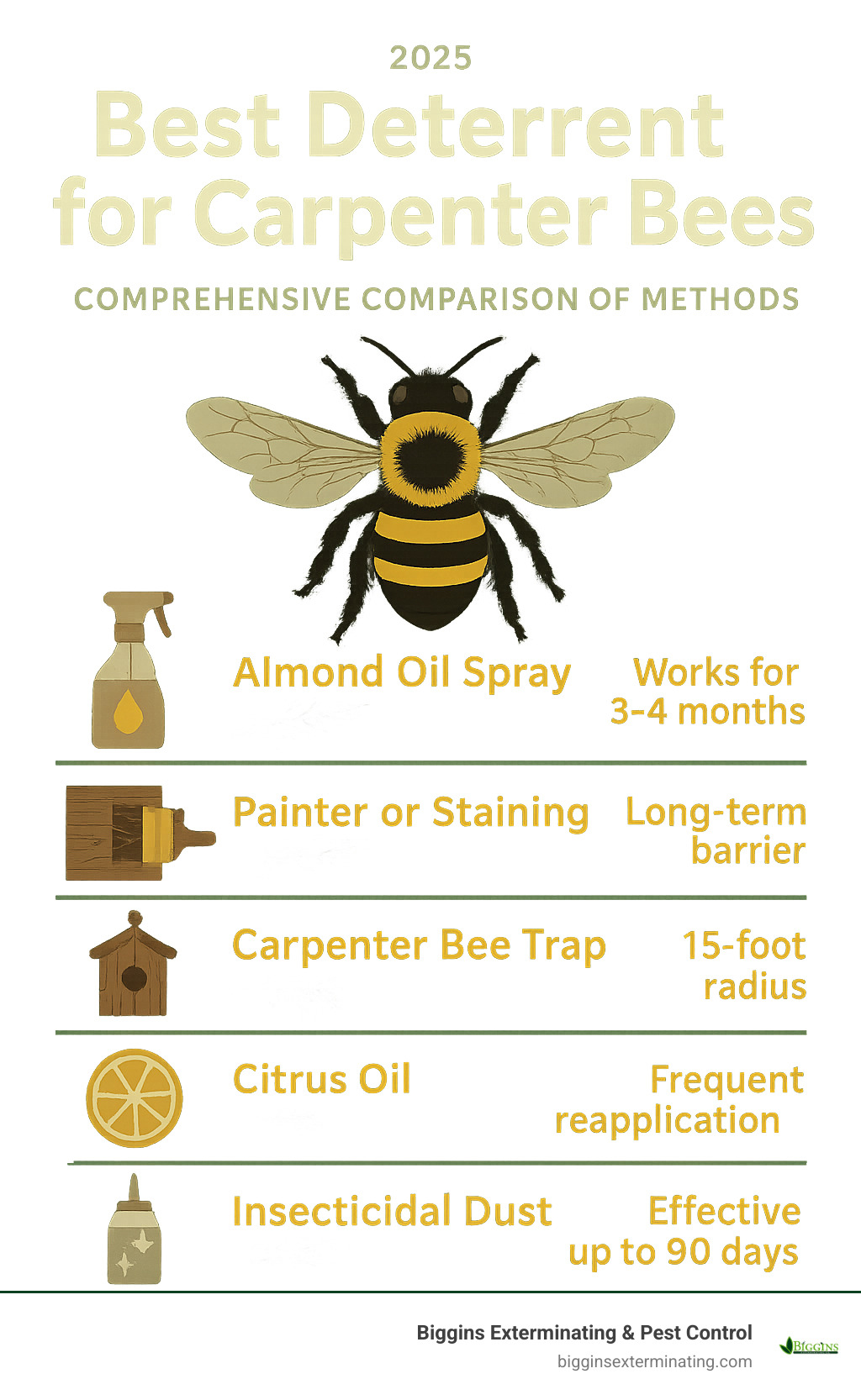
The best deterrent for carpenter bees includes a combination of natural repellents, physical barriers, and targeted treatments that protect your wood structures while preserving these important pollinators. Here are the top options:
Most Effective Deterrents:
- Almond oil spray – Works for 3-4 months when applied to wood surfaces
- Painting or staining wood – Creates a barrier carpenter bees avoid
- Carpenter bee traps – 15-foot working radius, chemical-free solution
- Citrus oil repellent – Natural deterrent that needs frequent reapplication
- Insecticidal dust – For severe infestations, effective up to 90 days
As Massachusetts homeowners have finded, carpenter bees can cause significant damage to wooden structures. These large, shiny-black bees bore perfectly round holes into untreated wood, creating galleries for their nests. While they’re excellent pollinators, their wood-boring habits can weaken decks, eaves, and outdoor furniture over time.
The good news? Prevention is much easier than removal. Natural deterrents like almond oil and citrus sprays work well for light activity, while traps offer a chemical-free solution for active infestations. For severe problems, targeted insecticide applications provide the most reliable results.
Timing matters. Spring and early summer are when carpenter bees are most active, making this the ideal time to implement deterrent strategies. Fall preparation – sealing holes and treating wood surfaces – prevents next year’s infestations.
I’m Stephen Biggins, and I’ve been helping Massachusetts homeowners protect their properties from carpenter bees for over 40 years at Biggins Exterminating Co. Through decades of hands-on experience, I’ve learned that the best deterrent for carpenter bees combines multiple approaches custom to your specific situation and infestation level.
Best deterrent for carpenter bees word guide:
Understanding Carpenter Bees and the Damage They Cause
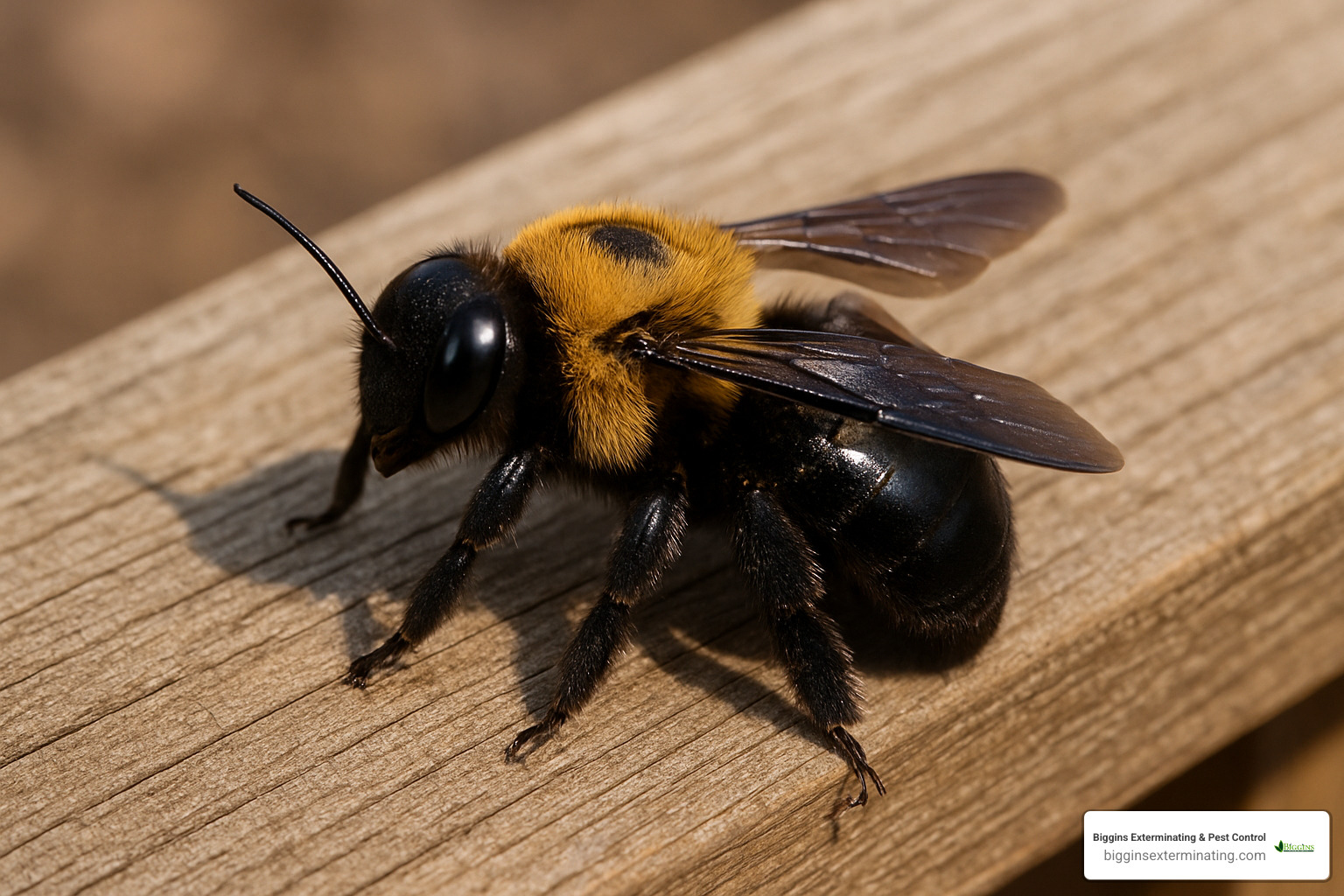
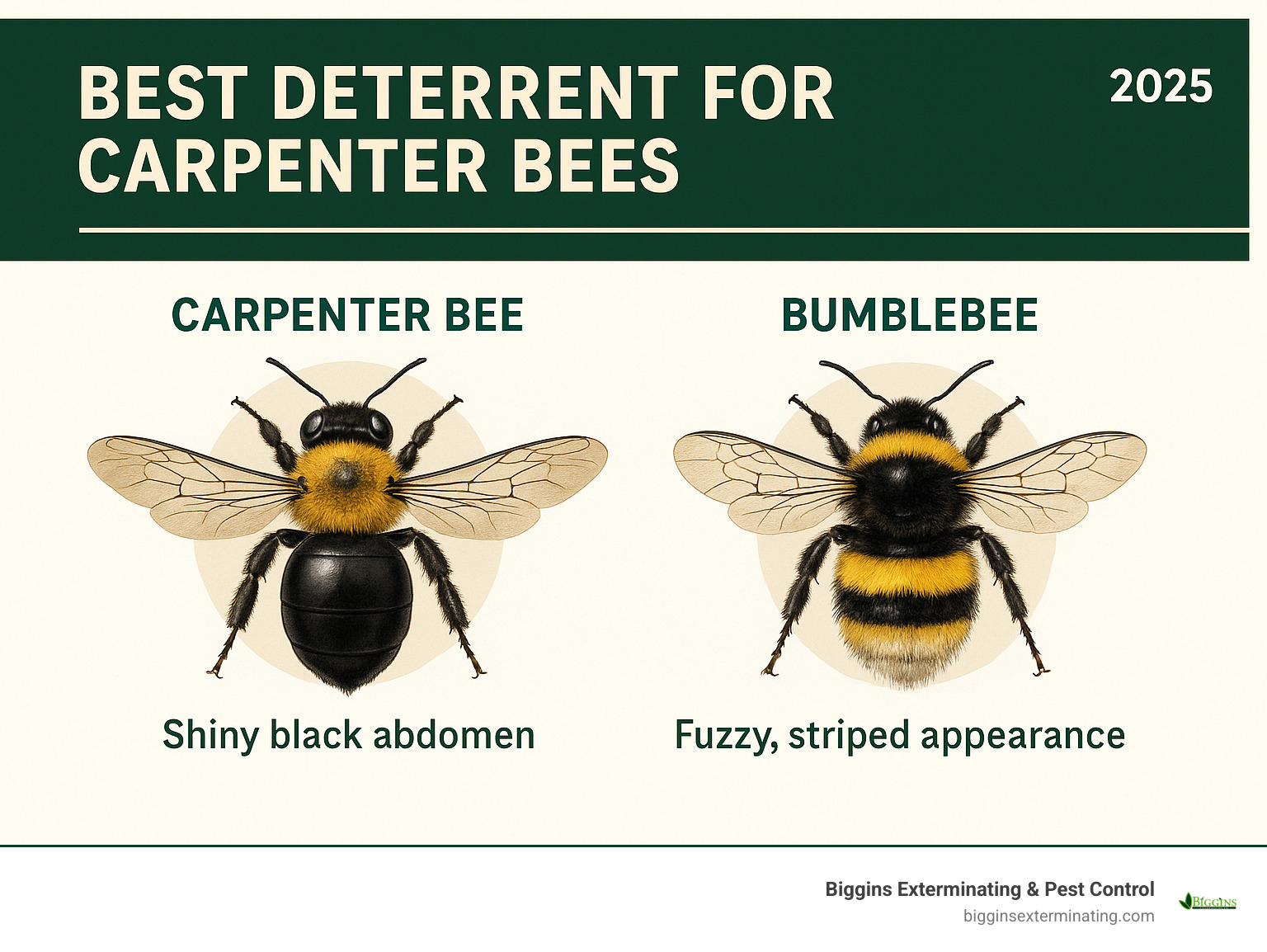
If you’ve ever seen a large, shiny black bee hovering around your deck or porch, you’ve likely encountered a carpenter bee. These impressive insects measure about 3/4 to 1 inch long and are quite different from their fuzzy bumblebee cousins. Carpenter bees have smooth, glossy black abdomens that almost look polished, while bumblebees are covered in soft, fuzzy hair with yellow and black stripes.
Unlike honeybees or bumblebees that live in busy colonies, carpenter bees are solitary bees that prefer to go it alone. Each female creates her own individual nest by boring into wood – and that’s where homeowners start to notice problems.
The telltale sign of carpenter bee activity is those perfectly round holes they drill into wooden surfaces. These holes are remarkably uniform, typically measuring 1/2 to 3/4 inch across and looking like someone used a drill bit. But here’s what many homeowners don’t realize: that hole is just the entrance to a much longer tunnel system that can extend 4-6 inches deep into your wood.
You’ll often spot sawdust piles (called frass) scattered beneath these holes, along with yellowish-brown staining from the bees’ waste. During spring and early summer, you might even hear chewing sounds coming from inside the wood as these industrious insects expand their galleries.
Don’t be alarmed if you see male bees acting aggressively around nesting sites – they’re all show and no sting. Male carpenter bees can’t actually sting you, though they certainly try to look intimidating! Female carpenter bees can sting, but they’re generally gentle and only sting when directly handled or trapped.
The real concern isn’t getting stung – it’s the structural damage potential these wood-boring insects create over time. While a few holes won’t bring down your house, repeated infestations can seriously weaken wooden structures. Each generation of carpenter bees often returns to expand existing galleries, creating an ever-growing network of tunnels.
Here’s an added frustration: those holes also attract woodpeckers who know there are tasty carpenter bee larvae inside. These birds can cause even more damage to your home’s exterior as they peck away trying to reach the insects.
What Attracts Carpenter Bees to Your Property?
Carpenter bees are surprisingly picky about their real estate choices. They’re particularly drawn to untreated wood and weathered wood that’s been softened by sun and rain. Softwoods like pine, cedar, and redwood are their absolute favorites because they’re easier to excavate than hardwoods.
Around your home, carpenter bees typically target eaves, fascia boards, decks, and porches – basically any exposed wooden surfaces with southern exposure. They also love boring into outdoor furniture, especially if it’s made from untreated softwood.
Once carpenter bees find a good spot, they often return year after year to old nests, expanding and reusing the same galleries. This is why finding the best deterrent for carpenter bees becomes so important – you want to break this cycle before it gets established.
Interestingly, adult carpenter bees also need flower nectar to survive, so properties with abundant flowering plants tend to attract more of these pollinators. While we appreciate their role in pollination, we’d prefer they didn’t set up housekeeping in our wooden structures!
Are Carpenter Bees Dangerous?
The good news is that carpenter bees pose very little direct danger to humans. Male bees cannot sting at all – they’re essentially harmless despite their intimidating hover-and-dive behavior around nesting sites. Female bees can sting, but they’re remarkably docile and stinging is rare unless you’re directly handling them or they feel trapped.
The main threat carpenter bees pose is to your home’s structural integrity. While a few holes won’t compromise your house, extensive tunneling over multiple seasons can weaken support beams, deck railings, and other wooden structures. Each generation can expand existing galleries, and with multiple generations per year, the damage adds up quickly.
For individuals with bee allergies, carpenter bee stings can trigger serious allergic reactions, though such encounters are uncommon given these bees’ gentle nature. If you’re dealing with any stinging insects around your home and need professional assessment, our Bee And Wasp Removal services can help you identify the species and determine the best course of action safely.
The bottom line? Carpenter bees are more of a property maintenance issue than a safety concern, but that doesn’t make them any less frustrating for homeowners trying to protect their wooden structures.
Your Guide to the Best Deterrent for Carpenter Bees
When it comes to protecting your home from carpenter bees, timing and strategy make all the difference. The best deterrent for carpenter bees isn’t just one magic solution – it’s about using an integrated pest management approach that matches your specific situation and respects these important pollinators.
Spring is your window of opportunity. From April through May, carpenter bees emerge from overwintering sites and begin their search for perfect nesting spots. This is when deterrent strategies work best, before they’ve already moved into your deck railings or eaves. But don’t overlook fall preparation either – sealing up empty galleries and treating wood surfaces in autumn prevents next year’s headaches.
Here’s something many homeowners don’t realize: carpenter bees are important buzz pollinators that help our gardens and ecosystems thrive. They use a special technique called “buzz pollination” that’s essential for crops like tomatoes and blueberries. That’s why I always recommend starting with deterrent methods that encourage these beneficial insects to nest elsewhere rather than eliminating them entirely.
Prevention beats removal every time. It’s much easier to discourage carpenter bees from choosing your property than to deal with an established infestation. Once they’ve created galleries in your wood, they’ll often return year after year, expanding those same tunnels and causing more damage.
The key is matching your approach to your situation. Light activity around your porch? Natural repellents might do the trick. Seeing sawdust piles under multiple holes? You’ll probably need traps or targeted treatments. Active infestation with structural concerns? That’s when chemical options become necessary.
Natural and Non-Chemical Deterrents
Natural deterrents are where I recommend most homeowners start, especially if you’re dealing with early-stage activity or want to protect pollinators. These methods work surprisingly well when applied correctly and consistently.
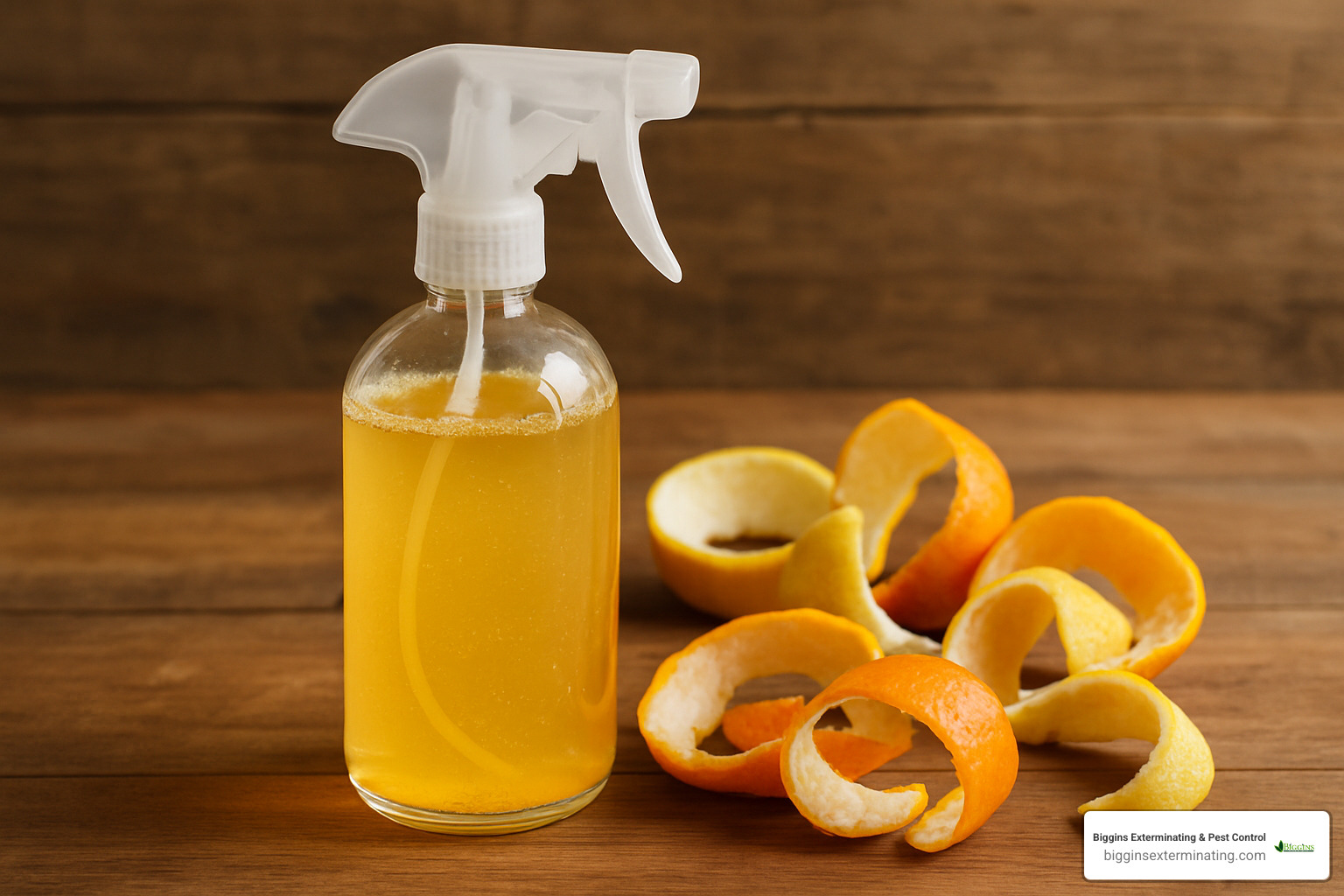
Citrus oil spray is probably the most popular DIY option, and for good reason. Carpenter bees absolutely hate the smell of citrus. Mix citrus essential oil with water and spray it on vulnerable wood surfaces – you’ll need to reapply every few days during peak season, but it’s completely safe for your family and pets.
Almond oil repellent is my top pick for natural deterrents. This stuff really works, providing protection for 3-4 months when applied properly. You can mix it with water or apply it directly to wood surfaces where you’ve seen carpenter bee activity. Many of my customers swear by it.
Essential oils offer another gentle approach. Lavender oil mixed with water (about 1 tablespoon per 8 ounces) creates a pleasant-smelling deterrent that works well around outdoor living spaces. Tea tree oil can be combined with lavender and citronella for improved effectiveness, while eucalyptus oil provides strong scent protection when used at 20-30 drops per ounce of water.
Here’s a trick that sounds crazy but actually works: loud sounds and vibrations. Carpenter bees are sensitive to noise and movement. Playing loud music near active nests for 2-3 days can encourage them to relocate. Wind chimes provide ongoing vibration that may deter nesting – plus they add a nice touch to your outdoor space.
Fake wasp nests take advantage of carpenter bees’ natural instinct to avoid areas with wasp activity. You can buy realistic-looking fake nests or use the old paper bag trick – just stuff a paper bag with newspaper, tie it shut, and hang it near vulnerable wood. Carpenter bees will think twice about nesting where they believe wasps are already established.
Are Carpenter Bee Traps an Effective Deterrent?
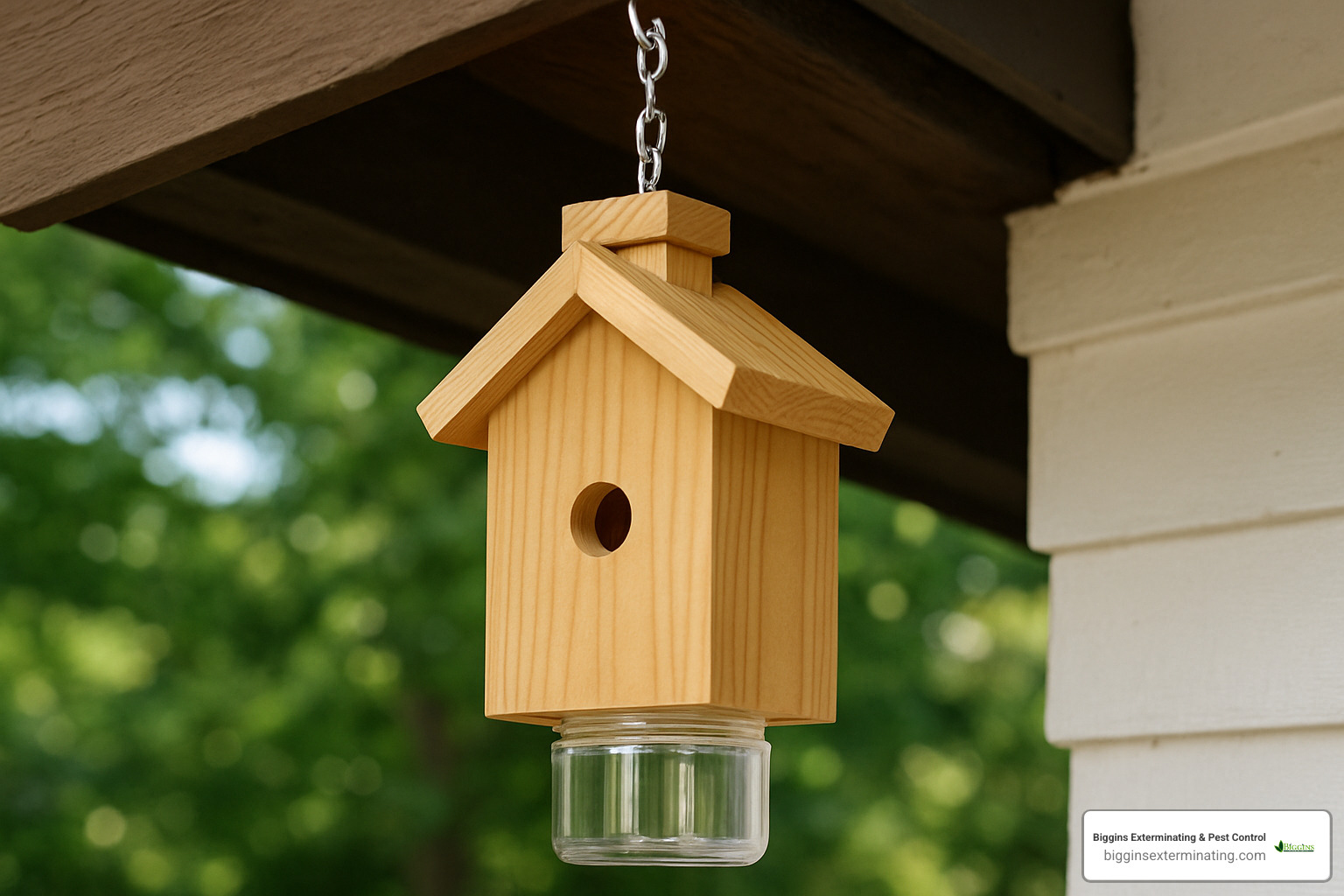
Carpenter bee traps are honestly one of the most effective non-chemical solutions I’ve seen. These clever devices work by mimicking natural nesting sites – they feature pre-drilled holes that look perfect to female carpenter bees searching for places to lay their eggs.
Here’s how the magic happens: once a bee enters the trap, she instinctively flies toward light, which leads her into a collection chamber where she becomes trapped. It’s a simple concept that works remarkably well.
Each trap covers approximately a 15-foot radius, making them most effective when placed near active nesting sites. I always tell customers to hang them on eaves and overhangs where carpenter bees naturally want to nest. The higher placement mimics their preferred nesting locations.
To maximize your trap’s effectiveness, plug existing holes first – this forces bees to look for new nesting sites and makes your trap more attractive. You can bait traps with dead carpenter bees or commercial attractants, though many work fine without bait. Empty the collection jar regularly to maintain effectiveness throughout the season.
Want to build your own? You’ll need a 4×4 inch wooden block about 7 inches long, a mason jar with lid, a 15/16 inch drill bit for the main hole, and a 3/4 inch drill bit for angled holes. Add some screws, mounting hardware, and a hook for hanging, and you’re in business.
The beauty of traps is that they let you release trapped bees away from your property if you want to relocate rather than eliminate them. It’s a great compromise for homeowners who want to protect their structures while being kind to these beneficial pollinators.
The Best Deterrent for Carpenter Bees: Chemical Options
Sometimes natural methods aren’t enough, and that’s when chemical deterrents become necessary. I always emphasize safety precautions first – you’ll need proper personal protective equipment (PPE) including gloves, protective eyewear, and respiratory protection when applying any insecticide.
Insecticidal dusts are incredibly effective because they work exactly how carpenter bees behave. Applied directly into carpenter bee holes, these products eliminate bees and larvae when they crawl through the dust entering or exiting their galleries. The residual effect means continued protection even after the initial application.
Aerosol sprays and foam insecticides expand to fill galleries completely, ensuring contact with bees and larvae hiding deep in the tunnels. Always apply these products in the evening when bees are inside their tunnels for maximum effectiveness.
Liquid insecticides like those with similar active ingredients to Dominion 2L provide excellent residual control, remaining effective for up to 90 days after application. Professional-grade products typically use application rates of 0.3 to 0.6 fl. oz per gallon of water to treat 1,000 square feet.
Borate treatments offer a different approach – these wood preservatives make wood less attractive to carpenter bees while providing long-term protection against various wood-boring insects. They’re particularly useful for preventing future infestations.
For severe infestations or when dealing with hard-to-reach areas, professional application ensures proper coverage and safety. You can learn more about professional-grade solutions on our Best Carpenter Bee Killer page.
How to Prevent and Treat a Carpenter Bee Infestation
When dealing with carpenter bees, it’s important to understand the difference between deterring future problems and treating an active infestation. Think of it like home maintenance – prevention is always easier and less expensive than repair.
Prevention focuses on making your property uninviting to carpenter bees before they start nesting. This means treating vulnerable wood surfaces, installing physical barriers, and maintaining protective finishes year-round. It’s like putting up a “No Vacancy” sign that carpenter bees actually respect.
Treatment, on the other hand, means you’re dealing with current residents who have already moved in and started remodeling your deck or eaves. This requires targeting active nests, eliminating existing bee populations, and sealing entry points to prevent the same galleries from being used again next season.
The most effective long-term strategy combines both approaches. You’ll treat current infestations while simultaneously implementing prevention measures to avoid future problems. For comprehensive protection that addresses both immediate concerns and long-term prevention, our Carpenter Bees Control services provide integrated solutions custom to your specific situation.
Treating and Sealing Existing Nests
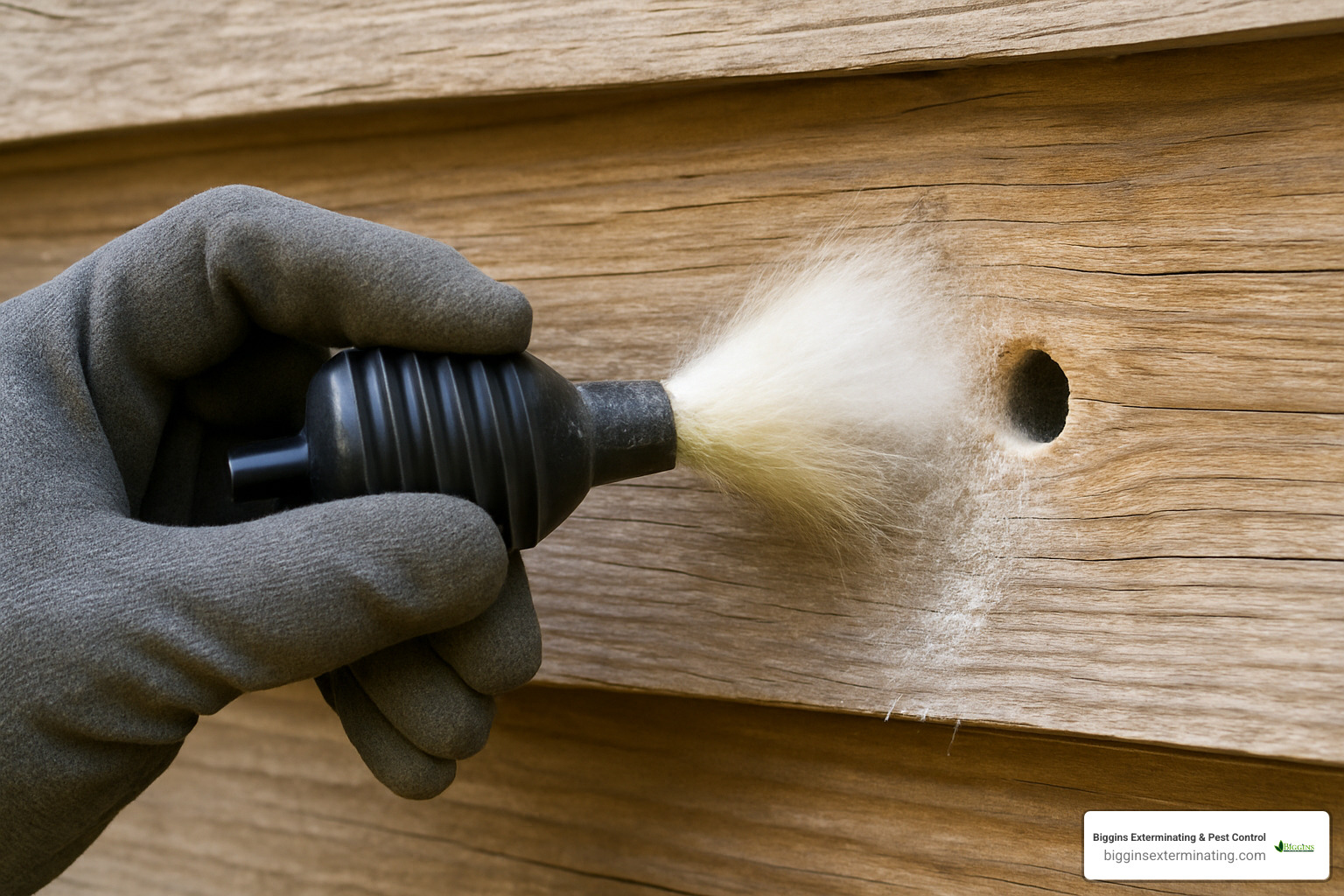
Treating active carpenter bee nests requires careful timing and the right technique. Evening application works best because carpenter bees are typically in their galleries and less likely to be flying around. It’s like catching them at home for dinner.
Start by applying insecticidal dust deep into each hole using a hand duster or squeeze bottle. The dust needs to penetrate the full length of the gallery to be effective. Follow up with foam insecticide for complete coverage – the foam expands to fill the entire tunnel system, ensuring contact with bees and larvae that might be hiding in side chambers.
Wait 24-48 hours before sealing to ensure all bees have been eliminated. This waiting period is crucial – seal too early, and you might trap live bees that will simply tunnel out elsewhere, creating new holes and more damage.
When it’s time to seal, choose the right material for your situation. Wood putty works best for painted surfaces and can be sanded smooth once dry. Steel wool creates an effective barrier that’s difficult for future bees to remove, while caulk handles cracks and smaller holes effectively. For a more natural look on exposed wood, wooden dowels can be cut to fit and glued in place.
Proper sealing serves two purposes: it prevents gallery reuse by next year’s bees and restores structural strength to the wood. Those perfectly round holes aren’t just cosmetic problems – they’re entry points to tunnel systems that can weaken your home’s wooden components over time.
The Best Deterrent for Carpenter Bees: Long-Term Prevention
Long-term prevention is hands-down the most cost-effective approach to carpenter bee management. Once you understand what works and commit to maintaining these protective measures, you can keep carpenter bees away for years with minimal ongoing effort.
Painting and staining wood surfaces ranks among the most effective preventative measures. Carpenter bees strongly prefer weathered, untreated wood, so maintaining a fresh finish creates a barrier they typically avoid. Plan to refresh paint or stain annually on the most vulnerable areas like eaves and deck railings.
Using hardwoods instead of softwoods provides the ultimate long-term solution. When building new structures or replacing damaged wood, choose dense hardwoods like oak, cherry, or ash. These materials are naturally resistant to carpenter bee damage because they’re too hard for the bees to excavate easily. While the upfront cost is higher, hardwoods can provide permanent protection.
Carpenter bee traps offer ongoing protection with minimal maintenance. Position them strategically around eaves and overhangs, and empty them regularly throughout the season. They’re particularly effective when combined with other prevention methods.
For comprehensive protection, consider structural modifications like installing vinyl siding over vulnerable wood areas or adding metal flashing to exposed edges. Sealing cracks and gaps in existing wood eliminates the imperfections that attract carpenter bees in the first place.
The best deterrent for carpenter bees combines multiple prevention strategies based on your specific situation, budget, and maintenance preferences. High-effort solutions like regular painting require ongoing commitment but offer excellent protection at reasonable cost. Low-maintenance options like hardwood construction or vinyl siding cost more initially but provide long-term peace of mind.
Frequently Asked Questions about Carpenter Bee Deterrents
When is the best time of year to implement deterrence strategies?
Timing is everything when it comes to carpenter bee control. I’ve learned over four decades that working with their natural cycle makes all the difference between success and frustration.
Early spring is your golden opportunity. As soon as temperatures consistently reach 60°F (typically March through April in Massachusetts), carpenter bees emerge from their overwintering sites looking for places to nest. This is when prevention strategies work best – before they’ve chosen your deck as their new home.
During the mating season in late spring and early summer, carpenter bees are at their most active. You’ll hear that distinctive buzzing around your eaves and see the telltale sawdust piles forming. If you missed the prevention window, don’t panic – this is still an effective time to implement the best deterrent for carpenter bees through traps and targeted treatments.
Late summer and early fall offer another excellent window for preparation. New adult bees are developing but haven’t established their overwintering sites yet. This is the perfect time for sealing empty galleries and applying protective treatments to wood surfaces.
The quiet winter months are ideal for major preventive work like painting, staining, or installing protective barriers. While the bees are dormant, you can address all those vulnerable spots without interference.
How can I protect beneficial pollinators while deterring carpenter bees?
This question comes up frequently, and I appreciate homeowners who want to be responsible about protecting our ecosystem. Carpenter bees are indeed important pollinators – they’re particularly effective at “buzz pollination,” where they grab flowers and vibrate their flight muscles to shake pollen loose.
The good news is that you can protect your home while being bee-friendly. Prioritize non-lethal methods whenever possible. Traps, for instance, allow you to relocate captured bees away from your property rather than eliminating them entirely.
Targeted application is key to protecting beneficial insects. Focus your deterrent efforts on structural wood where damage occurs, not on areas where bees are simply foraging for nectar. Avoid spraying open flowers or garden areas where carpenter bees and other pollinators feed.
When using traps, place them away from flowering plants and gardens. This draws carpenter bees away from both your wooden structures and your beneficial garden areas. It’s a win-win approach that acknowledges their role as natural enemies of garden pests while protecting your property.
Do carpenter bees actually eat wood?
Here’s a common misconception that surprises many homeowners: carpenter bees don’t actually eat wood at all. They’re excavating tunnels for nesting, not dining on your deck.
Think of carpenter bees as tiny construction workers rather than termites. They use their powerful mandibles to bore perfectly round holes, pushing out wood shavings (called frass) as they create nesting galleries. These tunnels can extend 4-6 inches deep, creating chambers where females lay their eggs.
Adult carpenter bees are actually vegetarians with a sweet tooth. They feed on flower nectar and collect pollen, which they combine into “bee bread” – a protein-rich mixture that serves as food for their developing larvae.
Understanding this behavior helps explain why certain deterrents work better than others. Since carpenter bees aren’t eating wood, treatments that make wood taste bad won’t be effective. Instead, the best deterrent for carpenter bees focuses on making wood harder to excavate or creating repellent scents that discourage nesting attempts.
This distinction also explains why carpenter bees prefer soft, weathered wood over painted or treated surfaces – it’s simply easier to excavate, not more appetizing.
Secure Your Home from Carpenter Bees for Good
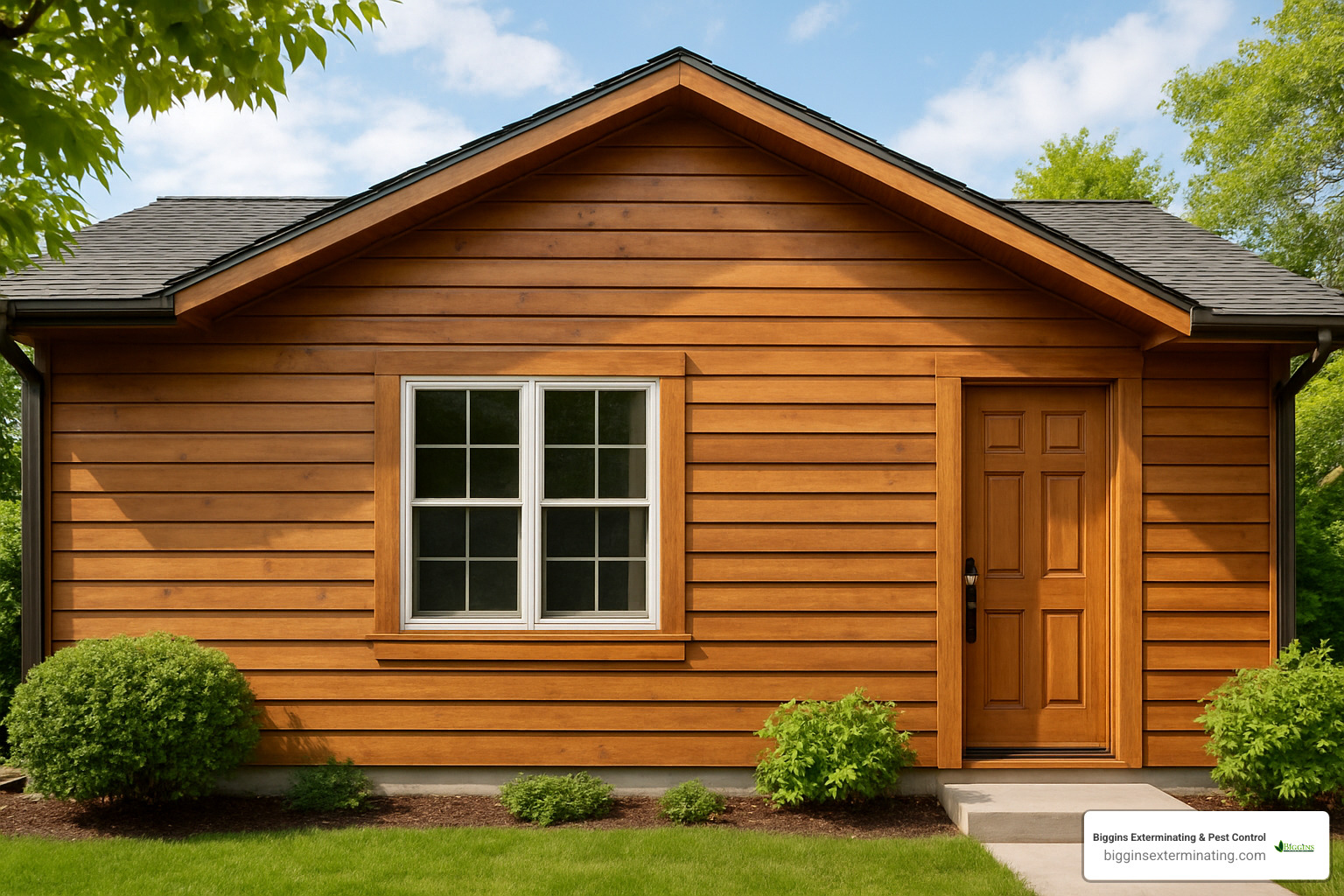
After four decades of helping Massachusetts homeowners protect their properties, I’ve learned that the best deterrent for carpenter bees isn’t about finding one magic solution. It’s about creating a comprehensive defense system that keeps these wood-boring insects away from your home year after year.
Think of carpenter bee prevention like maintaining your car – regular attention prevents major problems down the road. A well-maintained home with painted wood surfaces, strategic trap placement, and seasonal monitoring rarely develops serious carpenter bee issues.
The truth is, prevention beats treatment every single time. It’s much easier to apply almond oil spray to your deck railings each spring than to deal with dozens of perfectly round holes and weakened wood later. When you combine natural deterrents like citrus oils with physical barriers like fresh paint, you create an environment that carpenter bees simply don’t find appealing.
Timing makes all the difference. Spring preparation when carpenter bees emerge from winter hiding spots gives you the upper hand. Fall sealing of any existing holes prevents next year’s problems before they start. This seasonal approach, combined with ongoing monitoring, keeps your home protected through every carpenter bee season.
For homeowners in Andover, Bedford, Billerica, Burlington, Lexington, North Reading, Tewksbury, Wilmington, and Woburn, the integrated approach works especially well because our Massachusetts climate gives you clear seasonal windows for different deterrent strategies.
But here’s what I’ve learned after treating thousands of homes: persistent or large-scale infestations need professional expertise. When carpenter bees have already established multiple galleries or when they’re targeting hard-to-reach areas like high eaves, DIY methods often fall short. Professional treatment ensures complete elimination while using the safest, most effective products available.
At Biggins Exterminating & Pest Control, we’ve developed proven strategies that protect your property while respecting these important pollinators. Our approach combines the best deterrent methods with targeted treatment when needed, giving you long-term peace of mind.
Don’t let carpenter bees turn your beautiful wooden deck or porch into Swiss cheese. Whether you’re dealing with the first signs of activity or facing a full-scale infestation, the right combination of deterrent methods can restore your home’s protection and your peace of mind.
For professional Carpenter Bees Pest Control, contact us today!
