
Understanding the Costs of Hornet Nest Removal
When you find a hornet nest lurking on your property, your first thought might be “how much is this going to cost me?” It’s a fair question, and one I hear almost daily from worried homeowners across Massachusetts.
The average cost to remove hornets nest typically falls between $300 and $700, with most homeowners paying around $375 nationwide. But here’s the reality – pricing can vary dramatically based on your specific situation. A small, easily accessible nest might cost as little as $100, while a large infestation hidden in your attic or walls could run $1,300 or more.
Let me break this down for you in a way that makes sense:
| Hornet Nest Removal Cost Breakdown | Price Range |
|---|---|
| National Average | $375 |
| Typical Range | $300-$700 |
| Small Nest (10-50 hornets) | $100-$250 |
| Medium Nest (50-200 hornets) | $250-$500 |
| Large Nest (200+ hornets) | $500-$1,300 |
| Bald-faced Hornet Removal | $625-$750 |
| Yellow Jacket Removal | $500-$750 |
Finding hornets around your home isn’t just annoying – it can be downright dangerous. These aren’t your friendly neighborhood pollinators. Hornets are territorial and aggressive, building colonies that can house anywhere from 100 to 700 stinging insects. Each one is capable of delivering multiple painful stings that can trigger serious allergic reactions in sensitive individuals.
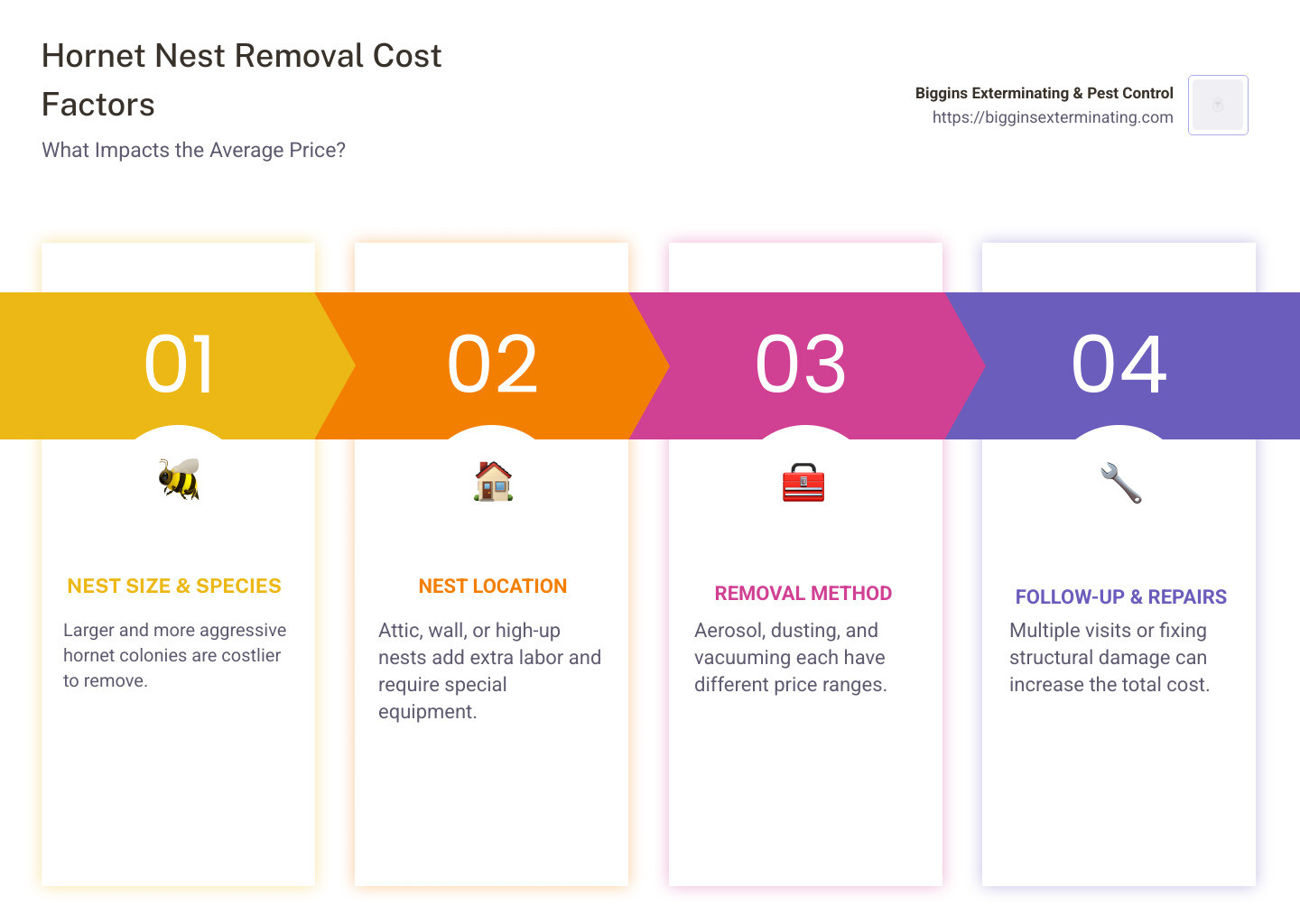
The price you’ll pay depends on several key factors. First, the species matters – bald-faced hornets typically cost more to remove than standard hornets. Next, the size of the colony significantly impacts price (more hornets = more risk = higher cost). Location is another major factor – a nest tucked away in your attic will cost more than one hanging from a tree branch. Accessibility plays a huge role too – the harder it is to reach safely, the more you’ll pay.
I’m Stephen Biggins, and I’ve been removing hornet nests throughout Massachusetts since 1982. After four decades in this business, I’ve seen it all – from tiny starter nests to massive colonies that have homeowners practically barricaded inside. What I’ve learned is that professional removal isn’t just about killing insects – it’s about providing peace of mind through a comprehensive service that includes careful inspection, safe treatment, complete nest removal, and proper disposal.
These prices reflect industry averages based on internet data and not specific Biggins Exterminating service costs. For an accurate quote custom to your specific situation, it’s always best to get a professional assessment.
Looking for more detailed information about wasp and hornet removal costs? Check out these helpful resources:
– average cost of exterminator for wasps
– remove wasp nest from soffit
Hornet Dangers & Nest Detection
When it comes to stinging insects around your Massachusetts home, hornets rank among the most aggressive neighbors you never wanted. Unlike honeybees that sacrifice themselves with a single sting, hornets can repeatedly jab you with their venom-loaded stingers. A typical nest houses between 100 and 700 insects—that’s potentially hundreds of painful stings waiting to happen if you accidentally disturb their home.
“When dealing with hornet nests near your home, the safety of your family, pets, and property becomes a top priority,” explains our lead technician Peter. “We’ve seen cases where homeowners have been hospitalized after disturbing a nest they didn’t even know was there.”
The craftsmanship of hornet nests is actually quite remarkable, despite the danger they pose. These insects are nature’s papermakers—they chew wood fibers and mix them with saliva to create a paper-like material. The result? Those distinctive gray, brown, or tan papery balloons you might spot hanging from trees, tucked under eaves, or hidden inside your attic or wall voids. Inside this protective shell lies a series of combs where the colony raises its young.
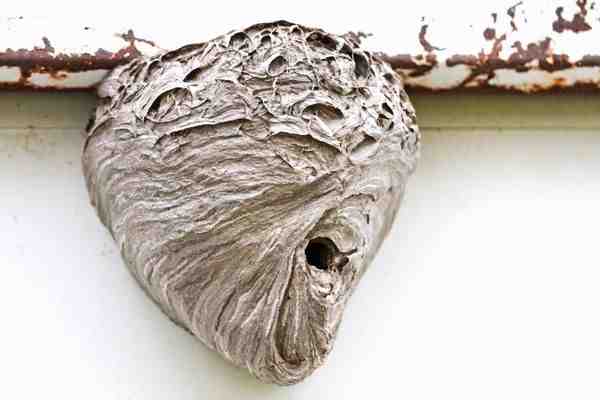
Here in Massachusetts, our team regularly encounters several hornet varieties:
- European Hornets: These hefty insects (1-1.5 inches) sport brown and yellow markings and aren’t shy about making themselves at home in tree hollows or building voids.
- Bald-faced Hornets: Despite their name, these black insects with distinctive white facial markings are actually a type of yellow jacket. Their aerial nests can grow to basketball size by late summer.
- Yellow Jackets: Wearing the classic black and yellow warning colors, these ground-nesters are notoriously aggressive defenders of their territory—especially when you’re trying to enjoy a late-summer picnic.
- Paper Wasps: With slender bodies and dangling legs, these insects build open-comb nests that resemble small umbrellas. While less aggressive than other species, they’ll still defend their home if threatened.
Signs You Have a Problem
Catching a hornet problem early can save you both money and pain. I’ve helped hundreds of Massachusetts homeowners identify infestations before they became major problems—here’s what to watch for:
Look for consistent flight paths where hornets travel in regular patterns to and from a specific area of your house or yard. This aerial highway often leads directly to their nest. You might also notice sawdust-like debris under eaves or siding—this fine wood material is a byproduct of hornets chewing to build their paper nests.
The most obvious sign is visible papery materials forming nest structures in sheltered areas. Less visible but equally telling is a distinct droning sound at night, especially coming from walls or attics. An increase in hornet activity around your garbage cans is another red flag—these insects love sweet foods and proteins.
Pay special attention if you spot hornets entering and exiting from a single hole, particularly in your home’s exterior. This behavior typically indicates a nest inside a wall cavity or other enclosed space.
A Wilmington homeowner recently told me: “I noticed hornets constantly flying in and out of a tiny gap in my attic vent. By the time I called Biggins, the colony had grown to over 300 hornets, and the average cost to remove hornets nest was nearly double what it would have been a month earlier.”
Why Fast Action Matters
When it comes to hornets, procrastination can sting you in more ways than one. Delaying removal creates several serious risks:
The health dangers can’t be overstated. Multiple stings can cause severe reactions even in people who aren’t typically allergic to insect venom. For the estimated 5-7% of the population with actual venom allergies, even a single sting could trigger a life-threatening emergency.
Beyond the physical danger, hornets can inflict surprising structural damage. They’ll happily chew through your drywall, insulation, and even wood to expand their growing colony. Many homeowners are shocked to find that their insurance policies typically don’t cover damage caused by pests—leaving you with unexpected repair bills.
Perhaps most concerning is how quickly the problem multiplies. A small spring nest of just 50 hornets can explode to 700+ buzzing residents by late summer. This colony growth directly impacts the average cost to remove hornets nest, as larger infestations require more extensive treatment and safety precautions.
In our 40+ years serving communities like Wilmington, Woburn, and Burlington, we’ve consistently found that early intervention typically reduces removal costs by 30-50%. Not only does this save you money, but it also spares you the anxiety of sharing your home with increasingly territorial insects.
When it comes to hornets, the old saying really is true: an ounce of prevention is worth a pound of cure—or in this case, several hundred dollars in your pocket.
Average Cost to Remove Hornets Nest in 2025
When it comes to dealing with those unwanted, buzzing houseguests, knowing what to budget for can ease some of the stress. In 2025, the national average cost to professionally remove a hornet nest sits at approximately $375. Most Massachusetts homeowners will pay between $300 and $700, though your specific situation might fall outside this range.
What’s really important to understand is that hornet removal isn’t a one-price-fits-all service. You might pay as little as $100 for a small, easily accessible outdoor nest that’s caught early in the season. On the flip side, that price can climb to $1,300 or even higher when dealing with large infestations tucked away in hard-to-reach spots like attics or inside wall voids.

Here’s what you might expect to pay for professional hornet removal in 2025:
| Nest Size | Average Cost | Typical Range |
|---|---|---|
| Small (10-50 hornets) | $200 | $100-$300 |
| Medium (50-200 hornets) | $500 | $350-$650 |
| Large (200+ hornets) | $900 | $650-$1,300 |
| Extreme cases | $1,500+ | $1,300-$2,000+ |
Please note: These figures represent national averages based on industry data and not specific pricing for Biggins Exterminating services. Our actual pricing may vary based on your specific situation.
If you’re comparing with last year’s prices, you’ll notice a slight bump up from 2024’s national average of around $350. This 7% increase reflects rising labor costs, investments in improved safety equipment, and the industry’s shift toward more eco-friendly treatment options that are often more expensive but better for your family and the environment.
National vs. Regional Prices for the average cost to remove hornets nest
Living in Massachusetts comes with its perks – beautiful fall foliage, world-class education, and… slightly higher pest control costs. If you’re in our service area (Andover, Bedford, Billerica, and surrounding communities), you can expect to pay about 10-15% above the national average.
Why the regional price difference? A few factors come into play:
The Northeast generally has higher labor costs than many other regions. Massachusetts enforces stricter pest control regulations (which is good for your safety!). Our shorter warm season means hornet activity is concentrated, creating seasonal demand spikes. And our charming New England homes often feature more complex building structures that require specialized equipment and approaches.
Throughout our Massachusetts service area, the average cost to remove hornets nest typically ranges from $350 to $800, though specific locations can influence pricing:
Urban settings like Lexington and Burlington might see slightly higher prices due to parking challenges and complex access issues. As one of our Burlington customers joked, “I’m paying extra for the hornets with the fancy ZIP code!”
Suburban homes in Wilmington and North Reading generally align with our regional averages, while more rural properties might include a travel fee but often feature more accessible nests.
“I called around for quotes when I found a hornet nest in my detached garage,” shared Tom from Wilmington. “Prices ranged from $425 to $900 for the exact same nest. What I learned was that the difference came down to experience, guarantees, and whether they included preventative treatment to keep the pests from coming back.”
Cost by Hornet Type & Nest Size
Not all hornets are created equal – at least when it comes to removal costs. Different species build distinctive nests that require varying approaches:
Standard Hornets typically run $300-$475 to remove. They build their paper nests in trees, shrubs, and under eaves. While they’ll defend their home if threatened, they’re only moderately aggressive compared to their cousins. Standard removal methods usually suffice.
Bald-faced Hornets command higher prices, around $625-$750. These striking black and white insects create large aerial nests, often positioned high in trees or building overhangs. They’re highly aggressive defenders, requiring specialized lift equipment and creating larger treatment zones – all factors that increase removal costs.
Yellow Jackets generally cost $500-$750 to remove. These ground-nesters frequently build inside wall voids or underground, making them particularly challenging. They’re extremely aggressive and will actually chase perceived threats (unlike most other stinging insects that just want you to go away). Removal might require excavation or opening walls, and often demands multiple treatment approaches.
The size of the colony dramatically impacts what you’ll pay:
A small colony of 10-50 hornets might only set you back $100-$250, while a medium colony of 50-200 insects typically costs $250-$500. But when you’re dealing with a large colony of 200-700+ hornets, prices climb quickly to $500-$1,300 or even higher.
After more than four decades of removing hornet nests throughout Massachusetts, we’ve consistently found that timing matters. Early season removal (May-June) typically costs 30-40% less than peak season (July-September) when nests have reached their maximum size. This is one situation where procrastination literally costs you money!
7 Factors That Influence Hornet Nest Removal Pricing
Ever wonder why your neighbor paid $200 for hornet removal while your quote came in at $700? When it comes to the average cost to remove hornets nest, several key factors can dramatically impact the final price tag. Let me walk you through the seven most important elements that determine what you’ll pay.
1. Nest Location
Where those pesky hornets decide to build their home might be the single biggest factor affecting your bill. A nest tucked under an easily accessible eave is a whole different ballgame than one hidden inside your attic.
Attic nests typically run $325-$450 because technicians need indoor access and must take special precautions to protect your living spaces. Wall void nests are even pricier at $350-$875, since they might require opening walls and subsequent repairs. Chimney nests ($475-$600) demand specialized equipment, while underground nests ($400-$700) often need excavation work.
The best-case scenario? An exterior nest at eye level, which might cost just $275-$300. But if those hornets built their home in a tall tree, expect to pay $400-$800 as lift equipment or extension tools enter the picture.
“I remember a job in Tewksbury where the nest was wedged between a chimney and roof valley,” shares our technician Mike. “What should have been a standard removal turned into a three-hour project requiring roof harnesses and specialized equipment. The location alone doubled the cost.”
2. Size & Population
Size matters when it comes to hornet nests. A small, basketball-sized nest with 50 hornets might be a quick job requiring minimal pesticide. But those massive nests harboring 500+ angry hornets? They demand extensive treatment, more product, longer service time, and often multiple visits.
Just last summer, we removed a yellow jacket nest from a Woburn home that housed over 600 insects. The colony had grown so large it required three separate treatments to fully eliminate—each visit adding to the final cost.
3. Species Aggression
Not all hornets are created equal when it comes to temperament. More aggressive species require additional safety measures, which translates to higher costs:
Paper wasps tend to be the least aggressive, making them simpler and safer to treat. European hornets fall in the middle with moderate aggression. But bald-faced hornets? These highly territorial insects demand extensive safety protocols. And at the extreme end, yellow jackets—particularly ground-nesters—require comprehensive protection due to their notorious aggression and tendency to chase perceived threats for considerable distances.
4. Accessibility & Height
That beautiful high cathedral ceiling you love? It becomes a costly complication when hornets build a nest in its corner. Height and accessibility dramatically impact removal costs:
Ground-level nests require basic equipment and minimal setup time. Nests 8-15 feet high need extension tools but remain relatively straightforward. When you get to 15-25 feet, specialized equipment or ladders come into play. And anything above 25 feet often requires lift equipment, which can add $100-$300 to your bill.
Many companies, including ours, charge an additional $25-$100 per 10-foot height increment above 10 feet. This reflects both the additional equipment needed and the increased safety risks.
5. Removal Method
Different situations call for different treatment approaches—each with its own price point:
Aerosol spraying starts around $125 and works well for exposed nests. Dusting techniques, starting at $200, excel for ground or cavity nests where powder can penetrate deep into nest structures. Vacuuming methods begin at $250 and are ideal for indoor or environmentally sensitive locations.
For environmentally conscious homeowners, we offer eco-friendly options that typically add 20-30% to standard treatment costs. These use botanical-based products that are less toxic but still effective.
6. Repair Needs
The removal itself might be just the beginning of your expenses. Post-treatment repairs can significantly impact the total project cost:
“The actual hornet removal cost $350,” shared our Burlington customer Janet, “but repairing the drywall and repainting afterward added another $600 to the project.”
Common repair costs include drywall work ($200-$500), insulation replacement ($150-$400), siding repair ($300-$700), and roof or eave repairs ($400-$900). When getting quotes, always ask whether these potential additional costs are included or might be extra.
7. Number of Visits
Most professional treatments include multiple components, each potentially affecting your final bill:
The initial inspection is often free or credited toward treatment. Then comes the primary treatment—the main service visit. Many companies include a follow-up visit in their package, while others charge separately ($75-$150). Severe infestations might require three or more visits, with each additional visit adding to the cost.
Other factors that might bump up your bill include travel fees (especially for remote locations), emergency service surcharges (typically 25-50% more for after-hours or weekend service), and seasonal pricing (peak season commands premium prices as demand soars).
For more information on selecting a qualified pest control service that balances cost with quality, the EPA provides helpful guidance worth reviewing before making your decision.
At Biggins, we’ve been removing hornet nests throughout Massachusetts for over 40 years, and we’re always happy to explain exactly what factors are influencing your specific quote. Our customers appreciate our transparency—we’ll never surprise you with hidden fees or unnecessary services.
Looking for quality hornet removal? Check out our High Quality Hornet and Wasp Removal services to learn more about our approach.
Comparing Removal Methods: Aerosol, Dusting, Vacuuming & More
Professional hornet nest removal employs several distinct methods, each with its own cost structure, application scenarios, and effectiveness levels. Understanding these differences can help you evaluate quotes and ensure you’re getting appropriate treatment for your specific situation.
Aerosol Treatment ($125+)
Best for: Exposed nests, exterior locations, initial knockdown
Process: Technicians use pressurized insecticide sprays, often with extending wands to maintain safe distance
Advantages: Quick-acting, relatively inexpensive, effective for visible nests
Limitations: May not penetrate deep nests, less effective for hidden colonies
“Aerosol treatments work well for those classic paper nests hanging from tree branches or under eaves,” explains our Biggins technician. “We can often eliminate 90% of the colony in a single treatment, though a follow-up is recommended to ensure complete eradication.”
Dusting ($200+)
Best for: Ground nests, wall voids, enclosed spaces
Process: Insecticidal dust is applied into nest openings where hornets track it throughout the colony
Advantages: Excellent penetration, long-lasting residual effect, reaches hidden areas
Limitations: Slower-acting, requires more technical application, higher material cost
A Tewksbury homeowner recounted: “After finding yellow jackets coming from under my deck, Biggins used a dusting technique. It took about 48 hours, but every single yellow jacket was eliminated without having to dismantle my deck.”
Vacuuming ($250+)
Best for: Indoor nests, sensitive environments, complete removal
Process: Specialized vacuum equipment physically removes hornets and nest material
Advantages: Immediate physical removal, reduced chemical use, comprehensive solution
Limitations: More labor-intensive, higher equipment costs, greater technician risk
Vacuuming is particularly valuable for nests inside living spaces or when chemical sensitivity is a concern. This method physically removes the insects and nest material rather than relying solely on pesticides.
Other Specialized Methods
- Eco-friendly foam treatments ($175+): Biodegradable foams that expand into nest cavities
- Live relocation ($300+): Rarely used for hornets but occasionally for honeybees
- Thermal fogging ($275+): Creates insecticide mist that penetrates deep into structures
- Combination approaches ($350+): Multiple techniques used for complex infestations
At Biggins Exterminating & Pest Control, our technicians are trained in all these methods, allowing us to select the most appropriate approach for each situation. You can learn more about our High Quality Hornet and Wasp Removal on our website.
Method Selection Checklist
When evaluating which removal method is appropriate (and worth the cost), consider:
- Species identification: Different hornets respond better to specific treatments
- Nest location: Indoor vs. outdoor dictates available options
- Accessibility: Hard-to-reach nests may require specialized approaches
- Environmental concerns: Proximity to water sources, gardens, or sensitive areas
- Structural considerations: Avoiding damage to your home
- Season and weather: Affects treatment effectiveness and hornet activity
- Follow-up requirements: Some methods require more monitoring
One North Reading customer noted: “I appreciated that Biggins didn’t just default to the most expensive option. They recommended dusting for my under-deck yellow jacket nest because it would be most effective, even though it was less expensive than the vacuum removal another company had quoted.”
DIY vs. Professional: True Cost & Safety Breakdown
When that hornets nest appears under your eave or in your garden shed, the temptation to grab a can of spray from the hardware store is strong. Your wallet might thank you initially—but is DIY really the money-saver it appears to be?
“I’ve seen too many homeowners in our emergency room after DIY gone wrong,” shares Dr. Martin, an ER physician in Woburn. “What started as a $15 can of spray turned into a $1,200 medical bill and a still-active hornets nest.”
Let’s break down what you’re really facing when comparing these options.
DIY Supplies vs. Pro Fees: a real-world breakdown of the average cost to remove hornets nest
The upfront costs of tackling a hornets nest yourself seem appealing:
A quality protective suit will run you about $100, while protective gloves add another $20-30. Don’t forget the face shield ($25-40)—hornets aim for the eyes and face when attacking. You’ll need 2-3 cans of hornet spray at about $15 each, and possibly extension poles ($30-50) to maintain a safe distance. If the nest is liftd, add a ladder rental at $40 per day.
All told, your DIY attempt will cost $205-$365 in supplies alone—not dramatically less than the lower end of average cost to remove hornets nest professionally ($300-$700).
What this calculation doesn’t capture, however, is the hidden costs. Most DIY attempts require multiple treatments, meaning repeat purchases. There’s also your time investment—typically 3-5 hours for research, preparation, execution, and cleanup. And the biggest wildcard? Medical expenses if things go wrong.
“I saved $300 avoiding professionals,” recalls Mike from Billerica, “but spent eight hours, got stung twice, and ultimately failed. The nest was still active when I finally called Biggins. In hindsight, I wasted both money and a weekend.”
Professional removal includes several valuable components beyond just killing hornets:
Proper identification of the exact species, determining the most effective treatment approach. Appropriate equipment including professional-grade products not available to consumers. Complete nest removal and disposal, preventing reinfestation. Perhaps most importantly, professionals carry liability insurance and typically offer warranties against recurrence.
When Biggins technicians remove a hornets nest, we’re not just selling a one-time spray—we’re providing peace of mind and a guaranteed solution.
Local Pros vs. National Chains
Not all professional services are created equal. Local companies like ours typically approach pest problems differently than national chains, affecting both price and results.
Local exterminators generally charge $300-$600 for standard hornet nest removal. Many include consultation fees ($75-$100) that apply toward treatment cost if you proceed. The advantage? Local companies typically offer more personalized service, flexible scheduling, and better follow-up. Most importantly, local pros understand regional hornet species and building styles unique to New England.
National chains often start with free inspections but ultimately charge $350-$700+ for similar services. Many push annual contracts or bundled services you might not need. While they have strong brand recognition, their standardized approaches sometimes miss nuances of local pest behaviors.
“The national company offered a free inspection but their removal quote was $200 higher than Biggins,” explains Jennifer from Reading. “Plus they kept pushing a quarterly service plan when all I needed was one nest removed.”
For Massachusetts homeowners, local expertise often translates to better value. At Biggins, we’ve been removing hornets nests from the unique architecture of New England homes for over 40 years. We understand the difference between treating a nest in a historic Lexington colonial versus a modern Burlington development.
For more information about finding qualified professionals in your area, check out our guide on hornet exterminators near me.
Saving Money & Preventing Future Infestations
Nobody loves spending money on pest control, but sometimes it’s necessary. While the average cost to remove hornets nest typically falls between $300-$700, I’ve gathered some insider tips to help you save money without sacrificing safety or effectiveness. Even better, I’ll share some proven prevention strategies that can help you avoid dealing with these stinging pests altogether.
Money-Saving Strategies for Current Infestations
When you find hornets have made themselves at home on your property, you don’t have to break the bank to reclaim your space. Many Massachusetts homeowners I’ve worked with have successfully reduced their costs with these approaches.
Do a bit of detective work before calling professionals by locating the nest yourself. This can significantly cut down inspection time, potentially saving you $50-75 in labor costs. As one of our technicians often says, “When a homeowner can point us directly to the problem, we can focus immediately on solutions rather than searching.”
Always get multiple quotes from reputable companies. I’ve seen price differences of $100-$200 for essentially identical services. Many customers are surprised by how much prices can vary for the same job.
Don’t be shy about asking for price matching. At Biggins, we often match legitimate competitors’ quotes for the same scope of work—many other reputable companies do this too, but you have to ask!
Removing obstacles around the nest area before technicians arrive can make a big difference. One Billerica customer cleared overgrown shrubs near their deck before our visit, making the yellow jacket nest much more accessible and saving about an hour of labor time.
Bundling services is another smart approach. If you’re already dealing with hornets, consider addressing other pest concerns simultaneously. Many of our customers save 10-20% by combining treatments rather than scheduling separate visits.
Scheduling during off-peak seasons can also reduce costs. A Tewksbury homeowner told me: “I saved nearly $150 by having Biggins treat a small hornet nest in early May rather than waiting until July when it would have grown much larger.”
Don’t forget to inquire about special discounts. Many pest control companies offer reduced rates for seniors, military personnel, first responders, or referrals. These discounts typically range from 5-15% off standard pricing.
Preventing Future Hornet Nests
The best way to save on hornet removal is to prevent nests from forming in the first place. After four decades of dealing with hornets throughout Massachusetts, I’ve found these prevention strategies to be most effective.
Eliminate food sources that attract hornets to your property. Keep garbage cans tightly sealed, clean up fallen fruit promptly, and store pet food indoors. One Burlington customer drastically reduced hornet activity simply by moving their outdoor dining area and being more diligent about cleaning up food scraps.
Seal potential entry points around your home, especially if you’ve had nests in wall voids or attics before. Pay special attention to gaps around windows, doors, foundations, and vents. A small investment in caulk and mesh screens can prevent much costlier removal services later.
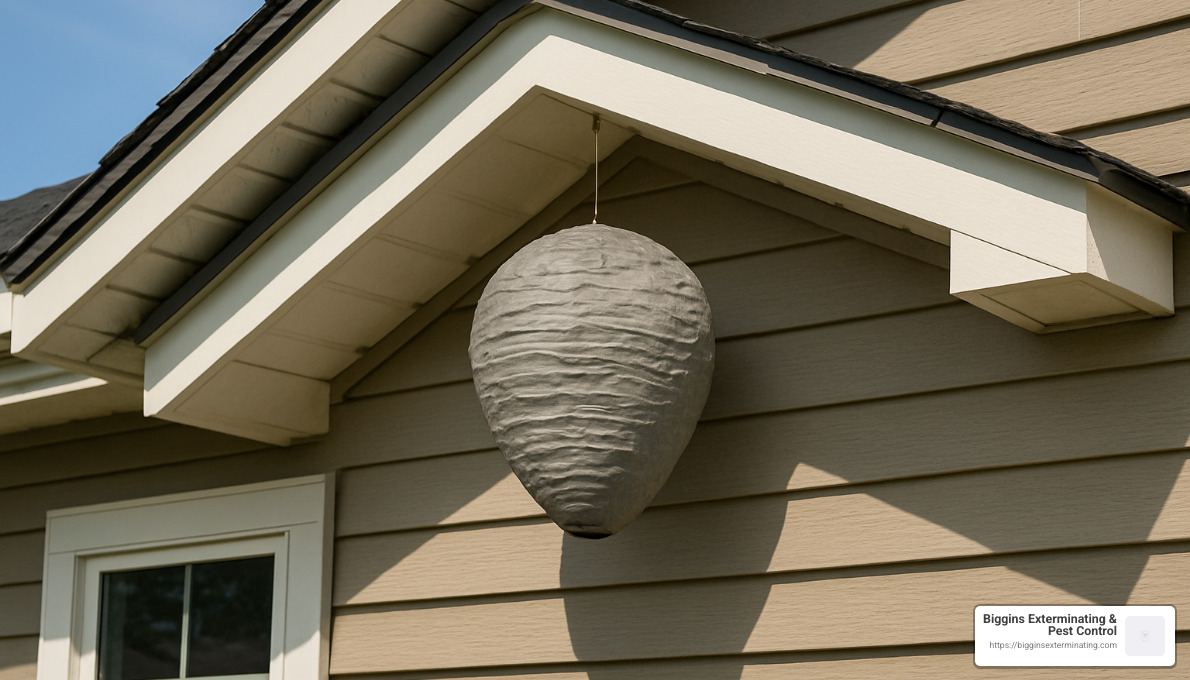
Use deterrents strategically around your property. Fake hornet nests ($10-$20 each) can be surprisingly effective, as hornets are territorial and avoid building near existing colonies. Natural repellents like peppermint oil, eucalyptus, or cinnamon applied around potential nesting areas can also discourage settlement.
“After having three hornet nests removed in two years, I hung fake nests under each eave,” shared a North Reading homeowner. “It’s been three years now without a single real nest forming.”
Reduce water sources that hornets need, especially during dry summer months. Fix leaking outdoor faucets, ensure proper drainage around foundations, and empty standing water in containers regularly.
Consider scheduling preventative treatments if you’ve had recurring problems. Professional perimeter treatments in early spring can create invisible barriers that deter nest formation. This approach is particularly valuable for properties that have had multiple infestations.
For more comprehensive guidance on protecting your home from hornets and other stinging insects, check out our detailed article on Protecting Your Home and Family.
Frequently Asked Questions about Hornet Nest Removal Costs
How many hornets are typically in a nest?
Most hornet nests contain between 100 and 700 insects, though this varies significantly by species and season. Early spring nests might have just 10-50 hornets, while late summer colonies can house more than 700 individuals. This growth pattern explains why early-season removal is usually less expensive.
Do hornets return to old nests after removal?
No, hornets and wasps don’t reuse nests from previous seasons. Each spring, new queens start fresh nests. However, if your property offered ideal conditions once, it likely will again. That’s why prevention is so important—the same favorable locations often attract new queens year after year.
Is free hornet nest removal ever available?
Unlike honeybee removal (which beekeepers sometimes perform for free), professional hornet removal almost always comes with a cost. Some municipal services might address nests on public property, but for private homes, paid professional services are typically necessary for safe, effective removal.
How long does hornet nest removal take?
The actual treatment usually takes 30-90 minutes depending on nest size and location. Complete elimination typically occurs within 24-72 hours, though some situations require follow-up visits 7-10 days later to ensure no secondary colonies have formed.
Will my homeowner’s insurance cover hornet nest removal?
Most standard homeowner’s policies don’t cover pest removal, including hornets. However, if hornets cause damage to your home’s structure, some policies may cover the repairs—but not the removal itself. It’s always worth checking your specific policy details.
What’s the difference between hornet and wasp removal costs?
Though the terms are often used interchangeably, true hornets (particularly European hornets) typically cost 10-20% more to remove than paper wasps due to their more aggressive nature and larger colony sizes. Yellow jackets, despite technically being wasps, are often priced similarly to hornets because of their aggressive defense behaviors.
When is the best time of year to remove a hornet nest?
Early intervention (May-June) is ideal as nests are smaller and colonies less established. However, nests can be effectively treated throughout the active season (April-October in Massachusetts). The earlier you address the problem, the lower the average cost to remove hornets nest will typically be.
Conclusion
Finding a hornet nest on your property can be alarming – those distinctive papery structures often signal danger, potential health risks, and the need for swift action. While the average cost to remove hornets nest typically falls between $300 and $700, this investment protects your family from painful stings and your property from potential damage.
Throughout this article, we’ve explored the many factors that influence hornet removal pricing – from nest location and size to species aggression and removal methods. As we’ve seen, costs can range from as little as $100 for a small, easily accessible nest to $1,300 or more for complex infestations requiring specialized equipment and multiple visits.
At Biggins Exterminating & Pest Control, we’ve been helping Massachusetts homeowners solve hornet problems since 1982. Our decades of experience in communities like Wilmington, Andover, Bedford, and surrounding areas have taught us that every hornet situation is unique – which is why we provide customized solutions rather than one-size-fits-all approaches.
“When a customer calls about hornets, they’re often feeling anxious and unsure,” says Stephen Biggins, our founder. “Our goal isn’t just removing the nest – it’s restoring peace of mind and helping them understand how to prevent future problems.”
Unlike many pest control companies that push annual contracts or bundled services, we believe our work should earn your trust naturally. That’s why we offer straightforward pricing, detailed explanations of our methods, and a satisfaction guarantee on all our hornet removal services.
Early intervention not only reduces the risk of painful stings but typically results in significantly lower removal costs. A small spring nest that might cost $200-$300 to remove can grow into a major infestation by August, potentially tripling your removal expenses.
For Massachusetts homeowners dealing with hornets, we’re always ready to help. Our experienced technicians provide thorough assessments, transparent pricing, and effective treatments – ensuring you understand exactly what’s included in your service and what to expect throughout the process.
Ready to reclaim your property from hornets? Contact us today for a customized quote custom to your specific situation. For more information about our comprehensive approach to hornet control, visit our hornets pest control services page or call our Wilmington office to schedule an inspection.
After more than 40 years and thousands of successful hornet removals across Massachusetts, we’re confident we can solve your hornet problem safely, effectively, and at a fair price – giving you one less thing to worry about.