
Understanding the Nighttime World of House Mice
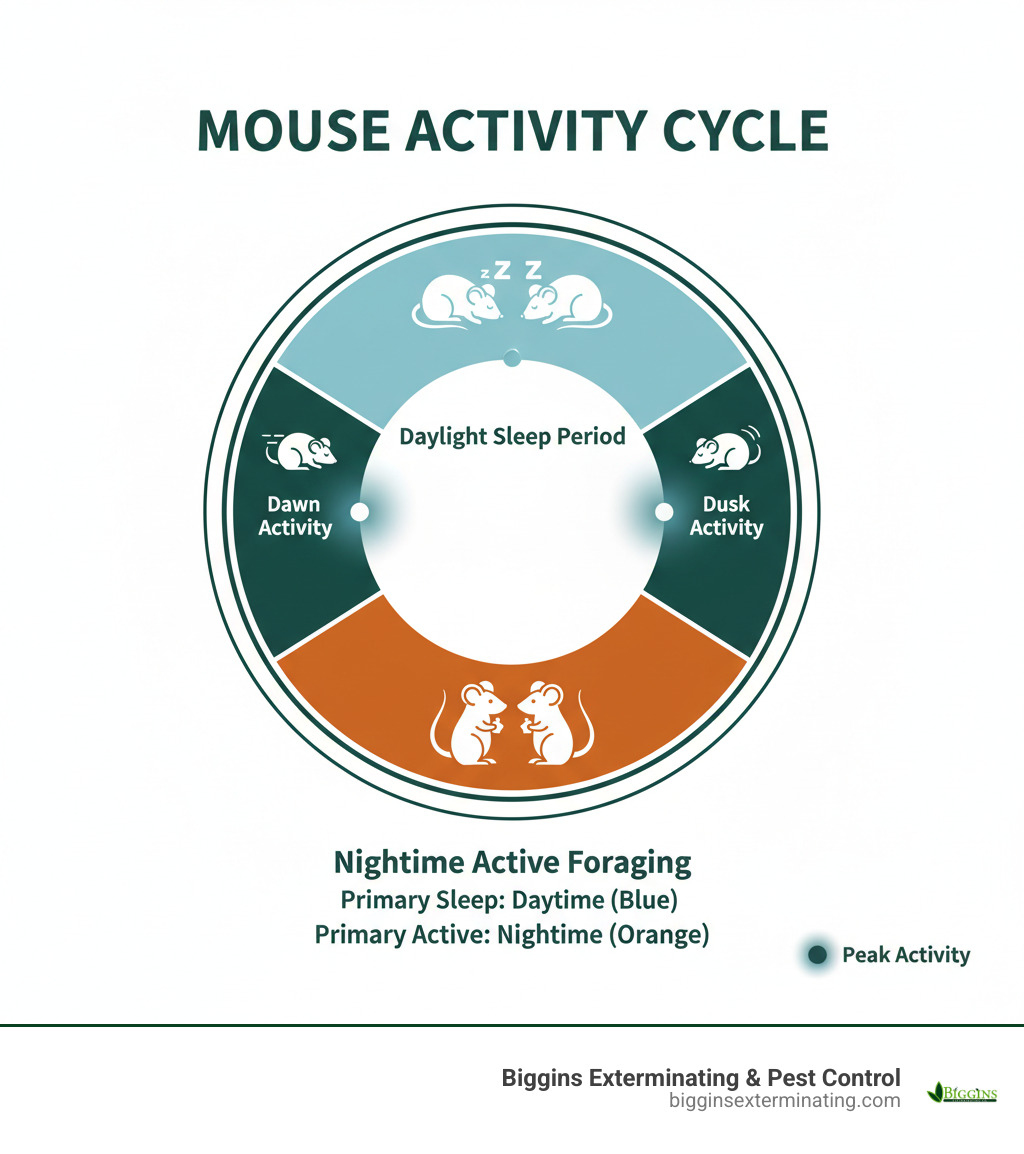
Are mice nocturnal? Yes, mice are primarily nocturnal creatures, meaning they’re most active during the night—specifically during twilight hours at dusk and dawn. While you sleep, these small rodents are busy foraging for food, building nests, and exploring your home under the cover of darkness.
Quick Facts About Mouse Activity:
- Most Active: Between sunset and sunrise, with peak activity at dusk and dawn (crepuscular behavior)
- Sleep Schedule: Approximately 12 hours per day in short bursts, mostly during daylight
- Daytime Sightings: Usually indicate a large infestation or serious resource scarcity
- Why They’re Nocturnal: To avoid predators, reduce competition, and stay away from humans
- Navigation: Poor eyesight compensated by excellent hearing, smell, and sensitive whiskers
If you’ve been hearing scratching sounds in your walls at night or finding droppings in your kitchen each morning, you’re experiencing the telltale signs of nocturnal mouse activity. These pests maintain a small territory—typically just 10 to 30 feet from their nest—but they can cause significant damage during their nightly excursions.
Understanding when and why mice are active is crucial for effective pest control. Their preference for darkness means infestations often go undetected until they’ve grown substantially. In Massachusetts, where mice seek warmth indoors during fall and winter, this nocturnal behavior becomes particularly problematic for homeowners.
I’m Stephen Biggins, and I’ve been helping Massachusetts families deal with mouse infestations since taking over my family’s pest control business in 1982. Over four decades of dealing with nocturnal rodents has taught me that understanding are mice nocturnal behavior patterns is the first step to reclaiming your peace of mind.
Simple guide to Are mice nocturnal? terms:
Why Are Mice Nocturnal? The Science Behind Their Nightlife
The answer to “are mice nocturnal?” is rooted in millions of years of evolution. Their nighttime schedule is a carefully refined survival strategy.

The biggest reason mice are nocturnal is survival. During the day, a mouse is an easy target for predators like hawks, owls, and cats. Waiting until dark dramatically increases their chances of survival. This aversion to bright lights is hardwired into their biology; mice actively avoid well-lit areas, sticking to shadows. Scientific research on mouse behavior confirms this is an evolutionary adaptation.
Predator avoidance is only part of the story. Nighttime offers other advantages:
- Reduced Competition: Most animals competing for the same food are active during the day. By operating on the night shift, mice get first dibs on resources.
- Avoiding Humans: We’re large, noisy, and terrifying to a mouse. Our daytime activities fill homes with movement and light. When we go to bed, mice feel safe enough to emerge from hiding.
This is especially true during the fall and winter in New England, when mice move indoors seeking warmth. The quiet of a sleeping household is their perfect opportunity to explore and forage.
How Do Mice Thrive in the Dark?
If mice are primarily nocturnal and operate in darkness, how do they steer? Their remarkable sensory toolkit compensates for their poor eyesight.
Mice have terrible vision and are sensitive to bright lights, but their other senses are boostd:
- Whiskers (Vibrissae): These are sophisticated navigation systems. The hairs sweep back and forth, detecting changes in air currents and textures, allowing mice to feel their way through tight spaces. More info about rodent senses shows how crucial whiskers are for survival.
- Keen Sense of Smell: A mouse can detect food from up to 10 feet away and follow pheromone trails left by other mice, creating invisible highways through your home.
- Extraordinary Hearing: Mice hear ultrasonic frequencies far beyond human range (up to 91,000 Hz), allowing them to detect faint rustles, predators, and the communication of other mice.
They also leave pheromone trails in their urine to mark safe routes along walls and baseboards. These adaptations make darkness a superpower for mice, not a disability.
When Might You See a Mouse During the Day?
While mice are nocturnal, a daytime sighting is a red flag. A healthy mouse will stay hidden when the sun is up, so seeing one in the open usually means something is seriously wrong. It’s almost always bad news.
Daytime activity typically points to one of these issues:
- Large Infestations: The population has grown so large that weaker mice are forced out during riskier daylight hours to find food.
- High Competition for Food: When resources are scarce, even dominant mice may risk daytime foraging.
- Disturbed Nest: Construction, deep cleaning, or other activities can destroy their shelter, forcing them into the open to find a new one.
- Lack of Food or Water: Extreme hunger or thirst can override their natural instinct to stay hidden.
If you see a mouse during the day, you’re likely dealing with a well-established infestation that has reached a critical point. This is a sign of a serious problem that needs immediate attention. For guidance, see our resource on How to Identify and Prevent Rodent Infestations in Massachusetts. Don’t ignore this warning sign.
Signs of a Nocturnal Mouse Invasion in Your Home
Because mice work while you’re asleep, you’re more likely to find the clues they leave behind than see the mice themselves. Recognizing these signs early is key to preventing a major headache.

Look for these telltale signs of a nocturnal mouse invasion:
- Droppings: The most obvious sign. A single mouse can leave 50-80 small, dark, rice-sized pellets in one night. Check cupboards, pantries, and along baseboards.
- Gnaw Marks: Mice constantly chew to trim their teeth. Look for damage on food packaging, wood, plastic pipes, and electrical wires.
- Nests: Mice build nests from shredded paper, fabric, and insulation in hidden spots like behind appliances, in drawers, or wall voids.
- Nighttime Noises: Scratching, scurrying, or squeaking sounds from walls or ceilings are classic signs that mice are nocturnal and active in your home.
- Odors: A strong, stale, or ammonia-like odor comes from mouse urine, which they use to mark territory.
- Tracks and Runways: In dusty areas, you might see tiny footprints. Along walls, look for greasy rub marks from their fur.
If these signs are familiar, it’s time for professional Mice Pest Control to address the problem before it worsens.
The Dangers and Damages Caused by Nocturnal Mice
Mice are far from harmless. Their nocturnal habits mean they can cause serious havoc while you sleep, often unnoticed until the problem is severe.
- Property Damage: Mice gnaw constantly on wood, plastic, and even soft metals. They can destroy furniture, heirlooms, and structural elements.
- Fire Hazards: Chewed electrical wires are a major risk. Damaged insulation can lead to short circuits and house fires.
- Insulation Damage: Mice tunnel through and nest in insulation, contaminating it with waste and reducing your home’s energy efficiency.
- Food Contamination: They chew through packaging to get to pantry items, contaminating food with droppings, urine, and bacteria.
- Health Risks: Mice spread diseases like Hantavirus, Salmonella, and Leptospirosis. Their dander, droppings, and urine are also powerful triggers for allergies and asthma.
The hidden dangers are extensive. For a deeper dive, read our article on the Top 5 Dangers of Rodents in and Around Your Home or Business.
Understanding the Mouse Lifecycle: Why a Small Problem Grows Fast
Seeing one mouse is rarely a sign of a single visitor. Understanding their rapid reproduction explains why immediate action is critical.
Mice are reproductive machines:
- A female has 5 to 10 litters per year.
- The gestation period is only 19 to 21 days.
- Each litter has 5 to 6 pups on average.
- Pups reach sexual maturity in as little as 6 weeks.
In the safety of a home, mice can live 1 to 2 years, allowing for exponential population growth. A single pair can lead to dozens of mice in just a few months. This is why you should never ignore a mouse sighting. By the time you see one, many more are likely hiding and breeding. If you’re wondering Should I Call an Exterminator If I See a Mouse?, the answer is yes—the sooner, the better.
Your Guide to Effective Nocturnal Mouse Control
Now that you understand why are mice nocturnal and the signs to look for, let’s discuss taking back your home. Effective mouse control requires a comprehensive strategy that addresses root causes to prevent future invasions.

We use Integrated Pest Management (IPM), a common-sense strategy combining multiple tactics for lasting results. It attacks the problem from all angles.
The foundation of IPM rests on two pillars you can implement yourself: exclusion (keeping them out) and sanitation (removing what attracts them), backed by professional intervention when needed. Combining these approaches creates an environment where mice can’t thrive. Let’s start with the most important step: exclusion.
Step 1: Mouse-Proofing Your Home (Exclusion)
A mouse can squeeze through an opening the size of a dime (a quarter-inch). Gaps around pipes, cracks in the foundation, and spaces under doors are all potential entry points. The best strategy is to keep them out in the first place, which is especially critical in Massachusetts before fall and winter when mice seek warmth indoors.
- Inspect your home’s exterior. Carefully check the foundation, walls, and roofline for any cracks or holes. Pay close attention to where utility lines enter the house.
- Use the right materials. Seal gaps with materials mice can’t chew through. Stuff steel wool into larger holes and use caulk for smaller cracks. Cover vents with metal mesh.
- Secure doors, windows, and chimneys. Install door sweeps on exterior doors, ensure windows seal properly, and use a chimney cap.
Summer and fall are the best times for mouse-proofing. Acting before cold weather arrives can prevent a winter infestation. For a complete guide, see our Keeping Your Home Mouse Proof: A Winter Pest Control Checklist.
Step 2: Eliminating Food and Shelter (Sanitation)
Exclusion works best when your home isn’t a buffet for mice. Removing food and shelter makes your home far less appealing.
Inside Your Home:
- Secure Food: Store all food, including pet food, in airtight containers of glass, metal, or thick plastic. Mice easily chew through cardboard and bags.
- Clean Diligently: Wipe down countertops, sweep floors, and clean spills immediately. Don’t leave dirty dishes in the sink overnight, as crumbs are a feast for mice.
- Manage Trash: Use trash cans with tight-fitting lids and empty them regularly.
- Declutter: Remove clutter like old newspapers and cardboard boxes from basements, attics, and garages. Use plastic bins for storage to eliminate nesting spots.
Outside Your Home:
- Maintain Your Yard: Keep grass short and trim vegetation away from your foundation. Remove fallen fruit from trees.
- Store Materials Properly: Keep firewood and lumber at least 18 inches off the ground and away from the house.
Consistent sanitation is key to protecting your home. For professional help with rodent management, explore our Rodent Control Services.
Frequently Asked Questions about Mouse Behavior
After decades of answering homeowner questions about mice, I’ve noticed the same concerns come up again and again. Let me address the most common questions we hear at Biggins Exterminating, especially when it comes to understanding these nocturnal little creatures.
Do mice sleep all day?
Here’s something that might surprise you: even though are mice nocturnal? is answered with a definitive yes, they don’t actually curl up and sleep through the entire day like we might during a full night’s rest. Instead, mice take frequent short naps throughout the daylight hours—think of it as a series of power naps rather than one long slumber.
These little guys are incredibly light sleepers, too. The slightest sound or vibration can snap them awake, ready to dart to safety in an instant. This fragmented sleep pattern is actually quite clever from a survival standpoint. It allows them to rest and recharge while remaining alert enough to respond to any threats or opportunities that might arise.
During these daytime hours, they’re essentially preparing their energy reserves for the busy night ahead, when they’ll be actively foraging, building nests, and exploring your home.
Why are mice so active at night in my house?
If you’ve been lying awake listening to scratching sounds in your walls, you might wonder why mice seem to throw their most active parties precisely when you’re trying to sleep. The answer comes down to pure survival strategy and instinct.
Safety in darkness is the primary driver. When your lights go out, mice feel protected from predators—including any cats or dogs you might have. The shadows become their shield, allowing them to move with confidence.
Your home at night also provides a quieter environment where every sound becomes clearer to their sensitive ears. With less background noise, they can better detect approaching threats while going about their business. And speaking of business, there’s far less human activity after dark. No footsteps thundering across the floor, no sudden movements, no bright lights flicking on—just peaceful darkness perfect for exploration.
Even if you have pets, they’re usually settling down for the night themselves, creating a reduced threat window. It’s during these quiet hours that their instinctive foraging time kicks in. Their internal biological clock, fine-tuned over thousands of years of evolution, tells them this is when they should be searching for food and tending to their nests.
Are mice nocturnal even in the winter?
Absolutely. The cold Massachusetts winters don’t change the fact that mice are nocturnal creatures. Their biological programming stays the same regardless of the season—they’re still wired to be most active between dusk and dawn.
What does change dramatically in winter is where they choose to spend those active nighttime hours. As temperatures drop and snow begins to fall, mice aren’t about to brave the frigid outdoors when there’s a perfectly warm home nearby—yours.
This seasonal shift means their nocturnal activities move from fields and yards directly into your walls, attics, and basements. You’ll notice increased indoor activity as they take full advantage of your home’s warmth and the food sources in your pantry. They’re not just visiting; they’re actively seeking warmth and food to survive the harsh New England winter.
This is precisely why year-round vigilance is so critical. While spring and summer might lull you into thinking mice aren’t a concern, they’re simply conducting their nocturnal business elsewhere. Come winter, they’ll be back, and if you haven’t mouse-proofed your home, you’ll definitely hear about it during those quiet winter nights.
For expert guidance on staying ahead of these seasonal invaders, take a look at our comprehensive guide: Winter Mouse Prevention 101: Expert Tips From Exterminators.
Conclusion: Reclaim Your Quiet Nights from Unwanted Pests
So, are mice nocturnal? Without a doubt. These tiny invaders have perfected the art of nighttime survival, using darkness as their shield against predators, competition, and—most importantly—us. While their vision may be poor, their whiskers, hearing, and sense of smell work overtime in the shadows, making them remarkably effective at navigating your home unseen.
The challenge with nocturnal pests is that they’re masters of stealth. By the time you hear that first scratch in the wall or spot droppings in your pantry, the problem has likely been growing for weeks. Those late-night scurrying sounds aren’t just annoying—they’re warning signs of potential property damage, contaminated food, and serious health risks. And with each female mouse capable of producing dozens of offspring in just a few months, what starts as a minor annoyance can explode into a major infestation faster than most homeowners realize.
Here in Massachusetts, as we head into the colder months, mice become even more determined to find warm shelter indoors. Your cozy home becomes their ideal winter resort, and their nocturnal habits mean they’ll be remodeling your walls and raiding your kitchen while you sleep.
The good news? You don’t have to accept these unwanted roommates. Understanding mouse behavior is half the battle, and taking proactive steps—sealing entry points, eliminating food sources, and maintaining proper sanitation—can make a world of difference.
At Biggins Exterminating & Pest Control, we’ve been helping families throughout Andover, Bedford, Billerica, Burlington, Lexington, North Reading, Tewksbury, Wilmington, and Woburn reclaim their homes from nocturnal pests for over 40 years. As a family-owned business, we know your home is more than just a building—it’s where your family feels safe and comfortable. That’s why we offer straightforward, contract-free solutions backed by solid warranties and a genuine commitment to getting the job done right.
Don’t let mice steal your peace of mind or put your home at risk. Whether you’re dealing with an active infestation or want to prevent one before winter sets in, professional help makes all the difference.
Contact Biggins Exterminating today for a professional consultation and let’s work together to send those nocturnal nuisances packing for good. Your quiet nights are waiting.
