How to Prevent Cicada Killer Wasps: A Homeowner’s Guide
To prevent cicada killer wasps from nesting in your yard, follow these key strategies:
- Maintain dense, healthy turf with no bare patches
- Water your lawn deeply (1-1.5 inches weekly)
- Mow grass higher (3-4 inches) during summer months
- Apply 3-4 inches of mulch in garden beds
- Use geotextile fabric barriers under mulch or patios
- Start prevention in early spring before adults emerge
If you’ve noticed large, intimidating wasps hovering around your yard and mysterious mounds of dirt appearing in your lawn, you’re likely dealing with cicada killer wasps. Despite their fearsome appearance, these solitary insects are generally non-aggressive. However, their burrowing can damage lawns, destabilize patios, and cause unnecessary alarm for homeowners.
Prevent cicada killer wasps effectively by understanding their behavior and habitat preferences. These large wasps (measuring 1.5-2 inches long) seek out bare, sandy soil in sunny areas near trees that host cicadas. By eliminating these favorable conditions, you can significantly reduce the likelihood of these insects choosing your property as their nesting ground.
As Stephen Biggins, owner of Biggins Exterminating Co., I’ve helped countless Massachusetts homeowners prevent cicada killer wasps through effective lawn care strategies and targeted treatments, with over 40 years of hands-on experience in pest management.

Simple prevent cicada killer wasps glossary:
– cicada wasp nest
– cicada killer repellent
– kill cicada killer wasps naturally
Meet the Cicada Killer Wasp: Size, Looks & Lifestyle
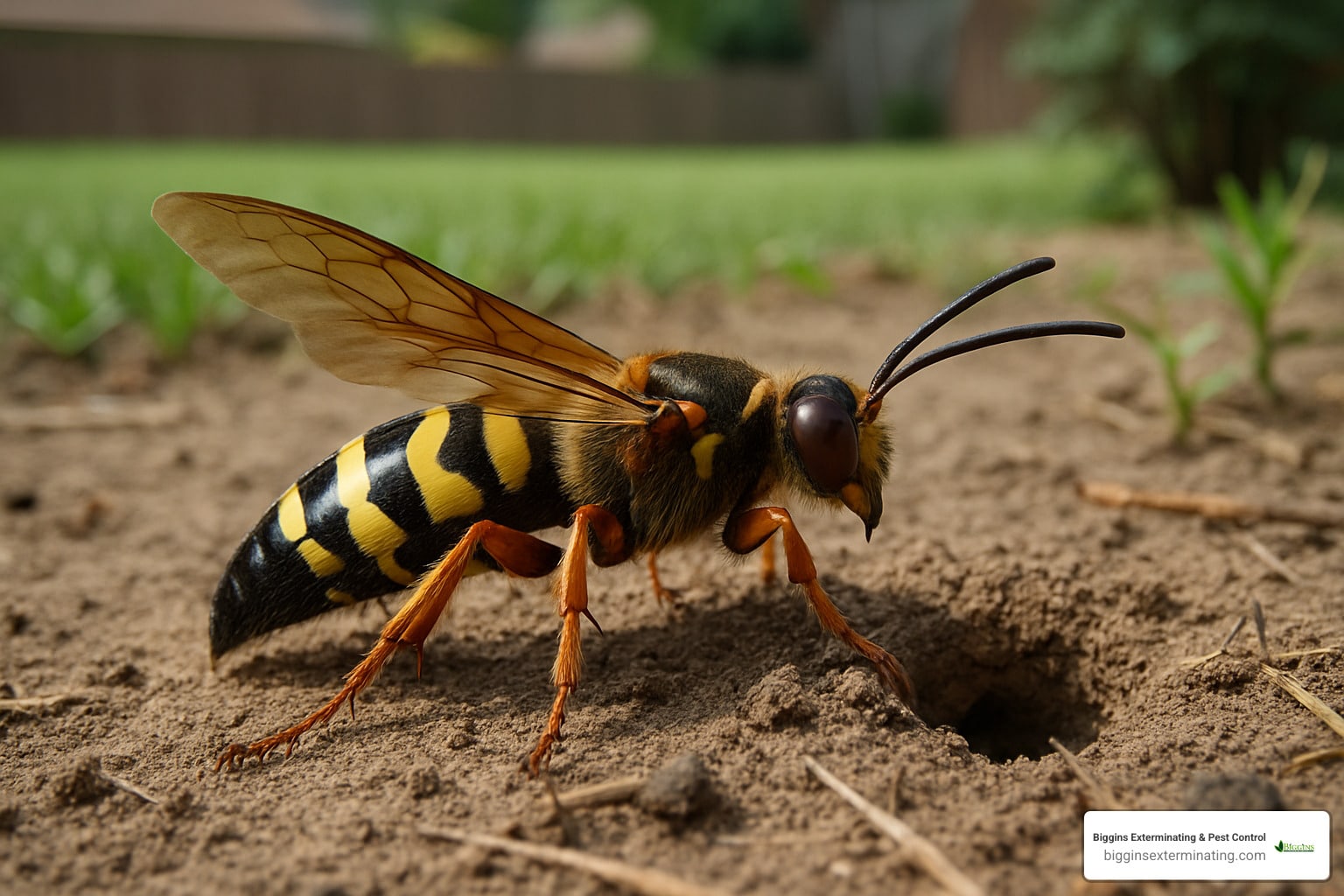
Before you can effectively prevent cicada killer wasps, you need to understand what you’re dealing with. The Eastern cicada killer wasp (Sphecius speciosus) is one of North America’s largest wasps, measuring an impressive 1.5 to 2 inches in length. These gentle giants are quite the sight with their rusty-colored heads, black bodies adorned with bright yellow horizontal bands across the abdomen, and wings that shimmer with a distinctive orange tint in the sunlight.
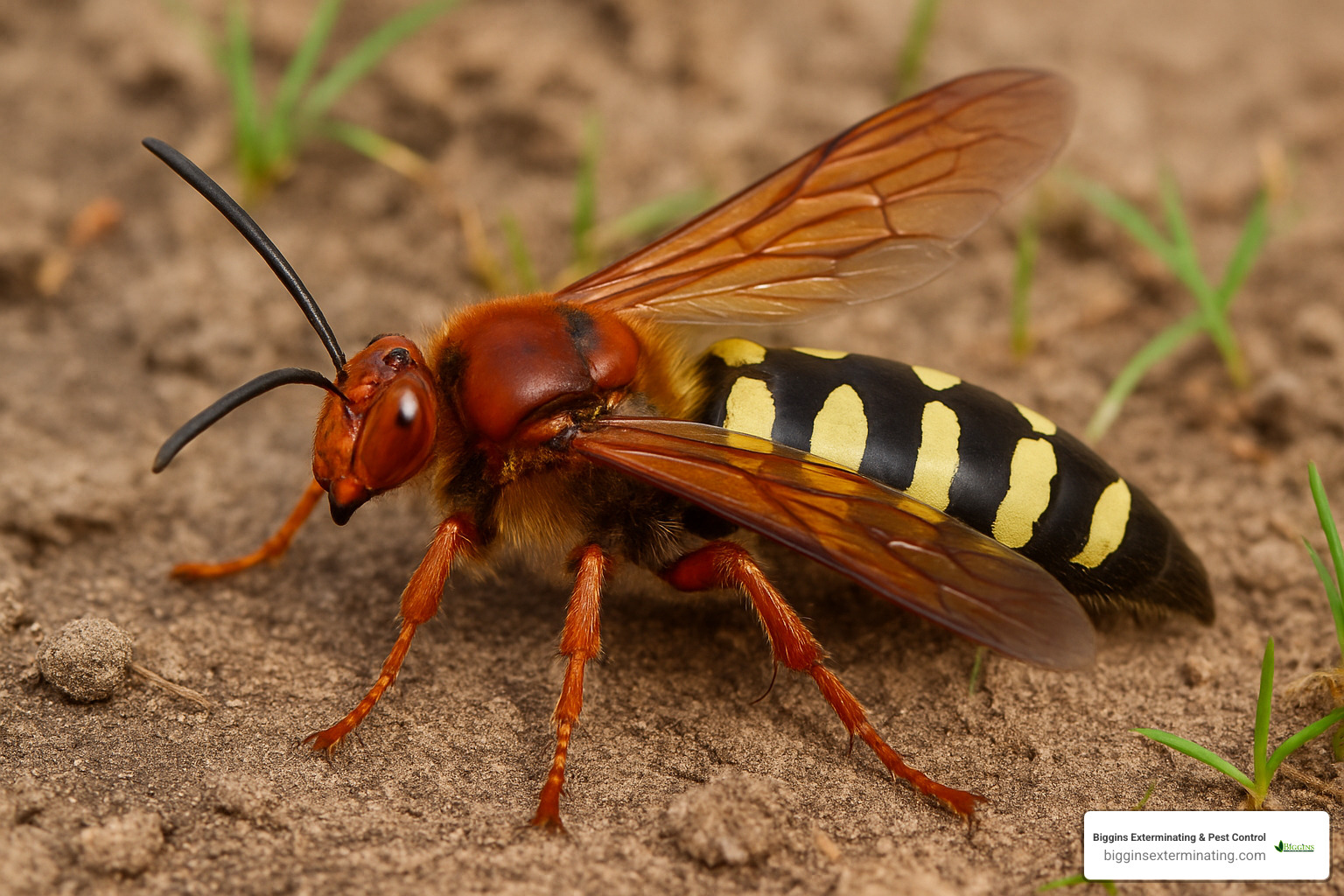
When it comes to the battle of the sexes, female cicada killers win the size contest hands down. They’re noticeably larger than males, which makes perfect sense considering their roles. The industrious females are the ones digging those impressive burrows and hunting cicadas, while males spend their days patrolling territory and, despite their sometimes intimidating dive-bombing behavior, cannot sting at all. (That’s right – those scary-looking males are all bark and no bite!)
Unlike their social cousins like yellowjackets or hornets, cicada killers are the introverts of the wasp world. They don’t form colonies or hives. Instead, each female digs her own personal burrow in well-drained, light-textured soil that gets plenty of sunshine. The entrance is unmistakable – a U-shaped mound of freshly excavated soil that often catches homeowners’ attention before they even spot the wasps themselves.
Their annual life cycle follows a predictable summer pattern. Adults begin emerging from mid-June to early July, with activity peaking during the hot days of July and August. By the time mid-September rolls around, most adults have completed their life mission and died off. Their offspring remain as larvae, snugly overwintering in underground cocoons until the following summer. It’s a once-a-year appearance – there’s just one generation annually.
Each female wasp is quite the excavator, removing up to 100 cubic inches of soil when creating her underground nursery. Inside this subterranean complex, she constructs 15-20 chambers, each carefully provisioned with paralyzed cicadas (one cicada for male eggs, two to three for female eggs). After the eggs hatch in just 2-3 days, the hungry larvae feed for 4-10 days until nothing remains of their cicada meal but an empty shell.
Distinguish from Other Big Wasps & “Murder Hornets”
Many homeowners understandably panic when they spot cicada killers, often mistaking them for the infamous “murder hornets” (Asian giant hornets) or other aggressive wasp species. Let me help clear up the confusion:
Cicada Killer Wasps are the gentle giants of the wasp world at 1.5-2 inches long with black bodies adorned with yellow horizontal bands. They’re solitary creatures with non-aggressive personalities who typically fly low to the ground, often hovering as they search for nesting sites. Each female constructs her own individual ground burrow.
European Hornets are slightly smaller (1-1.4 inches) with brown bodies and yellow markings. Unlike the loner cicada killers, these social insects build paper nests in trees or structures and can be more aggressive when defending their colony. They’re also unusual among wasps for their nocturnal flying habits.
Yellowjackets are the small but mighty members of the wasp family at just 0.5-0.75 inches. Their bright yellow and black pattern makes them distinctive, as does their quick, darting flight pattern. These social insects are known for their aggressive defense of nests, which can be found in the ground or in structures.
Asian Giant Hornets (the true “Murder Hornets”) are large (1.5-2 inches) with distinctive orange heads and dark thoraxes. Good news – they’re not established in Massachusetts! These social insects build paper nests and can be aggressive when their colony is threatened.
When we respond to worried calls from homeowners in Massachusetts communities, we often find that what they feared was a dangerous “murder hornet” invasion is actually just cicada killers going about their business. Understanding this distinction can save you unnecessary worry and help you make informed decisions about whether intervention is needed.
For more detailed information on properly identifying these fascinating insects, check out this scientific research on identification.
Why They Move In: What Attracts Cicada Killers & Potential Damage
Ever wonder why these impressive wasps chose your yard for their summer residence? To effectively prevent cicada killer wasps, you need to understand what makes your property so appealing to them in the first place.
These picky insects aren’t randomly selecting your lawn—they’re actually quite particular about their real estate choices. They’re drawn to areas with bare, sandy soil that’s easy to dig through, especially spots that get full sun exposure throughout the day. Having nearby trees hosting cicadas is like building next to a grocery store for them—convenient access to food is essential!
Areas with sparse vegetation or patchy turf practically roll out the welcome mat for these wasps. They’re particularly fond of edges and transitions where your lawn meets a driveway, patio, or garden bed—these borders offer the perfect entry point for their excavation projects.
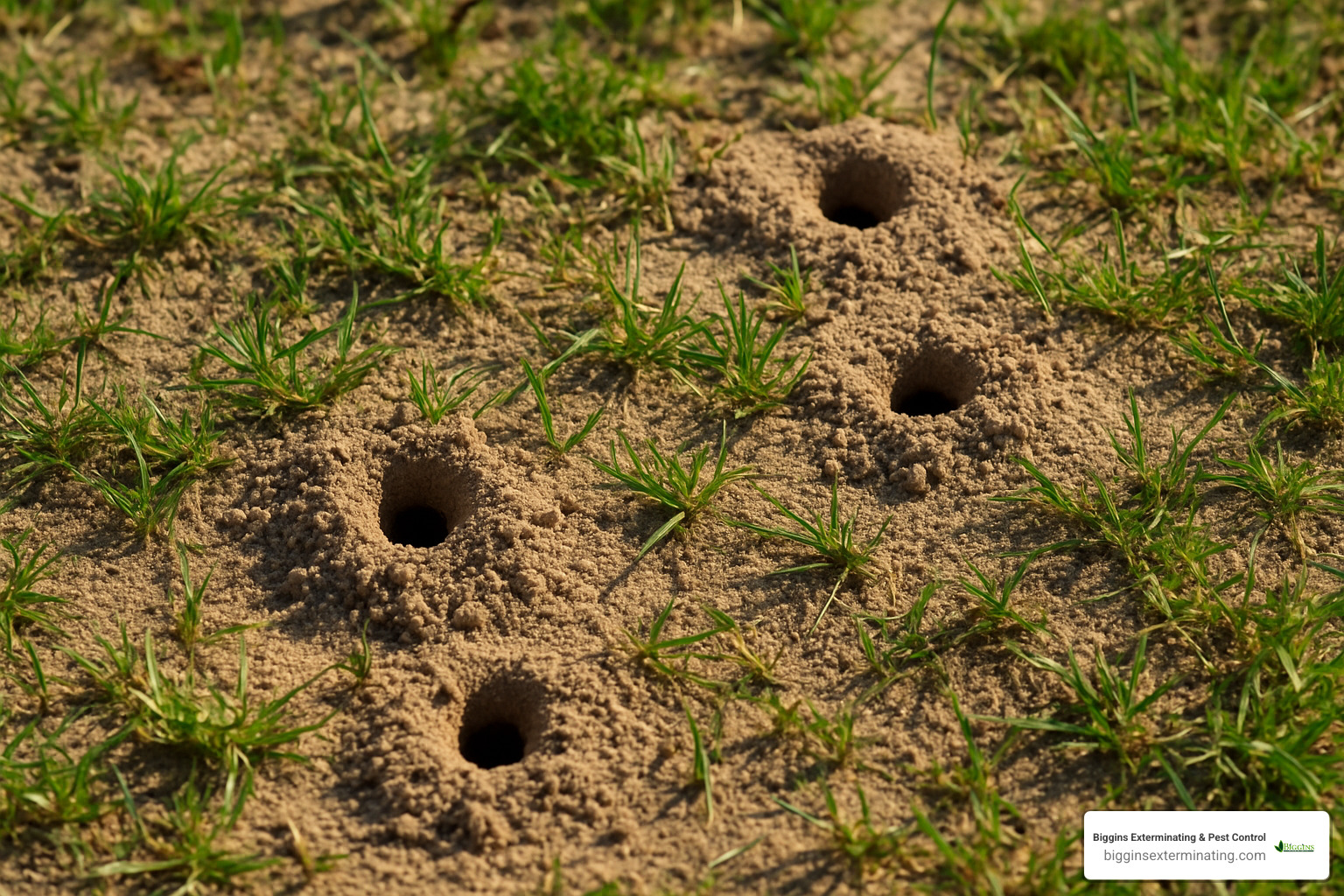
While these wasps do provide some ecological benefits, their housekeeping habits can cause headaches for homeowners. A single industrious female can excavate up to 100 cubic inches of soil—imagine a softball-sized amount of dirt suddenly appearing on your pristine lawn! When multiple wasps set up shop, the damage becomes even more noticeable.
| Benefits | Nuisances |
|---|---|
| Control cicada populations | Create unsightly soil mounds |
| Rarely sting humans | Smother grass patches |
| Don’t form aggressive colonies | Destabilize patios and walkways |
| Only active 2-3 months per year | Cause unnecessary alarm |
| Help protect young trees | May attract digging from pets or wildlife |
Those soil mounds aren’t just eyesores—they can smother your grass, creating bare patches that become even more attractive to next year’s generation of wasps. It’s a vicious cycle that gets worse if left unaddressed.
Beyond your lawn, these tunneling insects can undermine sand-based hardscapes. In our decades of serving Massachusetts communities like Burlington and Bedford, we’ve seen cicada killer tunnels cause patios to settle unevenly and walkways to shift. Nothing ruins your outdoor enjoyment faster than wobbly patio furniture or tripping hazards created by these underground engineers.
The silver lining? Now that you know what attracts these wasps, you can make your property less inviting. By addressing these attraction factors, you’ll be well on your way to prevent cicada killer wasps through simple habitat modifications—which we’ll cover in detail in the next section.
Year-Round Strategy to Prevent Cicada Killer Wasps
The best way to prevent cicada killer wasps is making your property less inviting through thoughtful lawn and garden care all year long. Think of it as rolling out an “unwelcome mat” for these diggers! Here’s how to approach this season by season:
Early Spring (March-April)
When those first warm days arrive, it’s time to prepare your defense. Start by dethatching and aerating your lawn to promote thick, healthy growth. Your grass will thank you, and cicada killers will look elsewhere! Apply lime and fertilizer based on a soil test to encourage dense turf, and don’t forget to overseed any thin or bare patches – those are prime real estate for wasp burrows.
One clever trick our Wilmington clients love is installing geotextile fabric under new mulch in garden beds. This creates a physical barrier that says “no digging here” to female wasps looking for nesting sites.
Late Spring (May-June)
As temperatures warm, shift your focus to moisture management. Begin your deep watering routine – about 1-1.5 inches weekly – to keep soil consistently moist (cicada killers strongly prefer dry soil). Apply a generous 3-4 inches of mulch in garden beds and around trees, which serves double duty: it retains moisture and creates another barrier against digging.
“The best defense is a good offense,” as one of our Tewksbury clients likes to say. He raises his mower height to 3-4 inches by June, creating a dense lawn canopy that discourages wasps from even considering his yard for their burrows.
Summer (July-August)
Summer is showtime for cicada killers, so stay vigilant! Continue your deep watering schedule, especially during dry spells. This is when your earlier work really pays off. Walk your property regularly to check for early signs of burrowing activity – those telltale U-shaped soil mounds.
If you spot a new burrow forming, a simple garden hose can be your best friend. A thorough soaking often convinces the wasp to abandon the site and look elsewhere. Keep maintaining that tall grass height of 3-4 inches – it’s your lawn’s natural armor.
Fall (September-October)
As cicada killer activity winds down, take time to identify and mark any existing burrows for spring treatment. Once abandoned, fill these burrows with soil and reseed to prevent next year’s generation from finding ready-made homes. Continue your lawn care practices to promote thick turf, and apply fall fertilizer to strengthen root systems for next year’s battle.

The heart of this strategy is creating conditions these wasps simply can’t stand. Since cicada killers prefer dry, sandy soil with full sun exposure, maintaining consistently moist soil with lush vegetation makes your yard about as appealing to them as a flooded basement.
I’ll never forget our North Reading client who eliminated a stubborn cicada killer problem by installing a simple drip irrigation system in the affected area. He maintained regular watering throughout summer, and the wasps literally packed their bags and moved to his neighbor’s drier yard!
Lawn-Care Practices That Prevent Cicada Killer Wasps
Your lawn is your first line of defense to prevent cicada killer wasps. Here’s how to turn it into an effective barrier:
Maintain Dense Turf by overseeding thin areas with grass varieties that thrive in your specific conditions. Apply appropriate fertilizer based on soil testing (not guesswork!), and dethatch and aerate annually to promote healthy root growth. Don’t ignore grub problems – they create bare patches that practically invite wasps to move in.
Water Properly with deep, consistent irrigation. Aim for 1-1.5 inches weekly, using a rain gauge or even an empty tuna can to measure application. Early morning watering reduces evaporation and fungal issues. One Andover family installed a smart irrigation system and told me, “It’s the best investment we’ve made – consistent moisture and no more wasps!”
Mow at the Right Height by keeping grass at 3-4 inches during summer. This height creates shade that keeps soil cooler and moister – conditions cicada killers avoid. Never remove more than 1/3 of the blade height in a single mowing, keep those mower blades sharp, and consider mulching clippings to feed your soil.
Address Soil Issues starting with a proper soil test. Cicada killers prefer slightly acidic soil, so applying lime if needed can make your yard less attractive. Adding organic matter improves soil structure, and reducing compaction through core aeration gives grass roots room to thrive.
A Lexington homeowner followed this regimen and saw remarkable results in just one season. Her property had hosted over 30 cicada killer burrows the previous summer. After implementing these practices, only three burrows appeared the following year, and by the third summer, the wasps had completely abandoned her property!
Eco-Friendly Ways to Prevent Cicada Killer Wasps
For those who prefer natural approaches to prevent cicada killer wasps, mother nature offers plenty of effective solutions:
Physical Barriers work wonderfully for targeted protection. Apply geotextile fabric under mulch in garden beds and under patios and walkways. One creative Burlington client created a “wasp-free zone” by using landscape fabric covered with decorative stone around his patio – previously a hotspot for cicada killer activity.
Natural Deterrents offer chemical-free protection. Diatomaceous earth creates an effective barrier when sprinkled around potential nesting sites. Essential oil sprays with peppermint, citronella, or tea tree oil (about 15-20 drops mixed with water) can discourage wasps from settling in. Hanging fake wasp nests can trick territorial males into believing the area is already claimed.

Water Saturation remains one of the simplest yet most effective deterrents. Regularly soaking potential nesting areas maintains a moisture level that cicada killers find uninhabitable. As one Woburn client joked, “They want beach-front property, not a swamp!”
Encouraging Natural Predators creates a sustainable ecosystem approach. Birds, especially woodpeckers and robins, may prey on cicada killers or their larvae. Creating bird-friendly habitats with feeders, baths, and native plants can help maintain natural balance.
For garden beds, a 3-4 inch layer of mulch over geotextile fabric provides both beauty and protection. This approach has worked wonderfully for our clients in Andover and Woburn who wanted to avoid chemical treatments near their vegetable gardens and children’s play areas.
Handling Existing Nests & Knowing When to Call a Pro
So you’ve tried your best to prevent cicada killer wasps, but you’ve still spotted those telltale mounds of dirt in your yard? Don’t worry—it happens to the best of us. Let’s talk about how to handle these uninvited guests safely and effectively.
The best time to inspect for cicada killer activity is during the evening hours when these insects are less active and typically tucked away in their burrows. If you need to check after dark, here’s a pro tip: cover your flashlight with red cellophane. Wasps can’t see red light well, so you’ll be less likely to disturb them.
Active burrows are pretty distinctive—look for that U-shaped mound of freshly dug soil with an entrance hole about the size of a quarter or half-dollar. They’re almost always in sunny spots with bare soil, and if you’re patient, you might catch the wasps coming and going.
For the DIY-minded homeowner, you have several effective options. Many of our Wilmington clients have had success with the water saturation method—simply drench each burrow thoroughly with water daily for about a week. It’s amazing how effective this can be! The wasps hate wet soil and will often abandon ship after a few days of this treatment.
“I was skeptical about the water method at first,” shares one of our Reading customers, “but after five days of soaking the burrows each evening, the wasps completely disappeared.”
If you prefer something with a bit more punch, a soapy water flush works wonders. Mix two tablespoons of regular dish soap with two cups of water and pour it directly into the burrow entrance in the evening. The soap breaks down the wasp’s protective coating, and it’s still gentle enough that it won’t harm your plants or beneficial soil microbes when used as directed.
For those dealing with more persistent infestations, an insecticidal dust applied directly into the burrow entrance can be effective. The key is to leave the entrance open so returning wasps contact the treatment. Always follow the product label instructions carefully—this isn’t the time to improvise!
Whatever method you choose, please wear protective clothing—long sleeves, pants, closed shoes, and gloves. And keep curious kids and pets away from the area while you’re working.
When to Call a Professional
While many homeowners can successfully handle small cicada killer problems, there are definitely times when calling in the pros makes sense:
If you or family members have allergies to insect stings, it’s simply not worth the risk. Similarly, if those burrows are popping up in high-traffic areas like playgrounds or right next to your patio, professional help can give you peace of mind.
Facing a large infestation with 25+ burrows? That’s another situation where professional expertise really pays off. And if you’ve tried DIY treatments without success, or the nests are in tricky locations, it’s probably time to call for backup.
Based on internet data (not Biggins Exterminating pricing), professional cicada killer control typically ranges from $150-$600 depending on the severity of the infestation and treatment methods used.
Step-by-Step: Treating a Burrow Safely
If you’re taking the DIY route, here’s a safe, methodical approach:
First, gather everything you’ll need before you start—your treatment of choice, any applicators, and protective gear. Evening is your friend here, as that’s when the wasps are likely to be inside their burrows.
Take time to locate and mark all the burrows with small flags or markers. This might seem unnecessary, but it’s surprising how easy it is to lose track of burrow locations, especially in larger yards.
When applying treatments, be precise. For dust treatments, one or two puffs directly into the entrance is sufficient. For liquid solutions, pour 1-2 cups directly into each burrow. Always leave the entrance open—you want returning wasps to contact the treatment.
The next day, check for continued activity. If you still see wasps, a second application may be necessary. Once activity stops, fill the burrow with soil and reseed the area to prevent new wasps from finding the same attractive spot next year.
Cicada killers are generally non-aggressive creatures. The males can’t sting at all (despite their intimidating dive-bombing behavior), and females rarely sting unless directly handled or severely provoked. Their scary appearance is mostly just that—scary looking.
Will They Return Next Year?
If your yard continues to offer what cicada killers consider prime real estate—bare, sandy soil in sunny locations—then yes, they’re likely to return. Research shows that about 40% of developing larvae emerge as adults the following year, which means populations can gradually increase if conditions remain attractive.
“We had cicada killers return to the same corner of our yard three years in a row,” explains a Burlington homeowner. “It wasn’t until we focused on thickening the grass in that area that they finally moved on.”
This is exactly why long-term prevention through habitat modification is so crucial. By maintaining dense turf, proper soil moisture, and implementing other preventive measures we’ve discussed, you can break this cycle and enjoy a wasp-free yard for years to come.
Need more information about dealing with stinging insects? Learn more about our bee and wasp removal services.
Frequently Asked Questions about Preventing Cicada Killer Wasps
Are cicada killer wasps dangerous to humans or pets?
Despite their intimidating size and fearsome appearance, cicada killers are surprisingly gentle giants in the wasp world. Those large wasps you see zooming around your yard and seemingly “dive-bombing” people? Those are males—and here’s the good news: they’re all buzz and no bite! Male cicada killers completely lack stingers, making their territorial displays nothing more than an impressive bluff.
Female cicada killers do possess stingers, but they’re remarkably docile toward humans. Unlike yellowjackets or hornets that aggressively defend their nests, female cicada killers are single-minded in their focus on hunting cicadas and preparing nests. In my 40+ years of pest control experience, I’ve rarely encountered someone who’s been stung by a cicada killer. When stings do occur, it’s almost always because someone accidentally stepped on one with bare feet or grabbed one without realizing it.
Your four-legged family members face similarly low risks. Curious dogs might get a painful lesson if they dig at burrows, but most pets quickly learn to leave these wasps alone. The venom itself is relatively mild compared to other stinging insects—it’s designed to paralyze cicadas, not defend against larger creatures like us or our pets.
Of course, anyone with known insect allergies should exercise appropriate caution around any stinging insect, but for most families, cicada killers are more of a nuisance than a danger.
When is the best month to start prevention?
The early bird gets the worm—or in this case, prevents cicada killer wasps most effectively! April and May are your golden months for prevention in Massachusetts. Starting early gives you a crucial head start before adult wasps emerge in mid-June to early July.
Spring prevention allows you to:
– Establish thick, healthy turf before wasps start house-hunting
– Install landscape fabric under fresh mulch in garden beds
– Set up proper irrigation for consistent soil moisture
– Repair any bare spots that might attract nesting females
Think of spring prevention as closing the welcome mat before your unwanted guests arrive. By creating unfavorable conditions early, you’re essentially telling cicada killers, “Sorry, no vacancy here!”
But don’t worry if you’re reading this in July with wasps already buzzing around. Starting prevention strategies at any time will help reduce current activity and set you up for better results next season. Many of our Lexington and Burlington clients have seen dramatic improvements in just one season of consistent prevention, even when starting mid-summer.
Will broad lawn insecticide sprays stop them?
When it comes to preventing cicada killer wasps, broad insecticide applications across your entire lawn are like using a sledgehammer to hang a picture—overkill that creates more problems than it solves.
Broadcast spraying typically disappoints homeowners for several key reasons. First, cicada killers spend very little time walking on your grass where they’d contact the chemicals. They’re either flying, hunting cicadas in trees, or tucked away in their burrows. Second, these wide-ranging applications harm beneficial insects like pollinators and natural predators that actually help keep your garden ecosystem balanced.
I’ve seen many frustrated homeowners in Wilmington and Woburn who tried the “spray everything” approach before calling us. Not only did they waste money on excessive product, but they often ended up with the same number of wasps plus new problems from disrupting beneficial insect populations.
Instead, targeted treatments applied directly into active burrows provide much better results when chemical control is necessary. This focused approach is both more effective and more environmentally responsible.
The most successful strategy I’ve seen in my decades of pest management combines smart habitat modifications with targeted treatments only when absolutely needed. By making your property less appealing through proper lawn care and moisture management, you’re addressing the root cause rather than just treating symptoms—and that’s always the wisest approach to pest control.
Conclusion
When it comes to enjoying your outdoor spaces without the worry of cicada killer wasps, prevention truly is your best strategy. Throughout this guide, we’ve explored how understanding these fascinating but sometimes troublesome insects can help you create a more peaceful yard environment.
Prevent cicada killer wasps by thinking like a homeowner, not just a pest controller. Dense, healthy turf isn’t just beautiful—it’s your first line of defense against these burrowing insects. Consistent soil moisture through proper watering schedules makes your yard significantly less appealing to these dry-soil lovers. Those fabric barriers under your mulch do double duty: they look great while blocking potential nesting sites.
I’ve seen many Massachusetts homeowners transform their properties from wasp havens to wasp-free zones using these simple techniques. One Burlington client told me, “I went from counting dozens of burrows to zero in just two seasons—and my lawn has never looked better!”
Remember these five keys to success:
Prevention beats elimination every time—start your efforts in early spring before these wasps even emerge. Consistent soil moisture is perhaps your most powerful tool, as cicada killers strongly prefer dry, sandy soil for their burrows. Thick, healthy vegetation makes digging nearly impossible for these insects, protecting your lawn while improving its appearance. If treatment becomes necessary, targeted approaches focusing on individual burrows are far more effective than broadcast applications. And perhaps most importantly, despite their intimidating size and appearance, cicada killers pose minimal risk to you and your family.
At Biggins Exterminating & Pest Control, we’ve spent over four decades helping homeowners across Andover, Bedford, Billerica, Burlington, Lexington, North Reading, Tewksbury, Wilmington, and Woburn find that perfect balance between effective pest management and environmental responsibility. Our family-owned business understands that you want solutions that work without long-term contracts or unnecessary chemical applications.
If you’ve tried the prevention methods outlined here but still find yourself facing a persistent cicada killer problem—especially in sensitive areas like children’s play spaces—our team can provide targeted, effective solutions backed by our satisfaction guarantee and warranties.
By implementing the strategies we’ve discussed, you’re not just creating a wasp-free yard—you’re nurturing a healthier outdoor environment for everyone to enjoy. For personalized assistance with cicada killer wasps or any other pest concerns, visit our cicada killers pest control page to learn more about our approach.