
Winter Wasp Nests: Empty Shells or Hidden Hazards?
Can I remove a wasps nest in winter? Yes, winter is actually the safest time to remove wasp nests as they are typically abandoned and inactive. Here’s what you need to know:
| Winter Wasp Nest Removal | Quick Facts |
|---|---|
| Is it safe? | Yes – most nests are empty after first frost |
| Are wasps present? | No – worker wasps die off, only queens hibernate (elsewhere) |
| Do I need protection? | Minimal – but still wear gloves and a mask for dust |
| Will wasps return to it? | No – wasps never reuse old nests |
| Best removal time | After first hard frost through early spring |
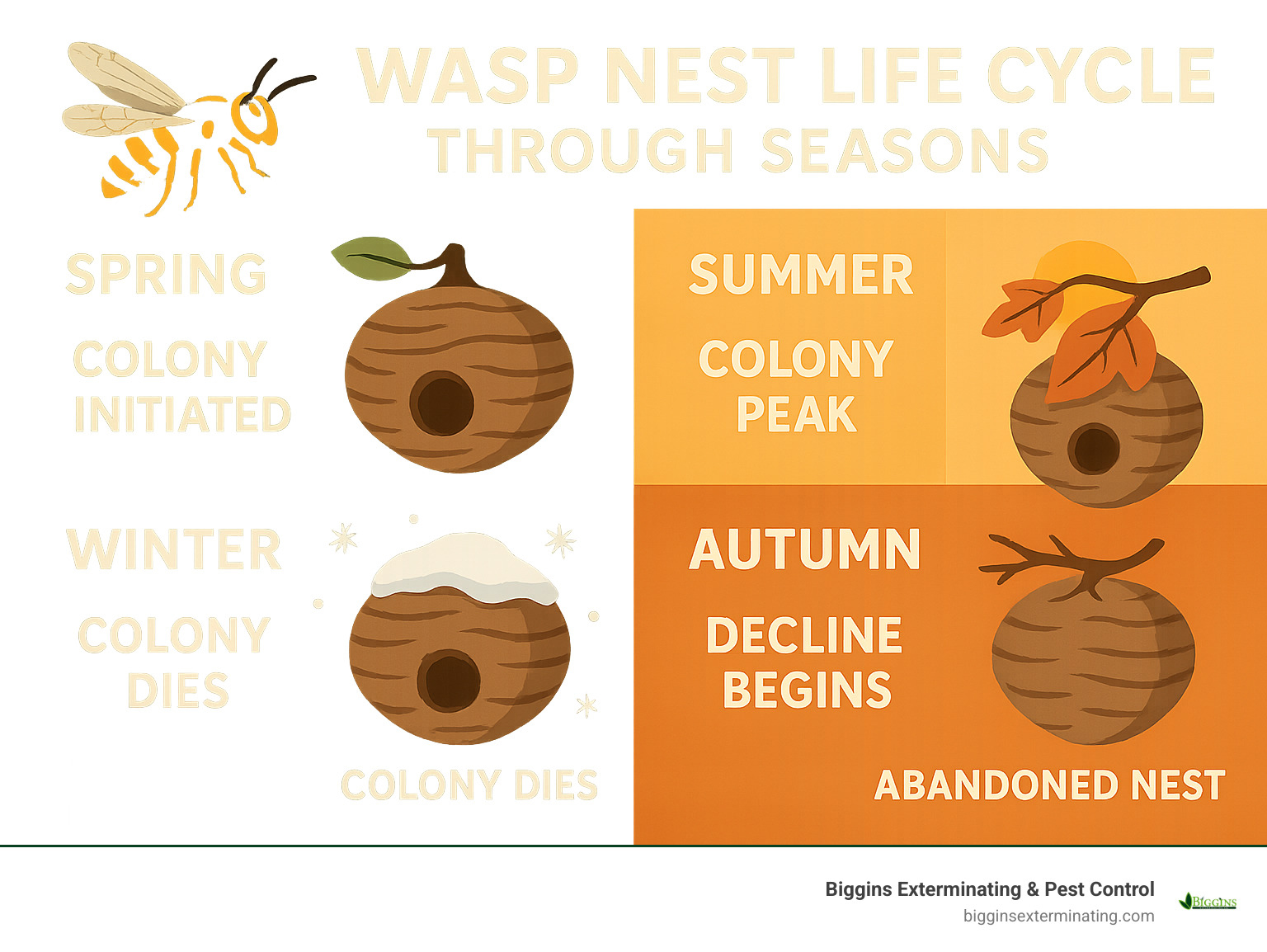
Finding a papery wasp nest under your eaves during winter clean-up can be concerning, but the good news is winter offers the perfect opportunity for safe removal. After temperatures drop below 50°F, most wasp colonies completely die off, leaving behind empty, abandoned structures. Only the fertilized queens survive the winter, and they don’t stay in the old nest—they hibernate in protected spots like tree trunks, rock crevices, or inside attics.
Unlike bee colonies that may survive for years, wasp nests are single-season structures. The complex paper home that housed thousands of wasps at its summer peak stands empty by winter, never to be reoccupied. This makes winter the ideal time for homeowners to safely remove these abandoned nests without risk of painful stings or aggressive swarms.
I’m Stephen Biggins, owner of Biggins Exterminating Co., and I’ve been safely removing winter wasp nests for over 40 years throughout Wilmington, MA and surrounding areas. Having personally handled hundreds of cases where homeowners ask “can I remove a wasps nest in winter,” I can confidently guide you through the safest approach to this common household concern.
Simple guide to can i remove a wasps nest in winter:
– average cost of exterminator for wasps
– hornets nest removal
– remove wasp nest from soffit
What You’ll Learn
In this comprehensive guide, we’ll answer all your pressing questions about winter wasp nest removal:
– Is it truly safe to remove a nest during winter months?
– What happens to wasps and their nests during cold weather?
– How can you tell if a nest is still active?
– What precautions should you take when removing a winter nest?
– Should you tackle removal yourself or call professionals?
– How can you prevent future infestations?
Whether you’re dealing with paper wasps, yellow jackets, or hornets, we’ll walk you through everything you need to know to safely address that abandoned winter nest.
Understanding Winter Wasp Biology
To understand why winter is the ideal time for wasp nest removal, it helps to know what happens to these social insects when cold weather arrives.
What Happens to Wasps and Their Nests During Winter?
When the thermometer consistently dips below 50°F, the busy wasp colony undergoes a dramatic change. Those busy summer nests that had you nervously tiptoeing around your yard? They become ghost towns.
Worker wasps, which make up most of the colony, simply can’t survive the cold. By mid-winter, every single worker has perished, leaving behind only empty paper chambers. It’s nature’s way of resetting the cycle each year.
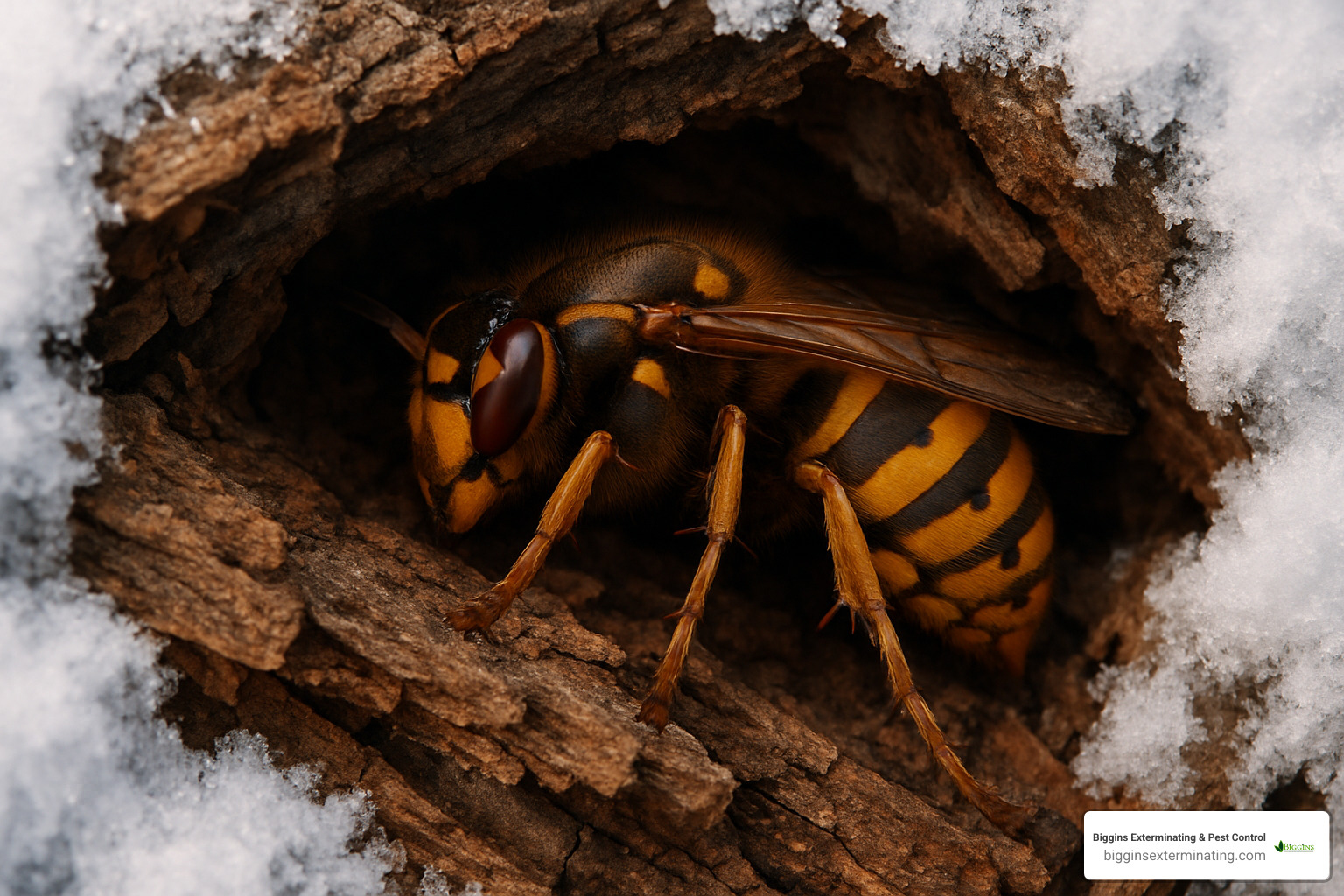
Only the fertilized queens make it through winter, and here’s the important part – they don’t stay in the nest! Instead, these queens seek out protected spots to hibernate, tucking themselves into tree bark crevices, under loose rocks, or sometimes even in your attic insulation. They enter a state called diapause – a deep hibernation where their metabolism slows dramatically until spring warmth awakens them.
The temperature drop essentially triggers a complete colony collapse. A nest that buzzed with thousands of wasps in August sits silent and abandoned by January. As Stephen Biggins often tells clients, “That papery structure that terrified you all summer is now just an empty apartment building with no tenants.”
One of our Wilmington customers shared: “I watched that nest under my porch grow all summer and was too scared to do anything. When Steve explained it would be completely empty by December, I was skeptical. But he was right – not a single wasp remained when we removed it!”
According to scientific research on social wasps, this annual cycle is remarkably consistent across most wasp species in New England, making winter removal truly the safest option.
Do Wasps Reuse Old Nests in Spring?
Here’s good news for homeowners wondering about next year: wasps never reuse old nests. This fact surprises many of our customers in Burlington and surrounding areas.
When spring arrives and queens emerge from hibernation, they always start fresh. The old nest – whether it was a paper wasp nest under your eaves, a bald-faced hornet nest hanging from a tree, or a yellow jacket nest in the ground – is permanently abandoned.
These abandoned structures naturally decay over time, especially after winter moisture and spring rains break down the papery material. Interestingly, old nests may actually deter new queens from building nearby. Many homeowners report that leaving the empty shell visible (in safe locations) seems to discourage new wasp colonies, as queens perceive the territory as already claimed.
There is a downside to leaving old nests in place, though. Abandoned wasp nests often become cozy homes for other pests like spiders, beetles, and even mice. They can also become fire hazards if located near lighting fixtures or electrical connections. For these reasons, we typically recommend removal once you’re certain the nest is inactive.
As we tell our customers in Reading and North Reading, understanding the wasp lifecycle gives you the confidence to know exactly when it’s safe to remove that intimidating nest – and winter is definitely that time.
Is It Safe? — can i remove a wasps nest in winter
Can I remove a wasps nest in winter? Absolutely yes! Winter truly is the safest season for tackling those papery structures. While summer removal might feel like a military operation, winter offers a much more relaxed experience—though smart precautions are still important.
Safety Checklist: can i remove a wasps nest in winter without Getting Stung
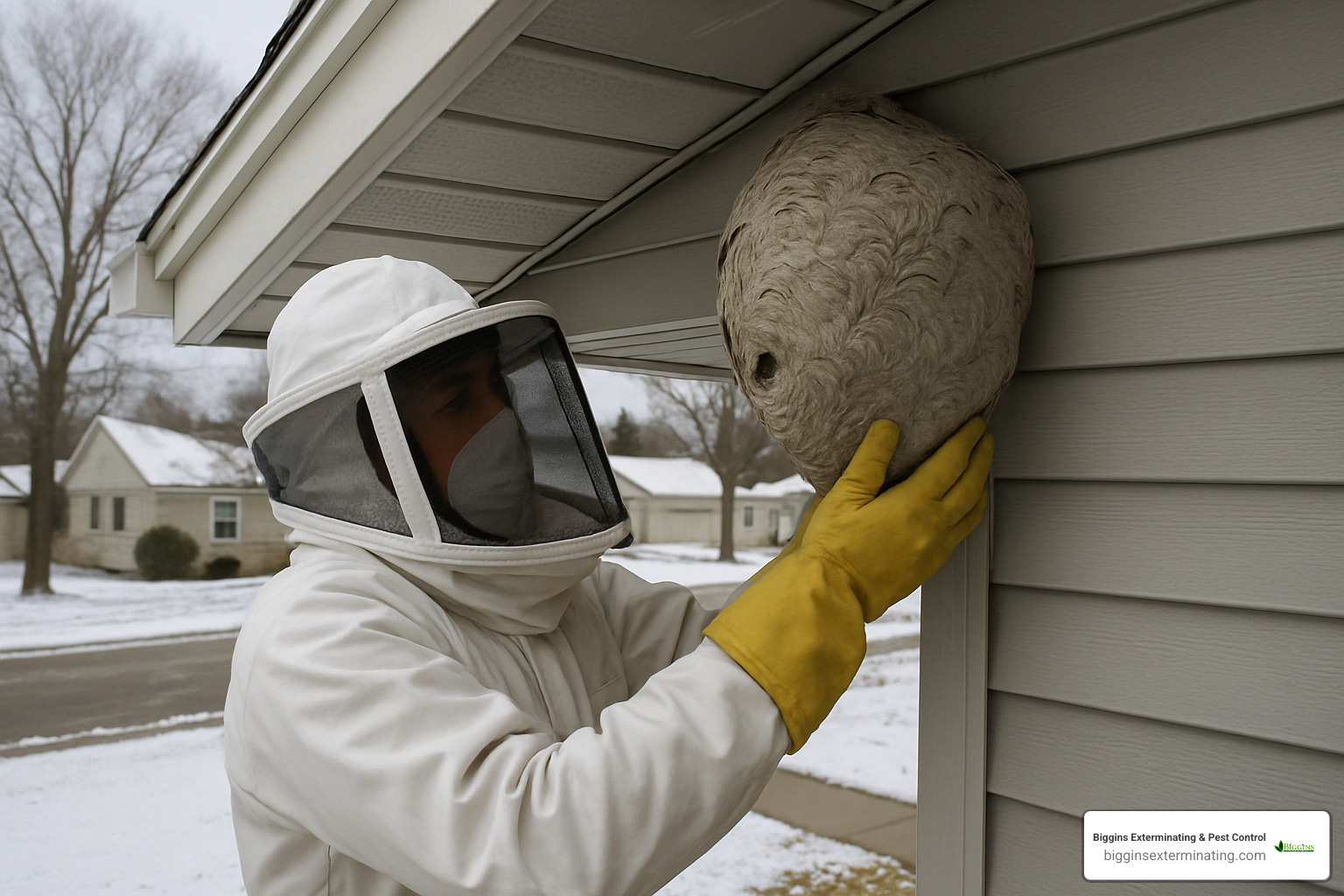
Before you grab that ladder and trash bag, take a few minutes to ensure a sting-free experience. The beauty of winter removal is that you’re dealing with an empty home, but a thoughtful approach still matters.
First, give that nest the “stakeout treatment” on a mild winter day. Just watch from a safe distance for about 15-20 minutes. No buzzing visitors? That’s your first green light. I always recommend choosing the coldest stretch of winter for removal—when temperatures have been consistently below freezing, the chance of surprise wasp encounters drops to practically zero.
Even with abandoned nests, dress for the occasion. Long sleeves, pants, and gloves protect against dust and allergens, not just potential stragglers. A simple dust mask is surprisingly important—those old nests contain all sorts of particles that can trigger allergies. As Martha from Lexington told me last year: “I skipped the mask thinking it was overkill. My sinuses disagreed for the next three days!”
Always plan your escape route before you start—old habits from my early exterminating days that still serve me well. And keep basic first aid supplies nearby, especially if you have known allergies. Better safe than sorry!
How to Tell if a Winter Nest Is Still Active
In my 40+ years serving Massachusetts homes, I’ve learned that roughly 99% of wasp nests are completely abandoned by mid-winter. But how can you be absolutely certain yours is in that majority?
The simplest check is the visual flight test. On a warmer winter day (anything above 50°F), watch the nest entrance for about 20 minutes. No wasps coming or going means you’re likely in the clear. If you’re feeling a bit braver, the “tap test” can confirm abandonment—using a long pole, gently tap near the nest (not directly on it), then quickly step back. An inactive nest will remain silent and still.
For the truly cautious, consider temperature and sound. Active nests maintain a slightly warmer temperature than their surroundings, while abandoned ones match the ambient cold. Similarly, put your ear near (but not too near!) the nest—active colonies produce a faint buzzing sound that’s absent in truly abandoned structures.
The rare exceptions to winter abandonment typically involve nests built in heated spaces like attics or wall voids. As Tom from Woburn finded: “The nest in my well-insulated attic corner somehow kept a few wasps alive until February. Thank goodness I checked before grabbing it!”
DIY Risk vs Professional Support
While winter makes wasp nest removal much safer for DIY-minded homeowners, certain situations still call for professional help from Hornets and Wasps: Identifying Nests and Ensuring Safety.
Height challenges top my “call a pro” list. I’ve witnessed too many ladder accidents from well-intentioned homeowners trying to reach second-story nests. Underground yellow jacket nests also merit professional attention—they’re surprisingly extensive and notoriously difficult to completely remove without specialized equipment.
If you have known insect allergies, even handling abandoned nests could trigger reactions from residual venom or allergens in the nest material. Similarly, nests built inside structural voids like walls or ceilings often require professional techniques to access without damaging your home. Finally, extremely large nests (basketball-sized or bigger) can be unwieldy and challenging to remove intact.
One of our Burlington clients sheepishly admitted: “I almost became a YouTube fail video trying to remove a nest from my second-story eaves in January. The nest didn’t get me—gravity nearly did. Should have called Biggins from the start!”
Winter nest removal is generally straightforward, but when in doubt, there’s no shame in calling for backup. Your safety matters more than the satisfaction of DIY pest control.
Step-By-Step Guide to Winter Wasp Nest Removal
Winter offers the perfect opportunity to safely tackle those abandoned wasp nests. If you’ve confirmed the nest is inactive and within reach, here’s how to handle it with confidence.
DIY Checklist: can i remove a wasps nest in winter
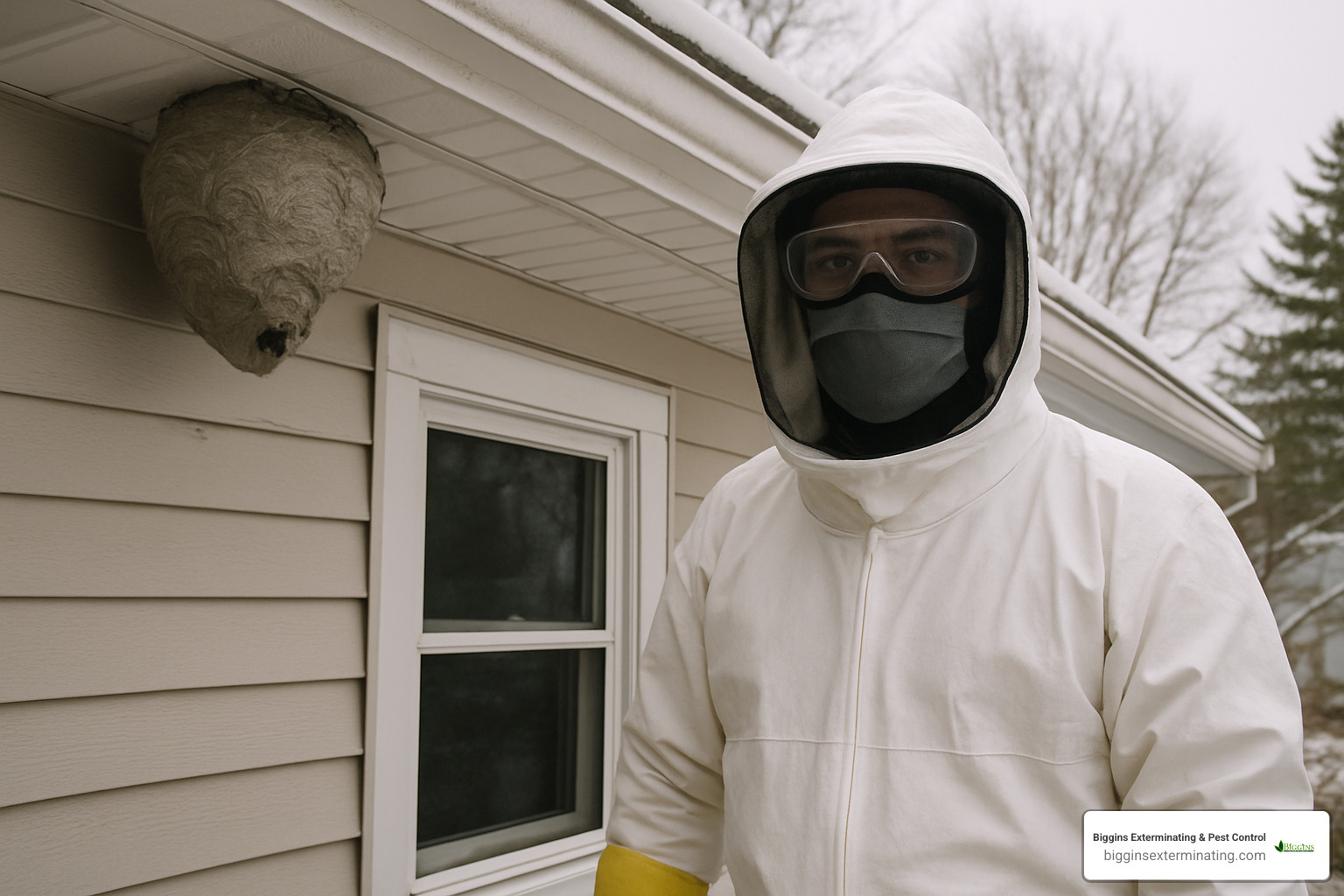
Before you start, gather everything you’ll need: a sturdy ladder, heavy-duty garbage bag, dust mask, gloves, long-sleeved clothing, and a scraper or putty knife. You might also want wasp spray as insurance (even in winter), a flashlight, and some disinfectant for cleanup.
The best time to remove a nest is during a cold snap when temperatures are well below 50°F. This ensures any lingering wasps are completely dormant. Always dress for success—cover all exposed skin with protective clothing and don’t forget your dust mask. Old nests can harbor allergens that might trigger respiratory issues.
Let someone know what you’re planning to do. My customer Frank from Bedford learned this lesson the hard way when his ladder slipped during a solo removal job. “Having my wife keeping an eye on me saved the day,” he told me afterward.
When you’re ready to approach the nest, move slowly and deliberately. Set up your ladder on stable ground if needed, and take a moment to shine your flashlight on the nest. This final visual check confirms there’s no activity before you proceed.
For most exposed nests hanging under eaves or on tree branches, the removal technique is straightforward. Hold your garbage bag directly under the nest, then use your scraper to gently detach it from its anchor point. Let gravity do the work as the nest falls into your bag, then seal it immediately. The whole process typically takes less than 30 minutes for accessible nests.
If your nest is tucked into a partially protected area, consider using wasp spray as a precaution before removal. Wait about 15 minutes after spraying, then proceed with the bagging method.
Don’t forget the cleanup step! After removal, wipe down the area where the nest was attached with disinfectant spray. This is also the perfect time to seal any cracks or entry points that might attract nesting queens next spring.
Based on internet data, DIY removal costs only about $10-30 for basic supplies, while professional removal averages $100-500 depending on the nest’s location and complexity. The savings can be substantial if you’re comfortable doing it yourself.
Should I Hire a Professional?
While winter DIY removal works for many situations, some scenarios definitely call for professional help. Can I remove a wasps nest in winter if it’s on my third-story roof peak? Probably not safely.
Consider calling Biggins Exterminating when facing:
Dangerous heights or locations – We have specialized equipment to safely reach nests on tall trees, steep roofs, or other precarious spots. Martha from Lexington told us, “After watching my neighbor’s wobbly ladder attempt, I called Biggins instead. Best decision ever!”
Underground yellow jacket nests – These subterranean colonies can be surprisingly extensive and difficult to completely remove without professional tools.
Structural nests – Any nest built inside walls, attics, or other building cavities requires expertise to remove without causing property damage.
Large or multiple nests – Particularly bald-faced hornet nests larger than a basketball or properties with several nests may indicate a recurring problem that needs professional attention.
| Comparison | DIY Removal | Professional Service |
|---|---|---|
| Average Cost | $10-30 (supplies) | $100-500 (based on internet data) |
| Time Required | 30 minutes – 2 hours | 30-60 minutes |
| Risk Level | Moderate | Minimal |
| Thoroughness | Variable | Complete |
| Warranty | None | Yes (with Biggins) |
| Follow-up | Self-managed | Professional support |
| Preventative Treatment | Limited | Comprehensive |
At Biggins Exterminating, we offer comprehensive wasp nest removal throughout Wilmington and surrounding communities. Our service includes complete nest removal, site treatment to discourage returns, and practical preventative recommendations—all without requiring long-term contracts.
A customer from Tewksbury recently shared: “After finding my ‘simple’ yellow jacket nest actually tunneled deep into my garden wall, I called Biggins. They removed the entire colony in under an hour with no drama. Worth every penny for the peace of mind.”
When considering whether to DIY or call the professionals, our Professional Wasp Removal services include expertise for even the most challenging Remove Wasp Nest from Soffit situations.
Prevention & Future Infestation Avoidance
The best way to deal with wasp nests is to prevent them from being built in the first place. Winter is the perfect time to implement preventative measures before spring queens emerge.
Benefits (and Drawbacks) of Leaving an Old Nest in Place
While I generally recommend removing old nests, there’s actually some interesting science behind both options that’s worth considering.
When you remove an old nest, you’re eliminating several potential problems. First, those papery structures can become serious fire hazards, especially when built near light fixtures or electrical connections. I’ve seen old nests catch fire in attics when touching hot light fixtures – definitely not something you want in your home!
Abandoned nests also become perfect hiding spots for secondary pests. Spiders particularly love moving into the empty cells, and I’ve even found mice making homes in larger hornet nests. For allergy sufferers, even empty nests contain allergens that can trigger reactions when disturbed.
But here’s something fascinating – some homeowners in Lexington have deliberately left old nests in safe, visible locations with interesting results. As one client told me: “I left an old paper wasp nest under my covered porch as an experiment. The following year, no new nests appeared anywhere near it, though I did find a new one on the opposite side of the house.”
This makes biological sense. New queens searching for nesting sites often avoid areas where nests already exist to reduce competition. Some gardeners even purchase fake wasp nests for this very deterrent effect!
If you do decide to leave a nest, just ensure it’s in a safe outdoor location away from human activity and not near any electrical components or fire hazards.
Deterring New Queens Next Spring
Winter gives you the perfect opportunity to wasp-proof your home before those hibernating queens wake up. After 40 years of helping Massachusetts homeowners prevent infestations, I’ve found these approaches work best:
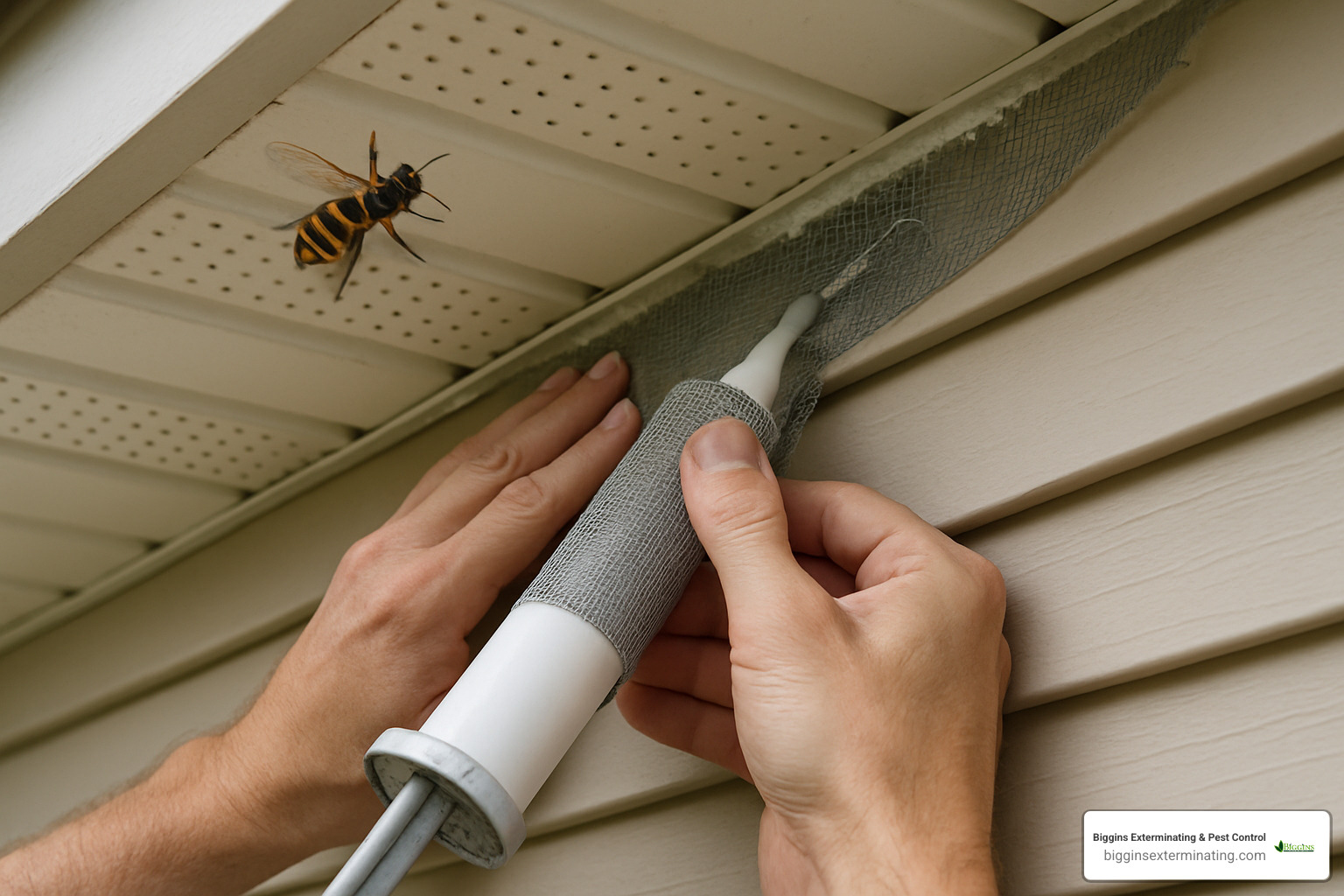
Seal all potential entry points during winter when you can thoroughly inspect your home’s exterior. Look for even tiny cracks around windows and door frames – a queen wasp can squeeze through surprisingly small spaces. Pay special attention to areas under eaves, around vents, and along the roofline where wasps commonly build. A simple tube of exterior silicone caulk can prevent dozens of potential nest sites.
Reduce attractive nesting locations around your property before spring arrives. Wasps love cluttered, protected areas for building. One Bedford homeowner finded this the hard way: “After clearing out my shed in spring, I found three wasp nests had already been started in old garden equipment I’d left leaning against the wall all winter.”
Clean out gutters, remove debris piles, and fill abandoned rodent burrows that yellow jackets might claim. Trim bushes and trees away from your house – creating a 3-foot gap between foliage and your home significantly reduces nesting spots.
Limit food sources that attract wasps to your property. Many people don’t realize that wasps are actually attracted to protein foods in spring (for feeding larvae) and switch to sweets later in summer. Secure your garbage cans with tight-fitting lids, clean up fallen fruit promptly, and keep outdoor eating areas spotless. One North Reading family eliminated their recurring wasp problem simply by moving their compost pile farther from the house.
Consider natural deterrents if you’ve had persistent problems. Certain essential oils like peppermint, clove and lemongrass naturally repel wasps. Apply these to potential nesting areas in early spring. Some homeowners have success with fake wasp nests, which trigger that territorial avoidance instinct in searching queens.
At Biggins Exterminating, we’ve found that comprehensive prevention during winter months can reduce spring wasp problems by up to 80% for our clients in communities like Bedford and North Reading. For professional assistance with prevention or High Quality Hornet and Wasp Removal, we’re always here to help – no contracts required.
Legal, Environmental & Species Considerations
When dealing with wasp nests, it’s important to consider legal, environmental, and species-specific factors.

Species Differences: Yellow Jackets, Paper Wasps, Hornets
Not all wasps are created equal, and knowing which species you’re dealing with makes a big difference in your approach to winter nest removal.
Paper wasps build those open, umbrella-shaped nests with visible cells that you might spot under your porch ceiling. Their colonies tend to be smaller—dozens rather than thousands—and they’re generally less aggressive than their cousins. If you find one of these in winter, you can be virtually certain it’s abandoned.
One Andover homeowner told me, “I was terrified of the paper wasp nest under my deck until I learned they’re the ‘gentler’ wasps. Still glad I waited until winter to remove it!”
Yellow jackets are a different story altogether. These ground-nesters often repurpose abandoned rodent burrows, creating extensive underground networks that can house up to 2,000 workers at their summer peak. They’re highly aggressive when disturbed and their underground nests can be challenging to fully remove even in winter. I’ve seen many DIYers think they’ve removed a yellow jacket nest, only to find in spring they only got the entrance.
Bald-faced hornets create those impressive, football-sized paper nests you might see hanging from tree branches. Despite their intimidating appearance and extremely defensive nature, winter abandonment of these nests is completely reliable. By January in Massachusetts, these impressive structures are invariably empty.
The largest wasp in our region, the European hornet, typically nests in hollow trees or structural voids. They’re less common around Wilmington and surrounding areas, but when they do appear, they can damage wood and bark. Like their relatives, they completely abandon their nests in winter.
Environmental Impact and Safe Disposal
While wasps may seem like unwelcome guests, they actually play important ecological roles that deserve consideration.
Wasps are nature’s pest controllers, hunting caterpillars and other insects that damage gardens. They also serve as pollinators, though less efficiently than bees. This is why at Biggins Exterminating, we always recommend targeted removal of problematic nests rather than broad elimination.
Responsible disposal matters too. If you’ve removed a nest without chemicals (as is usually possible in winter), that papery structure can actually be composted. It’s essentially just wood pulp! However, if you’ve used any insecticides during removal, the nest should be bagged and disposed of with regular trash. Never burn nests, as they may contain residual chemicals that create toxic smoke.
When it comes to pesticide use, winter removal is environmentally friendly precisely because it often requires little to no chemical intervention. If you do need to use insecticides, always follow label instructions precisely—these aren’t just suggestions, they’re federal requirements under the EPA.
Local regulations may also impact your approach. Some Massachusetts municipalities have restrictions on pesticide use or disposal methods. Before proceeding with any chemical treatment, it’s worth checking your town ordinances. In communities like Lexington and Bedford, there are specific guidelines about insecticide use near wetlands and waterways.
“I was pleased that Biggins removed my winter wasp nest without any chemicals,” shared an environmentally conscious client in Woburn. “They explained that winter removal rarely requires pesticides since the nests are abandoned.”
For more information about species identification and environmentally sound approaches to wasp management, check out this scientific research on wasp management from Michigan State University.
At Biggins Exterminating, we believe in balancing effective pest control with environmental responsibility throughout Wilmington and surrounding communities. After 40 years in business, we’ve found that understanding the unique characteristics of each wasp species leads to more effective, environmentally sound solutions.
Frequently Asked Questions about Winter Wasp Nests
1. Is it ever too early or too late to remove a nest in winter?
Winter offers a generous window for safe wasp nest removal, but timing still matters. The perfect moment is after that first hard frost when temperatures consistently dip below 50°F, ensuring the colony has naturally died off. Here in Massachusetts, that sweet spot typically falls between November and March.
“I always tell homeowners not to rush it,” says Stephen Biggins. “Wait until we’ve had that first real cold snap. By then, nature has done the hard work for you—the colony is gone.”
Jumping the gun before full abandonment means you might encounter some lingering workers, increasing your sting risk. On the flip side, waiting until late spring could put you right in the path of newly emerging queens looking for nesting sites. The good news? As long as temperatures remain winter-cold, you’re generally in the safe zone for removal.
2. Can abandoned nests attract other pests?
Those empty paper nests don’t stay vacant for long! While wasps never return to their old homes, abandoned nests become prime real estate for various opportunistic critters. Spiders often move in first, followed by beetles seeking shelter. Mice may tear apart the papery material for nesting, while moths and ants explore what’s left behind.
A Bedford homeowner recently told us: “I left an old nest under my deck thinking it wasn’t hurting anything. By spring, it had become a condominium for every spider in the neighborhood!”
This secondary pest invasion is precisely why we typically recommend removal, even though the wasps themselves have permanently checked out. That abandoned structure isn’t just an eyesore—it’s potentially a new pest problem waiting to happen.
3. Do I need a permit to remove a nest on public property?
When it comes to public property, it’s hands off unless you have permission. Public spaces like parks, schools, or municipal buildings fall under local government jurisdiction, and they typically have their own protocols for pest management.
If you spot a wasp nest in a public area around Wilmington, Billerica, Woburn, or other Massachusetts communities, your best approach is to contact the appropriate department (parks, public works, or facilities management). They’ll either handle the removal themselves or provide guidance on next steps.
For nests on your own property, you’re generally free to proceed without permits, though it’s worth checking if you live in a community with a homeowners’ association—some have specific rules about pest control activities.
“One customer in Tewksbury tried removing a nest from a town playground himself,” recalls Stephen Biggins. “He meant well, but ended up with a stern talking-to from the parks department. When it comes to public spaces, always call the proper authorities first.”
Conclusion
Winter truly offers the perfect window of opportunity for addressing those papery wasp structures around your home. With colonies naturally dying off and nests standing empty, what might be a risky endeavor during summer becomes remarkably straightforward during the colder months.
Throughout this guide on can i remove a wasps nest in winter, we’ve finded that timing makes all the difference. Those intimidating nests that once housed hundreds of stinging insects now stand abandoned—nature’s version of a ghost town. This seasonal reality transforms wasp nest removal from a potentially dangerous task into a simple home maintenance project.
Remember though, safety should never take a backseat. Always confirm the nest is truly inactive before approaching it, and even then, basic protective gear like gloves and a dust mask remain wise precautions. The nest may be empty of wasps, but it still contains allergens and debris that could cause respiratory irritation.
Know your limitations too. While many nests are perfect candidates for DIY removal, some situations call for professional assistance. Nests perched high on your roofline, buried underground, or hidden within your walls present unique challenges that experts are better equipped to handle safely.
Winter is also the perfect time to think ahead. While removing existing nests, take proactive steps to discourage spring queens from building new ones. Sealing entry points, removing potential nesting sites, and limiting food sources can dramatically reduce your chances of dealing with wasp problems when warmer weather returns.
As you address these abandoned insect structures, wasps do play beneficial roles in our ecosystem as both pollinators and predators of garden pests. When possible, minimize chemical use in removal—winter’s natural colony die-off often makes pesticides unnecessary.
At Biggins Exterminating & Pest Control, we’ve been safely removing wasp nests throughout Wilmington, MA and surrounding communities for over four decades. Our family-owned business provides reliable, warranty-backed service without requiring long-term contracts. We understand local wasp behavior patterns and can efficiently address nests that might prove challenging for homeowners.
Whether you choose the DIY route or call in professional help, winter provides that perfect opportunity to reclaim your property from these abandoned structures. By understanding wasp biology and following proper safety protocols, you can confidently address winter wasp nests and prepare for a pest-free spring ahead.
For expert assistance with wasp nest removal in Andover, Bedford, Billerica, Burlington, Lexington, North Reading, Tewksbury, Wilmington, or Woburn, we’re just a phone call away. Our experienced technicians provide thorough, safe removal services with your complete satisfaction guaranteed.
