
Why Yellow Jacket Extermination Requires Immediate Action
Yellow jacket extermination is a critical safety measure when these aggressive wasps colonize your property. Here’s what you need to know:
Essential Yellow Jacket Extermination Steps:
- Identify the nest – Look for paper-like structures in eaves, ground holes, or wall voids.
- Assess the danger – Colonies can contain thousands of workers by fall.
- Choose your approach – DIY for small, accessible nests or professional help for large or hidden infestations.
- Time treatments carefully – Apply at dusk when yellow jackets are less active.
- Use proper protection – Full-coverage clothing and safety gear are essential.
- Follow up – Ensure complete elimination and prevent re-infestation.
Unlike honeybees, yellow jackets are highly aggressive and can sting multiple times. Their colonies peak in late summer, making them increasingly dangerous as they scavenge for food. With over 500,000 people visiting emergency rooms annually due to stinging insects, proper yellow jacket extermination isn’t just about comfort—it’s about safety.
These social wasps build nests that can house anywhere from 1,500 to 15,000 individuals. They’re attracted to sugars and proteins, making outdoor gatherings and garbage areas prime targets.
I’m Stephen Biggins, owner of Biggins Exterminating Co. With over 40 years of experience handling yellow jacket extermination in the Wilmington, MA area, I’ve learned that most infestations require professional intervention to prevent dangerous stings and ensure complete removal.
Explore more about yellow jacket extermination:
Know Your Enemy: Identifying Yellow Jackets and Their Nests
Effective yellow jacket extermination starts with proper identification. These aggressive wasps are organized and clever nest-builders.
Physical Characteristics: What Do Yellow Jackets Look Like?
Yellow jackets are smooth-bodied insects, about 3/8 to 5/8 of an inch long, with a distinctive narrow waist. They are easily recognized by the bright alternating black and yellow bands on their abdomen.
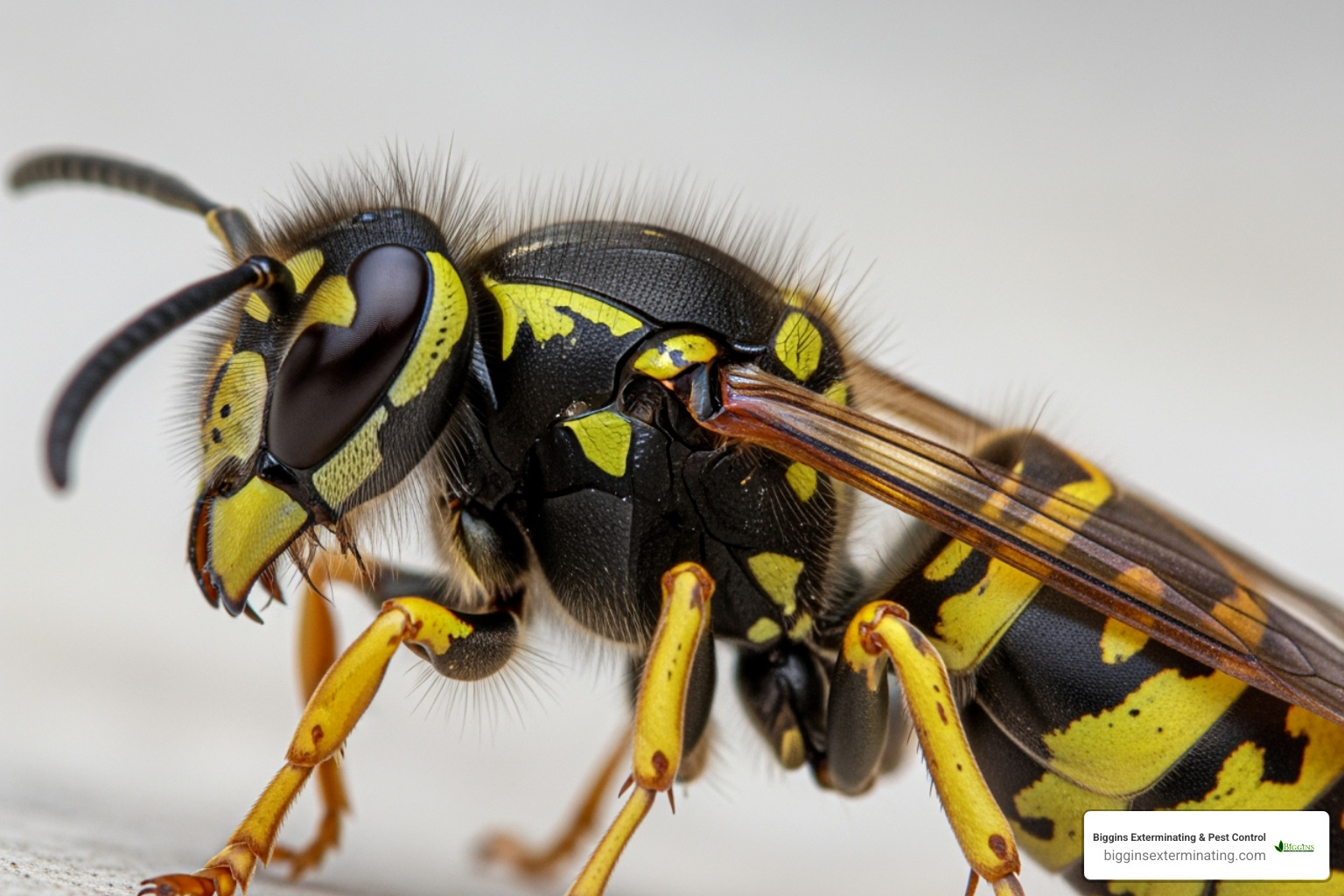
Unlike their fuzzy bee cousins, yellow jackets have smooth, nearly hairless bodies. When at rest, their wings fold lengthwise along their bodies, contributing to their sleek appearance.
Typical Behaviors and Habits: More Than Just Annoying Pests
As social insects, yellow jackets live in large colonies. A single queen in spring can produce a colony of 1,000 to 15,000 individuals by fall. Early in the season, they are helpful predatory insects, but as summer wears on, they become notorious scavengers for sugars and proteins.
This shift in diet is why they become so aggressive at late-summer barbecues. Their natural food sources are dwindling just as their colony reaches peak size, making your food and drinks irresistible targets.
The life cycle explains their seasonal behavior. A fertilized queen emerges from hibernation in spring to build a small nest and raise the first workers. These workers then take over all colony duties. By late summer, the colony produces new queens and males. After mating, only the new queens survive the winter by hibernating. This means yellow jackets never reuse their nests.
Differentiating Yellow Jackets: A Quick Comparison
Here’s how to tell yellow jackets apart from other common stinging insects:
| Feature | Yellow Jackets | Honeybees | Hornets |
|---|---|---|---|
| Appearance | Sleek, smooth, bright yellow & black bands, narrow waist | Fuzzy, rounder body, golden-brown & black, no narrow waist | Larger, thicker, black & white or reddish-brown patterns |
| Nest | Paper-like, underground, wall voids, or aerial locations | Waxy comb in hollow trees or structures | Large, gray, football-shaped paper nests |
| Diet | Predatory insects plus scavenged meats and sweets | Nectar and pollen exclusively | Large insects, some scavenging |
| Aggression | Very aggressive, sting multiple times without dying | Generally docile, sting once then die | Aggressive defenders, sting repeatedly |
Where Do Yellow Jackets Build Their Nests?
Yellow jackets build paper-like nests from chewed cellulose in various locations, which is crucial information for yellow jacket extermination.
Ground nests are common and dangerous. They are often built in abandoned rodent burrows or underground cavities. A steady stream of traffic to a small hole in the ground is a key indicator.
Aerial nests are more visible, appearing as paper globes hanging from tree branches, under eaves, or in dense shrubs. They start small but can grow to the size of a basketball by fall.
Wall voids and structural nests are the most challenging. Yellow jackets find small gaps in siding or around vents to build massive colonies inside walls or attics, often indicated by a persistent buzzing sound from within the structure.
More info about Wasp Hornet Control.
Spotting the Signs: Is Your Property Infested?
Recognizing the signs of a yellow jacket infestation early can prevent painful stings and allow for prompt action. These wasps are not subtle about their presence.
Recognizing Yellow Jacket Activity on Your Property
Key signs of a nearby nest include:
- Increased activity, especially a steady stream of yellow jackets flying in late summer and fall.
- Focused flight paths to and from a specific spot, such as a hole in the lawn, a crack in the foundation, or a gap under an eave.
- Constant buzzing coming from inside walls, attics, or other structural voids.
- Visible nests, which may appear as paper-like globes hanging from branches or as small holes in the ground with heavy insect traffic.
- Aggressive behavior near food sources, particularly around garbage cans, outdoor dining areas, and pet food.
Understanding the Health Risks
Yellow jacket extermination is urgent due to the serious health threats they pose. Unlike honeybees, yellow jackets can sting repeatedly, injecting painful venom each time. Multiple stings can overwhelm the body and cause severe reactions, even in people without known allergies.
The most serious risk is anaphylaxis, a life-threatening allergic reaction that can occur within minutes of a sting. Symptoms include difficulty breathing, swelling of the face or throat, rapid pulse, dizziness, and hives. According to data from the CDC on stinging insect reactions, these encounters send over 500,000 people to emergency rooms annually. These are genuine medical emergencies that can be prevented with proper yellow jacket extermination.
A person can develop a sensitivity to yellow jacket venom at any time, and reactions can worsen with each sting. This is why taking action at the first sign of an infestation is critical for your family’s safety.
More info on Identifying Nests and Ensuring Safety.
Your Guide to Safe Yellow Jacket Extermination
When it comes to yellow jacket extermination, underestimating these aggressive insects can turn a manageable problem into a dangerous one. If you are determined to handle a small, accessible nest yourself, doing so safely is paramount.
Safety Precautions: Protecting Yourself
Before approaching a nest, take these essential precautions:
- Wear protective clothing that covers all exposed skin. This includes a thick long-sleeved shirt, long pants tucked into socks, sturdy gloves, and a hat.
- Use eye and face protection, such as goggles and a face shield or a thick scarf.
- Time the treatment for dusk or dawn when yellow jackets are in the nest and less active.
- Plan a clear escape route before you begin, ensuring there are no obstacles.
- Avoid wearing perfumes or sweet scents that can attract yellow jackets.
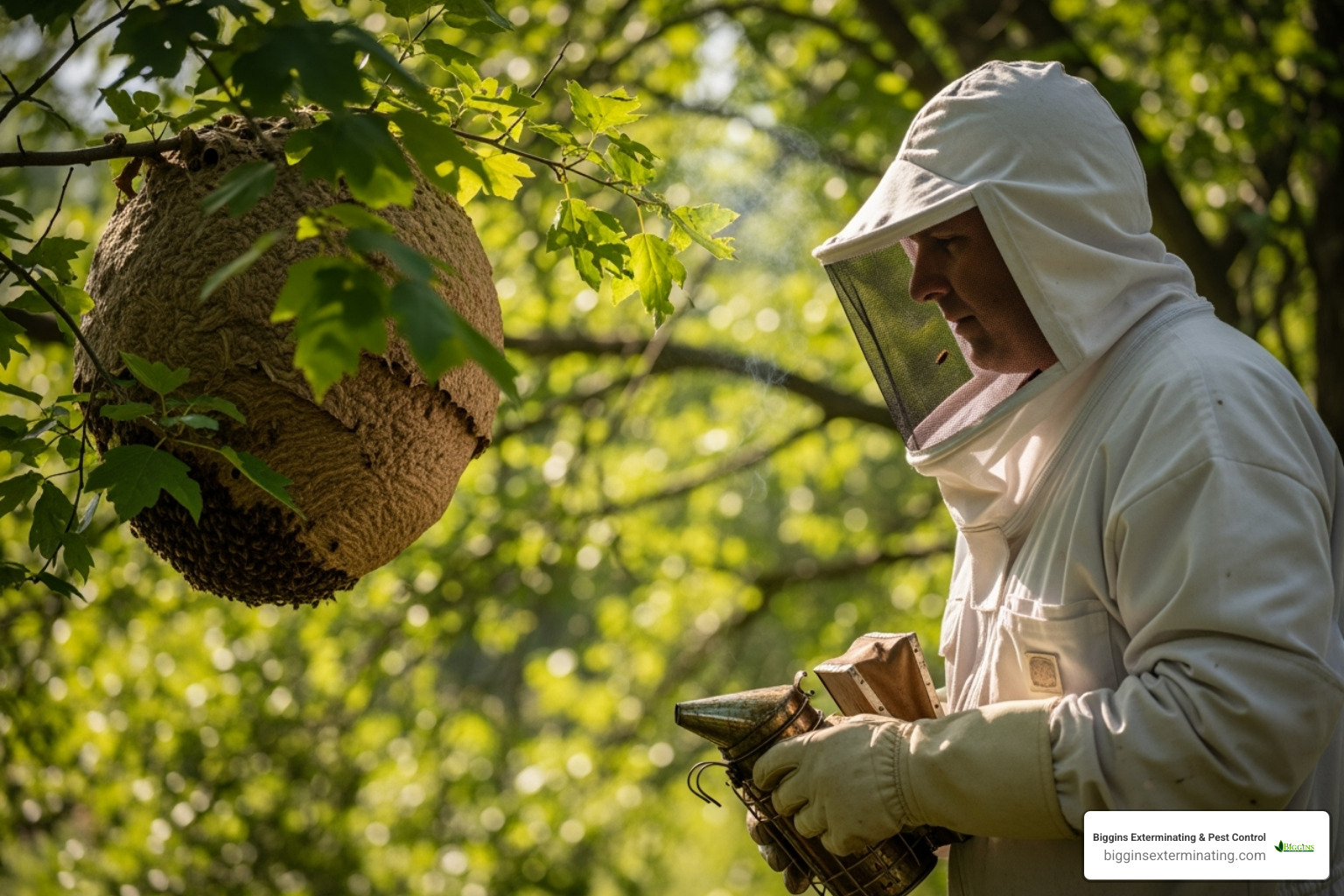
Why DIY Yellow Jacket Extermination is Risky
Most DIY yellow jacket extermination attempts make the problem worse. The biggest risks include:
- Agitating the colony without eliminating it: A failed attempt creates hundreds of angry survivors that will be on high alert and may attack.
- Incomplete extermination: Store-bought sprays only kill on contact and often fail to reach the queen or the core of a nest hidden in a wall void or underground.
- Sealing nest entrances: This is extremely dangerous. Trapped yellow jackets will chew through drywall and other materials to escape, often ending up inside your home.
You should avoid DIY approaches for large nests, inaccessible nests (in walls, high in trees), or if anyone in your household has a known sting allergy. In these cases, the risk of serious injury far outweighs any potential savings.
More info on the Best Way to Get Rid of Wasps Around House.
The Professional Yellow Jacket Extermination Process
Hiring a professional is about safety and effectiveness. At Biggins Exterminating, our 40+ years of experience have led to a safe and reliable process.
Our technicians use proper protective gear, professional-grade products with residual effects, and specialized equipment to reach nests safely and ensure complete colony elimination. Our process includes:
- Thorough Inspection: We locate all nests, identify the species, and assess the colony’s size and location.
- Customized Treatment: We use targeted methods, such as insecticidal dusts for ground nests or liquid treatments for aerial nests, to eliminate the entire colony, including the queen.
- Nest Removal: Whenever it is safe and accessible, we will remove the physical nest after the treatment is complete.
- Follow-up Support: We provide prevention advice and follow-up visits if needed to ensure the problem is solved for good.
Why Professional Hornet and Wasp Nest Removal is Essential.
The Cost of Peace of Mind
While safety is the top priority with an aggressive yellow jacket colony, it’s helpful to understand the factors that influence professional yellow jacket extermination costs.
Important Note: The price ranges we’ll discuss are average costs based on internet research and are not actual costs for Biggins Exterminating services. Every situation is unique, and we provide personalized quotes based on your specific needs.
No two yellow jacket problems are alike. Key factors that influence the cost include:
- Nest location: An easily accessible aerial nest is simpler and less costly to treat than one hidden deep inside a wall void or underground.
- Nest size: A massive fall colony with thousands of workers requires more product and time to treat than a small spring nest.
- Accessibility: The need for specialized equipment like ladders or lifts, or the need to work in tight spaces, can increase the complexity and cost.
Based on industry data, professional yellow jacket removal typically ranges from approximately $150 to over $700. This wide range reflects the difference between a straightforward treatment and a complex situation involving multiple nests or difficult access.
The cost of not hiring a professional—including potential medical bills, property damage from failed DIY attempts, and ongoing stress—can far exceed the treatment cost.
At Biggins Exterminating, we believe in transparency. We offer free inspections to provide accurate, no-obligation quotes custom to your specific situation.
More info about Yellow Jacket Exterminator Cost.
Keeping Them Out for Good: Yellow Jacket Prevention
After successful yellow jacket extermination, prevention is key to keeping these pests from returning. These simple steps make your property less attractive to them and help you avoid future infestations.
Making Your Property Less Appealing
Your first line of defense is eliminating food sources that attract yellow jackets.
- Use sealed trash cans with tight-fitting lids and clean them regularly.
- Clean up spills of sugary drinks or food on decks and patios promptly.
- Secure pet food in airtight containers indoors, and remove outdoor bowls as soon as your pet has finished eating.
- Keep food and drinks covered when dining outdoors.
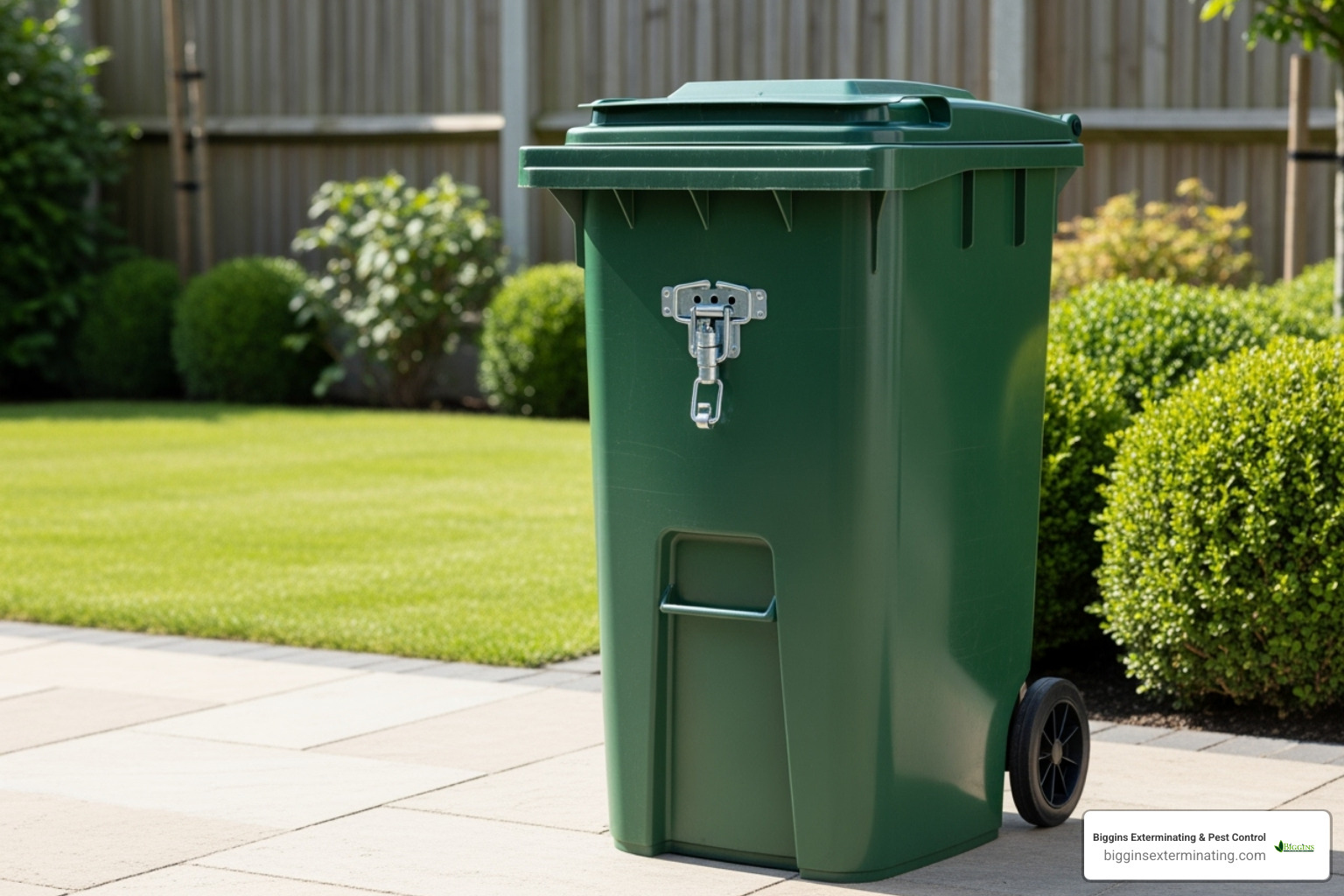
Blocking the Entry Points
Next, seal potential entry points to prevent yellow jackets from nesting inside your home.
- Caulk cracks and crevices in your foundation, siding, and around utility lines.
- Repair torn screens on all windows, doors, and vents. Consider adding fine mesh over vent openings.
Smart Yard Maintenance
A well-maintained yard is less inviting to nesting queens.
- Remove debris like old wood piles and overgrown compost heaps.
- Fill abandoned rodent burrows in your lawn to eliminate pre-made homes for ground-nesting species.
- Keep your lawn mowed and bushes trimmed to reduce potential nesting sites and make it easier to spot new activity.
The Power of Early Detection
Early detection in spring is your most effective prevention strategy. A new nest started by a single queen is far easier and safer to deal with than a mature colony of thousands. Make it a habit to inspect common nesting areas like eaves, sheds, and bushes each spring.
Top 5 Ways to Prevent Hornet and Wasp Nests on Your Property.
Frequently Asked Questions about Yellow Jackets
Here are answers to some of the most frequently asked questions about yellow jackets.
Why are yellow jackets so aggressive in the fall?
Several factors make yellow jackets more aggressive in the fall. First, their colonies are at peak size, with up to 15,000 workers competing for food. Second, their natural food sources are dwindling, forcing them to become desperate scavengers around human food. Finally, the colony is in a biological race to produce new queens before winter, making workers extremely defensive of their nest.
Can I just seal the entrance to a yellow jacket nest?
No. Sealing an active yellow jacket nest is extremely dangerous. Trapped wasps will become frantic and can chew through drywall or other materials to escape, often ending up inside your home. The colony must be completely eliminated by a professional before any entry points are sealed.
Do yellow jackets reuse their nests?
No, yellow jackets never reuse their nests. The entire colony, except for newly mated queens, dies off with the first hard frost. In the spring, surviving queens emerge from hibernation to build brand new nests from scratch. This is why spotting and dealing with a small nest in early spring is much safer and easier than tackling a large, established colony later in the year.
Conclusion
Throughout this guide, we’ve explored the serious nature of yellow jacket extermination and why these aggressive wasps demand immediate attention when they invade your property. From their sleek, smooth bodies and narrow waists to their ability to sting repeatedly without dying, yellow jackets are formidable opponents that pose real dangers to you and your family.
We’ve seen how these social insects build their paper-like nests in ground burrows, wall voids, and aerial locations, sometimes housing thousands of workers by fall. Their increasing aggression during late summer and early autumn, combined with their relentless scavenging for food sources, makes encounters almost inevitable if they’ve established a colony nearby.
The health risks are sobering – with over 500,000 people visiting emergency rooms annually due to stinging insects, yellow jacket extermination isn’t just about comfort. It’s about preventing painful multiple stings and potentially life-threatening allergic reactions like anaphylaxis.
While the DIY approach might seem tempting for small, accessible nests, we’ve discussed why it often backfires. Incomplete extermination, agitated colonies, and the risk of severe stings make professional intervention the wisest choice for most situations. Sealing nest entrances without eliminating the colony can turn a manageable outdoor problem into a terrifying indoor nightmare.
As a family-owned business serving the Wilmington, MA area for over four decades, we at Biggins Exterminating understand the urgency these situations create. We’ve helped countless homeowners in Andover, Bedford, Billerica, Burlington, Lexington, North Reading, Tewksbury, and Woburn safely reclaim their yards and protect their families from these aggressive pests.
Don’t let yellow jackets hold your outdoor spaces hostage or put your loved ones at risk. Our experienced team has the specialized equipment, professional-grade treatments, and safety protocols needed to eliminate entire colonies effectively. We stand behind our work with warranties and follow-up services to ensure your peace of mind.
If you’re dealing with yellow jackets on your property, time is of the essence. The longer you wait, the larger and more dangerous the colony becomes. Contact us for professional wasp and pest control services today, and let our local expertise and decades of experience solve your yellow jacket problem safely and completely.
