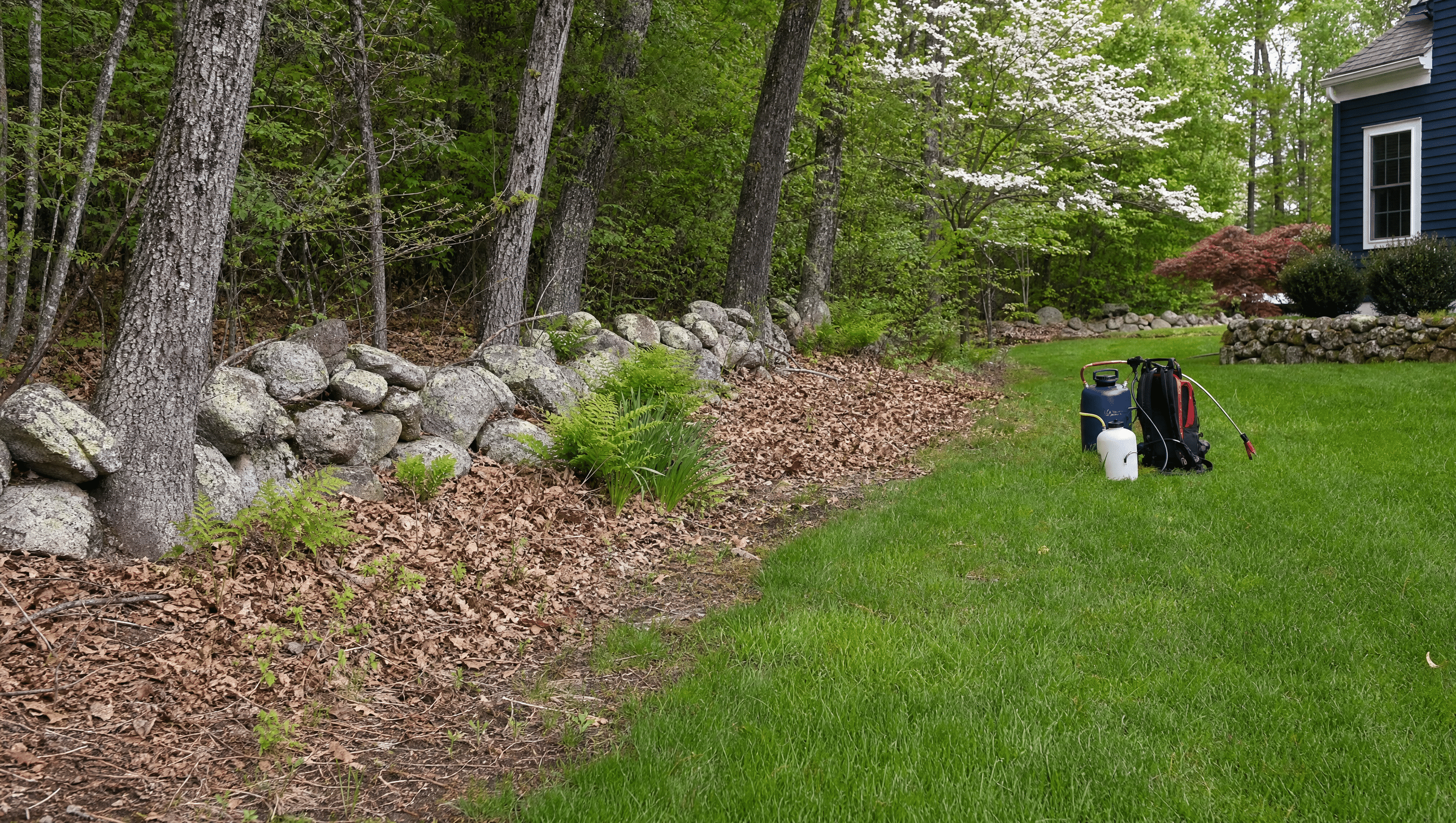
The best time to treat a yard for ticks in Massachusetts depends on the tick species and life stage, property habitat, weather, product label, and the goals of the treatment program. A calendar date alone is not enough. Treatment should be part of an integrated plan that also reduces exposure and tick habitat.
Start with the high-risk habitat
Ticks are more likely in shady, moist, brushy, wooded, and grassy areas than in hot, dry, open surfaces. Map the edges where lawn meets woods, leaf litter, stone walls, dense groundcover, brush, woodpiles, pet routes, and play areas. Targeted work at these transitions can be more useful than treating every square foot equally.
Use seasonal timing as a planning framework
| Seasonal window | Planning focus | What to verify |
|---|---|---|
| Early spring | Clean leaf litter, open edges, inspect habitat, and plan applications | Weather, site access, product label, and local activity |
| Late spring into early summer | Address nymph activity and high-use yard boundaries | Target zones, retreatment interval, rain, and mowing schedule |
| Late summer into fall | Review adult activity, leaf accumulation, pets, and fall use | Whether another targeted treatment fits the plan |
| Winter thaws | Continue personal checks when conditions allow tick activity | Do not assume cold weather eliminates exposure |
Actual application timing must follow the product label and local conditions. Weather can shift activity and treatment windows from one year or property to another.
Do not rely on spraying alone
The CDC advises that pesticides can reduce ticks in treated areas but should not be the only infection-prevention measure. Landscape changes, personal repellents, clothing, tick checks, pet protection, and prompt removal remain important.
Coordinate the yard before treatment
- Remove excess leaf litter and yard debris from treatment edges
- Mow or trim as directed for the selected product and plan
- Identify vegetable gardens, pollinator areas, ponds, wells, play equipment, and pet zones
- Move toys, dishes, and movable furniture according to instructions
- Close windows and keep people and pets out for the label-specified period
- Coordinate irrigation and expected rain
Measure the program, not a single visit
Record application dates, target areas, weather, habitat work, and any observed tick activity. Review whether the property edges, pet routes, and frequently used areas changed. Treatment cannot guarantee a tick-free yard, so success should be framed as reducing exposure and activity as part of a broader prevention program.
Biggins Exterminating provides flea and tick control services in Massachusetts. A property assessment can identify the habitats and seasonal conditions that should guide a targeted treatment plan.