Why Immediate Wasp Treatment Matters for Massachusetts Homeowners
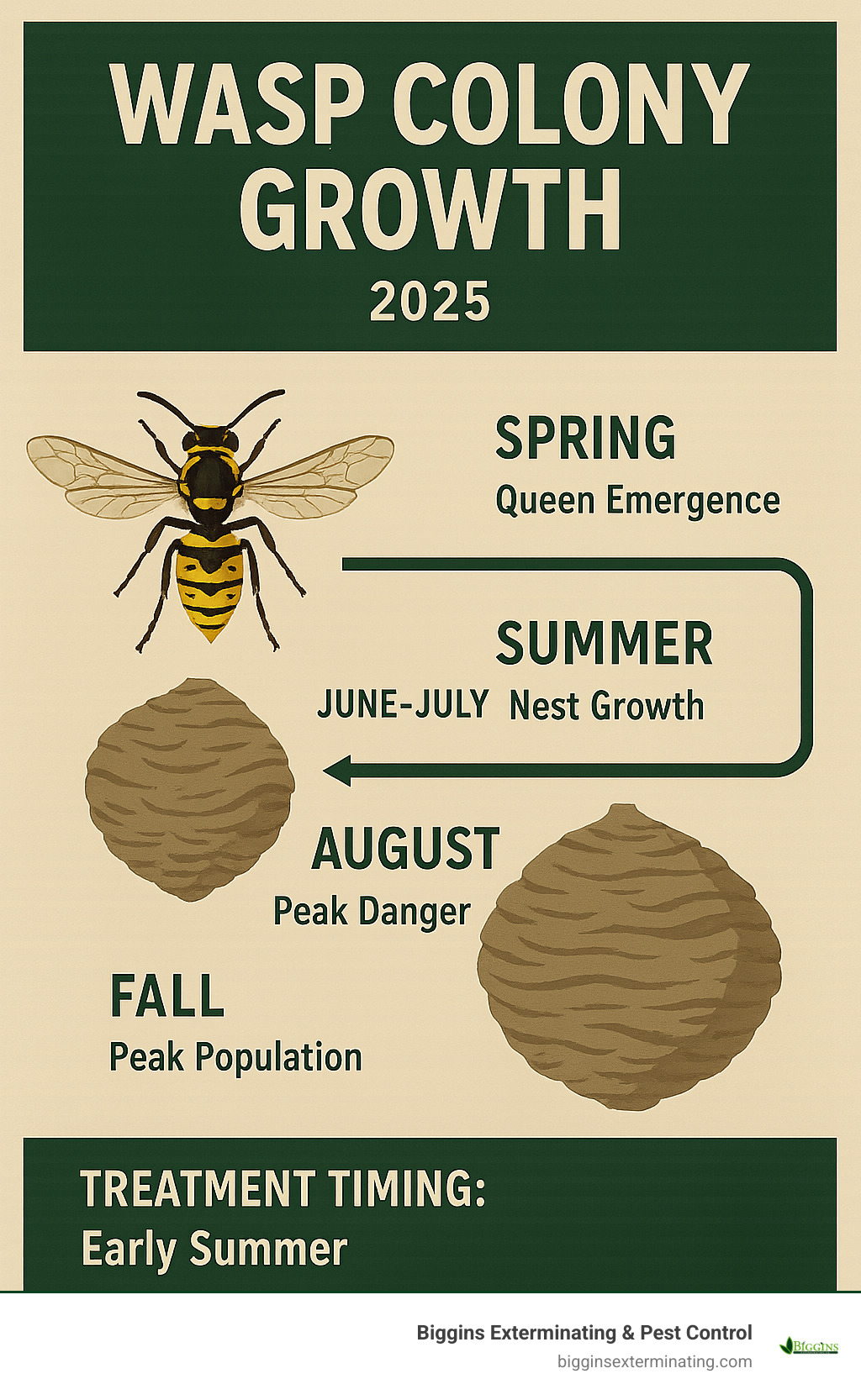
When you need wasp treatment near me, time is critical. Wasps become increasingly aggressive as their colonies grow throughout the summer, and what starts as a few scouts in spring can become thousands of stinging insects by fall.
Quick Options for Wasp Treatment Near Me:
- DIY Methods: Aerosol sprays ($5-$20), wasp traps ($10-$30), protective gear required
- Professional Service: $100-$500 average cost, same-day availability, guaranteed results
- Emergency Response: 24/7 services available, higher rates for after-hours calls
- Prevention: Seal entry points, remove attractants, annual inspections
Wasp colonies can house thousands of wasps at peak season, with some nests reaching over a meter in circumference. Unlike bees that sting once, wasps can sting multiple times and become extremely aggressive when their nest is threatened.
I’m Stephen Biggins, owner of Biggins Exterminating & Pest Control, and I’ve been helping Massachusetts families with wasp treatment near me services since taking over our family business in 1982. Our team has safely removed thousands of wasp nests across Wilmington and surrounding areas, always backing our work with warranties because your family’s safety comes first.
Quick wasp treatment near me definitions:
Spotting a Wasp Infestation Early
Finding wasps on your property early in the season makes wasp treatment near me so much easier – and safer for your family. After helping Massachusetts homeowners for over four decades, I’ve seen how a small spring problem can turn into a nightmare by August if left unchecked.
A golf ball-sized nest in May might house 20-30 wasps, but that same colony could explode to thousands by late summer. That’s why I always tell homeowners to trust their instincts – if something seems off, it probably is.
Increased buzzing traffic around your deck or garden is often the first clue. Wasps fly the same routes between their nest and food sources. When you notice more wasps than usual hovering around specific areas, they’re likely building nearby.
Look for chewed wood marks on your deck railings, fence posts, or outdoor furniture. Wasps create their papery nests by scraping wood fibers and mixing them with saliva. These small scrape marks are like construction sites that spell trouble ahead.
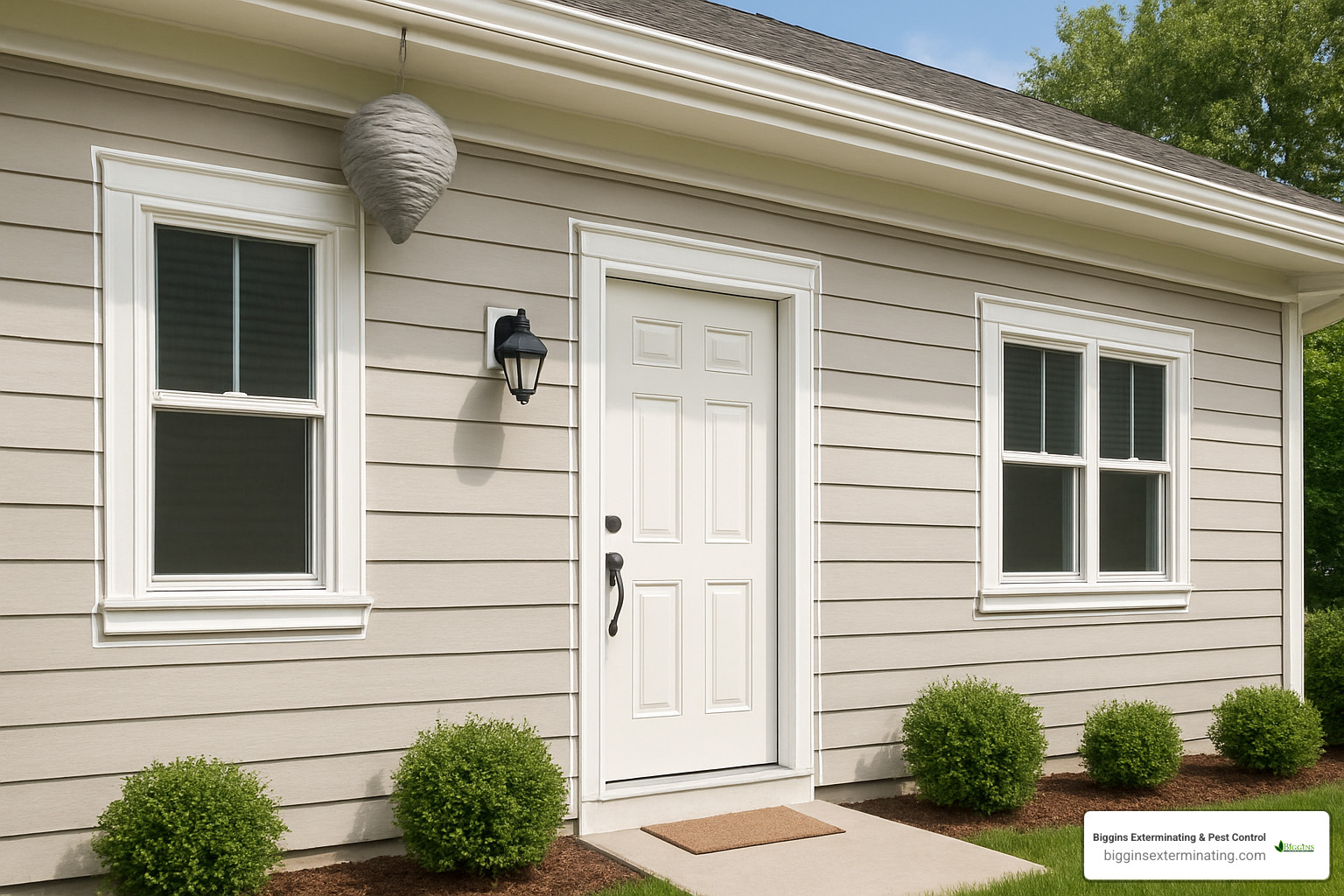
Visible nest structures start small but grow fast. Paper wasp nests look like gray umbrellas hanging upside down, while yellowjacket nests often hide in wall voids or underground. Even a tiny nest deserves immediate attention.
Ground holes with wasp activity signal underground yellowjacket colonies – some of the most dangerous situations we encounter. These hidden nests can house massive populations that explode in anger when accidentally disturbed during yard work.
Common Nest Locations
Building eaves and soffits top our list because they offer perfect protection from Massachusetts weather while providing easy access for foraging flights. Paper wasps especially love these spots for their characteristic umbrella-shaped constructions.
Wall voids and attic spaces create hidden dangers. Yellowjackets squeeze through tiny gaps in siding or around windows, building enormous colonies inside your walls. We’ve removed nests from these spaces that housed over 10,000 wasps – all invisible from the outside until the situation became critical.
Dense shrubs and bushes provide excellent cover for both aerial and ground nests. Rhododendrons, junipers, and overgrown landscaping create perfect wasp real estate. The problem is these nests often go unnoticed until someone gets too close while gardening.
Soil burrows house some of our most challenging removal jobs. Yellowjackets create elaborate underground cities with multiple entrance points. The main hole might be barely visible until you accidentally step near it and trigger a mass defensive response.
Red-Flag Behaviors
Aggressive swarming without obvious provocation means you’ve stumbled too close to their nest. Social wasp species coordinate these defensive attacks, sending chemical signals that rally the entire colony to fight.
Constant entry and exit activity at specific locations indicates an established, active colony. This traffic peaks during warm afternoon hours when foraging activity intensifies.
When you notice these warning signs, it’s time to call for professional help. The safety of your family isn’t worth the risk of tackling an aggressive wasp colony yourself.
Know Your Local Wasps: Species & Health Risks
When you’re searching for wasp treatment near me, knowing exactly what you’re dealing with makes all the difference. After four decades of removing wasp nests across Massachusetts, I can tell you that each species requires a different approach – and some are far more dangerous than others.
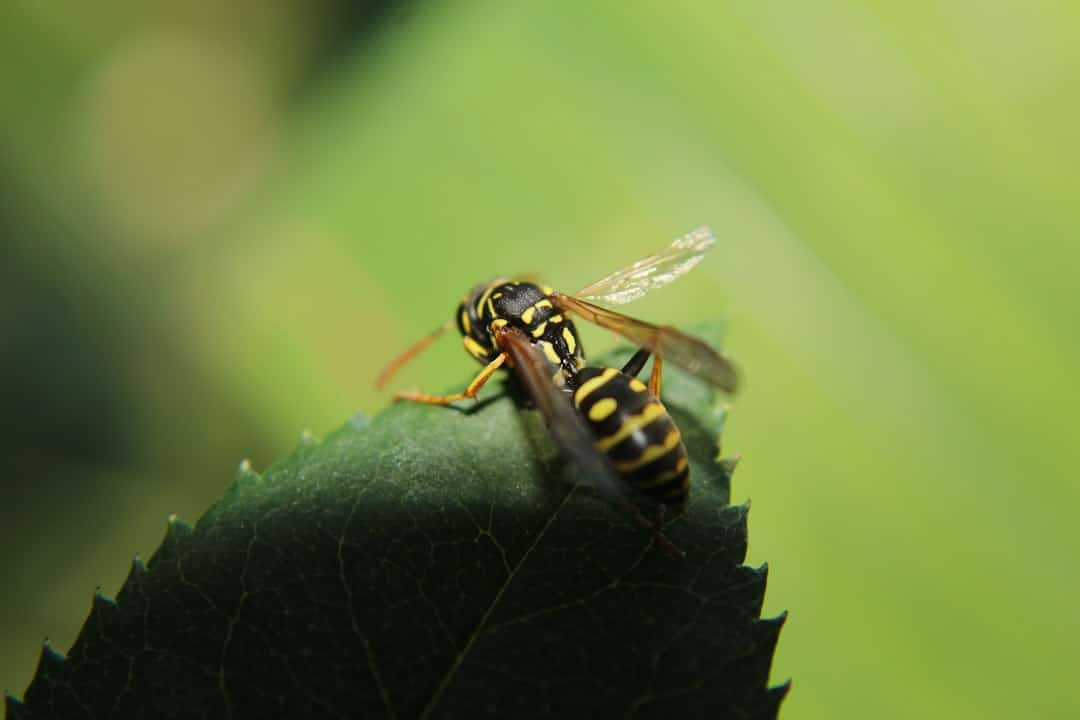
Yellowjackets are the troublemakers we see most often. These aggressive insects build their colonies underground or tucked inside wall voids where you can’t see them growing. A single nest can house thousands of yellowjackets, and they’ll attack in coordinated groups, stinging repeatedly. Their hidden nests also make professional removal more complex and costly.
Paper wasps are the more reasonable neighbors of the wasp world. You’ll spot their umbrella-shaped nests hanging under eaves and porch overhangs. While they can sting multiple times, paper wasps typically mind their own business unless you get too close to their nest.
Bald-faced hornets are actually large wasps despite their name – up to 30mm long. They build impressive football-shaped nests high in trees or attached to building sides. Their size makes their stings particularly painful, but they’re usually less likely to attack unless you directly threaten their nest.
Solitary mud daubers rarely sting humans and actually help control spider populations. Their mud tube nests might look unsightly, but they’re not dangerous. However, their presence can indicate conditions that attract more aggressive wasp species.
The health risks from wasps are serious business. These insects cause more than half of all insect stings requiring medical attention across North America. For the roughly 3% of people with severe wasp allergies, a single sting can trigger life-threatening anaphylactic shock requiring immediate emergency care.
Wasp vs Hornet vs Bee
Knowing the difference between these insects can save you time, money, and potentially your life. Many homeowners call for wasp treatment near me when they actually have bees, which require completely different handling.
| Feature | Wasps | Hornets | Bees |
|---|---|---|---|
| Body Shape | Slender with narrow waist | Large, robust wasp species | Rounded, fuzzy appearance |
| Hair Coverage | Smooth, shiny surface | Minimal hair | Dense, fine body hair |
| Food Sources | Nectar, insects, garbage | Tree sap, insects, fruit | Exclusively nectar and pollen |
| Nest Material | Paper from chewed wood | Paper, larger structures | Wax combs |
| Aggression Level | Moderate to high | High when threatened | Low, defensive only |
| Sting Capability | Multiple stings | Multiple stings | Single sting, then dies |
Body shape tells the story immediately. Wasps and hornets have that distinctive narrow waist and smooth, shiny appearance, while bees look fuzzy and rounded.
This identification makes a huge difference in treatment. When we encounter bees, we work with local beekeepers to safely relocate colonies whenever possible rather than exterminating these beneficial insects. Wasps and hornets threatening your family’s safety, however, require professional removal for everyone’s protection.
Finding Wasp Treatment Near Me: DIY vs Professional Options
When you’re frantically searching for “wasp treatment near me” at 9 PM because wasps just crashed your backyard barbecue, you’re probably wondering: should I grab a can of spray from the hardware store or call in the pros?
After 40 years in this business, I’ve seen both approaches work, and I’ve seen both go horribly wrong. The key is knowing when each makes sense for your situation.
DIY methods can handle small, accessible nests early in the season. Think golf ball-sized paper wasp nests hanging under your deck railing. Professional treatment becomes essential for large colonies, hidden nests, or when you’re dealing with aggressive yellowjackets.
The cost difference is significant. DIY supplies run $15-$50 total for sprays, traps, and basic protective gear. Professional wasp treatment near me services typically range $100-$500 based on internet averages, though complex situations can cost more. Emergency calls naturally carry higher rates.
DIY wasp treatment near me: safety first
If you’re determined to tackle a wasp problem yourself, let’s make sure you do it safely. Spraying nests with over-the-counter insecticides can work for small paper wasp nests, but success depends entirely on your approach.
Timing is everything when it comes to DIY wasp control. Never attempt treatment during the day when wasps are most active. Wait until dusk or early morning when most of the colony is inside the nest.
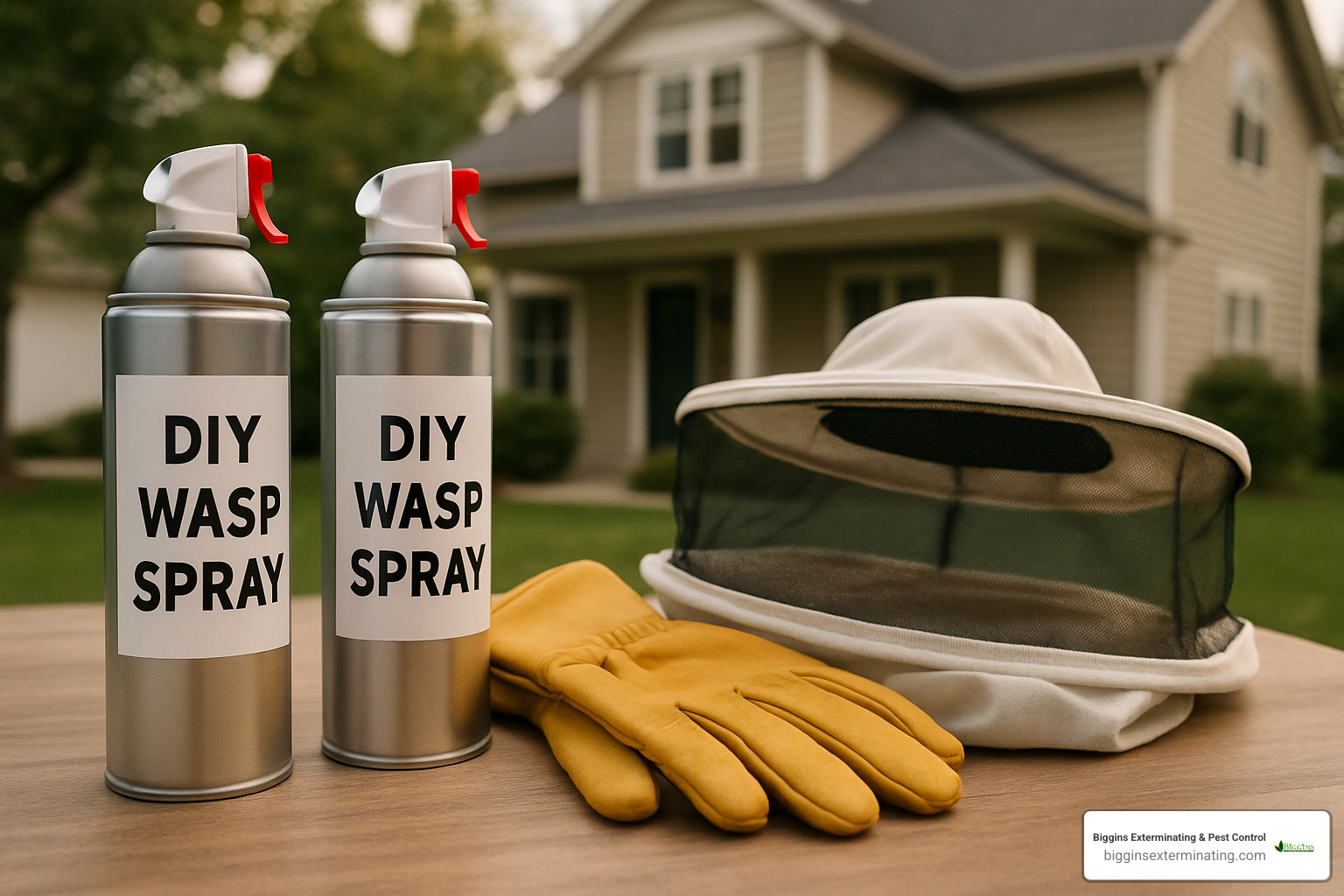
Protective gear isn’t optional – it’s life-saving equipment. You need thick layers, long sleeves, pants, closed shoes, and eye protection. Even small gaps in coverage can result in multiple painful stings.
The aerosol sprays you’ll find at hardware stores cost around $8-$15 and claim to reach nests 20 feet away. They work reasonably well on exposed paper wasp nests but struggle with underground yellowjacket colonies.
Ladder safety becomes critical for liftd nests. We’ve treated homeowners who fell while fleeing angry wasps – turning a pest problem into a medical emergency. If the nest requires a ladder higher than 6 feet, seriously consider professional help.
Professional wasp treatment near me: what to expect
Professional Wasp Removal takes a completely different approach that addresses problems DIY methods often miss.
When our technicians arrive for wasp treatment near me calls, the first step is always a thorough property inspection. We’re not just looking at the obvious nest you called about – we’re checking all the likely hiding spots where additional colonies might be developing.
Species identification drives our entire treatment strategy. Paper wasps get different products than yellowjackets. Ground nests require different techniques than wall voids.
Our targeted insecticides aren’t available to consumers for good reason – they’re more potent and require proper training to use safely. For underground nests, we use residual dusts that spread throughout the colony as wasps contact treated surfaces.
Complete nest removal happens after we’ve eliminated the colony. Leaving old nests in place creates problems – they release pheromones that attract new colonies.
Every professional treatment comes with warranties and guarantees. At Biggins Exterminating, we stand behind our work because we’re confident in our methods. If wasps return to treated areas within our warranty period, we come back at no charge.
For urgent situations, Emergency Wasp Removal Near Me provides rapid response when wasp activity threatens family safety. Average Cost of Exterminator for Wasps breaks down the factors that influence professional treatment pricing.
Inside the Professional Process & Average Costs
When you call for professional wasp treatment near me, you’re getting more than just someone with a spray can. At Biggins Exterminating, we follow our proven A.I.M. approach that’s kept Massachusetts families safe for over four decades.
Assessment comes first – and it’s more thorough than most homeowners expect. We don’t just treat the nest you found; we inspect your entire property to locate hidden colonies.
The Implementation phase uses targeted treatments designed for each specific situation. Underground nests get residual dusts that wasps carry throughout their tunnels. Aerial nests receive contact sprays for immediate results.
Monitoring ensures the job is truly done. Follow-up visits catch any foraging wasps that weren’t home during initial treatment. This is why professional services succeed where DIY attempts often fail.
Response time depends on your situation’s urgency. Standard service typically gets scheduled within 24-48 hours. When wasps are actively threatening your family, same-day emergency response is available (though it does cost extra).
We guarantee our work. Most reputable companies offer 100% satisfaction guarantees with free re-treatment if wasps return within 30-100 days.
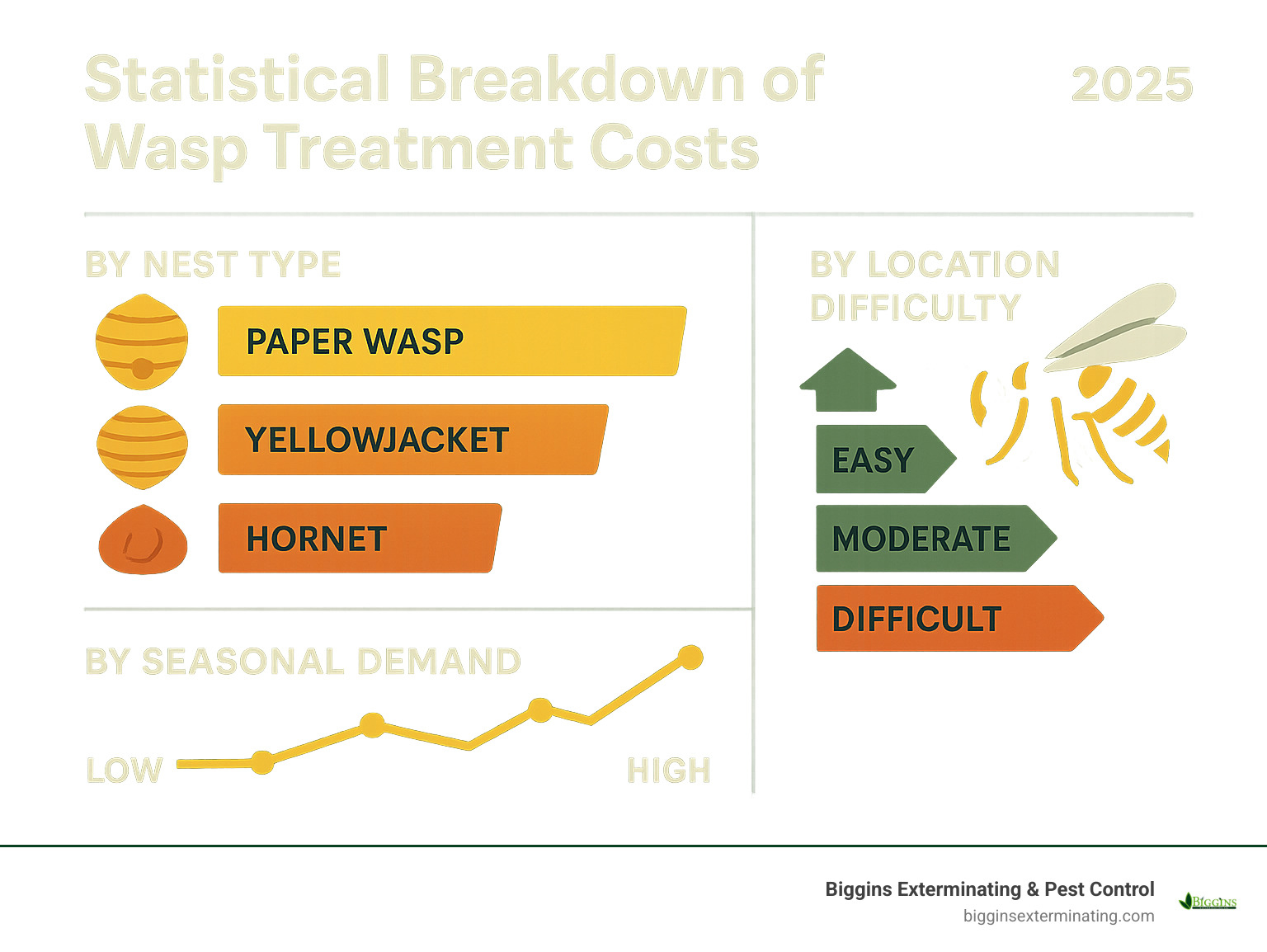
Cost considerations vary significantly based on your specific situation. These are average ranges based on internet research and not specific to our services at Biggins Exterminating: Standard wasp removal typically ranges from $100-$500, with simple paper wasp nests on the lower end and complex underground yellowjacket colonies requiring extensive treatment on the higher end. Emergency calls may add $50-$200 to base pricing.
Safety is our top priority, especially with children and pets around. We specifically choose products with low toxicity to mammals while remaining highly effective against wasps.
What Happens on Service Day
Our technicians arrive prepared for anything – complete protective gear, specialized equipment, and a clear treatment plan. Before we start, we’ll walk through exactly what we’re going to do and discuss any access issues.
Most treatments take 30-60 minutes from start to finish. Underground colonies sometimes need longer because we ensure complete elimination.
After confirming the colony is eliminated, we safely remove and dispose of nest structures. This prevents other wasps from reusing the location and eliminates pheromone markers that could attract new colonies.
Price Factors & Warranty Terms
Several factors influence what professional wasp treatment near me will cost for your specific situation:
Species type makes a big difference – yellowjacket removal typically costs more than paper wasp treatment because their colonies are larger and harder to access. Nest height requiring ladder work increases labor costs. Colony size matters too; larger, established nests need more time and product.
Timing affects pricing as well. Emergency calls, weekend service, or after-hours treatment often carry premium rates. Peak wasp season from July through September sees higher demand.
Warranty terms vary between companies, but most include free re-treatment if wasps return within the guarantee period. At Biggins Exterminating, we back our work with solid warranties because we’ve been perfecting our methods for over 40 years.
Keeping Wasps Away After Treatment
After investing in professional wasp treatment near me, the last thing you want is for these unwelcome guests to return next season. With the right prevention strategies, you can keep your property wasp-free year after year.
In my four decades of pest control experience, I’ve seen too many homeowners skip this crucial step. They’ll spend hundreds removing a dangerous nest, then wonder why wasps are back the following spring. Prevention isn’t just about saving money – it’s about protecting your family from future stinging incidents.
Sealing entry points is your first line of defense. Wasps squeeze through gaps around windows, doors, and siding that you might not even notice. Take a walk around your home with a tube of caulk and seal any openings where different building materials meet. Pay special attention to areas under eaves and around utility penetrations.
Decoy nests work surprisingly well, especially for paper wasps. These territorial insects avoid building near what they perceive as existing colonies. You can buy artificial nests for $10-$20 at most hardware stores. Hang them in early spring before wasps start scouting for nest sites.
Your trash and recycling areas can become wasp magnets if not properly managed. Those sticky soda cans and food containers are like dinner invitations to hungry wasps. Invest in tight-fitting lids and rinse containers before disposal.
Fallen fruit is another major attractant. If you have fruit trees, those overripe apples and pears on the ground are wasp candy. Keep your yard clean of fallen fruit, and harvest ripe fruit promptly.
The most effective prevention strategy is annual spring inspections. Small nests are infinitely easier to remove than established colonies. We catch dozens of golf-ball-sized nests each spring that would have become major problems by summer.
For comprehensive prevention strategies, check out our detailed guide on Top 5 Ways to Prevent Hornet and Wasp Nests on Your Property.
Eco-Friendly Prevention
You don’t need to drench your property in chemicals to keep wasps away. Some of the most effective prevention methods are surprisingly natural and environmentally friendly.
Plant deterrents can be both beautiful and functional. Wasps dislike the strong scents of peppermint, lemongrass, and eucalyptus. Plant these around outdoor dining areas and doorways. Your garden will smell wonderful while sending wasps elsewhere.
Manual trap maintenance offers chemical-free population control. Reusable wasp traps baited with fruit juice can significantly reduce local wasp numbers. The key is consistency – clean and rebait them regularly throughout the season.
When chemicals are necessary, a minimal approach works best. Focus treatments only on active problem areas rather than broad-spectrum spraying. This preserves beneficial insects like bees and butterflies while eliminating threatening wasps.
Prevention is an ongoing process, not a one-time fix. But with consistent effort and the right strategies, you can enjoy your outdoor spaces without worrying about aggressive wasps.
Frequently Asked Questions About Wasp Treatment
After four decades helping Massachusetts families with wasp treatment near me, we’ve heard just about every question imaginable. Here are the answers to the ones that come up most often:
What should I do if I’m stung?
Get that stinger out fast – but do it right. Use a credit card edge to scrape it away rather than squeezing with tweezers. Squeezing actually pushes more venom into your skin.
Clean and cool the area with soap and water, then grab some ice. The cold helps with both pain and swelling. Wrap the ice in a cloth – putting it directly on your skin just adds insult to injury.
Pain relief comes from the usual suspects: ibuprofen, acetaminophen, or antihistamines from your medicine cabinet. Calamine lotion works wonders for the itching that follows.
Watch for serious trouble though. If you start having difficulty breathing, widespread swelling beyond the sting site, a racing heart, dizziness, or severe nausea, get medical help immediately. These signs could mean anaphylactic shock, which is genuinely dangerous.
Multiple stings deserve extra attention. If you’ve been hit more than 10 times – which can happen when you accidentally disturb a ground nest while mowing – see a doctor even if you feel okay.
How fast can a pro arrive for an emergency?
When wasps are keeping your family trapped indoors or blocking your front door, speed matters. Here’s what affects response time for emergency wasp treatment near me:
True emergencies get priority. When we hear about nests threatening kids’ play areas or wasps swarming around building entrances, we drop everything and respond the same day whenever humanly possible.
Timing makes a difference. Daytime calls typically get faster response than evening emergencies, though many of us in the business offer 24/7 service because wasps don’t follow business hours.
Peak season gets crazy. July through September is when everyone needs help at once. The earlier you call, the better your chances of quick service.
At Biggins Exterminating, we know that when you’re dealing with aggressive wasps, “next week” isn’t an acceptable answer. We prioritize dangerous situations and work hard to provide same-day emergency response when families need help most.
How often should my property be inspected?
Think of wasp inspections like changing your car’s oil – regular maintenance prevents bigger problems down the road.
Spring inspections are golden. Early spring checks in April and May catch new nests when they’re golf ball-sized instead of basketball-sized. Queen wasps are just starting their colonies then, making elimination much easier and safer.
Some properties need extra attention. If you’ve had wasp problems before, have lots of landscaping, or live near orchards or restaurants, twice-yearly inspections make sense.
Post-treatment follow-ups happen 2-4 weeks after we’ve treated active nests. This catches any stragglers who were out foraging during the initial treatment.
The bottom line? An annual spring inspection costs far less than emergency removal of multiple large nests in August. Prevention really is the best medicine, even when we’re talking about insects with attitude problems.
Conclusion
When wasps threaten your family’s safety, finding the right wasp treatment near me can feel urgent and overwhelming. But you don’t have to face this challenge alone or settle for temporary fixes that put you at risk.
Throughout this guide, we’ve covered everything from spotting early warning signs to understanding the difference between DIY attempts and professional solutions. The truth is, while small paper wasp nests might seem manageable, most wasp problems require the expertise, equipment, and safety protocols that only trained professionals can provide.
Here at Biggins Exterminating & Pest Control, we’ve been protecting Massachusetts families from wasp dangers for over four decades. As a family-owned business rooted in Wilmington, we’ve seen how quickly wasp situations can escalate – and we’ve developed the experience to handle them safely and completely.
What sets us apart? We believe in straightforward service without the hassle of long-term contracts. When we eliminate a wasp colony, we back our work with solid warranties because we’re confident in our methods. We’ve safely removed thousands of nests across Wilmington, Andover, Bedford, Billerica, Burlington, Lexington, North Reading, Tewksbury, and Woburn.
Your family’s safety is our priority. Whether you’re dealing with aggressive yellowjackets swarming your backyard barbecue or finding a massive nest in your attic, we have the tools and expertise to solve the problem quickly and safely.
Don’t wait for wasp problems to get worse. Early spring is the perfect time to schedule preventive inspections, but we’re ready to respond to emergencies whenever they arise. We offer free estimates and always explain our approach so you know exactly what to expect.
Ready to reclaim your property from stinging pests? Contact Biggins Exterminating & Pest Control today to schedule your inspection. For additional guidance on nest identification and safety measures, check out our detailed resource: Hornets and Wasps: Identifying Nests and Ensuring Safety.
When it comes to wasp treatment near me, there’s no substitute for professional expertise. Your peace of mind and your family’s safety are worth far more than the cost of proper treatment.