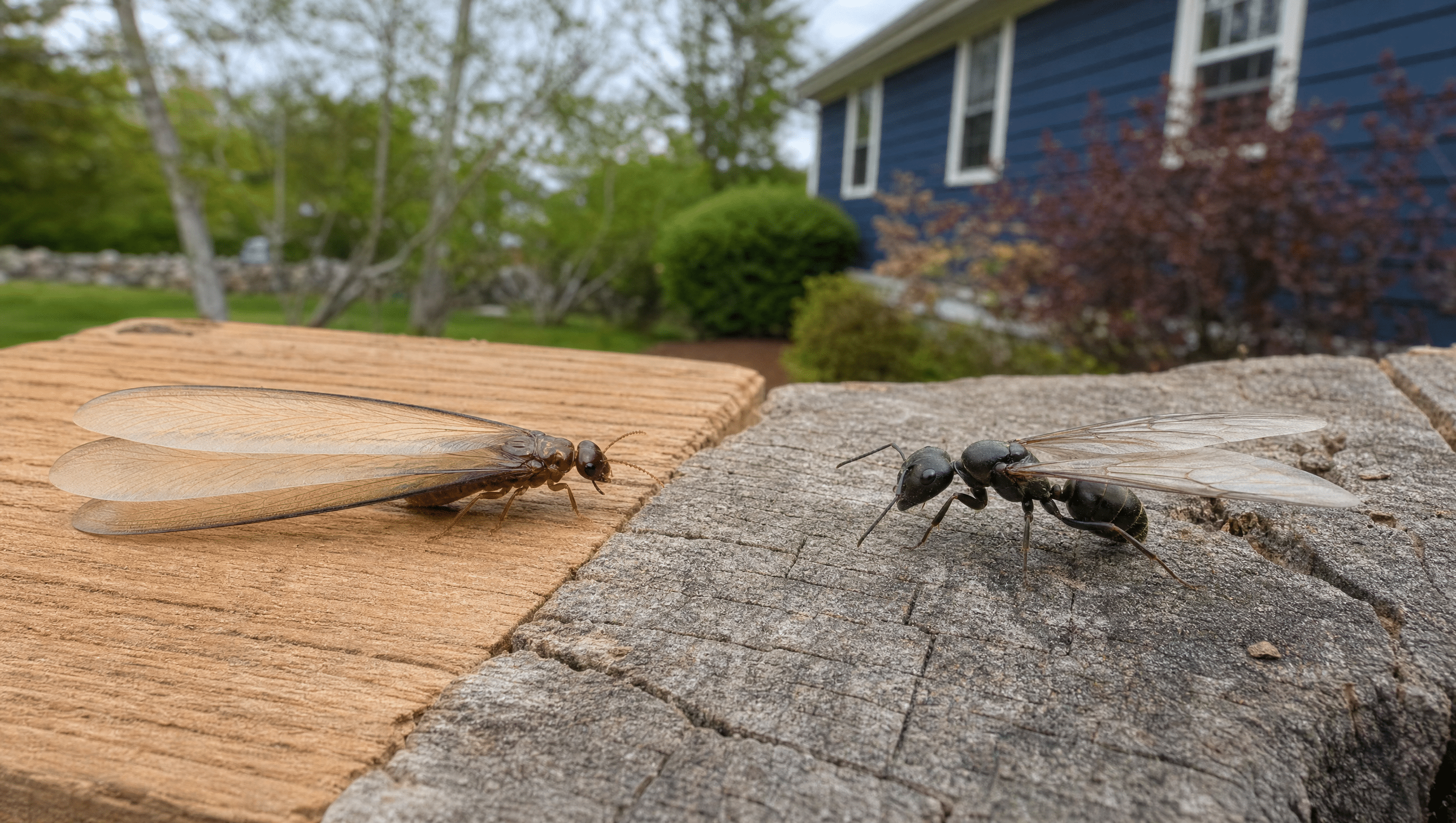
A termite and a flying ant can look similar during a swarm, but several body and wing features help separate them. Identification matters because a swarm can indicate very different nesting and treatment questions. Capture a specimen if it is safe to do so and avoid destroying the evidence before an inspection.
Compare the visible features
| Feature | Termite swarmer | Flying ant |
|---|---|---|
| Antennae | Relatively straight or gently curved | Noticeably elbowed |
| Waist | Broad body without a pinched waist | Distinct narrow waist between body sections |
| Wings | Two pairs that appear similar in length | Front wings are typically larger than rear wings |
| After swarming | May leave piles of similar-sized shed wings | Wing and body evidence varies by ant species |
Use several features together. A damaged insect or poor photo can make one characteristic misleading.
Pay attention to where they appeared
Record the exact room or exterior location, time, weather, nearby window or light, and whether insects emerged from a wall, sill, floor joint, trim, soil, or wood. Indoor swarmers near a foundation, finished wall, or window deserve attention even if the insects disappear quickly.
Look for termite evidence without opening the building
From accessible areas, note mud-like shelter tubes on foundation surfaces, damaged or hollow-sounding wood, discarded wings, moisture problems, and wood-to-soil contact. Do not tear open walls or disturb suspected tubes before inspection; their location can help the inspector understand activity.
Ant evidence points to different questions
Flying ants are reproductive members of an ant colony. The species, moisture conditions, food sources, and nest location determine the response. Large ants around damp or deteriorated wood can raise different concerns from small nuisance ants entering around food or water.
What to save for identification
- Several intact specimens in a sealed container
- Close photos from above and the side
- Photos of shed wings next to a ruler or coin
- The precise emergence location
- Date, time, and recent weather
- Any moisture, leak, or wood-contact condition nearby
Do not treat before identifying the pest
Spraying the insects that are visible may remove the evidence without addressing the colony. Termite work requires understanding species, activity, construction, soil and moisture conditions, and treatment options. Ant management requires species and nest information. A correct identification keeps the response tied to the actual pest.
When to request an inspection
Prompt inspection is appropriate when swarmers emerge indoors, repeated swarms occur, shelter tubes or wood damage are visible, or activity appears near structural wood. Keep the area available and share any prior pest treatment, leak, renovation, or foundation history.
Biggins Exterminating provides termite control services in Massachusetts. An inspection can confirm the insect, assess evidence and conducive conditions, and define a response based on the property rather than appearance alone.