
Why Termite Prevention Is Critical for Massachusetts Homeowners
Termite prevention is your home’s most important defense against one of nature’s most destructive pests. These silent destroyers cause over $1 billion in structural damage across the United States each year, with property owners spending more than $2 billion annually on treatments and repairs.
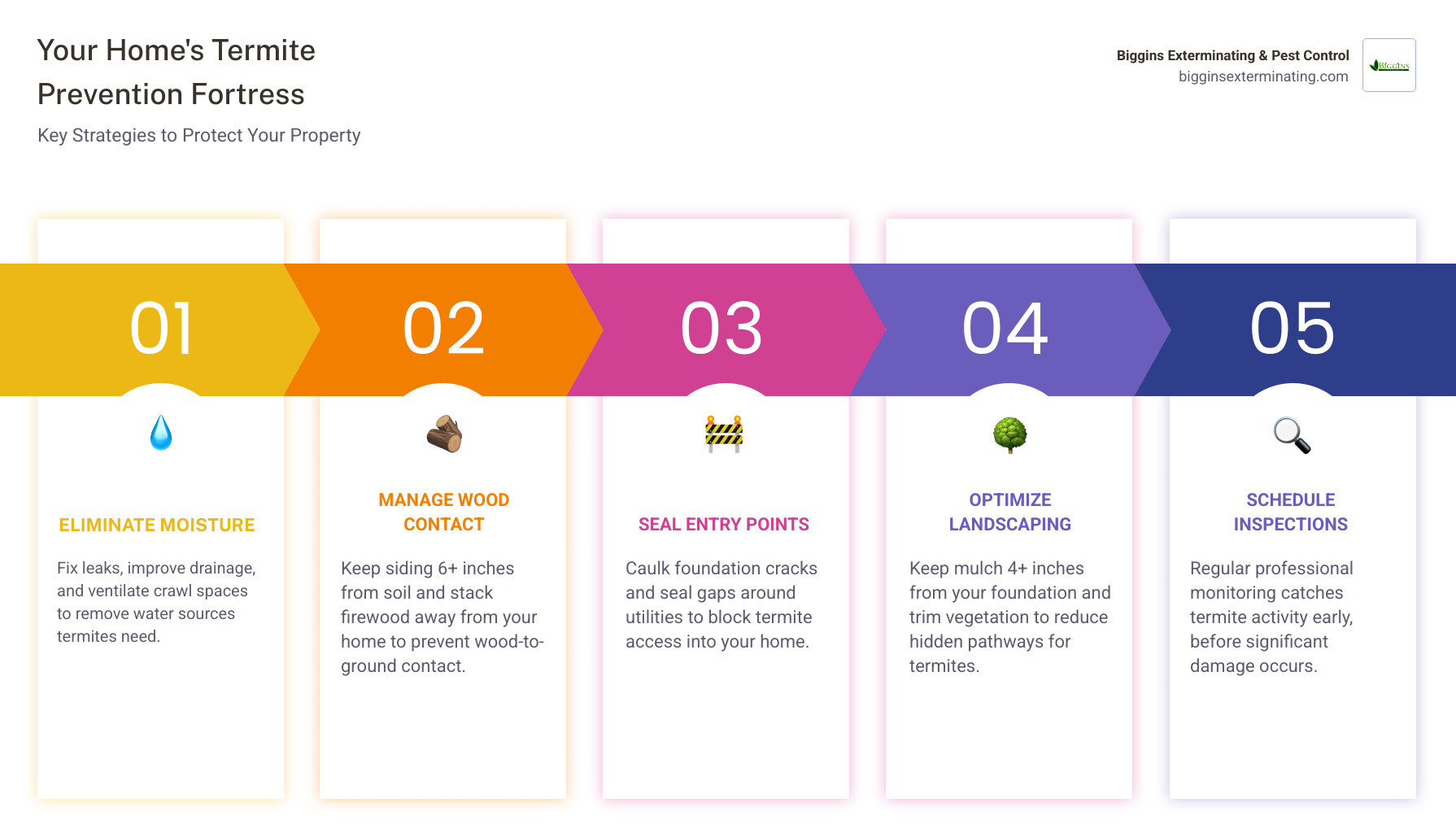
Key termite prevention strategies include:
- Eliminate moisture sources – Fix leaks, improve drainage, ventilate crawl spaces
- Remove wood-to-ground contact – Keep siding 6+ inches above soil, stack firewood away from home
- Seal entry points – Caulk foundation cracks, gaps around utilities
- Manage landscaping – Keep mulch 4+ inches from foundation, trim vegetation
- Schedule annual inspections – Professional monitoring catches problems early
The stakes couldn’t be higher. Unlike other pest damage, homeowner’s insurance typically doesn’t cover termite destruction. A strong termite colony can take just a couple of years to cause serious structural damage, and termites can squeeze through gaps as small as 1/32nd of an inch.
What makes termites especially dangerous is their ability to work undetected. They rarely emerge from soil or wood, making damage invisible until it’s extensive and expensive to repair.
I’m Stephen Biggins, owner of Biggins Exterminating & Pest Control, and I’ve been helping Massachusetts families protect their homes from termites for over four decades. My family’s company has built our reputation on honest termite prevention strategies that keep homes safe without unnecessary contracts or hidden fees.
Easy termite prevention word list:
Know Your Enemy: Identifying Termites and Recognizing Early Warnings
Understanding the difference between termites and other insects is crucial for effective termite prevention. Many homeowners mistake winged termites for ants, ignoring a critical warning sign. Termites are sneaky and prefer to stay hidden, but they leave clues if you know what to look for.
If you’re suspicious about unwelcome guests in your home, don’t wait. Check our detailed guide on How Do You Know If You Have Termites to get answers fast.
Termites vs. Ants: Telling Them Apart
A common question is how to tell termites from ants. The key differences are easy to spot once you know them.
| Feature | Termites | Ants |
|---|---|---|
| Body Shape | Thick, uniform waist (like a tube) | Pinched waist (hourglass figure) |
| Antennae | Straight and bead-like | Bent at sharp angles (elbowed) |
| Wings | Four wings, all the same size | Four wings, front pair much larger |
The biggest clue is the waist. Ants have a distinctly pinched waist, while termites have a uniform, thick body. For winged insects, termites have four wings of equal size, whereas ants have larger front wings.
Telltale Signs of a Termite Invasion
Though secretive, termites leave evidence. Catching these signs early can save you thousands in damage.
Hollow-sounding wood is often the first thing homeowners notice. Tap on baseboards or door frames. If they sound hollow or papery, termites might be inside.
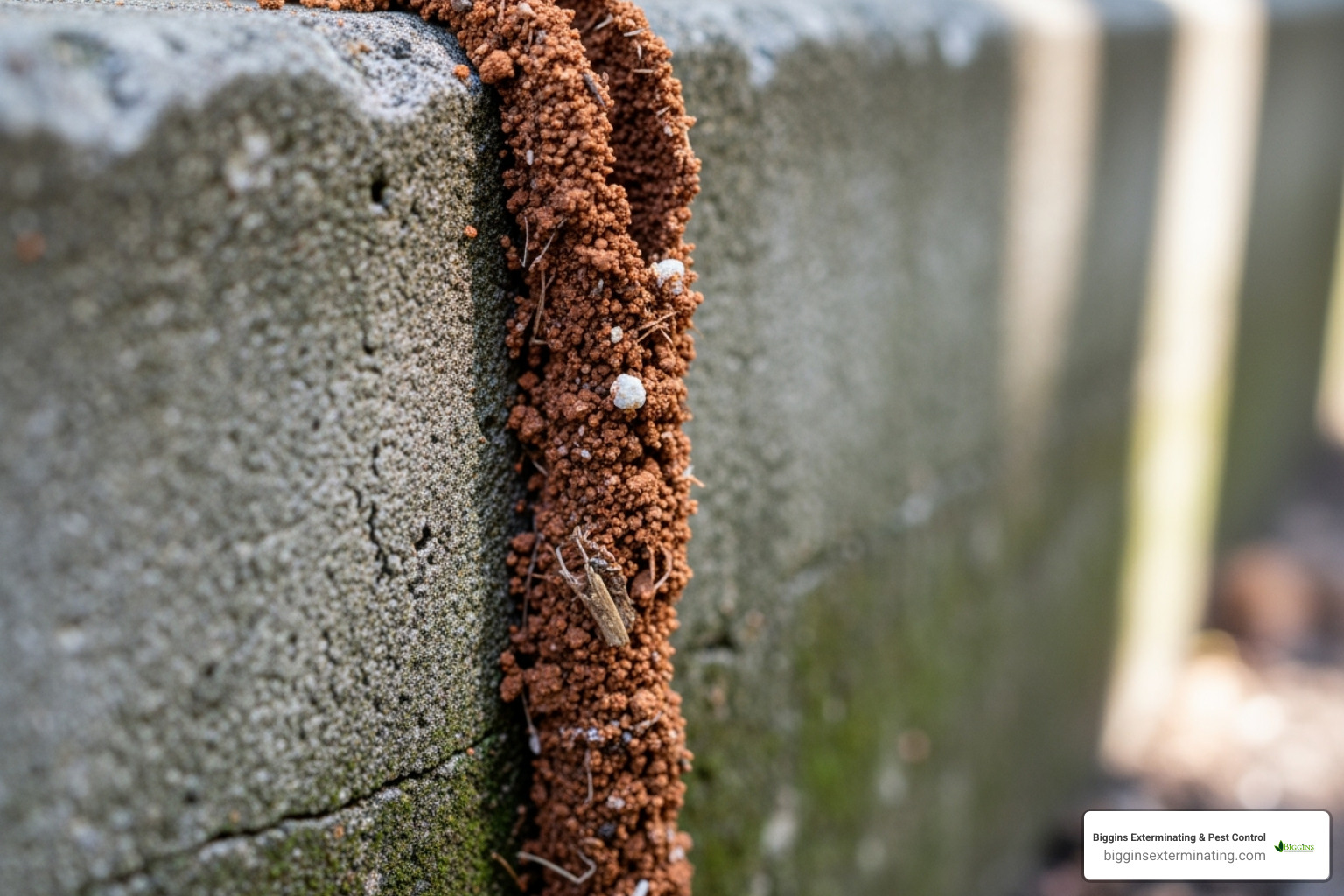
Pencil-thin mud tubes on foundation walls are termite highways. Subterranean termites build these protective tunnels to travel from their underground colonies to your home’s wood, often found in crawl spaces, basements, and along foundations.
Discarded wings near windows and doors indicate that swarmers have found a place to start a new colony. These translucent wings often appear in small piles.
Frass, or termite droppings, looks like tiny, wood-colored pellets resembling sawdust. Drywood termites push them out of their tunnels, creating small piles below infested wood.
Bubbling or peeling paint can look like water damage, but if there’s no water source, suspect termites tunneling just beneath the surface.
Stiff windows or doors that suddenly become hard to open might mean termites have warped the wood.
For a complete breakdown of what to watch for, visit our page on the Signs of Termites.
Common Termite Species to Watch For
In Massachusetts, we primarily deal with a few different termite species.
Native subterranean termites are the most common threat in our area. They build mud tubes, thrive in damp wood, and live in massive underground colonies. Learn more about native subterranean termite behavior or on our Subterranean Termites page.
Drywood termites are less common here but can be transported in furniture or lumber. They don’t need soil contact and infest dry wood directly. The University of California has more on drywood termite habits.
Formosan termites, or “super termites,” are extremely destructive, forming huge colonies. Though they prefer southern climates, they are moving north. The USDA explains the dangers of the Formosan termite.
Only Alaska is termite-free; the rest of us need solid termite prevention strategies.
Proactive Termite Prevention: Your First Line of Defense
The best termite prevention is making your property uninviting to termites. They need two things: wood and moisture. Eliminating these enticements is the goal of proactive prevention, which often involves simple home maintenance tasks that benefit your property in multiple ways.
This approach covers moisture control, landscaping adjustments, wood management, and sealing entry points. For a comprehensive overview, check out our page on How to Prevent Termites.
Eliminate Moisture and Water Sources
Subterranean termites need consistent moisture to survive, making water control a powerful termite prevention tool.
Fixing leaks should be a top priority. A dripping faucet, slow pipe leak, or roof leak can create enough moisture for termites to thrive.
Gutter maintenance is vital. Clogged gutters cause water to pool around your foundation. Clean them regularly and ensure downspouts direct water at least three feet away from the house.
Crawl space ventilation is crucial. These damp spaces are a termite paradise if not managed. Install vapor barriers, ensure good ventilation, and use a dehumidifier if needed. The University of Minnesota has excellent moisture management tips for these areas.
Also, ensure landscape grading slopes away from your foundation and that sprinklers don’t spray against the house.
Remove Termite Food and Shelter
Termites eat cellulose, found in wood and paper. Smart termite prevention involves managing these materials around your home.
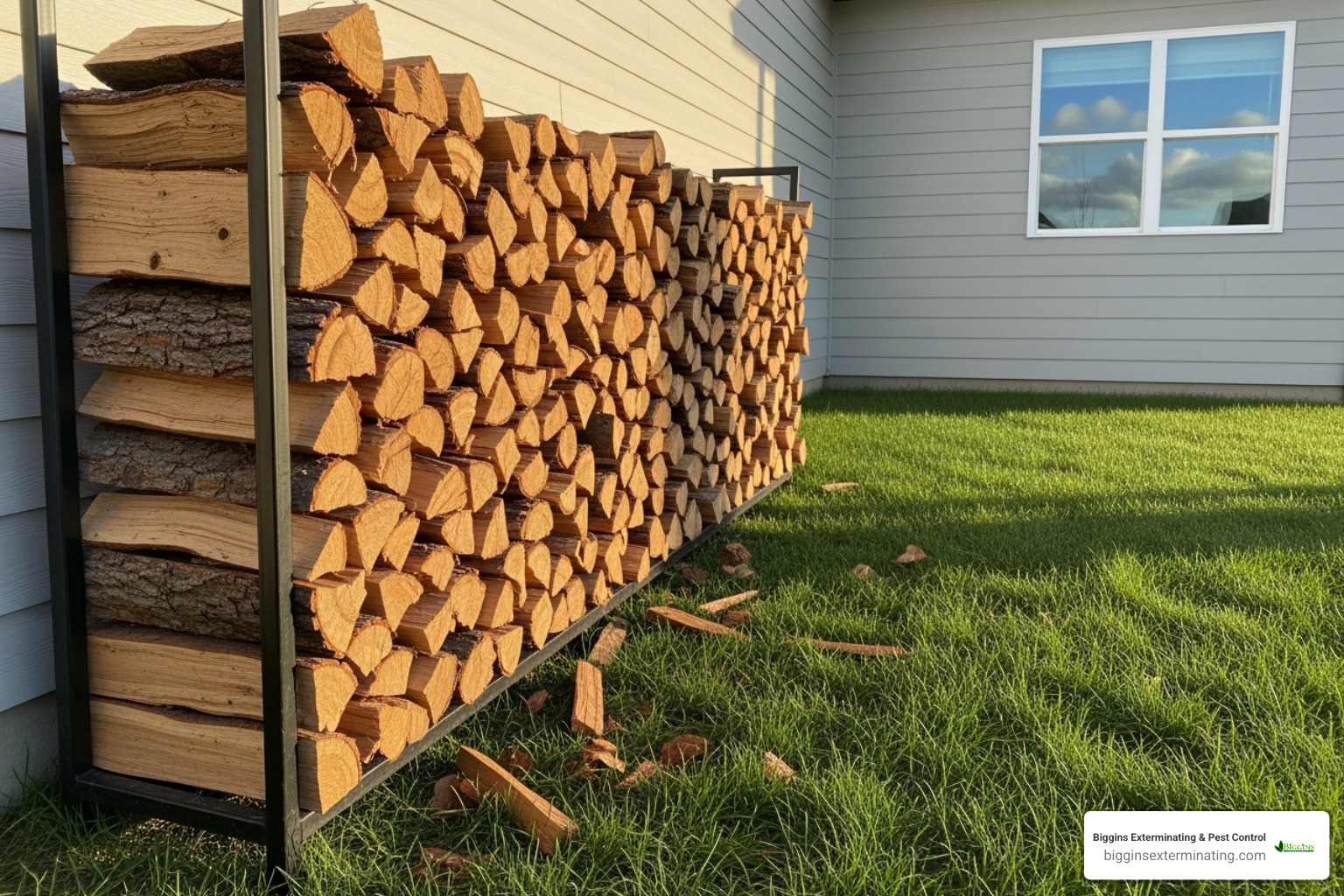
Firewood storage is a common mistake. Stacking wood against your house is a termite invitation. Keep firewood at least 20 feet from your home and 8 inches off the ground.
Mulch management is key. Wood-based mulch retains moisture and provides food. Keep all mulch at least 4 inches from your foundation and consider termite-resistant alternatives like gravel or rubber mulch.
Tree stumps and dead wood attract termites. Remove old stumps, dead trees, and any wood debris from your property, including forgotten lumber.
Cardboard and paper storage also needs attention. Store paper products in plastic containers, not cardboard boxes, especially in damp areas like basements.
Smart landscaping means keeping shrubs trimmed at least 12 inches from exterior walls to improve airflow and eliminate hidden termite pathways.
For more prevention strategies, visit our page on The Dangers of Termites and How to Prevent Them in Massachusetts.
Block Entry Points by Reducing Wood-to-Ground Contact
Termites can squeeze through cracks as narrow as 1/32nd of an inch. Effective termite prevention means sealing every possible entry point.
Foundation cracks are termite highways. Regularly inspect your foundation for cracks and seal them immediately with an appropriate patching compound.
Utility entry points are common vulnerabilities. Check where pipes and conduits enter your home and seal any gaps with caulk or foam sealant.
Wood siding clearance is critical. Maintain at least 6 inches between any wood components and the ground. If your soil level is too high, regrade it.
Deck and porch construction should also follow the 6-inch rule. Use concrete bases for support posts near the ground and consider termite-resistant materials.
Vents and screens can be entry points if damaged. Install fine mesh screens over foundation and attic vents and repair any holes in window screens.
These proactive measures improve your home’s health and value, saving you from massive repair bills. Every step in termite prevention counts.
Professional Termite Control: When to Call in the Experts
Despite the best termite prevention efforts, infestations can still happen. Treating an active infestation requires specialized knowledge and professional-grade products not available to homeowners. Much like calling a roofer for a major leak, professional exterminators are needed to handle termites effectively, using their expertise in termite behavior and treatment methods. Explore our services on our Termite Pest Control page.
Key Differences: Professional Liquid Barriers vs. Professional Bait Systems
Professionals typically offer two main treatment options: liquid barriers and bait systems. Both are effective but work differently.
Professional liquid termiticides create an invisible chemical barrier around your home’s foundation. Modern non-repellent formulas allow termites to pass through, pick up the active ingredient, and carry it back to the colony. This method offers immediate protection that lasts for years and is highly effective against subterranean termites. However, it requires some digging and drilling, making it more invasive. Learn more about this on our Termite Barrier Treatment page.
Professional termite bait stations use a different strategy. We place discrete stations with slow-acting insecticidal bait around your property. Termites carry the bait back to the colony, eventually eliminating it. Baiting systems are less intrusive (no drilling) and environmentally friendly, but they can take several months to work, unlike the immediate protection of liquid treatments.
Both methods are proven when applied by trained professionals. The best choice depends on your specific situation.
What to Expect from a Professional Termite Treatment
At Biggins Exterminating & Pest Control, we follow a thorough, proven process to get the best results.
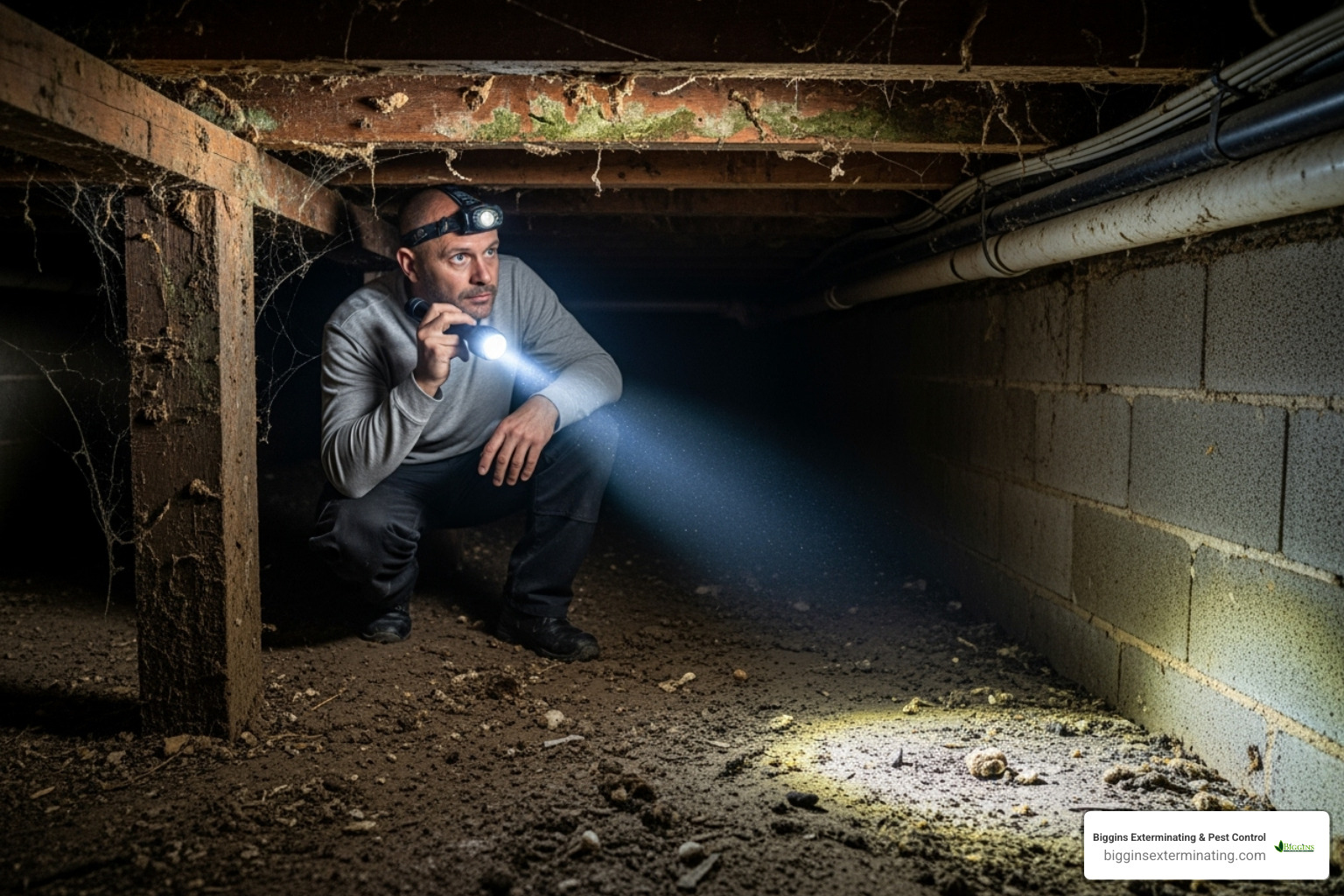
The inspection comes first. Our technicians conduct a thorough examination of your property, inside and out, looking for active termites, entry points, and conducive conditions. We check crawl spaces, foundations, and use specialized tools to find hidden damage.
Based on our findings, we develop a customized treatment plan. Since no two properties are alike, we tailor our approach and explain our recommendations and expected results.
The actual treatment varies by method. Liquid treatments may involve trenching around the foundation, while bait systems involve strategic placement of stations. Our licensed technicians handle all materials safely and effectively.
Safety is our top priority. We explain all precautions and answer your questions about the products used. The EPA offers more Information on pesticide safety from the EPA.
Our service doesn’t end with the treatment. We provide ongoing monitoring to ensure the treatment is working and to prevent future issues, which is crucial for long-term termite prevention.
DIY vs. Professional Termite Prevention: What’s Right for You?
Many homeowners ask about DIY termite control. The honest answer is that it depends on your goal.
For prevention, DIY efforts are valuable. The maintenance tips covered earlier are perfect homeowner projects that make a real difference.
However, for treating an active infestation, DIY products have limited effectiveness. They may kill some termites on contact but rarely eliminate the entire colony and its queen.
Improper application can worsen the problem. Using the wrong products can scatter a colony, spreading the infestation to new areas and making professional treatment more difficult and costly.
Professional help is necessary if you suspect active termites. If you see mud tubes, discarded wings, or damaged wood, don’t wait. Every day of delay increases the risk of expensive structural damage.
Long-term protection is another major advantage of professional treatment, which we back with warranties and ongoing monitoring. For permanent solutions, see our guide on How to Get Rid of Termites Permanently.
The bottom line: Prevention is a great DIY project, but active infestations need professional expertise.
The Importance of Regular Inspections and Vigilance
Even with the best termite prevention strategies, regular inspections are essential. Termites are relentless, and early detection can save you thousands of dollars and significant stress.
How Often Should a Home Be Inspected for Termites?
We recommend annual termite inspections for all homeowners, especially in Massachusetts where subterranean termites are common. An annual inspection by a trained professional can spot subtle signs of activity and conducive conditions you might miss. Early detection means less damage and lower treatment costs. Our inspectors know exactly where to look, including high-risk areas like crawl spaces and basements, providing invaluable peace of mind.
Regular inspections are a proactive investment in your home’s longevity. You can schedule your professional inspection with us on our Termite Inspection Services page.
The Cost of Inaction: Potential Consequences of Ignoring Termites
Ignoring a termite infestation can have severe and costly consequences:
- Structural damage: Termites compromise the integrity of beams, joists, and studs, making a home unsafe. Damage can happen to new and old houses alike, and it’s a gamble to leave a home untreated.
- Decreased property value: Termite damage can significantly decrease your home’s market value. Disclosing past or present termite issues can deter buyers or lead to lower offers.
- Expensive repairs: Repairing termite damage can be incredibly expensive, often soaring into the tens of thousands of dollars. This cost is typically not covered by homeowner’s insurance, leaving you to foot the entire bill.
- Safety hazards: In severe cases, compromised structures can lead to collapsing floors or walls, posing serious safety risks.
- Loss of peace of mind: Living in a home knowing it’s being silently eaten away is stressful. Regular inspections and effective treatment restore your peace of mind.
Frequently Asked Questions about Termite Prevention
Here are answers to common questions about termite prevention:
Are there any natural or “green” methods for termite prevention?
Many homeowners ask about natural methods. While many DIY remedies are ineffective against serious termite threats, some professional options are less chemically intensive.
Physical barriers, like specially sized sand or stainless steel mesh, can be installed by professionals during construction to create a wall that termites cannot penetrate.
Borate wood treatments are another environmentally friendly option. These compounds are low in toxicity to humans and pets but disrupt a termite’s digestive system. Borates can be applied to wood during construction or renovation.
These methods are best for prevention, not for treating active infestations, and require professional installation. Always consult a professional to find the right solution for your home.
Do termites swarm every year?
Yes, termites typically swarm once a year, usually in early spring. This is when young reproductive termites (swarmers) leave their colony to start new ones.
Swarming season often begins after the weather warms. Swarmers are attracted to light, so you may see them near windows and doors.
Don’t panic if you see swarmers, but don’t ignore them. The swarmers themselves don’t cause damage, but their presence indicates a mature colony is nearby, possibly in your home.
What should you do if you see swarmers? Try to collect a sample for identification and call a professional for an inspection right away. The real damage is done by the workers in the colony, so catching them early is key.
Can I get a warranty for termite prevention?
Yes, professional termite treatments typically come with warranties or service agreements. It’s important to understand the terms for your peace of mind.
There are two main types. Retreatment contracts are most common; we will re-treat the affected area at no cost if termites return during the warranty period. Damage repair contracts, which are less common, cover both re-treatment and repair costs for new damage.
When evaluating a warranty, check its duration, coverage for different termite types, any exclusions, and whether it’s transferable if you sell your home.
Reading the fine print is crucial. Understand your responsibilities, such as renewal fees. At Biggins Exterminating, we are transparent and will clearly explain our service agreements so you know exactly what you’re getting.
A good warranty is backed by a reputable company. We’ve built our reputation on honest service and keeping our promises to Massachusetts families for over 40 years.
Protect Your Investment with Expert Help
Your home is likely your largest investment, and protecting it from termites requires both smart termite prevention practices and professional expertise when needed. Think of it as building layers of defense – the moisture control, wood management, and entry point sealing we’ve discussed create your first line of protection, while professional treatment provides the heavy artillery when termites break through.
At Biggins Exterminating & Pest Control, we’ve been helping families in Wilmington, MA, and the surrounding communities of Andover, Bedford, Billerica, Burlington, Lexington, North Reading, Tewksbury, and Woburn protect their homes for over four decades. As a family-owned business, we understand that your home isn’t just a structure – it’s where your family creates memories and builds their future.
What sets us apart is our no-contract approach. We believe in earning your trust through quality service, not trapping you in lengthy agreements. When we treat your home, we back our work with solid warranties because we’re confident in our results. After 40+ years in business, we’ve learned that happy customers are our best advertisement.
The reality is that even the most diligent homeowner can face a termite challenge. These persistent pests are incredibly resourceful, and sometimes professional intervention is the difference between minor treatment costs and major structural repairs. When you spot those telltale mud tubes, hear hollow-sounding wood, or see discarded wings around your windows, time is of the essence.
Don’t gamble with your biggest investment. The cost of professional termite prevention and treatment is a fraction of what you’ll spend repairing extensive termite damage – damage that your homeowner’s insurance won’t cover.
Ready to build that fortress around your home? Contact us for a comprehensive termite inspection and control plan today. Let’s work together to keep those silent destroyers away from your family’s most important investment.
