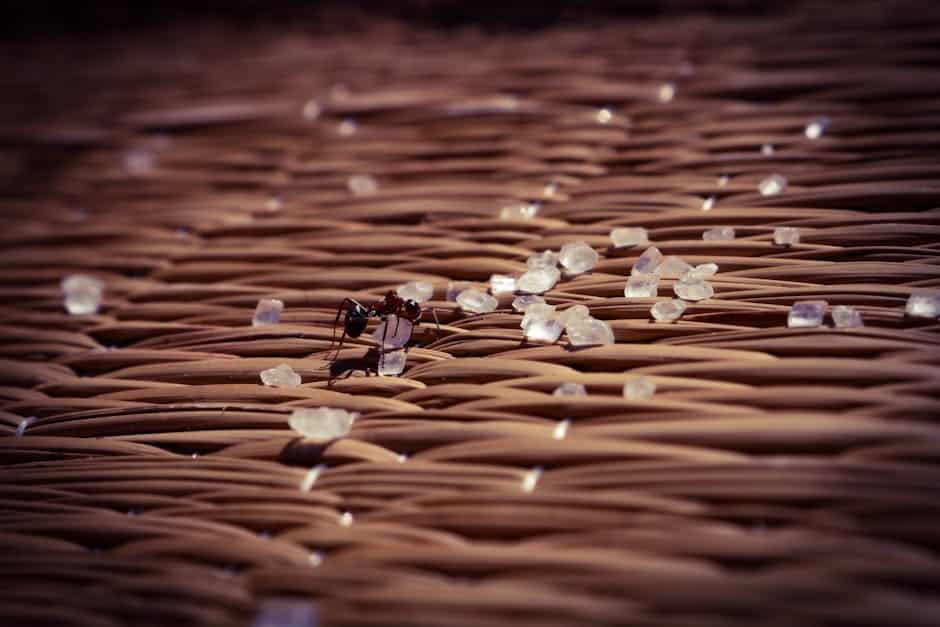
Why Sugar Ant Pest Control Matters
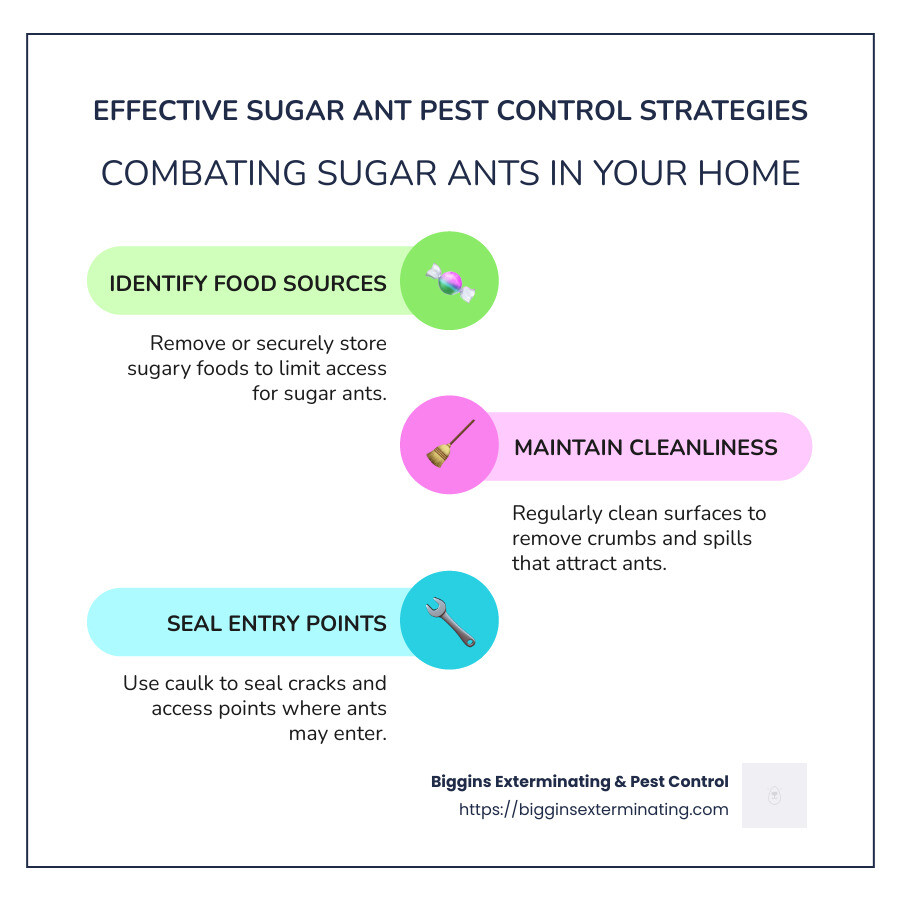
Sugar ant pest control is essential for maintaining a pest-free home environment. If you’re dealing with a sugar ant invasion, here are quick tips to handle the situation:
- Identify Food Sources: Remove or securely store sugary foods.
- Keep Spaces Clean: Regularly clean surfaces to remove crumbs and spills.
- Seal Entry Points: Use caulk to seal cracks and access points.
These steps form a foundation for effective sugar ant pest control in any home.
Sugar ants, commonly mistaken for a variety of ant species due to their attraction to sweets, can disrupt your peace at home. Addressing these nuisances with effective strategies is crucial. From quick home remedies like vinegar sprays to professional extermination options, dealing with sugar ants requires a custom approach to ensure they’re gone for good.
My name is Stephen Biggins, and with over four decades in the pest control industry, I’ve seen how important proper sugar ant pest control is for keeping homes in Massachusetts pest-free. My goal is to help you understand and tackle these tiny invaders efficiently.
Understanding Sugar Ants
Sugar ants, often confused with various small ant species, are a common household pest due to their love for sweets. However, the term “sugar ant” typically refers to the species Camponotus consobrinus, also known as the banded sugar ant.
Sugar Ant Species
Size and Appearance: Sugar ants can range from 2 to 15 mm in size. The winged males are completely black, while the female workers have distinctive orange bodies.
Behavior and Diet
Sugar ants are primarily nocturnal, which means they’re most active during the night. They have a particular fondness for sugary substances, which makes your kitchen an attractive destination.
Their diet includes:
- Honeydew from aphids, which they actively protect to ensure a steady food supply.
- Nectar and secretions from plants.
- Small animals and plant-eating invertebrates like caterpillars.
Habitat
Sugar ants thrive in warm, humid climates. In the wild, they typically nest in forests, heaths, and woodlands. They are often found in:
- Holes in wood
- Under rocks
- In soil
- Among tree or shrub twigs
In suburban areas, they can invade homes, making their presence known by forming trails to food sources.
Reproduction
Sugar ant queens lay eggs in late spring or early autumn, which hatch into new queens or males. During autumn, thousands of these ants mate in the air, while worker ants guard the ground.
Understanding the habits and habitats of sugar ants can help in devising effective sugar ant pest control strategies. By knowing where they live and what they eat, you can better target these pests and keep them out of your home.
Natural Remedies for Sugar Ant Control
When dealing with sugar ants, you don’t always need to resort to harsh chemicals. There are several natural remedies that are both effective and safe for your home. Let’s explore some of these options.
Vinegar
White vinegar is a simple and powerful natural repellent. It works by removing the pheromone trails that ants use to find their way to food sources.
- How to Use: Mix equal parts of white vinegar and water in a spray bottle. Spray this solution on countertops, floors, and any entry points like crevices and doorways. Repeat daily to prevent ants from reestablishing their paths.
Essential Oils
Essential oils, such as peppermint oil, are not just fragrant but also effective in repelling ants.
- How to Use: Add 10-15 drops of peppermint oil to a cup of water, and pour the mixture into a spray bottle. Spray around windows, doors, and areas where you notice ant activity. Alternatively, soak cotton balls in the oil and place them in problem areas.
Diatomaceous Earth
Food-grade diatomaceous earth (DE) is a fine powder that kills ants by dehydrating them. It’s safe for humans and pets when used properly.
- How to Use: Lightly sprinkle DE along ant trails, baseboards, and around entry points. Keep it dry, as moisture can reduce its effectiveness.
Boric Acid and Baking Soda
Both boric acid and baking soda can be used to create DIY ant baits that are effective in eliminating ants.
- Boric Acid Bait: Mix ½ teaspoon of boric acid with 8 teaspoons of sugar and a little water to form a syrup. Soak cotton balls in this mixture and place them near ant trails. Keep away from pets and children.
- Baking Soda Trap: Combine equal parts baking soda and sugar. Sprinkle this mixture in areas where you see sugar ants. The sugar attracts the ants, while the baking soda kills them.
These natural remedies can be an effective part of your sugar ant pest control strategy. They not only help in dealing with current infestations but also in preventing future ones by disrupting the ants’ scent trails and access to food.
Leading into the next section, if natural remedies aren’t enough, you might consider professional pest control solutions to tackle persistent ant problems.
Professional Pest Control Solutions
When dealing with sugar ants, sometimes natural remedies just don’t cut it. That’s when professional pest control solutions come into play. These experts bring a wealth of knowledge and tools to effectively manage and eliminate sugar ant infestations.
Pest Control Professionals
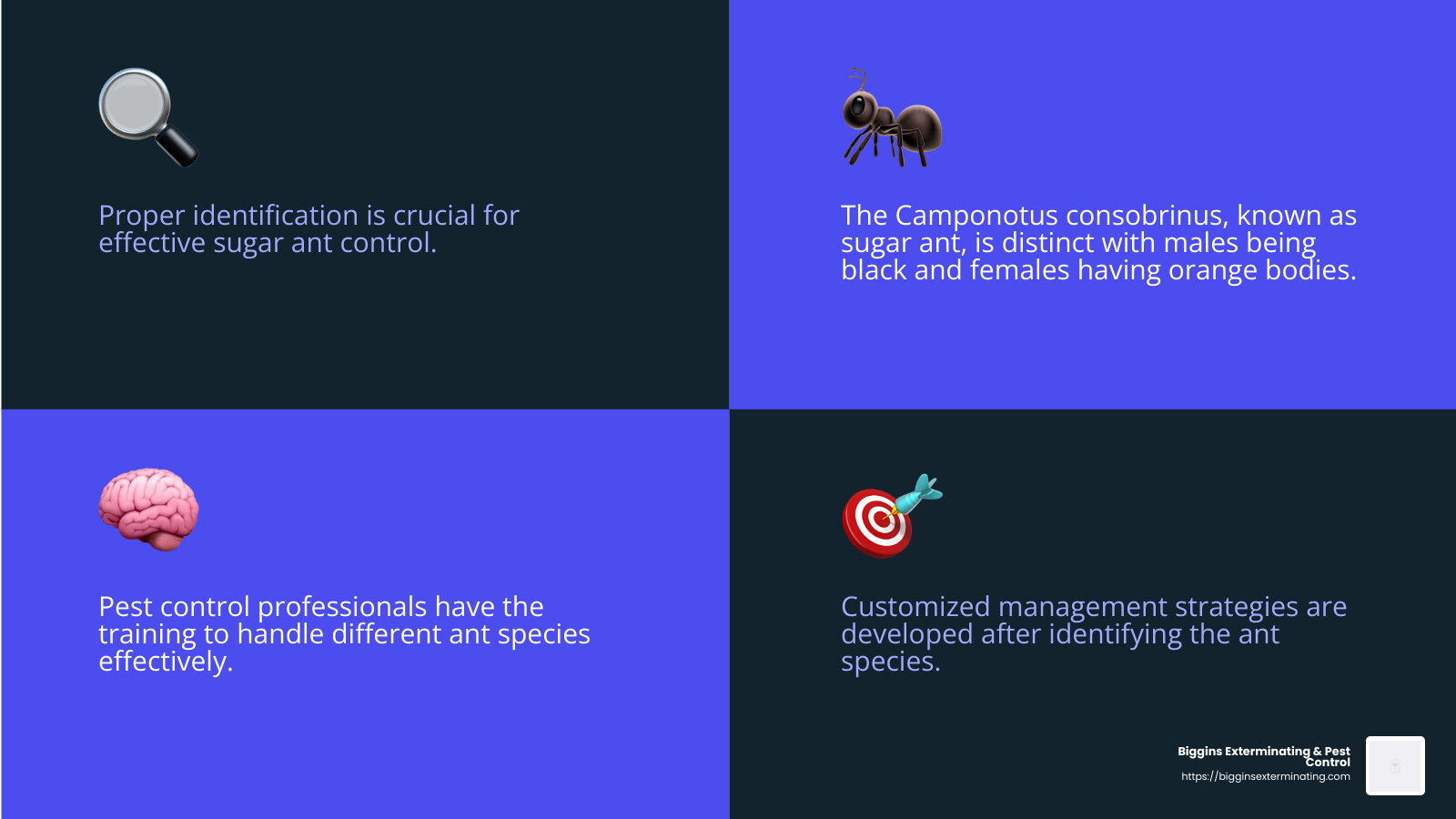
Hiring a pest control professional is often the most reliable way to tackle a stubborn sugar ant problem. These experts have the training to accurately identify the specific species invading your home. Proper identification is crucial because different ant species require different treatment strategies.
Identification
Understanding exactly what you’re dealing with is key. Many people mistake various small ants for sugar ants, but knowing the exact type is important for effective treatment. For instance, the Camponotus consobrinus, commonly referred to as the sugar ant, has distinct characteristics that professionals can identify. They range from 2 to 15 mm in size, with males being completely black and females having orange bodies.
Management Strategy
Once the species is identified, a pest control professional will develop a customized management strategy. This strategy might include:
- Baiting Techniques: Using specific baits that attract sugar ants but are toxic once ingested. This helps eliminate the colony from within.
- Barrier Treatments: Applying treatments around the perimeter of your home to prevent ants from entering.
- Environmental Modifications: Suggesting changes to your home environment, such as sealing entry points or reducing moisture, which can make your home less attractive to ants.
- Follow-Up Visits: Ensuring the problem is fully resolved with follow-up inspections and treatments if necessary.
Why Choose Professional Help?
Professional pest control services offer several advantages over DIY methods. They provide a thorough approach that not only addresses the immediate problem but also helps prevent future infestations. Additionally, experts use treatments that are safe for your home and family when applied correctly.
If you’re struggling with sugar ants and natural remedies aren’t doing the trick, reaching out to a pest control professional can be a smart move. They have the expertise to identify the problem accurately and apply the most effective solutions.
Next, we’ll explore some common questions about sugar ant pest control and how to achieve permanent results.
DIY Sugar Ant Control Methods
If you’re looking to tackle a sugar ant issue without calling in professionals, there are several DIY sugar ant control methods you can try. These approaches use simple household items and can be surprisingly effective.
White Vinegar
White vinegar is a great tool for disrupting the scent trails that sugar ants use to find food. To use it, mix equal parts of white vinegar and water in a spray bottle. Spray this solution on countertops, floors, and any entry points like windows and doors. The strong smell of vinegar masks the pheromones ants leave behind, confusing them and stopping their march into your home.
Borax
Borax is another powerful weapon against sugar ants. It works by poisoning the ants, which then take the borax back to their colony, effectively wiping out the entire group. To create a borax bait, mix ½ teaspoon of borax with 8 teaspoons of sugar and a small amount of water to make a syrup. Soak cotton balls in this mixture and place them near ant trails, but keep it out of reach of pets and children.
Lemon Juice
Like vinegar, lemon juice disrupts ant scent trails. Squeeze fresh lemon juice around entry points such as doorways and windows. You can also mix lemon juice with water in a spray bottle and apply it directly to areas where you’ve seen ants. The citrus scent is a natural deterrent.
Bay Leaves
Bay leaves are a natural ant repellent. Place whole bay leaves in areas where you store food, such as pantry shelves and containers. For added effectiveness, crush the leaves and sprinkle the powder around entryways and kitchen cabinets. The strong scent keeps ants at bay.
Coffee Grounds
Used coffee grounds can deter sugar ants and other pests. Sprinkle the grounds around the outside of your home, particularly near entry points. The smell is unpleasant to ants and can help keep them from entering your space.
These DIY methods can be effective for managing minor sugar ant issues. However, if the problem persists, it might be time to consider more robust solutions or professional help. Next, we’ll dive into some frequently asked questions about sugar ant pest control and how to achieve permanent results.
Frequently Asked Questions about Sugar Ant Pest Control
How do you get rid of sugar ants permanently?
Getting rid of sugar ants permanently often requires a pest control professional. These experts can identify the specific species of ant you’re dealing with, which is crucial for developing an effective management strategy. Each species might require a different approach, so proper identification is key.
Professionals use a variety of methods to ensure ants don’t return. This can include using baits that ants carry back to their colonies, effectively eliminating the entire population. Additionally, sealing entry points and regular maintenance can help keep your home ant-free.
What is the best pest control for sugar ants?
The best pest control for sugar ants involves disrupting their life cycle and habitat. Here are some effective methods:
- Disruption of Exoskeleton: Some pest control solutions work by disrupting the ants’ exoskeletons, leading to dehydration and death. Diatomaceous earth is a natural option that can achieve this.
- Suffocation: Certain powders and sprays can suffocate ants by clogging their breathing passages. These are usually applied directly to ant trails and entry points.
- Soap Solution: A simple mix of soap and water can also be effective. The soap breaks down the ants’ exoskeleton and suffocates them. Spray this solution directly on ants and around entryways to keep them at bay.
Will sugar ants go away on their own?
Unfortunately, sugar ants will not go away on their own. They are persistent and will continue to search for food and water sources. If left unchecked, they can multiply quickly and become a larger problem.
For long-term solutions, it’s often best to seek professional help from a pest control company. Professionals can assess the extent of the infestation and implement a comprehensive plan to eliminate the ants and prevent future invasions. With their expertise, you can ensure your home remains free of these tiny intruders.
By understanding the behavior and biology of sugar ants, you can make informed decisions about how to tackle an infestation effectively. In the next section, we’ll explore some of the professional pest control solutions available to ensure your home stays ant-free.
Conclusion
At Biggins Exterminating & Pest Control, we understand that a sugar ant infestation can be more than just a nuisance; it can disrupt your peace of mind. With over 40 years of experience, our family-owned company in Wilmington, MA, is committed to providing effective sugar ant pest control solutions custom to your needs.
Customer satisfaction is at the heart of what we do. We believe that every home deserves to be pest-free, and we work diligently to make that a reality for our clients. Our team of experts is trained to identify the specific species of sugar ants and develop a customized treatment plan to eliminate them from your home. We use safe and environmentally friendly methods to ensure that your living space is protected without compromising your health or the environment.
We pride ourselves on building long-lasting relationships with our clients. As a local company, we treat your home as if it were our own, ensuring that every treatment is thorough and effective. Plus, we don’t require contracts, giving you the flexibility to choose the services you need, when you need them.
If you’re dealing with a sugar ant problem, don’t wait for it to escalate. Contact us today for a consultation and let us help you reclaim your home. For more information on our services, visit our ant extermination page.
Choose Biggins Exterminating & Pest Control for reliable, effective, and customer-focused pest control services in Wilmington, MA, and surrounding areas. Your satisfaction is our ultimate goal, and we’re here to ensure your home remains a safe and comfortable place for you and your family.