
Why Subterranean Termites Are Massachusetts Homeowners’ Worst Nightmare
Subterranean termites are wood-destroying insects that live underground and cause billions of dollars in property damage across the United States every year. These silent destroyers can eat away at your home’s wooden structures for months or even years before you notice any signs of damage.
Key Facts About Subterranean Termites:
- Habitat: Live in underground colonies and build mud tubes to reach wood
- Diet: Feed on cellulose found in wood, paper, and plant materials
- Damage: Can cause severe structural damage that costs thousands to repair
- Detection: Often go unnoticed until significant damage has occurred
- Geography: Found throughout Massachusetts and most of the United States
Unlike other termite species, subterranean termites must maintain contact with soil to survive. They build distinctive mud tubes along foundation walls to travel between their underground colonies and the wood they’re eating in your home.
The damage these pests cause is both extensive and expensive. They can weaken floor joists, support posts, and other critical structural elements of your home. Many homeowners don’t realize they have a problem until they notice sagging floors, hollow-sounding wood, or visible mud tubes.
What makes subterranean termites particularly dangerous is their ability to remain hidden. They eat wood from the inside out, leaving the surface intact while hollowing out the interior structure.
I’m Stephen Biggins, and in my four decades of pest control experience at Biggins Exterminating Co., I’ve helped countless Massachusetts homeowners deal with subterranean termites and the costly damage they cause.
Subterranean termites vocab to learn:
– Termite Pest Control
– how do you know if you have termites
– termite barrier treatment
What are Subterranean Termites?
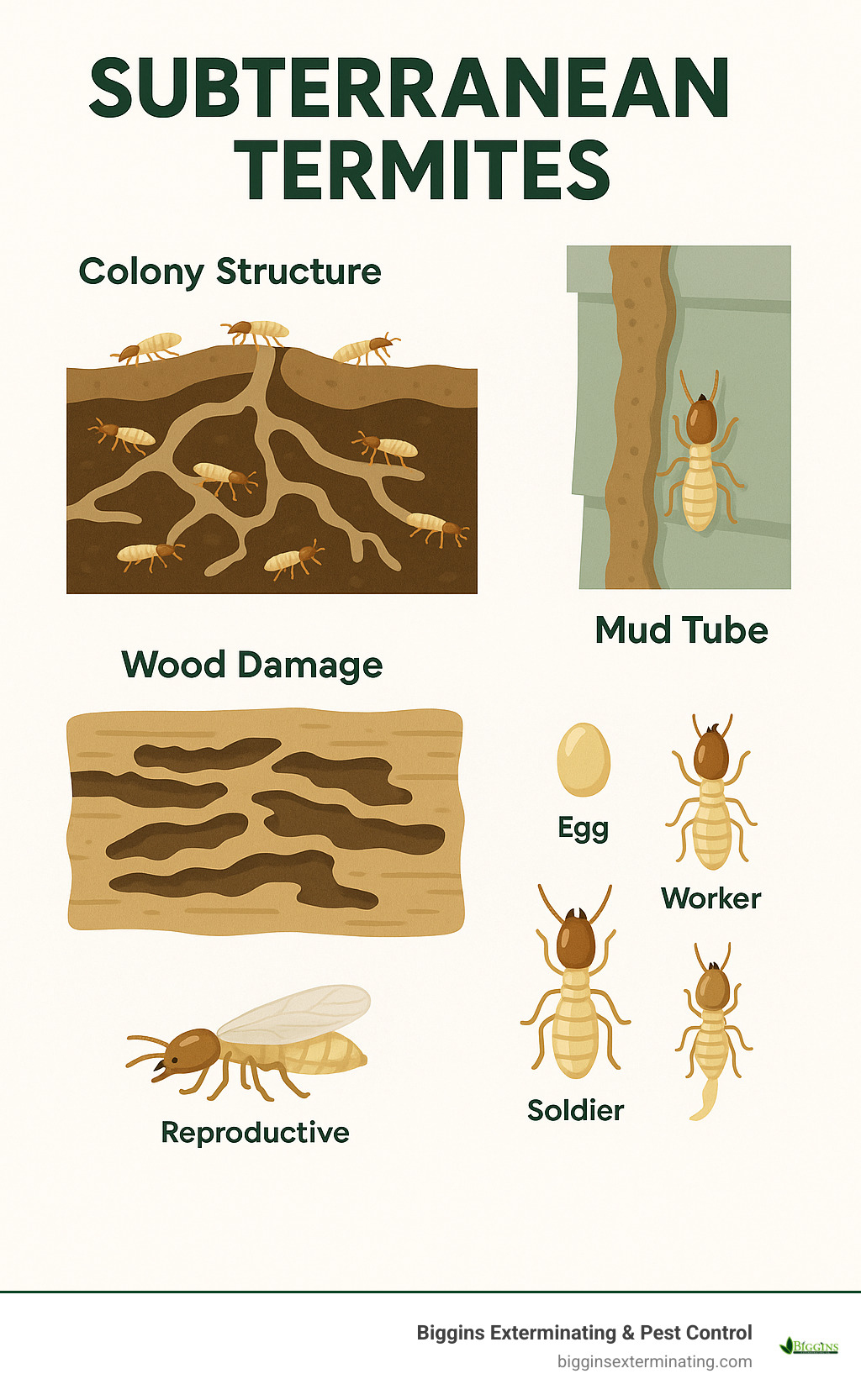
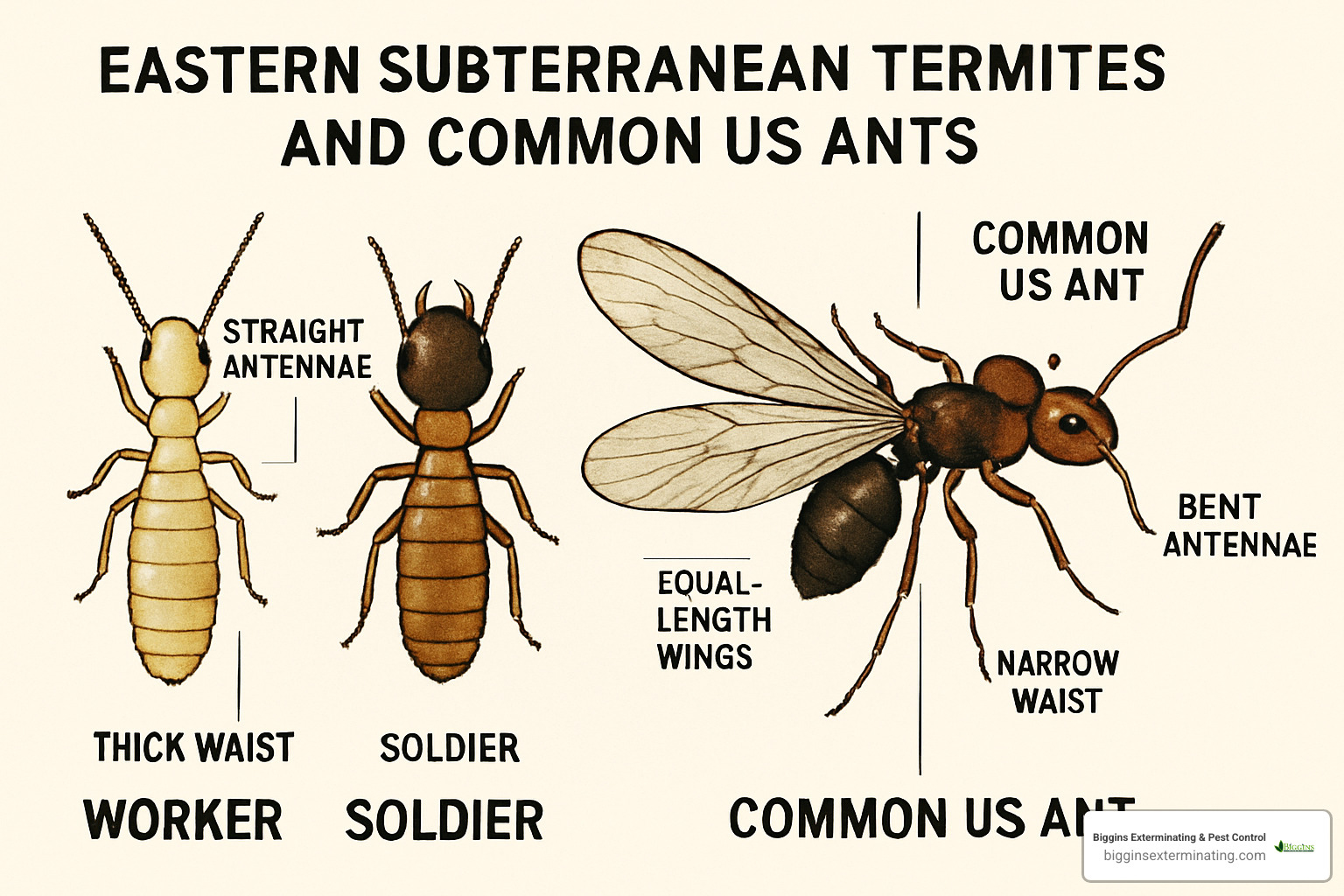
Think of subterranean termites as nature’s most organized demolition crew – except they’re working on your house without permission. These social insects live in highly structured underground colonies and belong to the order Isoptera. Many homeowners mistake them for flying ants during swarming season, but they’re actually more closely related to cockroaches than ants.
Species and Characteristics
Here in Massachusetts, we deal primarily with the Eastern Subterranean Termite (Reticulitermes flavipes). These little guys run their colonies like a well-oiled machine, with each member having a specific job to do.
The worker termites are the ones you really need to worry about – they’re the actual wood-eaters in the bunch. These pale, wingless insects are about 1/4 inch long and spend their days munching on your home’s wooden structures. They’re also the construction crew, building those telltale mud tubes that connect their underground world to your house.
Soldier termites are easy to spot if you ever see them – they look like tiny bodyguards with oversized rectangular heads and powerful jaws. Their job is colony security, fighting off threats like ants.
During spring months, you might encounter reproductive termites, also called swarmers. These dark brown to black winged termites are about 3/8 inch long and are essentially the colony’s house-hunting team. When they swarm, they’re looking for new places to establish colonies.
At the heart of every colony are the queen and king – the power couple that started it all. A termite queen is quite impressive, living 15 to 30 years and laying thousands of eggs every year.
How They Live and Survive
What makes subterranean termites particularly challenging is their absolute dependency on moisture and soil contact. Unlike their drywood cousins who can live entirely within wood, these termites must maintain their connection to the earth to survive.
Their colonies are engineering marvels, typically built 18 to 20 feet underground where humidity stays constant year-round. These underground cities feature elaborate tunnel systems that can stretch over 100 feet in all directions from the main colony.
When these tunnels reach your home’s foundation, the termites construct mud tubes using a mixture of soil, saliva, and feces to create covered highways between their underground home and the wood in your house.
Subterranean Termite Damage
The damage caused by subterranean termites is truly heartbreaking to witness. In my four decades in the pest control business, I’ve walked into countless Massachusetts homes where families had no idea these silent destroyers were literally eating their most valuable investment from the inside out.
Here’s what makes termite damage so devastating: subterranean termites cause more property damage across America than fires, floods, and tornadoes combined. Let that sink in for a moment. These tiny insects are more destructive than natural disasters.
How They Destroy Wood
Subterranean termites are remarkably efficient at what they do. They feed on cellulose, which is found in wood, paper, and other plant materials. Inside their digestive systems, they have special microorganisms called protozoa that break down cellulose into nutrients they can actually use.
Think of it this way: your home’s wooden structure is essentially a giant buffet to these pests. They don’t just randomly chew through wood – they’re strategic about it. Subterranean termites follow the natural grain of the wood, creating tunnel-like galleries that run parallel to the wood fibers.
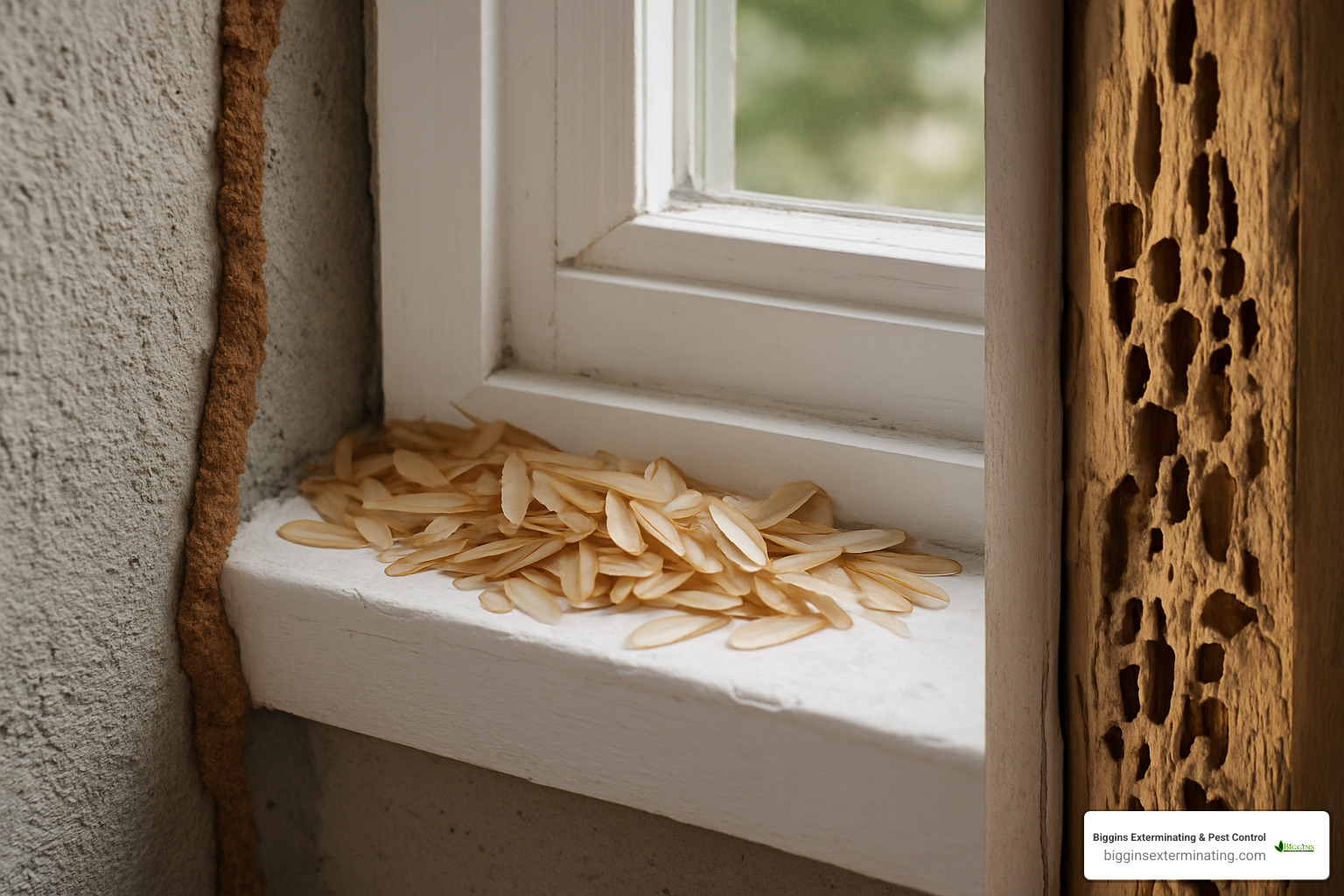
This creates what looks like a honeycomb pattern inside your wooden beams and supports. From the outside, everything might look perfectly normal. But inside, the wood has been hollowed out and severely weakened.
Types of Structural Damage
Over the years, our team has seen subterranean termites wreak havoc on homes throughout Wilmington, Andover, Burlington, and surrounding Massachusetts communities. The damage patterns are unfortunately predictable.
Foundation areas take the biggest hit because that’s where termites first enter your home. They love to feast on wooden sill plates and floor joists – the very bones of your house’s structure. When these get compromised, you’ll start noticing problems throughout your home.
Floor damage is often the first thing homeowners notice. Floors start sagging or become unusually squeaky because the support beams underneath can no longer do their job properly.
Wall damage shows up as hollow-sounding walls when you tap on them. You might also notice problems around windows and doors – they stick when they never used to, or you see small holes or damaged wood trim.
Roof damage is less common but absolutely devastating when it happens. Termites can work their way up to roof supports and trusses, creating serious structural problems.
Financial Impact
Let me be straight with you about the money side of this nightmare. Subterranean termites cause over $5 billion in property damage every year in the United States alone. For individual homeowners, repair costs typically range from $3,000 to $8,000, though severe infestations can easily exceed $20,000 in damage.
Here’s the part that really stings: most standard homeowner’s insurance policies won’t cover termite damage. Insurance companies consider it a preventable maintenance issue, which means you’re on your own financially.
This is exactly why prevention and early detection are so critical. The longer subterranean termites go unnoticed, the more expensive and extensive the damage becomes.

Signs of Subterranean Termite Infestation
Early detection of subterranean termites is like finding a small leak before it floods your basement – it can save you thousands of dollars and months of headaches. After four decades of crawling through Massachusetts basements and crawl spaces, I’ve learned exactly what to look for, and I want to share these warning signs with you.
Mud Tubes
The telltale calling card of subterranean termites is their mud tubes – those pencil-thin highways they build along your foundation walls. Think of them as termite superhighways connecting their underground cities to the wooden buffet that is your home.
These tubes are fascinating in a creepy way. Termites construct them using soil, their own saliva, and yes, their droppings. The result is a protective tunnel that keeps them moist and hidden while they commute to work. You’ll typically spot these tubes in crawl spaces, along foundation walls, or sneaking around plumbing penetrations.
Here’s a pro tip from my years in the field: if you find mud tubes, resist the urge to immediately smash them with a hammer. I know it’s tempting, but leave them intact and call for a professional inspection. We can determine whether the tubes are actively being used and assess how extensive the problem might be.
Hollow-Sounding Wood
Subterranean termites are sneaky little architects of destruction. They eat wood from the inside out, leaving just a paper-thin shell of wood or paint on the surface. It’s like they’re playing the ultimate prank – your house looks fine from the outside while they’re having a feast inside.
Grab a screwdriver handle or your knuckles and start tapping around wooden surfaces in your home. Healthy wood sounds solid, but termite-damaged wood sounds hollow or papery. Pay special attention to window and door frames, baseboards and trim, and any wooden support posts in your basement or crawl space.
I’ve seen homeowners accidentally put their foot through a floor joist that looked perfectly fine but was completely hollowed out by termites. Trust me, that’s not a home improvement project you want to find the hard way.
Discarded Wings
Spring in Massachusetts brings many beautiful things – blooming flowers, warmer weather, and unfortunately, termite swarms. From April through June, reproductive termites take their maiden flights to establish new colonies. After they land and find a mate, they shed their wings like tiny wedding dresses they’ll never need again.
Finding piles of translucent wings around your windowsills, doors, or light fixtures is like finding evidence of a termite wedding reception on your property. While this doesn’t necessarily mean you have an active infestation in your home, it’s a clear sign that termites are active in your neighborhood and looking for new real estate.
Other Warning Signs
Beyond the big three warning signs, subterranean termites leave other clues of their presence. Doors and windows might suddenly become tight-fitting as termite damage and moisture cause wood to warp. You might notice small holes in your drywall where termites have created exit points.
Sometimes you’ll find what looks like tiny wood pellets – these are termite droppings called frass. And if you find wood that crumbles easily in your hands or shows maze-like patterns when you break it open, termites have likely been having a long-term party at your expense.
The key is knowing what to look for and checking these areas regularly. A quick monthly inspection of your basement, crawl space, and around your home’s perimeter can help you catch these destructive pests before they cause serious damage.
Prevention and Control of Subterranean Termites
The best defense against subterranean termites is a good offense. After four decades of protecting Massachusetts homes, I’ve learned that prevention is always more cost-effective than dealing with an active infestation.
Moisture Control
Here’s something most homeowners don’t realize: subterranean termites are basically moisture addicts. They can’t survive without it, which gives us a powerful weapon in our prevention arsenal.
Start by becoming a detective around your own home. Walk around your foundation and look for leaky pipes and faucets – even that small drip you’ve been meaning to fix creates the perfect termite highway.
Your gutters and downspouts need to direct water at least three feet away from your foundation. When water pools near your home, it creates the moisture-rich environment that subterranean termites love.
Don’t forget about your crawl space ventilation. Poor airflow creates humidity levels that make termites feel right at home. Installing proper ventilation fans or vents can dramatically reduce moisture levels.
Grading issues around your foundation might seem like a minor landscaping problem, but they’re actually a major termite risk. Soil should always slope away from your home to prevent water from accumulating against your foundation walls.
Physical Barriers and Modifications
Smart homeowners create physical obstacles that make it harder for subterranean termites to reach their home’s wooden structures. The key is eliminating what we call “termite bridges” – direct pathways from soil to wood.
Wood-to-soil contact is like leaving your front door wide open for termites. Keep all wooden structures, including deck posts, stairs, and siding, at least six inches above ground level. This simple step forces termites to build visible mud tubes to reach the wood.
Termite barriers made of metal or specially treated materials can be installed during construction or retrofitted to existing homes. These barriers force termites to build around them, often exposing their mud tubes where you can spot them.
Sealing foundation cracks and gaps around utility penetrations eliminates hidden entry points. Even tiny cracks can provide access for termites, so use caulk or expandable foam to close these openings.
Finally, remove attractants from around your property. Dead tree stumps, firewood stored against your house, and buried construction debris all provide food sources that can attract subterranean termites to your property.
Professional Inspections and Treatment
While DIY prevention is important, professional expertise is essential for comprehensive termite protection. We recommend annual inspections for most Massachusetts homes, though properties with previous termite activity may benefit from more frequent monitoring.
Professional treatment options have evolved significantly over the years. Modern liquid barrier treatments create a protective zone around your home’s perimeter that termites cannot cross. These treatments can last for years when applied correctly.
Baiting systems offer another effective approach by using the termites’ own behavior against them. Worker termites carry the bait back to their colony, eventually eliminating the entire population including the queen.
For homes with existing infestations, direct wood treatment involves applying termiticides directly to affected areas. This targeted approach can stop active damage while protecting treated wood from future attacks.
The reality is that effective termite pest control requires both professional expertise and ongoing vigilance.
Subterranean Termite Treatment Costs
When you’re facing a subterranean termite problem, one of your first questions is probably “How much is this going to cost me?” It’s a fair question, and the answer depends on several factors that we’ll break down for you.
The good news is that treating termites, while not cheap, costs far less than letting them continue their destructive feast on your home’s wooden structures.
What You Can Expect to Pay
Based on internet data and industry averages, here’s what homeowners typically invest in termite treatment:
Liquid barrier treatments generally run between $1,200 and $4,500 for most homes. This wide range reflects differences in home size, soil conditions, and the extent of treatment needed around your property’s perimeter.
Baiting systems typically cost $1,500 to $4,000 for initial installation and the first year of monitoring. These systems require ongoing maintenance, which we’ll discuss in a moment.
For homes with extensive infestations or those requiring combination treatments, costs can range from $2,500 to $8,000. In severe cases where structural repairs are needed alongside treatment, homeowners might face costs of $5,000 to $15,000 or more.
These figures represent average costs based on internet data and are not specific pricing for Biggins Exterminating services.
Ongoing Costs to Consider
Subterranean termite treatment isn’t always a one-and-done expense. Baiting systems require annual monitoring, which typically costs $300 to $900 per year based on internet data. Professional inspections, whether annual or bi-annual, generally range from $150 to $500 per visit.
Liquid treatments may need retreatment every 5 to 10 years, with costs ranging from $800 to $2,500 depending on the scope of work needed.
Why the Wide Range in Costs?
Several factors influence what you’ll actually pay for termite treatment. Home size is obviously a big factor – a 1,200 square foot ranch requires less treatment than a 3,000 square foot colonial. The severity of your infestation also matters significantly. Catching termites early means lower treatment costs.
Your home’s construction type affects pricing too. Homes with crawl spaces, multiple levels, or complex foundations require more time and materials to treat properly. Geographic location plays a role, as does the accessibility of affected areas.
The Real Value of Treatment
Here’s the perspective that matters most: subterranean termite treatment costs pale in comparison to the damage these insects can cause. We’ve seen homeowners face repair bills ranging from $3,000 to $20,000 or more when termites go undetected and untreated.
Your homeowner’s insurance typically won’t cover termite damage, considering it preventable. That makes professional treatment not just smart – it’s essential protection for what’s likely your largest investment.

Frequently Asked Questions about Subterranean Termites
Are subterranean termites hard to get rid of?
Getting rid of subterranean termites isn’t exactly a weekend DIY project – these persistent little creatures have mastered the art of staying hidden and keeping their colonies safe. The challenge comes from their underground lifestyle and the sheer size of their colonies.
Think about it this way: while you’re dealing with the termites munching on your home’s wood, the real headquarters is buried 18-20 feet underground and could be the size of a football field. A mature colony can house anywhere from 60,000 to over a million termites, and they’re all working together with military-like precision.
What makes subterranean termites particularly tricky is their ability to find the tiniest entry points – cracks you’d never notice, gaps around pipes, or microscopic openings in your foundation. Even after treatment, if a few survivors remain, they can potentially rebuild their colony over time.
The good news? Modern professional treatments have come a long way. Liquid barrier treatments and baiting systems, when properly applied and monitored, have excellent success rates. The key is working with experienced professionals who understand termite behavior and know how to create comprehensive treatment plans.
In my four decades of experience, I’ve learned that persistence and proper follow-up are crucial. It’s not just about the initial treatment – it’s about ongoing monitoring to ensure these determined insects don’t make a comeback.
What are the signs of subterranean termites?
Spotting subterranean termites early can save you thousands in repair costs, but these sneaky insects are masters at staying hidden. The trick is knowing what to look for and where to look.
The most telltale sign is mud tubes – those pencil-width tunnels you might notice running along your foundation walls or around pipes. These aren’t just random dirt marks; they’re carefully constructed highways that termites build to travel safely between their underground colonies and your home’s wood.
When you’re walking around your house, pay attention to how wood sounds when you tap it. Hollow or papery sounds from areas that should be solid often indicate termites have been busy eating from the inside out. This is especially common around window frames, door trim, and baseboards.
During spring months, keep an eye out for small piles of translucent wings near windows, doors, or light fixtures. These are left behind by reproductive termites during their mating flights – nature’s way of telling you that termites are active in your neighborhood.
Other warning signs include doors and windows that suddenly become difficult to open or close, small holes appearing in drywall, or wood that feels unusually soft or crumbles when you touch it. If you’re still wondering how do you know if you have termites, combining these visual clues with a professional inspection gives you the most reliable answer.
How do subterranean termites differ from drywood termites?
The main difference between subterranean termites and drywood termites comes down to their lifestyle choices – and fortunately for Massachusetts homeowners, we primarily deal with the subterranean variety.
Subterranean termites are like underwater creatures that happen to live underground – they absolutely must maintain contact with soil to survive. They build those distinctive mud tubes to bridge the gap between their underground colonies and your home’s wood. These termites need constant moisture and will die if they dry out.
Drywood termites, on the other hand, are the independent types. They live entirely within the wood they’re eating, setting up smaller colonies right inside your furniture or structural wood. They don’t need soil contact and can survive in much drier conditions – which is why they’re mainly found in warmer, more arid climates like California and Florida.
When it comes to damage patterns, subterranean termites follow the wood grain and leave behind muddy, soil-filled galleries. Drywood termites create cleaner galleries and produce distinctive pellet-shaped droppings that look like tiny grains of sand.
The treatment approaches are completely different too. Subterranean termites require soil treatments and barrier methods since we need to intercept them on their journey from underground colonies. Drywood termites often need fumigation or direct wood treatments since they’re living right in the wood.
Here in Massachusetts, subterranean termites are overwhelmingly the species we encounter, so our focus on termite barrier treatment methods specifically targets these soil-dwelling destroyers.
Conclusion
Subterranean termites are truly every Massachusetts homeowner’s worst nightmare – and for good reason. These sneaky little destroyers cause billions of dollars in damage across the country every year, and they’re particularly good at staying hidden until it’s almost too late.
The scary truth is that these pests can be munching away at your home’s wooden structure for months or even years before you notice anything wrong. They’re like the ultimate uninvited dinner guests who eat you out of house and home – literally.
But here’s the good news: you’re not powerless against them. Knowing what to look for makes all the difference. Those mud tubes snaking up your foundation walls, wood that sounds hollow when you tap it, and those tiny discarded wings after spring swarms are all telling you something important. Listen to what your house is trying to say.
Prevention really is your best friend here. Keep moisture under control, fix those leaky pipes you’ve been meaning to get to, and make sure water flows away from your foundation. Think of it as making your home less appealing to these unwanted guests.
At Biggins Exterminating & Pest Control, we’ve been fighting the good fight against subterranean termites for over four decades. We’re a family business serving families throughout Wilmington, Andover, Bedford, Billerica, Burlington, Lexington, North Reading, Tewksbury, and Woburn. We get it – your home isn’t just a building, it’s where your life happens.
What sets us apart? We don’t believe in trapping you with long-term contracts. We earn your trust through results, not paperwork. Our warranties back up our work, and our commitment to customer satisfaction isn’t just a slogan – it’s how we’ve stayed in business for four decades.
Whether you need a thorough inspection, preventive termite barrier treatment, or help dealing with an active infestation, we’ve got the experience and tools to protect your investment.
Don’t play the waiting game with subterranean termites. These pests won’t get bored and move on – they’ll just keep eating. Early detection and professional treatment are your ticket to avoiding those heart-stopping repair bills that can reach into the tens of thousands.
Give us a call today to schedule your termite inspection. Your future self (and your wallet) will thank you for taking action before these silent destroyers turn your dream home into their all-you-can-eat buffet.
