Why Early Detection of Termites Saves Massachusetts Homeowners Thousands
Signs of termites can be subtle at first, but catching them early is crucial for protecting your home from costly structural damage. These silent destroyers cause over $5 billion in property damage annually across the United States, and your Massachusetts home could be next if you don’t know what to look for.
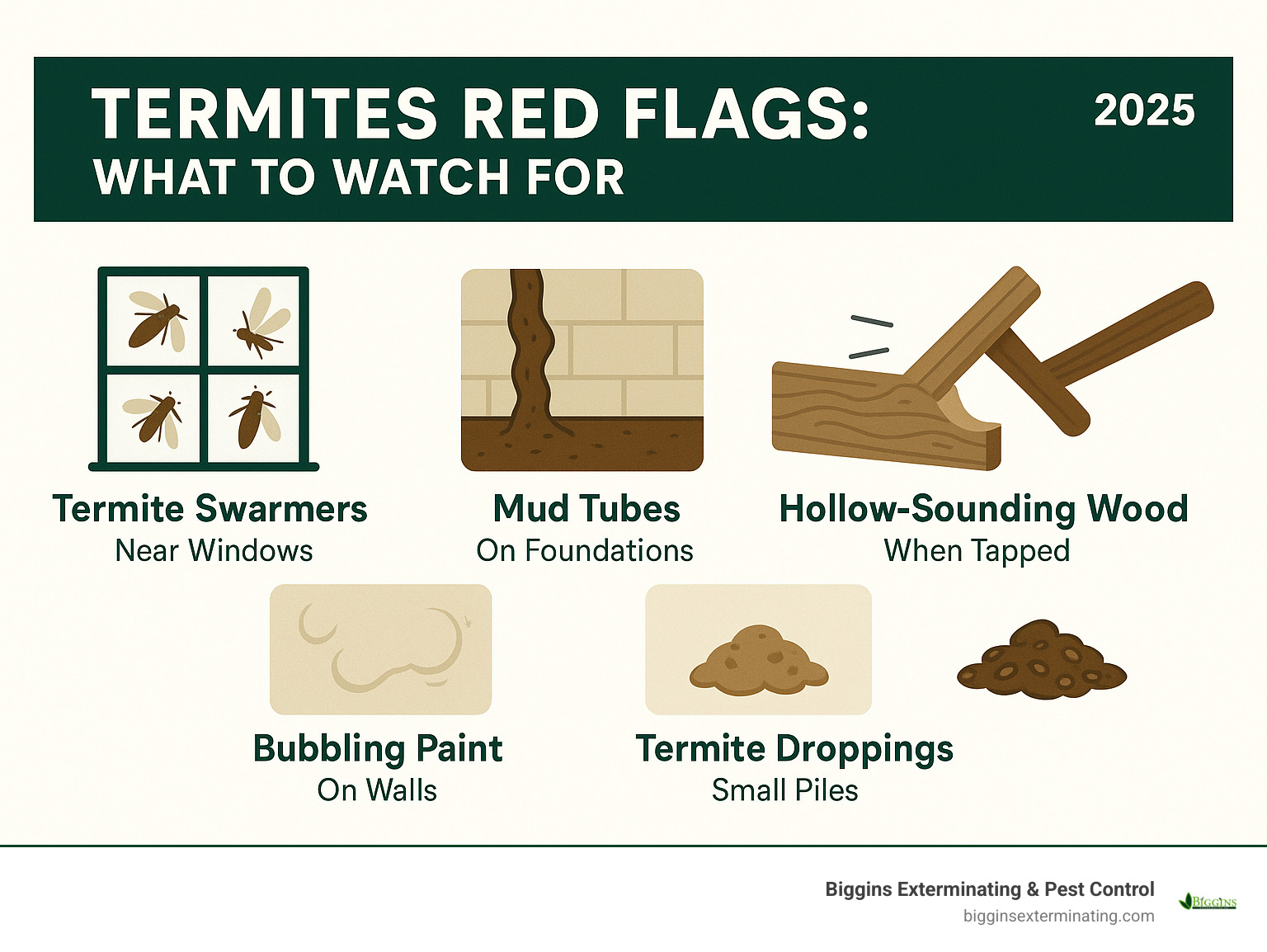
Quick Answer: The most common signs of termites include:
- Termite swarmers (flying termites) or discarded wings near windows and doors
- Mud tubes on foundations, walls, or crawl spaces
- Hollow-sounding wood when tapped
- Bubbling paint or damaged drywall that looks like water damage
- Stiff windows and doors that suddenly become hard to open
- Termite droppings (frass) that look like sawdust or coffee grounds
- Faint clicking or chewing noises coming from inside walls
Termites feed on cellulose found in wood, paper, and other plant materials. They can remain hidden for years while slowly eating your home from the inside out. A mature termite colony can have over a million members, and they can start causing noticeable damage within just a few weeks of settling in.
The key to minimizing damage is spotting these warning signs before the infestation becomes severe. Most homeowners miss the early indicators because termites are experts at staying hidden.
I’m Stephen Biggins, and I’ve been helping Massachusetts homeowners identify signs of termites and protect their properties for over four decades through Biggins Exterminating. In my experience, early detection makes the difference between a manageable treatment and thousands of dollars in structural repairs.
Simple guide to signs of termites terms:
The Most Common Signs of Termites
Termite Swarmers and Discarded Wings
Spring brings many things to Massachusetts – warmer weather, blooming flowers, and unfortunately, termite swarmers. These winged reproductive termites, also called alates, are often the first visible signs of termites that homeowners notice.
Flying termites emerge from mature colonies during spring swarming season in massive groups, looking for mates and new places to establish colonies. What makes them particularly noticeable is their strong attraction to light sources. You’ll spot them buzzing around windows, doors, and light fixtures during their brief mating flights.
Here’s what’s really concerning: after mating, these swarmers intentionally shed their wings because they won’t need them anymore. These discarded wings often collect in piles on windowsills, near doorways, or caught in spider webs. Finding these wing piles is actually worse news than seeing the swarmers themselves – it means a new colony has likely already been established nearby.
Many homeowners confuse termite swarmers with flying ants, but there are key differences. Termite swarmers have straight, uniform bodies with four wings of equal length and straight antennae. Flying ants have pinched waists, front wings larger than back wings, and bent antennae. The body shape and wing size are the easiest ways to tell them apart.
If you see swarmers inside your home, that’s a red flag that the colony is already established in your structure. Swarmers emerging outside but very close to your foundation should also prompt immediate investigation.
For more detailed information, check out this guide to termite swarmers and our page on How Do You Know If You Have Termites?.
Mud Tubes on Foundations and Walls
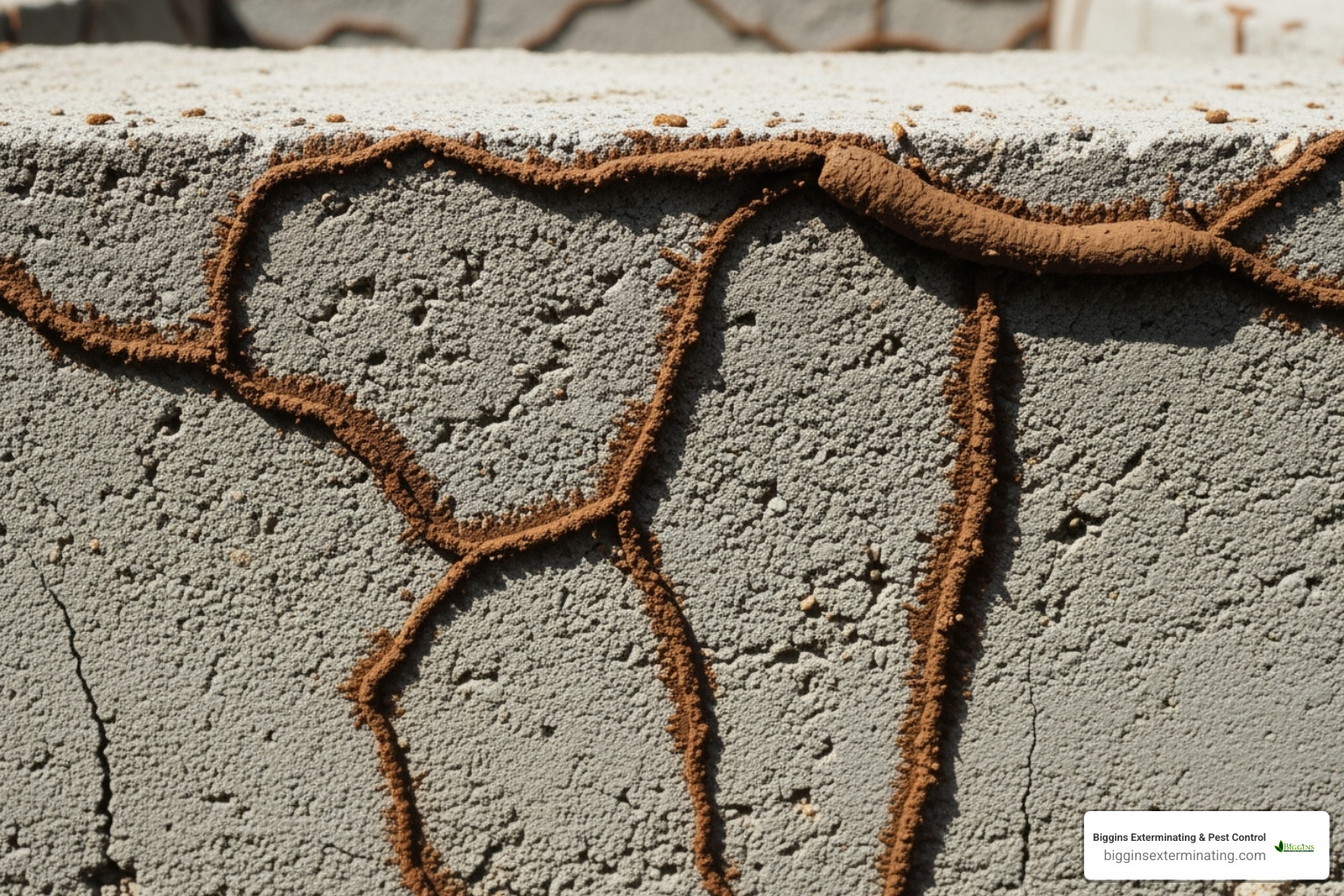
Mud tubes are probably the most definitive signs of termites you can find. These pencil-width tunnels look like miniature highways running up your foundation walls, and that’s essentially what they are – protected pathways for subterranean termites traveling between their underground colony and your home’s wooden buffet.
Subterranean termites build these shelter tubes from soil, wood particles, and termite saliva because they’re surprisingly fragile creatures. They need moisture retention and protection from predators and dry air to survive their journey to your wood.
You’ll typically find mud tubes along foundation walls, in crawl spaces and basements, on support piers and posts, around plumbing penetrations, and climbing up exterior walls toward wooden structures. Fresh tubes feel wet and pliable, while older ones become dry and brittle.
Here’s a simple test: carefully break off a small section of a tube and observe whether it gets repaired within a few days. If termites rebuild it, you have an active infestation. The presence of mud tubes is serious business – unlike some other signs that might indicate past activity, these usually mean termites are currently using that pathway to access your home.
Learn more about how to identify mud tubes and read our guide on Subterranean Termites.
Hollow-Sounding or Damaged Wood
Termites are sneaky little architects of destruction. They consume wood from the inside out, leaving only a thin outer shell that can fool homeowners for months or even years. This internal damage creates a distinctive hollow sound when you tap on affected wood with a screwdriver handle or your knuckles.
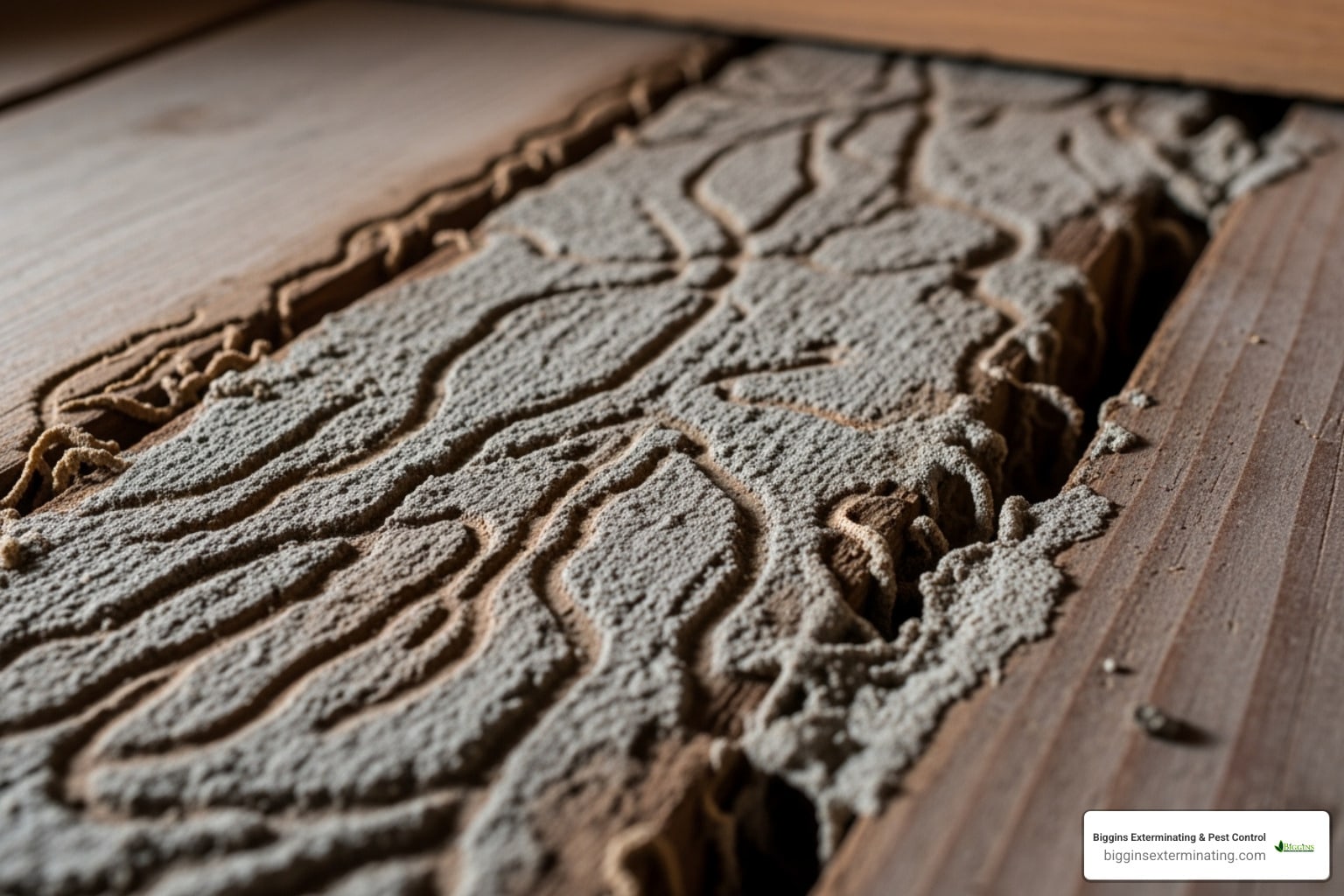
The wood often has a papery feel when you press on it, and you might notice maze-like patterns or grooves running along the wood grain. Termites prefer softer spring wood over harder summer wood, creating these characteristic tunnel patterns called galleries.
Common areas where we find this type of wood damage include baseboards, window frames, door frames, and structural beams in basements and attics. Sometimes you can actually see the galleries if you look closely at damaged wood – they’ll appear as narrow channels packed with mud or termite waste.
If you notice wood that feels soft, spongy, or gives way under light pressure, that’s a strong indicator of termite damage. Tapping on wood throughout your home should produce a solid, consistent sound. Hollow or dull sounds are red flags worth investigating.
For comprehensive information on identifying wood damage, visit our page on How to Tell If You Have Termites.
Bubbling Paint, Damaged Drywall, and Warped Floors

Here’s where termite damage gets tricky – it often looks exactly like water damage. As termites tunnel through wood and drywall, they bring moisture with them and create air pockets that cause bubbling paint, peeling paint, or sagging surfaces.
Damaged drywall shows up as pin-sized holes, narrow sunken lines under paint, crumbling drywall, or sagging ceilings. Termites actually eat the paper backing on drywall because it contains cellulose. They don’t eat the gypsum itself, but they’ll tunnel through it to reach wooden structures behind the walls.
The moisture termites produce while feeding can cause buckling wood floors, spongy flooring, loose tiles, or squeaky floorboards. If you notice sudden changes in your flooring or walls that can’t be explained by plumbing leaks or other water sources, termites might be the culprit.
The characteristic pin-holes are often plugged with a small speck of dirt, and the sunken lines create winding patterns under paint that look like tiny dried riverbeds. These visual clues help distinguish termite damage from actual water damage.
For more information about termite threats in our area, read The Dangers of Termites and How to Prevent Them in Massachusetts.
Stiff Windows and Hard-to-Open Doors
When termites tunnel through window and door frames, they produce moisture that causes the warped wood to swell. This can make windows and doors suddenly become difficult opening/closing, even if they worked fine before.
This sign is particularly tricky because homeowners often attribute stiff windows and hard-to-open doors to seasonal humidity changes or normal house settling. However, if multiple windows or doors become problematic at the same time, or if the issue persists regardless of weather conditions, termites could be weakening the frames.
The structural shifting occurs because termites introduce moisture as they tunnel, damaged wood loses structural integrity, and the remaining wood swells and distorts. Frames no longer fit properly in their openings, creating jammed windows and sticking doors.
Pay special attention to wooden window frames and door jambs, as these are prime targets for termite feeding. If you notice gaps appearing around frames or if previously smooth-operating windows suddenly require force to open, it’s worth investigating further.
Termite Droppings (Frass)
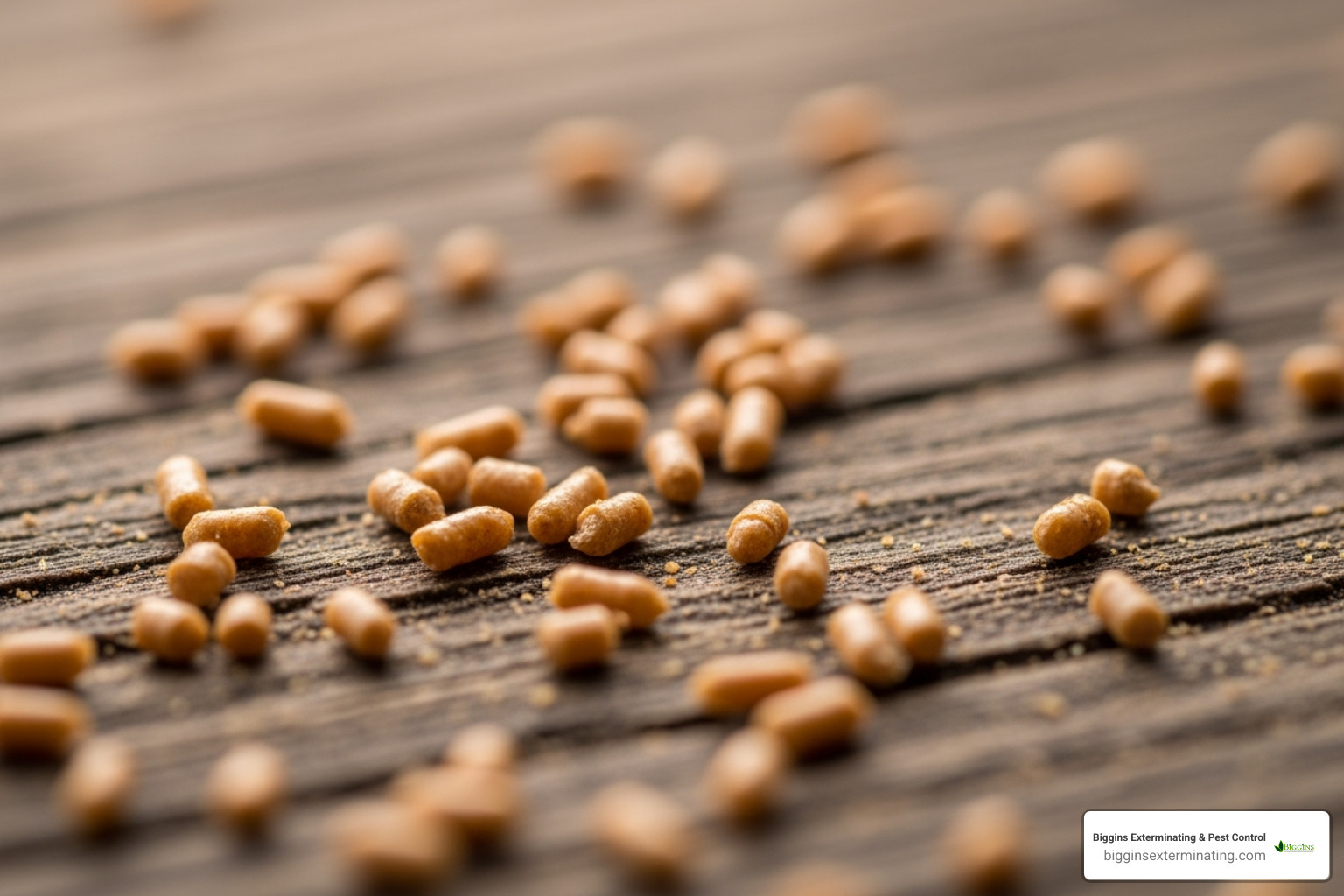
Drywood termites leave behind distinctive termite droppings called frass, which look like tiny fecal pellets or have a sawdust appearance. Some people describe fresh frass as having a coffee grounds look. Unlike subterranean termites that use their waste to build mud tubes, drywood termites push their waste out of small kick-out holes near their nests.
These piles of droppings appear as small, uniform pellets that are six-sided when viewed under magnification. The frass is wood-colored, matching the wood being consumed. You’ll typically find these piles on window sills, along baseboards, near infested wood, below ceiling beams, and around door frames.
The presence of frass is a clear indicator of active drywood termite feeding. Unlike sawdust from carpenter ants, termite frass has a more uniform appearance and doesn’t contain insect body parts. The pellets are also harder and more distinct than the powdery frass produced by powderpost beetles.
If you find what looks like sawdust but can’t identify a source of recent woodworking, collect a sample and have it examined. Fresh frass indicates ongoing termite activity and requires immediate attention.
Quiet Clicking or Chewing Noises
One of the more unusual signs of termites is the faint sounds they make while working. Soldier termites create clicking sounds through head banging against wood or shaking their bodies when the colony is threatened. This serves as a colony warning signal to other termites.
Worker termites are surprisingly noisy eaters. When they’re actively feeding on wood, you can sometimes hear faint munching, faint rustling, or papery sounds from walls, especially at night when the house is quiet. Some people describe the clicking as similar to the sound rice cereal makes when you pour milk on it.
These sounds are most noticeable late at night or early morning, when you place your ear against walls, in quiet rooms without background noise, and near areas where other signs are present. Don’t dismiss mysterious sounds in your walls as “house settling.”
If you hear unexplained clicking, tapping, or rustling sounds, especially combined with other warning signs, it could indicate an active termite colony. Learn more about what termites sound like and the fascinating world of termite communication.
How Quickly Can Termites Cause Damage?
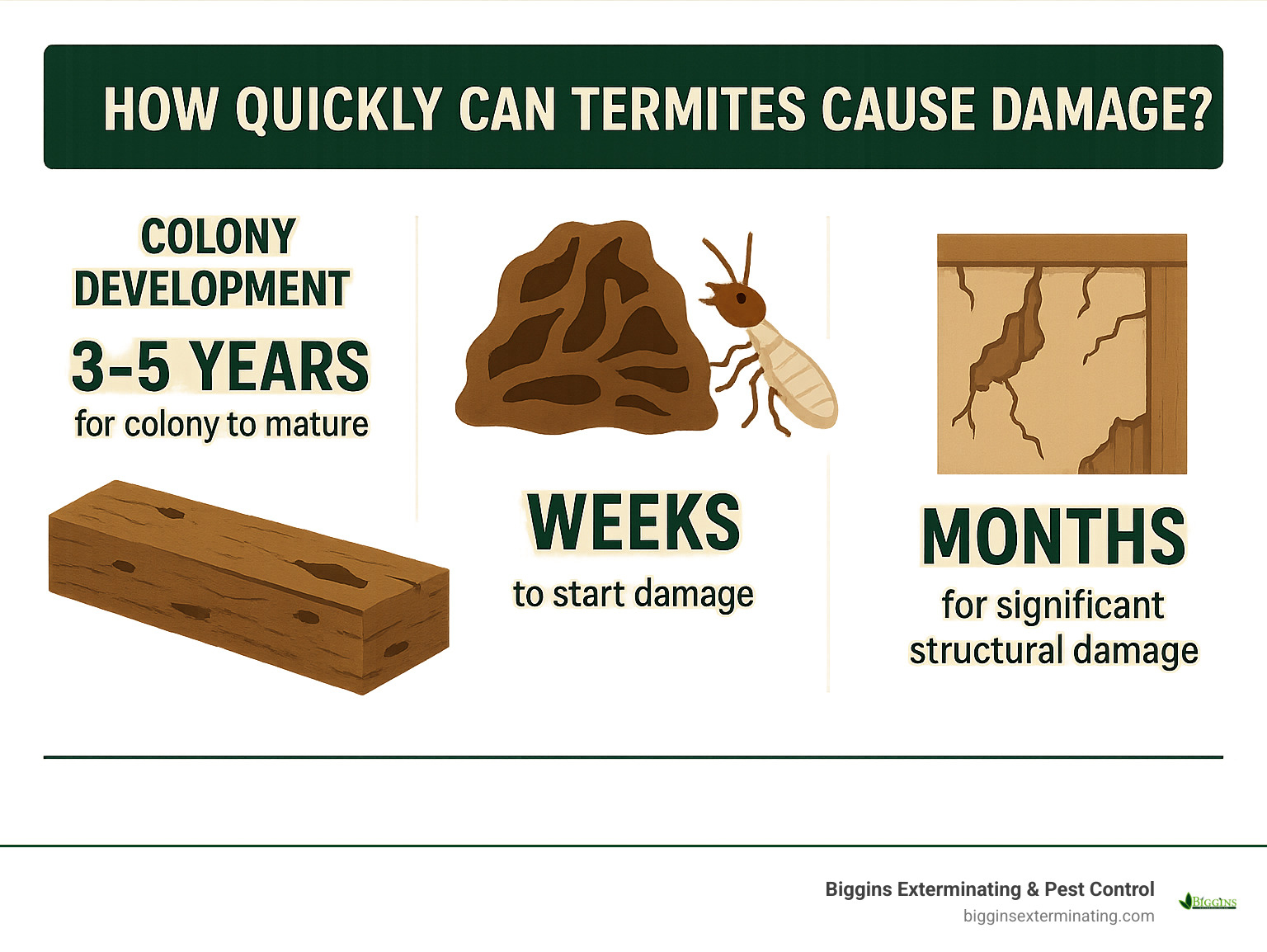
The question I hear most from Massachusetts homeowners is: “How fast can termites actually destroy my home?” After four decades of treating infestations, I can tell you the answer is both reassuring and alarming.
Colony maturation takes time – typically 3 to 5 years before a termite colony becomes large enough to produce those telltale swarmers. During this period, the colony is growing steadily but may not show obvious signs of termites that homeowners would notice.
Here’s where it gets concerning: once a colony is established, the damage timeline accelerates dramatically. Termites can start causing noticeable damage within just a few weeks of settling into your home’s wooden structures. They’re incredibly efficient at what they do – after all, they’ve been perfecting their wood-eating skills for millions of years.
Within 2 to 6 months, you’ll typically see significant hollowing of drywall and structural wood. This is when most homeowners start noticing those hollow sounds when tapping on baseboards or the bubbling paint we discussed earlier. By the one-year mark, extensive damage becomes apparent, and after several years of undetected activity, the structural integrity of your home may be seriously compromised.
The speed of destruction depends on several key factors. Larger colonies with over a million members can cause damage much faster than smaller, newer colonies. Softer woods like pine get consumed more quickly than hardwoods. Higher moisture levels and warm temperatures create ideal conditions that speed up termite activity and reproduction.
When it comes to costs, based on internet data (not actual Biggins Exterminating pricing), termite treatment typically ranges from $70 to $2,500, with a national average around $620. However, the cost of repairing termite damage often reaches tens of thousands of dollars for severe structural damage – which is exactly why early detection saves homeowners so much money.
A mature termite colony can house over a million individuals, all working around the clock to consume your home’s wooden framework. The key takeaway? Those weeks to months when damage is just beginning represent your best opportunity for cost-effective treatment.
For comprehensive treatment options, check out our guide on How to Get Rid of Termites Permanently.
Frequently Asked Questions about Termite Evidence
What are the most overlooked signs of termites?
While most homeowners keep an eye out for obvious signs of termites like wood damage or flying swarmers, some of the most telling indicators are surprisingly subtle. After four decades in the pest control business, I’ve noticed that these overlooked clues often appear months before the more dramatic damage becomes visible.
Unusual odors are probably the most underestimated warning sign. Many homeowners dismiss that persistent musty or mildew-like smell as just “old house character,” especially in basements or crawl spaces. But if you’re detecting these odors in areas without obvious moisture problems, termites could be the culprit.
Even more interesting is the sweet, honey-like scent that can signal termite queens releasing pheromones. According to research on termite queen behavior, these chemical signals play a crucial role in colony communication. If you notice an unexplained sweet smell near wooden structures, it’s worth investigating further.
Structural changes that seem minor can actually be major red flags. Floors that suddenly feel spongy underfoot or develop new squeaks often indicate termite damage to the underlying support structure. Similarly, floor tiles that start loosening without any obvious cause might be responding to moisture and structural changes caused by termite activity.
These subtle signs of termites are particularly important because they often appear before the dramatic wood damage that most people associate with infestations. Trust your instincts – if something feels different about your home’s structure or environment, don’t ignore it.
How can I tell the difference between termite and ant damage?
This is one of the most common questions we get, and for good reason. Both termites and carpenter ants can create galleries in wood, but their motivations and methods are completely different – and so are the clues they leave behind.
Termite damage tells a story of methodical consumption. These insects actually eat the wood for nutrition, creating clean, smooth galleries that follow the natural grain patterns. You’ll often find these tunnels packed with mud or soil, and the surrounding wood typically shows signs of moisture damage. When you examine termite debris, it’s remarkably clean – no insect body parts mixed in with the frass.
Carpenter ant damage, on the other hand, looks more like construction work gone wrong. These ants don’t eat wood; they just excavate it to create living space. Their galleries appear rougher and more irregular, and they keep them carefully clean without any mud packing. The telltale difference is in the debris – carpenter ant frass looks like coarse sawdust mixed with insect body parts and other organic matter.
The location of damage also provides clues. Termites often work from the inside out, leaving structural wood looking intact until you tap on it and hear that hollow sound. Carpenter ants typically create more visible entry holes and tend to target wood that’s already been softened by moisture.
When should I call a professional for a termite inspection?
Timing is everything when it comes to termite control. Some situations demand immediate professional attention, while others call for preventive action that can save you thousands down the road.
Call immediately if you find multiple signs of termites at once – this usually means an established infestation that’s been active for some time. Finding mud tubes on your foundation is particularly serious because it indicates active subterranean termite movement between their colony and your home’s wooden structures.
If you spot live swarmers inside your home, don’t wait. Unlike swarmers found outside, indoor swarmers often mean the colony is already established within your structure. The same urgency applies if you notice suspected structural damage like sagging floors or walls that suddenly feel different.
Preventive inspections are equally important, even if you haven’t noticed obvious problems. I recommend annual inspections for all Massachusetts homeowners – the cost is minimal compared to potential repair bills, and early detection allows for more effective, less expensive treatment options.
Consider scheduling an inspection if you’re dealing with moisture problems, have wood-to-ground contact around your property, or if neighbors have recently dealt with termite issues. These conditions create higher risk situations where professional monitoring provides valuable peace of mind.
At Biggins Exterminating, we’ve seen too many situations where homeowners waited too long, turning a manageable treatment into a major structural repair project. Our Termite Barrier Treatment services can provide comprehensive protection before problems develop.
Protect Your Home: Next Steps for Termite Control
Spotting signs of termites is only half the battle – what you do next determines whether you’ll face a manageable treatment or thousands of dollars in structural repairs. I’ve watched too many homeowners try DIY solutions, only to call us months later when the problem has gotten much worse.
Here’s the truth about DIY termite control: it almost never works. Those over-the-counter sprays and baits might kill a few termites you can see, but they won’t touch the main colony hidden in your walls or underground. It’s like putting a band-aid on a broken pipe – you might stop the drip, but the real problem keeps growing.
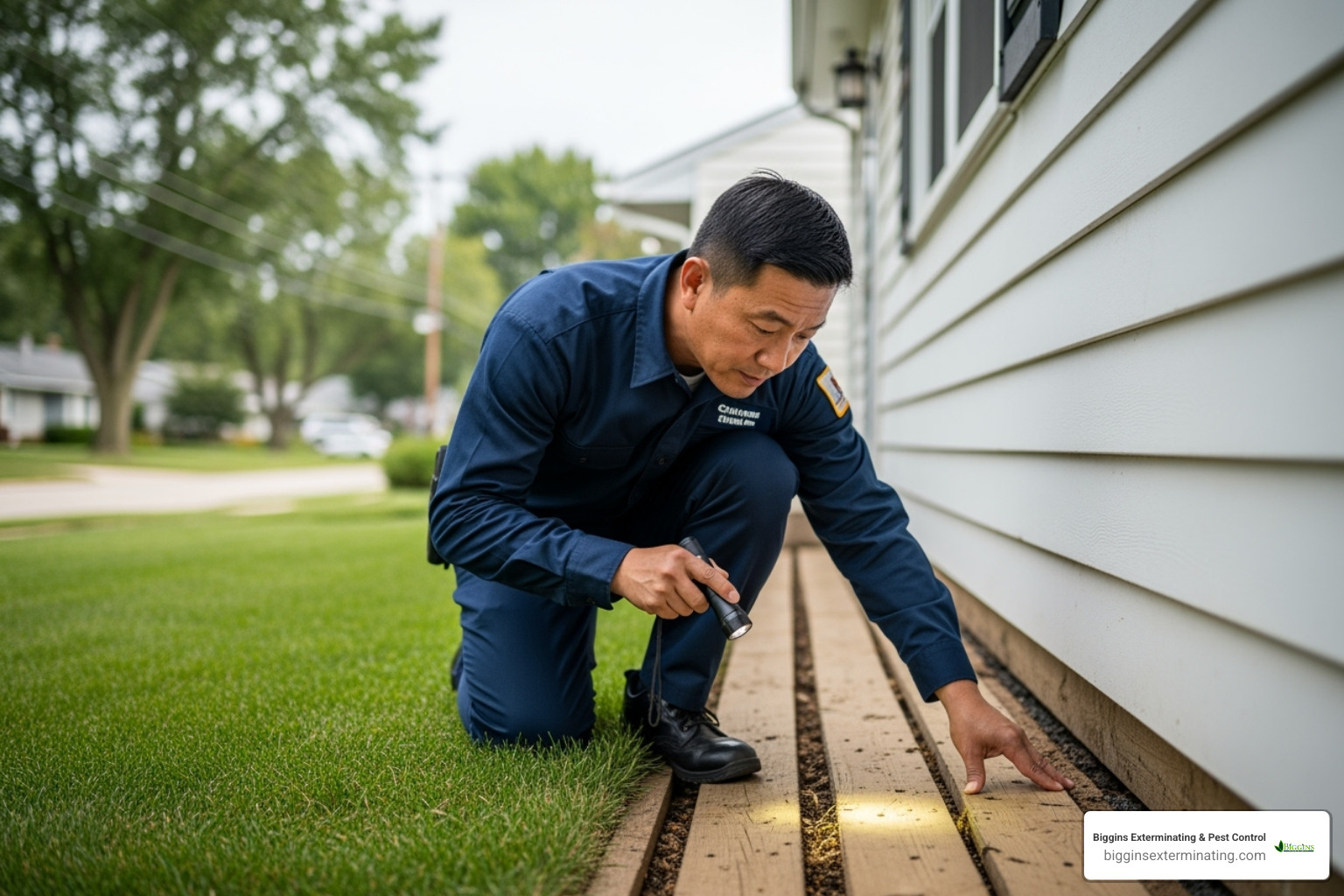
Professional termite treatment is different because we have the tools and training that homeowners don’t. We use thermal imaging cameras to spot hidden moisture problems, specialized moisture meters to find termite highways, and professional-grade treatments that eliminate entire colonies from the source.
At Biggins Exterminating, we’ve been protecting Massachusetts homes for over 40 years. Our family-owned business has seen every type of termite problem you can imagine in communities like Wilmington, Andover, Bedford, Billerica, Burlington, Lexington, North Reading, Tewksbury, and Woburn. We know exactly how these pests behave in New England homes.
When you call us, you’re not just getting a quick spray-and-pray treatment. We start with a comprehensive inspection of your entire property, not just the obvious problem spots. You’ll receive a detailed report with photo documentation showing exactly what we found and what it means for your home.
Our custom treatment plans are custom to your specific situation and budget. We don’t believe in one-size-fits-all solutions because every termite problem is unique. Plus, all our treatments come with warranties for your peace of mind – something you’ll never get from a DIY approach.
The follow-up monitoring we provide ensures your treatment stays effective over time. Termites are persistent, and we want to make sure they don’t come back.
Don’t let termites continue their 24/7 destruction while you debate what to do. What feels like a manageable problem today could become a structural emergency in just a few months. Every day you wait gives them more time to hollow out your home’s wooden framework.
If you’ve noticed any of the signs of termites we’ve discussed – or if you simply want the peace of mind that comes with professional inspection – now is the time to act. Early intervention is always more effective and less expensive than emergency repairs after major damage has occurred.
Your home is probably your biggest investment. Don’t let these silent destroyers turn it into an expensive nightmare. Contact us for professional Termites Pest Control and let our experienced team protect what matters most to you.
We also offer Termite Barrier Treatment services for comprehensive long-term protection. With proper detection and professional treatment, you can stop termites before they cause serious damage to your home.