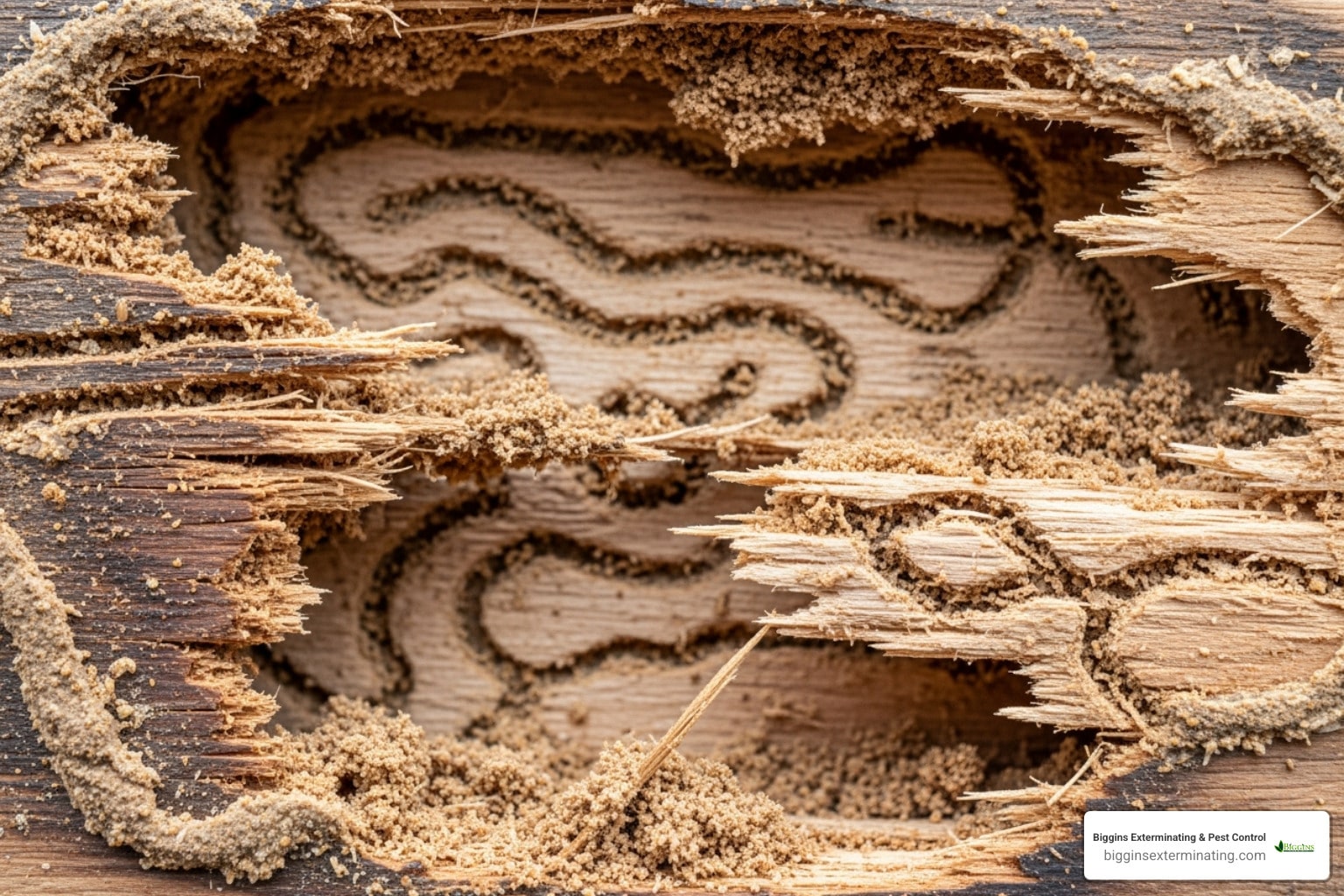
The Silent Destroyers in Your Home
Signs of termite damage can be subtle, but these “silent destroyers” cause over $5 billion in property damage across the U.S. annually. Termites are tiny insects that feed on cellulose in wood and paper, making your home’s structure their perfect meal.
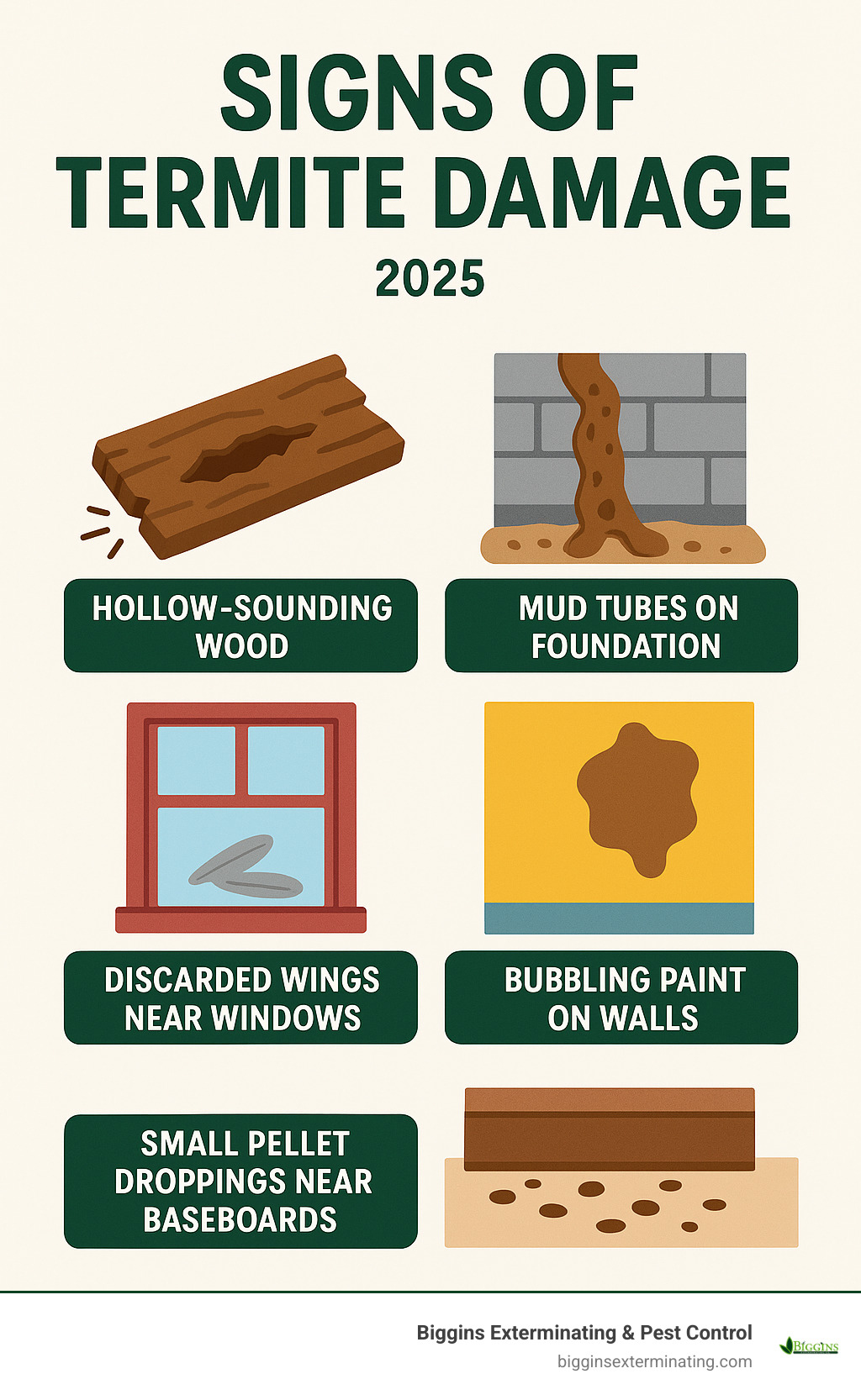
The most common signs of termite damage include:
- Hollow-sounding wood when tapped
- Mud tubes along foundations and walls
- Discarded wings near windows and doors
- Bubbling or peeling paint that looks like water damage
- Small piles of pellet-like droppings (frass)
- Sagging floors or ceilings
- Tight-fitting doors and windows
Unlike other pests, termites work quietly inside your walls and can live in your property for years before you notice visible damage. A single colony can have over a million members consuming your home’s cellulose-rich materials.
The financial impact goes beyond repairs. Homes with termite damage can see their property value reduced by up to 20%, and most insurance policies don’t cover this damage because it’s considered preventable.
I’m Stephen Biggins of Biggins Exterminating. With over four decades of experience, I’ve helped countless Massachusetts homeowners identify signs of termite damage before it’s catastrophic. Early detection is key to minimizing both structural damage and repair costs.
Top Visual Signs of Termite Damage to Look For
Think of yourself as a home detective, because when it comes to signs of termite damage, the clues are often hiding in plain sight. Termites are sneaky creatures that do their destructive work behind the scenes, causing serious structural damage long before most homeowners realize what’s happening.
The key to protecting your home is knowing what to look for. These visual signs might seem minor, but they are your early warning system against thousands of dollars in damage.
More info about signs of termites
Damaged or Hollow-Sounding Wood
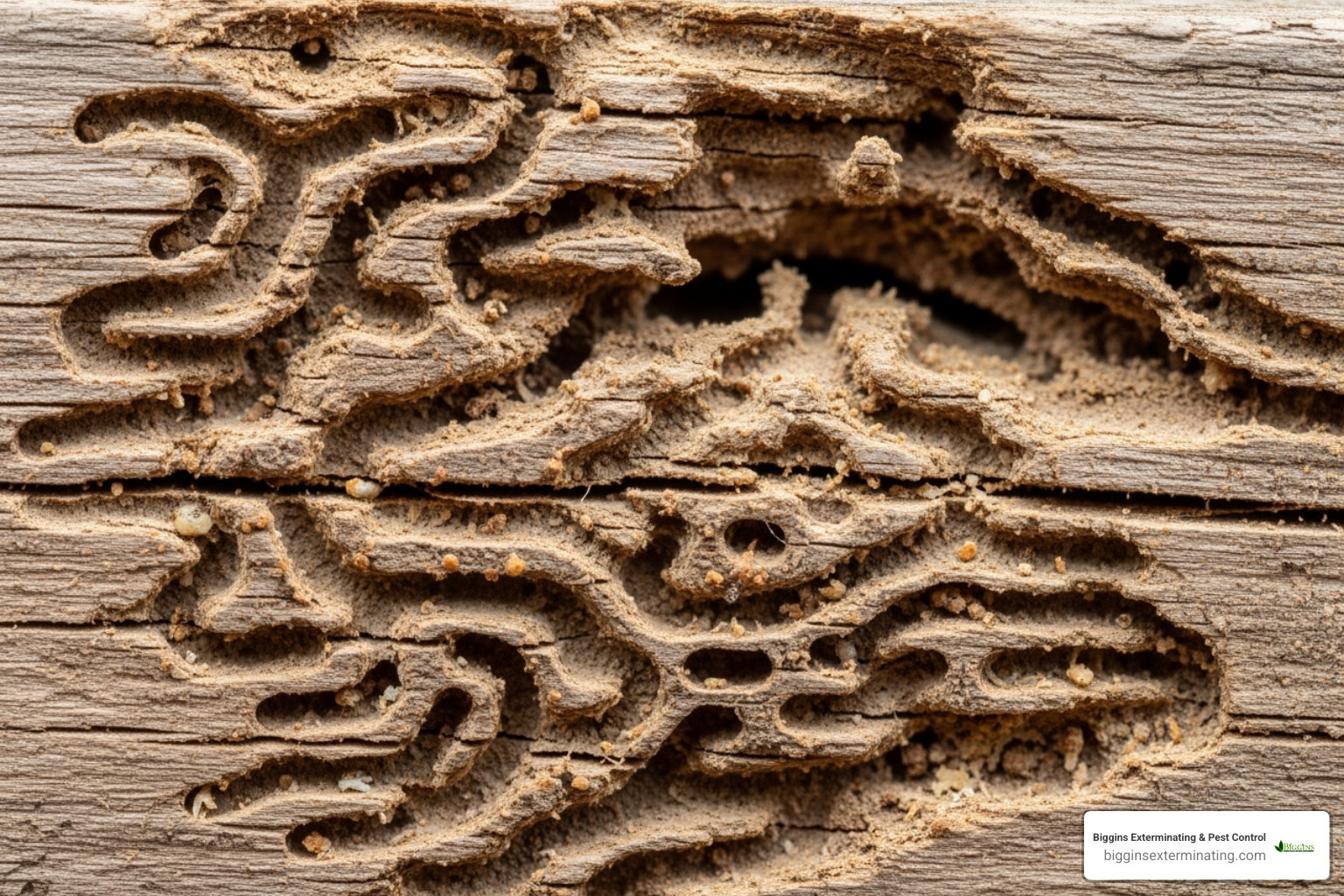
A simple test can save you thousands: gently tap wooden surfaces with a screwdriver handle. Healthy wood sounds solid, but termite-damaged wood will have an unmistakably hollow sound.
Termites eat wood from the inside out, leaving only a thin veneer on the surface to stay hidden. You might tap on what looks like normal wood, only to find it’s an empty shell. This internal consumption also leads to other telltale signs of termite damage, like blistered wood, sagging floors, or buckling wood around door frames. Many homeowners mistake these for water damage, but the real culprit might be far more destructive.
How do you know if you have termites
Mysterious Mud Tubes
If you spot pencil-sized mud tunnels along your foundation walls, you’ve just found termite highways. These mud tubes are one of the most obvious signs of termite damage from subterranean termites.
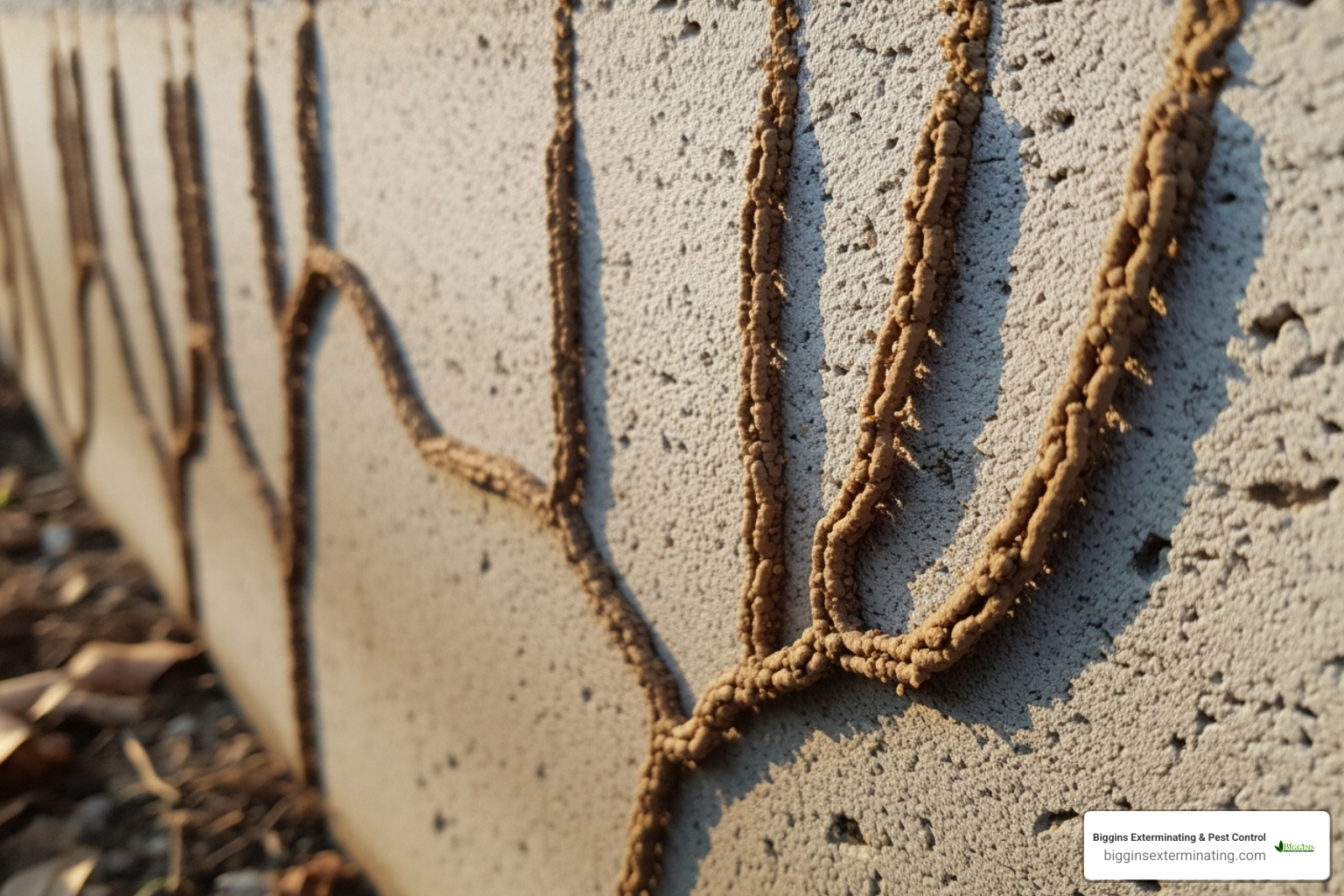
These tunnels serve as protected pathways between the underground termite colony and their food source (your home). Made from soil, wood particles, and termite saliva, the tubes create a moisture-controlled environment these pests need to survive. You’ll typically find them in crawl spaces, along foundation walls, or near plumbing penetrations. Fresh tubes are damp, while older ones are dry and crumbly. Even old tubes show that termites have been active in the area.
Evidence from Termite Swarmers
Flying termites during swarm season are a sign that a mature colony is nearby and ready to expand. These reproductive termites emerge to find mates and start new colonies. They are often confused with flying ants, but termites have straight antennae, equal-length wings, and a broad waist.
The real evidence comes after the swarm. Discarded wings pile up near windowsills, doorways, and light sources. These tiny, translucent wings look like scattered fish scales. Finding these is a clear sign that termites have successfully mated and are likely establishing new colonies nearby.
How to distinguish carpenter ants from termites identifying the menace in your home
Bubbling Paint and Damaged Drywall
Bubbling or peeling paint is often blamed on water damage, but termites can be the real culprit. As they tunnel through wood behind your walls, they create moisture buildup that causes paint to blister and peel, looking almost identical to water damage.
Drywall damage is another sneaky sign. Since drywall’s paper backing contains cellulose, it’s a termite food source. As they eat it, you may notice pinpoint holes, sagging drywall, or walls that sound hollow. The damage often appears as small bubbles or warped sections. If you see these issues without an obvious leak, it’s time for a termite inspection.
How termites cause paint to bubble
Subterranean vs. Drywood Termites: Knowing Your Enemy
Think of termites like different types of burglars – some sneak in through the basement, while others climb right through the attic window. Understanding which type you’re dealing with makes all the difference in spotting the signs of termite damage they leave behind.
Here in Massachusetts, we’re mostly dealing with subterranean termites, but drywood termites can show up too, especially in older homes with beautiful wooden features. Each species has its own calling card, and knowing these differences can help you catch an infestation before it becomes a disaster.
| Feature | Subterranean Termites | Drywood Termites |
|---|---|---|
| Primary Sign | Mud Tubes | Frass (fecal pellets) |
| Colony Location | Underground or in moist wood | Inside the wood they infest |
| Moisture Needs | High moisture, require contact with soil | Low moisture, do not require soil contact |
| Typical Damage Location | Near foundation, basements, crawl spaces, wood in contact with soil | Attics, furniture, door/window frames, wooden structures above ground |
Specific signs of subterranean termite damage
Subterranean termites are the troublemakers we see most often in Massachusetts. These guys are like underground miners – they live in massive colonies beneath your property and build those telltale mud highways I mentioned earlier to reach their wooden feast above ground.
Since they absolutely need moisture to survive, you’ll typically spot signs of termite damage from subterranean termites in the dampest parts of your home. Think basement support beams, crawl spaces, or anywhere wood touches soil directly. They’re particularly fond of areas where your home’s foundation meets wooden structural elements.
The damage they create often looks surprisingly similar to water damage at first glance. The wood appears soft, discolored, and weakened. But here’s the key difference – when you look closer, you’ll find those characteristic dirt-filled tunnels and galleries running through the wood like a tiny subway system.
Learn about Subterranean termites
Specific signs of drywood termite damage
Drywood termites are the rebels of the termite world – they don’t need soil contact and they don’t build mud tubes. Instead, they move right into the wood itself, setting up shop in your attic beams, antique furniture, or window frames like tiny squatters.
The most distinctive signs of termite damage from drywood termites are their droppings, called frass. These aren’t your typical pest droppings – they look like tiny, six-sided pellets that could be mistaken for sawdust or coffee grounds. The color usually matches the wood they’ve been munching on, so you might see everything from light tan to dark brown pellets.
You’ll often find these little piles near “kick-out holes” – small openings the termites create to push out their waste. Check windowsills, the floor around wooden furniture, or near baseboards. If you spot these pellets but no mud tubes anywhere, you’re likely dealing with drywood termites.
The damage itself is surprisingly neat – they create smooth, clean galleries inside the wood, unlike the messy, dirt-filled tunnels their subterranean cousins leave behind.
Beyond Sight: Other Clues of a Termite Infestation
Sometimes the most telling signs of termite damage aren’t what you see, but what you hear, feel, or simply notice has changed in your home. After four decades in pest control, I’ve learned that homeowners who pay attention to these subtle clues often catch infestations before they become catastrophic.
Think about it – your home talks to you every day. Doors that used to close smoothly, windows that opened easily, floors that felt solid underfoot. When termites start their silent destruction, these familiar things begin to change in ways that might seem minor at first.
Tight-fitting doors and warped windows are classic early warning signs. As termites consume door and window frames from the inside out, the wood begins to warp and distort. That bedroom door that suddenly sticks every time you try to close it? It might not be humidity – it could be termites weakening the frame.
Squeaky floors can also signal trouble below. When termites attack subflooring or floor joists, the structural integrity weakens, causing floors to sag slightly and create those annoying creaks and groans. Similarly, loosening tiles might indicate that termites have compromised the wooden subflooring underneath.
More signs that you have a pest infestation.
What Does a Termite Infestation Sound Like?
Here’s something that surprises most homeowners – termites aren’t always completely silent! While they’ve earned the nickname “silent destroyers,” a quiet house can sometimes reveal their auditory clues.
The most common sound is a quiet clicking or faint rustling coming from within your walls, especially during nighttime when your home is peaceful. This isn’t just the sound of munching (though that would be terrifying!). Soldier termites actually bang their heads against wood surfaces when they sense danger, creating colony warning signals that alert other termites to potential threats.
This head banging behavior might sound almost comical, but it’s an effective defense mechanism. If you press your ear against a wall or wooden beam and hear that distinctive tapping or rustling, particularly at night when other house sounds have quieted down, it’s worth investigating further.
Is It Termite Damage or Water Damage?
This is hands down one of the most common questions we get, and honestly, I don’t blame homeowners for being confused. Many signs of termite damage look remarkably similar to water damage – both cause wood to buckle, paint to peel, and surfaces to swell or sag.
The key difference lies in the details. Water damage typically creates soft, discolored wood that may show mold or mildew smell and obvious water stains. The wood feels spongy and often has a musty odor.
Termite damage, however, tells a different story. When you examine termite-damaged wood closely, you’ll find intricate wood tunnels and maze-like termite galleries running through it. These tunnels are the termites’ highways and dining rooms combined. For drywood termites, these galleries appear smooth and clean, while subterranean termites fill theirs with mud and soil.
Another dead giveaway is location. Water damage follows a logical path – you’ll see it near leaky pipes, under windows, or in areas with obvious moisture problems. Termite damage can appear anywhere there’s wood, regardless of moisture sources. Plus, water damage lacks the structural tunnels that termites create, and you won’t find mud tubes or frass nearby.
When in doubt, trust your instincts and call for a professional inspection. Getting the right diagnosis from the start can save you thousands in unnecessary repairs.
The Aftermath: Understanding Consequences and Prevention
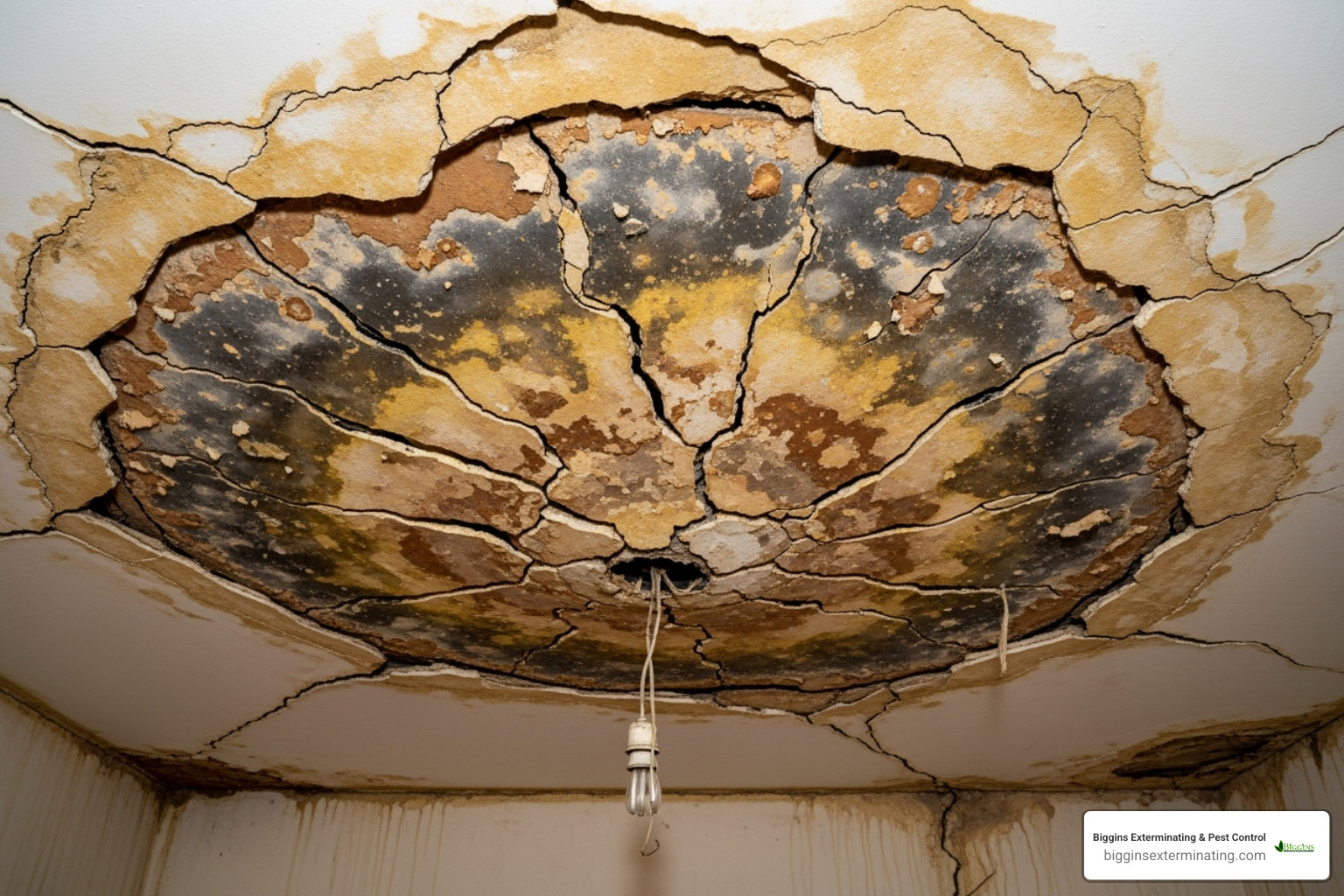
When homeowners ignore signs of termite damage, they are watching their biggest investment crumble from the inside out. The consequences extend far beyond what most people realize, compromising your home’s structural integrity, affecting property value, and leading to repair costs that can reach tens of thousands of dollars.
The dangers of termites and how to prevent them in Massachusetts
How Quickly Can Termites Cause Damage?
Termites are patient destroyers. A colony can feast on your home for years before you notice obvious signs of termite damage. A mature colony can house over a million members working 24/7. The timeline varies, but significant structural damage often occurs after several years of unnoticed activity. By the time you see sagging floors, the colony has likely been established for a while.
The High Cost of Ignoring an Infestation
The financial impact of ignoring signs of termite damage goes beyond fixing wood. When termites compromise support beams, you’re looking at repairs that affect your home’s safety.
Property values take a serious hit when termite damage is found. Homes with a history of termite problems can see their value reduced by up to 20%, and some buyers will walk away entirely. What catches many homeowners off guard is that most insurance policies don’t cover termite damage, considering it preventable. This makes early detection crucial for protecting your home and your wallet.
Active vs. Previous Termite Damage: What to Look For
When you find signs of termite damage, you need to know if the infestation is active or old.
Active infestations show ongoing activity: live termites, damp mud tubes that get repaired if broken, or new piles of frass.
Previous damage shows signs of past repairs like wood filler. Old mud tubes will be dry and crumble easily, and there will be no live insects or new droppings. However, termites are masters at hiding. A professional inspection is the only reliable way to confirm if an infestation is truly inactive.
Proactive Termite Prevention
The best way to avoid dealing with signs of termite damage is to prevent termites from setting up shop in the first place.
- Control Moisture: Termites are drawn to dampness. Fix leaky pipes, ensure proper foundation drainage, and keep gutters clean.
- Eliminate Wood-to-Soil Contact: Move firewood away from your foundation, remove old stumps and construction debris, and keep mulch from touching your home’s exterior.
- Seal Entry Points: Block potential termite highways by sealing foundation cracks and gaps around utility lines.
- Schedule Professional Inspections: The most effective strategy is scheduling regular professional termite inspection services. A trained eye can spot subtle signs you might miss, allowing for preventative treatment before a problem develops.
Frequently Asked Questions about Termite Damage
When homeowners find signs of termite damage, the questions start flooding in faster than termites at a lumber yard buffet! After four decades in the pest control business, I’ve heard just about every termite question imaginable. Let me share answers to the most common concerns that keep Massachusetts homeowners up at night.
Can termites damage materials other than wood, like drywall?
Here’s something that surprises many people: yes, termites absolutely can damage drywall! While these hungry little creatures prefer wood as their main course, they’re not picky eaters when it comes to cellulose. Drywall contains paper backing that’s packed with cellulose, making it an appetizing side dish for termites.
The signs of termite damage in drywall can be quite sneaky. You might notice small pinholes appearing seemingly out of nowhere, or paint that starts bubbling and peeling without any obvious water source nearby. Sometimes entire sections of drywall will begin sagging as termites chew through the paper layer to reach wooden structures behind it.
What makes this particularly tricky is that homeowners often mistake these symptoms for water damage. If you’re seeing these issues but can’t find any plumbing leaks or moisture problems, it’s time to consider that termites might be the real culprit.
What do termite droppings (frass) look like?
Termite droppings, or frass as we call them in the business, are like tiny calling cards that drywood termites leave behind. Think of them as evidence that these unwelcome guests have been making themselves at home in your wooden structures.
Frass looks remarkably like fine sawdust or coffee grounds, but there’s a key difference that sets it apart: the pellets are actually six-sided when you look at them closely. You might need a magnifying glass to see this hexagonal shape clearly, but it’s a dead giveaway that you’re dealing with termite droppings rather than regular sawdust from construction work.
The color varies depending on what the termites have been munching on. If they’ve been eating light pine, the frass will be pale. If they’ve been feasting on darker hardwood, the pellets will be correspondingly darker. You’ll typically find these small piles near kick-out holes in the infested wood, often accumulating on windowsills, floors beneath wooden furniture, or along baseboards.
What are tiny droppings can help you identify exactly what you’re seeing in your home.
When is it necessary to call a professional for termites?
Here’s my straightforward answer: immediately upon seeing any signs of termite damage or suspected activity. I know that might sound like a pest control guy trying to drum up business, but after 40 years of seeing what happens when people try to handle termites themselves, I can tell you that this is one battle you don’t want to fight alone.
Termites aren’t like ants that you can sprinkle some boric acid around and call it a day. These insects live in complex colonies that can extend deep into your home’s structure and even underground. Those store-bought termite treatments? They’re about as effective as using a squirt gun to fight a forest fire.
Even worse, DIY treatments can actually make the problem harder to solve. When you spray or bait termites incorrectly, you often just scatter the colony, making it much more difficult for professionals to locate and eliminate all the active areas.
At Biggins Exterminating, we’ve seen homes where well-meaning homeowners spent hundreds on DIY products, only to call us months later when the problem had spread throughout their property. A professional inspection can accurately identify the termite species, determine the full extent of the infestation, and create a customized treatment plan that actually works.
Don’t risk your most valuable asset by trying to save a few dollars upfront. The cost of professional treatment is always less than the cost of major structural repairs down the road.
How to get rid of termites permanently
Protect Your Home from Termite Damage
Finding signs of termite damage in your home can feel overwhelming, but remember – knowledge is power. Throughout this guide, we’ve walked through the telltale indicators that these silent destroyers leave behind: the hollow sound when you tap on wood, those mysterious mud tubes snaking up your foundation, discarded wings scattered near windows, paint that bubbles without any water damage, and those tiny pellet-like droppings that signal drywood termite activity.
The key to protecting your home is staying vigilant. These signs of termite damage are your early warning system, and catching them early can mean the difference between a manageable treatment and a catastrophic repair bill. Don’t forget that termites cause over $5 billion in damage annually across the United States – but your home doesn’t have to become part of that statistic.
At Biggins Exterminating, we’ve been helping Massachusetts families protect their homes for over 40 years. As a family-owned business, we understand that your home is more than just a building – it’s where your family creates memories and builds their future. That’s why we’ve dedicated ourselves to providing reliable, effective pest control services to communities like Andover, Bedford, Billerica, Burlington, Lexington, North Reading, Tewksbury, Wilmington, and Woburn.
We know that dealing with termites can be stressful, which is why we make the process as straightforward as possible. No long-term contracts are required, but we do provide warranties and guarantee customer satisfaction. Our experienced team knows exactly what to look for and how to create a treatment plan that’s custom to your specific situation.
The truth is, termite problems don’t get better on their own – they only get worse and more expensive to fix. If you’ve spotted any of the warning signs we’ve discussed, or if you just want the peace of mind that comes with a professional inspection, don’t wait. Early intervention is always more effective and less costly than dealing with extensive damage later.
Your home is likely your largest investment, and it deserves professional protection. Contact us today to schedule your termite inspection and take the first step toward safeguarding your property from these destructive pests.