Why Pet-Safe Pest Control is Essential for Every Pet Owner
Safe pest control for pets is a top concern for the many American households that share their homes with animals. The reality is that conventional pest control chemicals can cause health issues in pets, ranging from mild symptoms like vomiting to more serious complications.
Quick Answer for Pet-Safe Pest Control:
- Natural options: Diatomaceous earth, essential oils (with caution), beneficial nematodes
- Professional solutions: Bait stations, targeted applications, pet-safe formulations
- Safety protocols: Keep pets away until treatments dry (typically 30-60 minutes to 24 hours)
- Warning signs: Vomiting, lethargy, excessive drooling, skin irritation
Research has shown that exposure to certain herbicides and pesticides can increase health risks for pets. For example, studies from Purdue University found that Scottish terriers exposed to herbicides were more likely to develop bladder cancer. Other research shows that pesticide residues can remain on grass for over 48 hours, creating ongoing exposure risks for pets who spend time outdoors.
The good news is that effective pest control does not have to put your pets at risk. Modern pest management offers pet-safe alternatives that work as well as traditional methods.
I’m Stephen Biggins, and I’ve been helping Massachusetts families protect both their homes and their pets through safe pest control methods for over four decades. At Biggins Exterminating, we’ve seen how the right approach to safe pest control for pets can eliminate pests while keeping your companions healthy and happy.
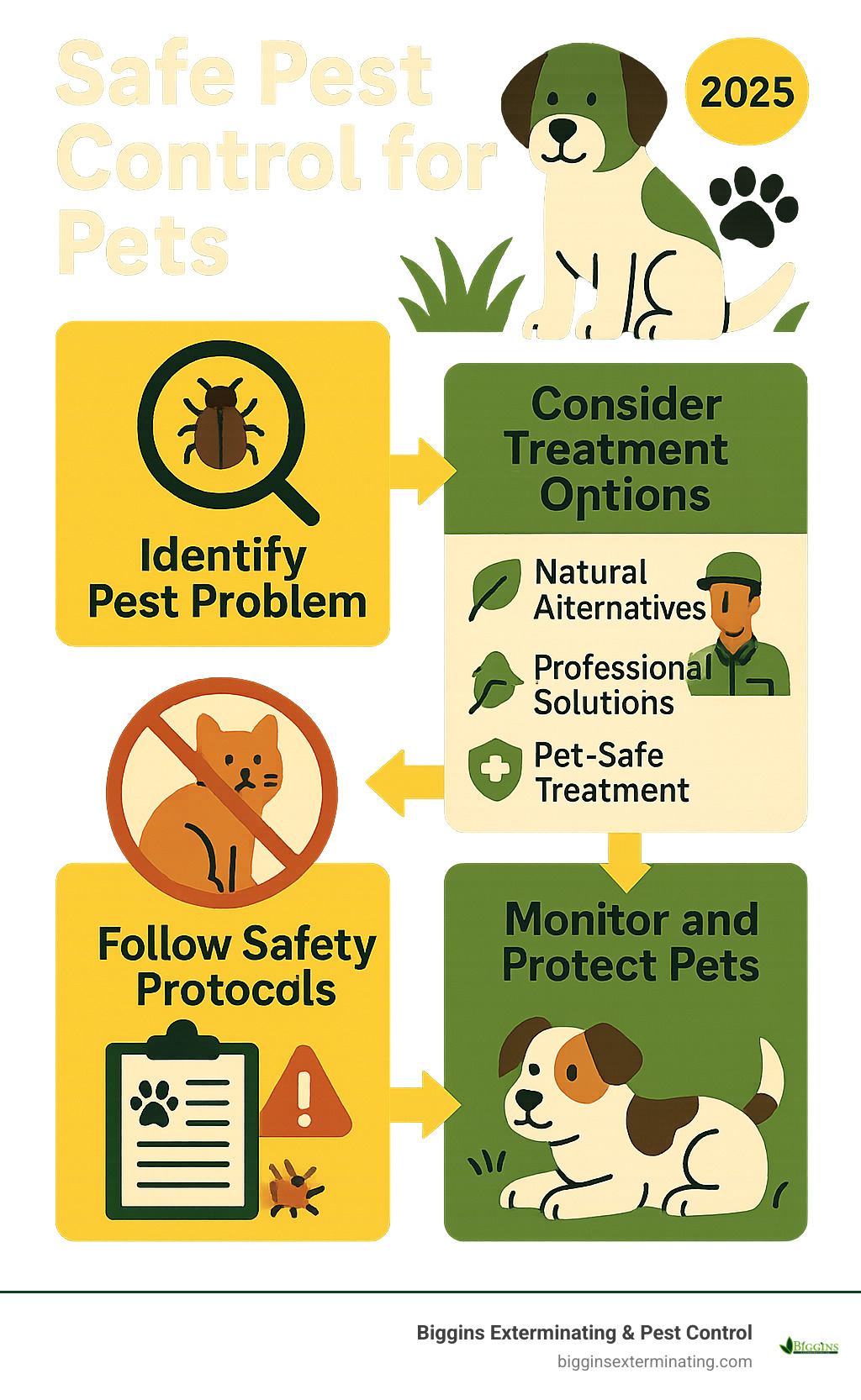
Quick safe pest control for pets definitions:
Is Pest Control Safe for Pets? Understanding Real Risks
The honest answer is: traditional pest control can pose serious risks to pets, but safe pest control for pets is absolutely possible with the right approach. Let’s examine the real dangers and how to avoid them.
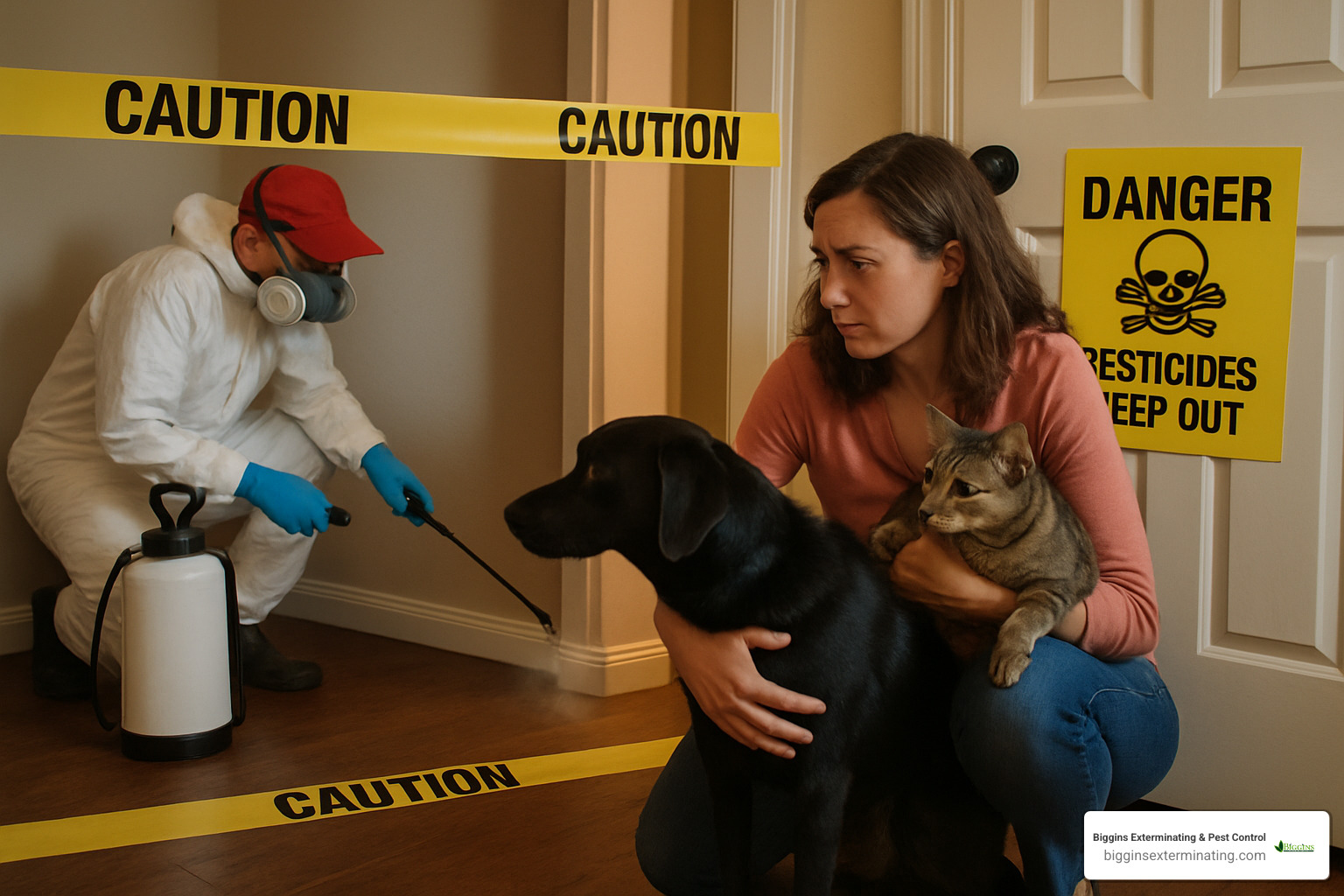
Your pets face chemical exposure in three main ways: direct contact with wet treatments, ingestion of residues from their paws or fur, and inhalation of airborne particles. The EPA classifies pesticides into toxicity categories, with Category I being the most dangerous and Category IV being the least toxic. Many household pest control products fall into the more dangerous Categories I and II.
Here’s what makes pets especially vulnerable: they spend more time close to treated surfaces than we do, have faster metabolic rates, and often groom themselves with their tongues. Research tracking pesticide residues in dog urine found chemicals still present 48 hours after yard treatments. This proves that exposure continues long after the pest control truck leaves your driveway.
The numbers are sobering. A Purdue University study found that Scottish terriers exposed to herbicides were 4-7 times more likely to develop bladder cancer. Scientific research on lawn pesticides and cancer demonstrates clear links between chemical exposure and health problems in companion animals.
But there’s hope. The EPA has established guidelines for minimum-risk pesticides that use food-grade ingredients and pose minimal risk to pets and humans when used correctly.
Main Risks Across Pet Types
Different pets face unique vulnerabilities to pest control chemicals, and understanding these differences helps you protect them better.
Dogs face the highest risk because they investigate everything with their noses and mouths. They walk through treated areas and then lick their paws clean. Smaller dogs are in greater danger because their lower body weight means they reach toxic doses more quickly. A 10-pound Yorkie will be affected by much less chemical than a 70-pound Golden Retriever.
Cats are extremely sensitive to many chemicals that dogs can tolerate just fine. They’re particularly vulnerable to certain essential oils like tea tree and eucalyptus, which can cause liver damage. Since cats spend hours grooming themselves each day, they’re at high risk for ingesting residues from their fur.
Birds have highly sensitive respiratory systems and can be poisoned by airborne particles that wouldn’t bother mammals. Their rapid metabolism means toxins affect them faster and more severely. Even canaries were once used in coal mines as early warning systems for toxic gases.
Fish and aquatic pets are endangered by any chemicals that enter their water systems. Even tiny amounts of pesticides can disrupt their delicate aquatic environment and affect their ability to breathe through their gills.
Reptiles and amphibians absorb chemicals through their skin more readily than mammals, making them vulnerable to even minimal exposure. Their unique skin structure offers less protection against chemical absorption.
Signs of Chemical Exposure to Watch For
Recognizing pesticide poisoning early can save your pet’s life. The symptoms often start subtle but can escalate quickly.
Watch for these warning signs: excessive drooling or vomiting, lethargy or unusual weakness, skin irritation or redness, difficulty breathing, tremors or seizures, loss of appetite, and diarrhea or excessive urination.
Some pets may also show increased tearing, unusual restlessness, or coordination problems. Trust your instincts – you know your pet better than anyone, and if something seems off, it probably is.
If you notice any of these symptoms after pest control treatment, contact your veterinarian immediately and call the National Pesticide Information Center (NPIC) at 1-800-858-7378. Time matters when dealing with chemical exposure, so don’t wait to see if symptoms improve on their own.
Preparing & Protecting Pets Before, During, and After Treatment
Getting ready for safe pest control for pets doesn’t have to be stressful, but it does require a little planning. At Biggins Exterminating & Pest Control, we’ve learned over the years that the secret to protecting your pets is preparation and good communication.
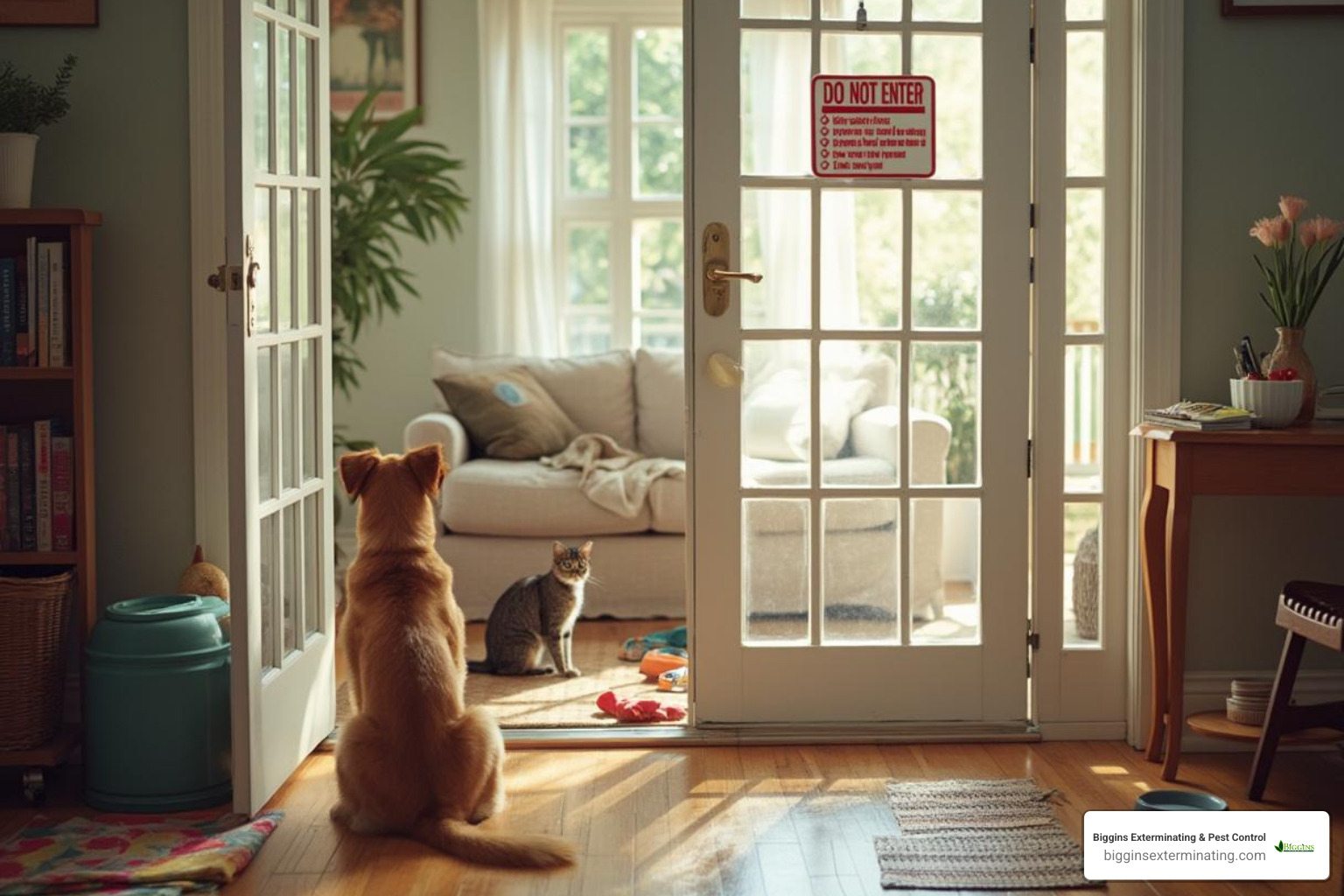
Before we start any treatment, set up a comfortable space for your pets well away from where the pest control will happen. Pick a room that’s cozy, with their favorite bed, toys, food, and water. Good ventilation is important—open a window if you can (just don’t let the cat escape!). Don’t forget to remove all pet items—like food bowls, water dishes, toys, bedding, and litter boxes—from any area that might be treated. This keeps residues off the things your pets use every day.
Timing is also key. Try to schedule your service for a time when you can keep an eye on things. Make sure pets are contained and can’t wander into treated zones by accident. If your pet is nervous or curious, an extra treat or a new toy in their safe room can do wonders to distract them.
For more handy advice, check out these pest control tips for pet owners.
What to Tell Your Pest Control Team About Your Pets
Honest, detailed communication with your pest control technician is a must for safe pest control for pets. Make sure you tell your technician about all your animals—not just dogs and cats, but also birds, rabbits, reptiles, or even that fish tank in the den. For each pet, share their species and breed, age and size, any allergies or health issues, normal habits, and where they tend to hang out. Be sure to mention if you have tanks, cages, or terrariums, as these often need extra protection.
The more we know, the better we can tailor our approach to keep every member of your furry (or scaly, or feathery) family safe.
How Long to Keep Pets Away?
Knowing when it’s safe to let your pets back into treated areas depends on the type of pest control used. For spray treatments, always wait until everything is completely dry—usually 30 to 60 minutes, though some research suggests up to three days is safest, especially for pets who are frequent lawn loungers. With bait stations, your pets can usually return right after since the bait is locked away in tamper-resistant boxes. Granular treatments need to be watered in and dry before pets can re-enter, which usually takes about 2 to 4 hours. For foggers or aerosol treatments, allow 2 to 4 hours for the air to clear and odors to fade.
A good rule of thumb: if you can still smell chemicals, it’s too soon for pets to come back. When in doubt, give it extra time and don’t hesitate to ask your technician for specific guidance.
Taking these simple steps can make a world of difference when it comes to safe pest control for pets. Your pets will thank you—with tail wags, purrs, and maybe a few happy zoomies!
Safe Pest Control for Pets: Treatment Types Compared
When it comes to safe pest control for pets, you have more options than ever before. The pest control industry has evolved dramatically, offering effective solutions that don’t put your furry friends at risk. Let me walk you through what actually works.
| Treatment Type | Pet Safety Level | Effectiveness | Re-entry Time |
|---|---|---|---|
| Traditional Sprays | Low | High | 24-48 hours |
| EPA Minimum Risk Products | High | Moderate-High | 30-60 minutes |
| Bait Stations | High | High | Immediate |
| Diatomaceous Earth | High | Moderate | Immediate |
| Essential Oil Treatments | Moderate* | Moderate | 2-4 hours |
| Beneficial Nematodes | High | High | Immediate |
*Varies by pet species – some oils toxic to cats
The good news? Safe pest control for pets doesn’t mean settling for less effective solutions. Many of these gentler approaches actually work better than old-school chemical bombing because they target specific pests rather than everything in sight.
Natural & Plant-Based Alternatives
Nature has been fighting pests for millions of years, and we’re finally catching up. Cedarwood oil stands out as a real winner here. It disrupts insects’ nervous systems while being completely safe for your dog or cat to walk on. Think of it as nature’s bug zapper.
Products containing cedarwood oil can treat up to 5,000 square feet for mosquitoes and fleas, with no waiting period for pets. That means your dog can keep playing fetch while the treatment does its work.
Citrus extracts derived from orange peels tackle ants, roaches, and silverfish effectively. The best part? They’re safe for pollinators like bees, which means you’re not harming the good guys while getting rid of the bad ones.
Diatomaceous earth works like microscopic razor wire for insects. It dehydrates bugs with hard shells within 24 hours, but it’s completely harmless to pets. Just make sure you’re using food-grade diatomaceous earth – the pool-grade stuff is dangerous.
Here’s where things get tricky: essential oils. While lavender and peppermint can repel insects, some oils are toxic to cats. Tea tree oil, for instance, can cause liver damage in felines. Always check with your vet before using essential oil treatments around pets.
Professional Low-Toxic Solutions
Professional pest control offers the sweet spot between safety and effectiveness. Insect Growth Regulators (IGRs) are game-changers – they prevent pest reproduction without harming pets. Instead of killing adult insects outright, they disrupt development cycles, providing long-term control with minimal toxicity.
Bait stations represent the gold standard for safe pest control for pets. Products like targeted ant gels, when properly applied in tiny amounts (0.1-1 gram per placement), eliminate entire colonies while keeping the active ingredient completely away from curious noses and paws.
Targeted applications focus treatments where pests actually live and breed rather than spraying everything in sight. This precision approach reduces pet exposure while increasing effectiveness. Our green pest control methods emphasize exactly this kind of smart application.
Professional treatments come with something DIY can’t match: warranties and ongoing monitoring. This ensures problems get solved without repeated exposure risks for your pets.
Why DIY Can Endanger Pets – Choose Safe Pest Control for Pets
DIY pest control is where good intentions can go very wrong. I’ve seen too many pets get sick because their owners made honest mistakes with store-bought products.
Concentration errors are the biggest culprit. Homeowners often think “if a little works, more is better.” Wrong. Using too much product or mixing chemicals incorrectly can create dangerous situations. While a 10-pound dog would need to consume about 40 ant traps to reach a lethal dose of borax, smaller amounts can still cause serious illness.
Hidden toxins lurk in products marketed as “natural.” Some permethrin-based products can cause respiratory failure in cats, even though they’re safe for dogs. The labels don’t always make these distinctions clear.
Misapplication puts pets at risk when baits or sprays end up where pets can access them. Professional technicians know proper placement techniques – we know where to put treatments so they work on pests but stay away from pets.
Species knowledge matters more than most people realize. What’s perfectly safe for your golden retriever might be deadly for your cat, bird, or reptile. Professionals understand these differences and adjust treatments accordingly.
The real kicker? Veterinary treatment for pesticide poisoning often costs more than professional pest control. DIY becomes expensive fast when things go wrong.
Creating an Ongoing, Pet-First Pest Management Plan
The best safe pest control for pets isn’t just about choosing the right treatment once—it’s about creating a comprehensive plan that keeps your home pest-free while protecting your furry family members year-round. Think of it as building a fortress around your home, but one that welcomes pets with open arms.
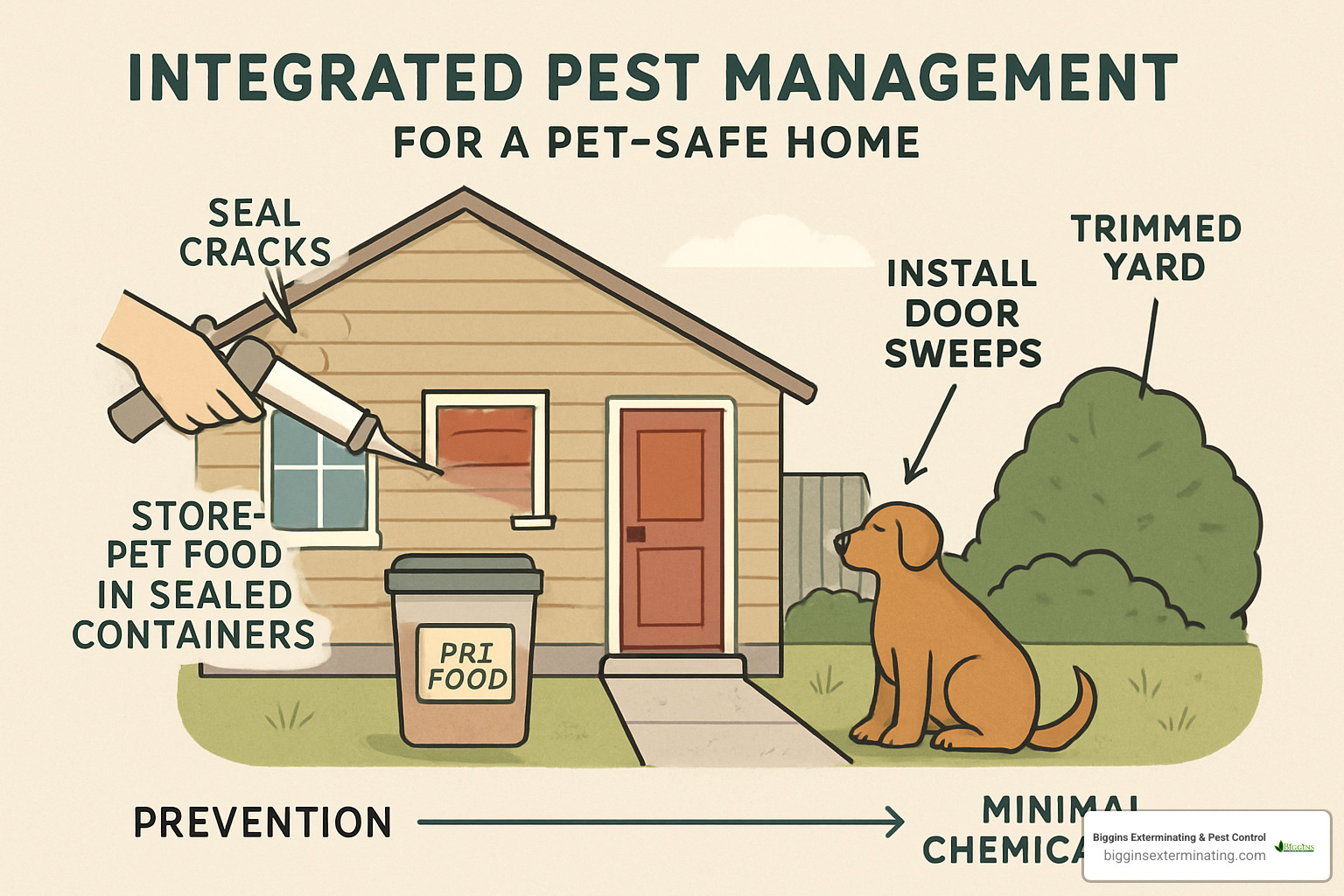
Integrated Pest Management (IPM) is like having a game plan that tackles pest problems from every angle. Instead of relying solely on chemicals, this approach combines prevention, monitoring, and targeted treatments to create lasting solutions with minimal risk to your pets.
The foundation starts with making your home uninviting to pests in the first place. Seal up entry points like cracks around windows, gaps under doors, and holes in foundations. Install door sweeps and repair torn screens. These physical barriers work 24/7 without any chemical exposure—your pets can roll around on the floor without worry.
Regular inspections are your early warning system. Walk through your home monthly, looking for signs of pest activity in areas where your pets love to hang out. Catching problems early means you can solve them with gentler methods before they become major infestations requiring stronger treatments.
Your yard maintenance routine becomes part of your pest control strategy too. Keep grass trimmed short, eliminate standing water from flower pots and gutters, and store pet food in sealed containers. These simple steps remove the food and water sources that attract pests to your property in the first place.
Seasonal scheduling makes treatments more effective and safer for pets. Spring treatments before pest populations explode are far more effective than playing catch-up in summer when bugs are everywhere. Plus, cooler weather often means better ventilation options for keeping pets comfortable during treatment waiting periods.
At Biggins Exterminating, our environmentally safe exterminator services focus on creating these sustainable, pet-friendly solutions that work with nature rather than against it.
Indoor vs. Outdoor Treatments & Pet Safety
Indoor treatments require a different playbook than outdoor applications when it comes to safe pest control for pets. Inside your home, air circulation is limited, so any products used take longer to dissipate. That’s why professional technicians focus on crack and crevice treatments rather than spraying entire rooms.
Think about where your pets spend their time indoors. That favorite sunny spot by the window where your cat naps, or the area rug where your dog likes to sprawl—these are the zones that need extra consideration during treatment planning.
Outdoor treatments face their own unique challenges. Wind can carry chemicals to unintended areas, and runoff from rain can contaminate water sources or create puddles where pets might drink. This is where solutions like beneficial nematodes shine—they work in the soil to control grubs and fleas without leaving any surface residues that could harm paws or noses.
The cumulative effect of multiple treatments matters too. Even pet-safe products can cause problems if overused. Professional pest control services track your treatment history and adjust approaches accordingly, ensuring your pets aren’t exposed to unnecessary chemicals over time.
Monitoring & Emergency Protocols
Creating a solid monitoring system gives you peace of mind and keeps your pets safe. Start by establishing clear protocols for watching your pets after any treatment. Keep a pet exposure kit handy with your veterinarian’s contact information, the National Pesticide Information Center hotline (1-800-858-7378), and labels from any products used in your home.
Document any changes in your pet’s behavior, even minor ones. A dog that’s suddenly less interested in dinner or a cat that’s sleeping more than usual could be showing early signs of exposure. Early intervention can prevent minor issues from becoming serious health problems.
Create a communication system with everyone in your household about treatment schedules and pet restrictions. Make sure family members know when treatments occur and when areas are safe for pets again. A simple note on the refrigerator or family group text can prevent accidental exposure.
The goal isn’t to live in fear of pest control—it’s to create a system where effective pest management and pet safety work hand in hand. With the right approach, you can have both a pest-free home and healthy, happy pets.
Frequently Asked Questions about Safe pest control for pets
How soon can my pets return after treatment?
This is one of the most common questions we hear from pet parents, and for good reason! Every treatment is a little different, so timing really does matter.
For most modern, safe pest control for pets (like EPA minimum-risk sprays, diatomaceous earth, or professional targeted treatments), the golden rule is: let surfaces dry completely before letting your pets back in. That’s usually about 30 to 60 minutes. If you’re treating your lawn and you have dogs that love to sunbathe or cats that do the zoomies outside, we recommend playing it extra safe—try to wait at least three days before letting them roam freely. Pesticide residues can linger, and pets get extra close to the grass.
Some products, like bait stations, are designed with safety in mind. Because everything dangerous is sealed away, your pets can go right back into treated areas. For heat treatments (like for bed bugs), there aren’t any chemical residues left behind, so your pets can usually come back inside within a few hours.
If your nose picks up any lingering chemical smells or you spot wet patches, it’s better to wait. When in doubt, more time is always safer for your furry (or scaly, or feathered) friends.
Which ingredients should I avoid around pets?
Pet parents often ask what to watch out for on those long, complicated labels. There are a few ingredients you should steer clear of to keep everyone safe.
Metaldehyde (found in some slug and snail baits) is extremely toxic to both dogs and cats and can cause seizures or even be fatal. Brodifacoum and other anticoagulant rodenticides—these are used in rat and mouse poisons and can lead to internal bleeding in pets. Permethrin is safe for dogs but highly toxic to cats, causing serious neurological problems. DEET, the common mosquito repellent, isn’t your pet’s friend—it can trigger tremors or even seizures, especially in cats. And while boric acid is generally safe in small amounts, bigger doses can upset your pet’s stomach.
When choosing safe pest control for pets, look for products made with EPA minimum-risk ingredients—think cedarwood oil, citrus extracts, and food-grade substances. And if you’re ever unsure, your vet can be a great resource.
Are pet-safe products as effective as traditional sprays?
Absolutely—when you pick the right product for the job and use it correctly. Many pet-safe pest control solutions these days are just as tough on bugs as traditional sprays, but they spare your four-legged family members (and you!) the risks.
For example, beneficial nematodes go after more than 230 types of soil pests, outlasting many regular surface treatments. Insect Growth Regulators (IGRs) stop pests from reproducing, so you get months of peace from a single treatment. And product lines like Wondercide use plant-based ingredients to handle mosquitoes, fleas, and ticks with no downtime for pets.
The trick is knowing which product matches your pest problem. Professional pest control teams have the experience and access to the safest, most effective options for your home. With the right help, you really can have a pest-free home and happy, healthy pets.
If you want to learn more about safe solutions or have more pet safety questions, our team at Biggins Exterminating & Pest Control is always ready to help.
Conclusion
Creating a safe pest control for pets environment isn’t just about choosing the right products—it’s about building a home where every family member can thrive without worry. After four decades of helping Massachusetts families steer this balance, I’ve learned that the most effective pest control happens when we put pet safety first, not as an afterthought.
The science is clear: you don’t have to choose between effective pest control and pet safety. Modern integrated pest management combines targeted treatments, natural alternatives, and professional expertise to eliminate pests while protecting the animals we love. Whether you’re dealing with ants marching across your kitchen counter or fleas making your dog miserable, there’s a pet-safe solution that works.
Your pets trust you completely—they count on you to make the right choices for their health and happiness. When you choose safe pest control for pets, you’re honoring that trust while creating the pest-free home your family deserves. It’s not about compromise; it’s about making informed decisions that protect everyone under your roof.
The families we serve in Andover, Bedford, Billerica, Burlington, Lexington, North Reading, Tewksbury, Wilmington, and Woburn have finded that professional pet-safe pest control actually works better than DIY solutions. Our eco-friendly pest control services combine decades of experience with the latest pet-safe innovations to deliver results that last.
The cost of doing pest control right the first time is always less than the cost of emergency vet bills or repeated treatments that don’t work. Your peace of mind—and your pet’s health—are worth the investment in professional, pet-safe solutions.
After all, our pets give us their whole hearts. The least we can do is keep them safe while we protect our homes from unwanted guests.