
Why Rodent Control (Mice & Rats) Matters for Your Home
Effective Rodent Control (Mice & Rats) involves a three-step approach: seal entry points, eliminate food and water, and trap existing rodents. As temperatures drop in Massachusetts, mice and rats seek warmth, food, and shelter in our homes. Prevention is always the most effective strategy.
Quick Action Checklist:
- Seal gaps around pipes and foundations with steel wool and caulk.
- Store all food in hard-sided containers and fix leaky pipes.
- Set snap traps along walls where you see droppings.
- Clean contaminated areas with a 1:10 bleach-to-water solution.
- Call a professional if you see daily droppings or hear scratching.
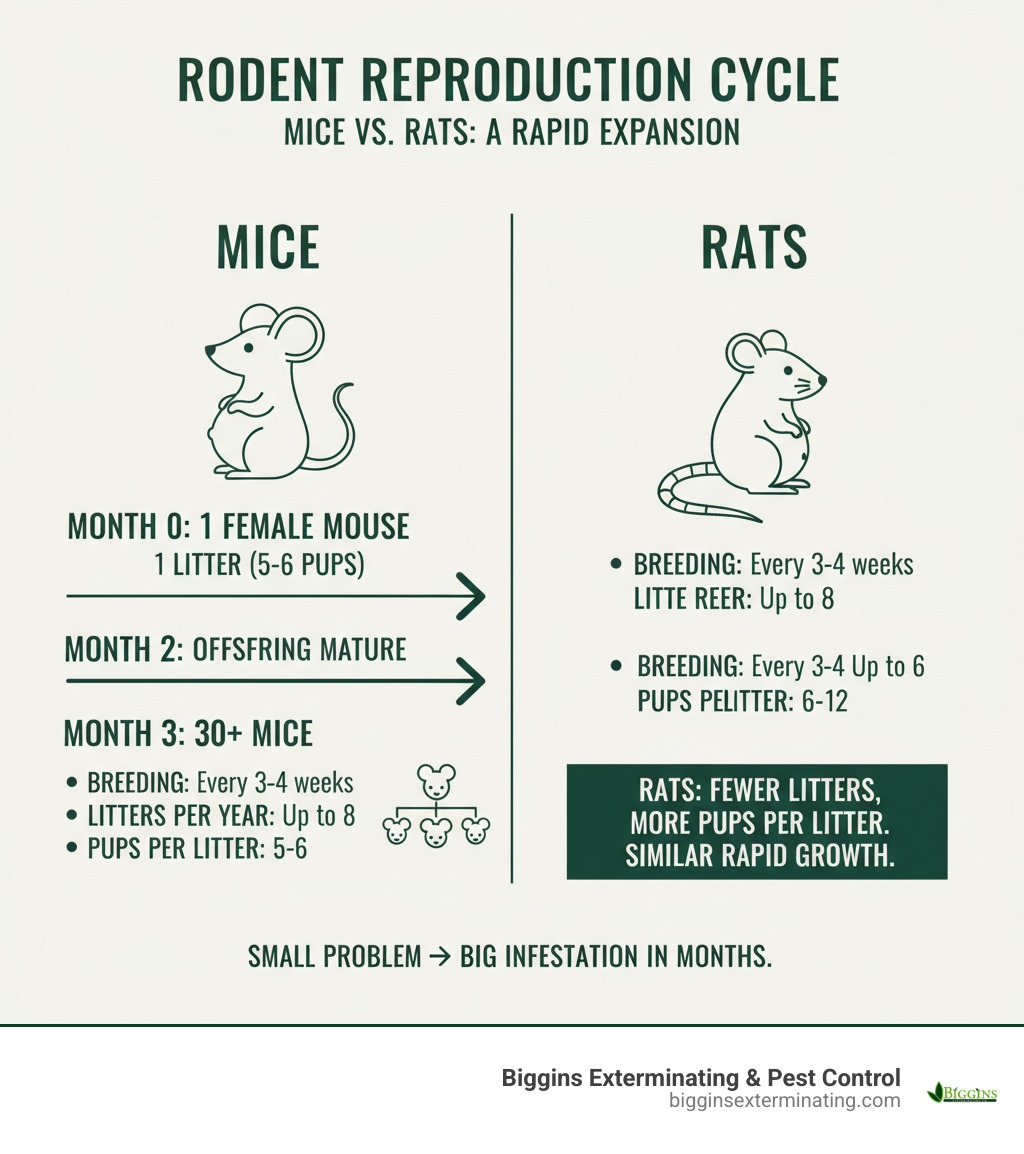
Ignoring the first signs of rodents is a costly mistake. Mice and rats breed every 3-4 weeks, meaning a pair of rodents can lead to a major infestation in just a few months. They aren’t just a nuisance; they pose serious health and safety risks. Rodents can spread diseases like salmonellosis, gnaw through electrical wiring causing fire hazards, and damage insulation and drywall.
This guide will show you how to identify, prevent, and eliminate rodent problems. I’m Stephen Biggins, owner of Biggins Exterminating Co. My father started our family business in 1982, and for over four decades, we’ve protected homes in Wilmington and surrounding areas. Let me share the proven strategies we use every day.
Identifying Your Unwanted Guests: Is It Mice or Rats?
Before you can win the battle against Rodent Control (Mice & Rats), you need to know your opponent. Mice and rats behave differently, so what works for one won’t necessarily work for the other. Correct identification is the first step to an effective control strategy.

Here are the key differences to look for:
-
Behavior: Mice are curious and will investigate new objects, making them easier to trap. Rats are cautious and exhibit neophobia (fear of new things), often avoiding traps for days or weeks.
-
Entry Points: Mice can squeeze through openings as small as a dime (0.7 inches). Rats need a hole the size of a quarter (about 1 inch), though some can get through a half-inch gap.
-
Appearance: Mice are slender, 3-4 inches long, with large ears, a small triangular head, and a thin, hairy tail. Rats are bulkier, 7-9 inches long, with smaller ears relative to their blunt-snouted head and a thick, scaly tail.
-
Droppings: Mouse droppings are small (1/8-1/4 inch), pointed, and scattered near food. Rat droppings are much larger (1/2-3/4 inch), capsule-shaped with blunt ends, and found in concentrated piles along travel routes.
-
Nesting & Travel: Mice nest close to food (10-30 feet), preferring hidden spaces like wall voids. Rats are more adventurous, traveling up to 150 feet from their nest to forage. Norway rats often burrow in soil, while roof rats prefer attics.
Understanding these distinctions directly impacts trap placement, bait selection, and exclusion methods, forming the foundation of successful Rodent Control (Mice & Rats).
Recognizing the Telltale Signs of a Rodent Infestation
Since rodents are nocturnal and stealthy, you’re more likely to see the evidence they leave behind than the pests themselves. Early detection is crucial for Rodent Control (Mice & Rats) because it allows you to address the problem before it grows into a major infestation. Here are the signs to watch for:

-
Droppings: This is often the first and most common sign. Look for small, pointed mouse droppings or larger, capsule-shaped rat droppings in cabinets, along baseboards, and under sinks. Fresh droppings are dark and moist, while old ones are gray and brittle.
-
Gnaw Marks: Rodents’ teeth never stop growing, so they chew constantly. Look for damage on food packaging, wooden beams, drywall, and especially electrical wires, which poses a serious fire hazard.
-
Nests: Rodents build nests from shredded materials like paper, fabric, and insulation. Check for these softball-sized clumps in hidden, undisturbed areas like behind appliances, in wall voids, or in attic corners.
-
Rub Marks: Rats have oily fur that leaves dark, greasy smudges along walls and baseboards they travel frequently. These marks indicate established runways.
-
Scratching Sounds: Scurrying, gnawing, or rustling noises in walls, ceilings, or under floors, especially at night, are a clear sign of an active infestation.
-
Unusual Pet Behavior: If your dog or cat is suddenly fixated on a specific spot, barking or staring intently, they may be detecting rodent activity that you can’t see or hear.
To confirm an active infestation, clean up all droppings and check again in 24-48 hours. If new signs appear, you have rodents living in your home right now.
The Ultimate Guide to Rodent Control (Mice & Rats): Prevention and Elimination
After four decades in pest control, I can tell you that successful rodent management comes from thinking like a rodent. They need food, water, and shelter. By removing these, you make your home far less inviting. This proactive approach is called Integrated Pest Management (IPM), and it’s the foundation of effective Rodent Control (Mice & Rats). IPM prioritizes prevention and monitoring over simply reacting with treatments.
Prevention is always less stressful and more cost-effective than dealing with an infestation. For more year-round strategies, see our residential pest control services. We follow best practices like those in the CDC’s guidance on rodent control, which also emphasizes prevention.
Here are the essential steps to protect your home.
Step 1: Rodent-Proof Your Property (Exclusion)
Sealing entry points is the single most important step. Otherwise, new rodents will simply replace the ones you remove. Inspect your home’s exterior from the foundation to the roofline for any gaps mice (dime-sized) or rats (quarter-sized) could use.
- Seal Gaps: Use steel wool (which rodents can’t chew through) stuffed into holes, then seal over it with caulk. For larger openings, use 1/4-inch hardware cloth.
- Check Key Areas: Pay close attention to the foundation, especially where it meets the siding. Seal gaps around utility pipes, cable lines, and dryer vents. Cover vents with sturdy wire mesh.
- Secure Doors and Windows: Install door sweeps under exterior doors and repair any damaged window screens or weather stripping. A gap under a door is an open invitation.
For detailed techniques, the Rodent Exclusion Manual from the National Park Service is an excellent resource.
Step 2: Eliminate Food, Water, and Shelter
Rodents won’t stay if there’s nothing to eat or drink and nowhere to hide. Make your property inhospitable.
- Food Sources: Store all food—including pet food and birdseed—in hard-sided containers with tight lids. Clean up spills immediately and don’t leave dirty dishes out overnight. Use trash cans with secure lids and take them out regularly.
- Outdoor Attractants: Harvest fruit from trees promptly and clean up fallen nuts. Use no-mess birdseed or bring feeders in at night. Never feed stray animals, and ensure your compost bin is rodent-proof.
- Water Sources: Fix leaky faucets and pipes. Ensure water drains away from your foundation and empty any standing water in buckets, planters, or old tires.
- Shelter (Harborage): Declutter storage areas like basements, attics, and garages. Store items off the floor and away from walls. Keep grass trimmed, prune bushes away from the foundation, and store firewood at least 20 feet from your house. Remove junk piles and debris.
These sanitation tips also help prevent other pests. For more general advice, see our page on ant extermination.
Step 3: Effective Strategies for Controlling Mice
If you’ve completed the first two steps, trapping becomes much more effective. Mice are curious, which makes them relatively easy to catch.
- Use the Right Traps: Classic snap traps are effective and allow you to confirm the catch. We do not recommend glue traps as they are inhumane.
- Placement is Key: Mice travel along walls. Place traps perpendicular to the wall, with the baited end closest to it. Set them in areas with signs of activity, like behind appliances or in cabinets.
- Use Enough Traps: Don’t just set one or two. Place traps every few feet in active areas to catch them quickly before they reproduce.
- Bait and Pre-Bait: Peanut butter, dried fruit, or oats are great baits. For best results, pre-bait the traps for a few days without setting them. Once mice are comfortable taking the bait, set the traps for a much higher catch rate.
Check traps daily and wear gloves when disposing of mice. For more detailed advice, visit our mice pest control page.
Step 4: The Best Strategies for Controlling Rats
Rat control requires more patience due to their cautious nature (neophobia). They are suspicious of new objects and may avoid traps for weeks.
- Pre-Baiting is Crucial: Place unset, baited, heavy-duty rat traps in active areas for up to a week. Let the rats get used to feeding from them before you set the triggers. This overcomes their natural fear.
- Use Rat-Sized Traps: Mouse traps are too small and will only injure a rat, making it trap-shy. Use powerful snap traps designed specifically for rats.
- Use Bait Stations: When using bait, always place it inside a tamper-resistant bait station, especially outdoors or in areas accessible to children or pets. Anchor the stations so they can’t be moved.
- Outdoor Control: Rats often live in burrows outside near foundations or under decks. Once an infestation is controlled, fill in these burrows. Continue to manage vegetation and eliminate water sources to make the area less attractive.
Due to their intelligence and the health risks they pose, professional help is often the best choice for rat problems. Our rats pest control services use advanced strategies for stubborn infestations.
Step 5: Using Rodenticides Safely for Rodent Control (Mice & Rats)
Rodenticides (poisons) should be a last resort, not a first choice, due to significant risks.
- Secondary Poisoning: A poisoned rodent can be eaten by a predator like a hawk, owl, or even a neighborhood cat, poisoning that animal as well.
- Odor and Secondary Pests: Poisoned rodents often die in inaccessible places like wall voids, creating a terrible odor for weeks and attracting flies and beetles.
If you must use rodenticides, follow these rules without exception:
- Use Tamper-Resistant Bait Stations: Never scatter loose bait. All rodenticides must be secured in locked bait stations that children and pets cannot open.
- Follow the Label: The label is the law. It provides instructions for safe and legal application, placement, and disposal.
Given the risks, we strongly recommend professional application of any rodenticides. Licensed technicians know how to use these products safely and effectively, in compliance with all regulations. The EPA provides guidance on rodenticides that details these risks.
After the Infestation: Safe Cleanup and When to Call for Help
Once the rodents are gone, a final, critical step remains: safe cleanup. Rodent droppings, urine, and nesting materials can carry pathogens like hantavirus, which can become airborne if disturbed. Proper cleanup is essential for protecting your family’s health.
How to Safely Clean Up Rodent Contamination
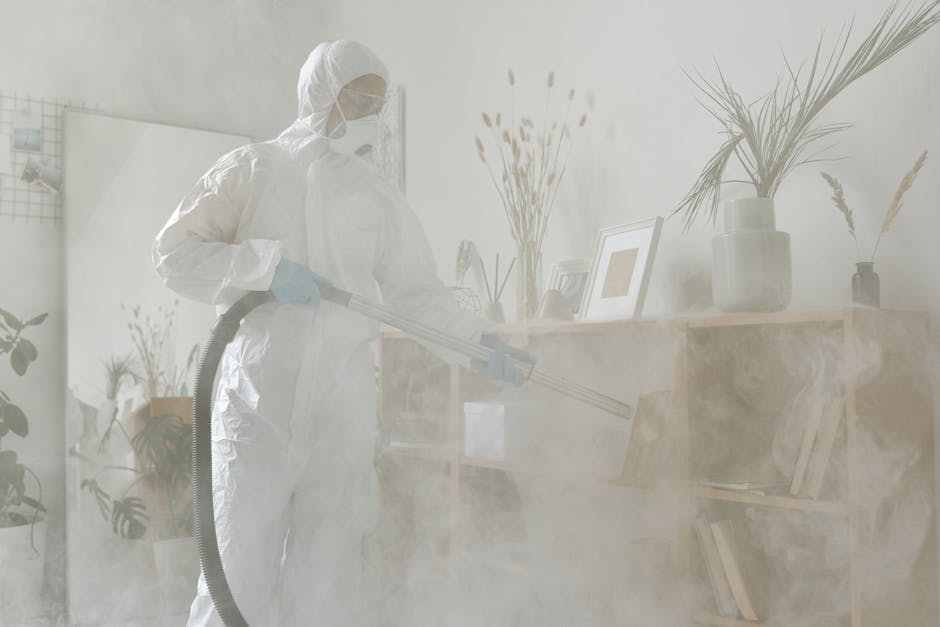
Never sweep or vacuum dry droppings. Use this wet-cleaning method recommended by health authorities:
- Ventilate: Open windows and doors for at least 30 minutes before you start.
- Gear Up: Wear rubber gloves and an N95-rated respirator mask.
- Disinfect: Thoroughly spray the contaminated area with a disinfectant solution (1 part bleach to 10 parts water). Let it soak for 15-20 minutes to kill pathogens.
- Clean Up: Use paper towels to wipe up the soaked material. Place all waste—including droppings, nests, dead rodents, and used paper towels—in a plastic bag. Seal it, place it inside a second bag, and dispose of it in an outdoor trash can.
- Final Steps: Disinfect the entire area again. Remove your gloves and mask, and wash your hands thoroughly with soap and water.
For more details, see this HealthLinkBC guide on how to clean up after rodents safely.
When to Call a Professional for Rodent Control (Mice & Rats)
While some minor issues can be handled DIY, many situations require professional help. Call a professional if you experience any of the following:
- Persistent Activity: You see fresh droppings daily despite your efforts.
- Regular Sounds: You hear scratching or scurrying in walls or ceilings at night.
- Widespread Infestation: The problem affects multiple rooms or is large in scale.
- Significant Damage: You find gnawed electrical wires, damaged insulation, or structural harm.
- Health Concerns: You have young children, elderly family members, or individuals with compromised immune systems at home.
- Peace of Mind: You simply want the problem handled quickly, safely, and effectively by an expert.
At Biggins Exterminating, we provide comprehensive, long-term solutions, not just a quick fix. We offer professional exclusion, monitoring, and customized IPM plans to ensure the problem doesn’t return. If you’re unsure, the EPA offers tips for hiring a rodent control professional.
Frequently Asked Questions about Rodent Management
What diseases can rodents spread to humans?
Rodents are carriers for several diseases, which is a primary reason to take Rodent Control (Mice & Rats) seriously. Transmission can be direct (from bites or contact with waste) or indirect (through ticks and fleas that fed on rodents).
- Hantavirus: A severe respiratory disease spread by inhaling airborne particles from the droppings, urine, or saliva of infected deer mice. The Canadian Centre for Occupational Health and Safety provides detailed information on hantavirus.
- Salmonellosis: A common bacterial infection caused by consuming food or water contaminated with rodent feces.
- Rat-Bite Fever: A bacterial disease transmitted through a rodent bite, scratch, or contact with their waste, causing fever, vomiting, and rash.
Other diseases include Leptospirosis and Tularemia. Due to these health risks, always handle rodent cleanup with care and seek medical attention for any bites.
How can property owners and tenants work together on rodent control?
In multi-family housing, cooperation is essential. When landlords and tenants work together, infestations are resolved quickly. When they don’t, the problem spreads.
- Tenant Responsibilities: Immediately report any signs of rodents. Maintain cleanliness, store all food in sealed containers, and dispose of trash properly in sealed bags.
- Landlord/Property Owner Responsibilities: Seal structural entry points, hire a licensed pest control service for established infestations, and maintain open communication with tenants about pest control efforts.
Shared responsibility is the key to keeping a multi-unit building rodent-free.
Who is responsible for rodent issues: property owners or the city?
Responsibility for Rodent Control (Mice & Rats) depends on the location of the problem.
- Property Owner: The owner is responsible for rodent issues on private property, both inside and outside a home or business. This includes the yard, garage, and even the sewer lines connecting the building to the main pipe in some municipalities.
- City/Municipality: The city is responsible for rodent control in public spaces like parks, alleys, and public sewers. They also typically handle inspections and enforcement for food service establishments.
No matter who is responsible, taking swift action is critical, as rodent populations grow rapidly.
Your Partner in a Rodent-Free Home
We’ve covered the essential steps for effective Rodent Control (Mice & Rats), which all come down to three proactive actions: seal entry points, sanitize your environment, and trap any existing intruders. As winter approaches in Massachusetts, now is the time to take these preventative measures before rodents come looking for shelter.
Prevention is always easier than elimination. But when you do need help, you deserve a partner you can trust. My father started Biggins Exterminating in 1982, and for over 40 years, our family has been dedicated to protecting homes across Wilmington, Andover, Bedford, Billerica, Burlington, Lexington, North Reading, Tewksbury, and Woburn.
We don’t use binding contracts, and we stand behind our work with warranties and a satisfaction guarantee. Our reputation is built on solving your problem effectively and giving you peace of mind.
If you’re facing a rodent issue or want a professional inspection, we’re ready to help. Contact us today for a comprehensive rodent control solution and let us make your home comfortable and rodent-free again.