
Why Professional Pest Inspections Are Essential for Massachusetts Homeowners
A pest control inspection is a thorough examination of your property by a trained professional to identify current pest problems, potential entry points, and conditions that attract them. A typical inspection takes 1-3 hours and involves assessing your home’s interior and exterior for pests like rodents, termites, carpenter ants, cockroaches, and seasonal invaders. Afterward, you receive a comprehensive report with treatment recommendations.
An inspection is crucial for annual preventive maintenance, before buying or selling a home, or anytime you notice signs of pests like droppings, gnaw marks, or strange sounds. Think of it as a health check-up for your home. Pest infestations can cause significant property damage and spread disease. Termites and carpenter ants alone cause homeowners billions of dollars in property damage every year.
Regular inspections catch problems early when they’re easier and less expensive to treat. In Massachusetts, where seasonal changes create ideal conditions for various pests, an annual inspection is your best defense.
I’m Stephen Biggins, and I’ve been conducting pest control inspections throughout Massachusetts for over four decades with Biggins Exterminating. My experience has shown me that early detection saves homeowners thousands in potential damage while keeping families safe.
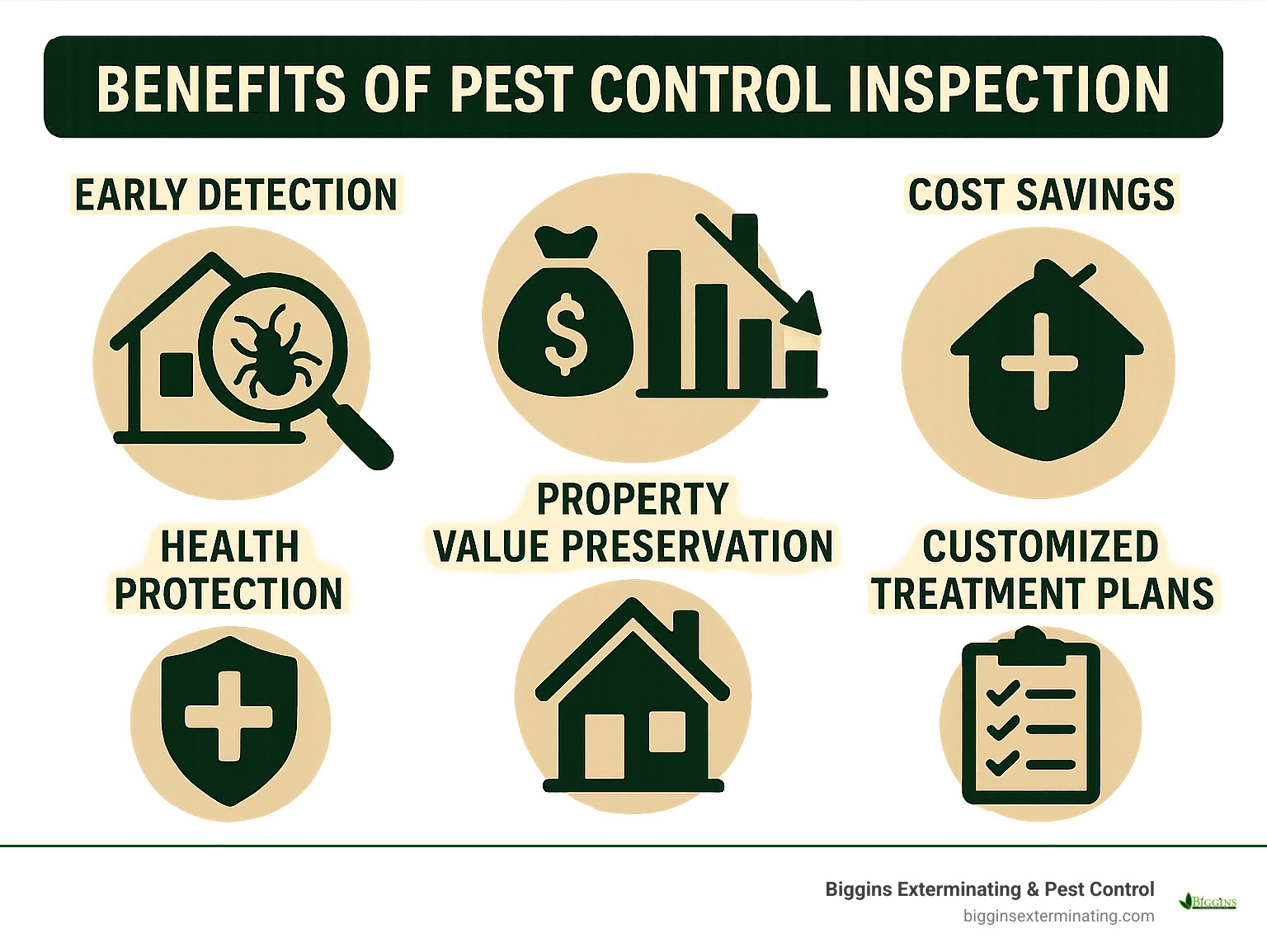
Pest control inspection glossary:
What is a Pest Inspection and Why is it Crucial?
Think of a pest control inspection as a thorough health checkup for your home. Our certified technicians conduct a comprehensive examination of your interior and exterior spaces, searching for subtle clues that reveal hidden problems before they become expensive nightmares.
This process is all about early detection and giving you peace of mind. We examine every nook and cranny, from basement to attic, to spot current infestations and identify potential entry points. This is vital because health and safety concerns go hand-in-hand with financial protection. Pests can seriously damage your property and put your family’s health at risk. You can learn more in our guide on The Importance of Regular Pest Inspections: Safeguarding Your Home and Health.
The Dangers of Hidden Pests
Some of the most destructive pests are also the most secretive. While you go about your day, termites might be eating through your home’s wooden structure, or carpenter ants could be tunneling through support beams. Property damage statistics show these insects cause billions in repairs annually. Termite damage can compromise your home’s structural integrity, turning your safe haven into a costly project.
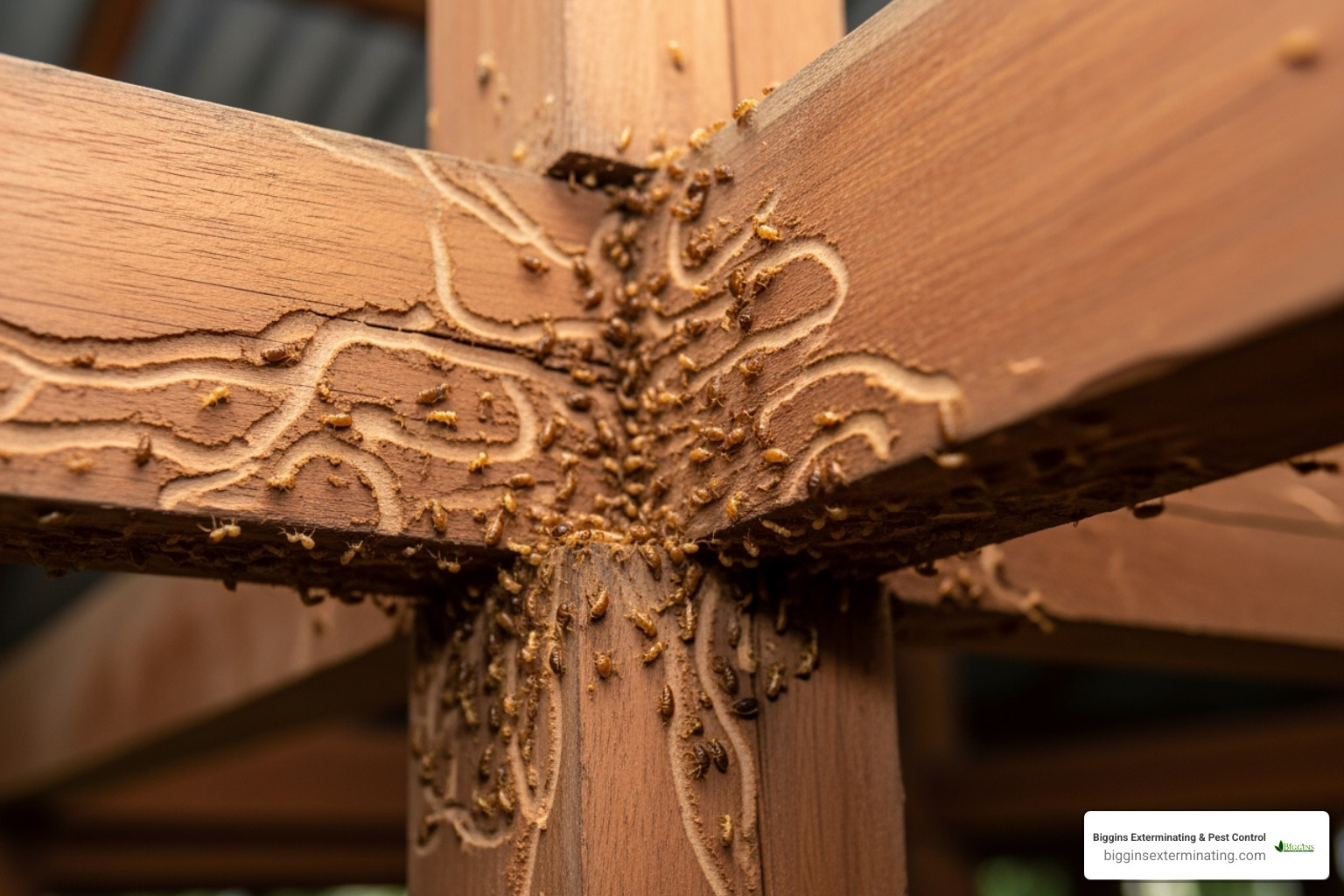
Beyond wood damage, rodent-chewed wires create serious fire hazards, and their droppings can carry dangerous pathogens. Cockroaches are notorious for food contamination and disease transmission, while bed bugs can cause itchy, sleepless nights.
Benefits of a Professional Inspection
While you might spot an obvious ant trail, a professional pest control inspection uncovers what you might miss. Our expert identification can save you thousands of dollars and countless headaches.
Professionals excel at uncovering hidden issues in places homeowners overlook, like tiny foundation cracks or dark crawl space corners. This is crucial for preventing costly repairs, as catching a small termite colony early is far cheaper than fixing extensive structural damage later. A clean pest report also helps in protecting property value when buying or selling.
Most importantly, we provide customized treatment plans based on our findings, not a one-size-fits-all approach. The peace of mind from a professional assessment is invaluable. For more insights, see our article on The Importance of Hiring a Professional Pest Control Service in Massachusetts.
Your Professional Pest Control Inspection: The Process and What to Expect
When you schedule a pest control inspection, our certified technicians use four decades of experience to examine every nook and cranny where pests might hide. It’s a systematic and thorough process, using modern equipment to spot subtle clues that reveal hidden infestations.
What Does an Inspection Entail?
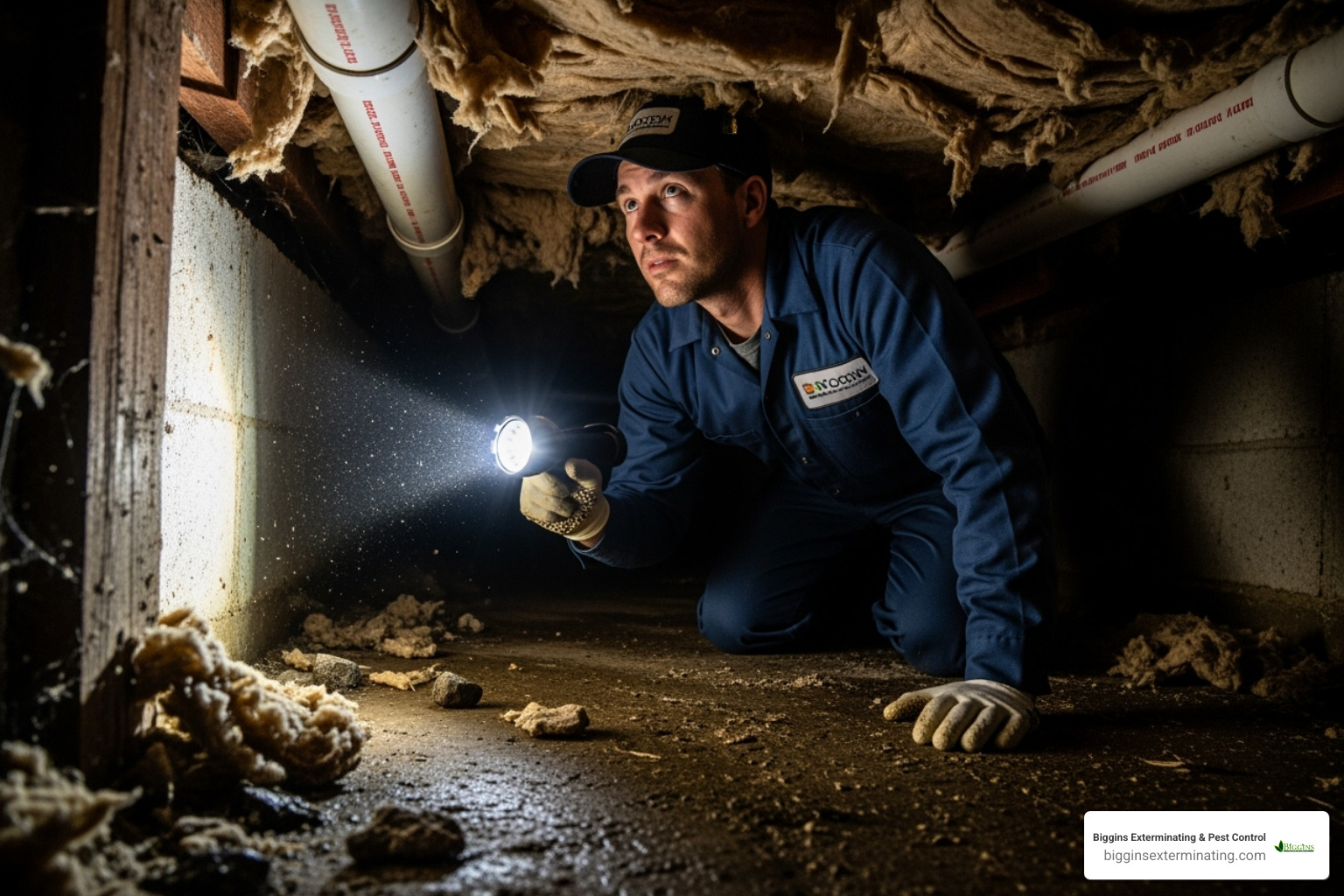
A thorough pest control inspection covers your entire property. Inside, we focus on high-risk areas like the attic, basement, and crawl space, which are perfect hideouts. We give special attention to kitchens and bathrooms, inspecting under sinks, behind appliances, and around pipes for signs of cockroaches, ants, and mice. We also check living areas and bedrooms for bed bugs, spiders, and other invaders.
Outside, we examine your property’s first line of defense. The foundation and siding are scrutinized for cracks and gaps. We look for termite mud tubes and check the roofline and gutters for moisture issues and entry points. Garden beds, fences, and outbuildings like sheds and garages are also inspected, as they can harbor pests before they move into your home.
Types of Pest Inspections
We offer several types of pest control inspections to match your needs:
- General Pest Inspection: Identifies common household invaders like ants, cockroaches, spiders, and rodents. Ideal for routine maintenance.
- Wood-Destroying Insect Reports: Focuses on termites and carpenter ants. Often required for real estate transactions. Learn more about our Termite Inspection Services.
- Bed Bug Inspections: A specialized search for these elusive pests in mattresses, furniture, and crevices.
- Rodent Inspections: Pinpoints entry points and nesting sites for mice and rats.
What Happens After the Inspection?
After the pest control inspection, we provide a detailed report covering identified pests, any damage assessment, and entry points. We also note conducive conditions (like excess moisture) that attract pests.
Most importantly, we provide treatment recommendations custom to your situation, along with a prevention plan with practical steps to keep pests from returning. We’ll review every finding with you, answer your questions, and explain our recommended solutions to help you maintain a pest-free home.
Common Pests and Signs of an Infestation
Recognizing the early warning signs of pest activity is your best defense in protecting your home. The sooner you spot the clues, the easier and less expensive it is to solve the problem. Pests leave behind specific calling cards that are easy to identify once you know what to look for. For a complete overview, see our guide on Signs That You Have a Pest Infestation.
Pests Commonly Found in Massachusetts Homes
Massachusetts’ seasonal changes are ideal for a variety of pests.
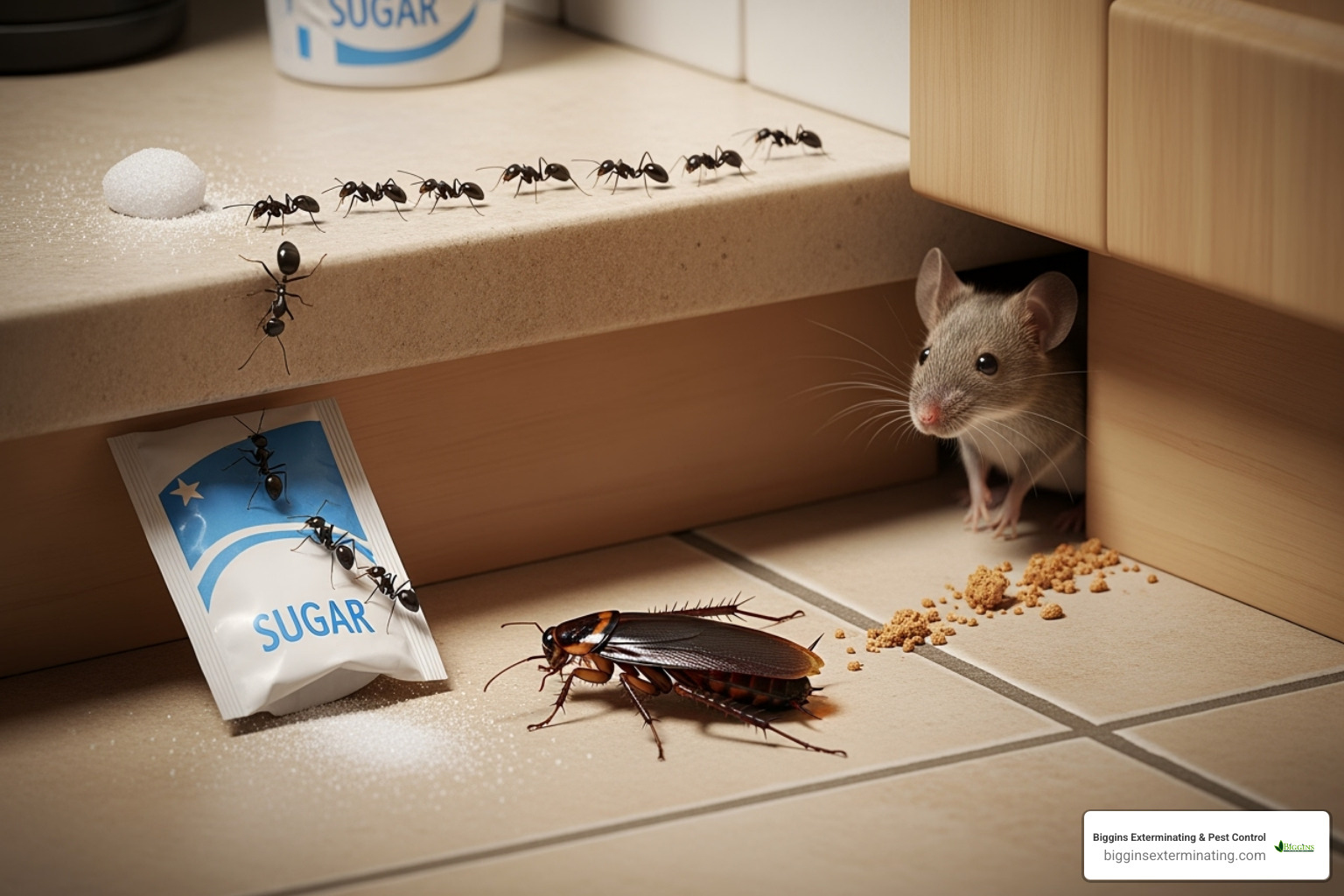
- Rodents: Mice and rats are persistent invaders that chew through wiring and insulation and contaminate food. Their pellet-like droppings are a common first sign.
- Wood-Destroying Insects: Termites (silent destroyers that eat wood) and carpenter ants (which tunnel through wood to nest) can cause serious structural damage. Look for mud tubes or sawdust-like frass. We offer specialized Carpenter Ants services.
- Common Household Insects: Cockroaches thrive in moist areas and can trigger allergies. Ants march in lines to food sources. Spiders leave obvious webs.
- Bed Bugs: These reddish-brown insects feed on blood, leaving itchy bites and small blood or fecal spots on bedding.
- Stinging Pests: Wasps and hornets build visible nests on eaves or in attics during warmer months and can be dangerous to those with allergies.
Telltale Signs You Need an Inspection
Pests almost always leave evidence. If you notice any of the following, it’s time to schedule a pest control inspection:
- Droppings: Small, pellet-like droppings (mice) or droppings resembling coffee grounds (cockroaches) in kitchens or along baseboards.
- Gnaw Marks: Chewed food packaging, wires, or wood indicates rodent activity and can be a fire hazard.
- Nests or Burrows: Paper-like wasp nests, mud dauber structures, or messy debris piles used by rodents.
- Strange Sounds: Scratching, scurrying, or gnawing noises inside walls or ceilings, especially at night.
- Structural Damage: Hollow-sounding wood, sawdust piles (frass), or mud tubes along your foundation point to wood-destroying insects.
- Visual and Olfactory Clues: Greasy smears along walls from rodents or musty odors from infestations.
- Live or Dead Pests: Seeing even one pest often indicates a larger population is hiding nearby.
A Homeowner’s Guide to Scheduling, Preparation, and Safety
A pest control inspection is a straightforward process. With a little planning, you can ensure our technicians can do their best work to protect your home and family.
When Should You Schedule a Pest Inspection?
The best time for a pest control inspection is before you have a major problem. We recommend scheduling one:
- Annually: For preventive maintenance.
- During Real Estate Transactions: A pre-purchase inspection is crucial for buyers, and a clean report helps sellers.
- Seasonally: As seasons change, pests like to move indoors. We know the local patterns in areas like Pest Inspection North Reading.
- Immediately: If you spot any evidence of pests, don’t wait. The sooner you call, the easier the solution.
How to Prepare for a Pest Control Inspection
To help us conduct a thorough inspection, please:
- Provide Clear Access: Ensure pathways to the attic, basement, and crawl spaces are clear.
- Declutter Storage Areas: Tidy up closets, pantries, and storage rooms where pests love to hide. Moving items away from walls is very helpful.
- Note Your Observations: Jot down any pest sightings, sounds, or odors you’ve noticed.
- Secure Pets: Please keep pets in a safe, secure area during the inspection for everyone’s comfort and safety.
Understanding Costs and Safety Protocols
Several factors influence pest control inspection costs, including property size and the type of inspection (general vs. specialized). Based on industry averages, an inspection can range from $75 to $600, with specialized services potentially costing more. Treatment costs are separate and depend on our findings. For more details, see our Pest Control Services Cost page.
Your family’s safety is our top priority. We use only EPA-registered products applied according to label directions. We believe in targeted applications, not widespread spraying. Before any treatment, we’ll explain the process, the products used, and any simple precautions you should take. As a licensed and insured company with over 40 years of experience, we do things the right way. You can also find more information on Pesticide safety information from official sources.
Frequently Asked Questions about Pest Inspections
After four decades of conducting pest control inspections, I’ve heard just about every question. Here are the most common ones.
What should I look for in a reputable pest control service provider?
Choosing the right company is key. Look for these qualities:
- Licensed and Insured: This is non-negotiable and protects you.
- Local Experience: A company that knows your area understands local pest pressures. We have served communities like Wilmington and Andover for over 40 years. Learn more about our Local Pest Control Experts.
- Positive Reputation: Check online reviews and ask for recommendations from neighbors.
- Transparent Communication: They should explain the process, services, and costs upfront.
- No High-Pressure Tactics: Be wary of anyone pushing for immediate, expensive treatments or long-term contracts. We believe our work should speak for itself.
How long does a pest control house inspection typically take?
For an average-sized home, a pest control inspection usually takes 1 to 3 hours. However, we take as long as needed to be thorough. The exact time depends on factors like property size, accessibility of areas like attics and crawl spaces, and the type of inspection being performed (e.g., a detailed termite inspection may take longer than a general one).
What are the most effective pest prevention strategies?
Prevention is always cheaper than treatment. Here are the most effective steps you can take:
- Seal Entry Points: Caulk cracks in the foundation, install door sweeps, and fix torn screens. Mice can fit through a dime-sized hole.
- Eliminate Moisture: Fix leaky pipes, ensure good ventilation in bathrooms, and keep gutters clean.
- Proper Food Storage: Use airtight containers for all food, including pet food. Clean up crumbs and spills immediately.
- Regular Cleaning: Vacuum regularly, especially under furniture, and take out the trash often.
- Yard Maintenance: Trim branches away from the house, remove leaf piles, and eliminate standing water.
Combining these steps with annual pest control inspections creates a strong defense. For more tips, visit our Home Pest Control Tips.
Conclusion: Your Next Step to a Secure and Healthy Home
A professional pest control inspection is one of the smartest investments you can make in your home. It’s a proactive approach to catch issues before they become serious, expensive problems that threaten your property and your family’s well-being.
Early detection, cost savings, and health protection all add up to one thing: peace of mind. Knowing your home has been thoroughly examined by trained eyes ensures your family is safe and your investment is protected.
At Biggins Exterminating, we’ve helped Massachusetts families protect their homes for over four decades. As a family-owned business, we understand your home is your safe haven. We’ve built our reputation on professional expertise you can trust, without contracts or high-pressure tactics. Our 40+ years of experience in Wilmington and surrounding communities means we know exactly what to look for.
Don’t wait until you hear scratching in the walls. The most effective pest control starts with a professional inspection.
Ready to take the next step? Schedule your comprehensive pest inspection today to protect your home and family. Let our experienced team give you the detailed assessment and peace of mind you deserve.
