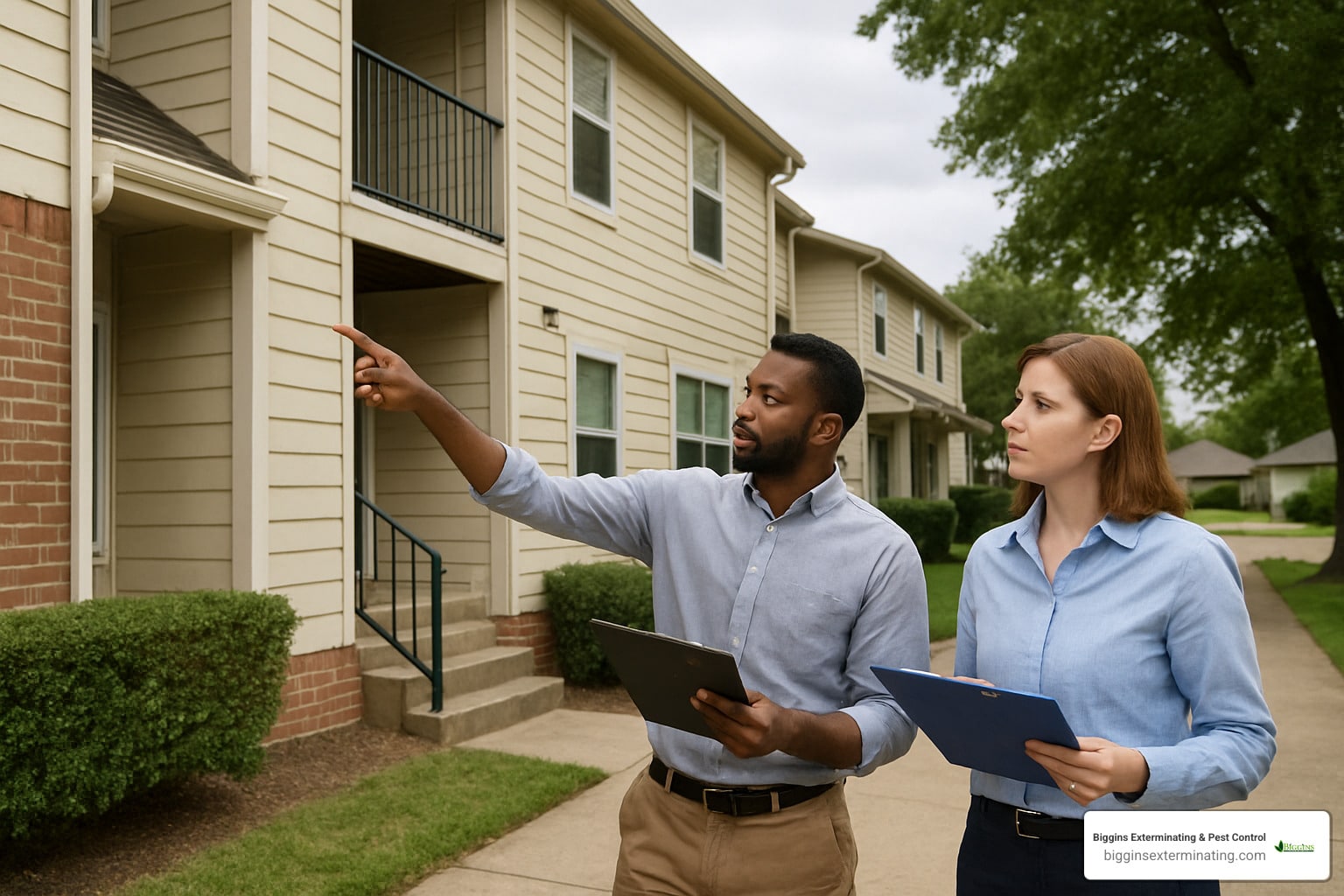
The Hidden Costs of Neglecting Pest Control in Multifamily Properties
Pest control for property managers is a critical component of successful property management that directly impacts resident satisfaction, property value, and legal compliance.
For quick reference, here are the key aspects of effective property management pest control:
| Aspect | Details |
|---|---|
| Legal Responsibility | In most states, property managers are legally responsible for pest prevention and control |
| Annual Infestation Rate | 84% of households experience a pest infestation each year |
| Average Treatment Cost | $223 per single professional treatment |
| Failed DIY Rate | 70% of residents choose ineffective DIY treatments |
| Key Prevention Strategies | Regular inspections, sealing entry points, proper waste management, moisture control |
| Recommended Approach | Integrated Pest Management (IPM) as recommended by EPA |
Managing pests in multifamily properties isn’t just about responding to complaints—it’s about protecting your investment, ensuring resident health and safety, and maintaining your property’s reputation.
I’m Stephen Biggins, owner of Biggins Exterminating Co., and with over four decades of experience providing pest control for property managers across Massachusetts, I’ve witnessed how proper pest management transforms problematic properties into desirable communities where residents stay longer and maintenance costs decrease.
Key terms for Pest control for property managers:
– Exterminator North Reading MA
– Pest inspection North Reading
– North Reading Pest Control
Why Pest Control Matters in Property Management
The importance of pest control for property managers extends beyond eliminating unwanted pests. It’s a cornerstone of successful property operations that impacts your financial success, legal standing, and reputation.
Pests bring serious health concerns. Cockroaches and rodents trigger asthma attacks and allergies, mosquitoes may carry West Nile virus, and ticks can transmit Lyme disease. Bed bug infestations cause psychological distress and painful bites, representing real liability issues for property managers who don’t address these problems promptly.
Your buildings themselves are at risk. Termites cause an estimated $5 billion in property damage annually across the United States. Rodents chew through electrical wiring (creating fire hazards) and tear up insulation (increasing energy costs). Even carpenter ants can compromise structural integrity over time.

In most states, you’re legally obligated to maintain pest-free environments under habitability laws. When you fall short, consequences can include tenants withholding rent, breaking leases without penalty, filing lawsuits, reporting violations to housing authorities, and triggering costly inspections and fines.
Properties struggling with recurring pest problems typically experience turnover rates up to 20% higher than well-maintained propertiesa lot of costly unit turns that could have been prevented.
Hidden Costs of Ignoring Pests
The financial impact of inadequate pest management runs deeper than immediate treatment costs:
- Minor rodent or termite damage can develop into major structural repairs costing thousands
- Housing code violations can result in legal fines ranging from hundreds to thousands per day
- A single pest complaint can become a permanent online review deterring prospective residents for years
- Recurring pest problems may lead to increased insurance premiums or coverage exclusions
- Lost rental income from units with pest issues that remain vacant longer or command lower rents
Preventive pest control for property managers is significantly more economical than reactive treatment. While preventive services might cost $40-50 per unit monthly, addressing established infestations can range from $350-1,500 depending on the pest type and severity.
Common Multifamily Invaders
Understanding which pests typically target multifamily properties helps you anticipate problems:
- Cockroaches thrive in multifamily settings with abundant food, water, and hiding places. German cockroaches are particularly troublesomea single female produces up to 40 eggs every 30 days.
- Rodents need openings as small as a dime (mice) or quarter (rats) to enter. They contaminate surfaces, chew through wiring, and multiply rapidlya single female mouse can produce up to 60 offspring annually.
- Bed bugs spread easily between units through walls, electrical outlets, and on belongings. With treatment costs ranging from $1,000-1,500 per unit, they’re among the most expensive pests to eliminate.
- Ants invade seeking food and water. Carpenter ants deserve special attention as they excavate wood for nesting, potentially causing structural damage.
- Termites cause billions in property damage annually. Subterranean termites, common in Massachusetts, build mud tubes to access wood and often remain undetected until significant damage occurs.
For more insights on maintaining pest-free environments, check out The Role of Pest Control in Maintaining a Clean and Healthy Home.
Pest control for property managers: Core Responsibilities & Legal Obligations
Pest control for property managers isn’t just another maintenance task—it’s a legal obligation that impacts your property’s compliance, residents’ wellbeing, and your bottom line.
The implied warranty of habitability forms the foundation of your pest control responsibilities. This legal doctrine requires that rental properties be suitable for human living—including being reasonably free from pests. While specifics vary by location, most jurisdictions consider a pest-free environment a basic tenant right.
In Massachusetts, the State Sanitary Code clearly requires landlords to maintain dwellings free from rodents, cockroaches, and insect infestations. We’ve seen similar regulations across all communities we serve—from Andover to Woburn.
Property managers are generally responsible for addressing infestations that existed before move-in or those occurring through no fault of the tenant. Many jurisdictions specify timeframes to address reported pest issues—sometimes as little as 24 hours for serious cases, though usually between 3-14 days depending on severity.
Documentation is crucial. Keep detailed records of inspections, treatments, and tenant communications. Your lease agreements should clearly outline tenant obligations to provide access for inspections and treatments. Some areas require you to inform potential tenants about recent pest issues, particularly bed bugs, before they sign a lease.

Understanding State & Local Codes
At the state level, housing codes establish minimum standards for habitability. In Massachusetts, the State Sanitary Code (105 CMR 410.000) outlines specific pest control obligations. Many cities and towns add requirements through local ordinances, with some adopting specialized bed bug ordinances with detailed protocols.
There’s a growing trend toward Integrated Pest Management (IPM) mandates. More jurisdictions now require or encourage these environmentally friendly approaches, especially in properties housing vulnerable residents. Massachusetts limits certain pesticide applications in residential settings, requiring professional applicators to follow specific guidelines.
Non-compliance consequences can be severe: fines ranging from hundreds to thousands of dollars, court-ordered emergency treatments at your expense, tenant rent withholding, and potential tenant relocation costs.
Clear Lines of Accountability
Establishing clear responsibility boundaries between you and residents prevents finger-pointing that delays effective treatment.
Start with comprehensive move-in inspections documenting the pest-free condition of each unit before occupancy. This creates a clear baseline for determining responsibility if issues arise later.
Your lease agreement should specify who handles different types of infestations, required reporting procedures, access requirements for treatments, consequences for non-compliance, and cost allocation for tenant-caused problems.
Regular communication keeps pest prevention top-of-mind for residents. Use newsletters, resident portals, and community meetings to encourage early reporting and share prevention tips.
When determining responsibility for an infestation, timing often tells the story. Problems present at move-in or appearing shortly thereafter generally fall to the property manager. Infestations affecting multiple units usually indicate a building-wide issue rather than tenant-specific causes.
Building an Integrated Pest Management (IPM) Plan
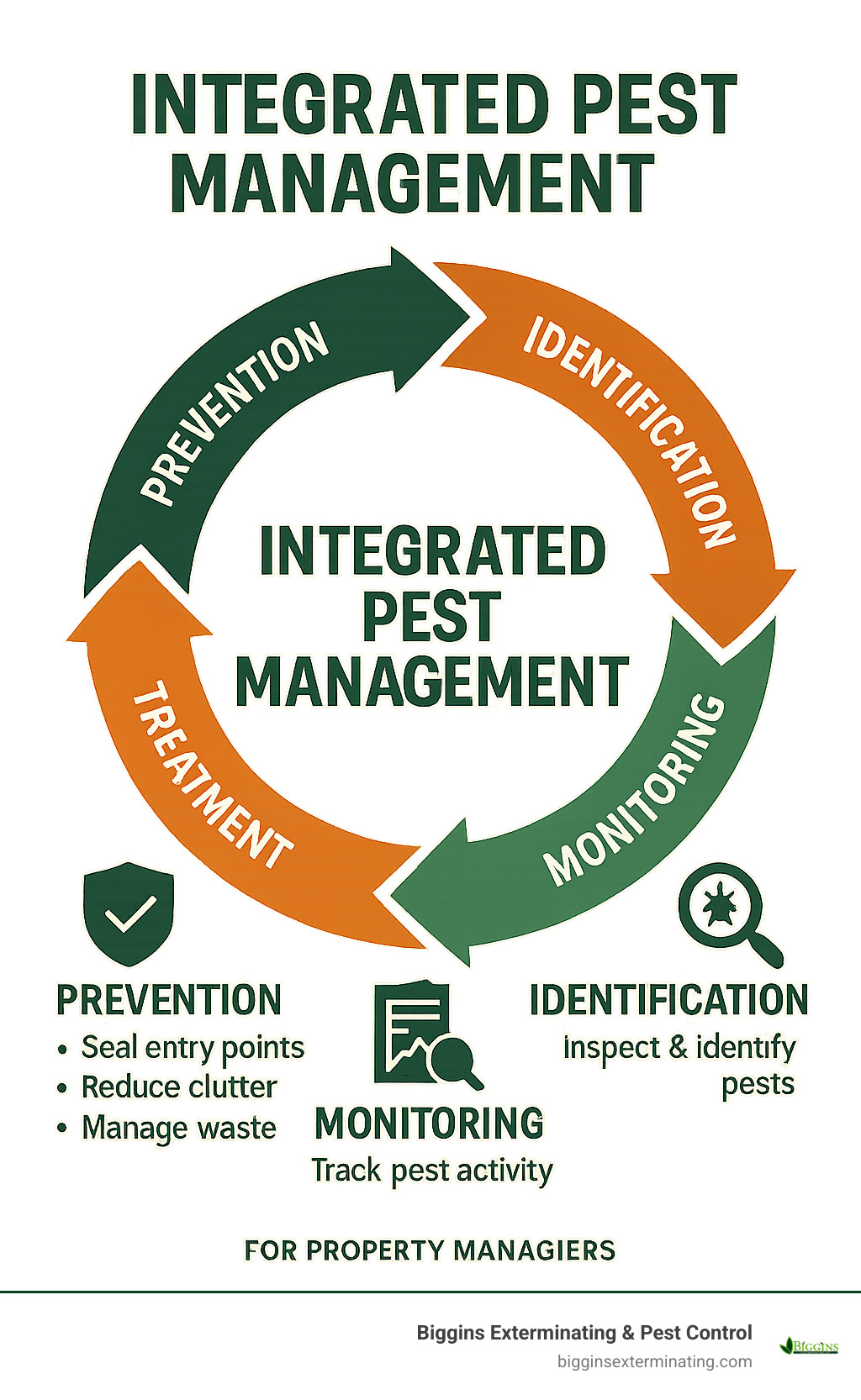
Integrated Pest Management (IPM) is the gold standard for pest control for property managers. It’s a comprehensive approach combining multiple strategies to address pest problems while minimizing chemical use. The EPA strongly recommends IPM for multifamily housing because it works better and reduces chemical exposure for residents.
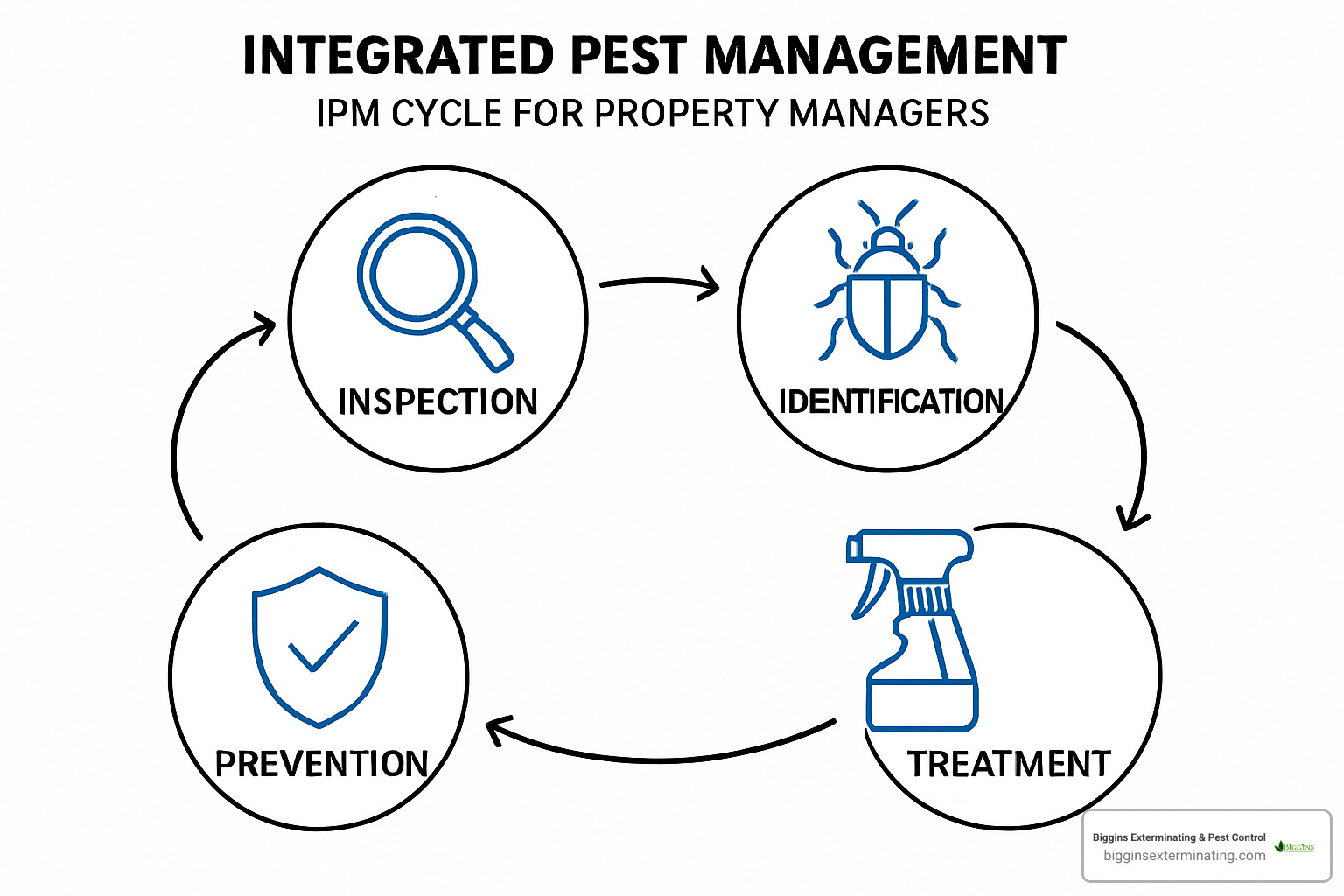
IPM is a decision-making framework rather than a one-size-fits-all solution. It starts with thorough inspection and monitoring to catch problems early. It emphasizes accurate pest identification to ensure effective treatment.
What makes IPM different is that it establishes clear action thresholds that trigger specific responses. Rather than automatically applying chemicals, IPM employs multiple control methods in sequence: physical barriers and traps first, behavior modifications second, and chemical treatments only as a last resort.
For your property to benefit from IPM, you’ll need:
- Regular inspection schedule covering common areas and a rotating sample of units
- Simple monitoring tools like sticky traps or pheromone monitors
- System to track where and when pest activity occurs
- Staff training so everyone knows what to look for and how to report it
- Resident education materials encouraging prevention and prompt reporting
- Treatment protocol starting with the gentlest solutions and escalating only when necessary
- Good record-keeping documenting everything you do and the results
Properties implementing IPM typically see happier residents, lower maintenance costs, and fewer regulatory issues.
Seven Essential Components of Good Facilities Management
After working with property managers throughout Massachusetts for decades, we’ve identified seven facilities management practices that make a difference in preventing pest problems:
- Systematic monitoring through regular, structured inspections of your property’s exterior, common areas, and a rotating sample of units.
- Access reduction by installing door sweeps, sealing utility penetrations, repairing foundation cracks, and closing gaps around windows.
- Moisture control through prompt plumbing repairs, addressing condensation issues, ensuring proper ventilation, and maintaining gutters and downspouts.
- Recycling management by requiring residents to rinse containers, providing covered collection bins, and ensuring frequent pickup.
- Waste management by positioning dumpsters 50-100 feet from buildings on concrete pads, ensuring tight-fitting lids, and keeping surrounding areas clean.
- Non-chemical removal methods like HEPA vacuums for insects, mechanical traps for rodents, and steam treatments for bed bugs.
- Resident cooperation through clear guidelines for food storage and waste disposal, easy reporting systems, and educational resources.
Reactive vs IPM Approaches
Many property managers wonder if the investment in IPM is worth it. This comparison helps illustrate the differences:
| Aspect | Reactive Approach | IPM Approach |
|---|---|---|
| Initial Cost | Lower ($150-300 per incident) | Higher ($350-600 for setup) |
| Long-term Cost | Higher (repeated treatments) | Lower (prevention emphasis) |
| Chemical Usage | Heavy reliance | Minimal, targeted application |
| Resident Disruption | Frequent emergency treatments | Scheduled, predictable service |
| Effectiveness | Short-term relief | Long-term prevention |
| Health Considerations | Higher chemical exposure | Reduced exposure risk |
Properties switching from reactive approaches to IPM typically see a 60-70% reduction in pest-related service calls within the first year. The upfront investment pays off quickly as emergency treatments decline and resident satisfaction increases.
For more information about how IPM works in our region, check out our article on The Role of Integrated Pest Management in Massachusetts.
Proactive Prevention & Tenant Engagement
Successful pest control for property managers combines smart prevention strategies with meaningful tenant engagement to create effective defense against unwanted pests.
Regular property inspections form the backbone of effective pest management. We recommend monthly walks around your building’s exterior (focusing on foundation cracks and utility entries), quarterly inspections of common areas, and annual checks of a sample of units. When a resident reports pests, immediate follow-up is essential.
Physical barriers represent your first line of defense. Sealing cracks in foundations, installing door sweeps, repairing damaged screens, and properly sealing utility penetrations keep pests outside where they belong.
Proper waste management is critical for pest prevention. Position dumpsters 50-100 feet from buildings on concrete pads with tight-fitting lids. Schedule frequent pickups to prevent overflow and regularly clean dumpster areas. In common areas, use rodent-resistant trash receptacles with secure lids.
Your landscaping choices significantly impact pest activity. Maintain a 12-18 inch vegetation-free zone around foundations, trim tree branches that could provide roof access, and keep mulch layers thin (2-3 inches). Direct drainage away from foundations and promptly remove fallen fruit or nuts.
Moisture control deserves special attention since water attracts nearly all common pests. Prompt plumbing repairs, addressing condensation issues, ensuring proper ventilation, and maintaining gutters and downspouts keep your property dry and less appealing to moisture-loving pests.
Educating Residents on Pest control for property managers
Even the most robust professional pest program needs resident cooperation. Resident education is a cornerstone of effective pest control for property managers.
Provide clear information during move-in explaining pest prevention responsibilities, reporting procedures, what to expect during treatments, and consequences of non-compliance. This establishes pest prevention as a shared responsibility from day one.
Maintain awareness through regular communication channels: quarterly newsletters with seasonal prevention tips, community bulletin boards with educational materials, and digital communications through resident portals.
Education should cover proper food storage in sealed containers, prompt cleaning of spills and crumbs, and appropriate waste disposal. Residents should learn early warning signs of pest activity and understand how to prepare their units for inspections or treatments.
Make reporting pest issues simple through online portals, dedicated phone lines, simple paper forms, or mobile apps. The easier you make reporting, the earlier you’ll catch potential infestations.
Provide materials in multiple languages if needed and recognize cultural differences in food storage and preparation that might require custom guidance.
Maintenance Staff & Vendor Coordination
The partnership between maintenance staff and pest control professionals is crucial for effective pest control for property managers. When these teams work together, structural issues get addressed promptly, and pest control treatments receive proper support.
Your maintenance staff should receive basic training in pest identification and recognizing conditions that invite infestations. They should understand proper documentation procedures and how their daily activities impact pest control efforts.
Establish clear coordination protocols: communication channels between maintenance staff and pest control vendors, procedures for following up on recommendations, documentation requirements, and escalation paths for urgent issues.
Pest pressure changes seasonally. Fall is prime time for rodent exclusion before cold weather drives them indoors. Spring calls for ant prevention as activity increases. Summer requires vigilance about standing water that breeds mosquitoes.
Digital tools have revolutionized coordination: shared documentation systems, mobile reporting applications, automated work order generation, and historical tracking of pest issues ensure nothing falls through the cracks.
Choosing & Working With Professional Services
Selecting the right pest control partner is a critical decision for property managers. The ideal provider should understand the unique challenges of multifamily properties and offer customized solutions.
When evaluating potential pest control partners, consider these key factors:
- Experience and specialization in multifamily properties
- Licensing and certification requirements for your state
- Insurance coverage including liability and workers’ compensation
- Service approach emphasizing IPM techniques rather than primarily chemical applications
- Response capabilities for emergency situations
- Contract terms and flexibility in service arrangements
- Documentation practices for regulatory compliance and tracking effectiveness
- Communication protocols with management and residents
- Technology integration with your property management systems
Based on internet research, typical pest control service frequencies and average costs for multifamily properties include:
- Monthly general pest service: $40-120 per building
- Quarterly general pest service: $75-225 per building
- Annual termite inspections: $150-500 per building
- Bed bug treatments: $500-1,500+ per unit
- Rodent exclusion services: $300-1,200 per building
Actual pricing varies significantly based on property size, pest issues, and service scope.
What to Expect From an Inspection
A professional pest control inspection provides the foundation for effective pest control for property managers. A comprehensive inspection should include:
Exterior assessment:
* Foundation examination for cracks and gaps
* Inspection of utility penetrations
* Evaluation of door and window seals
* Assessment of landscaping and vegetation
* Examination of drainage patterns
* Inspection of waste management areas
Interior common areas:
* Examination of basements and utility rooms
* Inspection of laundry facilities
* Assessment of storage areas
* Evaluation of mail and package rooms
Unit inspections (sample or problem units):
* Kitchen assessment focusing on plumbing areas
* Bathroom inspection for moisture issues
* Examination of entry points and windows
* Assessment of closets and storage areas
Documentation:
* Detailed written reports
* Photographic evidence of issues
* Clear recommendations for remediation
* Prioritized action items
Making Pest control for property managers Cost-Effective
Implementing cost-effective pest control for property managers requires strategic planning. We recommend several strategies to maximize return on investment:
Bulk service agreements for portfolio-wide service can significantly reduce per-unit costs.
Preventive service scheduling typically costs 30-50% less than emergency treatments.
Resident benefit packages that include pest control coverage:
* Distribute costs across all units
* Create predictable budgeting
* Eliminate disputes over treatment responsibility
* Encourage early reporting of issues
Staff training to identify early warning signs and perform basic prevention extends the impact of your pest control budget.
Vendor consolidation eliminates coordination costs and often results in volume discounts.
Strategic treatment targeting based on inspection data and resident reports allows for focused interventions rather than treating all units regardless of need.
Technology leverage through digital reporting tools, resident portals, and pest monitoring technologies improves early detection.
By approaching pest control as an investment rather than an expense, property managers can achieve better results while controlling costs.
Frequently Asked Questions about Multifamily Pest Management
Who pays for pest treatments if the tenant causes the problem?
The answer typically depends on your lease language and local regulations.
If your lease clearly states that tenants are responsible for pest issues resulting from their actions, you can generally charge them for treatment costs. However, you’ll need solid documentation showing the infestation directly resulted from tenant behavior.
Many successful property managers implement a “first treatment free” policy to encourage early reporting. This approach helps catch problems when they’re cheaper to fix, with tenants paying only if the same issue recurs due to their actions.
Some jurisdictions limit your ability to charge tenants for pest control regardless of who caused the problem. Always check your local housing regulations before establishing your policy.
How often should a property be inspected for pests?
Based on our experience serving Massachusetts properties, we recommend a tiered approach:
- Exterior inspections: Monthly, with additional checks after severe weather
- Common areas: Quarterly, with more frequent checks in high-risk spaces like laundry rooms and trash areas
- Individual units:
- Annual inspections of all units
- Quarterly inspections of a rotating sample (10-20% of units)
- Immediate inspection of any unit reporting pest activity
- Thorough checks during turnover between tenants
Professional inspections should be supplemented by maintenance team observations during routine work. Consider implementing a resident reporting program with small incentives for early notification of pest issues.
What are average treatment costs for common pests?
Based on publicly available internet data (not Biggins Exterminating & Pest Control pricing), here’s what you might expect to pay:
- Cockroach treatments: Initial services $350-750 per infested unit; follow-up visits $150-300; monthly prevention $40-60 per unit
- Bed bugs: Heat treatments $1,500-3,000 per unit; traditional chemical approaches $1,000-2,000 with multiple visits; preventive inspections $150-300 per unit
- Rodent control: Initial exclusion and trapping $250-750 per building; ongoing monitoring $100-200 monthly; severe infestations $1,000-3,000+
- Ant problems: Interior treatments $150-350 per occurrence; perimeter treatments $200-400 per building; carpenter ant treatment $400-800 per infestation
- Termite treatments: Liquid barrier treatments $800-2,500 per building; bait system installation $1,500-3,000 with annual monitoring fees $300-600
- General pest prevention: Quarterly service $150-450 per building; monthly service $40-150; bi-monthly service $75-225
The clear pattern is that prevention and early intervention cost significantly less than addressing established infestations.
Conclusion
Effective pest control for property managers is a vital investment that protects property value, ensures resident happiness, and maintains regulatory compliance. Taking a proactive approach delivers far better results than responding to emergencies with reactive treatments.
The most successful property managers view pest management as an ongoing program rather than a series of crisis responses. By adopting Integrated Pest Management principles, clearly defining responsibilities, engaging residents in prevention, and partnering with experienced professionals, you’ll experience fewer pest problems while protecting your bottom line.
At Biggins Exterminating & Pest Control, we’ve spent more than four decades helping property managers across Massachusetts develop effective pest management strategies. As a family-owned business, we pride ourselves on delivering personalized service with comprehensive solutions, standing behind our work with solid warranties without requiring long-term contracts.
Here’s what successful property managers understand about pest control:
- Prevention saves money in the long run through regular inspections, sealing entry points, and consistent maintenance practices
- Clear policies prevent headaches by spelling out responsibilities in lease terms and procedures
- Educated residents become allies in keeping properties pest-free when they understand their role in prevention
- Documentation protects your interests through thorough records of inspections, treatments, and communications
- Experienced partners make all the difference by providing specialized knowledge for your unique challenges
For property managers in Andover, Bedford, Billerica, Burlington, Lexington, North Reading, Tewksbury, Wilmington, and Woburn, Biggins Exterminating & Pest Control offers specialized multifamily pest management services designed for local conditions and property types.
When it comes to pest control for property managers, an ounce of prevention truly is worth a pound of cure. By implementing the strategies outlined in this guide, you’ll create healthier, more attractive living environments that benefit both residents and financial performance.
For more information about our comprehensive pest control for property managers services, please contact us for a free consultation. We’re ready to help you develop a pest management approach that works for your specific property needs.