
Why Quick Action Against Cockroaches Matters
Pest control for cockroaches near me is one of the most urgent searches homeowners make – and for good reason. These resilient pests multiply rapidly, with German cockroaches reproducing in as little as 36 days and laying 30-40 eggs at once.
If you need immediate help with cockroaches:
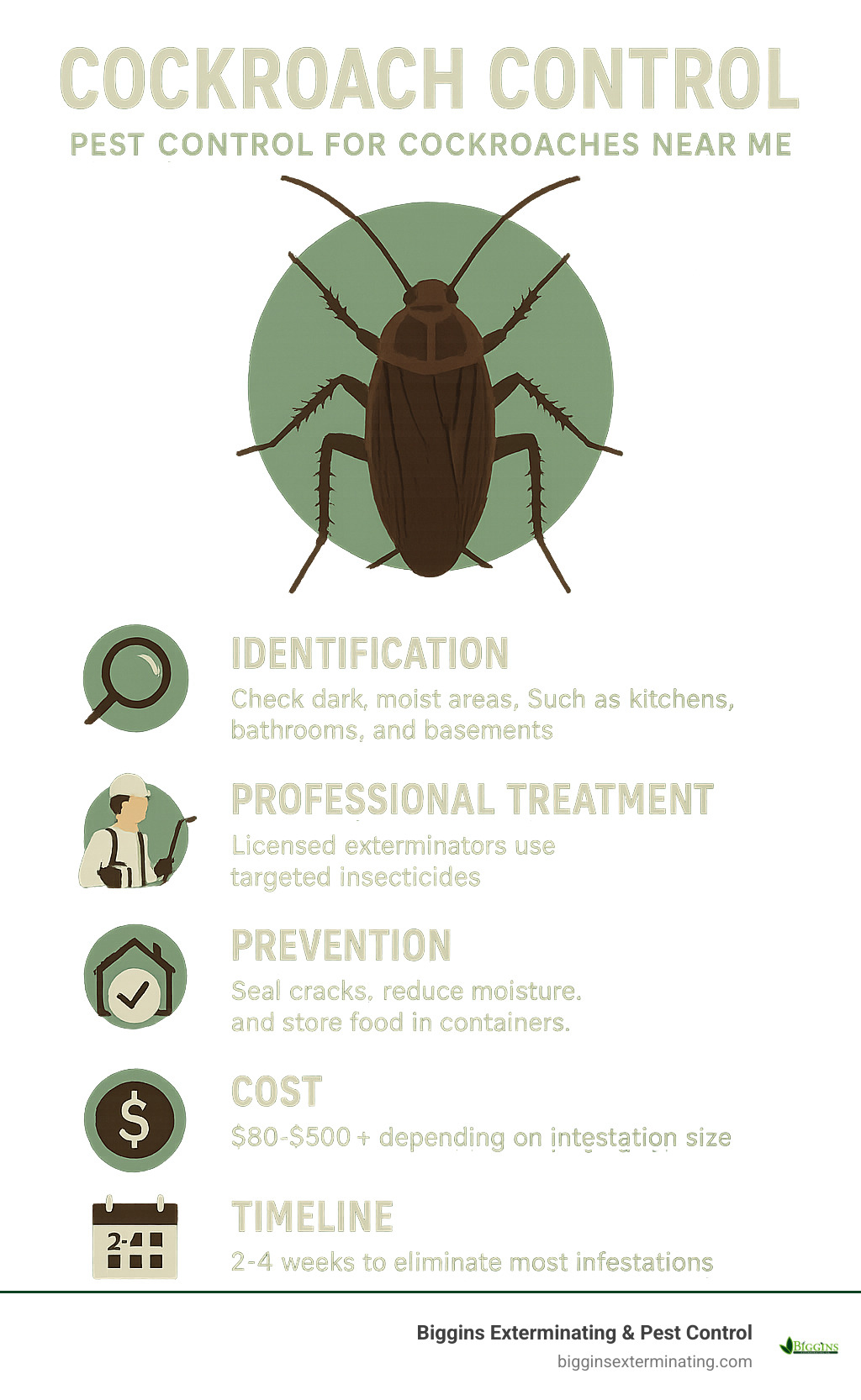
- Professional treatment cost: $80-$500+ depending on infestation size*
- Best local option: Licensed exterminators with guarantees and follow-up visits
- Safety: EPA-approved treatments safe for families when applied correctly
- Timeline: Most infestations controlled within 2-4 weeks with proper treatment
- Prevention: Seal entry points, eliminate moisture, store food properly
*Average costs based on internet data, not actual Biggins Exterminating pricing
Finding even one cockroach in your home signals the start of a potential infestation. These pests carry harmful bacteria like E. coli and Salmonella, while their droppings and shed skins trigger asthma and allergies in sensitive individuals.
The health risks are real. Cockroaches contaminate food surfaces, chew through packaging, and leave behind pathogens that put your family at risk. Their rapid reproduction means a small problem becomes a major infestation quickly.
I’m Stephen Biggins, and I’ve been helping Massachusetts families with pest control for cockroaches near me since taking over our family business in 1982. Our team has seen how fast these pests spread and why immediate action makes all the difference in protecting your home and health.
Cockroach 101: Species, Biology & Risks
When you’re searching for pest control for cockroaches near me, it helps to know exactly what you’re up against. Think of it as knowing your enemy – because these aren’t just any bugs we’re dealing with.
Out of over 4,600 cockroach species crawling around our planet, only about 30 actually want to move into your home. The good news? In Massachusetts, we mainly see four troublemakers, and once you know their habits, you’re already ahead of the game.
German cockroaches are the usual suspects – small but mighty at just ½ to ⅝ inches long, with two dark racing stripes behind their heads. These little speedsters love hanging out in your kitchen and bathroom where it’s warm and humid. Unfortunately, they’re also the champions of triggering allergic reactions in families.
The American cockroach is the heavyweight of the bunch, stretching 1-2 inches long with a reddish-brown color and a distinctive yellowish figure-8 pattern on their head. Here’s a fun fact: despite their patriotic name, they’re actually immigrants from Africa. These giants prefer the damp, dark corners of your basement or anywhere with steam and moisture.
Oriental cockroaches earn their nickname “water bugs” honestly – they’re about an inch long, dark brown to black, and absolutely love cool, damp spots like basements and crawl spaces. They move slower than their cousins, but you’ll know they’re around by the strong musty smell they leave behind.
Finally, brown-banded cockroaches break the mold at just ½ inch long with light brown racing stripes across their wings. Unlike their moisture-loving relatives, these rebels prefer dry, warm hideouts in furniture, closets, and even your electronics.

The Reproduction Reality
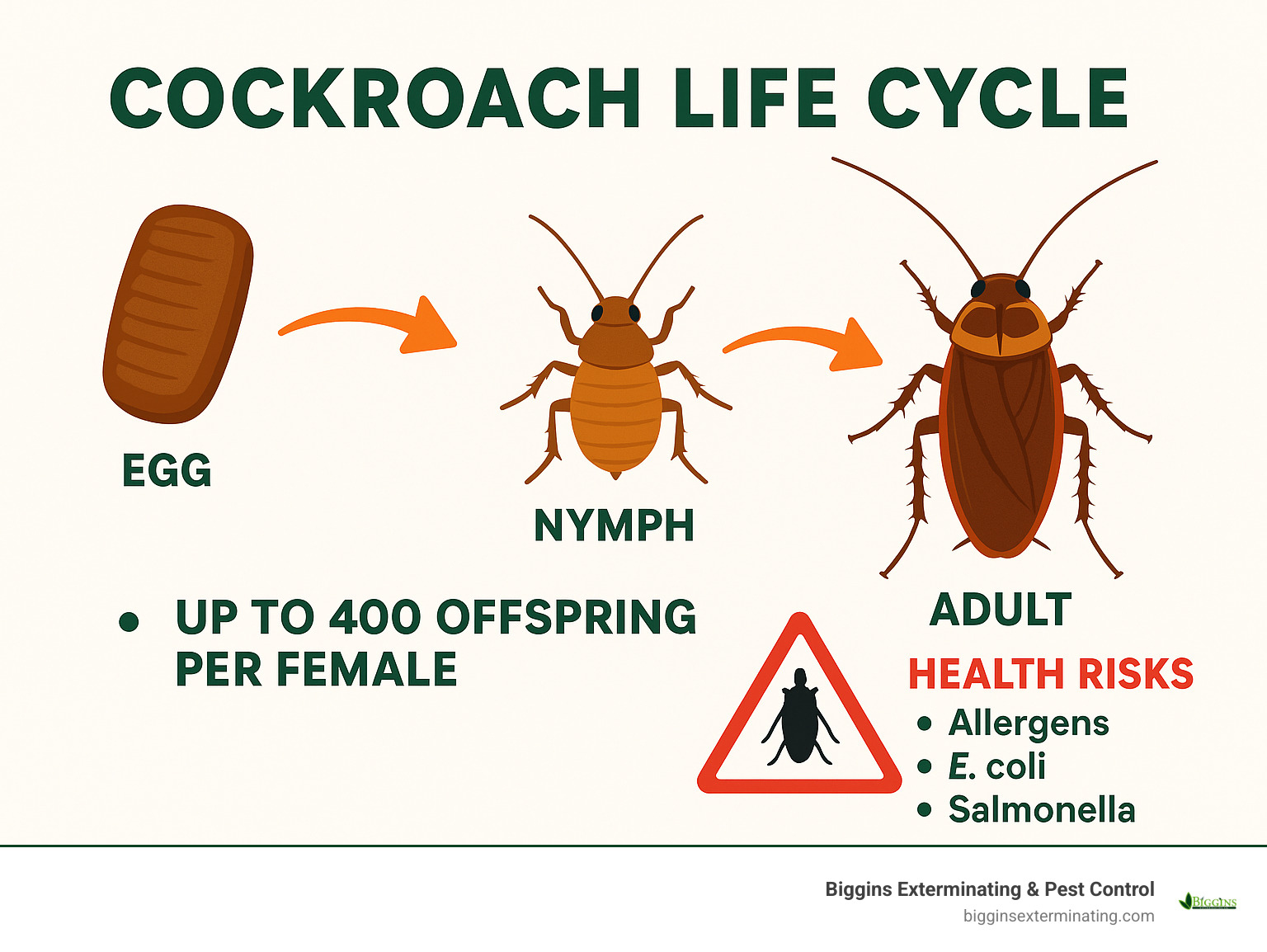
Here’s where things get scary fast. A single German cockroach female can pump out up to 400 offspring in her lifetime. With their lightning-fast 36-day reproduction cycle, what starts as “just one roach” becomes hundreds within a few months.
This exponential baby boom explains why spotting even one cockroach during daylight hours – when they normally stay hidden – often means you’re already dealing with a serious infestation. They only venture out during the day when their hiding spots are completely overcrowded.
Health Risks You Can’t Ignore
Let’s be honest – cockroaches aren’t just gross to look at. They’re walking health hazards that put your family at real risk. Their saliva, droppings, and the skin they shed contain powerful allergens that can trigger asthma attacks and allergic reactions, especially in children.
These disease-carrying pests don’t just contaminate your food – they’re like tiny biological warfare units spreading bacteria including E. coli, Salmonella, Staphylococcus, and Streptococcus wherever they crawl. They chew through food packaging, contaminate preparation surfaces, and leave a trail of pathogens on everything they touch.
For families already dealing with asthma or allergies, cockroach infestations can turn a manageable condition into frequent emergency situations. Scientific research on cockroach allergens shows just how serious these health impacts can be.
The bottom line? These aren’t just nuisance pests – they’re a genuine threat to your family’s health and safety.
How to Spot & Stop an Infestation Early
The difference between a minor cockroach problem and a major infestation often comes down to how quickly you recognize the warning signs. After four decades in the pest control business, I’ve seen how homeowners who catch these issues early save themselves significant time, money, and stress.
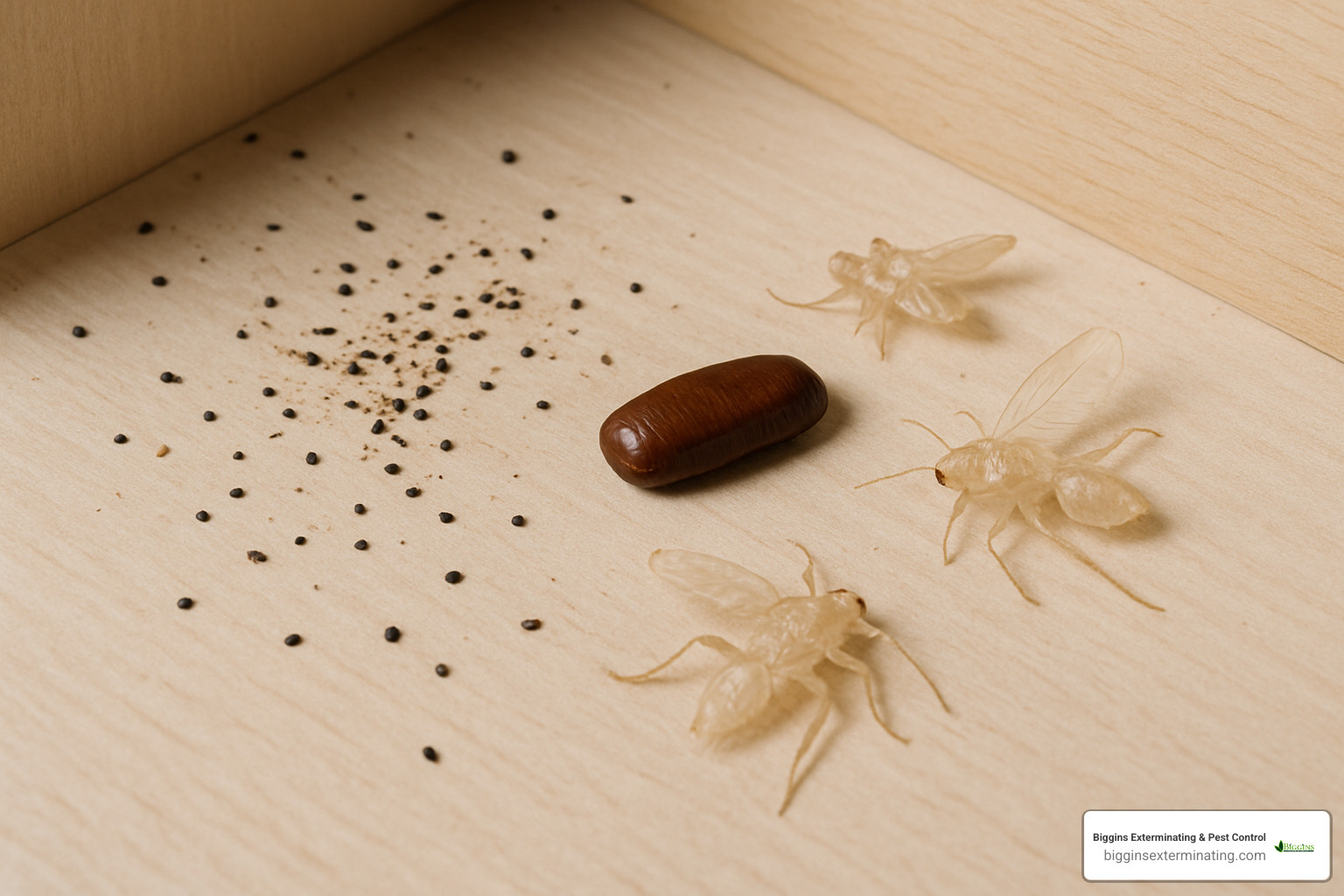
Think of cockroaches as unwelcome houseguests who leave evidence everywhere they go. Droppings are usually the first clue – those small, dark specks that look like coffee grounds or black pepper scattered in corners, behind appliances, and inside cabinets. Fresh droppings mean you’ve got active visitors, not just old remnants.
Smear marks tell another part of the story. These dark, irregular stains appear along walls where cockroaches regularly travel, especially near water sources. The oily residue from their bodies creates these highway markers that other roaches follow like a roadmap through your home.
Keep an eye out for egg cases, those brown, oval-shaped capsules about the size of a kidney bean. German cockroaches carry theirs around like tiny purses until hatching time, while other species drop them in hidden spots. Finding even one means dozens of new roaches are on the way.
A musty odor that won’t go away signals trouble brewing. This oily, unpleasant smell comes from cockroach pheromones and gets stronger as populations grow. It’s nature’s way of helping roaches find each other – unfortunately in your kitchen.
Shed skins scattered around hiding spots reveal another clue. Cockroaches molt five to eight times before reaching adulthood, leaving behind translucent ghost versions of themselves near their favorite hangouts.
The most alarming sign? Seeing cockroaches during daylight hours. These nocturnal creatures only venture out in daylight when their hiding spots become overcrowded. If you spot one during your morning coffee, you’re likely dealing with a severe infestation.
Common Entry Points and Attractants
Cockroaches are master infiltrators, squeezing through spaces you’d never imagine possible. Cracks around pipes and plumbing fixtures serve as superhighways from neighboring units or outdoor areas. Gaps under doors and around windows might seem too small, but remember – if a cockroach can fit its head through, its body will follow.
Cardboard boxes and grocery bags often transport hitchhikers directly into your home. I’ve seen entire infestations start from a single egg case hidden in a delivery box. Shared walls in apartments and condos create invisible highways between units, while drains and sewer connections provide moisture and easy access routes.
What draws them in once they arrive? Food residues and crumbs top the list, along with pet food left out overnight. Moisture from leaky pipes or appliances creates the humid environment they crave. They love warm, dark hiding spaces and actually feed on cardboard and paper materials. That grease buildup behind your stove? It’s like a five-star restaurant to a hungry cockroach.
The key to stopping an infestation early is eliminating these attractants while sealing entry points. When you’re searching for pest control for cockroaches near me, prevention and early intervention always cost less than treating a full-blown infestation.
For comprehensive information about cockroach behavior and control methods, visit our Cockroaches Pest Control page where we detail our proven treatment approaches.
Pest Control for Cockroaches Near Me: Comparing DIY & Professional Solutions
When you’re dealing with cockroaches, you’re probably wondering whether to grab some spray from the hardware store or call in the professionals. I’ve watched homeowners try both approaches over the past 40 years, and honestly, the answer isn’t always obvious. Let me walk you through what actually works – and what doesn’t.
DIY Methods: The Good, The Bad, and The Messy
Gel baits are your best DIY bet. These little tubes contain slow-acting poison that cockroaches love to eat. The genius part? They carry it back to their hiding spots and share it with their friends (through some pretty gross methods I won’t detail here). Place these baits behind your refrigerator, under sinks, and in corners where you’ve spotted activity.
Sticky traps won’t solve your problem, but they’re great detectives. Think of them as your cockroach surveillance system. They’ll catch a few stragglers and show you exactly where the action is happening. Just don’t expect them to handle a full infestation.
Boric acid mixed with sugar sounds like a home remedy your grandmother might have used – and she wasn’t wrong. Cockroaches groom themselves constantly, so when they walk through this powder, they ingest it and die. The catch? It only works if you apply it correctly, and it can be dangerous if you have curious pets or toddlers.
Diatomaceous earth is the “natural” option that health-conscious homeowners love. This fine powder damages cockroach shells, causing them to dry out. It’s safer than chemicals, but humidity makes it useless, and let’s be honest – Massachusetts isn’t exactly known for being dry.
Professional Treatment: Why We Do Things Differently
Here’s where I get a bit passionate about our work. Professional pest control for cockroaches near me isn’t just about spraying chemicals and hoping for the best. We use something called Integrated Pest Management – a fancy term for “let’s be smart about this.”
Our inspection comes first because you can’t fix what you don’t understand. We identify which species you’re dealing with (they all behave differently), find their entry points, and figure out what’s attracting them to your home in the first place.
Then we hit them from multiple angles. We might use granular baits around your home’s perimeter, liquid treatments in cracks and crevices, dust in wall voids, and growth regulators that mess with their ability to reproduce. It’s like playing chess while DIY methods are more like checkers.
The follow-up visits matter most. Cockroaches are stubborn, and their eggs are protected from most treatments. We come back to catch the next generation before they can establish themselves.
| Method | DIY Effectiveness | Professional Effectiveness | Safety Concerns | Cost Range* |
|---|---|---|---|---|
| Gel Baits | Moderate | High | Low | $10-30 |
| Sticky Traps | Low | Monitoring only | None | $5-15 |
| Boric Acid | Low-Moderate | Not used | High (pets/children) | $5-10 |
| Professional IPM | N/A | Very High | Minimal when applied correctly | $80-500+ |
*Average costs based on internet data, not actual Biggins Exterminating pricing
For a deeper dive into our methods, check out our Cockroach Control Services page.
When to Google “Pest Control for Cockroaches Near Me”
I hate to be the bearer of bad news, but some situations are beyond DIY help. Stop trying to handle it yourself if you see cockroaches during the day – that’s like seeing the tip of an iceberg. These nocturnal pests only come out in daylight when their hiding spots are completely overcrowded.
Multiple fresh droppings every day means you’re dealing with an active, breeding population. Worsening allergic reactions, especially in kids with asthma, should send you straight to the phone. And if you’ve been battling them with store-bought treatments for two weeks without success, it’s time to wave the white flag.
Finding egg cases is your final warning. Those brown, oval-shaped capsules mean they’re not just visiting – they’ve moved in permanently.
Choosing a “Pest Control for Cockroaches Near Me” Provider
Not all pest control companies are created equal, and frankly, some give the rest of us a bad name. Look for proper licensing first – Massachusetts requires pest control operators to be licensed and regularly tested. It’s not just paperwork; it’s proof we know what we’re doing.
Treatment guarantees separate the professionals from the pretenders. We stand behind our work because we’ve refined our methods over decades. If the cockroaches come back, so do we.
Ask about eco-friendly options. Modern pest control isn’t about dousing your home in chemicals. We balance effectiveness with safety, especially important if you have children or pets.
Transparent pricing should be non-negotiable. Any company that quotes you over the phone without seeing your home is either inexperienced or dishonest. Every infestation is different, and proper pricing requires a proper inspection.
Check local reputation ruthlessly. Online reviews, Better Business Bureau ratings, and neighbor recommendations tell you more than any sales pitch ever will.
Need help finding qualified providers in your area? Our Pest Control Companies Near Me resource can point you in the right direction.
Frequently Asked Questions about Cockroach Pest Control
When you’re dealing with cockroaches, you probably have a lot of questions running through your mind. After four decades in the pest control business, I’ve heard them all. Let me share the answers to the most common concerns homeowners have when searching for pest control for cockroaches near me.
How much does professional cockroach treatment cost?
The honest answer? It depends on what you’re dealing with. Based on national averages, you can expect to pay anywhere from $80-$130 for standard cockroach treatments, but severe infestations can run $175-$500 or more. These are internet averages and don’t reflect actual Biggins Exterminating pricing.
What drives the cost up or down? The size of your infestation makes the biggest difference. A few roaches in the kitchen require much less work than a full-blown colony that’s spread throughout your home. Your property size matters too – treating a small apartment costs less than a large house with multiple entry points.
The number of follow-up visits also affects your total investment. Some infestations resolve quickly, while others need multiple treatments to break the reproduction cycle completely.
Here’s what I always tell homeowners: start with a free inspection. Many companies, including ours, offer free estimates because every situation is unique. You can’t get accurate pricing over the phone – we need to see what we’re dealing with first.
Are treatments safe for children and pets?
This is probably the question I hear most from parents and pet owners, and I completely understand the concern. The good news is that modern pest control treatments are EPA-approved and designed specifically for safe use around families when applied correctly.
During treatment day, you’ll need to take a few simple precautions. Remove your pet’s food and water bowls from treatment areas, and keep kids and pets in another part of the house while we work. If you have fish tanks or bird cages, cover them temporarily. We’ll also ask you to open windows for ventilation.
After we finish, wait for all treated surfaces to dry completely before letting everyone back into those areas. This usually takes just a few hours. Here’s an important tip: don’t clean the treated areas for 3-4 days afterward – you’ll remove the treatment and reduce its effectiveness.
Professional-grade products are actually often safer than the sprays you buy at the store because we’re trained to use exactly the right amount in exactly the right places. No guesswork, no overspraying.
How can I prevent cockroaches from coming back?
Prevention is hands-down the most cost-effective approach to cockroach control. Once we eliminate your current problem, keeping them out becomes your best investment.
Moisture control tops the list because cockroaches need water to survive. Fix those leaky pipes under the sink, use exhaust fans when cooking and showering, and address any basement humidity issues. Even small drips can sustain a cockroach population.
Food source elimination comes next. Store everything in airtight containers – cereal, crackers, pet food, you name it. Clean up crumbs immediately, especially around toasters and under appliances. Don’t leave pet food out overnight, and make sure your garbage cans have tight-fitting lids.
Sealing entry points prevents new cockroaches from moving in. Caulk around pipes and fixtures, install door sweeps, and seal gaps where utility lines enter your home. These pests can squeeze through incredibly small spaces.
Regular monitoring catches problems before they become infestations. We recommend quarterly professional inspections, and you can use sticky traps between visits to keep an eye on things. When you spot a problem early, it’s much easier and cheaper to fix.
For ongoing protection services, check out our Local Pest Control Services options.
How long does it take to eliminate cockroaches?
I wish I could give you a simple answer, but cockroach elimination is more like a process than a single event. With professional treatment, most infestations are controlled within 2-4 weeks, but complete elimination typically takes 1-3 months.
Why does it take time? Cockroaches are masters at hiding in places we can’t reach directly – inside walls, under appliances, in tiny cracks and crevices. Our treatments work gradually as the roaches encounter baits and treated surfaces during their normal activities.
German cockroaches are the toughest to eliminate because they reproduce so quickly and prefer to stay indoors. American cockroaches often resolve faster because they’re larger, easier to target, and may be coming from outside sources we can address.
The duration also depends on how long the infestation has been established and how well you can follow our prevention recommendations. Properties with ongoing moisture issues or food sources take longer to clear completely.
Patience is key here. I know it’s frustrating to still see an occasional cockroach after treatment starts, but this is normal. The treatments are working – it just takes time to reach every hiding spot and break the reproduction cycle completely.
Conclusion
When you find yourself frantically searching for pest control for cockroaches near me at 2 AM because you spotted one of these unwelcome guests scurrying across your kitchen floor, remember this: you’re not alone, and there’s hope.
The truth is simple – effective cockroach control isn’t about magic solutions or overnight fixes. It’s about combining immediate professional action with smart prevention strategies that protect your family’s health and give you peace of mind.
Think of it this way: cockroaches are like that one relative who overstays their welcome, except they multiply rapidly and carry diseases. Early detection saves you from hosting the entire extended family reunion in your walls. Professional treatment using Integrated Pest Management doesn’t just evict the current guests – it changes the locks so they can’t come back.
Here’s what really works: thorough sanitation that eliminates their food sources, moisture control that makes your home less appealing, and professional expertise that targets their hiding spots with precision. DIY methods might catch a few stragglers, but established infestations need the comprehensive approach that only experienced professionals can provide.
At Biggins Exterminating & Pest Control, we’ve been helping Massachusetts families sleep better for over 40 years. When Stephen Biggins took over the family business in 1982, he made a promise that still guides us today: treat every home like it’s our own family living there.
That means no high-pressure sales tactics, no unnecessary long-term contracts, and no cutting corners on safety. We serve families throughout Wilmington, Andover, Bedford, Billerica, Burlington, Lexington, North Reading, Tewksbury, and Woburn with the same care and attention we’d want for our own loved ones.
Your family deserves better than sharing space with cockroaches. These resilient pests don’t just disappear with wishful thinking – they require professional expertise, the right tools, and ongoing prevention strategies. Our experienced team understands exactly what Massachusetts homes face and provides customized solutions with warranties that back up our work.
Don’t let cockroaches turn your safe haven into a source of stress and health concerns. Contact us today for a free inspection and find why generations of local families have trusted Biggins Exterminating for reliable, effective pest control. Visit our Best Pest Solutions page to learn more about our comprehensive approach to protecting your home.
Remember: when it comes to cockroaches, there’s no such thing as “just one.” Quick action and professional expertise make the difference between a minor scare and a major health hazard. Your family’s comfort and safety are worth the investment in doing it right the first time.
