Why Odorous House Ants Are Invading Your Massachusetts Home
Odorous house ants are small, dark brown to black ants that smell like rotten coconut when crushed. Here’s what you need to know to identify them quickly:
| Feature | Description |
|---|---|
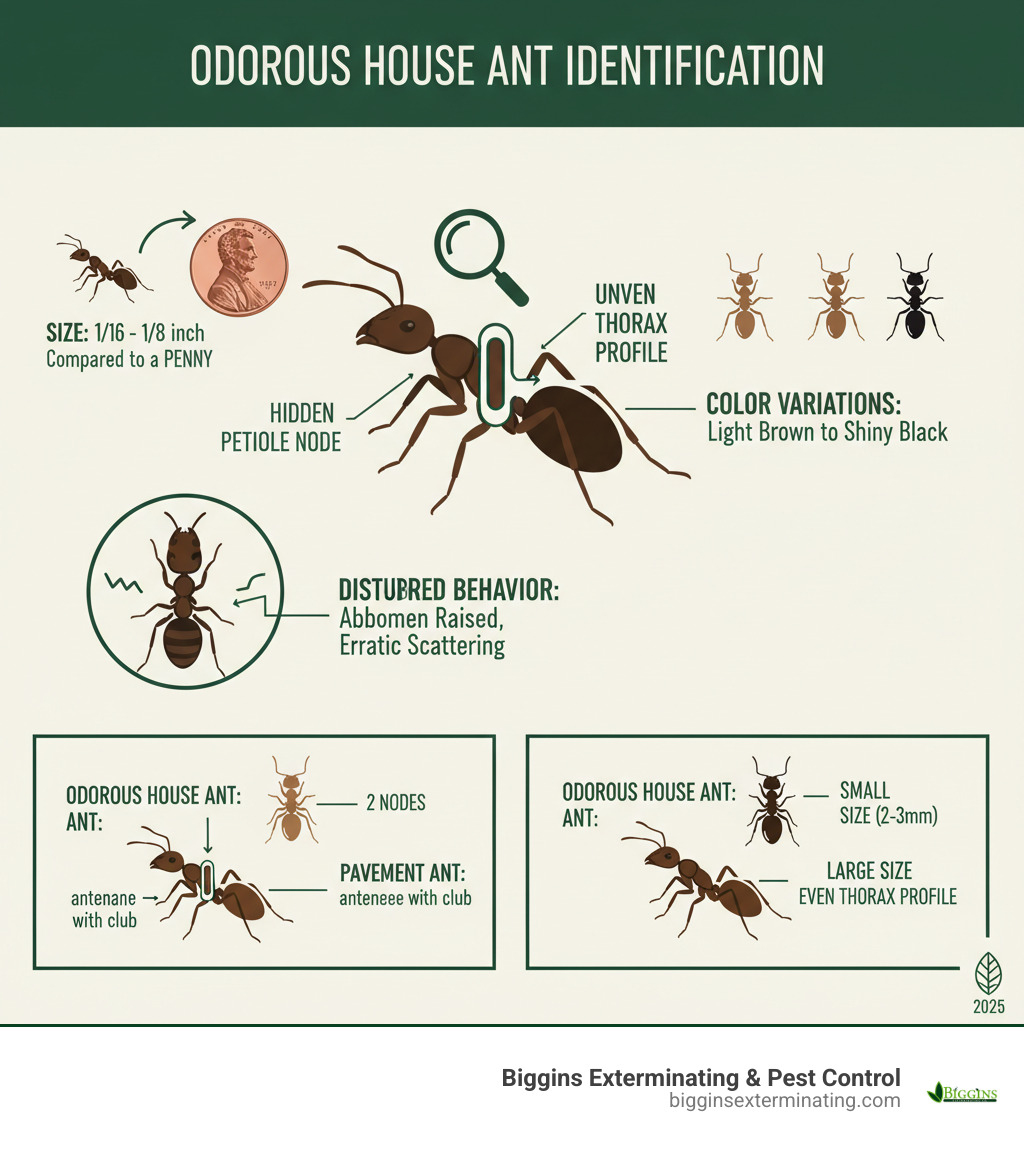
| Size | 1/16 to 1/8 inch long (about 2-3mm) |
| Color | Dark brown to shiny black |
| Distinctive Trait | Emit rotten coconut or blue cheese odor when crushed |
| Body Shape | Hidden petiole node; uneven thorax when viewed from side |
| Behavior | Move in trails; scatter erratically when disturbed with abdomens raised |
| When Most Active | Spring through fall; especially after rain |
If you’ve noticed tiny dark ants trailing across your kitchen counter or detected an odd smell after accidentally crushing an ant underfoot, you’re likely dealing with odorous house ants. These native North American pests have become one of the most common household invaders across Massachusetts, particularly during spring and summer months when they’re actively foraging for sweets, moisture, and warmth.
What makes these ants especially frustrating for homeowners is their ability to form massive colonies with multiple queens and satellite nests—sometimes containing up to 100,000 workers. They don’t just nest outside under rocks and mulch; they’ll happily set up shop inside your walls, near hot water pipes, beneath leaky fixtures, or even in your houseplants. After heavy rains, which flood their outdoor nests and wash away their primary food source (honeydew from aphids), they often migrate indoors in large numbers seeking shelter and new food sources.
As Stephen Biggins, owner of Biggins Exterminating & Pest Control, I’ve been helping Massachusetts homeowners deal with odorous house ant infestations for decades, using integrated pest management approaches that address both the visible workers and the hidden colony structure. Understanding how to identify these pests and what attracts them to your home is the first step toward effective control.
How to Identify Odorous House Ants
Picture this: you’re making your morning coffee, and you spot a line of tiny dark ants marching across your counter. You reach for a paper towel to wipe them away, and suddenly they scatter in every direction, abdomens pointed skyward like tiny antennas. If this sounds familiar, you’re probably dealing with odorous house ants.
Correctly identifying these pests is the first step to getting rid of them. When you know exactly what you’re up against, you can choose control methods that actually work. Odorous house ants leave behind pheromone trails—invisible chemical highways that tell other ants exactly where to find food and water. These ant trails can lead directly to your pantry, contaminating food along the way.
What makes these ants particularly recognizable is their panic response. When disturbed, they don’t just scatter randomly. They run in erratic movements, often raising their abdomens straight up in the air as if waving little flags. It’s almost comical to watch, but it’s also a dead giveaway that you’re dealing with this specific species. For more detailed identification help, check out this comprehensive resource: A Guide to House-Invading Ants and Their Control.
Physical Appearance: What Do They Look Like?
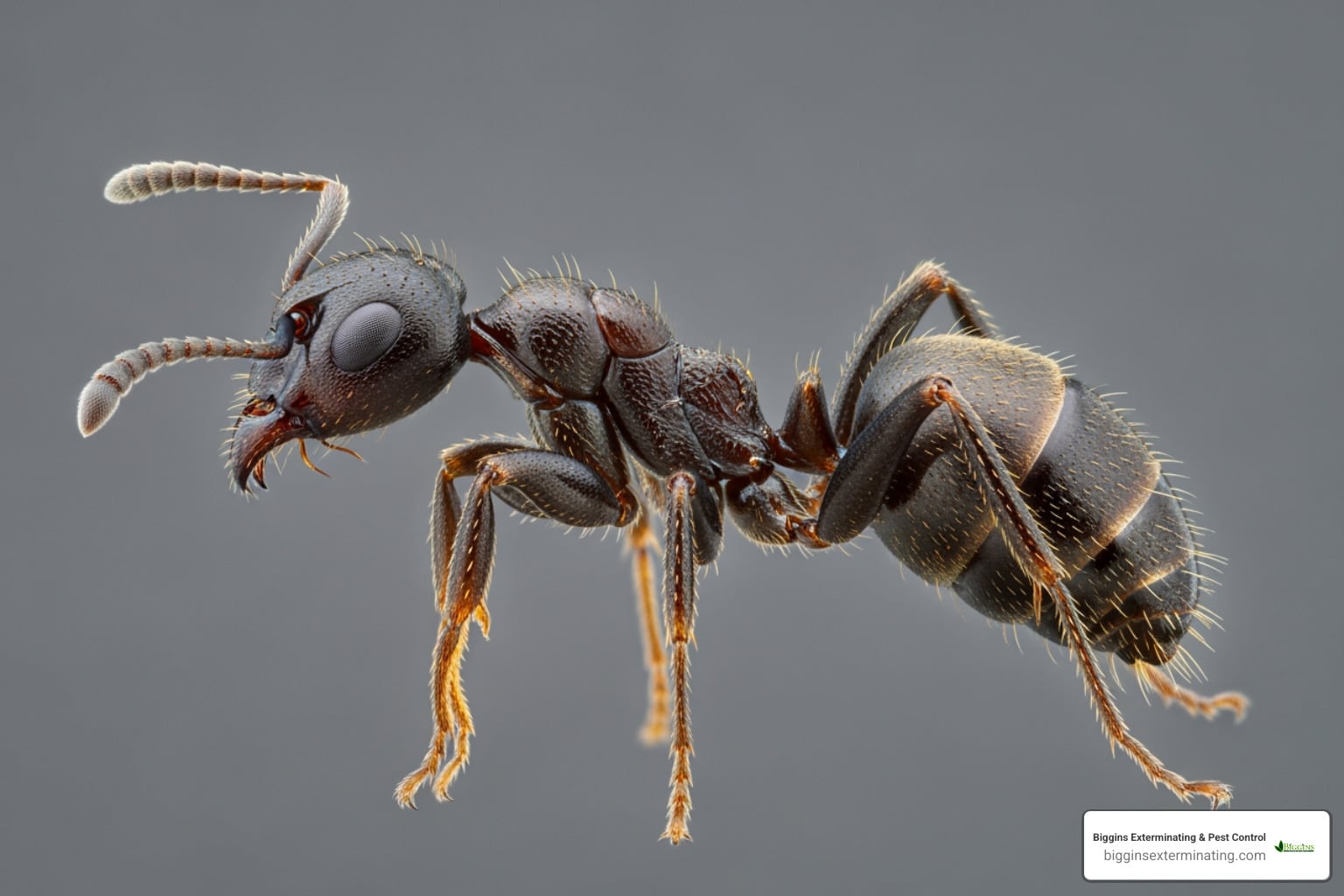
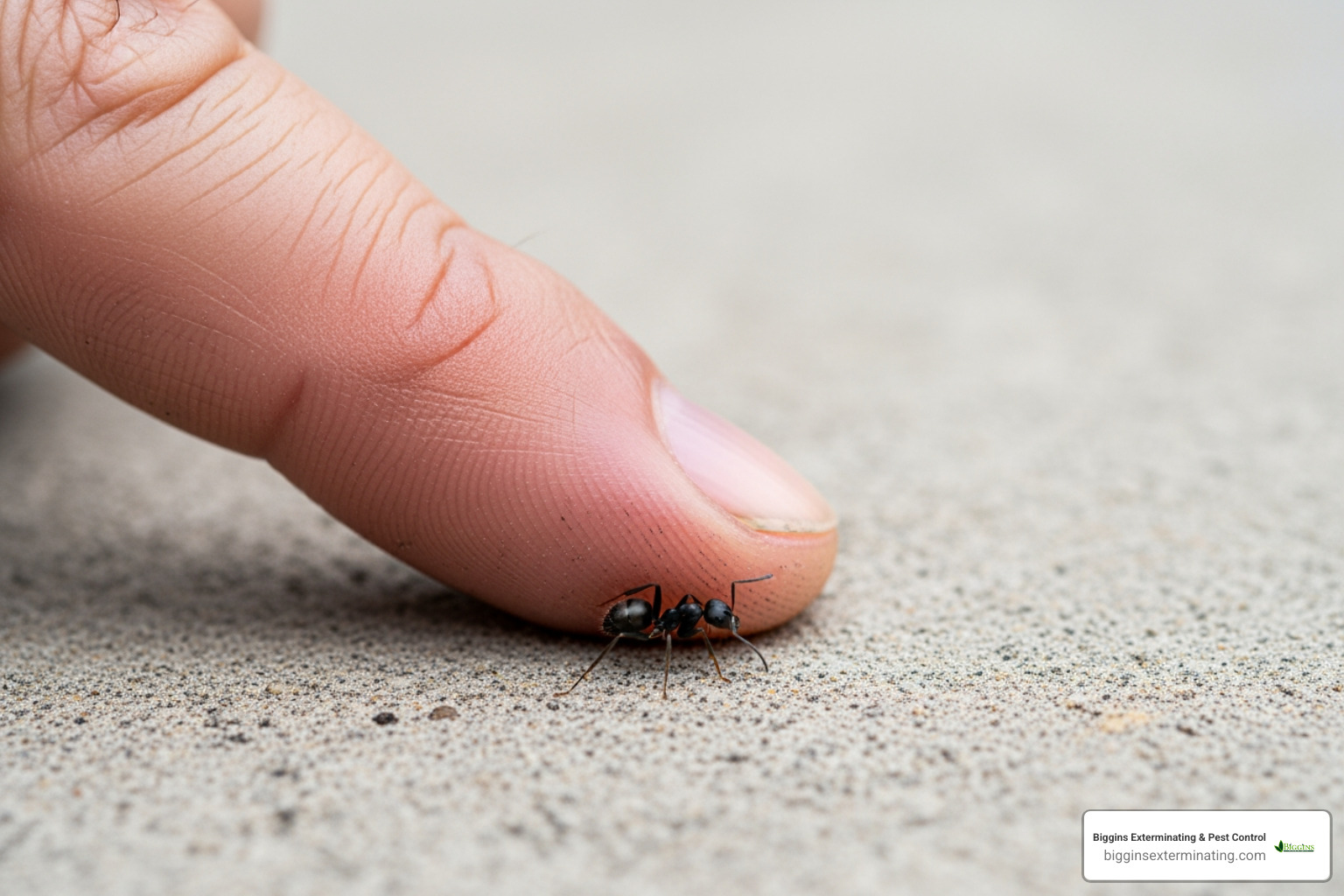
Odorous house ants are tiny—we’re talking about 1/16 to 1/8 inch long, which is roughly the thickness of a credit card. At that small size, they’re easy to overlook or mistake for other ant species. Their bodies range from dark brown to black in color, with a shiny appearance that catches the light.
Here’s where things get interesting for identification purposes. All the worker ants you see are essentially the same size—what we call uniform worker size. If you grabbed a magnifying glass (and we know that’s not everyone’s idea of a fun Saturday afternoon), you’d notice they have 6 legs and antennae with 12 segments.
The real identifying feature, though, is their body shape. When viewed from the side, the thorax (the middle section between the head and abdomen) has an uneven shape with one part higher than the other. They also have something called a petiole node—the narrow waist section between the thorax and abdomen—but you can barely see it because it’s hidden beneath the overhanging abdomen. This gives them a distinctive profile that sets them apart from other common household ants.
The Telltale Smell: Why Are They Called “Odorous”?
Here’s where odorous house ants earn their unfortunate name. If you accidentally crush one of these ants, you’ll immediately understand why they’re called “odorous.” The smell that hits your nose is unmistakable and, frankly, pretty unpleasant.
This isn’t just any random odor—it’s a defensive mechanism. When threatened or crushed, these ants release a chemical secretion from special glands in their abdomen. Most people describe the smell as resembling rotten coconut, though others swear it smells more like blue cheese or even turpentine. As one article cleverly asked, “The ants that smell like blue cheese — or is that Pine-Sol?”
Whatever you compare it to, one whiff and you’ll know you’re dealing with odorous house ants. That’s why we always recommend against crushing them—not only does it release that distinctive smell into your home, but the chemical can actually attract more ants to the area. It’s like ringing a dinner bell for the rest of the colony.
Signs of an Odorous House Ant Infestation
Beyond spotting the ants themselves, several telltale signs point to an active infestation in your home.
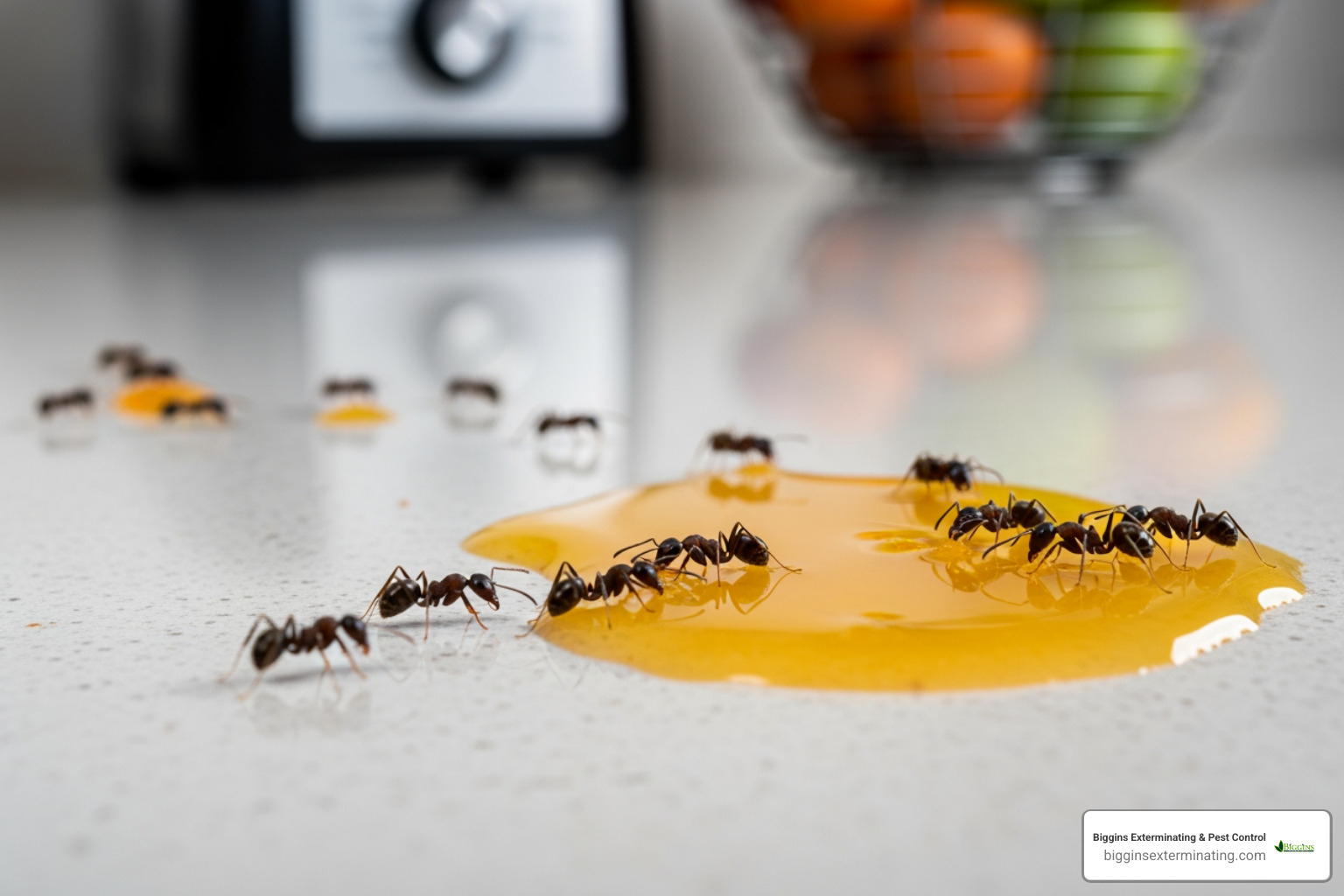
The most obvious sign is seeing foraging lines in your kitchen. These organized trails of ants are usually heading toward a food source—maybe a few crumbs on the counter, a sticky spot on the floor, or an open container in your pantry. They’re remarkably persistent once they’ve found something worth eating.
Odorous house ants are also drawn to moisture like a moth to a flame. You’ll often find ants near moisture sources throughout your home, particularly around sinks, bathtubs, and dishwashers. Any leaky fixture is basically an open invitation. During the hot Massachusetts summers, they’re especially attracted to these water sources as outdoor moisture dries up.
Watch for trails along baseboards and trails along countertops. These ants use walls and edges to steer, creating visible highways between their nest and food sources. Sometimes you’ll see a single trail, other times multiple trails converging like rush hour traffic.
The real confirmation comes when you disturb these trails. Crushed ants release that telltale smell, but even just disturbing a trail without crushing them triggers their signature behavior: erratic scattering with their abdomens raised in the air. It’s their panic mode, and it’s unlike how most other ants behave when threatened.
If you’re seeing these signs during spring and summer—especially after we’ve had heavy rain here in Massachusetts—you’re almost certainly dealing with an odorous house ant problem. The good news? Now that you can identify them, you’re one step closer to getting rid of them for good.
Understanding Odorous House Ant Behavior and Habitat
If you want to win the battle against odorous house ants, you need to understand what makes them tick. Knowing their habits, what they eat, and where they like to set up house gives us a real advantage when it comes to keeping them out of your Massachusetts home.
Here’s something every homeowner in our area should know: these ants become especially active during the warmer, wetter months—typically spring through fall. After a heavy rainstorm, you might suddenly notice trails of ants appearing seemingly out of nowhere. That’s because their outdoor nests have flooded, washing away their food sources and forcing them to seek shelter and sustenance elsewhere. And guess where that “elsewhere” often is? Your nice, dry, comfortable home. They’re drawn to both moisture and warmth, which makes our houses pretty irresistible to them. If you’re dealing with seasonal pest pressures like this, our Residential Pest Control services can help.
Diet and Foraging Habits
Odorous house ants definitely have a sweet tooth—they’re sometimes called “sugar ants” for good reason. Their absolute favorite food in nature is honeydew, that sticky, sugary liquid produced by aphids and scale insects that feed on plant sap. Scientists have even found they prefer sucrose over other types of sugars like fructose or glucose. So if you have aphid-infested plants near your home, you’re basically running an all-you-can-eat buffet for these ants.
But don’t think they’ll turn up their noses at other foods. These little opportunists will happily munch on meats, greasy foods, dairy products, fruit juices, pastries, dead insects, and even rotting fruits and vegetables. Pretty much anything edible in your kitchen is fair game. They forage both during the day and at night, which means there’s almost never a time when they’re not on the hunt for food.
Nesting Indoors and Out: Where Do They Live?
Here’s where things get tricky. Odorous house ants are remarkably flexible when it comes to choosing a home. They’re not picky about location, and they move around frequently—sometimes relocating their entire nest every couple of weeks. This nomadic lifestyle is one reason they’re so hard to control.
Common Outdoor Nesting Locations:
- Shallow nests in soil, tucked under rocks, logs, or firewood piles
- Beneath patio blocks, stepping stones, or yard debris
- In mulch beds, under loose bark, or inside plant cavities
- Near moisture sources like leaky outdoor faucets or areas with poor drainage
Common Indoor Nesting Locations:
- Wall voids, especially near hot water pipes or heaters where it’s warm and humid
- Under leaky fixtures like sinks, bathtubs, and dishwashers
- In insulation, beneath carpet edges, or under floorboards
- Inside termite-damaged wood (they love the ready-made tunnels)
- In potted houseplants or around garbage cans
Research shows that these ants typically stay in one nest for only about 12 to 13 days before moving on. They might relocate because of environmental changes like rain, temperature shifts, or simply because they’ve exhausted nearby food sources. This constant movement means a single colony can establish several satellite nests around your property, making them incredibly difficult to track down and eliminate.
Colony Structure and Life Cycle: Why They Spread So Fast
The way odorous house ants organize their colonies is actually pretty fascinating—and it explains why a small ant problem can quickly become a massive infestation. These ants practice what scientists call “polydomous” and “polygynous” colony structures. In plain English? They have multiple nests working together (polydomous), and each nest can have multiple queens (polygynous).
While some colonies might have a few thousand workers and a handful of queens, healthy colonies can swell to 100,000 workers or more. Some supercolonies reach into the hundreds of thousands. With multiple queens all laying eggs simultaneously, you can imagine how quickly the population explodes.
The life cycle from egg to adult worker takes anywhere from 3 to 11 weeks under ideal conditions, though it can stretch to 7 months in less favorable environments. This means they can pump out four to five generations per year in Massachusetts, especially during our warm summers.
But here’s the real kicker: odorous house ants reproduce through a process called “budding” or “fractionating.” When part of the colony feels threatened or finds a better location, a group of workers simply picks up one or more queens and marches off to start a brand new satellite nest. This is why using repellent sprays often backfires—you might just be encouraging them to split up and create even more nests throughout your home.
The queens themselves are incredibly tough. They can survive being injured, go without food for over two months, and withstand extreme temperature swings. Some can even continue laying eggs with crushed abdomens. This remarkable resilience is exactly why professional intervention is often necessary. For expert help tackling these persistent pests, check out our Ant Extermination Services.
Effective Control and Prevention Strategies
Odorous house ants are stubborn invaders, especially in Massachusetts where humid summers and rainy springs help them thrive. Their massive colonies, with multiple queens and satellite nests, make them incredibly difficult for homeowners to control.
Integrated Pest Management (IPM) is the most effective approach, combining sanitation, exclusion, baiting, and targeted treatments. It addresses the problem from all angles. For professional IPM services, see our Pest Control in Wilmington, MA page.
DIY Methods for Your Odorous House Ant Problem
For a small, new infestation, you can try these DIY methods, but be aware of their limitations.
| Method | Description | Pros | Cons |
|---|---|---|---|
| Baits (Sweet Liquid) | Place slow-acting sweet liquid baits along ant trails and near entry points. Workers carry bait back to the nest. | Targets the entire colony, including queens and larvae. Less toxic than sprays for indoor use. | Requires patience (can take weeks). Must be replenished. Ants may ignore if not sweet enough. |
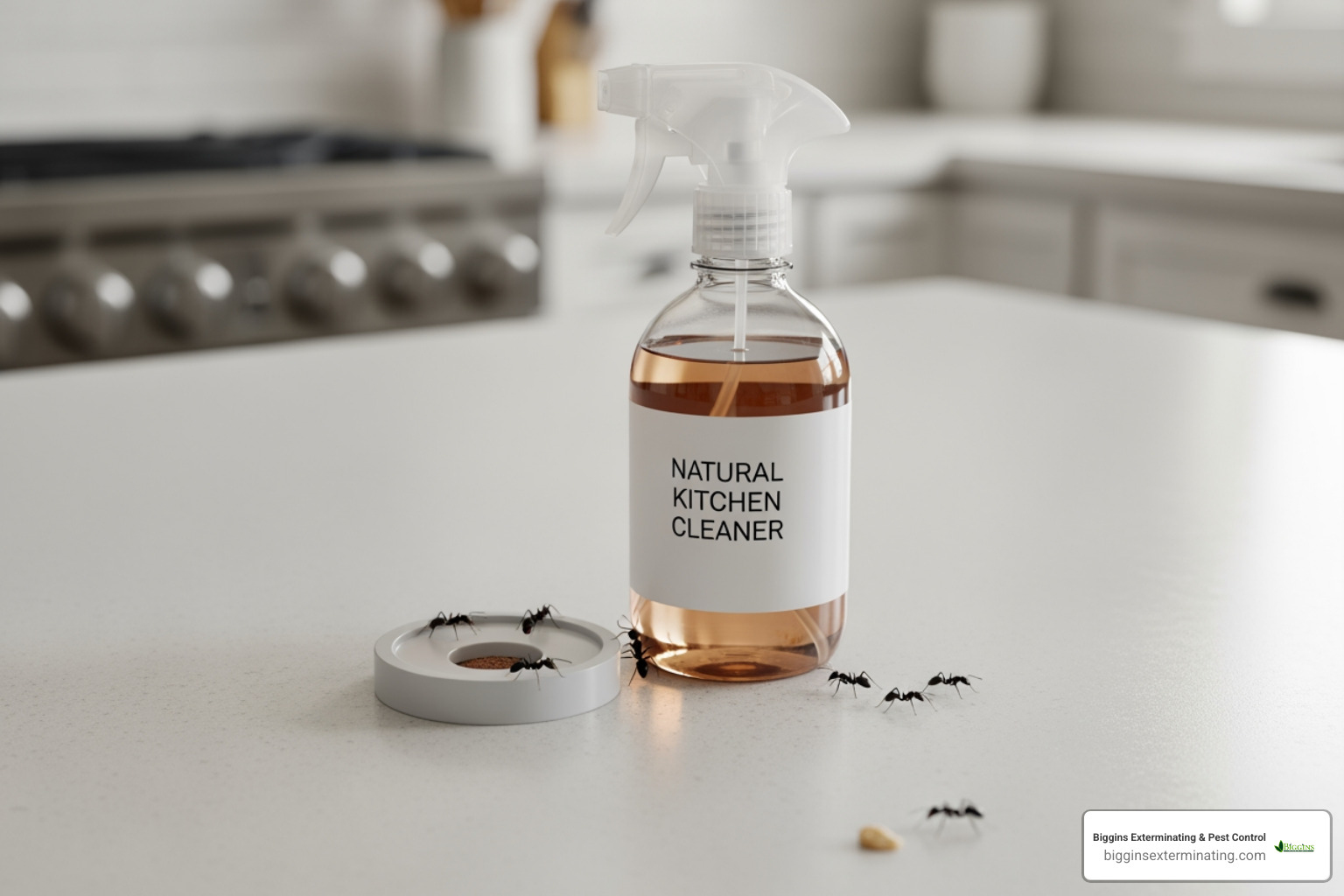
| Cleaning (Vinegar/Soap) | Wipe down surfaces and ant trails with a 50/50 white vinegar and water solution, or soapy water. | Eliminates pheromone trails, confusing ants. Safe and natural. | Only addresses visible trails, doesn’t kill the colony. |
| Sprays (Contact Killers) | Use over-the-counter contact killer sprays on visible ants. | Provides immediate satisfaction by killing ants on contact. | Does not eliminate the colony. Can cause budding (colony splitting), making the problem worse. Repellent sprays can scatter ants. |
- Sweet liquid baits are your best DIY bet. Use slow-acting baits so workers can carry the poison back to the queens and larvae. Place them along trails, away from children and pets. An initial increase in ants is a good sign—it means they’re taking the bait.
- Cleaning with vinegar or soapy water erases the invisible pheromone trails ants follow. This won’t kill the colony but can temporarily reduce traffic.
- Avoid contact killer sprays when possible. They only kill a fraction of the colony and can cause “budding”—where the colony splits into multiple new nests, making the problem worse.
Long-Term Prevention: Keeping Ants Out for Good
Prevention is the best defense. Here’s how to make your home less attractive to ants.
- Seal Entry Points: Use caulk to seal cracks and gaps in your foundation, around windows, doors, and utility lines.
- Manage Landscaping: Trim vegetation so it doesn’t touch your house. Keep mulch at least six inches from the foundation and store firewood away from the home.
- Control Moisture: Fix leaky pipes and faucets. Ensure gutters drain properly and eliminate any standing water.
- Practice Kitchen Sanitation: Store food (especially sweets) in airtight containers. Clean up crumbs and spills immediately, wash dishes promptly, and take out the trash regularly.
- Handle Pet Food: Feed pets at specific times and remove their bowls afterward. Clean up any spilled food or water.

When DIY Isn’t Enough: Calling a Professional
If you’ve tried DIY methods for weeks and the ants keep coming back, it’s time to call a professional. Large-scale infestations with ants in multiple rooms require professional-grade solutions.
A professional can locate all hidden nests and use non-repellent treatments that eliminate the entire colony without causing it to split and spread. We dismantle the whole colony structure, not just the ants you see.
With over 40 years of experience serving Wilmington and surrounding Massachusetts communities, we know how to get rid of these pests for good. If you’re ready to take back your home, learn more on our Pest Control Company near Wilmington, MA page.
Frequently Asked Questions about Odorous House Ants
After years of helping Massachusetts homeowners deal with odorous house ants, I’ve heard just about every question imaginable. Here are the ones that come up most often, along with honest answers based on decades of field experience.
Are odorous house ants dangerous to humans or pets?
Here’s the good news: odorous house ants aren’t dangerous. They don’t have stingers, so you won’t experience the painful sting you’d get from a wasp or even some other ant species. They also don’t transmit diseases like ticks or mosquitoes, so there’s no public health concern in that regard.
The bad news? They’re still a nuisance you don’t want in your home. Their primary issue is food contamination. When they march across your kitchen counters, crawl through your pantry, or trail through your sugar bowl, they’re leaving behind bacteria and potentially spoiling your food. Nobody wants to find ants in their cereal box or see a line of them leading to the fruit bowl. So while they won’t hurt you or your pets directly, they’re definitely unwelcome guests that need to be addressed.
Do odorous house ants bite?
Technically, odorous house ants have mandibles (tiny jaws) like all ants, but biting is extremely rare and not something you need to worry about. Their mandibles are simply too small and weak to cause any real pain or break human skin. If you ever feel a slight pinch, it’s probably because an ant got trapped against your skin—like between your fingers or under clothing—rather than an intentional bite.
These ants aren’t aggressive toward people at all. When they feel threatened, they prefer their signature defense mechanism: releasing that distinctive rotten coconut smell. They’d much rather run away (with their abdomens raised in the air!) than stand and fight. So you can rest easy knowing that odorous house ants pose no biting threat to you, your children, or your pets.
Why do I see more ants in my house after it rains?
If you’ve ever noticed a sudden surge of ants marching through your kitchen the day after a heavy rainstorm here in Massachusetts, you’re not imagining things. This is an incredibly common pattern, and it happens for several interconnected reasons.
First, many odorous house ant nests are built outdoors in shallow soil—under rocks, beneath mulch, or along your foundation. When we get those spring and summer downpours that Massachusetts is known for, these nests can quickly flood. The ants aren’t equipped to live underwater, so they evacuate and search for higher, drier ground. Your warm, dry home becomes the perfect refuge.
Second, heavy rains wash away the honeydew that aphids and scale insects produce on outdoor plants. This honeydew is the primary food source for odorous house ants in nature. When their outdoor buffet disappears down the storm drain, they need to find new food sources quickly—and your kitchen, with its crumbs, spills, and pantry items, looks pretty appealing.
Finally, they’re simply seeking shelter and moisture in a more controlled environment. After their outdoor nest has been disrupted and their food washed away, they scout for new nesting sites that offer both protection and resources. Unfortunately, the wall voids, spaces under sinks, and areas near hot water pipes in your home check all their boxes. This is why we often see the biggest influx of odorous house ants during our wet spring months and after summer thunderstorms roll through the area.
Get Rid of Odorous House Ants for Good
If you’re reading this, chances are you’ve already tried everything you can think of to get rid of those persistent odorous house ants marching through your Massachusetts home. You’ve wiped down counters with vinegar, strategically placed baits along their trails, and maybe even sealed up every crack you could find. Yet here they are again, especially during these warmer, wetter months when they seem to multiply overnight.
Here’s the thing about odorous house ants: they’re not your average pest. Their ability to create massive colonies with multiple queens and satellite nests—sometimes reaching 100,000 workers—makes them a formidable challenge even for the most determined homeowner. When one nest is disturbed, they simply split off and create another. It’s like playing an exhausting game of whack-a-mole, except the moles smell like rotten coconuts.
This is exactly when professional help makes all the difference. For over 40 years, the family-owned team at Biggins Exterminating & Pest Control has been helping Massachusetts homeowners take back their homes from these smelly invaders. We serve residents throughout Wilmington and the surrounding areas, including Andover, Bedford, Billerica, Burlington, Lexington, North Reading, Tewksbury, and Woburn. What sets us apart is our straightforward approach: no long-term contracts required, just reliable service backed by warranties and a commitment to your satisfaction.
We understand the unique challenges of pest control in Massachusetts. We know how spring rains flood outdoor nests and send ants streaming indoors. We’ve seen how our humid summers create perfect conditions for these pests to thrive. And we have the experience and professional-grade tools to locate those hidden satellite colonies and eliminate them for good—not just temporarily push them to another part of your home.
Don’t spend another day sharing your kitchen with unwanted guests. Contact us today to get a quote and finally reclaim your home from these persistent pests. Your peace of mind is just a phone call away.