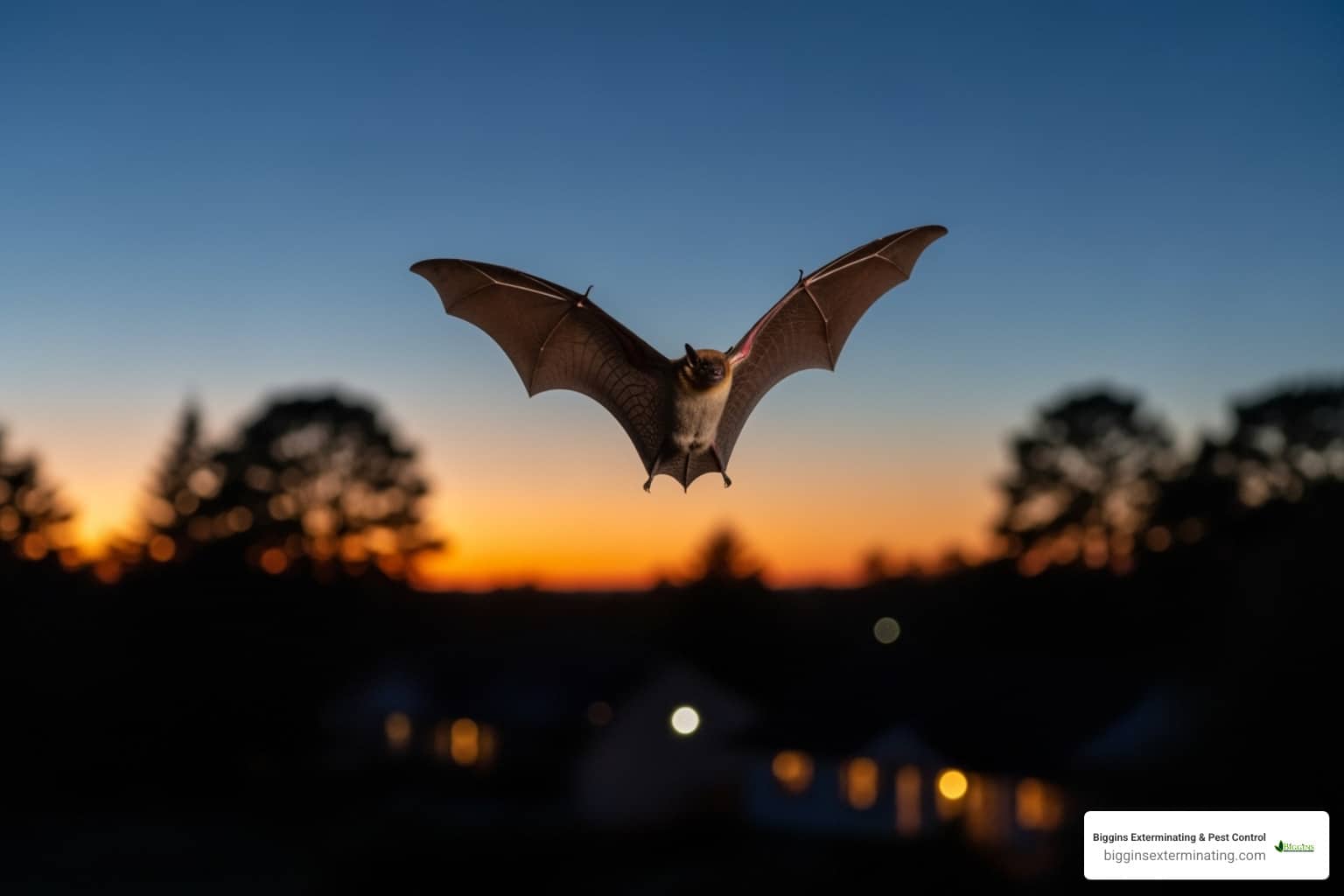
Why You Need Local Bat Exterminators This Summer
Bats are beneficial creatures of the night, eating their weight in mosquitoes. But when they move into your attic, they become unwanted houseguests that pose serious health and legal risks. You might hear scratching at dusk, smell a strong ammonia odor, or find piles of droppings. These are signs of a bat colony that require immediate professional attention.
Local bat exterminators are licensed professionals who humanely remove bats, seal entry points, and safely clean up hazardous droppings. They use humane exclusion methods, provide complete service from inspection to cleanup, and offer warranty protection. Crucially, they understand seasonal restrictions, knowing that bat removal is illegal in Massachusetts during the May-August maternity season.
Unlike mice or ants, bats are protected by state and federal laws, making DIY removal not just ineffective—but potentially illegal and dangerous. Bat droppings (guano) can cause a serious lung infection called histoplasmosis, and bats can carry rabies. Add the structural damage from their waste, and it’s clear why professional removal is essential.
I’m Stephen Biggins, owner of Biggins Exterminating & Pest Control, serving Wilmington, MA and surrounding areas since 1982. For decades, I’ve helped homeowners safely and legally resolve bat infestations. This guide will help you spot a bat problem, understand the risks, and choose a reputable service to keep your home safe and bat-free.
Spotting the Signs: Do You Have a Bat Problem?

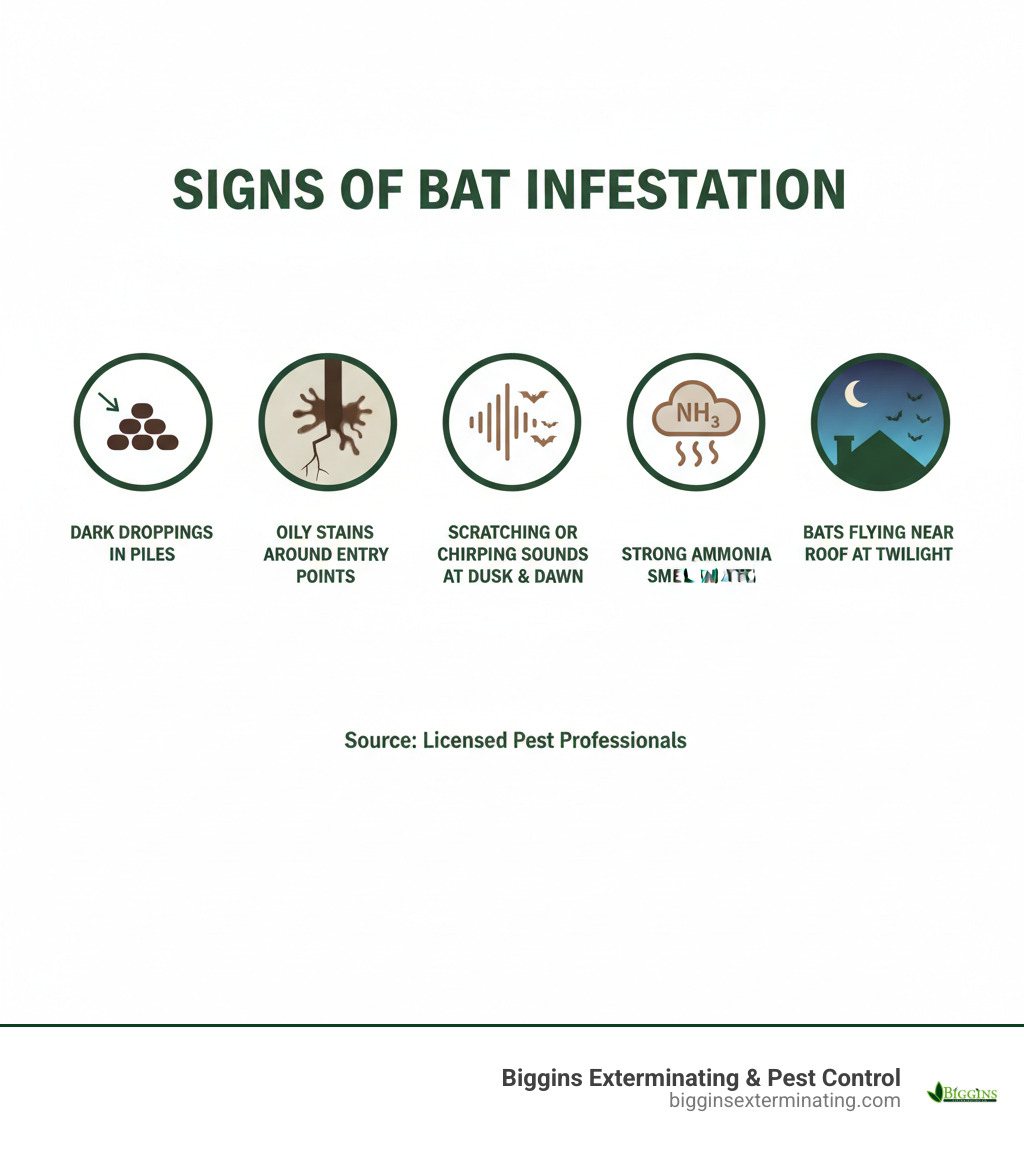
Most homeowners don’t notice a bat problem until a colony is well-established. Since bats are nocturnal and shy, they leave behind distinct clues. Look for these signs:
- Droppings (Guano): Unlike mouse droppings, bat guano is crumbly, often found in piles, and made of insect exoskeletons. You’ll find it in attics, on window sills, or below entry points.
- Sounds: At dusk and dawn, you may hear high-pitched chirping, squeaking, or scratching from attics, walls, or chimneys.
- Odor: A strong, sharp ammonia-like smell from accumulated urine and guano is a clear indicator, especially in warm weather.
- Sightings: Seeing bats emerge from your roofline at twilight confirms their presence. Look for dark, oily stains around these entry points, left by their fur over repeated use.
Common Hiding Spots in Your Home
Bats can squeeze through gaps as small as half an inch. They seek dark, quiet, and enclosed spaces. Common hiding spots include:
- Attics and Roof Spaces: The most common area, used as a passageway to wall voids. Bats enter through gaps in the roofline, vents, or damaged fascia.
- Wall Cavities and Soffits: These narrow, protected spaces offer stable temperatures, ideal for summer roosts.
- Chimneys and Vents: An uncapped chimney or unscreened vent is an open invitation for bats.
- Gutters and Eaves: Gaps where gutters meet fascia boards are common entry routes into the attic or walls.
- Basements and Crawl Spaces: Less common, but bats may seek these cooler areas during heat waves.
Bat Species Common in Massachusetts
Two species cause most home infestations in Massachusetts: the Big Brown Bat and the Little Brown Bat. Big Brown Bats are larger and often live in homes year-round. Little Brown Bats, whose populations have been devastated by White-Nose Syndrome, form maternity colonies in attics during the summer to raise their young.
Both species are nocturnal, emerging at dusk to hunt insects. This summer activity is driven by the maternity season (May-August), when female bats raise their flightless pups. Disturbing a colony during this time is illegal and inhumane, which is why professional local bat exterminators schedule their work around these crucial months. For more information on handling wildlife issues, visit our residential pest control page.
Health, Legal, and Structural Risks: Why DIY Bat Removal is a Bad Idea
Attempting DIY bat removal is a dangerous and often illegal mistake. It’s not like dealing with common pests; bats are protected animals that carry serious health risks. Trying to remove them yourself involves climbing ladders, crawling in cramped spaces, and risking falls or direct contact. A cornered bat will bite or scratch, creating a potential medical emergency.
Understanding the Health Hazards
The two biggest health threats are rabies and histoplasmosis.
- Rabies: This viral disease is fatal once symptoms appear. Any potential contact with a bat, including a bite, scratch, or waking up to one in your room, requires immediate medical attention.
- Histoplasmosis: This lung infection is caused by a fungus (Histoplasma capsulatum) that grows in accumulated bat droppings (guano). Disturbing the guano releases airborne spores, which can cause severe illness when inhaled. The CDC provides extensive scientific research on Histoplasmosis.
Additionally, bat urine and guano are acidic, corroding wood and ruining insulation, leading to costly structural repairs.
Why You Need to Hire Local Bat Exterminators
Professional help is essential for legal and practical reasons. Bats are a protected species in Massachusetts, meaning you cannot legally kill, trap, or harm them. Violators face substantial fines.
Timing is also critical. It is illegal to perform bat exclusion during the maternity season (May through August). Sealing entry points during this time traps flightless baby bats inside, where they will die. This is not only inhumane but creates a secondary problem of decaying animals in your walls or attic.
Professional local bat exterminators understand these laws and use humane, legal exclusion methods. DIY approaches like ultrasonic repellents are ineffective, and failing to seal every entry point will only lead to the bats returning. For comprehensive protection, learn more about our residential pest control solutions.
The Professional Bat Exclusion Process: From Inspection to Prevention
Professional bat removal is a proven, step-by-step process that is both humane and effective. It’s a comprehensive solution that unfolds over several weeks, ensuring your home is protected and the bats are unharmed.
Step 1: Thorough Inspection and Assessment
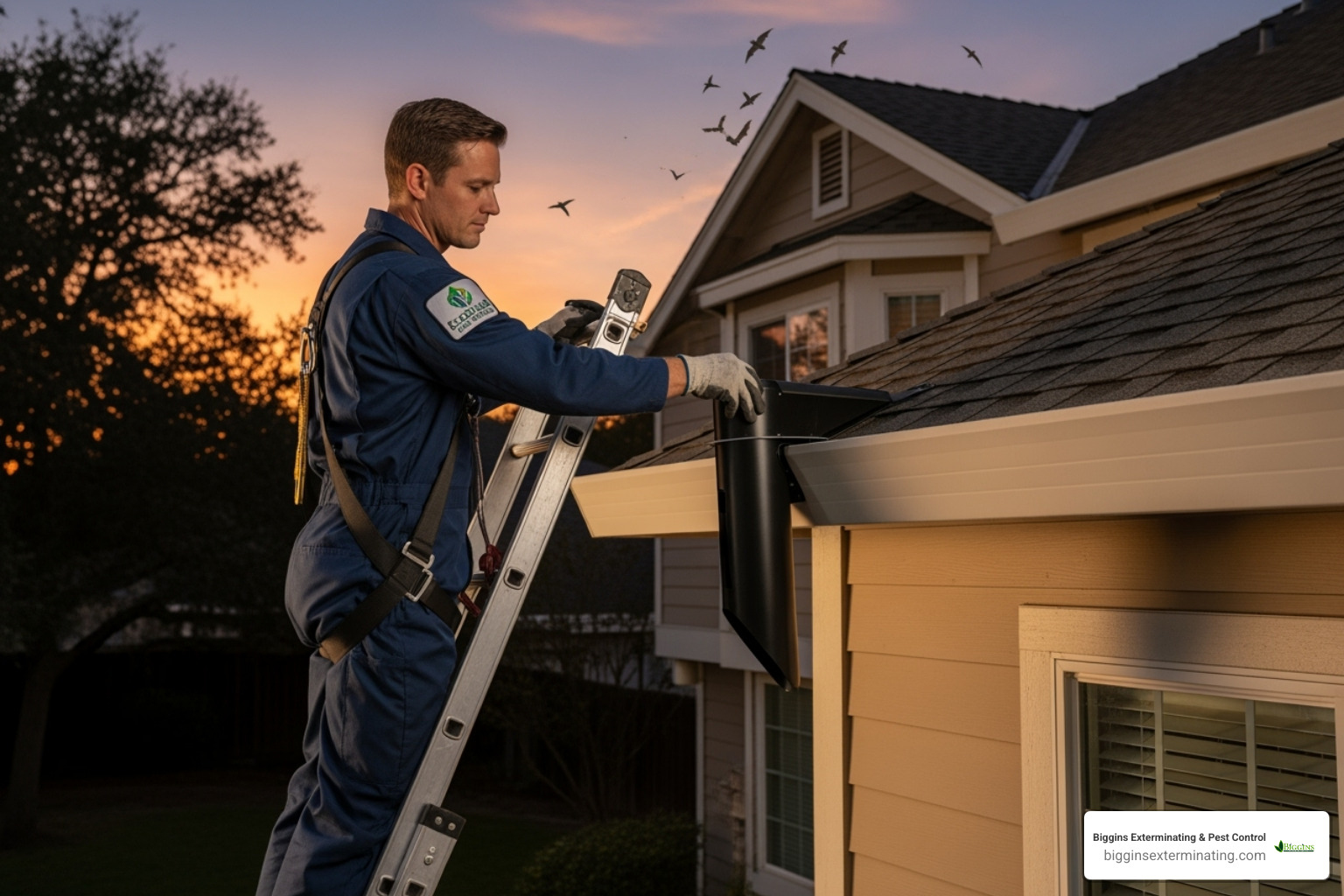
Everything starts with a meticulous inspection of your property. A technician will identify primary entry points—the active openings bats are using—by looking for signs like grease stains and guano. They will also locate secondary entry points, which are potential future vulnerabilities. This includes checking gaps in the roofline, siding, and foundation. Inside, the inspection determines the colony’s size and location by examining attics, wall cavities, and basements. This detailed assessment is crucial for a successful exclusion. For more about our local expertise, see our Wilmington, MA services.
Step 2: Humane Exclusion and Sealing
This phase uses the bats’ own behavior to guide them out. We install one-way exclusion devices (bat cones or doors) over the primary entry points. These allow bats to exit at dusk to hunt but prevent them from re-entering. While the devices are in place, we seal every other potential entry point with durable, professional-grade materials to “bat-proof” your home.
The exclusion devices remain for two to three weeks, ensuring every bat has left. This timeframe accounts for weather and bat behavior patterns. Rushing this step could trap bats inside. Once we confirm all bats are gone, we remove the devices and permanently seal the final openings.
Step 3: Cleanup and Decontamination
Getting the bats out is only half the battle. The hazardous mess they leave behind must be addressed. Bat guano can harbor the fungus that causes histoplasmosis, a serious lung infection. Our team uses HEPA-filtered vacuums and protective gear to safely remove all droppings.
After physical removal, we disinfect and deodorize the area to eliminate pathogens and the strong ammonia smell from bat urine. We also assess and repair any structural damage, such as corroded wood or ruined insulation. This attic restoration phase returns your space to a clean, safe condition, which is a key part of our comprehensive residential pest control services.
Finding and Budgeting for Local Bat Exterminators
After finding bats, homeowners naturally wonder about the cost and who to trust. Bat removal costs vary based on several factors, including the size of the infestation, the complexity of your home’s structure, and the extent of the damage from guano and urine. A small, recent colony is less expensive to handle than a large, established one requiring extensive cleanup.
What to Expect for Bat Removal Costs
Note: The following are average costs based on internet data and do not represent actual prices for Biggins Exterminating services. Costs can range from a few hundred dollars for a simple job to several thousand for a complex infestation with extensive cleanup.
- Inspection Fee: Many companies charge an initial fee of $150 to $400 for a detailed assessment, which may be applied to the total cost.
- Exclusion Service: A straightforward exclusion can range from $300 to over $1,500, covering the installation of one-way devices and sealing entry points.
- Guano Cleanup: This is often priced separately and can range from $600 to $8,000 or more, especially if it includes insulation replacement and structural repairs.
| Factor | Influence on Cost |
|---|---|
| Size of Colony | Larger colonies require more extensive exclusion and cleanup. |
| Number of Entry Points | More entry points mean more labor and materials for sealing. |
| Accessibility | Hard-to-reach areas increase labor time and complexity. |
| Extent of Guano | Heavy accumulation requires specialized cleanup and disinfection. |
| Structural Damage | Repairing wood rot or other damage adds to the expense. |
| Warranty | A guarantee on the work provides long-term value. |
How to Find Reputable Local Bat Exterminators
Choosing the right professional is critical for a safe and effective solution. Here’s what to look for:
- Licensing and Insurance: Verify the company is fully licensed and insured for wildlife control in Massachusetts. This protects you and ensures accountability.
- Experience: Look for a company with a proven track record in bat exclusion. Local experience is a plus, as technicians will be familiar with regional architecture and bat patterns. Biggins Exterminating has served the Wilmington, MA area for over 40 years.
- Humane Methods: Ensure the company uses one-way exclusion devices and follows maternity season restrictions. Avoid any company that suggests trapping or killing bats. The Bat World Sanctuary maintains an Exclusion Directory of ethical providers.
- Reputation and Reviews: Check Google, the Better Business Bureau, and other platforms for consistent positive feedback on thoroughness and communication.
- Detailed Quotes and Warranties: A professional will provide a detailed, written estimate after a thorough inspection and offer a warranty guaranteeing their work.
Bat Conservation and Long-Term Prevention
While bats in your home are a problem, it’s important to remember their vital role in our ecosystem. They are nature’s pest control, and we believe in solutions that protect both your home and these beneficial animals. That’s why humane exclusion is always the right approach.
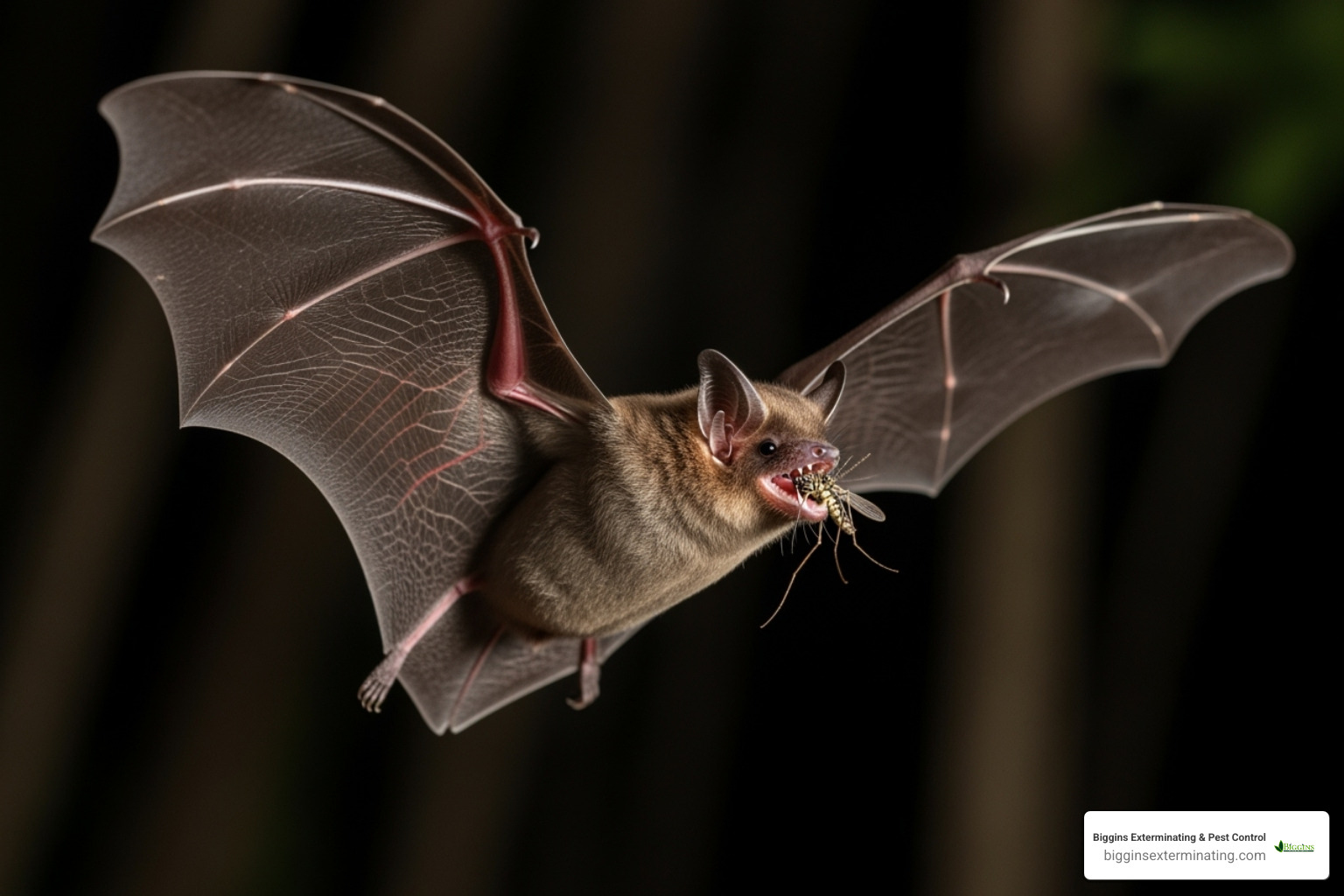
The Ecological Importance of Bats
A single bat can eat thousands of insects in one night, including mosquitoes, moths, and agricultural pests. This natural insect control reduces the need for chemical pesticides, making our environment healthier. Unfortunately, bat populations are under threat from White-Nose Syndrome, a deadly fungal disease that has devastated species like the Little Brown Bat. Using humane exclusion methods helps conserve these valuable animals for future generations.
Keeping Bats Out for Good
Once bats are removed, prevention is key to keeping them from returning. Bats are creatures of habit and will seek out familiar roosts. A few proactive steps can protect your home long-term:
- Regularly Inspect Your Home: Check your home’s exterior for any gaps or cracks larger than half an inch. Pay close attention to where utility lines enter, foundation cracks, and where different building materials meet.
- Seal All Gaps: Use high-quality caulk, expanding foam, or metal mesh to seal any potential entry points you find.
- Secure Your Roofline: Ensure all vents (gable, ridge, attic) are covered with durable hardware cloth. Replace any damaged shingles or loose fascia boards.
- Install a Chimney Cap: A sturdy cap prevents bats, raccoons, squirrels, and birds from entering your chimney.
- Provide an Alternative: Consider installing a bat house on your property, away from your home. This gives bats a place to roost so you can still benefit from their insect-eating prowess without them being in your house.
Think of these measures as a regular home health checkup. A seasonal bat-proofing inspection can save you thousands in future costs. If you’re ever unsure, local bat exterminators like Biggins Exterminating can help with inspections and preventative sealing.
Frequently Asked Questions about Bat Removal
Over 40 years, I’ve answered thousands of questions about bats. Here are the most common concerns from homeowners.
Is it illegal to kill bats in Massachusetts?
Yes. Bats are protected by state and federal law in Massachusetts. It is illegal to harm, trap, or kill them, and doing so can result in significant fines. Professional removal must be done humanely using exclusion methods. This is especially critical during the summer maternity season (May-August), when sealing entry points would trap and kill flightless baby bats, which is both illegal and cruel.
How long does the bat exclusion process take?
The physical work of installing one-way doors and sealing entry points can often be done in a few hours. However, the complete process takes longer. We leave the exclusion devices in place for two to three weeks to give every bat in the colony time to exit on their own. The total timeframe depends on the colony size, weather, and time of year. Patience is key to ensuring a complete and humane removal.
Can a single bat in my house mean I have an infestation?
While it’s possible a single bat flew in an open window, it’s more often a red flag for a larger problem. A lone bat found in your living space likely came from inside the structure—from an attic, wall cavity, or chimney where a colony is roosting. That one bat is often a sign of a much larger group hidden from view. We always recommend a professional inspection after finding even one bat inside to address the issue before it becomes a major infestation.
Your Trusted Partner for a Bat-Free Home
Proper bat removal is a complex job involving health hazards, legal regulations, and a narrow window for safe exclusion. It’s not a DIY project, and you shouldn’t have to handle it alone.
That’s why Biggins Exterminating & Pest Control has served families in Wilmington, MA, and surrounding communities for over 40 years. We’re your neighbors in towns like Andover, Bedford, Billerica, Burlington, Lexington, North Reading, Tewksbury, and Woburn. We understand how a bat problem can disrupt your peace of mind, and we’re here to restore it.
Our commitment is to do the job right with humane wildlife control methods. Our process is thorough, from inspection to exclusion to final cleanup. Our warranty-backed services are our promise of a permanent solution. If bats return after our work is done, we’ll come back and make it right.
Summer is peak season for bat activity. If you’re hearing strange noises, noticing odors, or have seen a bat in your home, don’t wait. The problem will only grow.
Contact us for a professional bat removal consultation today. Let our family-owned business bring four decades of experience to your home and provide a clear path to a safe, healthy, and bat-free home.