
Understanding the Gentle Giants in Your Yard
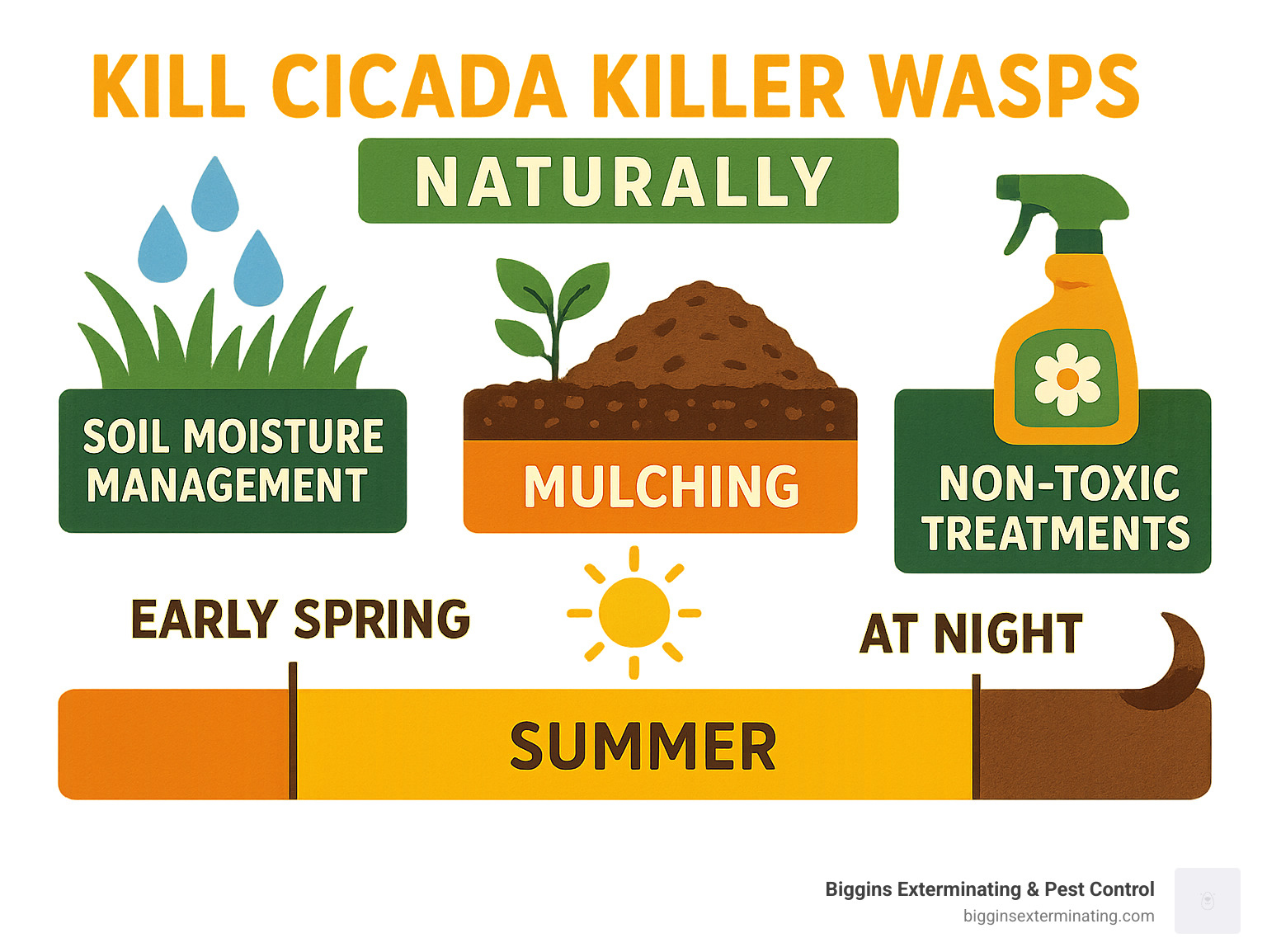
If you’re searching for ways to kill cicada killer wasps naturally, you have several effective options that don’t require harsh chemicals:
| Natural Control Method | How It Works | When to Apply |
|---|---|---|
| Soil moisture management | Keep soil consistently wet (wasps avoid moist soil) | Throughout summer |
| Thick lawn maintenance | Mow at 3-4 inches and water deeply | Weekly maintenance |
| Mulch application | Apply 3+ inches of mulch in bare areas | Early spring |
| Boiling water treatment | Pour directly into burrows to kill adults and larvae | At night when wasps are in nests |
| Diatomaceous earth | Apply around nest entrances to dehydrate wasps | Daily for 5-7 days |
| Essential oil sprays | Peppermint or eucalyptus oil repels wasps | Every 3-4 days |
| Soapy water solution | Spray directly on wasps or into burrows | At dusk or dawn |
Cicada killer wasps may look intimidating with their large 1.5-2 inch bodies and black and yellow markings, but they’re actually among the gentlest of the wasp family. Despite their formidable appearance, these solitary ground-nesting insects pose minimal threat to humans, with males unable to sting at all and females rarely stinging unless directly handled or stepped on.
These wasps earned their name from their specialized hunting behavior – they paralyze cicadas to feed their developing larvae. While they serve a beneficial ecological role by controlling cicada populations and acting as pollinators, their burrowing habits can create unsightly mounds of soil in lawns and gardens, leading many homeowners to seek removal methods.
I’m Stephen Biggins, and with over 40 years in pest control at Biggins Exterminating, I’ve helped countless Massachusetts homeowners safely and effectively kill cicada killer wasps naturally without resorting to harmful chemicals that might endanger families, pets, or beneficial insects.
Cicada Killer Basics: Identification, Biology, Risk & Role
That large, intimidating wasp hovering around your lawn might look dangerous, but before reaching for insecticide, let’s make sure you’re dealing with cicada killers and understand their fascinating (and mostly harmless) nature.
Cicada killers (Sphecius speciosus) are impressive native wasps found throughout Massachusetts and the eastern United States. While their size might trigger alarm, these solitary insects are actually quite docile neighbors.
Spotting Cicada Killers:
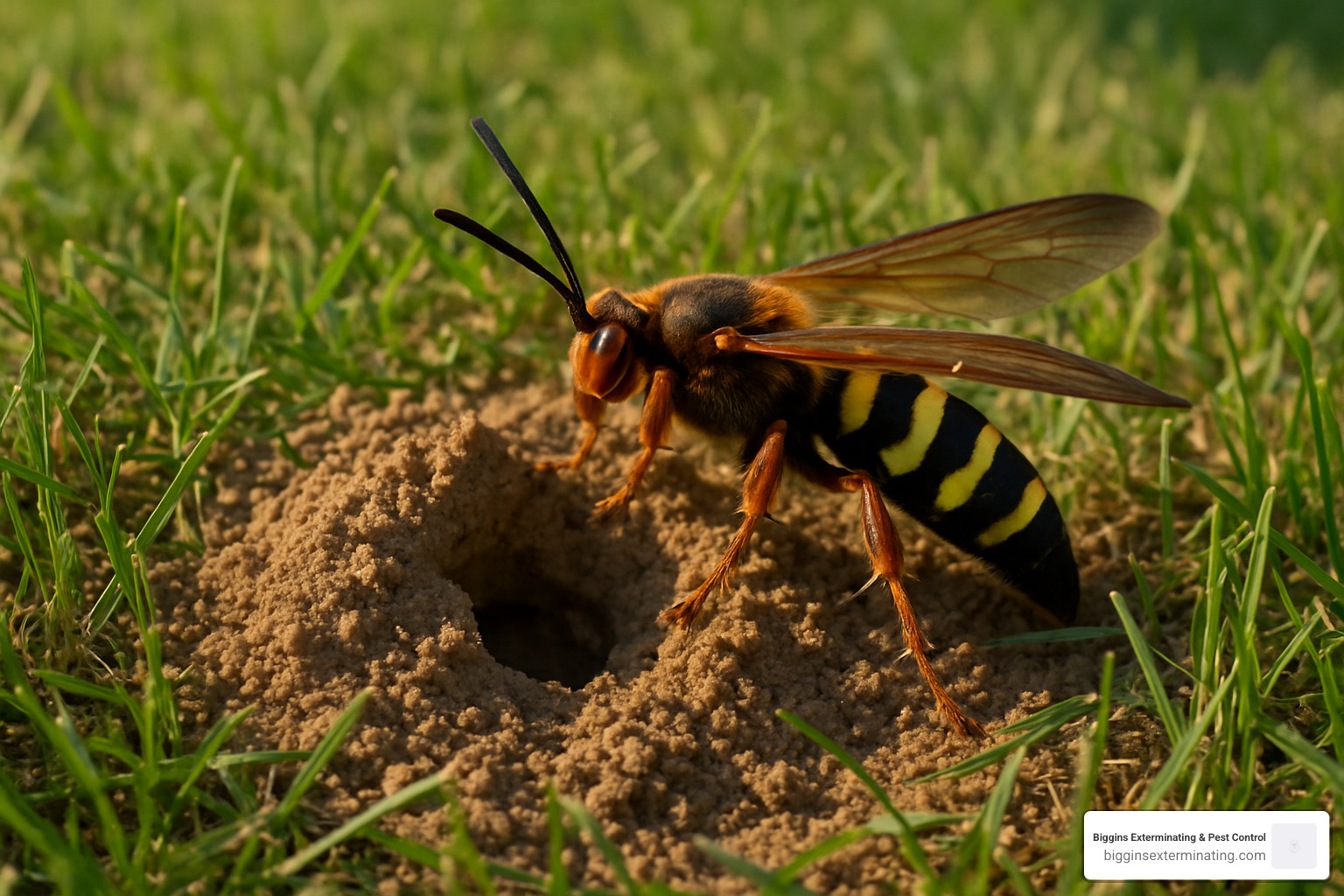
When you see a large wasp with a black abdomen marked by bold yellow bands, amber-colored wings, and reddish-brown eyes measuring a whopping 1.5-2 inches long, you’ve likely found a cicada killer. The females are noticeably larger than males, built for the impressive task of hunting cicadas.
“Folks in Wilmington call us in a panic about ‘giant hornets’ in their yard,” says our senior technician, “but when I arrive, I often find these gentle giants who are just focused on their burrows and finding cicadas.”
The most obvious sign of cicada killers is their distinctive U-shaped soil mounds with 1-1.5 inch entrance holes. These burrows, often in sunny, well-drained areas of your lawn, are engineering marvels extending 10-12 inches down with lateral tunnels stretching up to 70 inches!
In Massachusetts, adults emerge in July, with peak activity through August before disappearing by September. Here’s where things get interesting: female wasps hunt and paralyze cicadas, dragging these much larger insects back to their burrows. Each egg chamber gets stocked with 1-3 cicadas, depending on whether the developing larva will be male (one cicada) or female (two or three cicadas). The eggs hatch quickly, and the larvae feast for about two weeks before pupating and remaining underground until next summer.
The “Sting” Truth:
Despite their fearsome appearance, cicada killers pose minimal risk to humans. The males may dive-bomb you aggressively, but here’s the surprise – they completely lack stingers! The females can sting but rarely do unless directly handled or stepped on. Most of our Andover and Bedford customers are relieved when we explain this.
Ecological Benefits:
Before you decide to kill cicada killer wasps naturally, consider their valuable contributions:
– They’re nature’s cicada population controllers
– They serve as important pollinators when feeding on flower nectar
– Their burrowing activity naturally aerates soil
– They provide food for birds and small mammals
According to scientific research on ground-nesting wasps, these insects play a significant role in maintaining healthy ecosystem balance.
Look-Alikes & Misconceptions
“I had a Billerica homeowner call about ‘murder hornets’ destroying their property,” recalls our technician. “Turns out, they were just male cicada killers who couldn’t hurt a fly – literally couldn’t sting one if they tried!”
Cicada killers are commonly confused with:
Asian Giant Hornets (Murder Hornets): Despite media hype, these aren’t established in Massachusetts. They’re much more aggressive and have distinctive orange-yellow heads with different markings.
European Hornets: These social wasps build paper nests (not ground burrows) and have more orange-brown coloration. They’re established in Massachusetts and are more aggressive than cicada killers.
Yellow Jackets: About half the size of cicada killers, these social wasps may nest underground but don’t create the visible soil mounds characteristic of cicada killers. They’re also much more aggressive and prone to sting.
Understanding these differences can save you unnecessary worry – and help you decide whether control methods are truly needed for the gentle giants visiting your yard.
To Kill or Coexist? Weighing Pros, Cons & Safety
Let’s face it – seeing a giant wasp buzzing around your yard can be unnerving. But before reaching for that spray can or calling in the cavalry, take a moment to consider whether these fascinating creatures deserve a spot in your backyard ecosystem.
I’ve had countless conversations with homeowners across Massachusetts about this very dilemma. One Lexington customer called in a panic about “monster wasps,” only to laugh with relief when I explained their gentle nature.
“We had a customer in Burlington who decided to leave the cicada killers alone after learning about their benefits,” shares our technician. “They simply roped off a small section of their backyard where the burrows were located and used it as a teaching moment for their children about beneficial insects.”
The case for peaceful coexistence is pretty compelling. Male cicada killers, despite their intimidating dive-bombing behavior, literally cannot sting you – they lack the equipment! Females can sting but rarely do unless you step on them barefoot or grab them. They’re single-minded creatures focused on hunting cicadas, not humans. Plus, they’re only active for about 4-6 weeks each summer, serving as both natural cicada control and pollinators during their brief adult lives.
On the flip side, there are legitimate reasons some homeowners prefer removal. Those distinctive U-shaped soil mounds can disrupt the pristine look of a carefully maintained lawn. Multiple burrows can create tripping hazards, especially concerning for elderly family members or young children. And let’s be honest – their imposing size can be frightening for some people, even if the fear isn’t justified by actual danger.
The decision often comes down to your specific situation and comfort level. Many of our Andover and Bedford customers ultimately choose to tolerate these beneficial insects once they understand the facts.
When Removal Is Justified
There are situations where controlling cicada killer populations makes perfect sense:
Family members with allergies deserve special consideration. While cicada killers rarely sting, even that small risk might be too much for someone with severe insect sting allergies. Your family’s safety always comes first.
High-traffic areas like playgrounds, sports fields, and walkways with multiple burrows present legitimate concerns. A North Reading homeowner contacted us about dozens of cicada killer burrows along their patio edge. In this case, removal was justified as the burrowing was beginning to undermine the patio stones, creating a safety hazard.
Structural integrity issues can develop when numerous burrows appear near foundations, retaining walls, or other structures. The extensive tunneling (sometimes up to 70 inches in length) can potentially contribute to soil erosion or undermining over time.
Unusually large populations might indicate an ecological imbalance. While a few burrows are natural, finding 10+ in a small area might warrant some intervention to restore balance.
In these situations, knowing how to kill cicada killer wasps naturally becomes important. The good news is you have several effective, environmentally friendly options that don’t require harsh chemicals – which we’ll explore in detail in the next section.
The goal isn’t to eliminate all beneficial insects from your property, but rather to maintain a healthy balance that works for both your family and the ecosystem.
How to Kill Cicada Killer Wasps Naturally: 7 Green Solutions
If you’ve decided that removal is necessary, there are several effective methods to kill cicada killer wasps naturally without resorting to harsh chemicals:

Soil & Turf Upgrades to kill cicada killer wasps naturally
The most sustainable approach is making your yard less appealing to these wasps by changing their preferred habitat conditions.
Keeping soil consistently moist is perhaps the most effective deterrent. Cicada killers strongly prefer dry, well-drained soil for their burrows. By watering your lawn deeply (about 1-1.5 inches per week), you’ll create conditions these wasps actively avoid. One of our Lexington customers solved their cicada killer problem entirely by installing a drip irrigation system and increasing their watering schedule.
Creating dense, healthy turf makes it physically difficult for female wasps to dig. Aim to mow at a height of 3-4 inches and overseed any bare patches in your lawn. The thick grass creates a natural barrier that frustrates the wasps’ burrowing attempts.
Applying 3-4 inches of organic mulch in garden beds and around trees serves a dual purpose. It retains that all-important moisture and creates a physical barrier that wasps struggle to dig through. Plus, it looks great and benefits your plants!
For even better moisture retention, try adding compost to improve soil structure, planting shade trees to reduce soil drying, using soaker hoses around your property’s perimeter, and ensuring even coverage from sprinkler systems. Deep, less frequent watering encourages deeper root growth and better moisture retention throughout your soil.
Direct Treatments to kill cicada killer wasps naturally
When habitat changes aren’t enough or you need faster results, try these direct approaches:
Boiling water treatments are 100% natural but require careful timing. Wait until evening when wasps are inside their burrows, then pour a large pot of boiling water directly into the nest entrance. Cover the hole with a bowl overnight and repeat for 2-3 nights to ensure complete elimination. A Tewksbury customer told us: “I was skeptical about the boiling water method, but after three evenings of treatment, the cicada killers completely disappeared. It was much easier than I expected.”
Soapy water solutions are surprisingly effective. Mix 2 tablespoons of dish soap with 2 cups of water in a spray bottle. The soap breaks down the wasp’s protective waxy coating, causing fatal dehydration. You can spray directly on wasps when possible or pour the solution into nest entrances at night. Daily application for 3-5 days usually resolves the problem.
Diatomaceous earth works like microscopic razor blades for insects. This natural powder cuts through their exoskeletons, causing dehydration. Apply food-grade diatomaceous earth around and directly into nest entrances, reapplying after rain or every 3 days for about a week.
Essential oil sprays can both repel and kill wasps when used in sufficient concentration. Mix 15-20 drops of peppermint oil with 2 cups of water and a teaspoon of dish soap, then spray around nest entrances and active areas. Reapply every 3-4 days. Eucalyptus, tea tree, and clove oils are also effective alternatives.
Non-Lethal Deterrents & Traps
If you prefer avoiding lethal methods while still removing wasps from your property, consider these humane alternatives:
Fake nest decoys exploit wasps’ territorial nature. Since cicada killers avoid nesting near other wasps, hanging commercial or DIY decoys (made from paper bags) can discourage them from settling in your yard.
Glass wasp traps use sweet bait to lure wasps through a small entrance they can’t easily exit. Fill with a mixture of sugar water and apple cider vinegar, place away from seating areas, and refresh weekly. While more effective for social wasps, they can help reduce cicada killer numbers.
Burrow blocking is remarkably simple but effective. Wait until a wasp leaves its burrow during the day, then quickly place a clear bowl or jar over the entrance. The returning wasp, unable to re-enter its home after several attempts, will likely relocate.
Essential oil barriers create protected zones in your yard. Mix 20 drops each of peppermint, clove, and lemongrass oils with 2 cups of water and a teaspoon of dish soap. Spray around patio edges, play areas, and garden borders, reapplying every 2-3 days, especially after rain.
“We recommend combining multiple approaches for the best results,” explains our Woburn technician. “For example, use soil moisture management as your primary strategy, essential oil barriers around your patio, and targeted treatments for any persistent burrows.”
When dealing with any pest, timing is everything. The best time to apply most treatments is at dusk or after dark when wasps are less active and more likely to be in their burrows. And always wear protective clothing as a precaution, even though cicada killers rarely sting humans.
For particularly stubborn infestations or when you’d prefer professional assistance, Natural Wasp Control offers additional resources, or you can contact a local expert who specializes in environmentally-friendly pest management.
Prevention, Safety & Professional Help
Want to avoid the hassle of dealing with cicada killer wasps altogether? Your best bet is a proactive approach through smart yard management throughout the year.
“Most homeowners don’t realize that what they do in early spring directly impacts whether they’ll have cicada killers in July,” explains our Wilmington technician. “A little prevention goes a long way.”
Start your preventive measures in early June, before cicada killers emerge in Massachusetts. Focus on maintaining a thick, healthy lawn through regular watering and proper mowing height (3-4 inches is ideal). Those bare patches in your yard? They’re practically inviting cicada killers to move in, so be sure to overseed them.
Garden beds need attention too. Apply fresh mulch each spring, especially in sunny, well-drained areas that might attract nesting. A 3-4 inch layer of mulch creates a barrier that female wasps find difficult to dig through.
“One of our Burlington customers had a recurring cicada killer problem for years,” shares our technician. “After implementing our prevention plan with proper mulching and irrigation, they didn’t see a single burrow the following summer.”
If you’re serious about prevention, consider reducing cicada populations (the wasps’ food source) by treating trees where cicadas are abundant. You can also incorporate plants that naturally repel wasps into your landscape design:

Marigolds, eucalyptus, and citronella not only look and smell great but also help keep wasps at bay. Mint is highly effective too, but plant it in containers to prevent it from taking over your garden.
Safety First When Treating Nests
If you’re going the DIY route to kill cicada killer wasps naturally, always prioritize safety:
Dress for success in protective clothing – long sleeves, pants, closed shoes, and gloves are non-negotiable. The best time to work is at dusk or after dark when wasps are less active and more likely to be inside their burrows.
“I always tell customers to use a red-filtered flashlight,” says our North Reading technician. “Wasps don’t see red light well, so you’re less likely to agitate them.”
Before you start, plan your escape route (just in case), and keep children and pets far away from treatment areas. Most importantly, if you have known allergies to insect stings, please leave the job to professionals – no DIY project is worth risking a serious allergic reaction.
Sometimes, despite your best efforts, a professional touch is needed. This is especially true for severe infestations or nests in hard-to-reach locations. Based on industry data, professional cicada killer wasp treatment typically costs between $150 and $600, depending on the extent of the infestation and methods used.
At Biggins Exterminating & Pest Control, we pride ourselves on environmentally responsible treatment options that target cicada killers while minimizing impact on beneficial insects. Our approach isn’t just about eliminating current problems – we help you implement long-term prevention strategies that reduce the likelihood of future infestations.
“What really makes our customers happy is our no-contract approach,” notes Stephen Biggins. “We focus on solving your problem, not locking you into ongoing services you might not need.”
For more information about our environmentally conscious approach, visit our Environmentally Safe Exterminator page or learn about our specialized Cicada Killer Treatment services.
Frequently Asked Questions about Natural Cicada Killer Control
How deep are the burrows and how do I locate them safely?
Cicada killer burrows are engineering marvels, typically extending 10-12 inches deep with lateral tunnels that can reach up to 70 inches in length. The entrance is usually a distinctive U-shaped mound of freshly excavated soil with a hole about 1-1.5 inches in diameter.
To locate burrows safely, look for these soil mounds in sunny, well-drained areas, particularly along the edges of walkways, patios, and garden beds. Morning inspections are safest, as the wasps are less active then. You can also observe wasp flight patterns during midday – they’ll fly directly to their burrows.
“One customer in Bedford was amazed to find over 20 burrows along their garden edge that they hadn’t noticed until we pointed them out during our inspection,” shares our technician. “They were hiding in plain sight.”
Will soapy water harm my plants or soil microbes?
Good news – when used as directed for wasp control, soapy water solutions are generally safe for your garden ecosystem. The diluted solution (2 tablespoons per 2 cups water) is mild enough that it won’t significantly impact soil microbes, and any minimal effect is temporary and localized.
For best results and minimal impact, use biodegradable, phosphate-free dish soap when possible, and apply directly into burrows rather than broadcasting over plants. If you’re treating near sensitive plants, test on a small area first to ensure there’s no adverse reaction.
For extra plant safety, you can rinse nearby foliage with clean water after treatment if you’re concerned about soap residue. Most plants will be completely fine with the minimal exposure from targeted wasp treatments.
What month should I start preventive watering and mulching?
In Massachusetts, timing is everything when it comes to cicada killer prevention. Here’s the ideal timeline:
April-May: Kickstart your spring lawn care with aeration and overseeding of any bare patches. This gives your grass time to establish before wasps start house-hunting.
Late May: Apply fresh mulch to garden beds, making sure it’s 3-4 inches deep. This creates a physical barrier that female wasps find difficult to dig through.
Early June: Implement your improved watering schedule before wasps emerge. Consistent soil moisture is your best defense.
June-August: Maintain that soil moisture throughout the active season. Dry soil is like a “Vacancy” sign for cicada killers.
September: Take some time to evaluate your results and identify areas for improvement next season.
“Many of our customers in Wilmington and surrounding areas have successfully prevented cicada killer infestations by starting their prevention efforts in late spring,” notes our technician. “The key is getting your lawn and garden in shape before the wasps start looking for nesting sites.”
For dedicated assistance with cicada killer problems, learn more about our specialized cicada killer services.
Conclusion
Let’s face it – those intimidating cicada killers buzzing around your yard can be unnerving. But now that you understand these fascinating creatures, you’re equipped with natural solutions that respect both your family’s safety and the environment.
Successfully managing cicada killers doesn’t require harsh chemicals or expensive treatments. The most effective approach combines several of the natural methods we’ve discussed:
First, make your yard less appealing by keeping soil consistently moist through regular watering. Those U-shaped mounds disappear like magic when your lawn stays hydrated! Our Bedford customers often tell us this single change solved their problem completely.
Next, create physical barriers with thick turf and mulch. As one Lexington homeowner shared, “After overseeding my patchy lawn areas and adding that 3-inch layer of mulch around my garden beds, the wasps simply moved on to my neighbor’s yard where digging was easier.”
For existing burrows, timing is everything. Apply treatments like boiling water or diatomaceous earth at dusk when wasps are tucked away in their burrows. A Wilmington customer told us, “I was amazed how effective the simple soapy water solution was when applied at the right time!”
Remember to be consistent and patient. Natural methods sometimes require multiple applications, but the results are worth it. Monitor treated areas and be ready to reapply after rain or every few days as needed.
Finally, mark your calendar to implement preventive measures each spring before wasps emerge. In Massachusetts, that means starting your lawn care and mulching routine by late May, well before the July emergence of cicada killers.
For most homeowners in our service areas – Andover, Bedford, Billerica, Burlington, Lexington, North Reading, Tewksbury, Wilmington, and Woburn – these natural approaches provide effective control. However, if you’re dealing with dozens of burrows or have specific safety concerns like allergies, professional help might be your best option.
At Biggins Exterminating & Pest Control, we’ve spent over 40 years developing environmentally responsible approaches to pest management. We understand that sometimes peaceful coexistence is possible, while other situations call for more direct intervention. Either way, we’re here to help with contract-free solutions backed by warranties that ensure your satisfaction.
Cicada killers are only active for a brief window each summer, and they do provide ecological benefits by controlling cicada populations and serving as pollinators. When possible, consider giving these fascinating creatures a designated “wasp zone” away from high-traffic areas.
For more information about our dedicated cicada killer services or to schedule a free consultation, visit our cicada killer pest control page or contact us today. We’ll help you find the perfect balance between backyard enjoyment and environmental stewardship.
