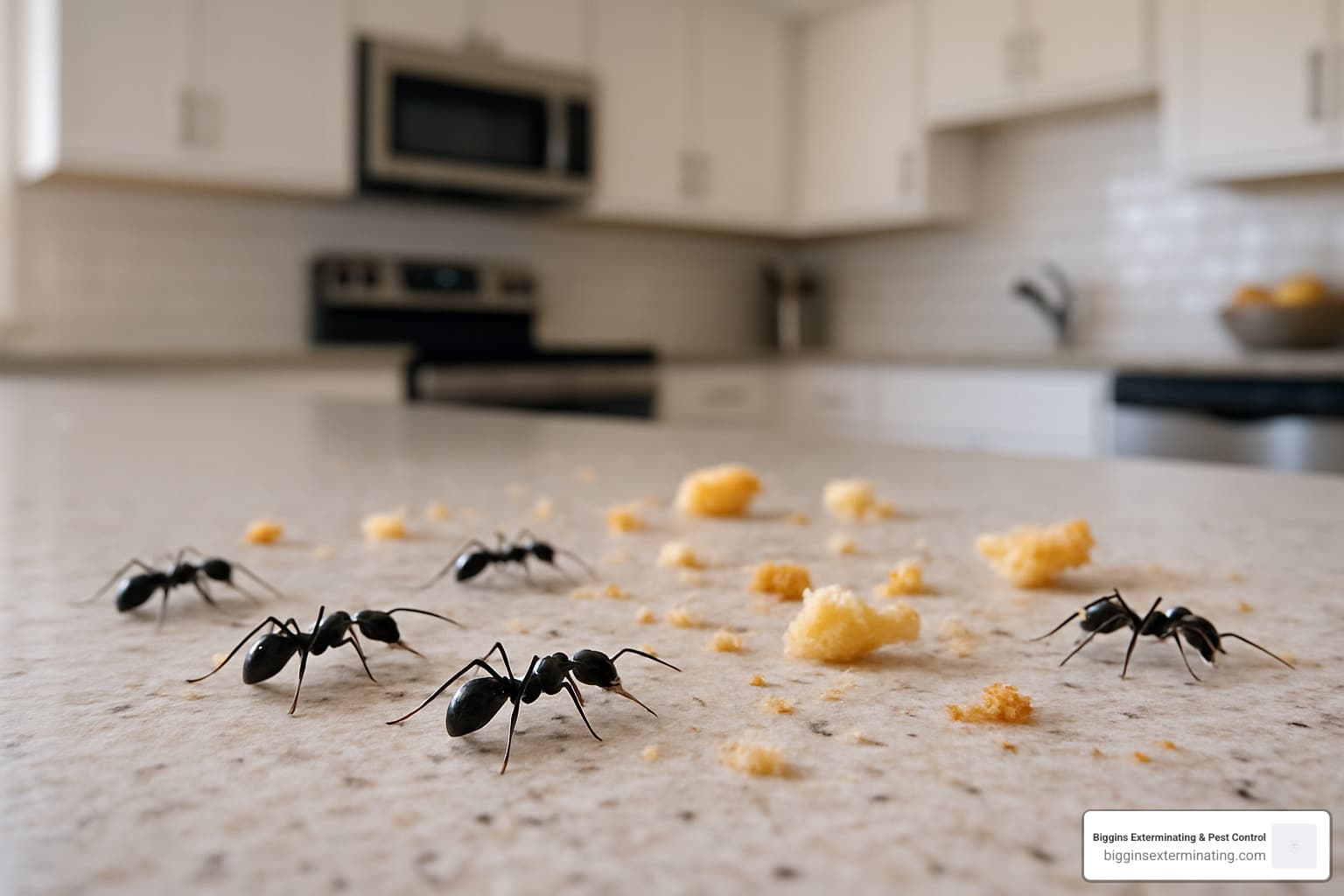
The Definitive Guide to Indoor Ant Control
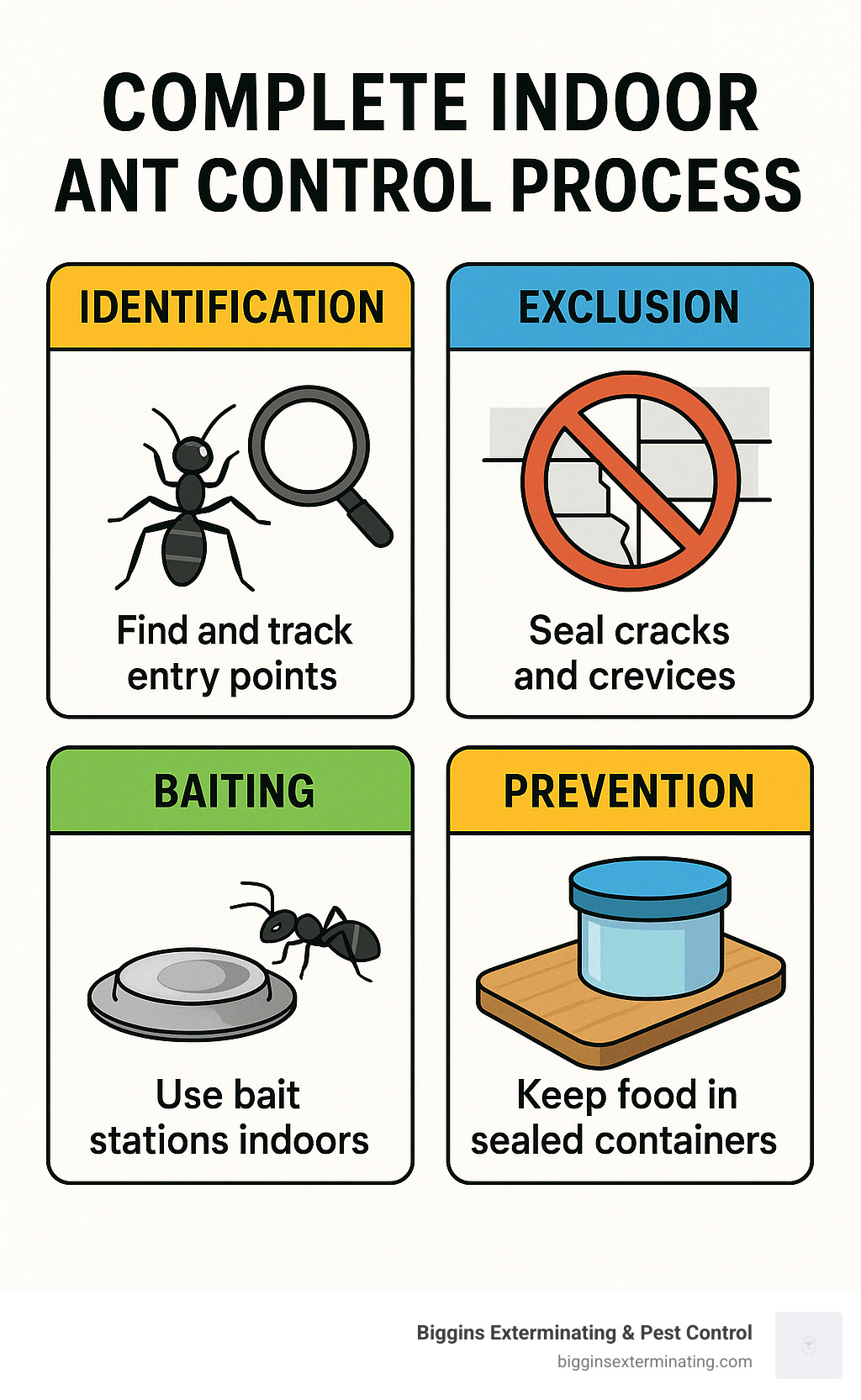
Indoor ant control begins with identifying entry points, removing food sources, and using targeted baits. For immediate results:
- Seal cracks and crevices around windows, doors, and foundation
- Clean all surfaces with vinegar solution to remove ant trails
- Place liquid ant baits near visible trails but not directly on them
- Remove food sources by storing items in airtight containers
- Fix moisture issues like leaky pipes that attract ants
When ants invade your home, they’re not just unwelcome guests – they’re persistent pests that can contaminate food, spread bacteria, and in some cases, cause structural damage. These tiny invaders follow scent trails into your kitchen, bathroom, or any area with accessible food and moisture, quickly turning from a few scouts into full-blown colonies that are difficult to eliminate with surface treatments alone.
Most homeowners make the mistake of spraying visible ants, which only addresses 20% of the problem while the queen and remaining colony continue to thrive out of sight. Effective indoor ant control requires understanding ant behavior and implementing a comprehensive approach that targets the entire colony.
I’m Stephen Biggins, owner of Biggins Exterminating Co., and I’ve been helping Massachusetts homeowners eliminate indoor ant infestations since 1982. With four decades of experience in indoor ant control, I’ve seen how the right combination of exclusion, sanitation, and targeted treatments can provide lasting results that keep ants from returning.
Related content about indoor ant control:
– House Ant Exterminator
– Local pest control services
Spotting an Indoor Ant Infestation: Species & Signs
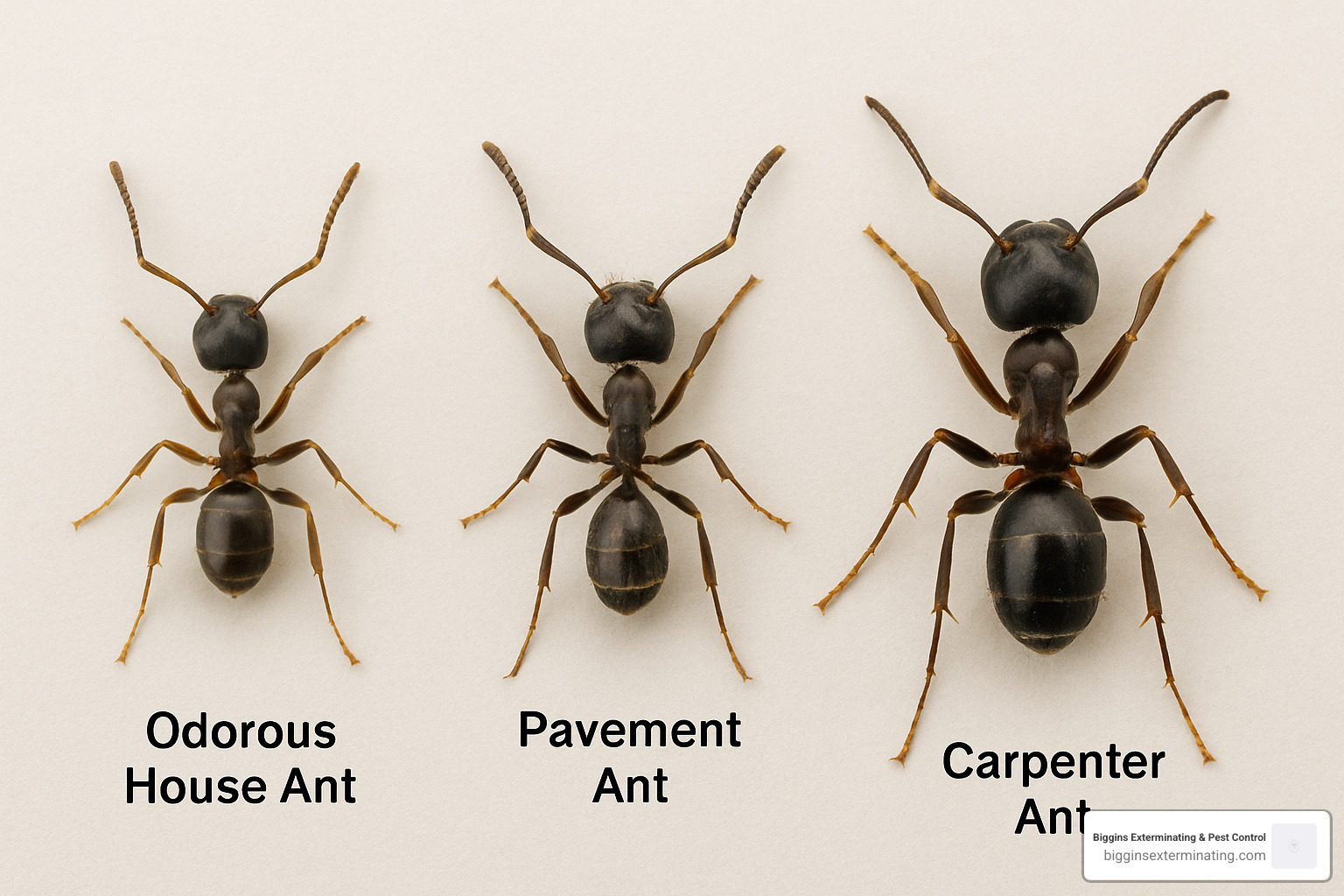
Ever walked into your kitchen to find a tiny conga line of ants marching across your counter? You’re not alone! The first step in effective indoor ant control is figuring out exactly who these uninvited guests are.
“What most homeowners don’t realize,” explains our senior technician at Biggins Exterminating, “is that different ant species require different treatment approaches. Identifying the specific ant invading your home is crucial for targeted control.”
Here in Massachusetts, we regularly battle several common household invaders, each with their own quirks and preferences:
Odorous House Ants are small troublemakers (about 1/8 inch long) that emit a peculiar coconut-like smell when squished – not that I recommend going around squishing ants as a hobby! They’re particularly fond of sweet treats and often create highways along your baseboards.
Carpenter Ants are the big guys of the ant world at 1/4 to 1/2 inch long. Unlike their cousins, these woodworkers can actually damage your home’s structure. They don’t eat the wood (they’re not termites), but they carve out elaborate galleries inside it for their growing families.
Pavement Ants are the small dark brown to black ants (about 1/8 inch) that you might spot nesting in driveway cracks outside. Don’t be fooled by their name though – they’re perfectly happy to relocate indoors when the opportunity presents itself.
Pharaoh Ants are tiny yellowish to reddish ants (just 1/16 inch) with a concerning habit – they can spread pathogens, especially in sensitive environments like hospitals. These little ones are particularly tricky to control because they’re masters at establishing satellite colonies.
How to Identify the Culprit
Playing ant detective isn’t as complicated as it sounds. For effective indoor ant control, look for these telltale features:
The ant’s “waistline” is a dead giveaway – ants have a distinctive narrow petiole (think pinched waist) between their thorax and abdomen. Their antennae are elbowed rather than straight, which is one way to distinguish them from termites. And if you spot winged versions, check their wings – ants have unequal wing pairs with the front ones larger than the back ones.
Speaking of winged ants, one of our most common service calls involves panicked homeowners who’ve spotted flying insects and fear they have termites. Here’s a quick comparison to ease your mind (or confirm your fears):
| Feature | Ants | Termites |
|---|---|---|
| Waist | Narrow, pinched | Broad, thick |
| Antennae | Elbowed | Straight |
| Wings | Unequal sizes | Equal sizes |
| Wing texture | Clear, veined | Milky, translucent |
| Body color | Usually darker | Usually lighter |
Still unsure what’s marching through your kitchen? The Key to Identifying Common Household Ants is a wonderful resource for the curious homeowner.
Red Flags Inside Your Home
Sometimes the ants themselves aren’t immediately visible, but they leave calling cards around your home. Here are some warning signs that might indicate you have unwelcome tenants:
Visible trails of ants moving in organized patterns are the most obvious sign. These little highways often run along baseboards, countertops, or walls as ants follow scent trails left by their scout buddies.
Small piles of debris that look like sawdust could be carpenter ant frass – basically, the waste material they push out while excavating their wooden condos inside your walls.
Rustling sounds inside your walls might sound like something from a horror movie, but it could just be a large carpenter ant colony going about their business. (Still creepy, though!)
Hollow-sounding wood when tapped could indicate carpenter ants have been busy remodeling your home’s structure – without your permission.
Discarded wings near windows or doors are evidence that reproductive ants have swarmed, potentially starting new colonies in or around your home.
Just last month in Billerica, we found a significant carpenter ant infestation after a homeowner noticed small piles of what looked like sawdust appearing each morning beneath her windowsill. When we investigated, we finded a mature colony had set up shop inside the wall void, causing substantial damage to the structural framing. Early detection could have saved her thousands in repairs!
By knowing what to look for, you’re already one step ahead in the battle for indoor ant control. And remember, when in doubt, our team at Biggins Exterminating is just a phone call away to help identify your specific ant invaders and create a targeted plan to send them packing.
What Draws Ants Indoors—and Why You Should Care
Ever wondered why those tiny invaders keep marching into your home despite your best efforts? Ants aren’t just randomly wandering in—they’re on a mission, and your home might be offering exactly what they’re looking for.
“Ants are incredibly resourceful foragers,” explains our technician with a knowing smile. “They can detect food residues we can’t even see, and once they find a reliable source, they’ll recruit the entire colony through chemical trails.”
These little scouts are primarily searching for three essentials: food, water, and shelter. That half-empty soda can? It’s a sugar bonanza. Those few crumbs under the toaster? A feast waiting to happen. Even that tiny drip under your sink creates a perfect water source for a thirsty colony.
Food residues like crumbs, spills, and unsealed food containers are ant magnets. But they’re equally drawn to moisture sources including leaky pipes, condensation, and even your pet’s water bowl. Your home also offers perfect shelter opportunities within wall voids, insulation, and those cozy spaces behind appliances. Ants particularly love sweet substances like honey, syrup, and juice spills, though many species won’t turn down protein sources like pet food, grease, or meat scraps either.
Nature’s rhythm also plays a role—in spring and fall, many ant species naturally increase their foraging activity. During rainy periods or drought, your climate-controlled home becomes even more attractive as a stable environment.
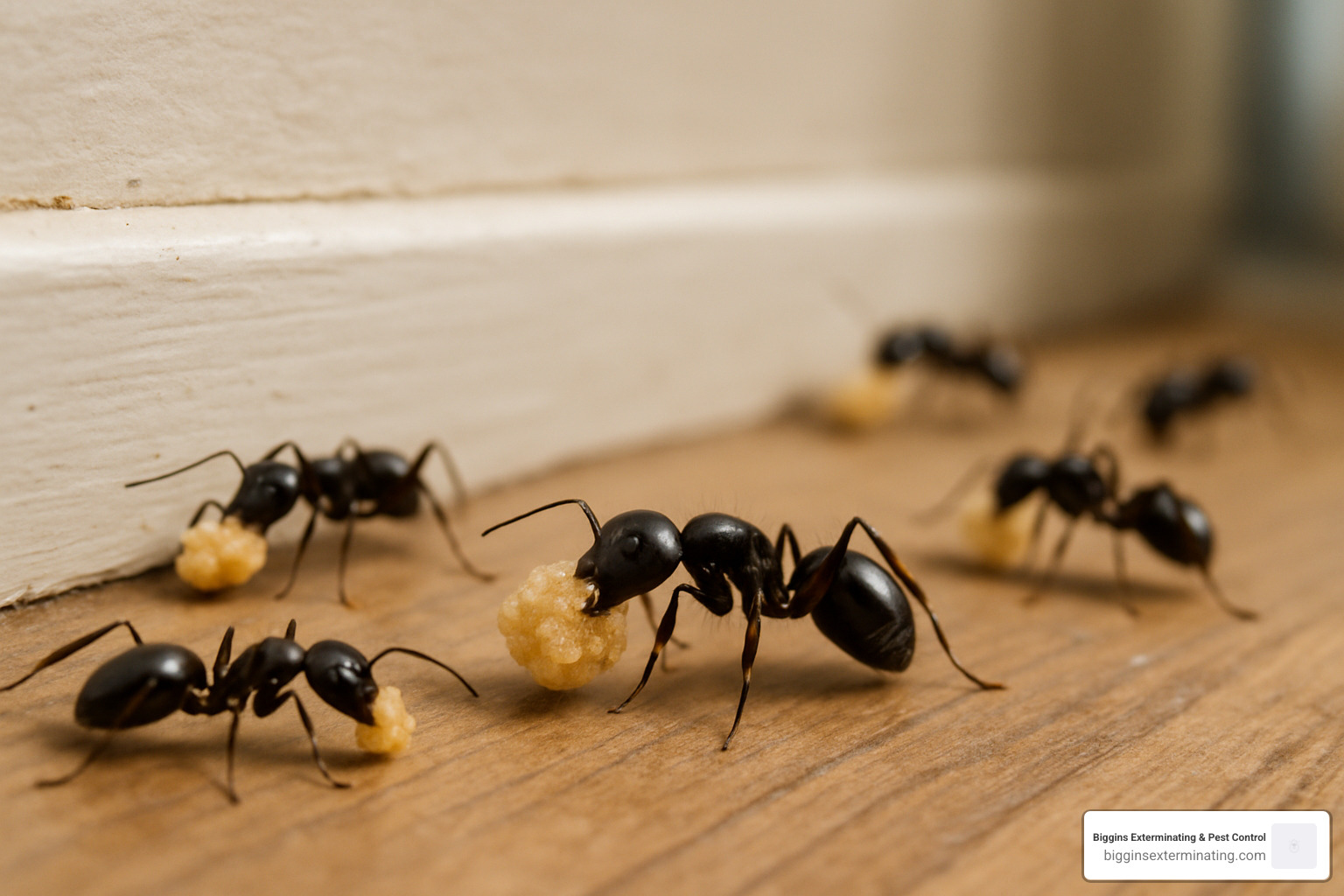
Hidden Dangers Behind the Walls
“Just a few ants, no big deal”—might be what you’re thinking. But effective indoor ant control becomes crucial when you understand what’s happening behind your walls.
While you spot a dozen ants on your counter, thousands could be nesting within your walls. It’s like seeing the tip of an iceberg—the real mass remains hidden from view.
Carpenter ants pose the most significant structural threat. Unlike termites, they don’t eat wood but excavate it to create nesting galleries. Over time, this silent excavation can seriously weaken your home’s structural elements.
“We once responded to a call in Lexington where the homeowner had ignored a small trail of carpenter ants for several years,” our senior technician recalls with a shake of his head. “By the time we inspected, the ants had hollowed out a significant portion of a load-bearing wall, requiring expensive repairs beyond just pest control.”
Beyond structural concerns, ants can create several unexpected problems:
Some species are oddly attracted to electrical fields and may nest in outlet boxes or chew on wiring insulation, creating potential fire hazards. Others nesting in wall voids can displace or damage insulation, affecting your home’s energy efficiency. Ant activity sometimes indicates underlying moisture issues that need addressing. And for sensitive individuals, large numbers of ants can even trigger allergic responses.
The health risks shouldn’t be underestimated either. A 2019 scientific study showed that Monomorium ants can carry pathogenic bacteria as they travel between waste areas and food surfaces. They can contaminate your food, spread bacteria throughout your kitchen, and even introduce secondary pests like aphids to your houseplants.
When you understand what brings these tiny invaders indoors—and the not-so-tiny problems they can cause—you’ll see why proper indoor ant control isn’t just about eliminating a nuisance. It’s about protecting your home, your health, and your peace of mind.
Indoor Ant Control Methods That Work
Effective indoor ant control requires a multi-faceted approach. At Biggins Exterminating, we practice Integrated Pest Management (IPM), which combines various techniques to achieve long-lasting results while minimizing environmental impact.
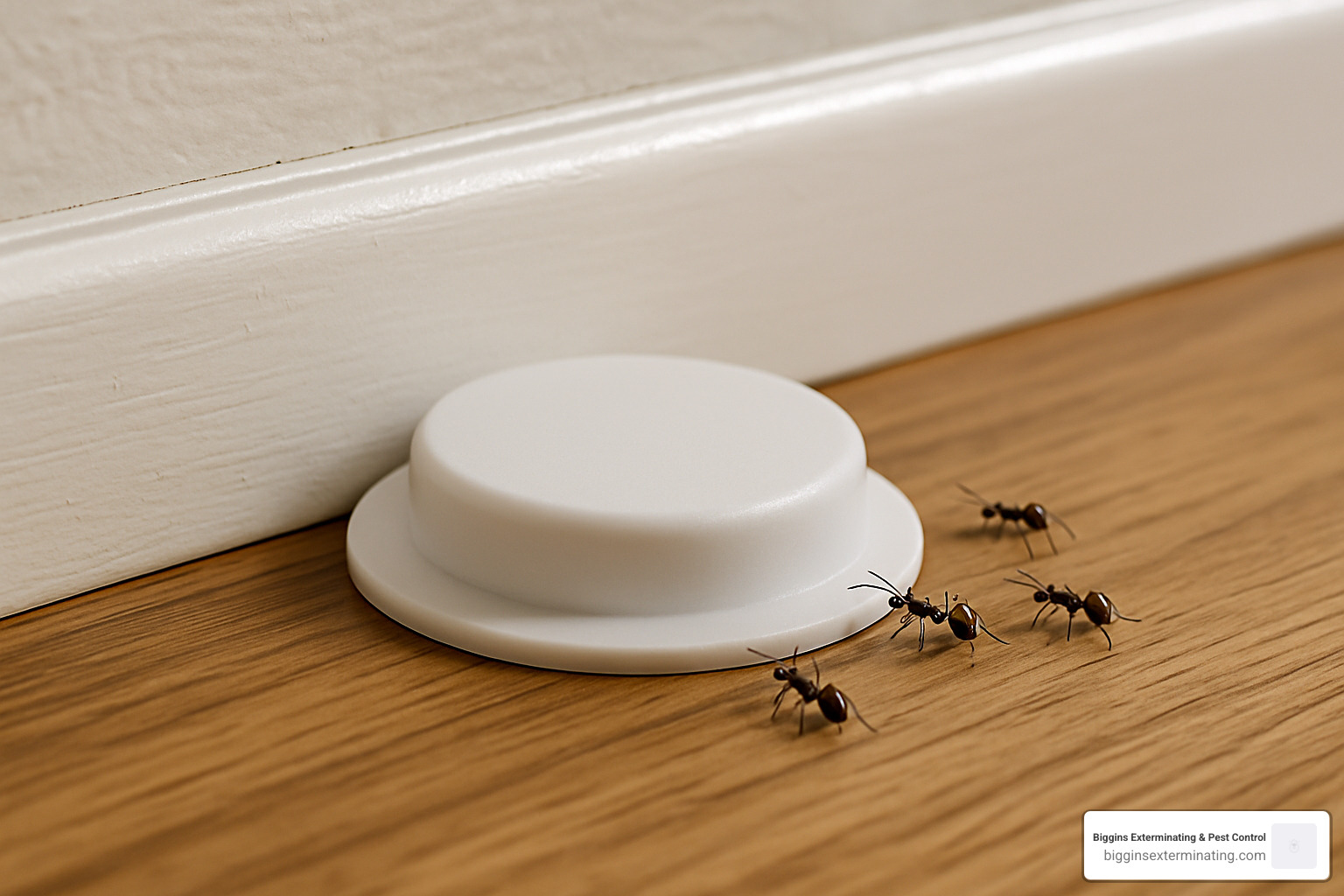
Indoor Ant Control With Liquid & Gel Baits
Baits are truly the superheroes of modern indoor ant control because they cleverly use ants’ own social behavior against them. When ants feed, they share food with their nestmates through a process called trophallaxis – essentially passing dinner around the family table.
“The beauty of baits is watching nature’s little delivery system at work,” explains our technician with a smile. “The foraging ants essentially become our unwitting allies, carrying the treatment right to the heart of the colony.”
Most ant baits contain slow-acting ingredients like borax or fipronil mixed with something ants find irresistible. This delayed reaction is by design – we want those worker ants to have plenty of time to share their “delicious find” with the entire colony, including the all-important queen, before feeling any effects.
Choosing the right bait makes all the difference. Sweet-toothed odorous house ants go crazy for sugar-based baits, while carpenter ants prefer a protein-rich meal. For best results, place baits near ant trails but not directly on them – you don’t want to disrupt their commute to the free buffet!
Patience is crucial with baiting. While smaller ant problems often resolve within 24-48 hours, larger colonies might take up to 10 days before you see complete results. During this time, resist the urge to clean around the bait stations, as you might accidentally remove the invisible chemical trails ants use to find their way back.
For persistent sweet-loving ants, check out our detailed guide on Sugar Ant Pest Control.
Indoor Ant Control Using Sprays & Granules
While baits do the heavy lifting in indoor ant control, sometimes they need backup from sprays and granules – especially for stubborn infestations.
Modern non-repellent sprays have changed the game entirely. Unlike the harsh-smelling repellents of yesteryear that ants could detect and avoid, today’s formulations are completely undetectable to ants. They walk through treated areas, pick up the active ingredient on their bodies, and unwittingly share it throughout the colony – similar to how baits work, but through physical contact rather than feeding.
“I always tell homeowners to avoid the temptation of using old-school repellent sprays,” our technician explains. “They might feel satisfying when you see ants scurrying away, but they often cause ‘budding’ – where the colony splits into multiple smaller colonies, making your problem worse instead of better.”
For indoor applications, focus on strategic treatments along baseboards, window frames, and door thresholds – common ant highways into your home. Always use products specifically labeled for indoor use, and follow directions carefully.
Granular products serve as your outdoor first line of defense. Creating a 2-5 foot protective band around your home’s foundation can significantly reduce the number of ants that make it indoors in the first place. Just remember to water them in according to label directions to activate the barrier, and reapply after heavy rain.
DIY & Natural Alternatives
If you prefer taking the natural route for indoor ant control, several kitchen-cabinet solutions have proven surprisingly effective.
A homemade borax-sugar paste works remarkably well for sweet-loving ants. Mix one tablespoon of borax with one cup of sugar and add just enough water to create a paste. Place small amounts on pieces of cardboard near ant trails, making sure they’re out of reach of curious pets and children.
Diatomaceous earth (DE) is mother nature’s own insect control – these microscopic fossilized diatoms have sharp edges that damage ants’ exoskeletons as they crawl through the powder, eventually causing dehydration. A light dusting around entry points creates an effective barrier that’s safe for households when you use food-grade DE.
Essential oils not only make your home smell wonderful but can send ants packing too. Peppermint oil is particularly effective – mix 10-20 drops with two cups of water in a spray bottle and apply to entry points and trails. Scientific research published in the Journal of Economic Entomology confirmed peppermint oil’s effectiveness against several ant species.
One of my favorite quick fixes is a simple vinegar solution – equal parts white vinegar and water not only cleans surfaces but also wipes away the invisible chemical trails ants follow. While it won’t kill ants, it certainly confuses them! Used coffee grounds spread near entry points can have a similar trail-disrupting effect.
A customer in Woburn shared her success story: “After trying everything under the sun, I finally mixed up some borax and sugar, put tiny amounts on bottle caps behind my refrigerator, and cleaned everything with vinegar. Within three days, my kitchen was ant-free for the first time in months!”
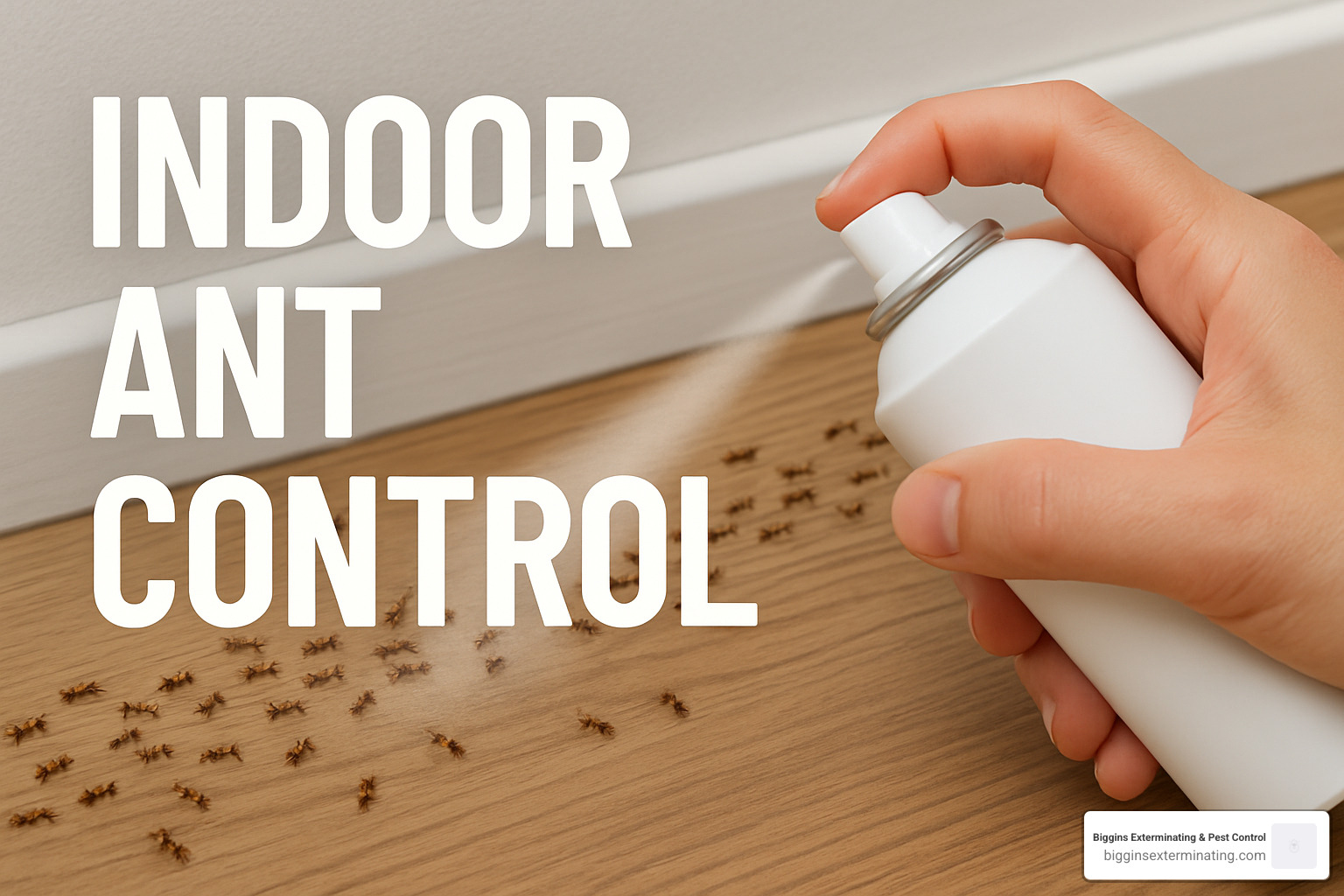
Safety First: Kids, Pets, and Product Precautions
When it comes to indoor ant control, effectiveness matters – but safety matters more, especially in homes with children and pets.
Tamper-resistant bait stations are worth their weight in gold for households with curious little ones, whether they have two legs or four. These protective containers allow ants to enter and exit freely while keeping the actual bait safely contained. Whenever possible, place treatments in areas naturally inaccessible to children and pets – behind appliances, inside cabinets, or in wall voids.
Always read product labels completely – they’re not just there for legal reasons but contain crucial safety information specific to that product. Wearing gloves might seem like overkill for a small ant treatment, but your skin will thank you later. And when using sprays indoors, proper ventilation isn’t just a suggestion – it’s essential.
Keep all pest control products in their original containers stored in locked cabinets. The colorful liquids in some ant baits might look deceptively like juice or candy to a child. And never, ever mix different pest control products together – the resulting chemical reaction could create toxic compounds not intended by either manufacturer.
It’s always better to be safe than sorry, so keep the Poison Control Center number (1-800-222-1222) readily available. With proper precautions, you can achieve effective indoor ant control while keeping your family safe and sound.
Prevention: Seal, Clean, Maintain
The most effective indoor ant control strategy is prevention. By making your home less attractive and accessible to ants, you can avoid infestations before they start.
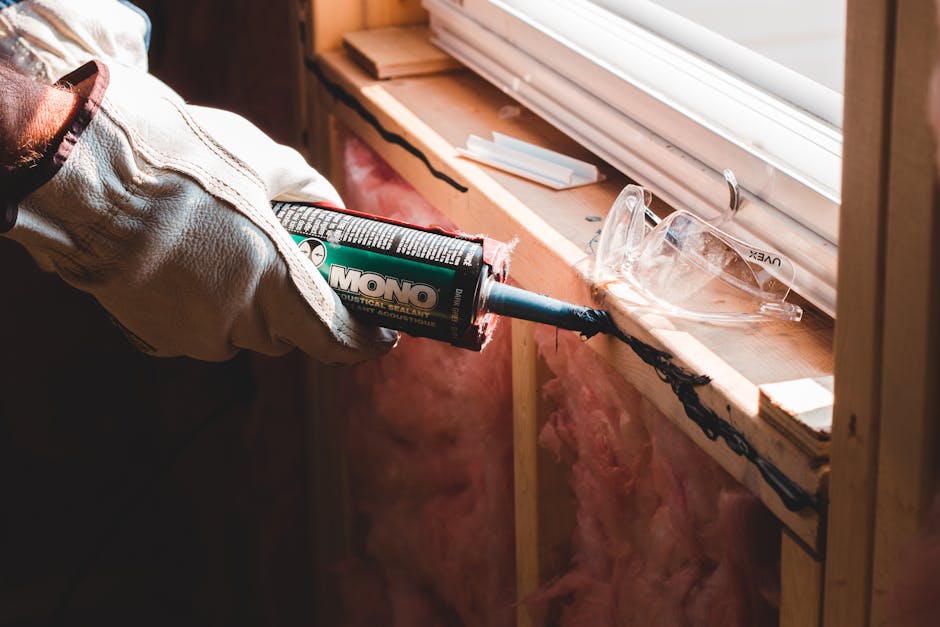
Locate & Block Entry Points
Ants are remarkable little invaders that can squeeze through openings as tiny as 1/16 of an inch—about the thickness of a credit card! This amazing ability means your home likely has dozens of potential entry points you’ve never even noticed.
“Most homeowners are shocked when I show them all the places ants can enter their homes,” says our senior technician. “What looks like a solid barrier to us might as well be an open door to an ant.”
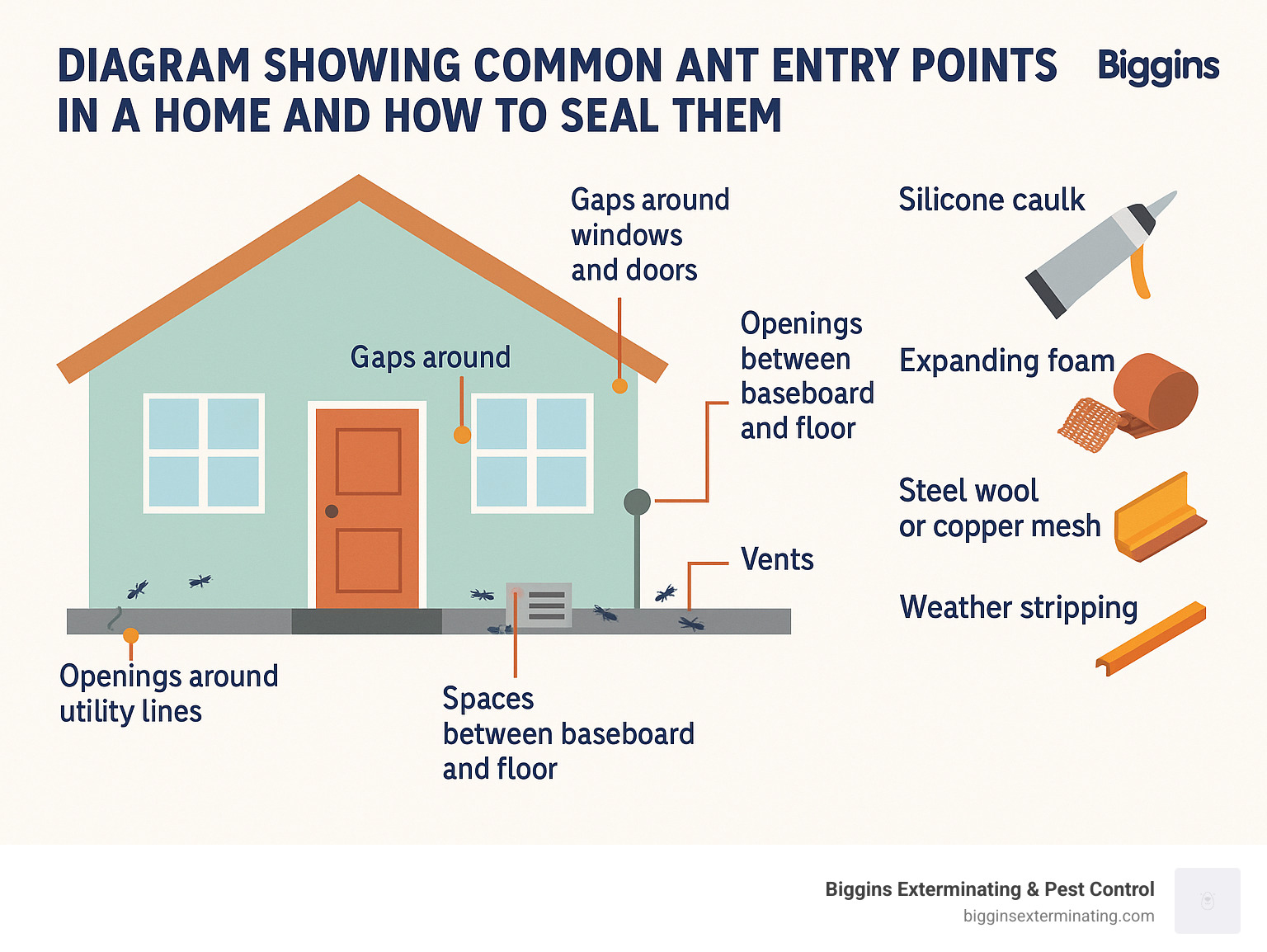
During our home inspections, we commonly find ants entering through cracks in the foundation, gaps around windows and door frames, openings where utility lines enter the home, spaces between baseboards and flooring, and vents with damaged screens. These tiny highways into your home need to be identified and blocked.
To effectively seal your home, start with a thorough inspection of both exterior and interior walls. I recommend marking potential entry points with chalk or painter’s tape as you go—this makes it easier to track your progress. Then, match the right sealing material to each type of gap. Use silicone caulk for smaller cracks, expanding foam for larger openings, and steel wool or copper mesh for gaps around pipes since ants won’t chew through metal. Don’t forget weather stripping for doors and windows and fine mesh screens for vents.
One of our most satisfying indoor ant control success stories involved a North Reading family who had battled recurring ant invasions for years. During our inspection, we identified and sealed 27 different entry points throughout their home. The result? They’ve remained ant-free through multiple seasons—proof that exclusion works when done thoroughly.
For more comprehensive strategies on keeping pests out of your home, visit our Home Pest Control Tips page.
Housekeeping Habits That Keep Ants Away
Your daily habits can either invite ants in or keep them away. It’s the little things you do consistently that make the biggest difference in preventing ant problems.
In the kitchen, wipe counters and sweep floors every night before bed. This simple 5-minute routine removes the tiny food particles and spills that might be invisible to you but are like flashing “restaurant open” signs to foraging ants. Store sweet items like honey, syrup, and sugar in containers with airtight seals—ants can smell these treats even through thin plastic.
“The kitchen sink is ant paradise,” explains our technician. “A wet sink with food residue is the perfect combination of water and nourishment.” Make drying your sink part of your nightly routine, and fix leaky faucets promptly since moisture attracts ants just as much as food does.
Your dining habits matter too. Consider establishing a designated eating area to contain food residues. Clean spills immediately, especially sugary drinks that leave sticky residues ants love. And those dirty dishes in the sink? They’re practically sending invitation cards to every ant colony in the neighborhood.
Pet owners face special challenges with indoor ant control. Pet food is incredibly attractive to ants, so don’t leave it out overnight. Either pick up bowls after feeding or place them in a moat (a shallow dish of water) that ants can’t cross. Be sure to clean around pet feeding areas regularly to remove any dropped kibble.
Smart pantry management prevents ants from finding your stored foods. Rotate products regularly so nothing sits forgotten in back corners. Inspect new groceries before storing them—ants can hitch rides into your home this way. Store susceptible items like flour, cereals, and crackers in sealed containers rather than their original packaging. Some of our clients have found success placing bay leaves or a light dusting of food-grade diatomaceous earth in pantry corners as natural deterrents.
A Burlington client shared this success story: “After implementing the housekeeping recommendations from Biggins, we went from having constant ant problems every spring to being completely ant-free for three years running. The nightly counter wipe-down and keeping our pet’s food on a schedule made all the difference.”
These prevention strategies might seem simple, but they’re the foundation of effective indoor ant control. By sealing entry points and practicing good housekeeping habits, you create a home environment that’s far less attractive to ants—and that means more peaceful, pest-free living for you and your family.
Professional Solutions & Common Questions
While DIY methods can be effective for minor infestations, persistent or severe ant problems often require professional indoor ant control services.
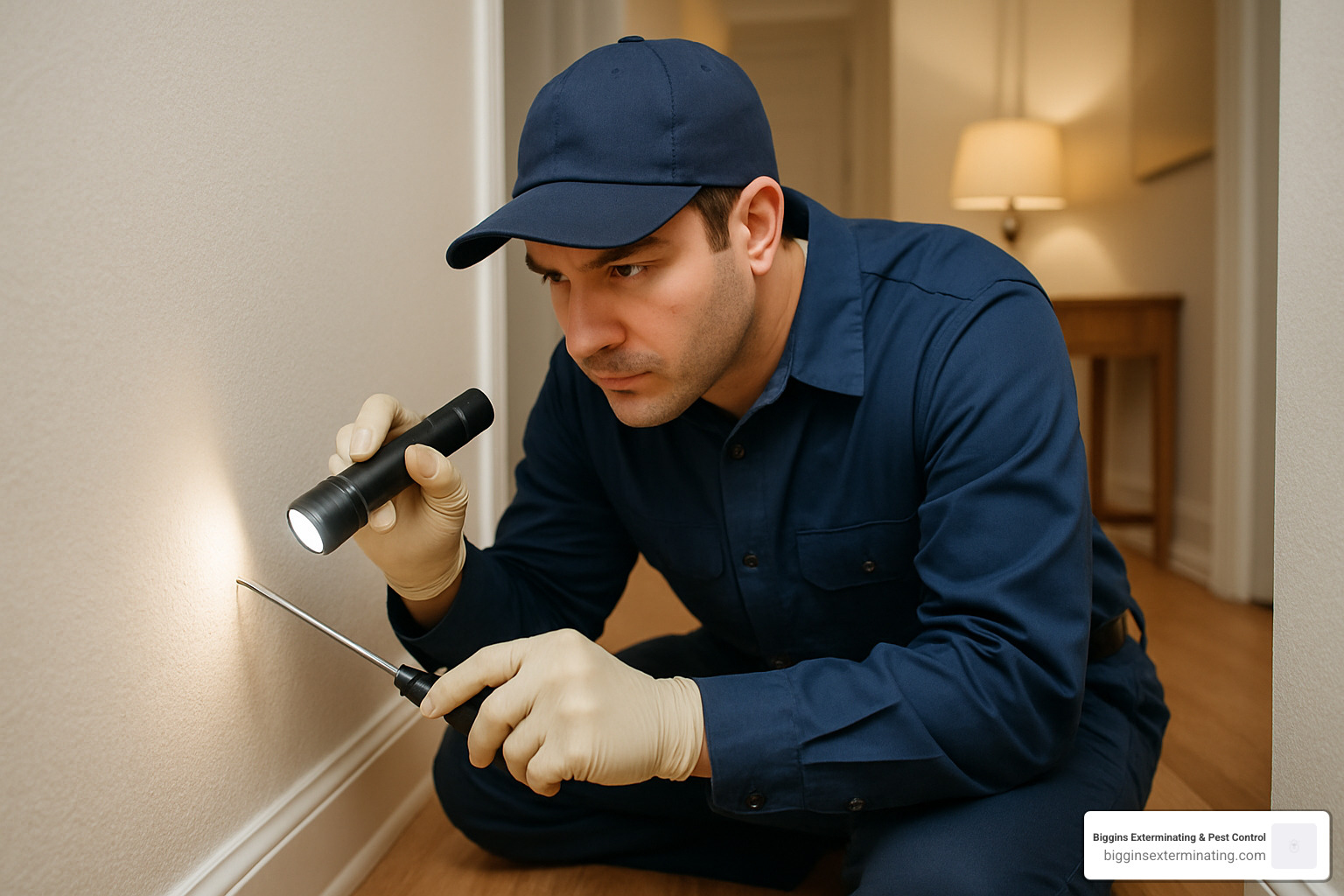
When to Call a Pro for Indoor Ant Control
Sometimes those tiny invaders just won’t surrender to your DIY efforts. I’ve seen countless homeowners exhaust themselves with store-bought solutions before finally reaching out for help.
Multiple or persistent colonies are often the first sign you need professional assistance. If you’re treating one area only to have ants appear elsewhere in your home, it likely means you’re dealing with satellite colonies or haven’t reached the main nest.
“Last month, a customer in Reading had been battling ants for nearly a year,” shares our senior technician Mark. “They’d appear in the kitchen, disappear after treatment, then show up in the bathroom two weeks later. Our inspection revealed three separate colonies accessing the home through different entry points.”
Carpenter ant infestations definitely warrant professional intervention. Unlike other household ants, carpenter ants can cause serious structural damage as they excavate wood to create their nests. Their colonies are typically hidden deep within walls or structural timber where DIY treatments simply can’t reach.
When nests are hidden in hard-to-reach places like wall voids, under floors, or in crawl spaces, professional equipment and techniques become essential. We use specialized tools like dusters that can distribute treatment deep into these concealed areas.
Health concerns also matter. If you or family members have allergies or asthma that might be triggered by DIY pesticides, professional treatment offers more targeted application with minimal exposure.
Professional pest control brings several advantages to your ant battle. We provide proper identification of the specific ant species, which is crucial since different ants respond to different treatments. We also have access to professional-grade products that offer better results with less product applied.
Our thorough inspections uncover the root causes of infestations that homeowners often miss. At Biggins Exterminating, we don’t just treat symptoms – we find and eliminate the source of your problem, all while backing our work with solid warranties that don’t require ongoing contracts.
For more detailed information about our approach, visit our Ant Control Exterminators page.
What Does Professional Service Cost?
I’m often asked about pricing during initial phone calls, and I understand why – it’s an important consideration for any homeowner.
Professional indoor ant control services vary in cost based on several factors. The size of your home naturally impacts pricing, as larger properties require more time and materials. The severity of the infestation plays a major role too – a few scouts in your kitchen requires less intensive treatment than multiple established colonies.
The type of ant species also affects cost. Carpenter ants, for instance, typically require more comprehensive treatment than pavement ants due to their nesting habits and potential for damage. Location and accessibility of nests matter as well – treating an easily accessible area costs less than addressing colonies hidden within structural elements.
Based on industry averages (not Biggins Exterminating pricing), you can expect professional ant control to typically range from:
– Basic inspection and treatment: $175-$600
– Severe infestations or structural issues: $600-$1,500+
Most companies provide warranties ranging from 30 days to a full year. At Biggins, we believe in transparent pricing with no surprises. We provide detailed quotes after a thorough inspection so you know exactly what you’re paying for. While these industry averages give you a general idea, your specific situation may differ, which is why we recommend scheduling an inspection for an accurate quote.
Indoor Ant Control FAQ
Q: How long does it take to eliminate an ant colony?
Most homeowners see dramatic improvement within 24-48 hours of professional indoor ant control treatment. You’ll notice significantly fewer ants almost immediately, but complete elimination typically takes 5-10 days for larger colonies. This timeline reflects how the treatment works – it needs time to be carried back to the queen and developing larvae to stop the reproductive cycle completely.
Q: What if ants aren’t taking the bait I’ve placed?
This is a common frustration! Ants can be surprisingly picky eaters, and their preferences change based on the colony’s needs and the season. In spring, they often seek proteins for developing larvae, while in summer, they might prefer sweets for energy. If your bait isn’t working, try switching between sugar, protein, and oil-based formulations.
Another common mistake is using repellent sprays near your baits. These can deter ants from approaching the baits altogether. As our technician Jim likes to say, “You can’t trap a mouse if you surround the cheese with cats!”
Q: Are professional ant treatments safe for my family and pets?
Today’s indoor ant control products are designed with safety in mind when properly applied. At Biggins Exterminating, we prioritize your family’s safety by selecting the least-toxic effective options. We place treatments in locations inaccessible to children and pets, and we provide clear safety instructions for each treatment.
“We’re parents and pet owners too,” notes our owner Stephen Biggins. “We only use products in clients’ homes that we’d feel comfortable using in our own.”
Q: Why do ants suddenly appear in my bathroom?
Finding ants in your bathroom often points to moisture issues. Ants need water just like they need food, and bathrooms provide plenty of it through leaky pipes, condensation, or simply high humidity. Fixing these moisture problems is essential for long-term control. Check under sinks, around toilet bases, and look for grout or caulk that needs repair.
Q: How do I protect my infant from ant treatments?
For homes with infants, we take extra precautions. We recommend targeted gel baits placed in cracks and crevices where babies can’t reach, tamper-resistant bait stations, and creating physical barriers rather than widespread spraying. Always let your pest control professional know about infants in the home so they can adjust their approach accordingly. Your baby’s safety is our priority too.
Conclusion
Winning the battle against ants isn’t a one-time effort—it’s an ongoing commitment to keeping your home protected from these persistent invaders. Effective indoor ant control creates a home environment where ants simply can’t thrive, giving you and your family peace of mind.
Through this guide, we’ve covered the complete roadmap to ant-free living. The most successful homeowners combine several approaches, creating a comprehensive defense system that addresses both immediate infestations and long-term prevention.
When I visit homes that have remained ant-free for years after our treatments, I notice they all share common practices:
They’re vigilant about identifying early warning signs of different ant species, allowing them to address problems before they become full-blown infestations. They’ve taken time to thoroughly seal entry points around their home’s perimeter, creating a physical barrier that keeps ants outside where they belong.
These homeowners are committed to consistent cleaning routines that eliminate the food and water sources that attract ants in the first place. They understand that strategic bait placement targets the entire colony rather than just the visible 20% of foragers. And perhaps most importantly, they maintain preventive measures year-round, not just when ants become visible.
“After years of battling seasonal ant invasions, I finally followed the complete prevention plan from Biggins,” shares a Lexington homeowner. “It’s been two years without seeing a single ant in our kitchen—the longest stretch in the 15 years we’ve owned our home.”
For Massachusetts residents in Wilmington, Andover, Bedford, Billerica, Burlington, Lexington, North Reading, Tewksbury, and Woburn, our Biggins team brings over 40 years of local indoor ant control expertise to your doorstep. As a family-owned business, we understand the unique challenges New England homes face from seasonal ant pressures, and we’re committed to providing solutions that last.
Whether you’re dealing with a minor kitchen invasion or concerned about carpenter ants potentially damaging your home’s structure, we’re here to help you reclaim your space with reliable, warranty-backed solutions—without locking you into unnecessary long-term contracts.
For professional assistance with indoor ant control, visit our ant control services page or reach out today for a friendly, no-pressure consultation. Together, we’ll create a home environment where ants simply choose to look elsewhere.