
Why Knowing How to Remove a Hornet Nest from Your House Matters
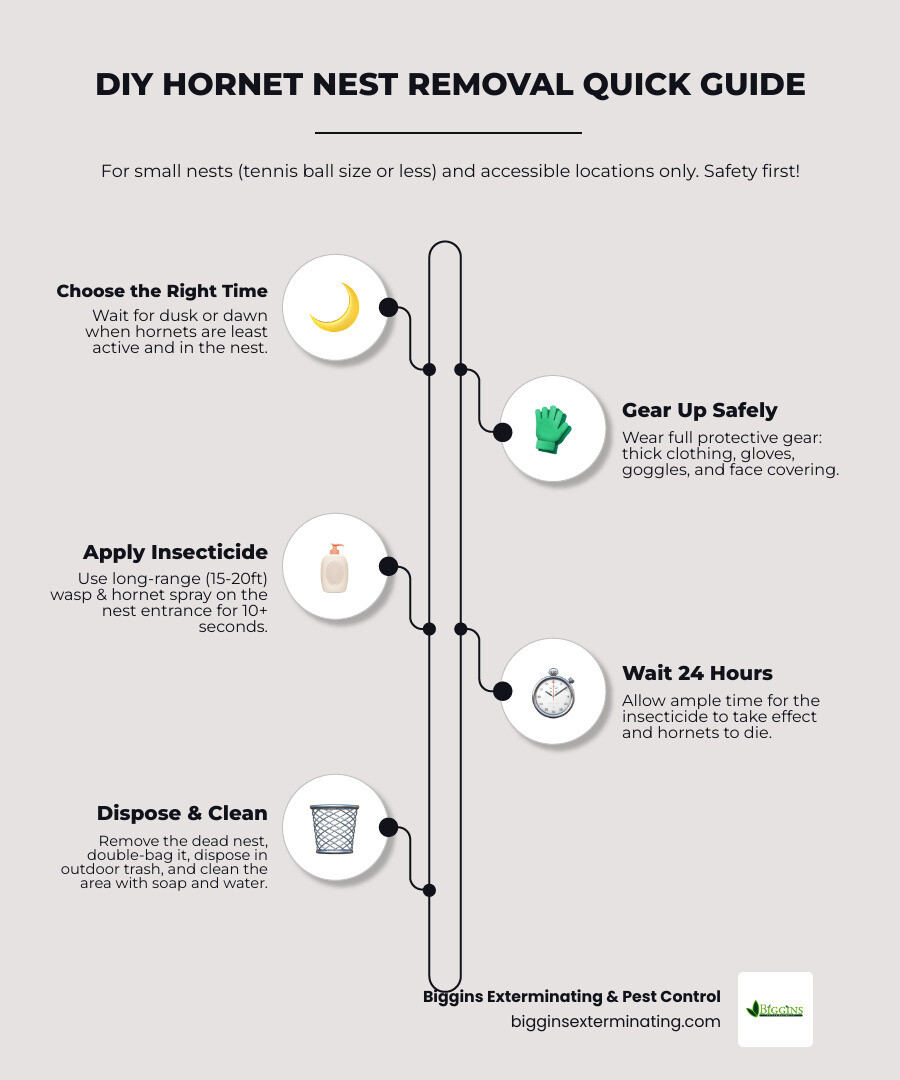
How to remove a hornet nest from your house safely requires the right timing, protective gear, and technique. Here’s the quick answer for small nests only:
Quick Removal Steps:
- Wait for dusk or dawn when hornets are least active
- Wear full protective gear – thick clothing, gloves, goggles, face covering
- Use long-range insecticide spray (15-20 feet reach) on the nest entrance
- Spray for 10+ seconds to saturate the nest completely
- Wait 24 hours before removing the dead nest
- Dispose in sealed trash bag and clean the area with soap and water
Important: Only attempt DIY removal on nests smaller than a tennis ball. Larger nests require professional help.
Hornets typically won’t bother you if you leave them alone. However, when their nest is near your home’s entrance, deck, or children’s play area, removal becomes necessary for safety. These stinging insects can be aggressive when their nest is threatened, and multiple stings can cause serious reactions.
The key to safe hornet nest removal lies in understanding their behavior and timing your approach correctly. Hornets are less active during cooler parts of the day – early morning or late evening – making these the safest windows for removal attempts.
I’m Stephen Biggins, owner of Biggins Exterminating Co., and I’ve been helping Massachusetts homeowners safely handle stinging insect problems for over four decades. Throughout my career, I’ve seen many dangerous DIY attempts at how to remove a hornet nest from your house, which is why proper education about safe removal techniques is so important.
Relevant articles related to how to remove a hornet nest from your house:
Before You Act: Identifying the Nest and Assessing the Risk
Before you consider how to remove a hornet nest from your house, you must identify what you’re dealing with. Rushing in without knowing the species, nest location, and activity level is a dangerous gamble. These factors determine if DIY removal is safe or if it’s time to call professionals.
How to Identify a Hornet’s Nest
Hornet nests have a distinctive look. They are made of a papery material created from chewed wood fibers mixed with saliva, giving them a rough, cardboard-like appearance.
The color is typically gray or brown, and the shape is often teardrop-like or pear-shaped, especially when hanging from branches or eaves.
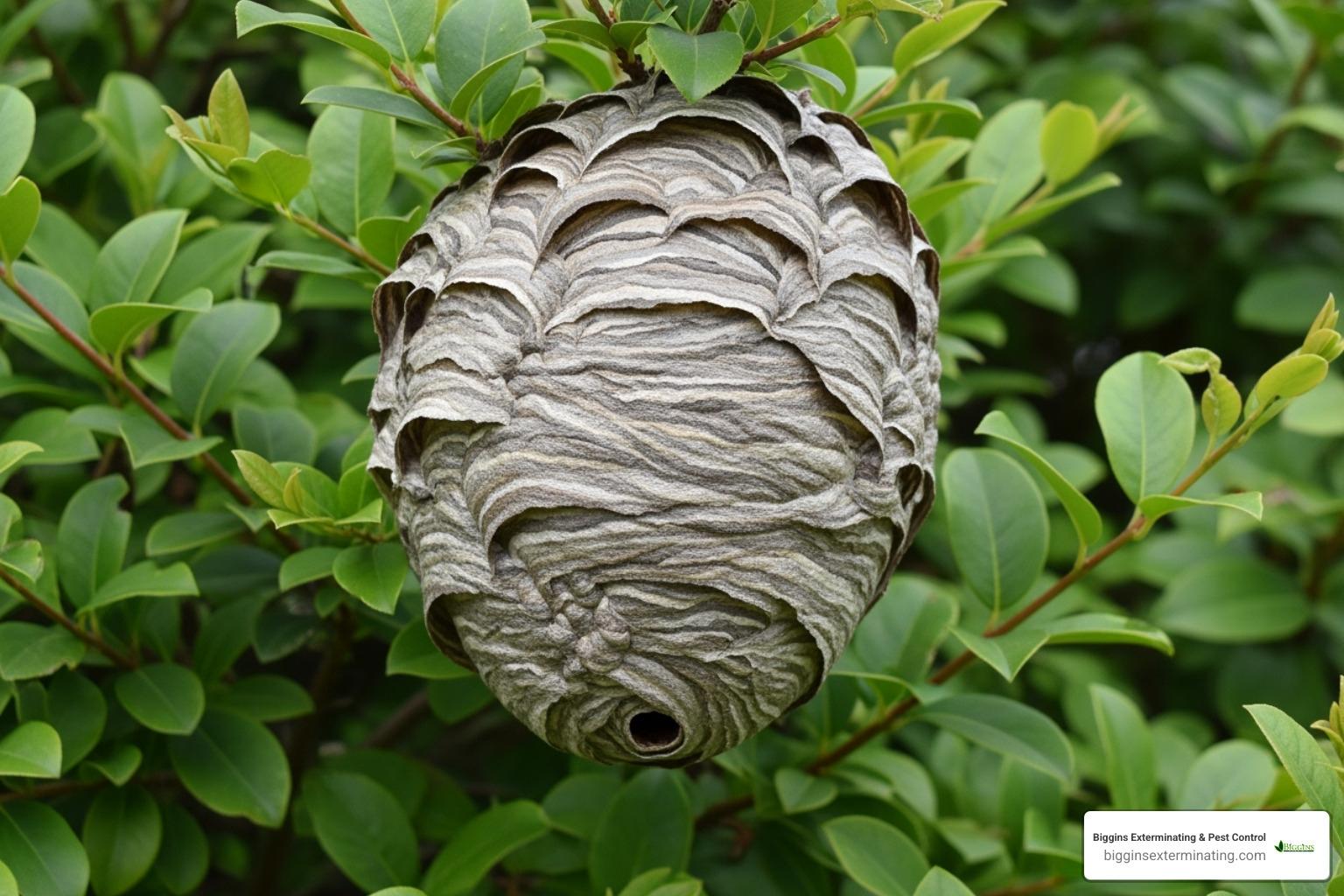
A crucial detail is the single entrance hole, usually at the bottom of the nest. This is the main entry and exit point. Nests start small but can grow to the size of a basketball by late summer, housing hundreds of workers.
Common Hornet Species in the US
Knowing the species is key to your removal strategy.
European hornets are the only true hornets in North America. They are large (¾ to 1⅓ inches), brown with yellow markings, and build nests in concealed spaces like hollow trees, wall voids, and attics. They are generally less aggressive unless their nest is threatened.
Bald-faced hornets are technically a type of yellow jacket. They are smaller (½ to ¾ inch) with black and white markings. They build the large, aerial paper nests you see hanging from trees and are known for being highly aggressive when disturbed.
| Feature | European Hornets | Bald-faced Hornets |
|---|---|---|
| Appearance | Larger (¾”-1 ⅓”), brown with black/yellow | Smaller (½”-¾”), black with white markings |
| Nest Location | Hollow trees, wall voids, attics, enclosed spaces | Suspended from trees, bushes, building structures |
| Aggressiveness | Less aggressive unless directly provoked | Highly aggressive when nest is threatened |
Where to Find Hornet Nests
Hornets choose protected locations for their nests.
Around your home, check under eaves, overhangs, in attics, sheds, and garages. These spots offer shelter from the elements.
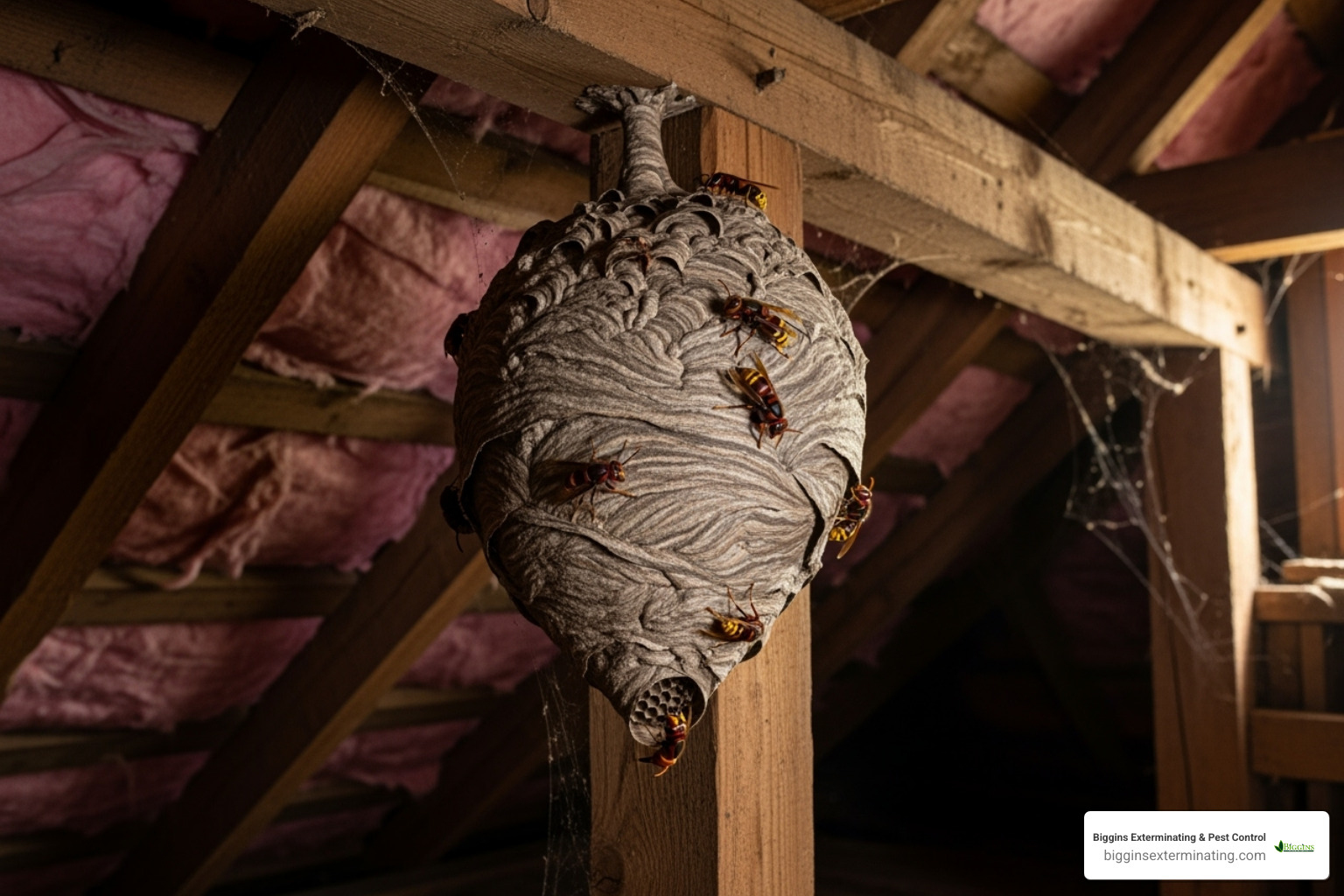
Outdoors, look in trees and dense shrubs, which provide support and camouflage for aerial nests.
Always observe from a safe distance, using binoculars if necessary. Look for hornets flying to and from a specific spot, which indicates an active nest. For more guidance, see our guide on Hornets and Wasps: Identifying Nests and Ensuring Safety.
Safety First: Gearing Up and Choosing the Right Time
When considering how to remove a hornet nest from your house, safety is paramount. Hornets defend their nests aggressively and can sting multiple times. Multiple stings can cause severe reactions, and for anyone with an insect sting allergy, a single sting can be life-threatening.
Essential Protective Gear
You must cover every inch of exposed skin. Hornets can find any gap in your protection.
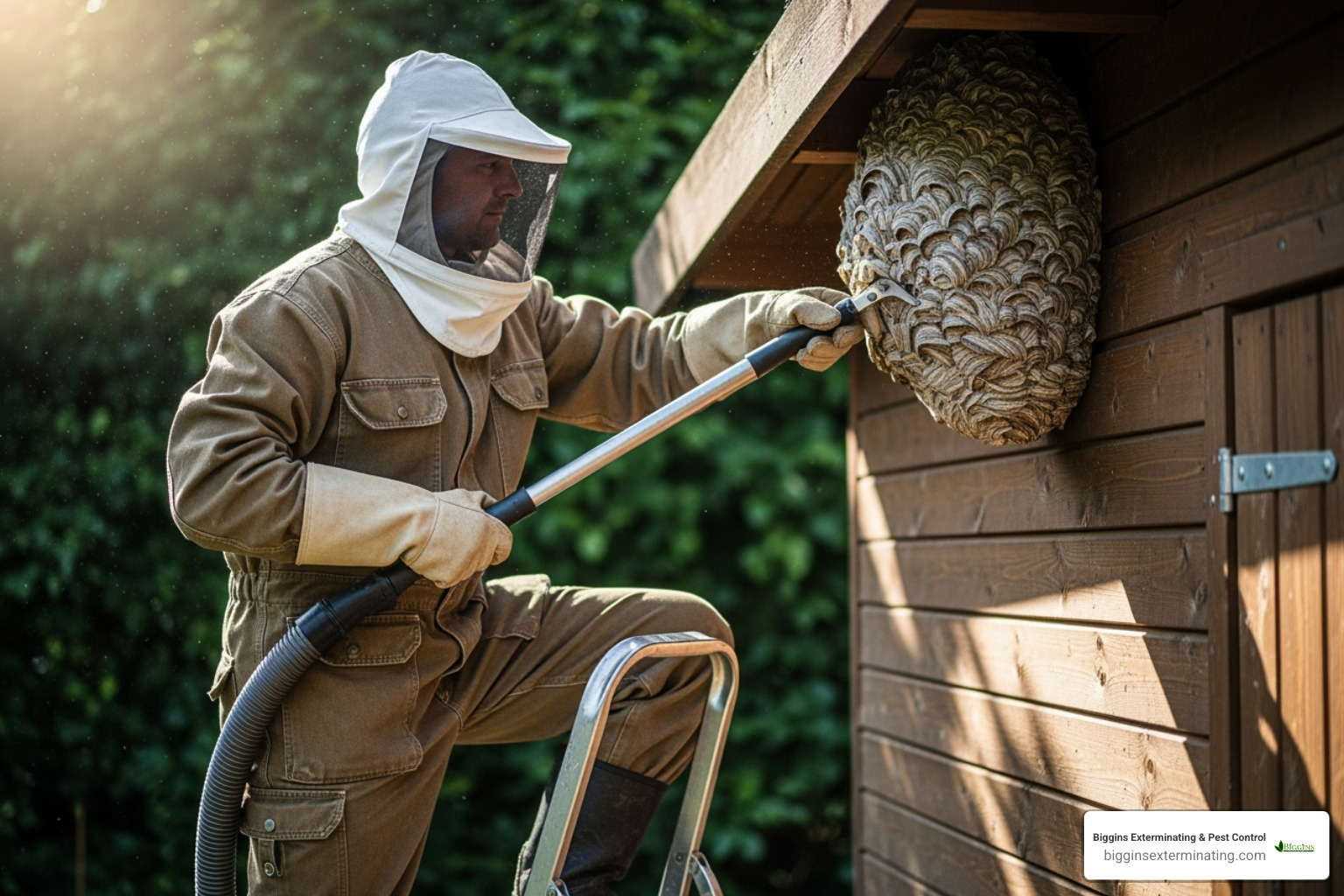
- Ideal Gear: A professional beekeeper’s suit offers the best protection.
- DIY Armor: If a suit isn’t available, wear multiple layers of thick clothing, including a heavy jacket, long sleeves, and pants.
- Hands, Face, and Feet: Use heavy-duty gloves (leather or thick rubber), sealed protective goggles, and a face covering like a balaclava or thick scarf. Wear closed-toe shoes and tuck your pants into your socks or boots.
The Safest Time for Removal
Hornets are less active and aggressive in cooler, darker conditions.
- Time of Day: Dusk or dawn are the best times for removal. Most hornets are in the nest and are sluggish due to cooler temperatures. Nighttime is also effective, but use a flashlight with a red filter, as insects don’t see red light.
- Temperature: Wait for a cool evening, preferably below 50°F, when hornet activity is minimal.
- Season: Early spring is ideal, as nests are small and only contain the queen. Late fall is also a good time, as most hornets have died off, leaving the nest inactive. Hornets don’t reuse old nests.
Always plan a clear escape route before you approach the nest. If you have known allergic reactions to stings, do not attempt removal yourself. Learn more about the risks from the American College of Allergy, Asthma & Immunology.
The DIY Guide on how to remove a hornet nest from your house
This guide covers how to remove a hornet nest from your house, but it is only for small, accessible nests (tennis ball size or smaller). For larger nests or those in hard-to-reach spots like inside walls, call a professional. It’s not worth the risk.
Before you start, ensure you have a clear escape route. You’ll need to move quickly if hornets become aggressive.
Method 1: Using an Insecticide Spray
This is the most common method for small, accessible nests.
- Choose the Right Product: Purchase an aerosol insecticide made for wasps and hornets with a 15-20 foot spray range. This distance is critical for safety.
- Time Your Attack: Approach the nest at dusk or dawn when hornets are less active. Move slowly and quietly to avoid alerting them.
- Spray the Entrance: Aim directly at the nest’s entrance hole (usually at the bottom) and spray for at least 10 seconds to saturate the interior.
- Retreat Immediately: As soon as you’re done spraying, leave the area via your planned escape route. Do not wait to see the results.
- Wait 24 Hours: Allow the insecticide a full day to work. It needs time to affect all the hornets, including any that return to the nest. If you still see activity after 24 hours, you may need to spray again.
For insights into professional techniques, see our page on professional Hornet and Wasp Removal methods.
Method 2: The Bagging Method for how to remove a hornet nest from your house
This high-risk method is only for very small, freely hanging nests, typically in early spring. It requires speed and steady nerves.
- Prepare: Wear full protective gear and have a heavy-duty garbage bag ready.
- Cover the Nest: At dusk or dawn, approach carefully. Quickly and smoothly place the bag over the entire nest.
- Detach and Seal: Twist the bag opening tightly to seal it, then use a pole to scrape or snap the nest off into the bag.
- Dispose: Seal the bag securely (double-bagging is recommended) and place it in an outdoor trash bin immediately.
This method is risky due to the close proximity to the nest.
What to Avoid: Dangerous and Ineffective Methods
Many common DIY ideas for how to remove a hornet nest from your house are dangerous. Avoid these at all costs:
- Fire or Flammable Liquids: Using gasoline or fire is a severe hazard that can cause serious burns and property damage. It will also enrage the hornets, causing them to swarm and attack.
- Swatting the Nest: Hitting the nest or swatting hornets releases alarm pheromones, which call the entire colony to attack you.
- Using Water Hoses: Spraying a nest with water will not kill the hornets. It will only make them angry and scatter them, creating a more dangerous situation.
- Blocking the Entrance: Never block the entrance to a nest, especially in a wall. Hornets will chew a new exit, which could be directly into your home.
Sticking to proven, safe methods is crucial. For any situation that feels unsafe, call a professional.
After the Removal: Disposal and Prevention
Once you’ve dealt with how to remove a hornet nest from your house, proper disposal and prevention are key to ensuring they don’t come back.
How to Dispose of a Removed Hornet’s Nest
Handle the removed nest with care, even if it appears inactive.
- Place the nest into a heavy-duty plastic trash bag. Double-bagging is recommended for extra security against lingering insecticide or surviving hornets.
- Seal the bag tightly and place it in a covered outdoor trash can.
- Check local waste disposal regulations, as some areas may have rules regarding insecticide-treated materials.
How to Prevent Hornets from Returning
Hornets can be attracted to old nesting sites. Take these steps to make your home less appealing.
- Clean the Area: Scrub the spot where the nest was attached with warm, soapy water. This removes pheromones that can attract new queens.
- Seal Entry Points: Inspect your home’s exterior and seal any cracks or gaps in the foundation, walls, and around vents or soffits.
- Use Decoy Nests: Hanging fake nests can sometimes deter territorial hornets from building nearby.
- Remove Food Sources: Keep garbage bins sealed, clean up food spills quickly, and store food in sealed containers when eating outdoors.
- Maintain Your Yard: Trim trees and shrubs to eliminate potential nesting spots.
These proactive steps can save you from a repeat problem next season. For more prevention tips, read our guide: Top 5 Ways to Prevent Hornet and Wasp Nests on Your Property.
When DIY is a “Don’t”: Knowing When to Call a Professional
While this guide covers how to remove a hornet nest from your house, some situations are too dangerous for DIY methods. Knowing when to call a professional is crucial for your safety.
Call for professional help if you encounter any of the following:
- Large Nests: If the nest is soccer ball size or larger, it can contain hundreds of aggressive hornets. The risk of a massive swarm attack is too high for a DIY approach.
- Difficult Locations: Nests in high or hard-to-reach places like attics, high on a roofline, or deep inside dense shrubs require specialized equipment and should be left to professionals.
- Nests Inside Walls: This is a particularly dangerous situation. Attempting to block the entrance will likely cause the hornets to chew a new exit directly into your living space. Professionals have the tools to handle this without infesting your home.
- Known Allergies: If anyone in your household has an allergy to insect stings, do not attempt removal yourself. A single sting can be life-threatening. See the American College of Allergy, Asthma & Immunology for more information.
- Aggressive Hornets: If hornets are already swarming or acting aggressively, they are on high alert. This is a clear sign to stay away and call for expert assistance.
Professional exterminators have the proper protective gear, equipment, and experience to handle these dangerous situations safely. Based on internet data, professional removal can range from $150 to $500 or more, depending on the nest’s size and location. This cost is a worthwhile investment in your family’s safety.
As a family-owned business with 40+ years of experience, we offer warrantied services to handle these jobs safely. Learn more in our guide: Why Professional Hornet and Wasp Nest Removal is Essential.
Frequently Asked Questions about Hornet Nest Removal
Here are answers to common questions about hornet nest removal.
What happens if I just leave a hornet nest alone?
If a nest is in a remote part of your yard, leaving it alone may be an option. Hornets are beneficial insects that control pests like flies and mosquitoes. They are typically not aggressive unless their nest is threatened.
The colony naturally dies off in the winter, except for the new queens who hibernate elsewhere. Hornets do not reuse old nests, so a nest from a previous year is inactive and poses no threat.
However, if a nest is near high-traffic areas like doorways, decks, or play areas, removal is necessary for safety. Learn more in our article: Debunking Myths About Hornets and Wasps: Separating Fact From Fiction.
How can you tell if a hornet nest is active?
Before attempting how to remove a hornet nest from your house, confirm it’s active. Observe from a safe distance during the day. Key signs of an active nest include:
- Constant Traffic: Hornets flying in and out of the single entrance hole.
- Guard Hornets: Hornets posted near the entrance.
- Audible Buzzing: A humming sound coming from the nest.
If you see no activity during the day, the nest is likely abandoned, especially in late fall or winter.
How to remove a hornet nest from your house when it’s inside a wall?
A nest inside a wall is a job for professionals. Do not attempt to remove it yourself.
The biggest mistake is blocking the entrance. Trapped hornets will chew a new exit, which could be directly into your living space. This creates a dangerous indoor infestation.
Professionals use specialized equipment like thermal cameras to locate the nest and apply treatments that eliminate the colony without forcing them into your home. They can then remove the nest material and seal entry points to prevent future issues, all without damaging your home’s structure. The risk of property damage and personal injury from a DIY attempt is too high. Learn more here: The Importance of Expert Nest Removal.
Conclusion: Stay Safe and Hornet-Free
Learning how to remove a hornet nest from your house safely is about much more than just getting rid of unwanted guests – it’s about protecting your family while making informed decisions. Throughout this guide, we’ve walked through the essential steps: identifying different types of nests, understanding when hornets are least active, gearing up with proper protective equipment, and using effective removal techniques for small nests only.
The most important lesson? Know your limits. While DIY removal can work for tennis ball-sized nests in accessible locations, larger nests or those tucked away in wall voids require professional expertise. There’s no shame in calling for help – in fact, it’s the smart choice when facing soccer ball-sized nests or when anyone in your household has sting allergies.
Successful hornet nest removal isn’t just about the removal itself. Proper disposal in sealed bags, thorough cleaning of the area to remove pheromones, and taking preventive measures like sealing entry points all play crucial roles in keeping your home hornet-free long-term.
As a family-owned business serving Wilmington, MA and surrounding communities like Andover, Bedford, Billerica, Burlington, Lexington, North Reading, Tewksbury, and Woburn for over four decades, we’ve seen what happens when hornet removal goes wrong. That’s why we’re passionate about educating homeowners on safe practices – and being here when professional intervention is the wisest choice.
Your safety and peace of mind matter more than any nest. If you’re facing a hornet situation that feels beyond your comfort zone, we’re just a phone call away. Our experienced team has the specialized equipment and expertise to handle even the most challenging removals safely and effectively, with warranties that ensure your satisfaction.
Don’t let hornets turn your home into a battleground. Whether you tackle a small nest yourself or need professional backup for a larger challenge, you now have the knowledge to make the right decision. Contact us for safe and effective hornet pest control whenever you need us – we’re here to help keep your family safe and your home hornet-free.
