Why Termite Prevention is Your Home’s Most Important Investment
How to prevent termites is a critical concern for homeowners, as these silent destroyers cause billions of dollars in structural damage annually across the United States. Property owners spend over two billion dollars each year on treatments, with up to 600,000 homes dealing with termite damage annually.
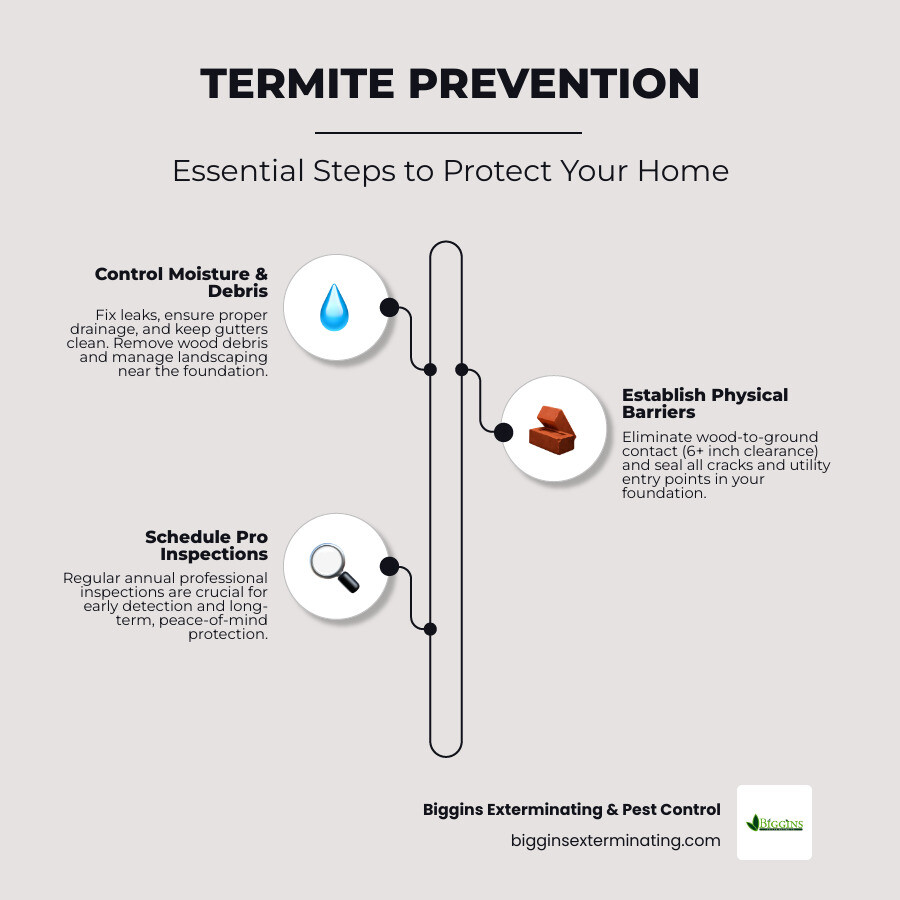
Quick Answer – How to Prevent Termites:
- Control moisture – Fix leaks, improve drainage, maintain gutters
- Eliminate wood-to-ground contact – Keep wood siding 6+ inches above soil
- Store firewood properly – At least 20 feet from home, 8+ inches off ground
- Manage landscaping – Keep mulch 4+ inches from foundation
- Seal entry points – Fill cracks around utilities and foundation
- Schedule annual inspections – Professional detection is key
- Remove food sources – Clear wood debris, dead trees, and stumps
The financial stakes are high. Termites can enter a structure through a space as small as 1/32nd of an inch, causing massive damage. They are particularly dangerous because they can feed on your home’s foundation for years without being noticed, often revealing themselves only after structural stability is compromised.
Prevention beats treatment every time. The most common species in the U.S. are native subterranean termites, which are attracted to moisture and the cellulose in wood, paper, and cardboard. Understanding what draws them to your property is the first step in keeping them away. Other types include drywood termites and invasive Formosan termites.
As Stephen Biggins, owner of Biggins Exterminating & Pest Control, I’ve spent over four decades helping Massachusetts families protect their homes. My expertise in how to prevent termites comes from years of hands-on experience with infestations and prevention strategies that work.
Find more about how to prevent termites:
Understanding the Threat: Why Termite Prevention is Crucial
Termites are called “silent destroyers” because they can feast on your home’s structure for years, completely out of sight, causing immense damage before you know they’re there. Working 24/7, they consume the cellulose in wood and other plant materials, putting your property’s structural integrity at risk and leading to expensive repairs.
The numbers are staggering: termites cause billions of dollars in damage across the U.S. each year, and homeowners spend over two billion dollars on treatments alone. A crucial point for homeowners is that standard insurance policies usually don’t cover termite damage, as it’s considered preventable. This means the repair costs fall directly on you, which is why learning how to prevent termites is a vital investment.
So, what makes your home so appealing? Termites love cellulose, found in wood, paper, and cardboard. They are drawn in by a combination of moisture, warmth, and easy access to food, especially through wood-to-ground contact. Leaky pipes, poor drainage, or firewood stacked against your foundation can create a welcoming environment for them. Learn more about local risks here: The Dangers Of Termites And How To Prevent Them In Massachusetts.
Early Warning Signs of Termite Activity
Because termites are so stealthy, spotting early warning signs is critical to preventing major damage and expense. Be observant and regularly check your property for these key clues:
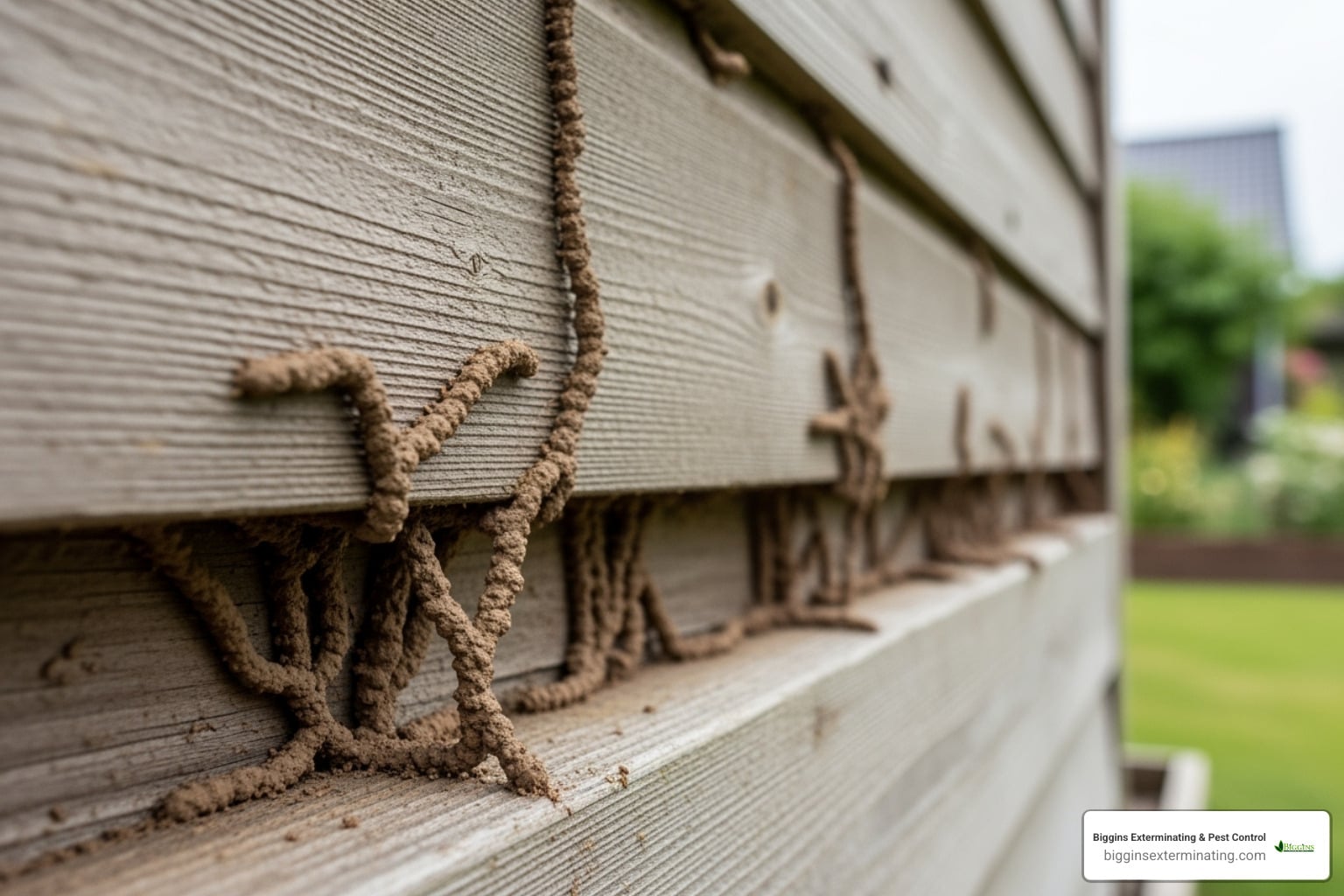
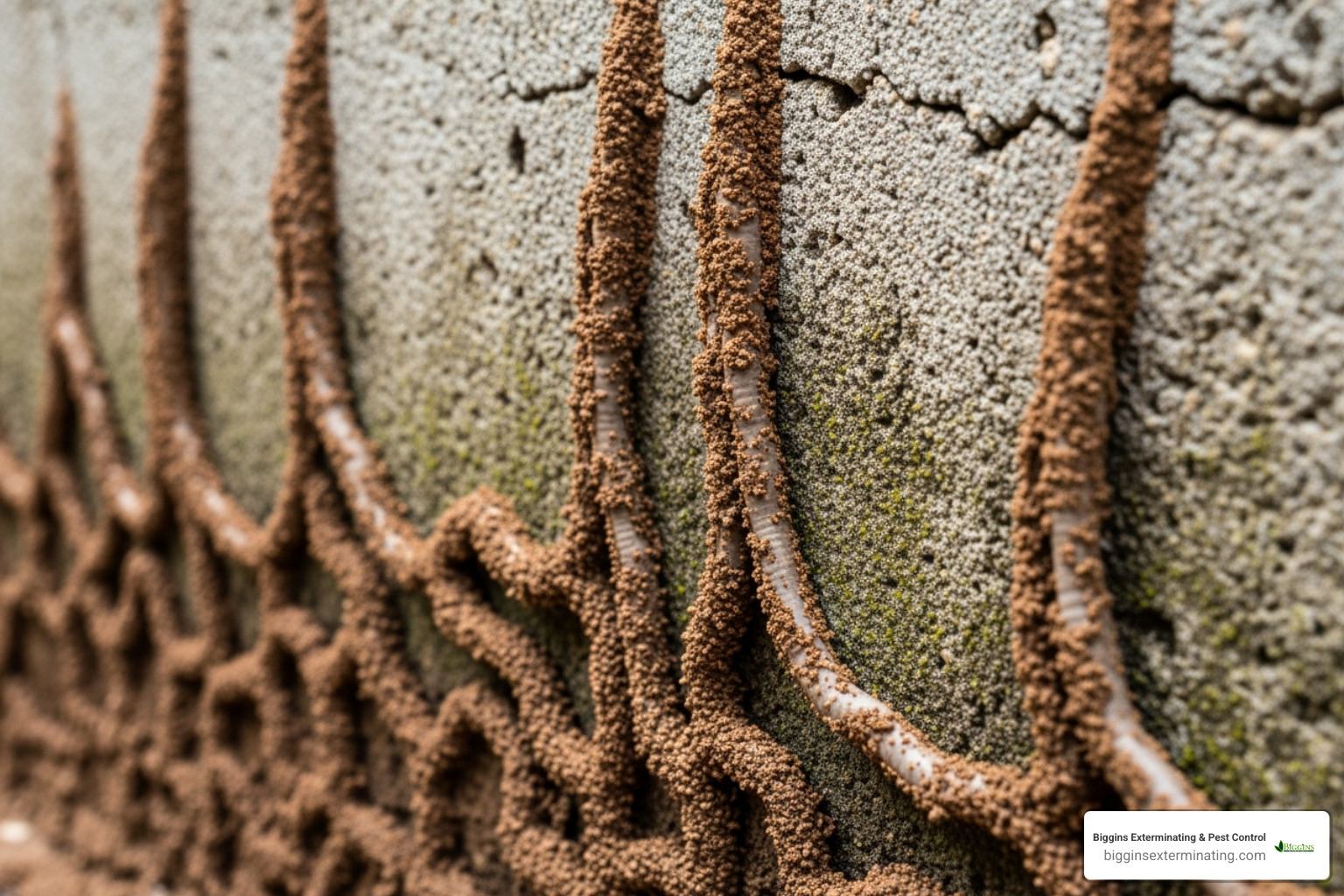
- Mud Tubes: Pencil-width tunnels on foundation walls, in crawl spaces, or along pipes that termites use to travel between their colony and your home’s wood.
- Discarded Swarmer Wings: Small, translucent wings resembling fish scales found on windowsills or in spiderwebs, left behind by reproductive termites starting new colonies.
- Hollow-Sounding Wood: If tapping on baseboards, door frames, or studs produces a dull, hollow sound, it could mean termites have eaten the wood from the inside.
- Bubbling or Peeling Paint: Termites can introduce moisture into walls, causing paint to bubble or peel, which can be mistaken for water damage.
- Sagging Floors or Ceilings: In advanced infestations, structural damage can cause floors or ceilings to sag and warp.
- Sticking Windows or Doors: As termites tunnel through and consume wooden frames, they can cause them to warp, making windows and doors difficult to open or close.
Being aware of these signs is your first line of defense. For more details, read our guides: How Do You Know If You Have Termites and Signs Of Termites.
Termites vs. Carpenter Ants
It’s easy to confuse termite swarmers with flying ants, but knowing the difference is key to identifying your pest problem. While both can damage wood, the threat from termites is typically more severe.
Here’s a quick comparison:
| Feature | Termite Swarmers | Flying Ants |
|---|---|---|
| Waist | Straight and broad (uniform body) | Pinched and narrow (like an hourglass) |
| Antennae | Straight and beaded (like a string of pearls) | Elbowed or bent (like a tiny elbow) |
| Wings | Two pairs of equal size, typically milky white | Two pairs of unequal size (front wings longer), often clear |
If you’re ever unsure, call a professional for a definitive identification. For a more in-depth look, check out our guide: How To Distinguish Carpenter Ants From Termites Identifying The Menace In Your Home.
Your First Line of Defense: Non-Chemical Termite Prevention
Your first line of defense against termites doesn’t always require chemicals. Proactive, non-chemical methods are about making your property as unappealing as possible to these pests. These practical tasks, woven into your regular home maintenance, are a huge part of learning how to prevent termites. For more helpful tips, you can check out resources like Prevention Tips.
Eliminate Moisture Magnets Around Your Foundation
Termites need moisture to survive, making moisture control one of the most effective prevention strategies.
- Fix Leaks: Regularly check for and repair leaky faucets, pipes, and AC units.
- Maintain Gutters: Keep gutters and downspouts clean and ensure they direct water several feet away from your foundation with extenders.
- Ensure Proper Drainage: The ground around your foundation should slope away from the house to prevent water from pooling.
- Adjust Sprinklers: Position lawn sprinklers so they don’t spray directly onto your foundation.
- Ventilate Crawl Spaces: Ensure your crawl space has adequate ventilation to prevent moisture buildup. A vapor barrier and a dehumidifier can also significantly reduce dampness. For more advice, see these Recommendations by the University of Minnesota.
Break the Bridge: Reducing Wood-to-Ground Contact
Subterranean termites live underground and enter homes through direct wood-to-soil contact. Breaking this connection is a key strategy in learning how to prevent termites.
- Maintain Clearance: Keep all wood portions of your home, like siding and door frames, at least six inches above the ground.
- Store Firewood Properly: Stack firewood at least 20 feet away from your house and at least 8 inches off the ground. Never store it in a crawl space.
- Clear Debris: Remove old lumber, dead trees, and tree stumps from your property, as they are prime food sources for termites.
- Build Smart: When building decks or porches, use metal stirrups for posts to prevent soil contact and ensure adequate ground clearance.
By eliminating these connections, you force termites to build visible mud tubes, making them easier to spot. For more on these invaders, see our page on Subterranean Termites.
Smart Landscaping to Deter Termites
Your landscaping can either invite termites or deter them. Smart choices are a critical part of learning how to prevent termites.
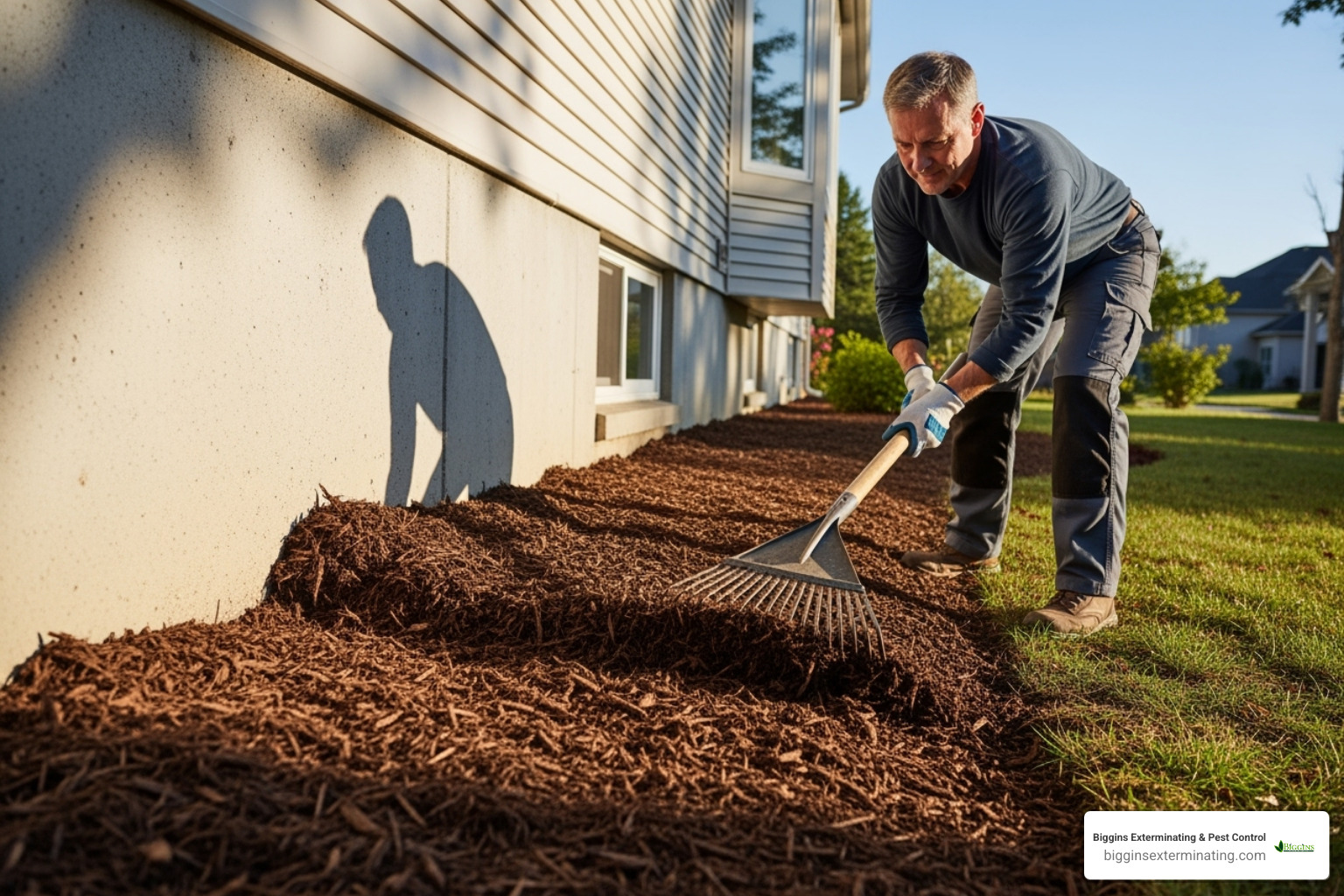
- Manage Mulch: Keep wood mulch at least 4 inches away from your foundation. Consider inorganic alternatives like pea gravel or shredded rubber, which don’t provide a food source.
- Trim Plants: Keep shrubs, bushes, and other dense plantings trimmed and at least 12 inches away from exterior walls to improve air circulation and reduce moisture.
- Keep a Clean Yard: Regularly rake leaves, cut grass short, and remove any dead trees, stumps, or wood debris from your yard.
A Homeowner’s Checklist: How to Prevent Termites with Simple Maintenance
Incorporate these tasks into your home routine to build a strong defense against termites.
- Monthly Tasks:
- Check for and fix any visible leaks from faucets or pipes.
- Quickly inspect your foundation and crawl space for moisture or mud tubes.
- Seasonal Tasks:
- Clean gutters and downspouts to ensure proper drainage.
- Trim back shrubs and plants to maintain a 12-inch clearance from your home.
- Confirm soil grading slopes away from the foundation.
- Annual Tasks:
- Inspect your foundation for cracks (as small as 1/32nd of an inch) and seal them.
- Remove any tree stumps or old wood debris from your property.
- Ensure mulch is at least 4 inches from the foundation and wood siding is 6 inches above the soil.
- Check wooden fences connected to your home for rot or termite signs.
- Ensure exterior vents are clear and unobstructed.
- Verify firewood is stored at least 20 feet from your home and 8 inches off the ground.
Advanced Strategies & Professional Help: How to Prevent Termites for Good
While home maintenance is crucial, comprehensive prevention often requires advanced strategies and professional expertise. These methods provide a robust, long-term shield for your home, making it nearly impossible for termites to invade.
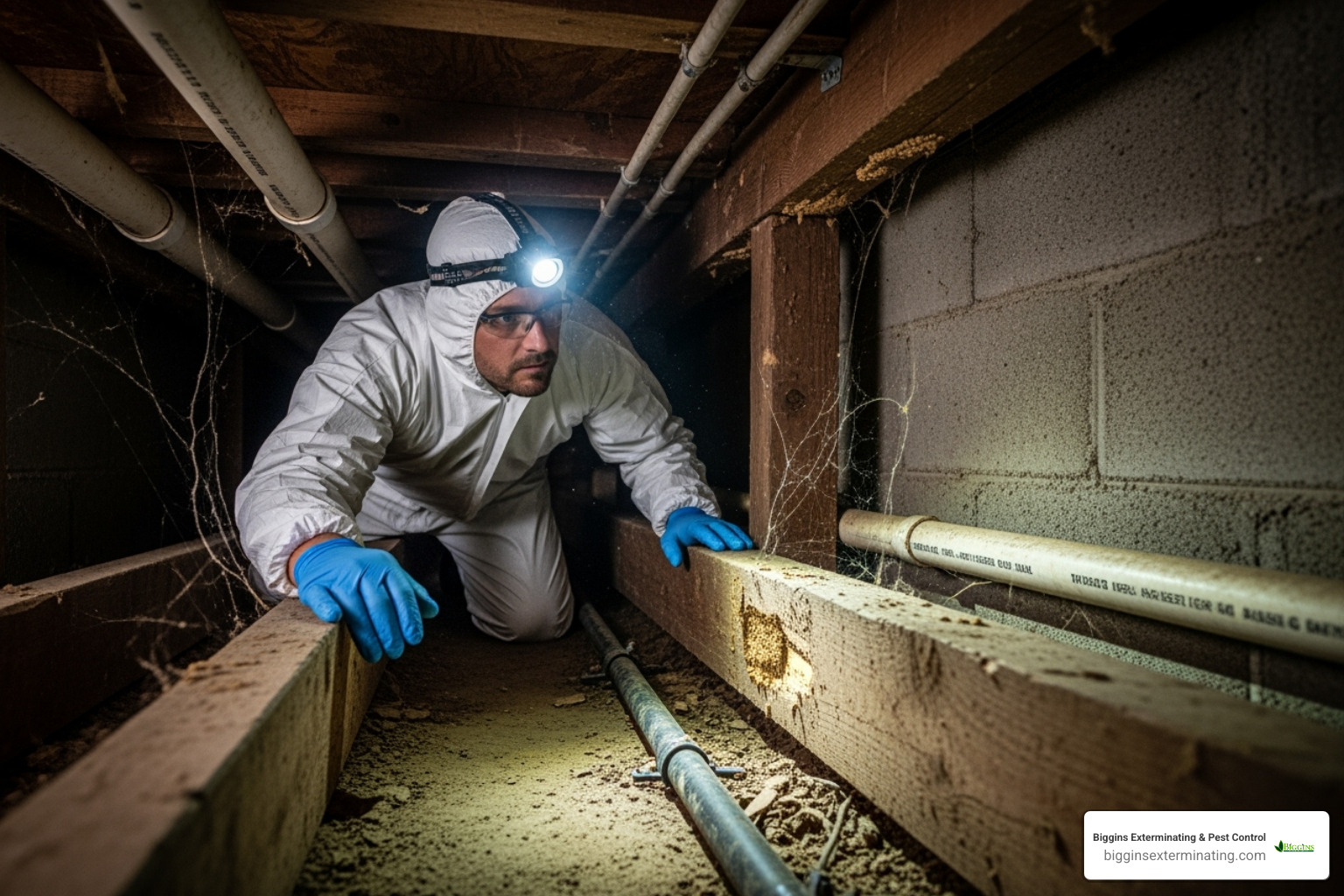
This section covers powerful tools like professional chemical treatments, smart construction methods, and why regular inspections are non-negotiable. At Biggins Exterminating & Pest Control, we’ve spent over 40 years mastering these techniques. For robust solutions, consider our Termite Barrier Treatment.
An Overview of Professional Chemical Treatments
Professionals use specialized products applied with precision to create a powerful defense against termites.
- Liquid Soil Termiticides: A continuous chemical barrier is created in the soil around your foundation. Termites that cross it carry the termiticide back to the colony, spreading it through grooming and eventually eliminating the entire population. Common active ingredients like Fipronil and Imidacloprid offer long-lasting protection.
- Termite Bait Stations: Discreet stations containing a slow-acting insect growth regulator are placed around your property. Foraging termites find the bait, carry it back to the colony, and share it, leading to the colony’s gradual elimination.
- Direct Wood Treatments: Borates can be sprayed directly onto wood during construction or renovations, making the wood toxic and unappealing to termites. Some building materials are even pre-impregnated with termiticides.
These treatments, applied by a licensed professional, are incredibly effective. For more on active ingredients, refer to EPA fact sheets on Fipronil and Imidacloprid.
How to Prevent Termites During New Construction
The best time to learn how to prevent termites is before your home is built. Incorporating termite-resistant practices from the start provides lasting protection.
- Foundations: A solid, properly sealed concrete foundation significantly reduces entry points.
- Physical Barriers: Metal termite shields installed on top of the foundation wall or fine stainless steel mesh woven into the foundation can physically block termites.
- Pre-Treatment: The soil can be treated with a liquid termiticide before the slab is poured, and wooden components can be treated with borates.
- Seal Entry Points: Carefully fill any cracks and gaps around utility lines where they penetrate the foundation, as termites can enter through a space as small as 1/32nd of an inch.
While pressure-treated wood is resistant to decay, it is not foolproof against termites and should not be your only line of defense.
Why Regular Professional Inspections are Non-Negotiable
Even with the best prevention methods, regular professional inspections are your home’s annual health check-up, catching issues before they become major problems.
- Early Detection: A trained professional can spot subtle signs of termite activity that an untrained eye would miss, saving you thousands in potential repairs.
- Identify Conducive Conditions: Professionals can identify and provide recommendations for fixing conditions that attract termites, like excess moisture or wood-to-ground contact.
- Assess Risk: An expert can assess your home’s specific risk based on its construction and location, recommending a custom prevention strategy.
- Peace of Mind & Warranties: Regular inspections provide peace of mind. Many professional treatments also come with a termite warranty or “termite bond,” which often requires an annual inspection to remain active. This ensures that if termites return, the company will re-treat at no additional cost.
Regular inspections are a proactive measure that complements all your other efforts. Learn more about The Importance Of Regular Pest Inspections Safeguarding Your Home And Health and our Termite Inspection Services.
Frequently Asked Questions about Termite Prevention
When it comes to protecting your home, it’s natural to have questions. Here are clear answers to common inquiries we receive about how to prevent termites.
How often should I have my home inspected for termites?
Think of a termite inspection as an annual health check-up for your home. We strongly recommend a professional inspection at least once a year. In high-risk areas or if you’ve had a past infestation, bi-annual inspections may be advisable.
Regular inspections are crucial because termites are stealthy. A trained professional can spot subtle signs of activity or conducive conditions long before significant damage occurs. This proactive step is a cornerstone of effective termite prevention and provides immense peace of mind.
Are termite treatments safe for my family and pets?
Yes. Your family’s and pets’ safety is our top priority. All pesticides, including termiticides, are strictly regulated by the Environmental Protection Agency (EPA) and undergo rigorous testing to meet strict safety standards when applied correctly according to label directions.
Licensed pest management professionals are trained in the safe and effective application of these products. We use proper dosages and techniques to minimize exposure risks. We always encourage homeowners to review the product label and discuss any concerns with us before treatment.
Does homeowner’s insurance cover termite damage?
Unfortunately, standard homeowner’s insurance policies typically do not cover termite damage. Most insurance companies consider termite infestations a preventable issue that falls under the homeowner’s responsibility for property maintenance.
This means the financial burden for repairs, which can be substantial, usually falls on you. This common exclusion highlights how critical it is to invest in robust prevention strategies and regular professional inspections. Many homeowners opt for a separate “termite bond” or warranty from their pest control company, which can cover re-treatment and sometimes even damage repair if termites return.
Conclusion

Protecting your home from termites is an absolute necessity. These silent invaders can cause devastating and costly structural damage, often before they are even detected.
The good news is that by understanding what attracts termites and implementing a multi-faceted approach, you can significantly reduce your risk. Diligent home maintenance, like controlling moisture and eliminating wood-to-ground contact, combined with smart landscaping, creates a strong defense.
However, for comprehensive and long-lasting protection, professional oversight is key. Chemical treatments, proper construction practices, and regular professional inspections are the pillars of a robust termite prevention plan that safeguards your investment.
At Biggins Exterminating & Pest Control, we understand the stakes. As a family-owned business with over 40 years of experience serving Wilmington, Andover, Bedford, Billerica, Burlington, Lexington, North Reading, Tewksbury, and Woburn, MA, we’re committed to providing reliable pest control services without requiring contracts. We stand by our work with warranties and a commitment to customer satisfaction. For comprehensive protection and peace of mind, explore our Termite Pest Control services.