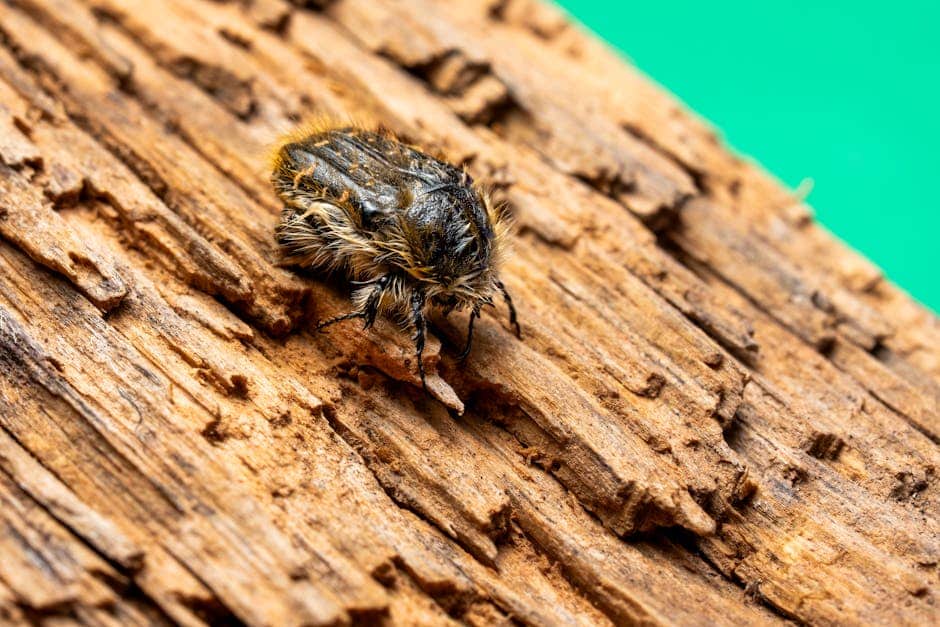
Why the Right Powderpost Beetle Spray Can Save Your Home’s Structure
Powderpost beetle spray is one of the most effective tools for stopping wood-destroying beetles before they hollow out the structure of your home. Here are the top options at a glance:
| Spray Type | Best For | Active Ingredient | Residual Protection |
|---|---|---|---|
| Borate spray (e.g., Tim-Bor, Bora-Care) | Unfinished/bare wood | Disodium Octaborate Tetrahydrate | Long-term (years, if not exposed to rain) |
| Cyfluthrin spray (e.g., Tempo) | Contact kill, adult beetles | Cyfluthrin | 2-3 months |
| Ready-to-use spray (e.g., Spectracide Terminate) | Quick DIY spot treatment | Varies | 2-3 months |
| Foaming aerosol (e.g., FiPro) | Gallery/exit hole injection | Fipronil | Up to 30 days per application |
Powderpost beetles are second only to termites in their ability to destroy wood in homes and furniture. Yet most homeowners don’t notice them until the damage is already done.
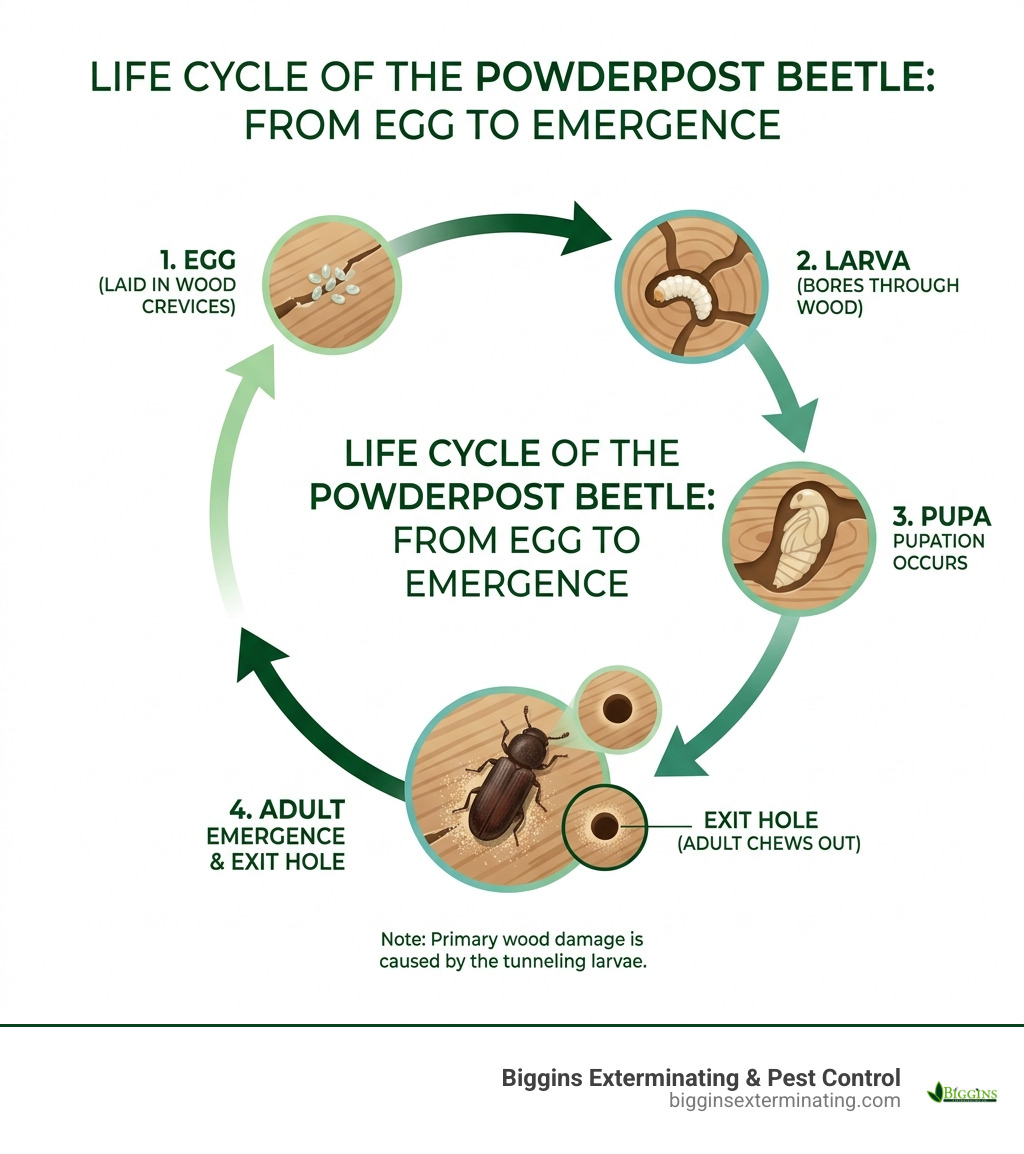
The trouble is that the larvae — not the adults — do the real destruction. They tunnel silently through wood for months, sometimes years, before an adult ever chews its way out. By the time you spot the telltale pinhole exits and fine powdery dust, the damage is already underway.
The good news? With the right spray treatment and a clear plan, you can stop an active infestation and protect your home’s wood long-term.
I’m Stephen Biggins, owner of Biggins Exterminating Co., a family-owned pest control company serving Wilmington, MA and surrounding communities since 1982 — and in that time, I’ve treated countless homes affected by powderpost beetles using both borate-based and contact powderpost beetle spray solutions. Let me walk you through exactly what works, what doesn’t, and when it’s time to call in a pro.
Identifying the Signs of an Active Infestation
Before we start grabbing the powderpost beetle spray, we need to make sure we are actually dealing with an active problem. In our 40 years of service across Wilmington, Woburn, and Burlington, we’ve seen many homeowners get spooked by old damage that hasn’t been “live” for decades.
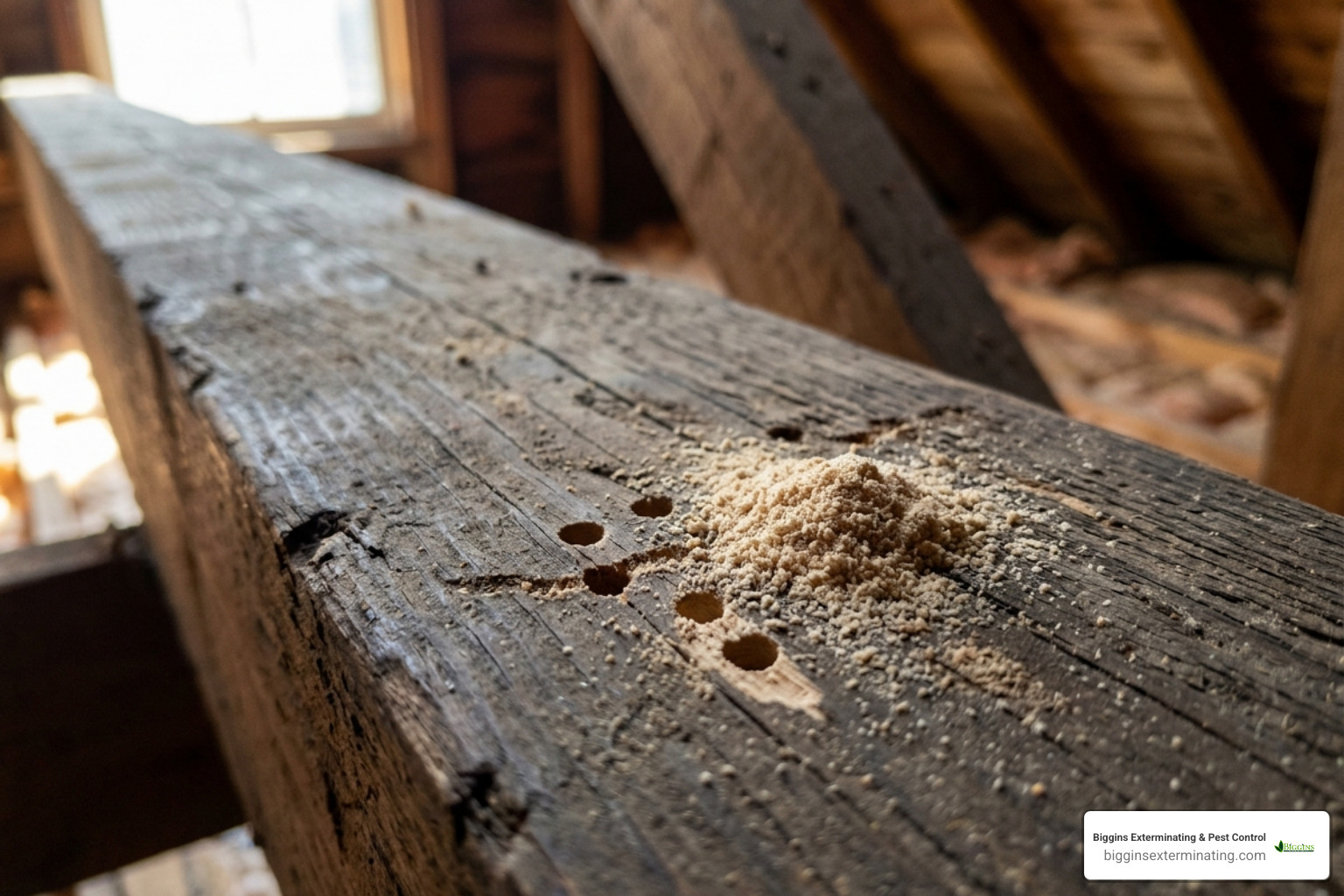
The primary sign of these beetles is the appearance of small, round emergence holes. These are created by the adult beetles chewing their way out of the wood after completing their larval stage. Depending on the species, these holes range from 1/32 to 1/8 inch in diameter—roughly the size of a pinhead to the lead of a pencil.
The most definitive sign of activity is “frass.” Frass is the powdery wood dust left behind by the beetles. If you see piles of dust that look like fine flour or cornmeal beneath the holes, you likely have an active infestation. In some cases, the frass may be more granular or contain tiny pellets, which helps us identify which specific family of beetle has moved into your joists or furniture.
Distinguishing Between Beetle Species
Not all wood-boring beetles are the same. Knowing which one you have dictates which powderpost beetle spray we use and where we look for damage.
- Lyctidae (True Powderpost Beetles): These are the most common in the United States. They love seasoned hardwoods like oak, ash, and hickory. If you have hardwood floors or antique cherry cabinets, these are the likely culprits. Their frass is extremely fine, like talcum powder.
- Anobiidae (Furniture and Deathwatch Beetles): These guys are less picky and will attack both hardwoods and softwoods. They are often found in damp crawl spaces or basements in towns like North Reading and Billerica. Their frass is more “gritty” than the Lyctid variety.
- Bostrichidae (False Powderpost Beetles): These usually prefer “green” wood (wood that hasn’t been dried yet) and are less likely to re-infest seasoned wood inside a home, though they can still cause significant initial damage.
- Old House Borer: Despite the name, these are often found in newer homes (less than 10 years old). They create larger, oval holes and can have a life cycle lasting up to 12 years!
For more detailed identification help, you can check out this guide on Wood-Boring Beetle Treatment & Control.
Active vs. Inactive Damage
It is vital to determine if the beetles are still there. If you find holes but the wood is dark inside the hole and there is no dust, the infestation might be old.
To test for activity, we often recommend cleaning the area thoroughly and then checking back in a few weeks. If new holes appear or new dust piles form, it’s time to act. Another trick is to listen; the Deathwatch beetle is famous for a rhythmic “ticking” sound it makes at night as it bangs its head against the tunnel walls to attract mates. If your crawl space is “ticking,” you definitely have an active issue.
Choosing the Right Powderpost Beetle Spray for Your Home
When it comes to Powderposts Beetles Pest Control, your choice of spray depends on the type of wood and the severity of the infestation. Broadly speaking, we categorize these into borate-based treatments and contact insecticides.
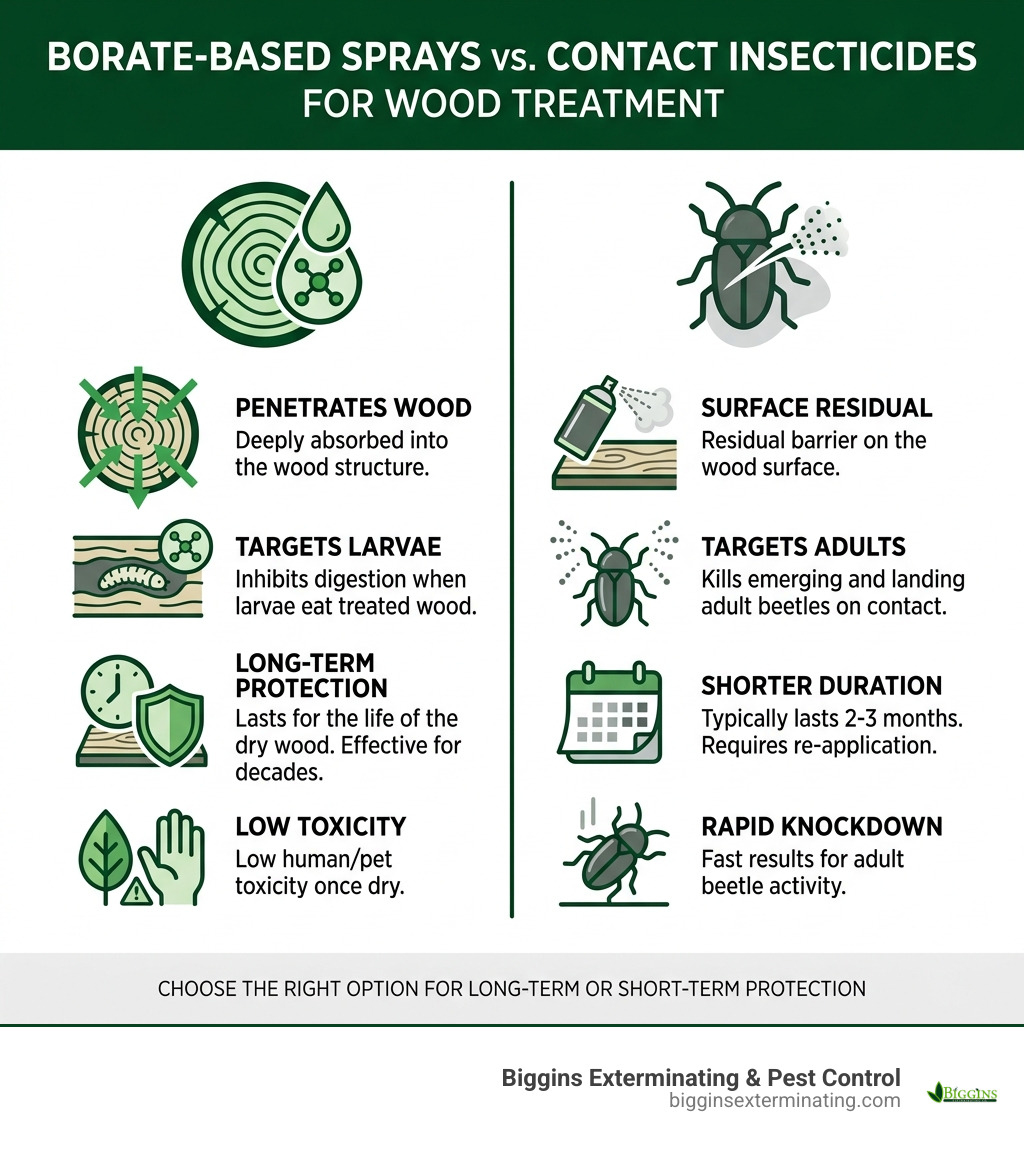
Borates are the gold standard for long-term protection. Products like Bora-Care and Tim-Bor use disodium octaborate tetrahydrate. These aren’t just surface sprays; they actually penetrate the wood fibers. When the larvae eat the treated wood, the borate inhibits their enzymes, making it impossible for them to digest the wood fibers, eventually killing them.
Contact insecticides, such as those containing Cyfluthrin (like Tempo), are better for killing adult beetles as they emerge or land on the wood to lay eggs. These have a shorter residual life—usually 2 to 3 months—whereas borate treatments can last for the life of the wood as long as it stays dry.
Effective Ingredients in Powderpost Beetle Spray
If you are browsing for a powderpost beetle spray at a local store in Bedford or Lexington, look for these key ingredients:
- Disodium Octaborate Tetrahydrate: Found in professional-grade borates. It’s highly effective and has low toxicity to humans and pets once dry.
- Cyfluthrin: A pyrethroid that provides a quick “knockdown” of adult beetles.
- Fipronil: Often found in foaming aerosols, this is great for injecting directly into visible exit holes to reach the galleries inside.
You can find several of these at retail outlets; for instance, check the Bug Killer Spray section for ready-to-use options like Spectracide Terminate.
Applying Powderpost Beetle Spray to Unfinished Wood
Applying the spray correctly is just as important as the chemical itself. Borates work best on unfinished wood because they need to soak in.
Before spraying, we check the wood’s moisture content. Ideally, the wood should be below 20% moisture to reduce the beetle’s ability to thrive, but for the borate spray to penetrate deeply, the wood shouldn’t be too bone-dry. If the moisture is below 15%, we sometimes lightly mist the wood with water first to help the borate “wick” deeper into the grain.
Most borate treatments require two applications. We spray the first coat, let it soak in for a few hours, and then apply the second. This ensures the chemical reaches the larvae hidden deep inside the timber.
How Borate-Based Treatments Protect Your Structure
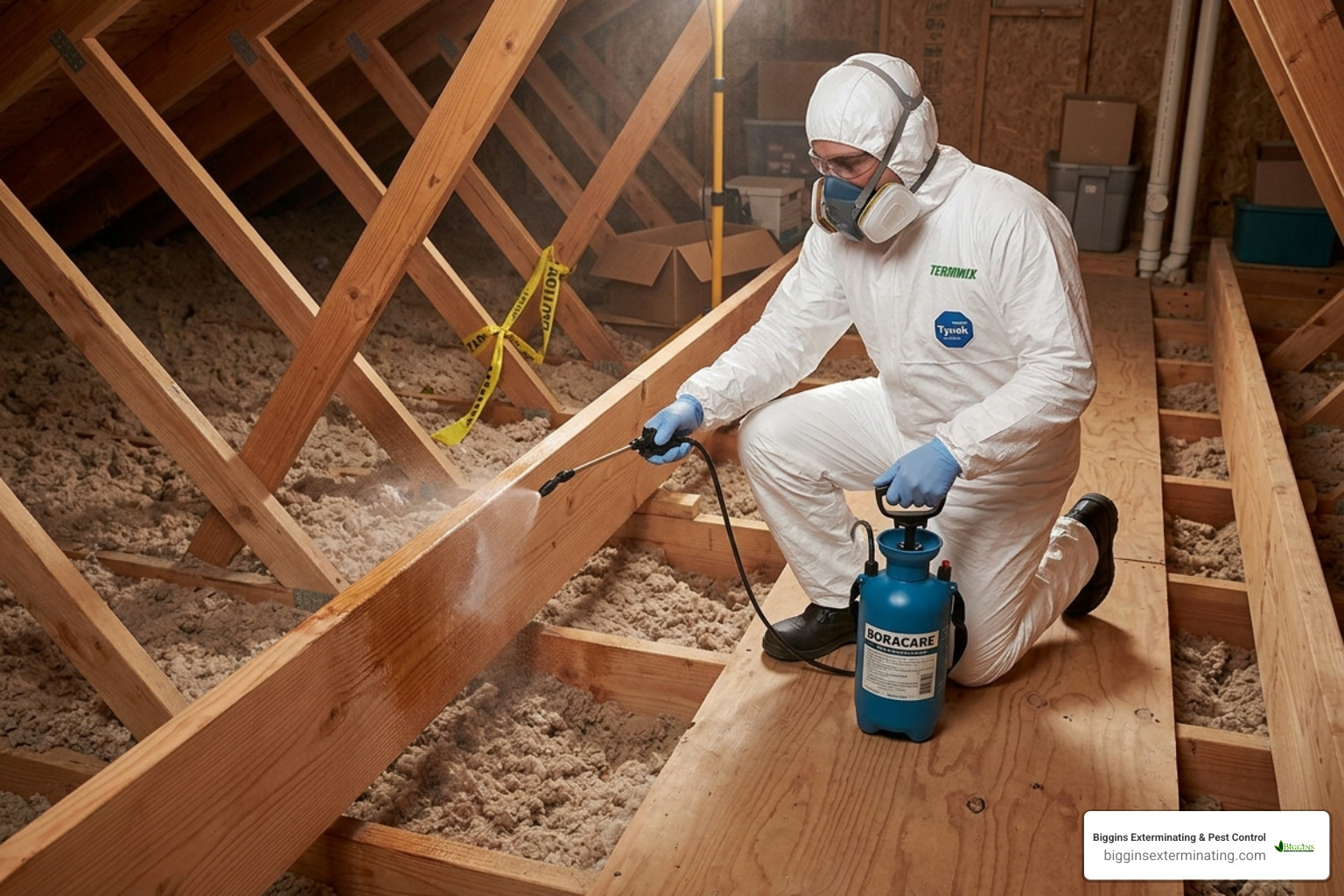
Borate-based powderpost beetle spray acts as a long-term insurance policy for your home. Unlike fumigation, which kills everything currently alive but leaves no protection for the future, borates stay in the wood. If an adult beetle flies in from your neighbor’s firewood and tries to lay eggs on your treated joists, the larvae won’t survive their first meal.
Furthermore, borates provide the added benefit of preventing wood-decay fungi and mold. In the humid summers we experience in Massachusetts towns like Tewksbury and Andover, this dual protection is invaluable for maintaining the structural integrity of your home.
Treating Finished or Painted Surfaces
Here is the catch: powderpost beetle spray cannot penetrate paint, varnish, or wax. If you have an infested antique table that is heavily varnished, simply spraying the surface won’t do a thing.
To treat finished wood, you have three options:
- Strip the finish: Sand the wood down to the bare grain, apply the borate spray, let it dry completely (usually 48-72 hours), and then refinish it.
- Inject the galleries: Use a foaming aerosol with a needle-thin tip to inject pesticide directly into the exit holes.
- Treat the back/underside: Often, the back of a cabinet or the underside of a table is unfinished. Treating these areas can sometimes allow the chemical to soak through to the infested sections.
Safety and Ventilation Requirements
While modern powderpost beetle spray is much safer than the chemicals used decades ago, safety is still our top priority.
- PPE: Always wear eye goggles, a mask, and chemical-resistant gloves when applying sprays.
- Ventilation: Ensure the area has plenty of airflow. If you are treating a crawl space in Woburn, use fans to move the air.
- Stay Out: We recommend keeping children and pets out of the treated area until the spray is completely dry.
- Label Compliance: The label is the law. Never mix concentrations stronger than what the manufacturer recommends.
Professional Treatment vs. DIY Methods in Massachusetts
We often get calls from homeowners in Wilmington or North Reading who tried the DIY route first. Small, localized issues—like a single piece of furniture or one infested board in a shed—are often manageable for a handy homeowner. However, structural infestations are a different story.
Professional equipment allows us to reach deep into crawl spaces and attics where a hand-pump sprayer simply can’t provide even coverage. We also have access to higher-concentration borates and specialized foaming tools that aren’t always available at the local hardware store.
When to Call an Expert for Severe Infestations
You should put down the DIY powderpost beetle spray and call us if:
- The infestation covers a large area of your home’s framing.
- You see signs of the Old House Borer (large oval holes), as these can cause structural failure much faster.
- The wood is in a hard-to-reach area where you cannot guarantee 100% coverage.
- You want a warranty. At Biggins Exterminating, we stand by our work and provide the peace of mind that a DIY job lacks.
Average Costs for Professional Wood Treatment
Based on publicly available internet data, professional wood-boring beetle treatments in 2026 typically range from $500 to $2,500+, depending on the size of the structure and the severity of the infestation. These figures are average market costs and do not reflect the actual pricing of any specific local provider. Factors like the accessibility of the crawl space and whether the wood needs to be cleaned or sanded first will influence the final cost.
Long-Term Prevention and Moisture Control
The secret to never needing powderpost beetle spray again is moisture control. These beetles thrive in damp wood. Lyctid beetles need moisture content above 6%, while Anobiids usually need it above 13%. If you keep your wood dry, you make your home a desert for these pests.
We recommend several steps for long-term prevention:
- Vapor Barriers: Install a heavy-duty plastic vapor barrier in your crawl space to stop moisture from rising out of the soil and into your floor joists.
- Dehumidification: Use a high-capacity dehumidifier in basements to keep the relative humidity below 50%.
- Ventilation: Ensure your attic and crawl space have proper venting to allow moist air to escape.
- Kiln-Dried Wood: When doing renovations or building additions in Lexington or Billerica, only use kiln-dried lumber. The heat of the kiln kills all life stages of the beetle.
Maintaining Low Wood Moisture
Maintaining wood moisture below the 20% threshold is the single most important thing you can do. We often suggest that homeowners invest in a simple moisture meter. If you notice your basement timbers are creeping up toward 25% during a rainy Massachusetts spring, it’s a red flag that you’re inviting wood-boring insects to dinner.
Frequently Asked Questions about Powderpost Beetles
How long does the protection from a borate spray last?
If applied to interior wood that is not exposed to rain or flooding, a borate-based powderpost beetle spray can protect the wood for decades. It does not break down like traditional organic pesticides.
Can powderpost beetles destroy a house as fast as termites?
Generally, no. Termites work much faster because they live in massive colonies. However, because powderpost beetle larvae can stay hidden for years, the damage is often quite advanced by the time you see the first hole. Over a decade, they can absolutely compromise the structural integrity of a home.
Is it safe to stay in the home during a spray treatment?
For topical spray treatments, you usually only need to vacate the specific room being treated until the product is dry. However, if a professional is performing a large-scale structural treatment, we may ask you to leave for a few hours to ensure proper drying and ventilation.
Conclusion
Finding “sawdust” in your basement can be alarming, but as we’ve seen, it’s a problem with a clear solution. Whether you choose to tackle a small spot with a DIY powderpost beetle spray or require a full-scale structural treatment, the key is to act quickly and focus on long-term prevention through moisture control.
Biggins Exterminating & Pest Control is a local, family-owned and operated Massachusetts pest control company with over 40 years of trusted, high-quality service. We serve communities from Woburn to Andover with expert wood-destroying insect solutions. We don’t believe in high-pressure contracts—just honest work and a commitment to keeping your home safe.
If you’re worried about the wood in your home, don’t wait for the “ticking” to get louder. Contact us today for a thorough inspection and a plan tailored to your home.