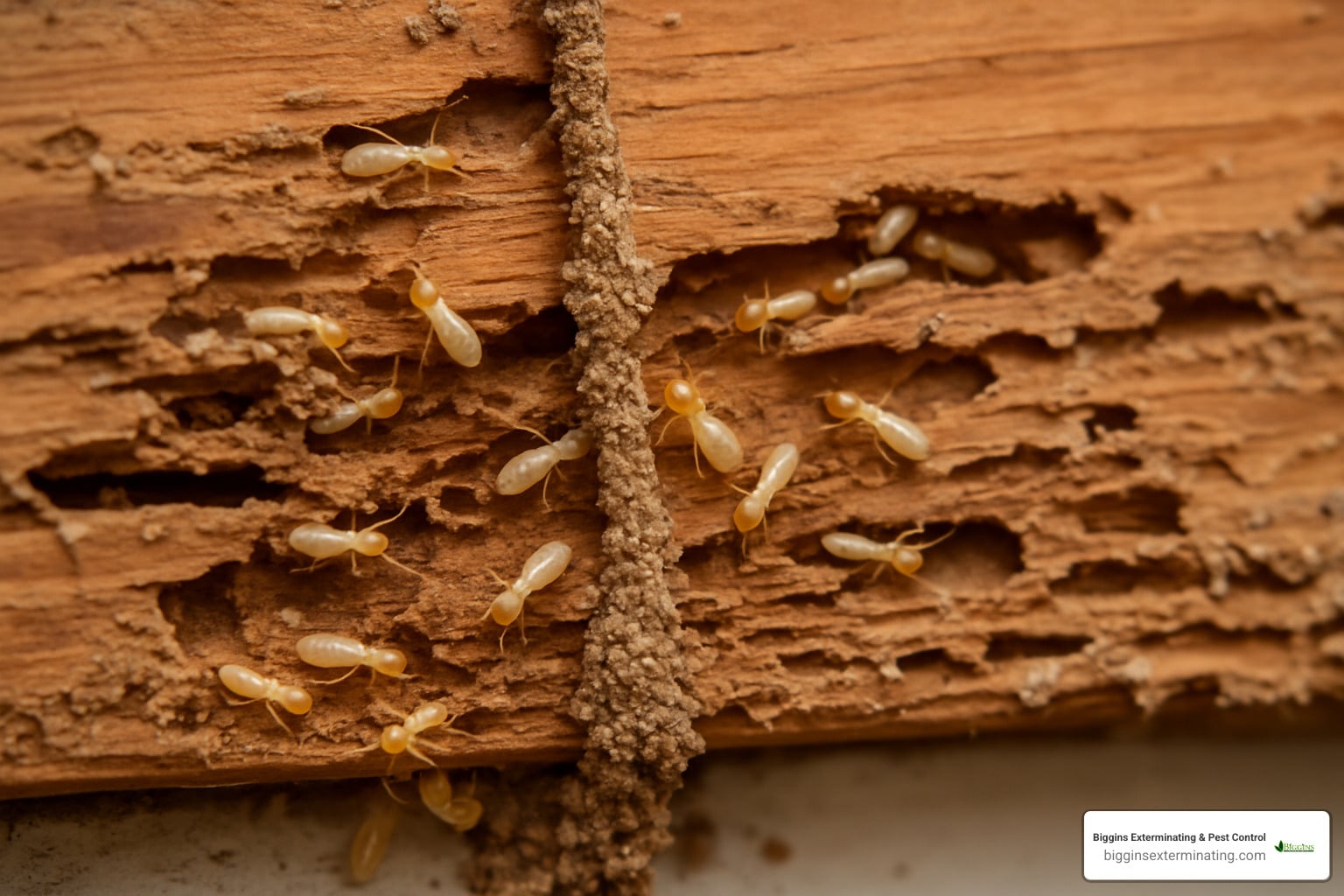
Why Termites Are America’s Most Costly Home Invaders
How to get rid of termites permanently starts with understanding these silent destroyers that cause over $1 billion in damage each year in the United States alone. These tiny wood-eating insects can turn your home’s structural foundation into their personal buffet, often without you noticing until serious damage is done.
Quick Answer: How to Get Rid of Termites Permanently
- Professional liquid barriers – Non-repellent chemicals like fipronil create soil barriers lasting up to 10 years
- Bait station systems – Poison bait eliminates entire colonies including the queen
- Fumigation or heat treatment – Whole-structure methods for severe infestations
- Prevention maintenance – Annual inspections, moisture control, and wood-to-soil gap maintenance
- Natural methods – Nematodes, orange oil, and diatomaceous earth for smaller infestations
Unlike ants or other pests, termites live in colonies that can house 60,000 to over 1 million individuals. They feed on cellulose found in wood, paper, and other plant materials – making your home’s wooden structures their ideal food source.
Subterranean termites cause the most damage by building mud tubes from soil to wood. Drywood termites infest wood directly without soil contact. Both types require different treatment approaches for permanent control.
I’m Stephen Biggins, and over four decades at Biggins Exterminating Co., I’ve helped thousands of Massachusetts families learn how to get rid of termites permanently through both professional treatments and prevention strategies.
Glossary for how to get rid of termites permanently:
– subterranean termites
– termite barrier treatment
– Termite Pest Control
Understanding Termites: Biology, Species & Why They Wreck Homes
Termites are nature’s recycling crew gone rogue. These insects have been around for 250 million years, breaking down dead wood and returning nutrients to soil. But when they target your home, that’s when problems begin.
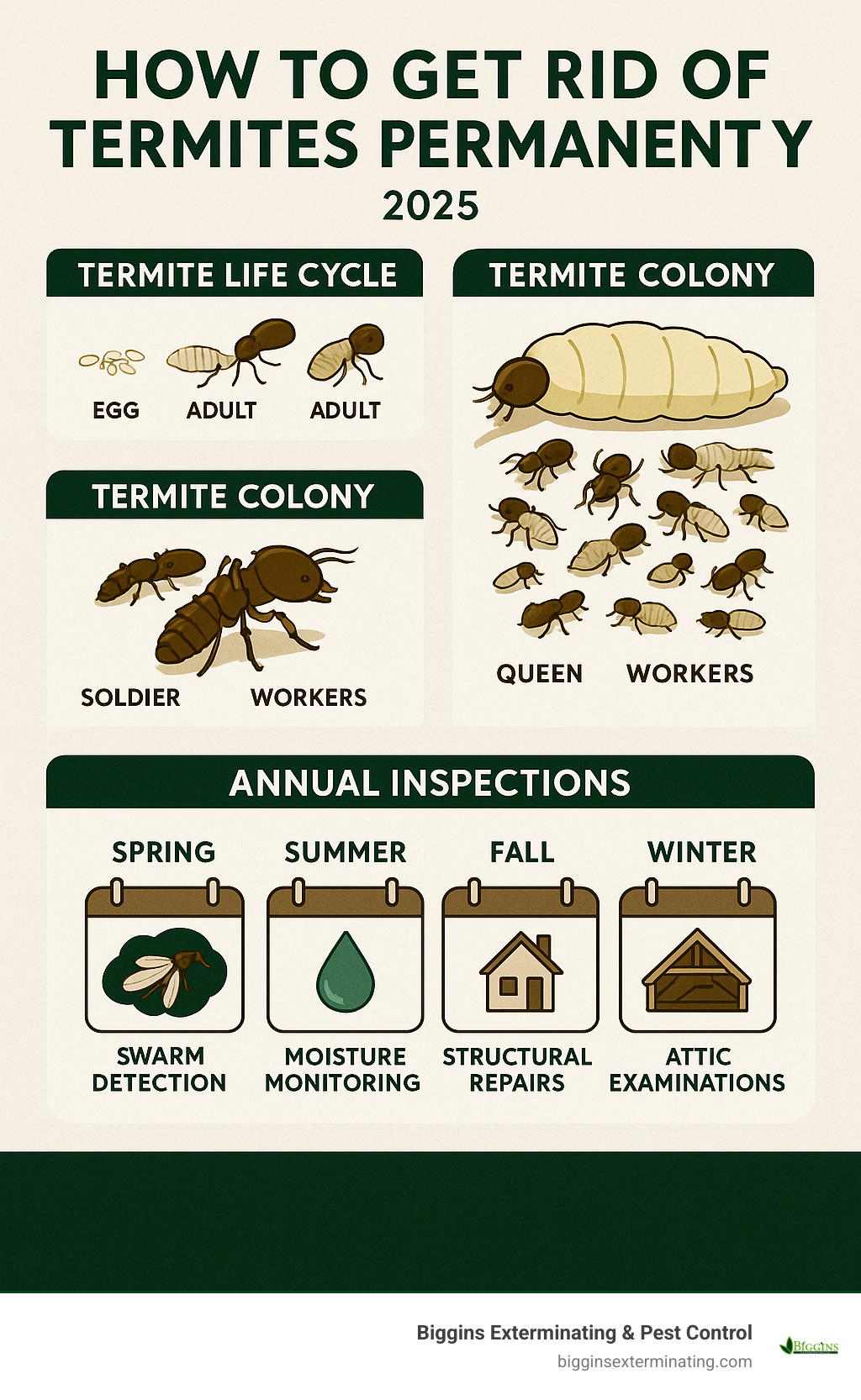
How to get rid of termites permanently starts with understanding these organized social insects living in colonies with workers, soldiers, reproductive swarmers, and a queen who can live for decades. They have special bacteria in their stomachs that digest cellulose – the material that makes up wood fibers. A modest colony of 60,000 termites can devour an entire foot of 2×4 lumber in just six months.
Research shows termites cause approximately $40 billion in damage globally each year, with over $1 billion happening in the United States.
Common U.S. Species & Regional Risks
Subterranean termites are the main troublemakers in Massachusetts and the eastern United States. These insects live underground and build mud tubes up foundation walls – life support systems that keep termites moist while they commute to wooden structures.
Formosan subterranean termites are aggressive “super termites” with colonies housing over one million individuals. They mostly stick to southern states but may expand northward with warming temperatures.
Drywood termites don’t need soil contact and move directly into dry wood. You’ll often find small piles of their droppings that look like sawdust or coffee grounds.
Dampwood termites prefer moisture-damaged wood and are mostly a Pacific coast problem, rare in New England except where wood stays consistently wet.
Massachusetts winters don’t kill termites – they just push them deeper underground or into heated areas of your home.
Why Moisture & Wood Contact Invite Disasters
Moisture is what turns your property from termite-resistant to termite-irresistible. Subterranean termites need consistent moisture to survive, which is why they’re drawn to homes with leaking pipes, poor foundation drainage, clogged gutters, or poorly ventilated crawl spaces.
Wood-to-soil contact eliminates the natural barrier that protects your home. When deck posts, porch steps, or siding touch the ground, you’ve rolled out the red carpet for termites. Building codes now require at least 6 inches between wood and soil for good reason.
Learn more about termite basics and identification to better protect your home from these persistent invaders.
Early Detection: Signs, Inspections & Confirmation
The secret to learning how to get rid of termites permanently lies in catching these sneaky invaders before they turn your home into their personal dining room. Early detection is your home’s smoke alarm for termite trouble.
Discarded wings scattered near windows or doors are often the first sign homeowners notice. When termite swarmers finish their mating flight, they shed their wings. Finding these translucent wings means reproductive termites were recently active in your area.
Hollow-sounding wood tells a story of destruction happening behind the scenes. Tap your wooden beams, baseboards, and door frames with a screwdriver handle. Healthy wood sounds solid, while termite-damaged wood sounds papery or hollow.
Mud tubes are subterranean termites’ highways – pencil-thick tunnels they build from soil to reach wooden structures. These protective tunnels snake up foundation walls, along plumbing pipes, and even stretch across concrete.
Frass are termite droppings that look like tiny coffee grounds or sawdust. Drywood termites push these pellets out of their galleries, creating small piles that many homeowners mistake for regular sawdust.
Blistered paint can signal termites munching away behind your walls, and squeaky floorboards or doors and windows that suddenly stick often mean termites have compromised wooden framework.
DIY vs Professional Termite Inspections
Armed with a flashlight and screwdriver, you can check for obvious signs around areas where wood meets soil, plumbing fixtures, basements, and anywhere moisture collects. The acoustic test – tapping wood and listening for hollow sounds – can reveal damage in accessible areas.
But termites are masters at staying hidden. Professional inspectors bring moisture meters to identify damp conditions termites love, and some work with detection dogs trained to sniff out live termite activity. We know the subtle signs that distinguish old damage from active infestations and provide warranty reports needed for insurance claims and real estate transactions.
Get detailed information about professional termite inspections to understand what’s involved in a thorough assessment.
Preparing for Any Treatment Plan
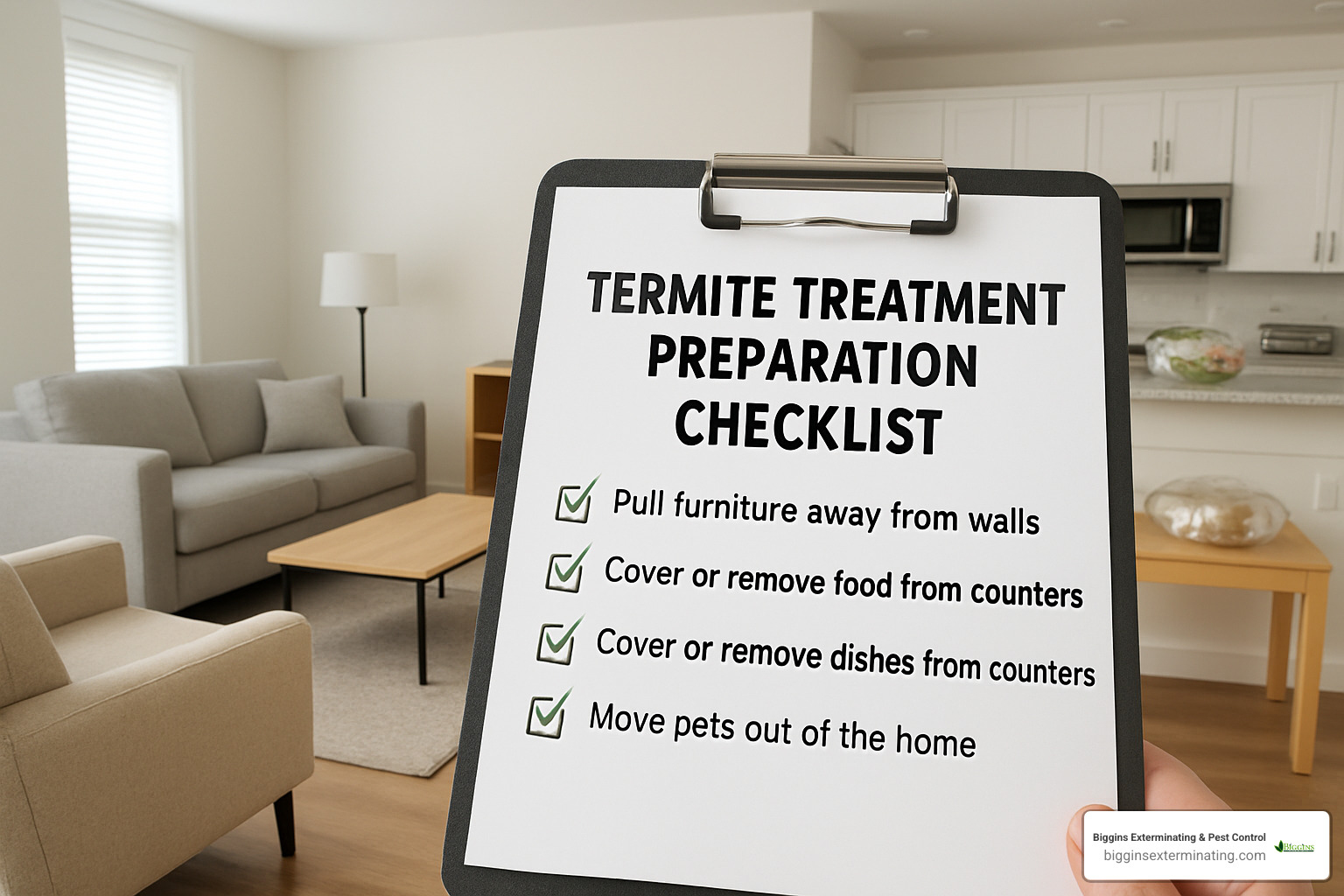
Proper preparation makes the difference between success and frustration. Inside your home, move furniture and stored items away from walls where treatments will be applied. Clear soil trenches in basements and crawl spaces. Seal food items and remove dishes from treatment areas.
Pet safety requires arranging temporary housing for animals during chemical applications. Outside, clear vegetation and debris from around your foundation. Remove firewood, lumber piles, and other materials that might interfere with treatment.
Photo documentation of existing damage helps with insurance claims and provides a baseline for measuring treatment success.
How to Get Rid of Termites Permanently: Streamlined Action Plan
Permanent termite control always combines three steps: 1) wipe out the colony that is present, 2) install a barrier that keeps new colonies out, and 3) stay on top of simple prevention chores. The mix of tools you choose depends on termite species, the size of the problem, and your home’s construction, but the overall game plan stays the same.
1. Professional Treatments – Fastest & Most Reliable
- Liquid soil barriers – Non-repellent termiticides such as fipronil or imidacloprid are injected into a trench around the foundation (and through any concrete when needed). Termites walk through the treated soil, share the chemical by grooming, and the whole colony—including the queen—dies off. A correctly applied barrier protects 8–10 years.
- Bait station systems – Monitoring/bait devices (for example Sentricon) are installed every 10–20 ft around the structure. Once termites find the cellulose inside, the insert is swapped for slow-acting bait that stops molting. Colony elimination usually takes 3–6 months and the stations continue to serve as an early-warning system.
- Whole-structure solutions – For large drywood infestations or when termites are spread through multiple levels, tent fumigation or heat treatment (120–140 °F for several hours) reaches every hidden gallery in a single visit.
2. Natural & DIY Options – Support, Not Substitute
These approaches can help with very small or early infestations, or add an extra layer between pro visits:
- Beneficial nematodes – Mix with water and soak soil; microscopic worms hunt termites within 48 h.
- Orange oil (d-limonene) – Inject directly into visible drywood galleries.
- Diatomaceous earth & boric acid – Dust or spray in wall voids and along foundation cracks.
- Cardboard traps – Collect foragers, then dispose of the entire trap.
DIY methods rarely reach the queen or create long-lasting protection, so use them only when the infestation is clearly localized or while you wait for a professional appointment.
3. Preparation Tips (Works for All Treatment Types)
- Declutter basements, crawl spaces, and the slab perimeter so technicians can trench or drill without obstacles.
- Fix moisture problems first—gutters, downspouts, leaks, and poor grading undo even the best chemical barrier.
- Protect family & pets – Follow label instructions on re-entry times, cover or remove food items, and arrange temporary housing for sensitive pets during liquid or gas applications.
Combining a quick colony knock-down, a long-term barrier, and proper preparation removes termites now and keeps them from reclaiming your Wilmington-area home later.
Long-Term Prevention & Home Maintenance Strategies
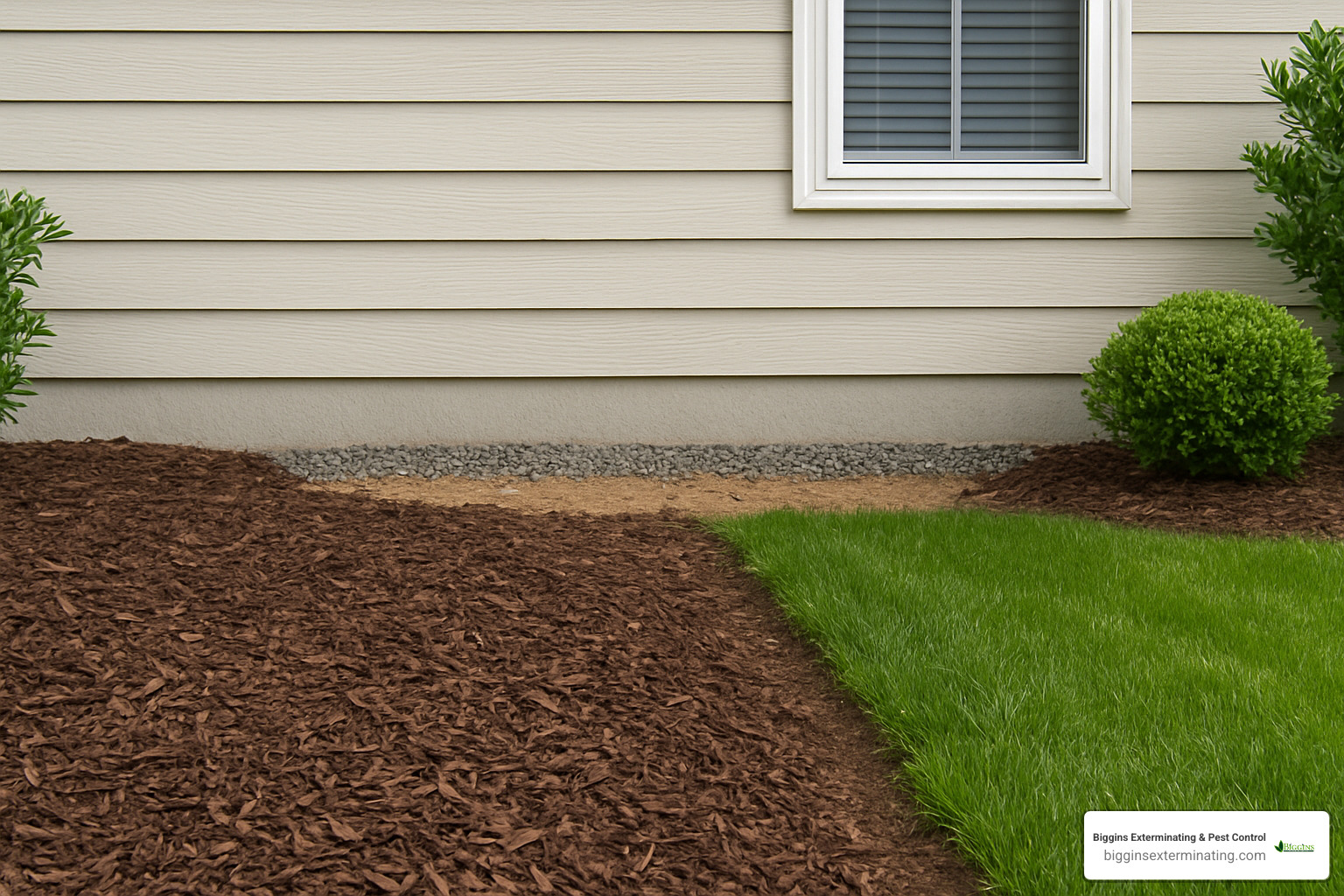
Killing termites is only half the battle—keeping them away is what makes the fix permanent. Most reinfestations we see around Andover, Burlington, or Lexington start with excess moisture or direct wood-to-soil contact, both of which are easy to avoid.
Core Prevention Habits
- Annual professional inspection (twice yearly in high-risk sites). Small warranty check-ups catch problems before they become pricey repairs.
- Moisture control – Clean gutters, extend downspouts 6 ft, repair leaks fast, use vapor barriers or dehumidifiers to keep crawl spaces < 50 % RH.
- Wood clearance – Maintain a 6-inch gap between soil and any wooden siding or framing. Store firewood at least 20 ft from the house and 6 in off the ground.
- Remove termite “magnets” – Old stumps, scrap lumber, cardboard, and heavy mulch hold moisture and cellulose. Haul them away.
- Choose the right materials – Where lumber must be near soil, switch to pressure-treated wood, composite, metal, or concrete.
Landscaping & Construction Best Practices
- Keep shrubs, trellises, and planter boxes a few feet from the foundation for airflow and easy inspection.
- Replace thick wood mulch close to the house with gravel or stone, or maintain a clear 4-inch gap.
- Use drip irrigation, not sprinklers, near walls to avoid constant surface moisture.
- During renovations, add physical barriers such as sand layers or stainless-steel mesh to block termite entry points.
Easy Four-Season Checklist
- Spring: Watch for swarmers after warm rains; clear winter debris; schedule your inspection.
- Summer: Monitor humidity in basement/crawl space; check decks and sill plates.
- Fall: Seal foundation cracks, fix grading, and store firewood correctly before snow.
- Winter: Peek into attics for condensation and plan any needed repairs for early spring.
Consistent, low-cost upkeep like this is the real secret behind “permanent” termite freedom.
Costs, Safety & When to Call the Pros (Condensed)
What Will It Cost?
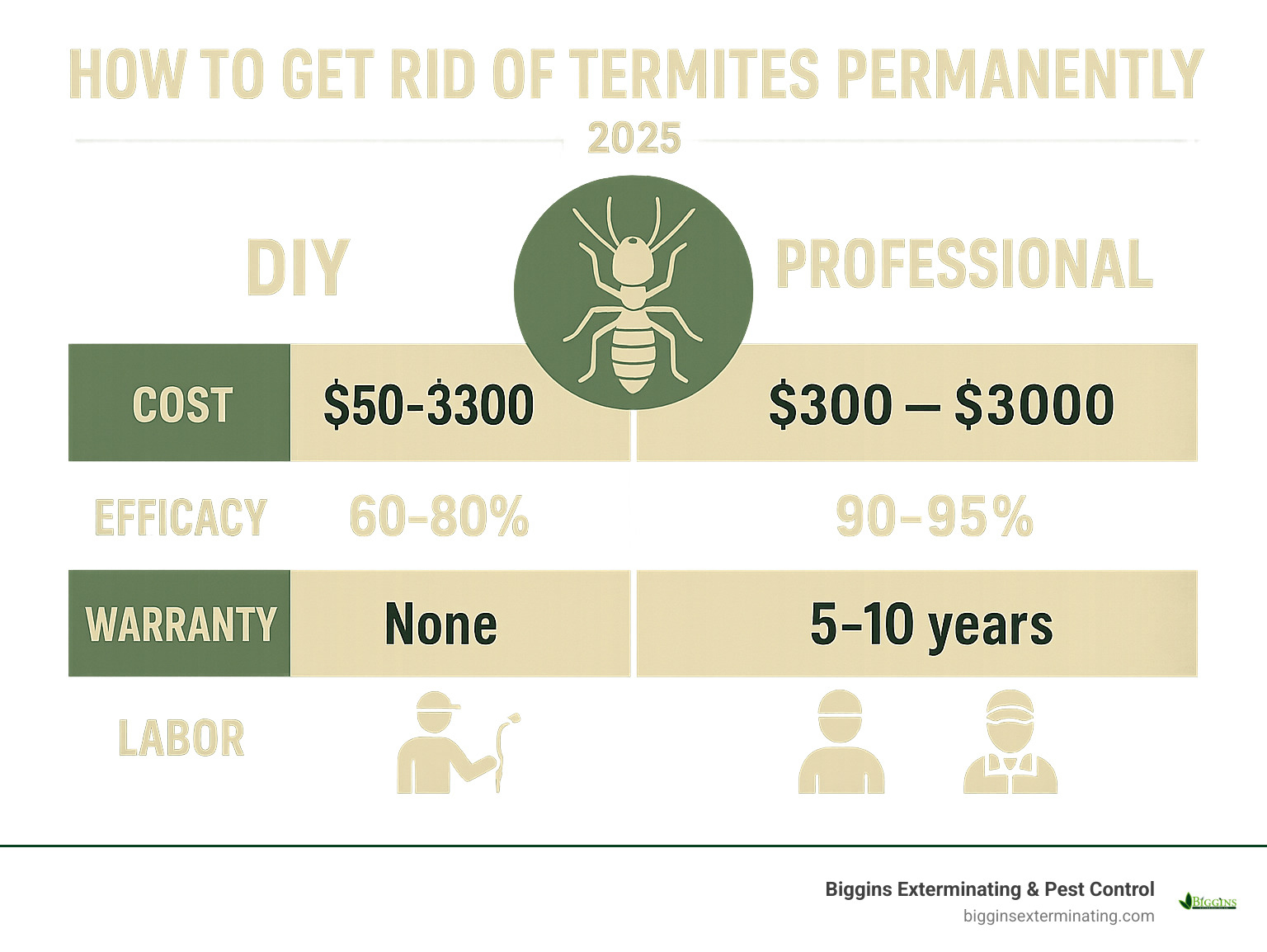
- DIY supplies: $50–$300 (average internet data). You provide all labor and there is no warranty.
- Professional treatments: $300–$3,000+ (average ranges from national sources, not Biggins pricing). Higher cost reflects commercial-grade termiticides, specialized equipment, and a 5–10 year warranty.
Waiting often multiplies repair bills; termite damage grows every day.
Are Modern Termiticides Safe?
Yes—today’s non-repellent formulas target insect nervous systems and have very low mammalian toxicity. When applied by licensed technicians following EPA labels, they stay in the soil, produce no lingering odor, and break down naturally. Families and pets can usually re-enter treated areas the same day once surfaces are dry.
Biggest DIY Pitfalls
- Treating only visible damage while the main colony stays hidden.
- Ignoring moisture that attracted termites in the first place.
- Skipping follow-up checks.
Call a Licensed Expert When…
- Structural beams, sill plates, or floor joists show damage.
- You see repeat activity after a DIY attempt.
- Hidden wall or ceiling infestations are suspected.
- A home sale, refinance, or insurance claim requires certified documentation.
Biggins Exterminating offers contract-free, warranty-backed solutions throughout Wilmington, Woburn, Tewksbury, and nearby towns, so you only pay for the protection you need—no long-term commitments.
Frequently Asked Questions (Short Version)
Can I really eliminate termites forever?
Yes—professional liquid barriers or bait systems remove the current colony and keep new colonies out for up to a decade. Annual inspections make sure that protection still stands and catch any fresh invaders before damage starts.
How often should my house be inspected?
Plan on one professional visit each year. In between, do a quick monthly walk-around yourself to spot mud tubes, discarded wings, or new moisture issues.
Are treatments safe for kids, pets, and gardens?
When a licensed pro applies EPA-registered, non-repellent termiticides exactly as labeled, risks are extremely low. Products stay in the soil, have no odor, and break down over time. Heat and bait options are available if you prefer zero residual chemicals.
Conclusion
Learning how to get rid of termites permanently isn’t just about killing the bugs you can see – it’s about creating a comprehensive defense system that protects your home for years to come. Think of it like building a fortress: you need strong walls (barriers), watchful guards (regular inspections), and smart maintenance to keep invaders out permanently.
After four decades of helping Massachusetts families battle these wood-munching invaders, I’ve seen what works and what doesn’t. The homes that stay termite-free long-term all share common traits: early detection through regular monitoring, complete colony elimination that reaches the queen, long-term chemical or physical barriers, ongoing moisture control, and professional expertise when the situation calls for it.
The truth is, DIY methods can handle small, localized problems – especially when you catch them early. But termites are social insects with complex colonies that can house over a million individuals. Surface treatments often miss the bigger picture, which is why we see so many homeowners who tried the DIY route first, only to call us when the problem returned worse than before.
At Biggins Exterminating & Pest Control, we’ve built our reputation on honest, effective solutions without the pressure of long-term contracts. Our family-owned business has been protecting homes in Andover, Bedford, Billerica, Burlington, Lexington, North Reading, Tewksbury, Wilmington, and Woburn since the 1980s. We know New England homes, we understand our local termite species, and we stand behind our work with solid warranties.
Every termite situation tells a different story. Maybe it’s a small drywood colony in your attic, or perhaps subterranean termites have been quietly building highways from your garden to your foundation. We take time to understand your specific situation, explain your options clearly, and create a treatment plan that fits your needs and budget.
The most expensive termite treatment is the one you put off until tomorrow. These little guys work 24/7, and structural damage adds up fast. But here’s the good news: with proper treatment and prevention, you can protect your home permanently. We’ve seen it work countless times over the decades.
Don’t let termites turn your biggest investment into their all-you-can-eat buffet. Whether you’re seeing warning signs or just want peace of mind, we’re here to help with honest advice and proven solutions.
Get more information about our termite pest control services and find how we can help protect your home for years to come.