
Why Ground Wasps Pose a Serious Threat to Your Property
How to exterminate ground wasps begins with understanding the threat: these aggressive insects build underground colonies of thousands right beneath your feet. Unlike aerial wasps, they nest in soil, making them nearly invisible until you accidentally disturb them while mowing or gardening.
Quick Answer: How to Exterminate Ground Wasps
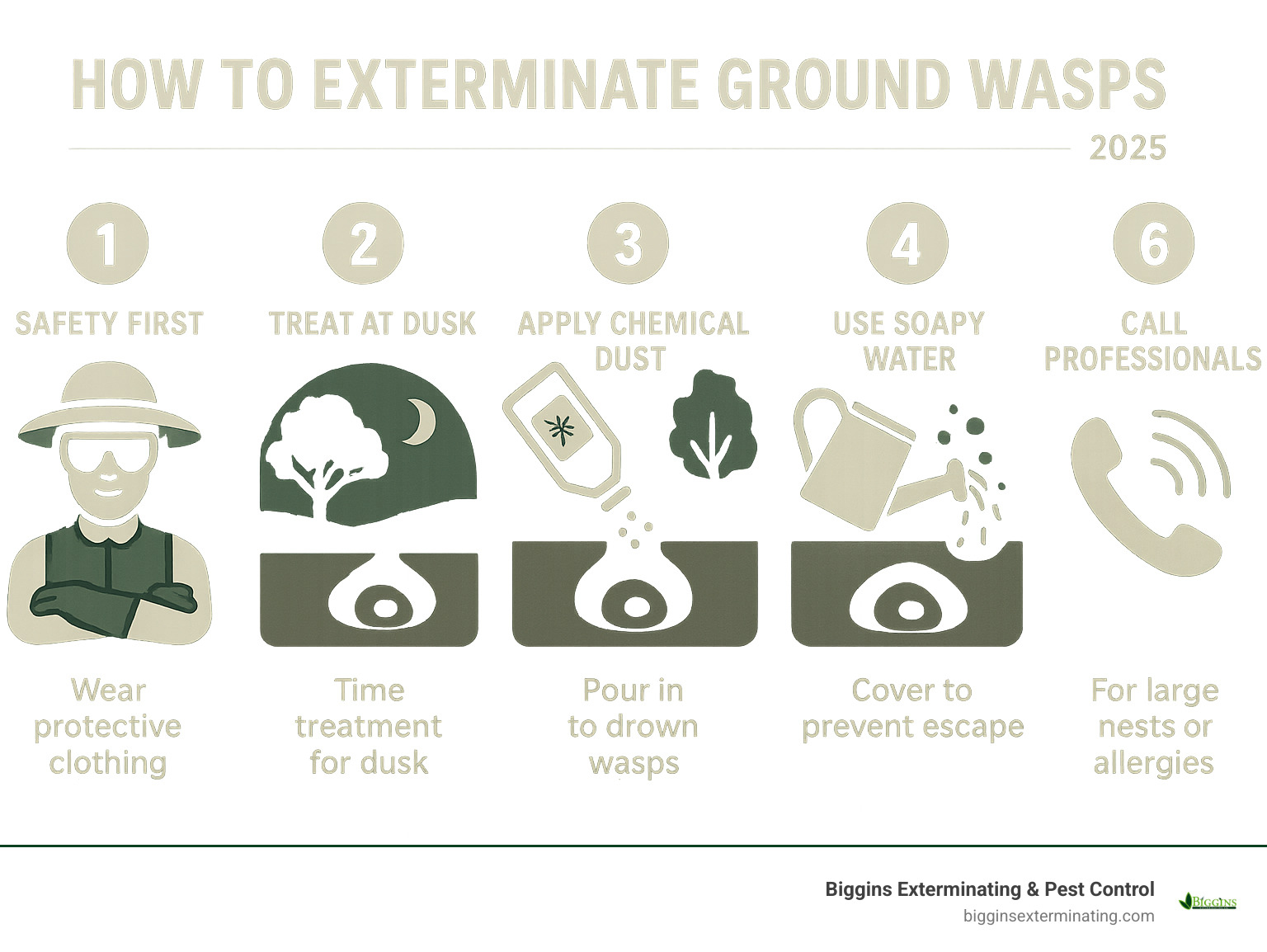
- Safety first – Wear protective clothing and treat at night when wasps are dormant
- Chemical method – Apply insecticidal dust directly into nest opening
- Natural method – Pour soapy water solution to drown the colony
- Seal the nest – Cover opening after treatment to prevent escape
- Call professionals for large colonies or if you have sting allergies
It’s no surprise that 75% of homeowners consider ground wasps to be a nuisance. These social insects, mainly yellow jackets, become highly aggressive when their nests are disturbed. As pest control experts note, encounters often happen “sometimes painfully, while mowing the lawn or weeding gardens and flower beds.”
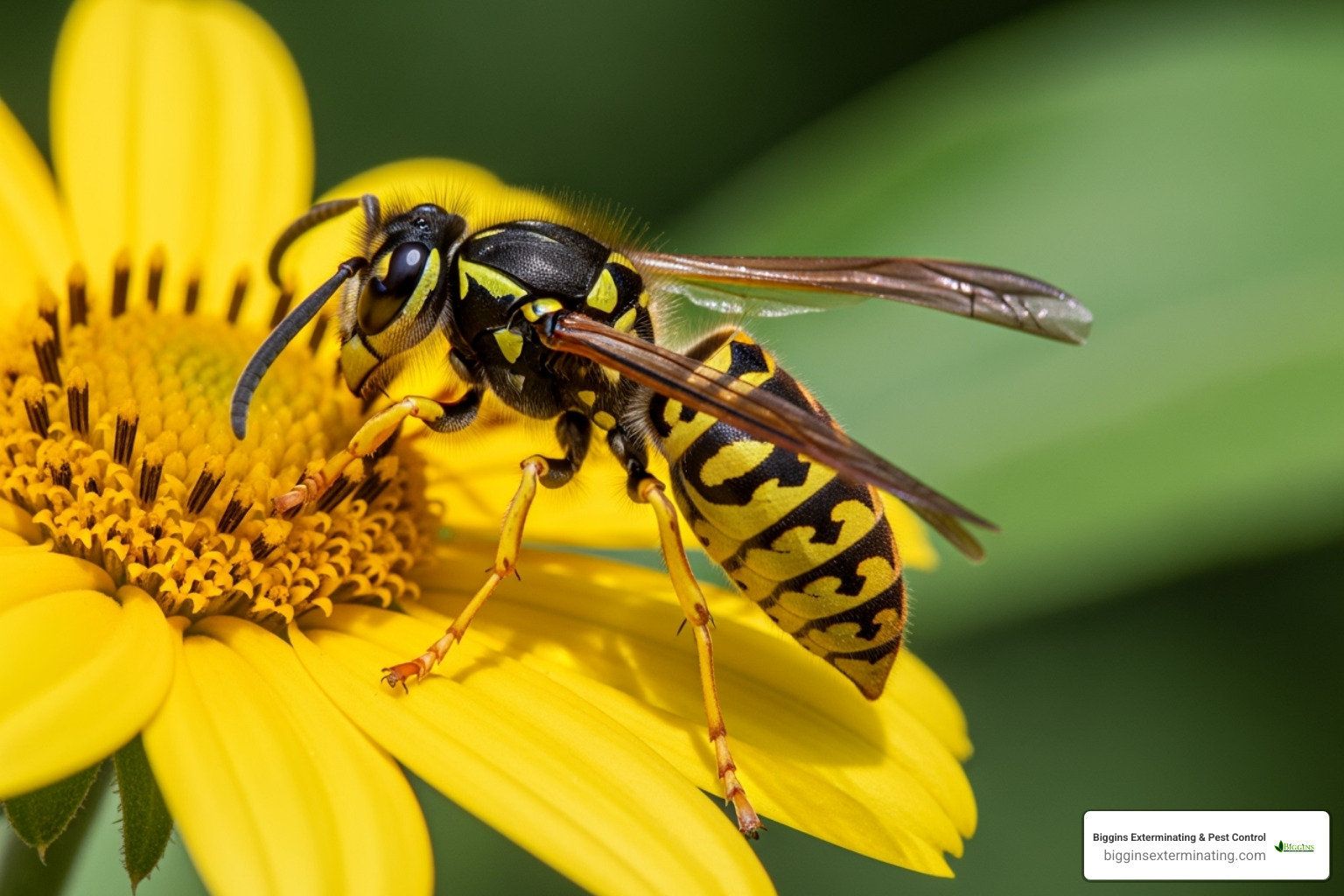
The most common ground wasps you’ll encounter are yellow jackets – black and yellow striped insects about ½ inch long that create colonies of up to 5,000 workers by late summer. Their nests appear as small holes in the ground, typically 1.5 inches in diameter, often with small piles of dirt nearby from their digging activities.
Ground wasps are especially dangerous due to their pack mentality. A threatened wasp releases alarm pheromones, summoning the entire colony to attack. Unlike bees, wasps can sting repeatedly, making encounters with their nests extremely hazardous.
I’m Stephen Biggins, owner of Biggins Exterminating Co. With over four decades in pest control, I know that safe ground wasp extermination is critical to avoid injury. While DIY methods can work for small nests, my experience shows that larger colonies often require professional intervention for complete and safe removal.
How to exterminate ground wasps terms at a glance:
Identifying Ground Wasps and Their Nests
Before you can learn how to exterminate ground wasps, you must identify them. “Ground wasp” is a broad term, but the most problematic for homeowners are social wasps, especially yellow jackets.
Social Wasps vs. Solitary Wasps
Understanding the difference between social and solitary wasps is key, as their behavior and the need for removal differ greatly.
Social Wasps (like Yellow Jackets): These wasps live in large, organized colonies that can house thousands of individuals. They are extremely protective and will swarm if their nest is disturbed. Yellow jackets are typically black and yellow striped, about 0.5 to 1.5 inches long, and may have orange markings. As scavengers, they are attracted to sweets and proteins, often disrupting picnics and BBQs.
Solitary Wasps (like Cicada Killers and Digger Wasps): These wasps are far less aggressive and unlikely to sting unless handled. They don’t form large colonies; each female digs her own burrow. While numerous burrows can appear, these wasps are often beneficial. Cicada killers (up to 1.5 inches long!) hunt cicadas, and digger wasps control other pests. It’s often best to leave these helpful wasps alone.
What Does a Ground Wasp Nest Look Like?
A ground wasp nest typically looks like a single hole in the ground, about 1.5 inches wide, often with a small, conical pile of excavated dirt beside it. This is very different from the papery, aerial nests of other wasps.
Yellow jackets prefer sandy soil and often use abandoned rodent burrows. They also nest near food sources like fruit trees. Constant wasp traffic to and from a single spot in your yard is a clear sign you’ve found a ground wasp nest.
For even more detailed identification tips and important safety information, be sure to check out our comprehensive guide on Hornets and Wasps: Identifying Nests and Ensuring Safety.
Safety First: Precautions Before Tackling a Nest
Tackling a ground wasp nest requires a cautious approach to minimize risk. At Biggins Exterminating, we know that knowing how to exterminate ground wasps safely is not just a suggestion—it’s essential.
Essential Protective Clothing
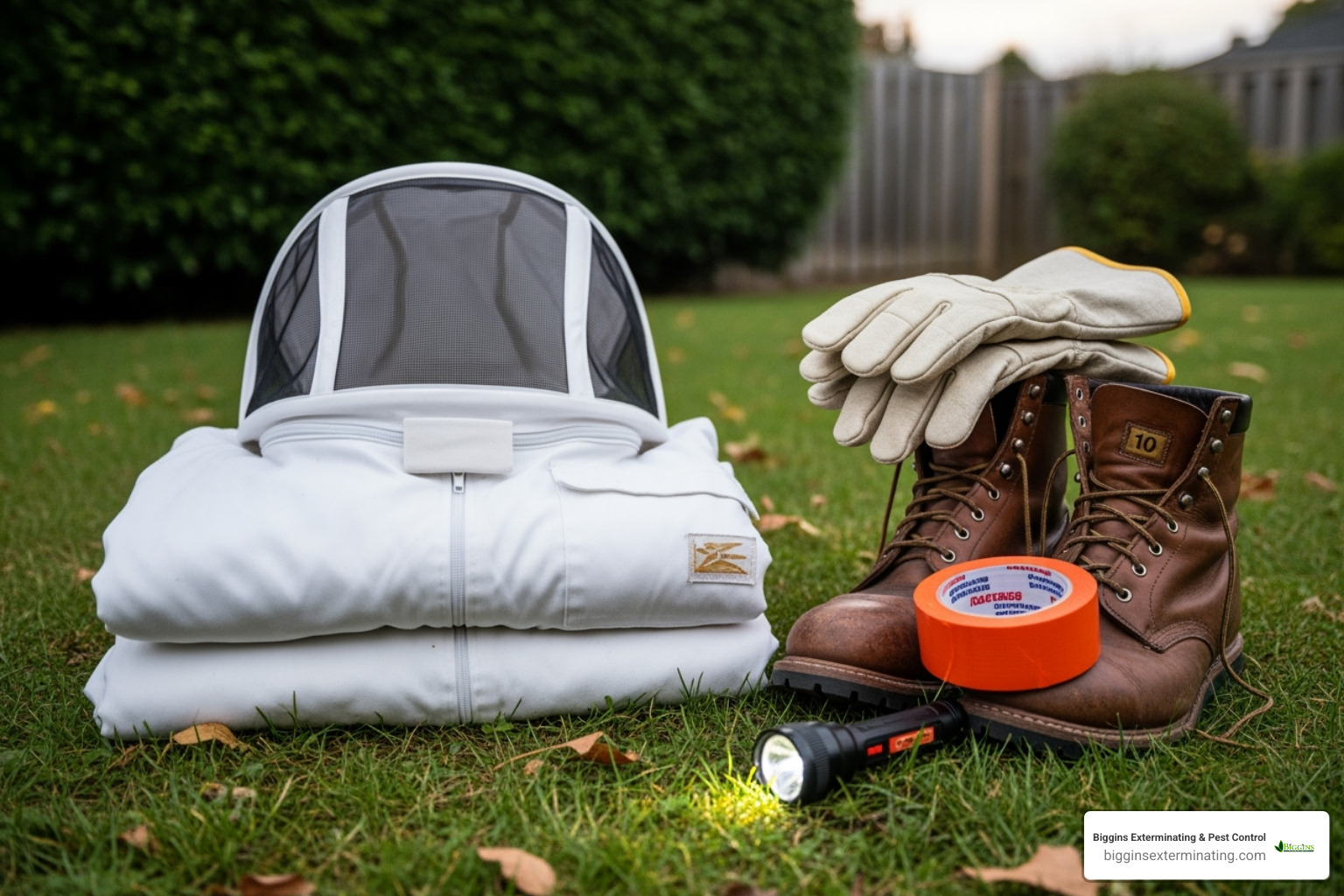
Proper gear is your first line of defense against aggressive ground wasps. Wear thick, long-sleeved clothing and long pants. Essential gear includes heavy-duty leather gloves, goggles or safety glasses, and a full-face veil or beekeeping suit for non-negotiable head protection.
Wear sturdy, closed-toe boots and tuck your pants into them. Use duct tape to seal any gaps at your wrists and ankles to prevent wasps from getting inside your clothing. The Centers for Disease Control and Prevention (CDC) also stresses the importance of protective gear for wasp removal.
Timing is Critical
Timing is critical. Wasps are active during the day but become slow and less aggressive after dark. The best time to treat a nest is late evening, well after dark, or in the very early morning just before dawn, when the entire colony is inside and docile.
Before you approach, plan and clear an escape route for a quick retreat if needed. If you need light, use a red-light flashlight (or cover a regular one with red cellophane), as wasps are less attracted to red light than to white light.
Allergic Reactions and Anaphylaxis Risk
Most wasp stings cause localized pain and swelling, but for some, they can trigger a severe, life-threatening allergic reaction called anaphylaxis. This is a medical emergency.
Symptoms of anaphylaxis can include hives, swelling of the face, throat, or tongue, difficulty breathing, dizziness, a rapid pulse, and nausea.
If you or anyone in your household has a known allergy to wasp stings, or if you experience any of these severe symptoms after a sting, please do not attempt DIY removal. Seek immediate medical attention. Your safety is the top priority.
For a deeper dive into the potential pitfalls of handling pests yourself, especially in our Massachusetts communities, we encourage you to read our article on The Dangers of DIY Pest Control in Massachusetts. You can also find additional valuable safety guidance from MSU guidance on wasp nest safety.
A Step-by-Step Guide on How to Exterminate Ground Wasps
With your gear on and plan in place, you’re ready to tackle the nest. Proper preparation is key to successfully learning how to exterminate ground wasps.
Preparation
- Observe Nest from a Distance: During the day, watch from a safe distance to confirm activity and locate all entrance holes.
- Choose Your Method: Decide between a chemical or a natural approach based on nest size, your comfort level, and environmental factors.
How to Exterminate Ground Wasps with Chemical Treatments
Chemicals are often the fastest way to eliminate a ground wasp nest. Always read and follow label instructions. The Environmental Protection Agency (EPA) suggests products with pyrethrin or permethrin for ground wasps.
1. Aerosol Wasp Spray:
– These sprays deliver insecticide from a safe distance (15-20 feet) and provide a “quick knockdown” effect, killing wasps on contact. They contain pyrethrins or pyrethroids that paralyze wasps and break down quickly in sunlight.
– Application: At night and in full protective gear, stand at a safe distance and spray directly into the nest opening. Retreat immediately. Check for activity after a day or two and re-treat if necessary. Once activity ceases, fill the nest hole.
2. Insecticidal Dust:
– Powdered insecticides like those with permethrin or carbaryl are highly effective. Wasps track the dust deep into the colony, killing the queen and other members.
– Application: At night, apply a generous amount of dust into and around the nest opening using a bulb duster. Do not cover the hole immediately; allow wasps to track the dust inside. The colony should die off in one to two days. Once all activity stops, seal the opening with dirt.
When choosing a chemical, check the “signal word” on the label. “Caution” is the least toxic, while “Warning” and “Danger” are more toxic. Opt for the least toxic effective product.
For more in-depth information on chemical treatments, especially for yellow jackets, see our guide on Exterminating Yellow Jackets.
How to Exterminate Ground Wasps with Natural & Non-Chemical Methods
For those who prefer to avoid pesticides, several natural methods can be effective on smaller nests.
1. Soapy Water Solution (Drowning Method):
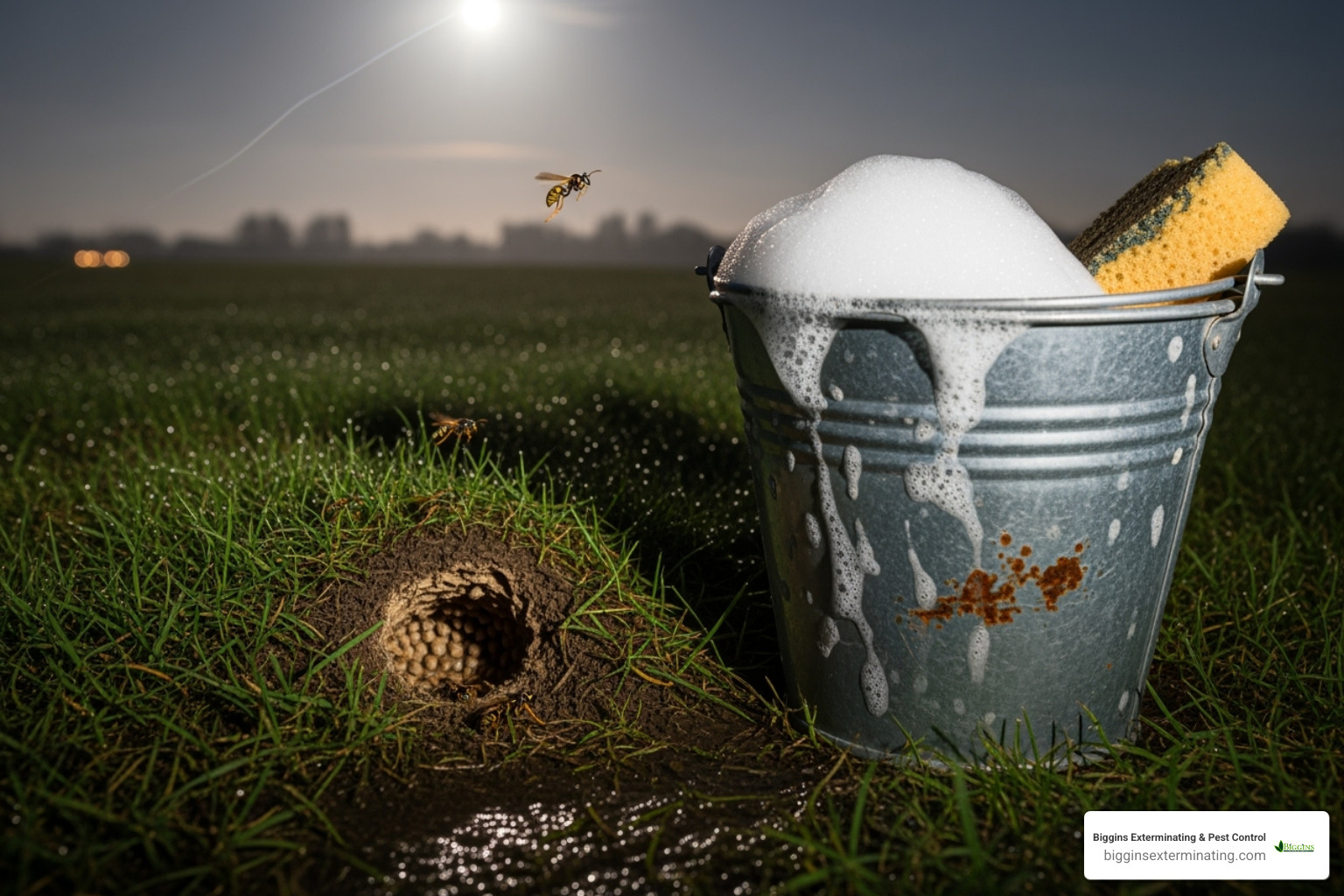
– Dish soap mixed with water can drown wasps by impairing their ability to fly and breathe.
– Application: At night, mix 1/4 to 1/2 cup of soap per gallon of water. Quickly pour a large volume into the nest opening to flood it. Immediately cover the hole with a heavy object (like a rock or weighted bucket) to trap wasps inside. Leave it covered for several days.
2. Diatomaceous Earth (DE):
– This natural powder kills insects by scratching their exoskeleton, causing dehydration.
– Application: At night, apply food-grade DE into and around the nest opening. Wasps will carry it inside. DE takes a few days to work and must be reapplied if it gets wet.
3. Vacuum Method:
– A wet/dry shop-vac can physically remove wasps.
– Application: Add a few inches of soapy water to the vacuum’s tank. Position the hose at the nest entrance and turn it on. Wasps will be sucked in and killed by the soapy water. Run the vacuum until activity ceases. Afterwards, seal the hose and leave the vacuum for a day or two to ensure all wasps are dead before disposal.
Pros and Cons for Natural Methods:
- Soapy Water: Pros: Inexpensive, non-toxic, fast-acting. Cons: Requires large volume, can be messy, may not reach entire colony.
- Diatomaceous Earth: Pros: Non-toxic, long-lasting when dry. Cons: Slow-acting, ineffective when wet, inhalation risk (wear a mask).
- Vacuum Method: Pros: Non-chemical, immediate removal. Cons: Requires shop-vac, potentially dangerous if wasps escape, may not get the entire nest.
While natural methods work for small nests, the effectiveness of any method depends on the infestation’s scale. For large or aggressive colonies, professional help is the safest choice.
When to Call a Professional for Wasp Removal
While DIY strategies can work, some situations require professional help. Biggins Exterminating & Pest Control has been safely managing pest issues across Wilmington, Andover, Bedford, Billerica, Burlington, Lexington, North Reading, Tewksbury, and Woburn, MA for over 40 years. We understand ground wasp behavior and know how to remove them safely.
You should definitely consider giving us a call if:
- Your DIY attempts fail and the nest remains active.
- You’re dealing with a large colony. Yellow jacket nests can house over 5,000 wasps, posing a significant risk of multiple stings. Professionals have the specialized equipment to handle massive infestations safely.
- The nest is located inside walls or other structures. These are difficult to treat, and sealing the entrance can force wasps into your home.
- You have a severe infestation with multiple nests or extremely aggressive wasps.
- Anyone in your household has a known allergy to wasp stings. The risk of a life-threatening anaphylactic reaction is too high.
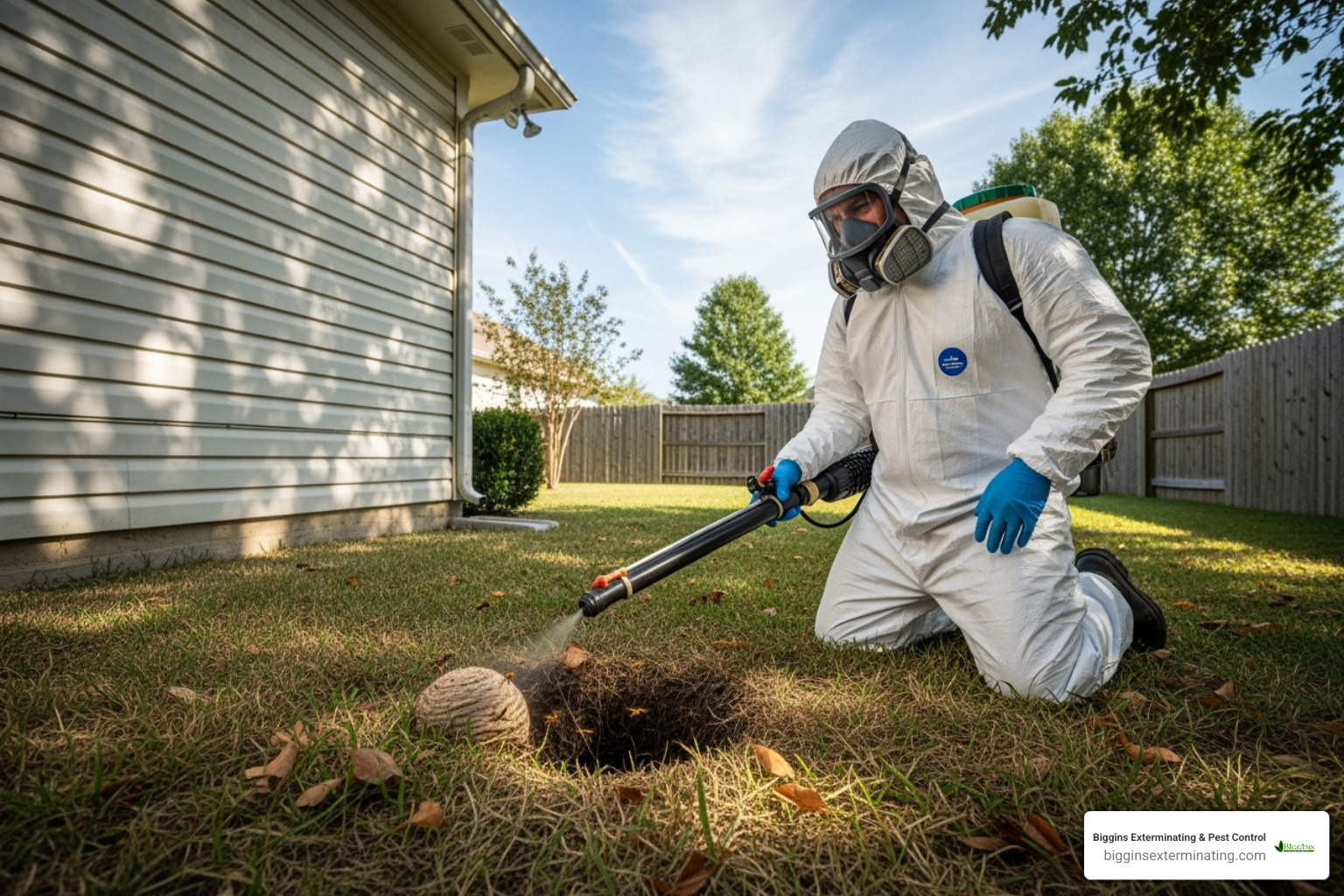
When you hire experts, you get guaranteed safety and effectiveness. Our team will identify the wasp, assess the problem, and apply the right treatment with minimal risk. We provide warranties for your peace of mind. Knowing how to exterminate ground wasps safely and completely often requires professional expertise. Don’t put yourself or your loved ones at risk. Learn more about Why Professional Hornet and Wasp Nest Removal is Essential.
Preventing Future Ground Wasp Infestations
After removing a ground wasp nest, take preventive steps to ensure they don’t return next season. This will give you peace of mind and a safer yard.
Fill Abandoned Rodent Burrows
Yellow jacket queens often don’t dig new nests; they prefer existing holes like abandoned rodent burrows. During yard maintenance, look for these openings, especially in sandy soil. Fill any holes with soil or gravel in the spring to eliminate potential nesting sites before a colony can establish itself.
Remove Food Sources
In late summer and fall, ground wasps scavenge for sweets and proteins. To deter them, secure your trash cans with tight-fitting lids. Clean up fallen fruit from trees, don’t leave pet food out, and clean up sugary spills. Keep compost piles contained and away from high-traffic areas.
Wasp Traps for Queens in Spring
Trapping queen wasps in early spring can prevent a colony from forming. Each queen trapped means thousands fewer workers in the summer. In spring (March-May), use protein baits (chicken, salmon) in traps. Later in the season, switch to sweet baits (juice, soda). Place traps at least 20 feet from your home and high-traffic areas to draw wasps away. A simple DIY trap can be made from a 2-liter soda bottle.
Yard Maintenance
A well-maintained yard is less attractive to ground wasps. Keep soil consistently moist, as wasps prefer dry, sandy soil for digging. Regular mowing and weeding also helps you spot potential nests early. Always be alert during yard work; if you see concentrated wasp activity, back away and assess from a distance.
For specialized prevention strategies for other ground-nesting insects, check out our guide on Treatment for Cicada Killer Wasps. Knowing how to exterminate ground wasps includes understanding how to prevent them from coming back in the first place.
Conclusion: Reclaiming Your Yard Safely
Learning how to exterminate ground wasps involves understanding the key strategies we’ve covered: proper identification, prioritizing safety, and using effective chemical or natural treatments.
The golden rule is that your safety always comes first. Taking precautions, from wearing protective gear to treating the nest at night, is essential.
From our four decades of experience, we know DIY methods can work for small, accessible nests. However, there is no shame in calling for help when you’re outmatched.
Call in professionals for massive colonies, nests inside walls, or if anyone in your household has a sting allergy. A DIY attempt is not worth the risk of an emergency room visit.
At Biggins Exterminating & Pest Control, we’ve been helping families in Wilmington, Andover, Bedford, Billerica, Burlington, Lexington, North Reading, Tewksbury, and Woburn reclaim their yards for over 40 years. We have the local knowledge, equipment, and experience to get the job done safely and correctly, backed by our warranties.
Don’t let ground wasps make your yard a danger zone. With the right approach—DIY or professional—you can get back to enjoying your outdoor space without fear.
Ready to take back your yard? For safe and effective wasps pest control, contact our experts today. We’re here to help you get back to barbecues, gardening, and lazy afternoons outside—minus the unwelcome buzzing neighbors!
