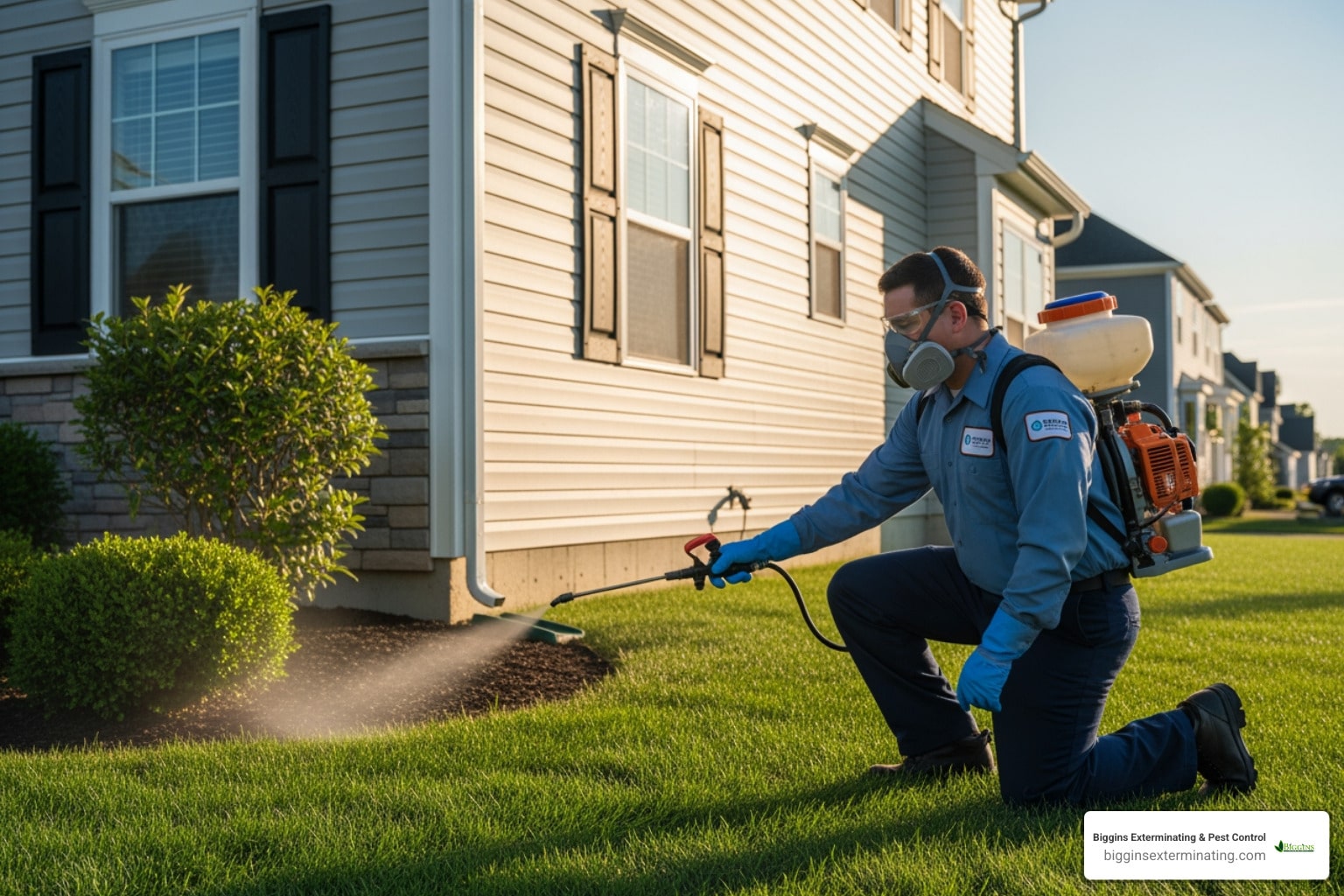
Understanding What You’ll Pay for Pest Control Services
How much does pest control cost? Based on national averages, here’s what homeowners typically pay:
- One-time treatments: $250 to $550 for common pests like ants or spiders
- Severe infestations: $1,500 to $8,000+ for bed bugs or termites
- Quarterly service plans: $100 to $300 per visit
- Annual programs: $500 to $1,200 per year
- Emergency or specialized services: $300 to $600+
Note: These are average costs based on internet data and do not represent actual Biggins Exterminating pricing.
As autumn settles over Massachusetts, you’ve probably noticed more than just the colorful leaves. Pests are looking for warm places to spend the winter—and your home looks pretty inviting right about now.
Whether you’re dealing with ants marching across your kitchen counter, mice scratching in your walls, or wasps building nests under your eaves, you’re probably wondering what it’s going to cost to fix the problem.
Here’s the truth: there’s no universal price tag for pest control. The cost depends on what you’re dealing with, how bad it is, and what it takes to fix it for good.
A neighbor who paid $180 to remove a single wasp nest had a very different experience from someone spending $1,500 to eliminate a bed bug infestation. Your specific situation determines your final bill.
I’m Stephen Biggins, and I’ve been helping Massachusetts homeowners understand how much pest control costs and why pricing varies for over two decades at our family business. The key to getting fair value is knowing what factors actually drive your costs—and that’s exactly what this guide will explain.
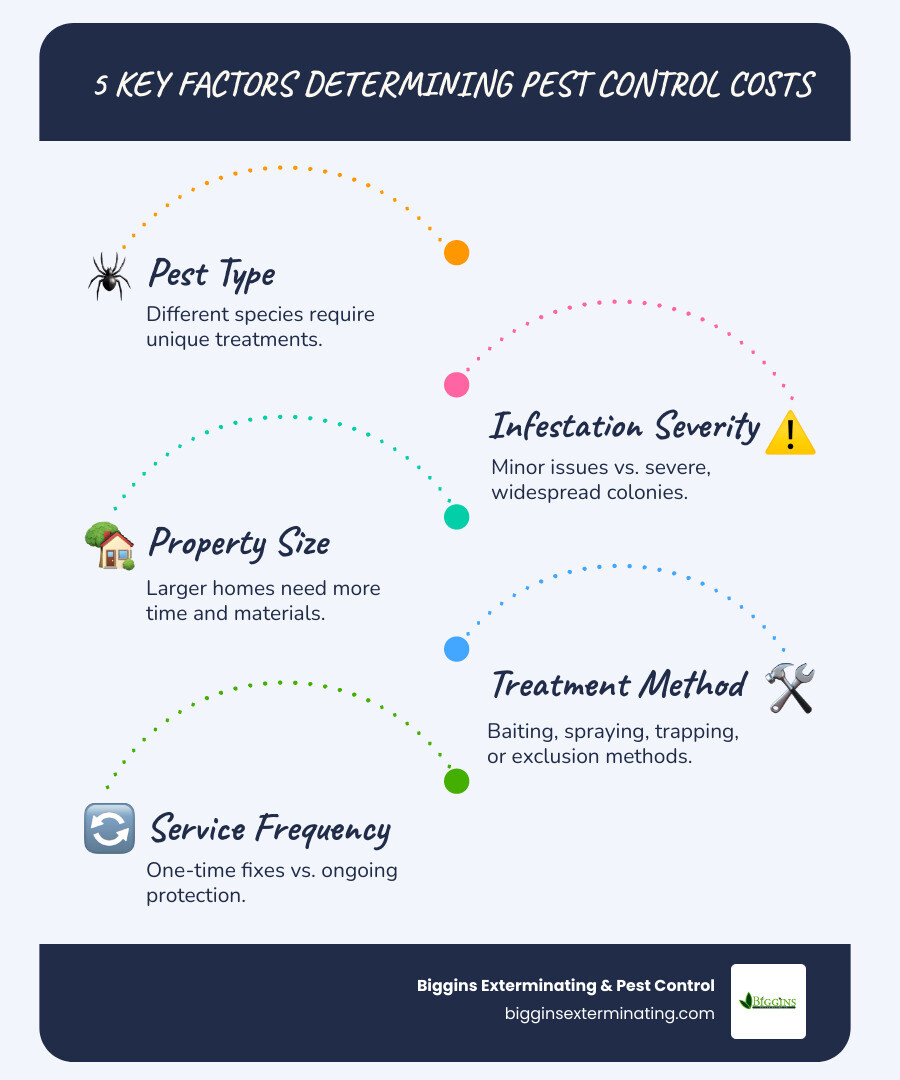
Key Factors That Determine Your Pest Control Bill
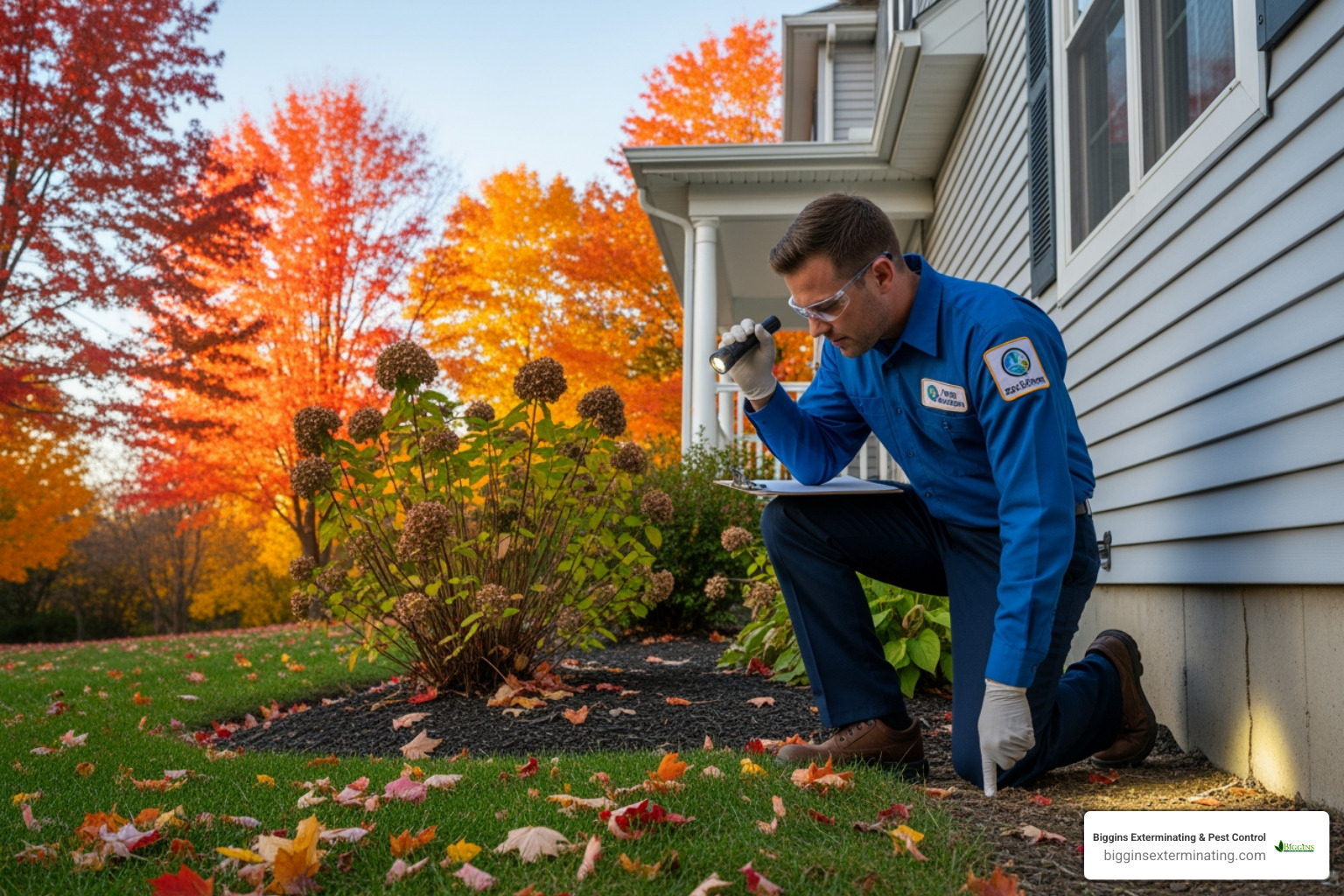
Here’s something that surprises most homeowners: no two pest problems are exactly the same, which is why there’s no such thing as a one-size-fits-all price for pest control.
When autumn leaves start to fall across Massachusetts, pests from rodents to insects instinctively seek shelter from the coming cold. A mouse family trying to nest in your walls needs a completely different approach than a wasp nest under your eaves. Your neighbor might have paid $200 for ant treatment, but that doesn’t tell you much about what your carpenter ant colony living inside your walls will cost to eliminate.
So what actually determines how much pest control costs for your specific situation?
The type of pest makes a huge difference in both the approach and the price. Removing a wasp nest typically involves a quick, targeted treatment—one visit and you’re done. But rodents? They require multiple visits for trapping, monitoring, and exclusion work to seal up the entry points. And carpenter ants, which are common in our area, demand a much more intensive treatment strategy than the few pavement ants you might see on your driveway.
How severe the infestation is matters just as much. A few ants marching across your kitchen counter is a straightforward job. But a carpenter ant colony that’s been expanding through your walls for months? That’s a different story entirely. Minor issues might be resolved with a single treatment, while severe infestations—especially ones that have been ignored—naturally require more time, effort, and materials to completely eradicate.
Your property size plays a practical role too. A cozy home in Bedford needs less time and product to inspect and treat than a sprawling property in Andover. We need to cover more ground, check more potential entry points, and apply treatments across a larger area. It’s simple math: more square footage and a larger perimeter mean more work.
The treatment method we use directly impacts your cost. Baiting systems, liquid sprays, trapping programs, exclusion work (sealing entry points), and more intensive approaches like fumigation or heat treatments all come with different price tags. Some methods are more labor-intensive. Others require specialized equipment. Heat treatments for bed bugs, for example, involve bringing in commercial heaters and carefully monitoring temperatures throughout your home—that’s naturally more involved than setting out bait stations.
Where you live can influence pricing slightly, even within Massachusetts. Regional pest pressures vary—some areas see more carpenter ants, others deal with more rodent issues. Local operating costs differ between towns like Wilmington, Woburn, and Lexington. These factors create modest variations in what you’ll pay.
How often you need service changes the pricing structure significantly. A one-time emergency call to handle a sudden wasp nest has a different cost than a comprehensive quarterly plan designed to keep pests out year-round. Recurring services typically offer better value per visit when you look at the long-term picture.
Finally, accessibility can increase costs. Pests are experts at hiding in the most inconvenient places. A hornet nest twenty feet up on your roofline, mice in a cramped crawlspace, or bed bugs deeply embedded in furniture—these situations require extra time, specialized equipment, and additional safety precautions. When our technicians need to spend more time working in difficult conditions, that affects the final price.
The good news? Once we understand your specific situation, we can give you an accurate quote that reflects exactly what it will take to solve your problem for good.
How Much Does Pest Control Cost? A Breakdown by Pest and Service Type
Let’s talk real numbers. I know you’re here because you want to know what you’ll actually pay to get rid of whatever’s bugging you—literally.
Before we dive in, here’s something important: The following figures are based on broad national averages found online and are for informational purposes only. They do not represent actual pricing for Biggins Exterminating services. For an accurate quote custom to your specific situation here in Massachusetts, a professional inspection is necessary. We pride ourselves on transparent pricing and no-contract services, so you only pay for what you need.
How much does pest control cost for common household invaders?

As Massachusetts autumn settles in and temperatures drop, you’ll notice more uninvited guests trying to move indoors. Here’s what homeowners typically face when dealing with the most common fall invaders.
Ants & Spiders are usually the most affordable pests to tackle. If you’re dealing with a few ants on your kitchen counter or some spiders in the corners, a single treatment might run $150 to $250. But here’s where it gets tricky—not all ants are created equal. Carpenter ants, which we see a lot of in our area, can tunnel through wood and cause real structural damage. When you’re dealing with these destructive species or an infestation that’s spread into your walls, you’re looking at $300 to $500 or more, often requiring follow-up visits. Spider control typically falls in the $100 to $500 range depending on severity. For more details, check out our guide on How Much Does an Exterminator Cost for Ants?
Wasps & Hornets become particularly problematic in fall when their nests reach peak size. Most nest removals are handled in a single visit, typically costing $125 to $450. That said, if you’ve got a massive nest tucked inside a wall, perched on a high roofline, or you’re dealing with aggressive yellow jackets, the price can climb toward $400 or higher. Some situations require two visits plus sealing work to prevent them from returning. Learn more about our Wasp Pest Control services.
Rodents (Mice & Rats) are the classic fall problem in Massachusetts. As soon as that first cold snap hits, they’re looking for a warm place to nest—and your home looks perfect. Unlike a one-and-done wasp nest removal, rodent control usually requires multiple visits for trapping, baiting, and exclusion work to seal up entry points. Initial services typically range from $250 to $600, with most homeowners spending between $250 and $450. Severe infestations with multiple access points or larger colonies can push costs even higher. For detailed pricing information, see our Mice Extermination Cost guide or our comprehensive Rodent Treatment Cost Guide 2025.
Cockroaches are among the toughest pests to eliminate, period. Their resilience and ability to hide in the tiniest spaces make them formidable opponents. A minor cockroach problem in a single room—say, a few German cockroaches in a condo kitchen—might cost around $250 for gel baiting and targeted spray treatments. But a widespread infestation that’s infiltrated multiple rooms or spread to neighboring units? You could be looking at $1,200 or more. We offer effective Pest Control for Cockroaches to tackle even the toughest infestations.
Pricing for Severe Infestations: Bed Bugs & Termites
Now we’re getting into the heavy hitters. Bed bugs and termites cause significant distress and damage, and unfortunately, they’re notoriously difficult to eradicate completely. These situations often require intensive, whole-home treatments.
Bed Bugs are hands down one of the most expensive pests to treat. These tiny, elusive insects are masters at hiding and can survive for months without feeding, making them exceptionally hard to eliminate. A single-room treatment using thermal or chemical solutions starts around $500. But if you need a whole-home heat treatment—which is often the most effective approach—you’re looking at $1,500 to $5,000 or more, depending on your home’s size and how severe the infestation has become. We’ve helped many Massachusetts families reclaim their homes from these persistent pests.
Termites often take the crown as the costliest pest problem you can face. Why? Because by the time most homeowners find them, they’ve already caused significant structural damage. These silent destroyers work hidden inside your walls, often for years before detection.
Treatment options like baiting systems or liquid termiticides typically range from $1,500 to over $8,000 for full fumigation or extensive barrier treatments. Annual termite treatment plans can cost $400 to $1,600 per year. It’s a substantial investment, but considering termites cause billions in property damage annually across the U.S., it’s protection worth having. Learn more about Termite Treatment Cost and what’s involved.
One-Time Visit vs. Recurring Service Plans
When you’re figuring out how much pest control costs, one of the biggest decisions is whether you need a quick fix or ongoing protection. Let me break down the real difference.
One-time services handle immediate problems—that wasp nest that appeared overnight, a sudden ant invasion, or spiders taking over your basement. These visits typically range from $250 to $550 or more. They’re perfect for isolated incidents, and you’ll see results quickly. The catch? Once the treatment’s residual effect wears off (usually a few weeks to a couple months), you’re on your own again. If conditions are right, new pests can move right back in.
Recurring plans, whether quarterly, bi-monthly, or even monthly, work differently. Instead of waiting for a problem to appear, these services create a protective barrier around your home and address seasonal pest pressures before they become infestations. Each visit typically costs $100 to $300, making the per-visit price lower than a one-time service. More importantly, you get year-round peace of mind.
This proactive approach aligns with Integrated Pest Management (IPM) principles, which focus on prevention rather than just reaction. At Biggins Exterminating, we offer flexible, no-contract recurring services throughout Wilmington, Billerica, Bedford, and all our Massachusetts service areas. You’re never locked in—just protected.
Here’s a quick comparison to help you decide what makes sense for your situation:
| Feature | One-Time Visits | Recurring Plans (e.g., Quarterly) |
|---|---|---|
| Upfront Cost | Higher | Lower per visit |
| Long-Term Cost | Potentially higher if re-infestation occurs | Generally lower due to prevention |
| Prevention | Minimal | Excellent, year-round protection |
| Best For | Isolated incidents (e.g., single wasp nest) | Ongoing pest management, prevention, peace of mind |
The bottom line? If you’re dealing with a one-off problem, a single visit makes sense. But if you want to stop worrying about what’s going to show up next season, a recurring plan delivers better long-term value and keeps your home consistently protected.
Professional vs. DIY: Calculating the True Cost of Pest Removal
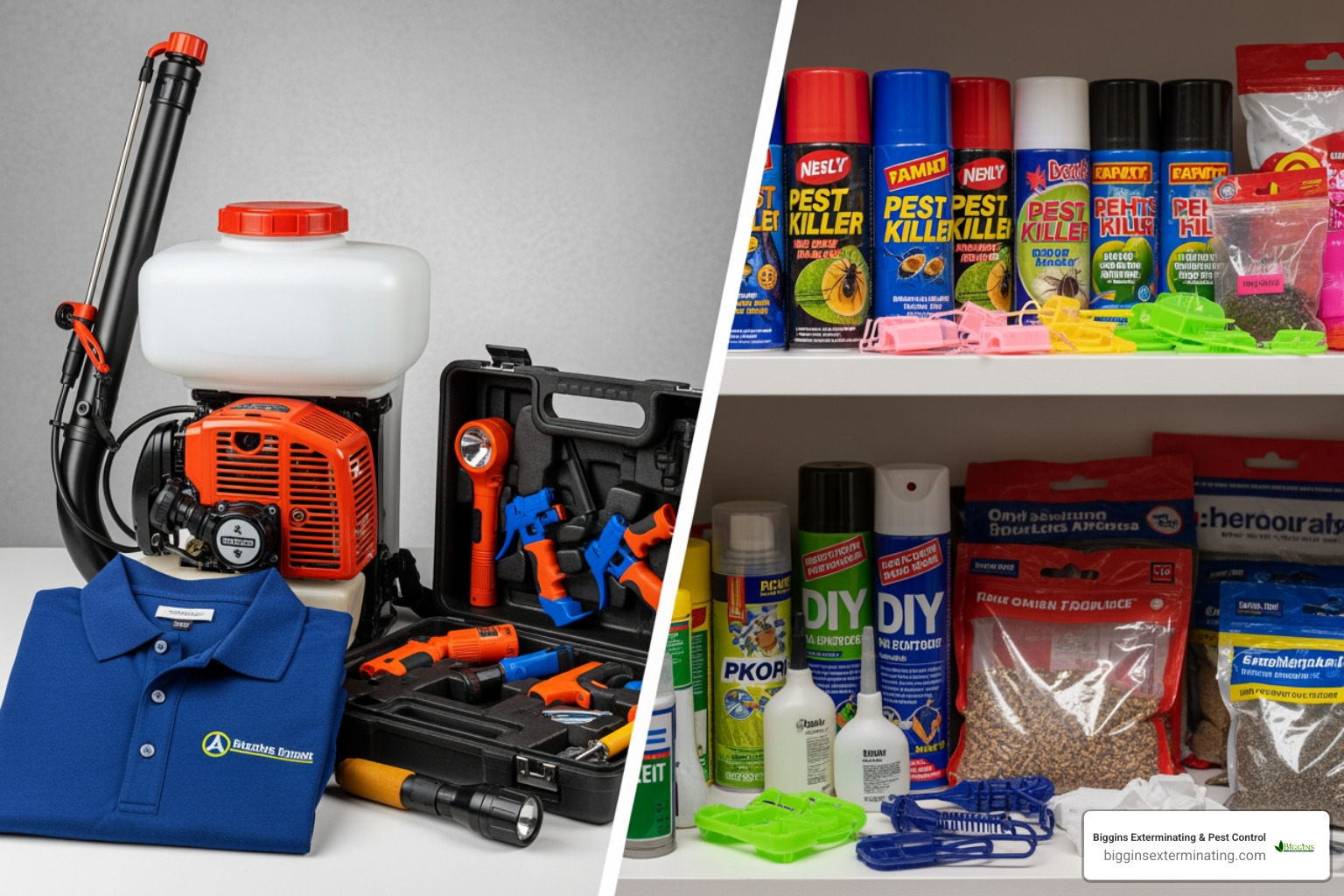
I get it. When you spot a line of ants marching across your kitchen counter on a Saturday morning, your first instinct is probably to drive to the hardware store and grab a can of bug spray. It’s quicker, it feels cheaper, and you can handle it yourself, right?
Sometimes, yes. A few stray ants or a spider here and there? A DIY solution might do the trick. But here’s what we’ve learned after four decades in the pest control business: the initial price tag on that spray can doesn’t tell the whole story about how much pest control costs.
The Hidden Costs of DIY Pest Control
That $12 bottle of ant spray might seem like a bargain compared to calling a professional. But we’ve seen countless homeowners spend $50, $100, even $200 on various store-bought products over several weeks—only to still have pests crawling around their home.
The problem? Store-bought solutions rarely address the root cause. That spray kills the ants you can see, but it doesn’t touch the colony living in your walls. You’re treating symptoms, not solving the problem.
And it gets worse. Improper treatment can actually make things harder to fix later. We’ve responded to calls where homeowners tried to treat bed bugs themselves, only to scatter them throughout the house. What started as a problem in one bedroom became a whole-home infestation requiring heat treatment—turning a $500 issue into a $3,000 problem.
Then there’s the damage that happens while you’re still experimenting with DIY solutions. Carpenter ants don’t take weekends off. Every day they’re in your walls, they’re tunneling deeper into the wood. We’ve seen situations where a homeowner spent three months trying different products, and in that time, those ants caused $2,000 in structural damage that could have been prevented with early professional intervention.
Health and safety risks are real too. Without proper training, it’s easy to misuse pesticides or apply them in areas where your kids or pets spend time. Professional products require licensing for a reason—they’re powerful, and they need to be handled correctly.
The Value of Hiring a Licensed Professional
Here’s what you’re actually paying for when you hire a professional—and why it’s worth it.
Proper identification is everything. Is that a pavement ant or a carpenter ant? A mouse or a vole? Different pests need completely different approaches, and our technicians spend years learning how to identify species, understand their behavior, and locate their hiding spots. We find certified professionals through organizations like the National Pest Management Association.
We also have access to professional-grade products that simply aren’t available at the hardware store. These treatments are more effective, longer-lasting, and precisely targeted to specific pests. They work faster and more thoroughly than anything you can buy retail.
Safety is built into everything we do. Our team knows exactly how to apply treatments to eliminate pests while keeping your family and pets safe. We’re trained, certified, and insured. You don’t have to worry about whether you’re exposing your toddler to harmful chemicals or accidentally contaminating your kitchen.
But here’s my favorite part: we guarantee our work. If pests come back within the warranty period, we return and re-treat at no additional charge. Try getting that guarantee from a spray can. This commitment to standing behind our services is something we’ve built our family business on for over 40 years, serving homeowners throughout Wilmington, Burlington, Billerica, and beyond.
Most importantly, we don’t just kill the pests you have today. We focus on prevention and exclusion to stop them from coming back. We seal entry points, eliminate conducive conditions, and create a protective barrier around your home. That’s the difference between spending $200 on temporary DIY fixes every few months and investing in a real solution that keeps your home pest-free year-round.
Peace of mind is priceless. Knowing your home is protected, your family is safe, and if anything does pop up, we’re just a phone call away—that’s the real value of professional pest control.
Frequently Asked Questions About Pest Control Costs
After helping Massachusetts homeowners deal with pest problems for over 40 years, we’ve heard just about every question there is about pricing. Here are the answers to the most common ones we get asked, especially as fall brings more pests indoors.
How much does pest control cost for a single treatment?
For a common pest like ants or spiders, a single treatment typically ranges from $250 to $550 based on national averages. But here’s the thing – that’s just a starting point.
The actual price depends heavily on what you’re dealing with. A few pavement ants trailing across your kitchen counter? That’s on the lower end. A carpenter ant colony that’s been tunneling through your walls for months? That’s a different story entirely, often pushing towards the higher end or beyond.
Property size matters too. A small condo in Woburn will naturally cost less to treat than a large home in Andover. And if you’re dealing with a severe rodent or bed bug problem, the cost jumps significantly – potentially reaching $2,000 or more for comprehensive eradication. For instance, removing a raccoon from an attic might run $400 or more, depending on how difficult the access is and what follow-up work is needed.
This is why we always recommend a professional inspection before quoting a price. It’s the only way to give you an accurate estimate for your specific situation.
Are eco-friendly pest control options more expensive?
The short answer is: sometimes, yes. Eco-friendly or natural pest control can be more expensive upfront, typically adding 20-35% to the cost compared to conventional treatments.
Why? Specialized botanical products often cost more to produce and purchase. They may also require more frequent applications to achieve the same level of effectiveness as traditional chemical treatments.
That said, for homeowners in Wilmington, Billerica, or any of our service areas who prioritize environmentally conscious solutions for their families and pets, these options are absolutely available. We’re happy to discuss the trade-offs and help you find the right balance between effectiveness, safety, and budget.
What extra charges can I expect?
Nobody likes surprise fees, which is why we believe in transparent pricing. Beyond the base treatment cost, here are the most common additional charges you might encounter:
Emergency or after-hours service typically comes with a premium if you need immediate assistance outside regular business hours – like a wasp nest finded on a Sunday afternoon when guests are coming over.
Follow-up visits are sometimes necessary for complex infestations. While our warranties often cover re-treatments if pests return, some initial one-time services might require additional visits not included in the original quote. Always ask upfront what’s covered.
Specialized services like exclusion work (sealing entry points to keep rodents out permanently), odor neutralization after wildlife removal, or extensive cleaning after a severe infestation often carry additional costs. For example, crawlspace repair or insulation replacement due to pest damage can add hundreds or even thousands to the overall expense.
Inspection fees vary by company. Many companies (including Biggins Exterminating) offer free inspections, but some charge $150 to $300, which might be applied to your service cost if you proceed with treatment.
The key is to always ask for a detailed, written estimate that clearly outlines all charges before any work begins. No surprises, no hidden fees – just straightforward pricing so you can make an informed decision about protecting your home.
Is Professional Pest Control a Worthwhile Investment?

We’ve walked through all the numbers, the variables, and the specifics of how much does pest control cost. But here’s the question that really matters: is it worth it?
After four decades in this business, I can tell you without hesitation—yes. And it’s not just about the dollars and cents.
Think about what happens when you ignore a pest problem, hoping it’ll just go away on its own. That single mouse you saw last week? It probably has friends. Those carpenter ants in your garage? They’re slowly tunneling through the wood that holds up your roof. That small cockroach problem? It’s multiplying behind your walls right now.
The cost of inaction adds up fast. Termites can cause thousands of dollars in structural damage before you even realize they’re there. Rodents chew through electrical wiring, creating fire hazards and repair bills that dwarf any extermination cost. Carpenter ants can compromise load-bearing beams. We’ve seen homeowners face $10,000+ in repairs because they waited too long to address what started as a “minor” pest issue.
And it’s not just about your house. Your family’s health matters more than any repair bill. Cockroaches trigger asthma and allergies, especially in children. Rodents carry diseases like hantavirus and salmonella. Bed bugs rob you of sleep and peace of mind. Mosquitoes and ticks right in your own yard can transmit serious illnesses. These aren’t scare tactics—these are real risks that professional pest control actively prevents.
Protecting your home’s value is another consideration most people overlook until it’s too late. Try selling a house with a known pest problem. A termite inspection that comes back positive can kill a sale or knock tens of thousands off your asking price. Regular pest control is like insurance for your property value.
Here’s what professional pest control really gives you: peace of mind. It’s knowing that when autumn brings those first cold nights and pests start looking for warmth, your home has a protective barrier. It’s not worrying about what’s scratching in your walls at night. It’s your kids playing on the floor without concern. It’s sleeping soundly without wondering if bed bugs are in your mattress.
For over 40 years, Biggins Exterminating has built our reputation on providing exactly that kind of peace of mind to families across Andover, Bedford, Billerica, Burlington, Lexington, North Reading, Tewksbury, Wilmington, and Woburn. We’re a family-owned business that believes in honest work, fair pricing, and treating your home like we’d treat our own. That’s why we don’t require contracts—we want you to choose us because you trust us, not because you’re locked in.
Our satisfaction guarantee means we stand behind every service. If pests come back between treatments, so do we—at no extra charge. That’s not just good business; it’s the right way to do business.
Ready to protect your home from the pests that come with autumn’s chill? Contact us for a professional consultation and estimate today. We’ll give you straight answers, transparent pricing, and effective solutions that actually work. Your pest-free home is just one call away.