
The Silent Destroyers: Recognizing Termite Invasions
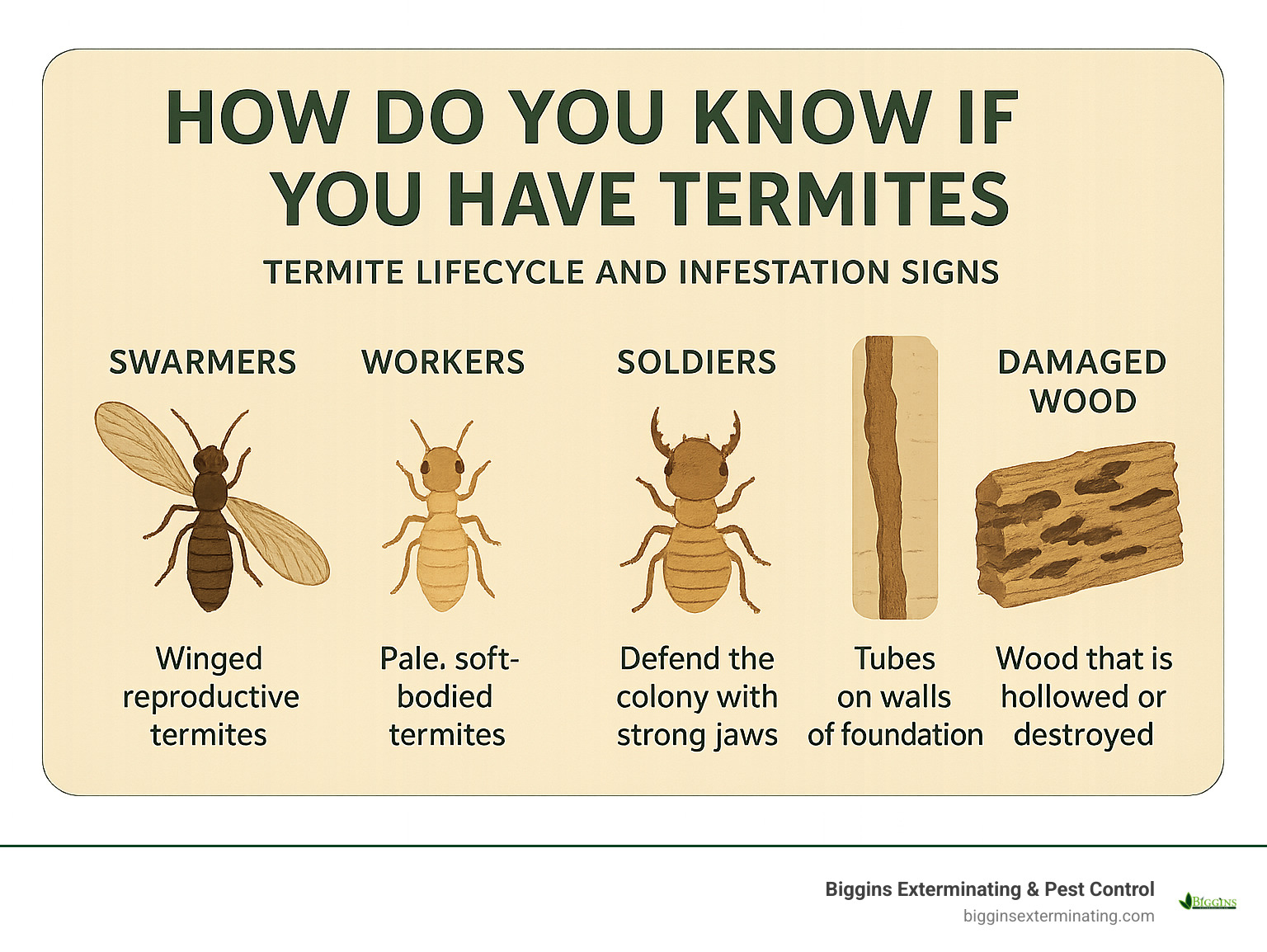
How do you know if you have termites? These silent destroyers can remain hidden for years while causing extensive damage to your home. Here are the key signs to look for:
- Mud tubes on foundation walls or interior surfaces
- Hollow-sounding wood when tapped with a screwdriver
- Discarded wings near windows, doors, or light fixtures
- Frass (termite droppings resembling sawdust or coffee grounds)
- Bubbling or peeling paint on wooden surfaces
- Stuck doors or windows due to warped frames
- Clicking sounds in walls from soldier termites
Termites cause more than $5 billion in property damage annually in the United States, and most homeowner insurance policies don’t cover this destruction because it’s considered preventable. What makes termites particularly dangerous is their ability to feed 24 hours a day, seven days a week, while remaining completely hidden from view. A single colony can contain up to two million members, silently feasting on the wooden structures of your home.
In Massachusetts, the risk of termite infestation varies by region, but no home is completely immune. Subterranean termites are the most common threat in our area, building distinctive mud tubes to travel between their underground colonies and the wood they consume. These pencil-width tunnels protect the termites from predators and maintain the humidity they need to survive.
I’m Stephen Biggins, owner of Biggins Exterminating Co., and I’ve been helping homeowners identify and eliminate termite infestations for over four decades, developing specialized expertise in how do you know if you have termites through thousands of successful treatments. My team and I are committed to providing honest, effective termite control solutions that protect your most valuable investment.
How do you know if you have termites word roundup:
– Termite Pest Control
– termite barrier treatment
How Termites Enter and Thrive Indoors
Ever wonder how these tiny invaders find their way into your home? Termites are masters at finding and exploiting the smallest vulnerabilities in your home’s defenses. Understanding their entry methods is crucial for spotting an infestation early.
The most direct path termites take is through soil-to-wood contact. When wooden elements of your home—deck posts, door frames, or siding—directly touch the soil, you’re essentially providing termites with an open invitation. Think of it as rolling out the red carpet for these unwelcome guests.
Foundation cracks create another perfect entry point. You might be surprised to learn that termites can squeeze through cracks as thin as 1/32 of an inch—barely the thickness of a credit card! These tiny fissures naturally develop as your home settles or responds to Massachusetts’ seasonal temperature changes.
“I can’t tell you how many times I’ve seen termites marching through the tiniest cracks around plumbing entries,” shares our senior technician with over 25 years of experience in Wilmington. “They’re particularly drawn to plumbing and utility penetrations because these spots offer both access and moisture—it’s like a termite’s version of a five-star resort.”
Your home’s vulnerability doesn’t end there. Firewood piles stacked against your exterior walls create a termite highway directly into your home. Those persistent moisture leaks from faulty gutters or plumbing? They’re creating the perfect humid environment that termites crave.
High crawl-space humidity due to poor ventilation creates an ideal breeding ground, while improper landscaping grade that slopes toward your foundation directs water right where termites want it most. Every drop of excess moisture makes your home more attractive to these destructive pests.
Once they’ve made their way inside, termites flourish in dark, humid environments where they can work undisturbed. Their colonies can grow to astonishing sizes—up to two million individuals—and remain active year-round in heated homes, even during the harshest Massachusetts winters.
How do you know if you have termites entering your home? Start by examining these vulnerable areas regularly. Look for mud tubes, damaged wood, or any signs of moisture problems. Early detection is your best defense against these silent destroyers that cause billions in property damage annually.
Addressing these entry points isn’t just about dealing with current infestations—it’s about preventing future ones. At Biggins Exterminating, we’ve spent over 40 years helping homeowners identify and seal these vulnerable areas before termites can exploit them.
How Do You Know If You Have Termites? 11 Warning Signs
Detecting a termite infestation early can save you thousands in repair costs. As a family-owned business with over 40 years of experience, we’ve seen how these silent destroyers can wreak havoc when left unchecked. Here are the 11 most common warning signs that should prompt you to call for a professional inspection:
1. Swarmers (Flying Termites)
When spring arrives in Massachusetts, mature termite colonies release winged reproductive termites (swarmers) to establish new colonies. These flying termites typically emerge after rainfall when humidity levels rise. Finding swarmers inside your home is a serious red flag – it typically means a mature colony has been feeding on your home for 3-5 years already, as we often explain to our Lexington and Burlington clients.
2. Discarded Wings
After finding their new nesting spot, swarmers shed their wings – they don’t need them anymore! These discarded wings resemble tiny fish scales and often collect on windowsills, floors, or in spider webs. They’re uniformly sized, translucent, and typically measure between 1/4 to 1/2 inch long. Finding even a small pile of wings indoors is nature’s way of warning you about termite activity.
3. Mud Tubes
Perhaps the most distinctive sign of subterranean termites is their mud highways – pencil-width tunnels built from soil, wood particles, and termite saliva. These tubes serve as protected passageways between their colony and food source.
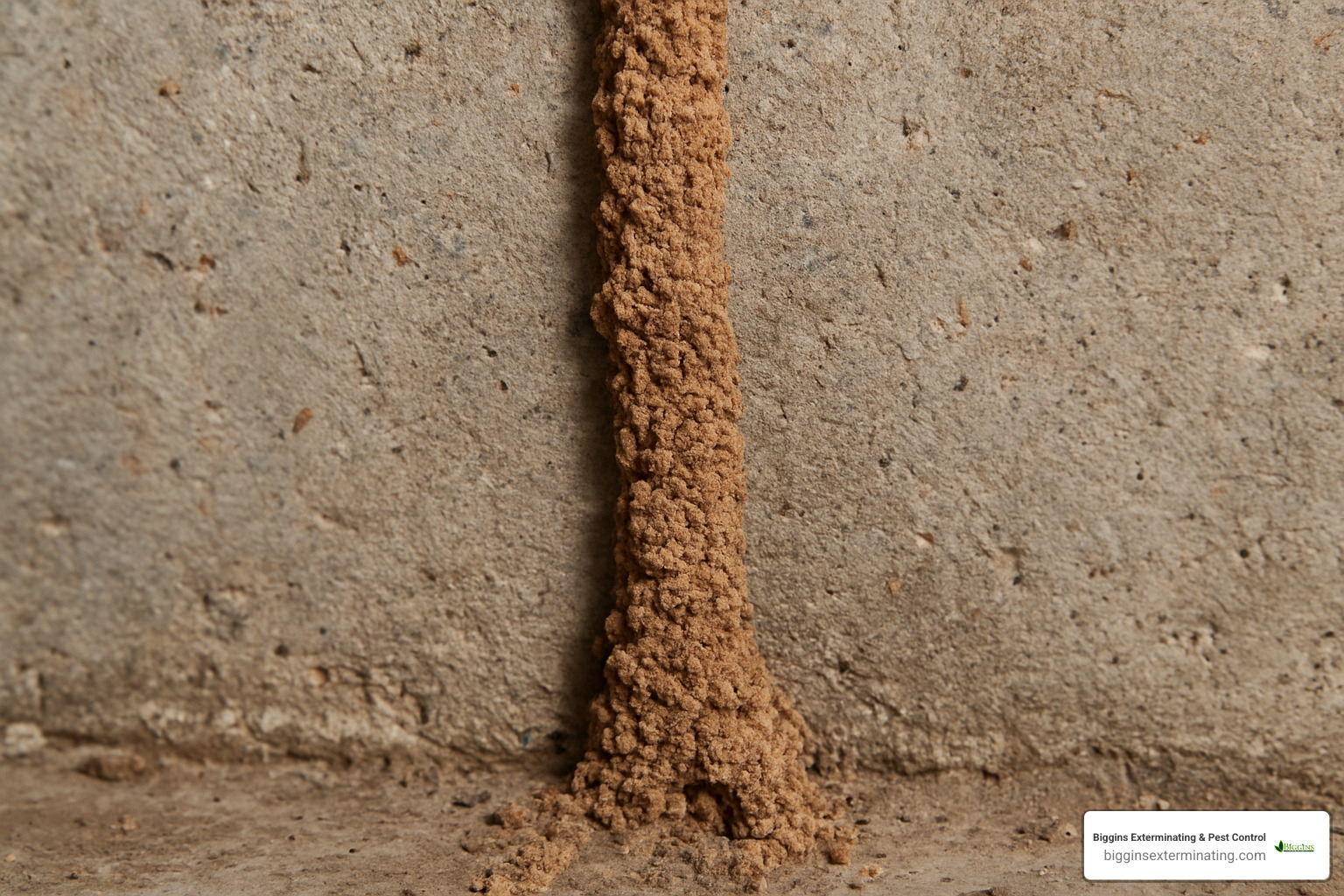
Check your foundation walls, crawl spaces, support piers, and even interior walls for these tubes. Here’s a simple test: break open a small section of a suspected mud tube. If you find live termites inside, you have an active infestation. If you break a section and it’s repaired within a few days, that’s another confirmation that you’re dealing with an active colony.
4. Frass (Termite Droppings)
While less common in Massachusetts, drywood termites leave behind distinctive droppings called frass. These tiny pellets resemble sawdust or coffee grounds and typically collect near kick-out holes where termites push waste from their tunnels. Our Bedford technician often points out that “under magnification, termite frass appears as six-sided pellets with rounded tips,” which distinguishes it from other wood-boring pests.
5. Hollow Wood
Termites are sneaky – they eat wood from the inside out, often leaving just a paper-thin veneer of wood or paint intact. The tap test is a homeowner’s best friend: simply tap suspect wood with a screwdriver handle. If it sounds hollow or the tool easily pokes through, you’ve likely got termite damage. Baseboards, door frames, and window sills are particularly vulnerable spots.
6. Buckling Floors
As termites feast on floor joists and subflooring, wooden floors may develop unusual blisters or begin to buckle. Tiles might loosen as the wood beneath deteriorates. Because these changes happen gradually, they’re easy to miss until the damage becomes extensive – which is why regular inspections are so valuable.
7. Stuck Windows and Doors
When termites invade door and window frames, the resulting damage and moisture can make these fixtures stubborn to open or close. While seasonal changes can also affect doors and windows, persistent sticking that worsens over time often points to termite activity beneath the surface.
8. Bubbling or Peeling Paint
Paint that bubbles or peels on wooden surfaces without any obvious water source nearby can signal termites working beneath. As they tunnel, termites introduce moisture that affects paint adhesion. This subtle sign is often missed but can be an early indicator of trouble.
9. Squeaky Floors
Those new or worsening squeaks underfoot might not just be charm of an older home – they could be warning signals. As termites hollow out joists and subfloors, the weakened wood becomes more prone to movement and noise when walked upon. If your floors are suddenly singing a different tune, it might be time for a termite inspection.
10. Clicking Sounds
Here’s something most homeowners don’t know: termites are actually audible if you listen carefully. Place your ear against a suspect wall and you might hear faint clicking sounds. That’s the soldier termites banging their heads against wood or shaking their bodies to signal danger to the rest of the colony. It’s their version of a security alarm!
11. Moldy or Musty Odor
Advanced termite infestations sometimes produce a distinctive smell similar to damp cardboard. This musty odor comes from the combination of termite waste, moisture, and deteriorating wood. If you notice this smell but can’t find any visible source of moisture, termites might be the culprit.
How do you know if you have termites: Look, Listen, Sniff
Engaging multiple senses can help you detect how do you know if you have termites before severe damage occurs. Your eyes, ears, and nose can all be valuable termite detectors:
Look: Regularly inspect wooden structures, foundation walls, and moisture-prone areas. Watch for swarmers near light sources, discarded wings, mud tubes, tiny holes in wood, and subtle changes in drywall texture.
Listen: In a quiet house, you might hear the faint symphony of destruction. Soldier termites make audible clicking or tapping sounds when disturbed, and heavily infested areas sometimes produce a soft rustling sound that can be heard when you place your ear against the wall.
Sniff: Your nose might catch what your eyes miss – a distinctive musty, earthy odor in areas with significant termite activity. It’s similar to mildew or damp cardboard and often comes from walls or wooden structures with no apparent moisture source.

How do you know if you have termites: Hidden Structural Red Flags
Many termite warning signs remain hidden because these pests work from the inside out. These subtle red flags often indicate a well-established infestation:
Hollow-sounding beams: The tap test works for structural elements too. Termite-damaged beams and joists sound distinctly hollow compared to solid wood. This simple check can reveal internal damage that’s invisible to the naked eye.
Blistered drywall: Termites sometimes tunnel through drywall’s paper backing, creating small blisters or dimpling on the surface. Look for subtle texture changes, especially near floor or ceiling joints where moisture tends to gather.
Sagging ceilings: When termites damage wooden support structures, ceilings may begin to sag or dip. This is particularly concerning as it indicates damage to critical structural components that maintain your home’s integrity.
Loosened tiles: Floor tiles becoming mysteriously loose without any water damage nearby? Termites could be damaging the wooden subfloor beneath, causing the adhesive to fail and tiles to detach.
The timeline for structural damage varies, but typically colonies need 3-5 years to mature enough to cause significant structural issues. During this time, the colony transforms from a handful of pioneers to a massive workforce of up to 2 million termites, all with one job: consuming your home’s wooden structures.
As our North Reading specialist often tells homeowners, “By the time most people notice visible structural damage, termites have likely been present for several years. This is why early detection and regular inspections are so critical.” A trained eye can spot the subtle signs long before serious damage occurs.
Termite or Ant? Spot-The-Difference Guide
“Is that a termite or just an ant with wings?” It’s one of the most common questions we hear from worried homeowners in Wilmington and surrounding communities. This confusion is perfectly understandable – both insects can appear similar at first glance, especially when they’re flying around your light fixtures on a spring evening.
Let me help you tell them apart with some simple but crucial differences:
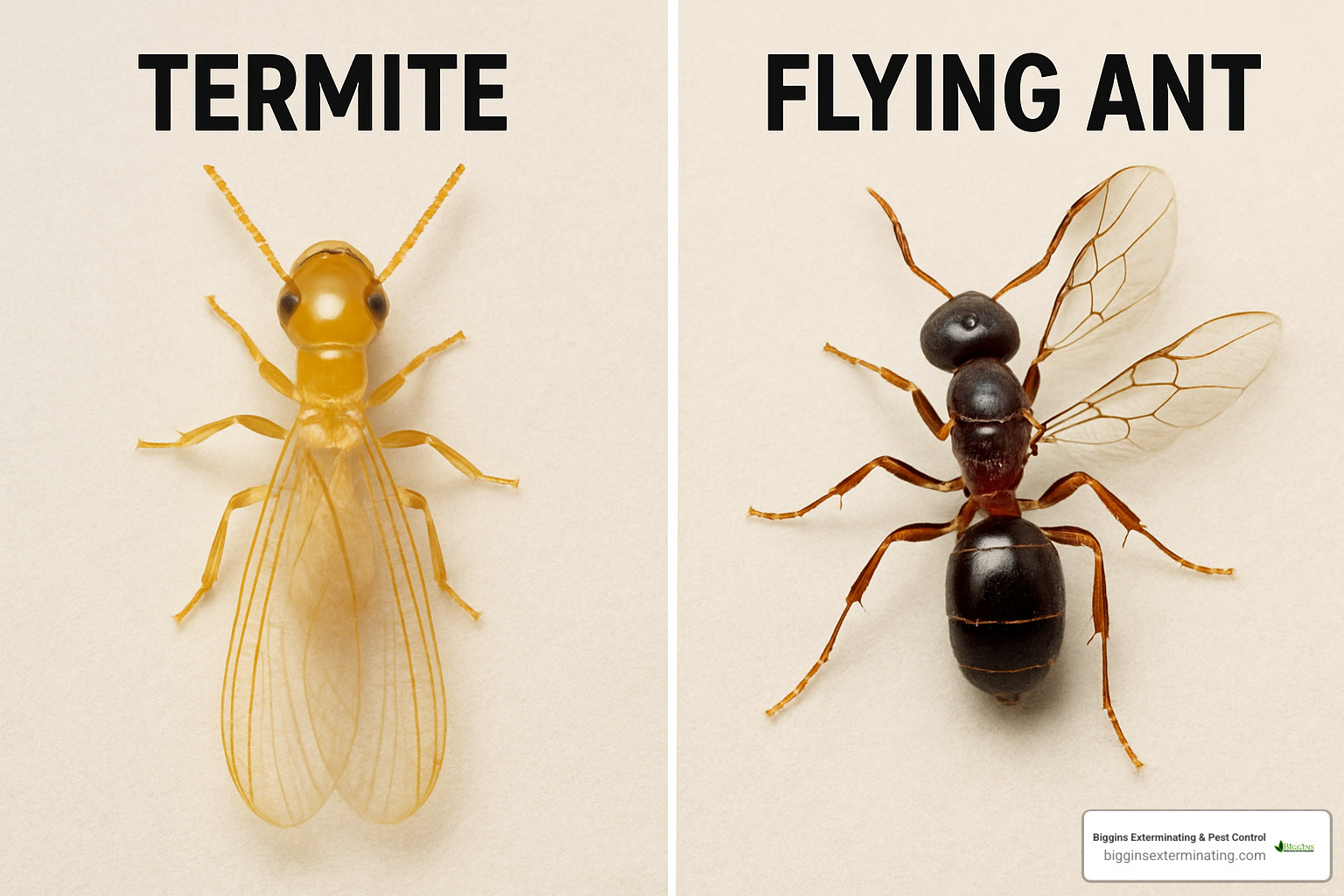
The body shape is your quickest visual clue. Termites have straight, uniform bodies without any narrowing in the middle – think of a cigar shape. Flying ants, by contrast, have that distinctive pinched “waist” in the middle, similar to an hourglass or, as our Andover technician likes to say, “a classic Coca-Cola bottle shape.”
Their antennae tell another story. Termite antennae are straight and beaded, like a string of tiny pearls. Ant antennae have a distinctive bend or “elbow” in them. This difference is visible even to the naked eye if you can get a good look at the insect.
Wings provide another definitive clue. Termites have two pairs of wings that are equal in length and often appear translucent or slightly milky. Flying ants also have two pairs, but their front wings are noticeably longer than their back wings, and they typically have a clearer appearance.
The color difference can help too. Termites generally appear light-colored – ranging from creamy white to light brown. Flying ants are usually darker, typically brown to black, with more variation in their coloring.
Timing matters as well. Termite swarms typically emerge in spring, especially after rainfall when humidity rises. Flying ants, while they can appear at various times, tend to swarm more frequently during summer months.
| Feature | Termites | Flying Ants |
|---|---|---|
| Body Shape | Straight waist (no pinch) | Pinched waist (thin middle) |
| Antennae | Straight, beaded | Elbowed (bent) |
| Wings | Two pairs of equal length | Two pairs of unequal length (front longer than back) |
| Wing Texture | Translucent, may appear milky or smoky | Clear or slightly tinted |
| Color | Usually light-colored (cream to light brown) | Typically darker (brown to black) |
| Swarming Season | Primarily spring, especially after rain | Various times, often summer |
What happens after the swarm provides another important clue. When termites find a suitable location to establish a new colony, they quickly shed their wings, leaving behind distinctive piles of discarded wings that resemble tiny fish scales. Flying ants tend to keep their wings much longer. Finding these wing piles around window sills, door frames, or light fixtures is a strong indicator that you’re dealing with termites, not ants.
“In my 30 years of pest control in Massachusetts, I’ve seen countless homeowners mistake flying ants for termites and vice versa,” shares our senior technician. “The difference matters because termites require immediate, specialized treatment to prevent serious structural damage.”
If you’re specifically concerned about carpenter ants, which can also damage wood (though differently than termites), we’ve created a detailed guide to help. For more specific information on telling these wood-damaging pests apart, visit our guide on How to Distinguish Carpenter Ants from Termites.
When in doubt about how do you know if you have termites versus flying ants, it’s always best to have a professional inspection. The treatment approaches differ significantly, and proper identification ensures you’re addressing the right problem with the right solution.
Acting Fast: Inspection, Treatment & Prevention
When you suspect termites have invaded your home, quick action can save you thousands in repair costs. Let’s walk through what you should do if you think these silent destroyers have moved in.
DIY Preliminary Inspection
Before reaching for the phone, there are several simple checks you can perform yourself:
Grab a screwdriver and tap on wooden structures around your home—particularly baseboards, window frames, and door jambs. A hollow sound often reveals termite tunneling beneath the surface. Then gently probe any suspicious wood; if the screwdriver sinks in easily or the wood feels spongy, that’s a red flag.
“I always tell homeowners to start in their basements and crawl spaces,” says our senior technician. “A quick flashlight inspection along the foundation can reveal those pencil-width mud tubes that are a termite calling card.”
If you’ve spotted discarded wings, collect a few in a small container. These tiny translucent wings can help our experts confirm whether you’re dealing with termites or just harmless flying ants.
Professional Inspection
While DIY checks provide valuable clues, nothing replaces a trained eye. Our thorough inspections at Biggins Exterminating include examining all accessible areas of your home, using moisture meters to identify high-risk zones, and carefully probing structural elements for damage that might be invisible to the untrained eye.
Professional inspections should become part of your home maintenance routine:
– Schedule annual inspections even if you see no signs (prevention is always cheaper than cure)
– Call immediately if you notice any warning signs
– Always get an inspection before purchasing a home
– Request a check if neighboring properties develop termite problems
“Many of our Wilmington customers are surprised when we find early-stage infestations during routine inspections,” our technician notes. “Catching termites before they cause structural damage can save homeowners thousands.”
Treatment Options
Once termites are confirmed, we’ll recommend treatment based on your specific situation:
Liquid Barriers create a protective zone around your home’s perimeter. Modern non-repellent formulations are particularly effective—termites can’t detect them, so they pass through the treated soil and unknowingly carry the product back to their colony, eliminating the entire population.
Bait Stations work on a similar principle but use a different approach. We strategically place these stations around your property, containing cellulose material treated with growth regulators. Foraging termites find the bait, bring it home, and the colony gradually collapses from within.
Borate Wood Treatments provide direct protection to wooden structures. These treatments penetrate the wood and create a long-lasting barrier against termites and other wood-destroying pests.
Based on internet data, termite treatment costs typically range from $600 to $2,500, with most homeowners paying around $1,500. However, extensive infestations in larger homes can reach $4,000-$8,000 to treat completely. These are industry averages—not specific Biggins Exterminating pricing.
For those interested in the science behind modern termite treatments, the EPA’s Chemical Search database provides detailed research on registered termiticides and their effectiveness.
Prevention Strategies
Whether you’ve just completed treatment or want to avoid problems altogether, these prevention strategies are essential:
Moisture Control is your first line of defense. Termites need moisture to survive, so fix leaky pipes promptly, ensure downspouts direct water away from your foundation, and maintain proper drainage around your home’s perimeter. A dry home is much less attractive to these pests.
Ventilation Improvements reduce humidity levels that termites love. Ensure crawl spaces have adequate airflow, use dehumidifiers in damp basements, install vapor barriers where needed, and maintain proper attic ventilation to prevent condensation.
Landscaping Tips can make a big difference. Keep soil at least 6 inches below any wooden structural elements, position mulch at least a foot away from your foundation, remove dead trees and stumps from your property, and trim branches that touch or overhang your roof.
Structural Modifications offer long-term protection. Consider replacing damaged wood with termite-resistant materials, sealing foundation cracks with appropriate fillers, installing metal mesh barriers at potential entry points, and using concrete supports with proper caps for deck posts.
“Most homeowners don’t realize that termite damage isn’t covered by standard insurance policies,” our Tewksbury specialist points out. “Insurance companies consider termite damage preventable, which means homeowners bear the full cost of repairs.” This makes prevention not just wise but financially essential.
For more details about our comprehensive termite protection services, visit our Termite Pest Control and Termite Barrier Treatment pages.
At Biggins, we believe in straight talk and lasting solutions. When you’re worried about how do you know if you have termites, we’re here to provide peace of mind with honest assessments and effective treatments that protect your biggest investment.
Frequently Asked Questions about how do you know if you have termites
How quickly can termites cause serious damage?
The silent nature of termite damage makes it particularly dangerous. While a mature colony might only consume about one foot of a 2×4 in 5-6 months, what makes termites so destructive is their relentless feeding schedule – they literally never stop eating your home.
Most homeowners don’t realize that termite colonies typically need 3-5 years to mature before producing the swarmers that often first alert you to their presence. By then, they’ve been quietly feasting on your home’s structure for years.
“Here in Massachusetts, we have a bit of a mixed situation,” explains our Woburn technician. “Our colder climate slows termites down compared to southern states, but most of our homes are heated year-round, creating a perfect environment for termites to keep munching away regardless of season.”
Climate change is also extending termite activity periods in our region as winters become milder. The bottom line? The longer these unwelcome guests go undetected, the more extensive – and expensive – the damage becomes.
Are termite treatments safe for family and pets?
Modern termite treatments have evolved significantly, with safety being a top priority alongside effectiveness. All products used by licensed professionals like our team at Biggins must be EPA-registered, ensuring they’ve been evaluated for safety when applied according to label directions.
“We treat every home as if our own children and pets lived there,” our Burlington specialist often tells worried homeowners. “That’s why we carefully select products with the lowest possible toxicity that will still effectively eliminate your specific infestation.”
Our approach to family and pet safety includes:
- Using contained bait systems in tamper-resistant stations when appropriate
- Providing clear instructions about re-entry times after treatments
- Training our technicians thoroughly in proper application techniques
- Offering reduced-risk options whenever possible for concerned families
During liquid treatments, you’ll typically need to leave home for a few hours, but most modern termiticides dry quickly with minimal odor. We always recommend covering fish tanks and turning off pumps during application, and keeping pets away from treated areas until completely dry.
Does homeowners insurance cover termite damage?
Here’s a painful truth many homeowners find too late: most standard homeowners insurance policies explicitly exclude termite damage. Insurance companies consider termite infestations to be preventable maintenance issues rather than sudden accidents like fires or storms.
“I’ve had to deliver the difficult news to families facing $25,000+ in termite repair costs that their insurance won’t cover a penny,” shares our Billerica specialist. “It’s heartbreaking, especially when regular inspections could have caught the problem early.”
This insurance exclusion exists because termite damage develops gradually over time and is considered preventable through proper maintenance. While some providers offer separate pest control coverage riders, these aren’t standard and come with additional costs.
Even new construction isn’t immune – while builders often use treated wood and other preventive measures, these protections deteriorate over time, potentially leaving homes vulnerable after several years.
This reality makes prevention and early detection absolutely critical. At Biggins Exterminating & Pest Control, we emphasize annual inspections as a small investment compared to the potentially devastating repair costs that fall entirely on the homeowner when termites strike.
How do you know if you have termites before they cause significant damage? The answer lies in regular professional inspections – the most reliable insurance policy against these destructive pests.
Conclusion
How do you know if you have termites? The signs might be subtle, but catching them early can save your home—and your wallet—from devastating damage. From those telltale mud tubes climbing your foundation to the hollow sound of wood that’s being eaten from within, staying alert to these warning signs is your best defense against these relentless destroyers.
At Biggins Exterminating & Pest Control, we’ve spent over four decades protecting homes throughout Wilmington, Andover, Bedford, and surrounding Massachusetts communities. As a family-owned business, we understand that your home isn’t just a structure—it’s your sanctuary and likely your biggest investment.
What truly makes our approach different is our commitment to protecting your home without trapping you in long-term contracts. We stand behind our termite treatments with solid warranties because we’re confident in our methods and dedicated to your complete satisfaction. Each home is unique, and we tailor our solutions to address your specific situation and concerns.
“We’ve seen what happens when termite problems go unaddressed,” says Stephen Biggins. “That’s why we’re passionate about helping homeowners spot the early warning signs and take action before significant damage occurs.”
The reality is sobering—termites work silently and continuously, potentially causing thousands in damage before you even realize they’re there. And remember, most homeowners insurance policies won’t cover termite damage, considering it preventable with proper maintenance.
If you’ve noticed any of the warning signs we’ve discussed—from discarded wings on your windowsill to frass pellets near wooden structures—don’t wait until your floors start sagging or your paint starts bubbling. Schedule a professional inspection today and gain the peace of mind that comes from knowing your home is protected from these silent destroyers.
For more information about our comprehensive termite control services, visit our Termites Pest Control page or reach out directly to schedule your thorough inspection.
When it comes to termites, remember this simple truth: early detection and professional treatment aren’t just conveniences—they’re essential safeguards for your home and financial wellbeing.
