
Understanding the Threat in Your Yard
Hornet nest removal near me is a task that requires careful planning and proper safety precautions. If you’re facing this challenge on your property, here’s what you need to know:
Quick Guide to Hornet Nest Removal:
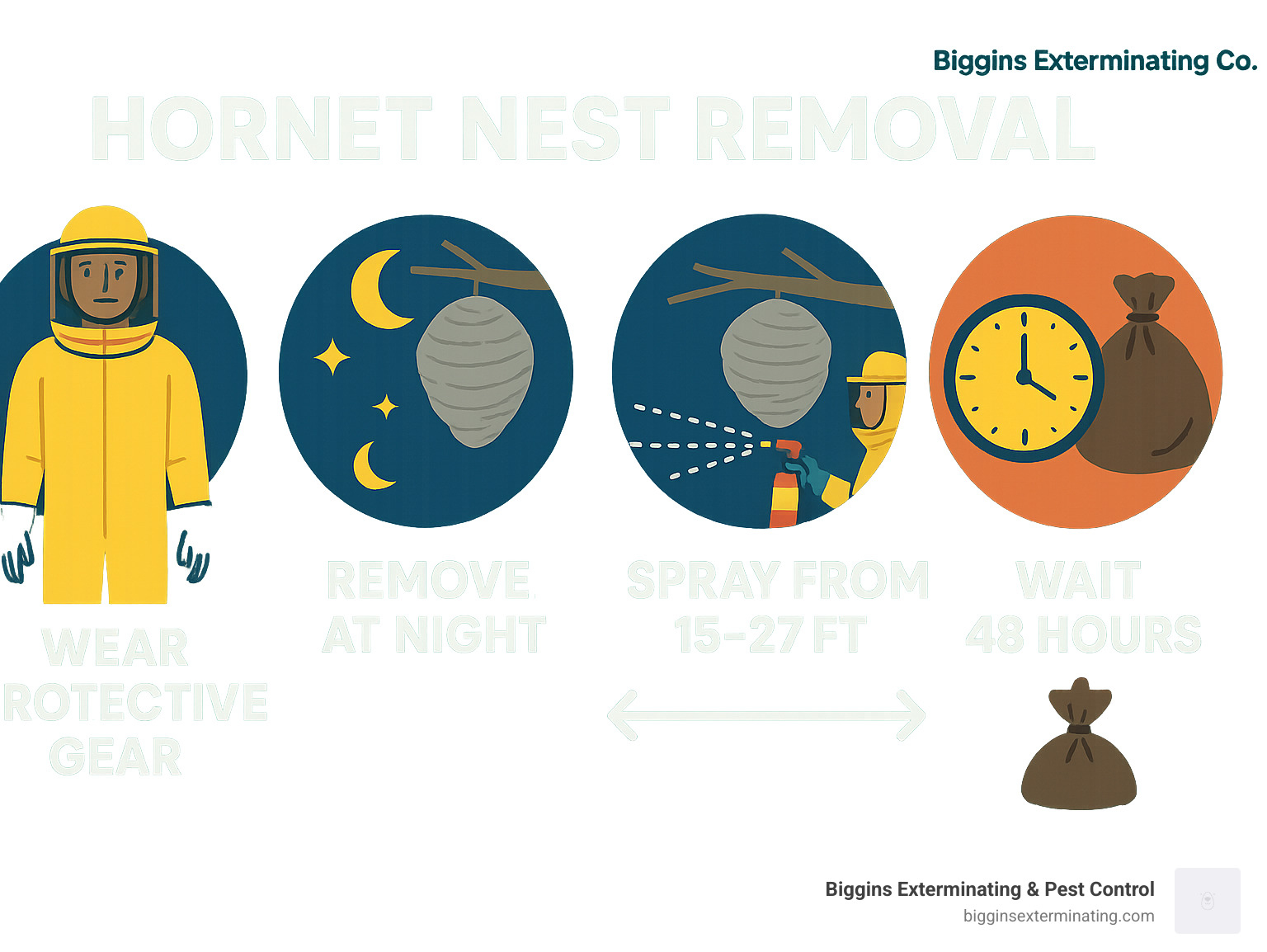
1. Safety First: Wear full protective clothing including a bee veil
2. Timing Matters: Remove nests at night when hornets are less active
3. Professional Help: Call experts for nests larger than a tennis ball
4. Proper Technique: Use hornet-specific insecticide spray from at least 15 feet away
5. Follow-up: Wait 48 hours after treatment before removing the nest
Finding a hornet nest on your property can be alarming. These aggressive stinging insects build paper-like nests in trees, under eaves, and in other sheltered locations around your home. Unlike bees, hornets can sting multiple times and will aggressively defend their colony when threatened. With over 500,000 people visiting emergency rooms each year due to hornet and wasp stings, taking proper precautions isn’t just recommended—it’s essential.
The size of the nest often indicates the severity of the infestation. Small nests (smaller than a tennis ball) might be manageable for DIY removal, but larger structures housing hundreds of hornets typically require professional intervention. Location also matters—nests in hard-to-reach places present additional dangers beyond the hornets themselves.
I’m Stephen Biggins, owner of Biggins Exterminating Co., and I’ve been safely removing hornet nests from Massachusetts properties since 1982, applying specialized hornet nest removal techniques that prioritize both effectiveness and family safety.
Quick Hornet nest removal terms:
– Affordable pest control services
– Home pest control tips
Know Your Enemy: Hornets 101
Getting to know your stinging neighbors is the first step in safe hornet nest removal. These aren’t your average backyard bugs – hornets pack a powerful punch and defend their homes with remarkable aggression.
In Massachusetts, you’ll likely encounter two main troublemakers:
European Hornets are the true hornets of North America, measuring a hefty 1 to 1.5 inches long. With their reddish-brown heads and yellowish striped abdomens, they’re impossible to miss. These formidable insects prefer building their paper nests in protected spaces like tree hollows, attics, or inside your walls.
Bald-faced Hornets might have “hornet” in their name, but they’re actually yellowjackets in disguise. Smaller than their European cousins at about 0.5 to 0.75 inches, they sport distinctive white facial markings against their black bodies. Their gray, papery nests hanging from tree branches or building overhangs look like something from an alien world.
“Hornets actually do good work controlling other insect populations,” says our senior technician at Biggins Exterminating. “The problem starts when they set up shop too close to your family’s living space. Those painful stings and potential allergic reactions make removal the safest option.”
The life of a hornet colony follows nature’s calendar. Spring sees a lone queen emerge from winter hibernation, building a modest starter home and laying the first eggs. As worker hornets hatch, they take over construction duty, expanding the nest while caring for new larvae. The queen’s sole job becomes egg production. By August, you could have 100-700 hornets buzzing around a single nest, depending on the species.
| Insect Type | Size | Nest Appearance | Aggressiveness | Sting Capacity |
|---|---|---|---|---|
| Hornets | 0.75-1.5 inches | Large paper envelope, aerial or in cavities | Very aggressive when nest threatened | Multiple stings |
| Yellow Jackets | 0.5-0.75 inches | Paper nests in ground or cavities | Highly aggressive, especially in fall | Multiple stings |
| Paper Wasps | 0.75-1 inch | Open-celled paper comb, umbrella-shaped | Moderately aggressive near nest | Multiple stings |
| Honey Bees | 0.5 inch | Wax combs, usually in cavities | Generally docile unless provoked | Single sting (dies after) |
Spotting a Hornet Nest
Early detection makes hornet nest removal much easier and safer. Here’s what to look for:
Hornet nests have a distinctive appearance – they’re enclosed, multi-layered paper structures with a single entrance hole, typically at the bottom. Made from chewed wood fibers mixed with hornet saliva, these architectural marvels start small in spring (think golf ball size) but can expand to basketball dimensions by late summer. Their grayish or brownish exterior has a unique layered, textured appearance.
The most telling sign is increased hornet traffic. If you notice several large wasps flying a consistent path to and from a specific area, you’ve likely found their home base. Since hornets are daytime creatures, watching their flight patterns during daylight hours can lead you straight to the nest.
“We had a client in Wilmington who noticed hornets disappearing into a tiny hole in their siding,” our technician remembers. “When we investigated, we finded an enormous European hornet nest hidden inside their wall cavity. Catching it earlier would have saved them a lot of trouble and expense.”
Common Nest Locations
Hornets are particular about real estate, preferring sheltered spots that offer protection while allowing easy access for food-gathering missions. After 40+ years of hornet nest removal across Massachusetts, we’ve found these insects in some truly surprising places:
Building exteriors are prime hornet territory, especially under eaves, soffits, and overhangs. Trees and shrubs provide natural support for hanging nests, while attics and wall voids offer European hornets the dark, protected spaces they crave. Outdoor structures like playsets, sheds, and pergolas make perfect attachment points, and some species even repurpose underground cavities like abandoned rodent burrows. Hollow tree trunks provide ready-made shelter that hornets rarely pass up.
In our decades serving communities like Andover, Bedford, and Billerica, we’ve extracted hornet nests from some unexpected hideouts – including inside barbecue grills, mailboxes, and even once from the engine compartment of a car that had been sitting unused for a few weeks!

Safety First – Gear, Timing & Precautions
When it comes to hornet nest removal, nothing trumps safety. These territorial insects don’t mess around when their home is threatened. One agitated hornet can sting multiple times, and a disturbed colony can transform from peaceful neighbors to an angry swarm in seconds.
“I’ve seen too many DIY removal attempts go sideways,” says our head technician with 25 years of experience. “Folks just don’t realize how quickly hornets mobilize when they feel threatened. Proper protection isn’t something you can skimp on—it’s absolutely essential.”
For safe hornet nest removal, you’ll need comprehensive protective gear. Start with thick full-body coveralls that have elastic closures at the wrists and ankles—no skin should be exposed. Your head needs complete protection with a bee veil and hat, as face stings are particularly dangerous. Pair these with heavy-duty leather gloves that stingers can’t penetrate and high-top boots with pant legs tucked inside for complete coverage.
A clever tool in your arsenal should be a red-filter flashlight. Hornets can’t see red light, making nighttime work significantly safer. This simple trick has saved our technicians from countless stings over the years.
Timing your hornet nest removal can make all the difference between success and a trip to the emergency room. The safest window is after sunset or before dawn when temperatures drop and most hornets are inside the nest, sluggish and less aggressive. Many of our most experienced technicians prefer working about an hour after complete darkness has fallen, when hornet activity reaches its lowest point.
If you have known allergies to insect stings, please don’t attempt DIY removal under any circumstances. According to scientific research on sting reactions, even people without previous allergic history can develop sensitivities after multiple stings. Always keep an epinephrine auto-injector (EpiPen) on hand if you have allergies, and never work alone—a helper could literally save your life in an emergency.
Before you begin, map out your escape route. Know exactly which direction you’ll move if things go south, and clear the path of anything that might trip you up during a hasty retreat. It might seem overly cautious, but when hornets start swarming, you’ll be grateful for the planning.
Choosing the Right Tools
Beyond your protective suit, successful hornet nest removal requires specialized equipment that keeps you at a safe distance from the angry residents.
First and foremost, you need an insecticide specifically formulated for wasps and hornets that can spray from at least 15-27 feet away. This distance is your safety buffer—the further you can stand from the nest, the better your chances of avoiding stings. The best commercial sprays reach 20-27 feet, giving you that crucial margin of safety.
For hard-to-reach nests, an extendable pole can be invaluable, allowing you to treat high nests without climbing. If branch trimming is necessary, have pruning shears or a saw ready, but only use them after the nest has been thoroughly treated and hornets are inactive.
For disposal, prepare heavy-duty garbage bags and duct tape to seal them securely. If you must use a ladder (though we strongly recommend professional help for liftd nests), invest in a ladder stabilizer to prevent dangerous wobbling.
“The spray distance matters more than most homeowners realize,” our technician explains. “Standing at least 15 feet from an active nest dramatically cuts your risk. When selecting an insecticide, look for products with pyrethroids or similar fast-acting ingredients. Foaming formulations work particularly well because they expand inside the nest, reaching hornets that might otherwise escape your initial treatment.”
DIY vs Professional Risk Assessment
How do you decide whether to tackle hornet nest removal yourself or call in the professionals? At Biggins Exterminating, we recommend this straightforward risk assessment:
DIY removal might be reasonable when all these conditions are met: the nest is smaller than a tennis ball, it’s easily accessible without climbing, you have complete protective gear, you have no insect sting allergies, the nest is fully visible (not hidden in a wall cavity), and you can work at night when hornets are less active.
On the flip side, professional help is the smarter choice if any of these apply: the nest exceeds tennis ball size, it requires ladder access, it’s partially hidden or inside a structure, you have health concerns or allergies, children or pets are at risk, or multiple nests are present on your property.
“We had a customer in Burlington who decided to remove a nest from their second-story eaves,” our service manager recalls with a grimace. “When the hornets swarmed, they fell from the ladder and ended up with both painful stings and a broken wrist. Between their medical bills and our eventual service call, they spent far more than if they’d just called us in the first place.”

Ladder accidents during hornet nest removal attempts are frighteningly common. When you combine heights with the panic that follows disturbing a hornet nest, the results can be disastrous. No nest is worth a trip to the hospital—when in doubt, leave it to professionals who remove these nests safely every day.
DIY Hornet Nest Removal Near Me Step-by-Step
If you’ve assessed the situation and determined that DIY hornet nest removal is appropriate, follow these careful steps for the safest experience:
- Prepare during daylight: Observe the nest from a safe distance to identify access points and flight patterns. Plan your approach, but don’t attempt removal until after dark.
- Gear up completely: Put on all protective clothing before approaching the nest area. Check for gaps in your protection and seal them with tape if necessary.
- Approach carefully: Move slowly and quietly toward the nest after dark. Use a red-filtered flashlight to see without agitating the hornets.
- Apply insecticide: From at least 15 feet away, spray the insecticide directly into the nest entrance. Apply a steady stream for 10-15 seconds, saturating the nest exterior.
- Retreat immediately: After spraying, back away quickly but carefully along your planned escape route. Do not use a white-light flashlight or make loud noises.
- Wait 48 hours: This crucial waiting period ensures the insecticide has time to work throughout the colony. Return during daylight to observe if any hornets remain active around the nest.
- Remove the nest: If no activity is observed after 48 hours, approach the nest wearing full protection. Place a heavy-duty garbage bag under the nest, cut it down (if attached to a branch), and seal the bag immediately.
- Dispose properly: Place the sealed bag in outdoor trash. Do not crush the nest, as it may contain surviving hornets.
- Clean the area: Wash the area where the nest was attached with soap and water to remove pheromones that might attract future colonies.
“The 48-hour waiting period is non-negotiable,” emphasizes our senior technician. “We’ve seen many cases where people rushed to remove a nest too soon, only to find that not all the hornets were dead. This almost always results in stings and a more complicated removal process.”
For nests attached to valuable plants or structures, take special care during removal to minimize damage. If the nest is attached to your home, inspect the area afterward for any entry points that should be sealed to prevent future nests.
Hornet Nest Removal at Night
Nighttime hornet nest removal offers significant safety advantages. Hornets are cold-blooded insects whose activity level corresponds directly to the ambient temperature. After sunset, when temperatures drop below 50°F (10°C), hornets become sluggish and less aggressive.
Additionally, at night:
– Most or all worker hornets will have returned to the nest
– Their vision is naturally poor in darkness
– They’re less likely to fly long distances if disturbed
– Their reaction time is significantly slower
If you must conduct a removal during daylight hours (which we don’t recommend for DIY attempts), choose a cool, overcast day when hornet activity is naturally reduced. Early morning, just before dawn, can be almost as effective as night if temperatures are still low.
“We once had an emergency removal in Lexington where a nest had been built right next to a child’s bedroom window,” shares our technician. “We performed the removal at 3:00 AM when the hornets were completely dormant. Not a single hornet became airborne during the entire process.”
Hornet Nest Removal Without Chemicals
For those concerned about chemical use, there are alternative methods for hornet nest removal, though they generally carry higher risks and may be less effective:
Soapy Water Method:
1. Mix 2 cups of dish soap with 1 gallon of water
2. At night, while wearing full protection, pour or spray the solution directly into the nest entrance
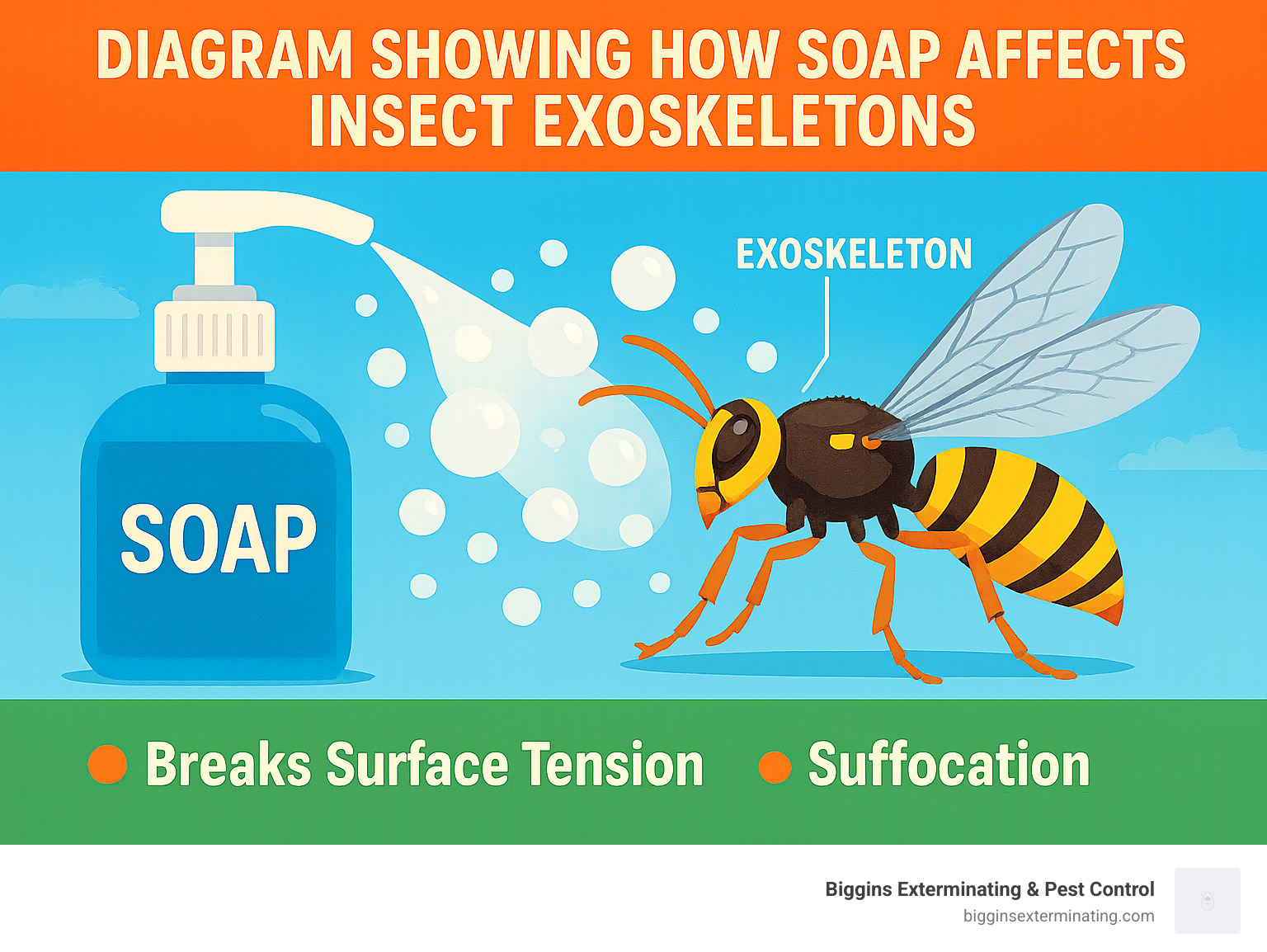
3. The soap breaks the surface tension of the hornets’ exoskeleton, essentially suffocating them
4. Multiple applications may be necessary
Vacuum Extraction:
This method requires a shop vacuum with a long hose attachment:
1. Set up the vacuum at night with the hose positioned near (but not touching) the nest entrance
2. Turn on the vacuum and allow it to run for 1-2 hours to capture hornets as they enter or exit
3. Seal the vacuum bag immediately after turning off the unit
4. Freeze the bag for 24 hours before disposal
“While these methods can work, they require closer proximity to the nest than chemical sprays,” warns our technician. “We typically reserve these approaches for special circumstances where chemical sensitivity is a concern, and even then, we use modified techniques that maintain safe distances.”
When to Call the Pros & What It Costs
Despite the availability of DIY methods, professional hornet nest removal is often the safest and most effective solution. At Biggins Exterminating & Pest Control, we bring specialized equipment, extensive training, and decades of experience to every job.
“I’ve seen too many homeowners end up in the emergency room trying to handle what should have been a professional job,” shares our senior technician. “When it comes to large nests or difficult locations, the risk simply isn’t worth it.”
Professional removal is strongly recommended when the nest is larger than a volleyball, located more than 10 feet above ground, or hidden inside a wall, chimney, or structural void. If you’ve observed extremely aggressive behavior, previous removal attempts have failed, or someone in your family has allergies to insect stings, it’s definitely time to call us. Multiple nests on your property also indicate a situation best handled by professionals.
Based on internet research (not our specific pricing), professional hornet nest removal typically costs between $150 and $600 nationwide, with high-end removals for difficult cases potentially reaching $1,800. Factors affecting cost include nest size and location, number of nests requiring treatment, accessibility challenges, need for specialized equipment, and whether follow-up treatments are necessary.
Unlike many companies, at Biggins Exterminating & Pest Control, we don’t require long-term contracts for hornet nest removal. Our family-owned business has been serving communities throughout northeastern Massachusetts for over 40 years with transparent pricing and guaranteed results.
“What sets us apart is our commitment to complete removal,” explains our owner. “We don’t just spray and leave—we ensure the entire colony is eliminated and take preventative measures to discourage future nests in the same location.”
Signs You Need Professional Help
Sometimes, the need for professional hornet nest removal is obvious. Other times, the signs are more subtle.
A nest larger than a volleyball houses hundreds of hornets and requires professional handling. When hornets build nests in inaccessible locations like wall voids, chimneys, or high in trees, special equipment and techniques become necessary for safe removal.
“Last summer, we helped a family in Andover who finded hornets entering their bedroom wall,” recalls our technician. “They’d initially tried store-bought sprays, but the problem only worsened. When we opened the wall, we found a nest nearly three feet tall inside the cavity—something no homeowner could safely handle alone.”
Multiple entry points often indicate a satellite nest or extensive infestation. If hornets return to the same area year after year, there may be structural issues or attractants that need professional assessment. Unusual aggression—hornets attacking without provocation or from significant distances—suggests a particularly defensive colony that requires expert handling.
If you or anyone in your home has severe allergies to insect stings, professional removal isn’t just convenient—it’s essential. The risk of anaphylaxis makes even small nests too dangerous for DIY approaches.
What to Expect From a Service Visit
When you call Biggins Exterminating & Pest Control for hornet nest removal, our process is thorough and effective. We start with a comprehensive inspection to identify all nests, including hidden or satellite colonies that might be overlooked. Based on what we find, we develop a targeted approach using the most effective and appropriate methods.
Our technicians arrive fully equipped with professional-grade protective gear and specialized application equipment that allows treatment from safe distances. After the nest is treated, we physically remove it when safe to do so, eliminating the risk of reinfestation.
“What surprises many of our clients is how quickly and efficiently we can resolve even serious infestations,” says our service manager. “A job that might take a homeowner multiple dangerous attempts over several days can often be completed by our team in a single visit, with guaranteed results.”
Before we leave, we’ll provide preventative recommendations to identify and help address conditions that might attract future hornet colonies. We also offer a follow-up guarantee—if any hornets return to the treated area, we return at no additional cost.
When hornets are near power lines or in other hazardous locations, professional services become even more valuable. Our technicians are trained to work safely around these dangers and have the proper equipment to reach difficult spots without putting themselves or your property at risk.
“I remember a particularly challenging removal at a three-story colonial in Bedford,” our technician shares. “The nest was tucked between the chimney and roof peak, nearly 35 feet up. The homeowner had considered renting a lift to do it himself, but wisely called us instead. We had the proper equipment, insurance, and expertise to handle it safely—and the peace of mind that provided was worth every penny to the family.”
Keep Them Away: Long-Term Prevention
The best approach to hornet nest removal is preventing nests from being established in the first place. Here are proven strategies to make your property less attractive to nest-building hornets:
- Seal entry points: Inspect your home’s exterior for gaps, cracks, and holes, particularly around eaves, soffits, and vents. Use caulk, expanding foam, or fine mesh screens to seal potential entry points.
- Reduce food sources: Hornets are attracted to sweet foods and proteins. Keep outdoor eating areas clean, secure garbage cans with tight-fitting lids, and promptly clean up fallen fruit from trees.
- Manage outdoor lighting: Many flying insects that hornets prey on are attracted to lights. Using yellow “bug light” bulbs for exterior lighting can reduce the insect population that attracts hornets.
- Install decoy nests: Hornets are territorial and generally won’t build nests near existing colonies. Commercial decoy nests can deter hornets from establishing real nests on your property.
- Apply preventative treatments: Consider professional perimeter treatments around your home, especially in spring when queens are seeking nesting sites.
“Prevention is always more cost-effective than removal,” advises our technician. “Many of our regular maintenance clients haven’t had a hornet problem in years because we’ve implemented comprehensive preventative strategies.”
For clients in communities like Woburn, Tewksbury, and Burlington, we offer seasonal preventative treatments that significantly reduce the likelihood of hornet nest establishment.
Yard Maintenance Checklist
Your landscaping practices can significantly impact hornet activity. Here’s a maintenance checklist to reduce the appeal of your yard to nest-building hornets:
- Trim vegetation: Keep bushes, shrubs, and tree branches trimmed away from your home’s exterior (at least 3 feet clearance).
- Remove yard debris: Piles of leaves, wood, or compost can provide shelter for hornets looking to establish nests.
- Manage water sources: Fix leaky outdoor faucets and ensure proper drainage to eliminate standing water that attracts insects hornets feed on.
- Regularly inspect outbuildings: Check sheds, garages, and other structures monthly during spring and summer for early signs of nest building.
- Position bird feeders strategically: Place them at least 30 feet from your home to keep hornet-attracting activity away from living areas.
- Maintain compost properly: Turn compost regularly and keep it covered to reduce insect activity that might attract hornets.
“One of our clients in Lexington had recurring hornet problems until we helped them redesign their garden layout,” shares our landscaping consultant. “Simply relocating their hummingbird feeders and fruit trees farther from the house dramatically reduced hornet presence near their patio.”
Safe Repellent Products
Several commercial and natural products can help deter hornets from establishing nests on your property:
Natural Repellents:
– Essential oils: Peppermint, clove, geranium, and lemongrass oils have shown effectiveness as hornet deterrents. Mix 15-20 drops with water in a spray bottle and apply to potential nesting areas.
- Cucumber peels: Hornets dislike the acidic property of cucumbers. Placing peels near previous nest sites may discourage new construction.
- Vinegar solution: A 50/50 mix of vinegar and water sprayed around potential nesting sites creates an inhospitable environment for hornets.
Commercial Products:
– Motion-activated deterrents: Devices that spray water when motion is detected can discourage hornets from building nests in specific areas.
- Ultrasonic repellers: These devices emit high-frequency sounds that are unpleasant to many insects, including hornets.
- Preventative sprays: Long-lasting insecticide barriers can be applied to eaves, soffits, and other common nesting areas in early spring.
“We recommend a layered approach to prevention,” advises our pest management specialist. “Combining physical barriers, natural repellents, and targeted professional treatments provides the most comprehensive protection against hornet nest establishment.”
Frequently Asked Questions about Hornet Nest Removal
How small must a nest be for safe DIY removal?
When it comes to hornet nest removal, size truly matters. We generally recommend the “tennis ball rule” – only attempt DIY removal if the nest is smaller than a tennis ball (about 2.5 inches in diameter). These smaller nests are typically in their early development stages and house fewer hornets, which significantly reduces your risk of receiving multiple painful stings.
“The tennis ball rule is something we emphasize to all our clients,” says our technician. “Once a nest exceeds this size, the colony has likely grown large enough to mount a significant defense if disturbed.”
To put this in perspective, a mature bald-faced hornet nest can grow to basketball size or larger and may house anywhere from 400-700 hornets. European hornet nests can contain similar numbers, though they’re trickier to spot since they prefer building in cavities rather than hanging in the open. When colonies reach these sizes, the coordinated defense they can mount makes professional intervention the safer choice.
What should I do if I’m stung during removal?
Despite our best precautions, stings can happen during hornet nest removal. If you find yourself on the receiving end of a hornet’s stinger, don’t panic. Follow these steps:
First, retreat to safety immediately but try to move deliberately rather than flailing or running erratically, which can trigger more aggressive responses from the hornets. Once you’re at a safe distance, check for the stinger. Unlike bees, hornets can sting multiple times, but occasionally their stinger might break off.
If you spot a stinger, remove it by scraping (never pinching) with a credit card or similar flat edge. Pinching can squeeze more venom into the wound. Wash the area thoroughly with soap and water, then apply a cold compress to reduce swelling and pain.
Over-the-counter antihistamines like diphenhydramine (Benadryl) can help manage symptoms. The most important thing is to monitor for severe reactions. Watch for signs of anaphylaxis, including difficulty breathing, dizziness, nausea, or swelling beyond the sting site.
“The severity of reactions can increase with multiple stings or repeated exposure over time,” warns our safety coordinator. “Even if you’ve never had an allergic reaction before, it’s important to monitor symptoms carefully after any sting incident.”
For those with known allergies, using an epinephrine auto-injector immediately and seeking emergency medical attention is crucial, regardless of how minor the initial reaction might seem.
Can I burn or hose down a hornet nest instead?
I’ve heard many creative hornet nest removal ideas over my years in pest control, but using fire or water are two approaches I strongly advise against. Here’s the honest truth about why these methods are dangerous:
Fire methods might seem effective in theory, but they create serious fire hazards for your home and surrounding vegetation. They often fail to kill the entire colony and cause hornets to disperse aggressively in all directions—significantly increasing your risk of multiple stings. Not to mention, using fire may violate local fire codes and result in hefty fines. The risk simply isn’t worth it.
Similarly, water methods rarely work as expected. Hornet nests have waterproof outer layers specifically designed to protect against rain. Hosing down a nest typically triggers immediate defensive behavior from the entire colony. Wet hornets can’t fly well, but they can certainly still sting—and they’ll be extremely agitated. Plus, forceful water can damage your home’s structures through unwanted water infiltration.
“We’ve seen the aftermath of both these approaches, and they almost always result in injury, property damage, or both,” cautions our emergency response specialist. “One client in Bedford tried hosing down a nest and received over 30 stings when the hornets swarmed.”
If you’re looking for alternatives to chemical treatments, the soapy water method described earlier is much safer and more effective than either fire or plain water approaches. But for nests beyond the tennis ball size, professional removal remains your safest option.
At Biggins Exterminating, we’ve safely removed thousands of hornet nests over our 40+ years serving Massachusetts communities. We’ve developed techniques that prioritize both effectiveness and safety, giving you peace of mind without the painful stings or property damage that often result from DIY approaches.
Conclusion
Hornet nest removal isn’t just about getting rid of an unsightly paper structure—it’s about restoring safety and peace of mind to your outdoor spaces. Throughout this guide, we’ve walked through the critical steps for identifying, addressing, and preventing hornet infestations around your home.
When I first started in the pest control business back in 1983, I noticed how many homeowners were attempting dangerous DIY removals that often ended with multiple stings or incomplete elimination. That’s why at Biggins Exterminating & Pest Control, we’ve developed proven techniques that prioritize both effectiveness and family safety.
Timing and preparation make all the difference. Small nests caught in spring can prevent major colonies by late summer. Proper protective gear isn’t optional—it’s essential for anyone approaching a nest. And our “tennis ball rule” provides a simple guideline: if the nest is larger than a tennis ball, it’s time to call professionals.
“The most rewarding part of our job is seeing families reclaim their yards,” says our senior technician Mark. “Last summer, we helped a family in Burlington who hadn’t used their beautiful backyard for weeks because of an aggressive hornet colony. The day after our treatment, their kids were back on the swing set without worry.”
For those determined to handle small nests themselves, follow our nighttime removal guidelines carefully. For larger infestations, professional hornet nest removal is an investment in your family’s safety—not an unnecessary expense.
Our family-owned business has proudly served communities throughout northeastern Massachusetts for four decades, including Andover, Bedford, Billerica, Burlington, Lexington, North Reading, Tewksbury, Wilmington, and Woburn. Unlike many pest control companies, we don’t lock customers into long-term contracts. We stand behind our work with satisfaction guarantees and preventative recommendations to keep your property hornet-free year after year.
The best compliment we receive isn’t just that we’ve eliminated a dangerous nest—it’s that we’ve helped restore a sense of security to our clients’ homes. Whether you’re dealing with a small nest under your deck or a massive colony in your attic eaves, our team is ready to help you solve your hornet problems quickly, safely, and completely.
For more information about our hornet nest removal services or to schedule a free inspection, contact our team today. Let us put our 40+ years of family-owned expertise to work for you.
