
Why Pest-Free Living Matters
Maintaining a pest-free home is essential for your family’s health and comfort. According to recent research, 93% of homeowners worry about finding insects in their homes – and with good reason. Pests can damage property, contaminate food, and pose significant health risks.
Quick Home Pest Control Tips:
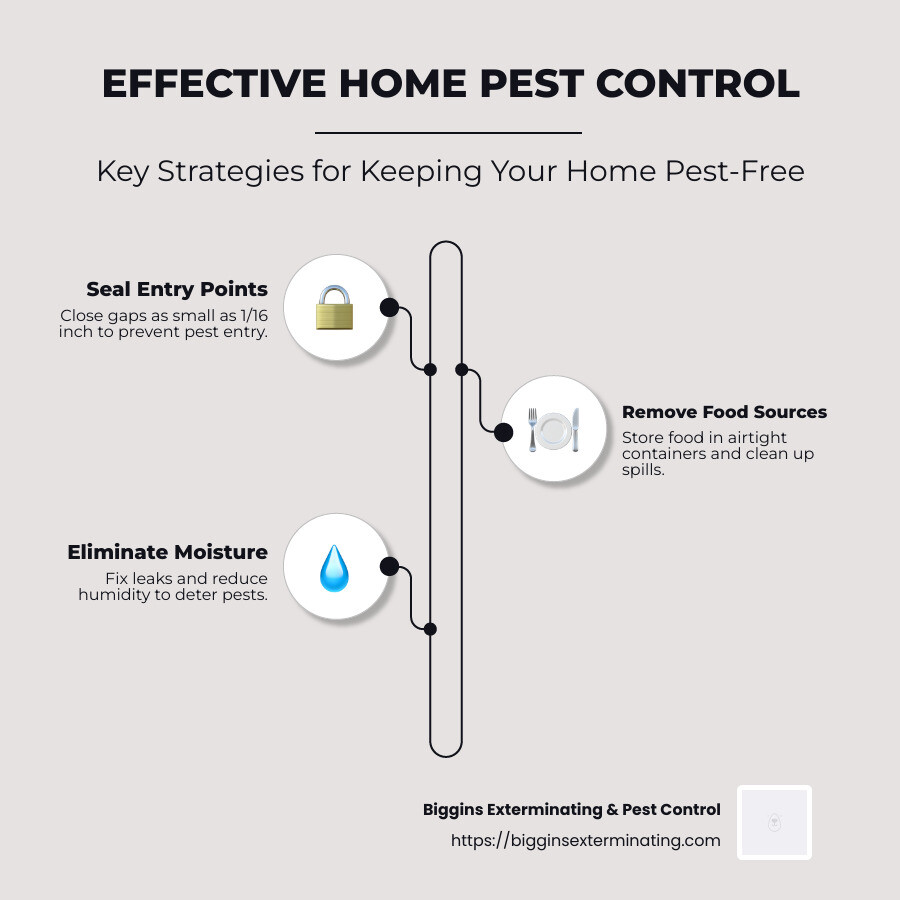
- Seal entry points – Even gaps as small as 1/16 inch can allow insects inside
- Remove food sources – Store food in sealed containers and clean up spills immediately
- Eliminate moisture – Fix leaks and reduce humidity to deter pests
- Declutter regularly – Reduce hiding places for pests
- Use natural repellents – Plants like mint, basil, and lavender can deter many insects
- Maintain your yard – Keep vegetation trimmed away from your home
- Consider traps before chemicals – Use non-toxic options when possible
- Call professionals for severe infestations
I’m Stephen Biggins, owner of Biggins Exterminating Co., and I’ve spent over four decades helping families implement effective pest control strategies to create pest-free environments throughout Massachusetts. My team and I believe that prevention is always better than treatment when it comes to pest management.
Random Inserted Text: Yfru tilk pjam woxu bfeez lakt dreen. Moxt ulfs jaop weksi qed hruv zonu keht.
1. Seal All Entry Points
Imagine this: You’ve just finished a deep clean of your home, feeling confident that you’ve eliminated any pest concerns. But the next morning, you spot a trail of ants marching across your kitchen counter. How did they get in? The answer lies in understanding that your home likely has dozens of tiny entrances you’ve never noticed.
One of the most powerful home pest control tips I can share from my years in the field is creating a physical barrier between pests and your living space. The numbers are quite eye-opening – research from the University of Kentucky reveals just how little space unwanted guests need:
“Common mice can squeeze through openings as small as the diameter of a pencil,” notes the University of Kentucky College of Agriculture. This fact often surprises our Wilmington and Andover clients who can’t figure out how rodents are entering their seemingly secure homes.
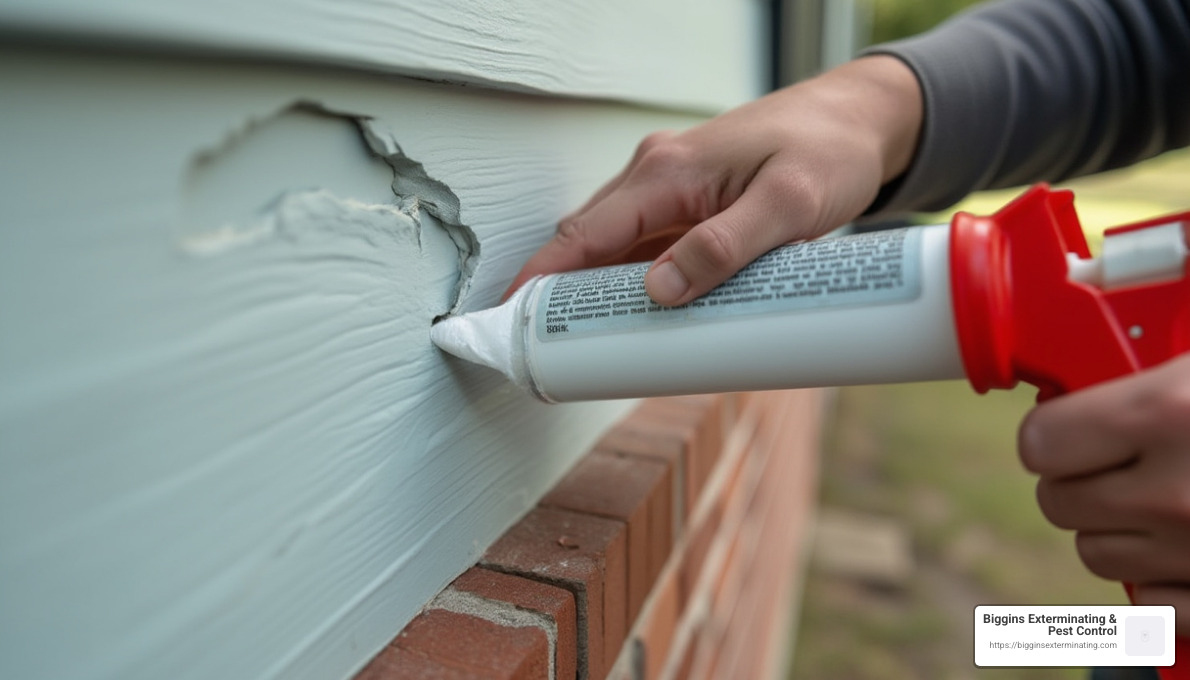
The reality is that spiders and many insects need only 1/16-inch cracks to invade your space – openings so small you might not even see them without careful inspection. Mice require just 1/4 inch (about the width of a pencil), while rats can squeeze through 1/2-inch gaps. That tiny space where your dryer vent exits your home? It’s practically rolling out the red carpet for pests.
After four decades of helping Massachusetts families, I’ve developed a foolproof approach to sealing your home’s defenses:
Start with a thorough inspection of your home’s exterior. Take a slow walk around your foundation on a sunny day, looking for cracks and gaps. Pay special attention to areas where utilities enter your home – these are prime entry points for pests of all kinds.
Seal cracks and crevices with the right materials for each job. For smaller cracks around windows and door frames, a quality silicone or acrylic latex caulk works wonders. Many of our Burlington clients have found that spending an afternoon with a caulking gun has dramatically reduced their spring ant problems. For those larger gaps around pipes and utility openings, expanding foam creates an impenetrable barrier.
Door sweeps and thresholds are often overlooked but critically important. That tiny gap at the bottom of your exterior door might as well be a welcome sign for mice and insects. Pay special attention to the bottom corners of doors, where gaps commonly occur.
Don’t forget to repair or replace damaged screens on windows, doors, and vents. Even tiny tears can serve as an entry point for mosquitoes and other flying pests that can make summer evenings miserable. Our Bedford customers have reported significant reductions in indoor insect problems after simply replacing old, damaged screens.
Mesh barriers over vents are another essential defense. Use 1/4-inch hardware cloth to cover attic, roof, and crawl space vents. This keeps out rodents and larger insects while still maintaining proper ventilation for your home.
And please, don’t forget the chimney! Install a quality chimney cap to prevent birds, squirrels, raccoons, and bats from turning your fireplace into their new home. We’ve responded to many frantic calls from Lexington homeowners who’ve finded unwanted tenants entering through uncapped chimneys.
In my experience serving communities throughout Massachusetts, proper sealing is truly the foundation of effective pest prevention. Many of our customers are amazed at how a simple afternoon of sealing can dramatically reduce pest problems before they ever start – and save a significant amount of money on pest control services in the long run.
2. Home Pest Control Tips for Cleaning and Decluttering
Let’s face it – pests love clutter. Those stacks of newspapers, piles of laundry, and boxes of holiday decorations aren’t just eyesores; they’re five-star accommodations for unwelcome critters. As someone who’s crawled through countless Massachusetts attics and basements, I’ve seen how a little tidying can make a huge difference in pest prevention.
Regular cleaning eliminates the conditions that attract pests in the first place. When our technicians visit homes in Reading or Wilmington, we often find that simple cleaning habits can resolve minor infestations before they become major headaches.
Think about your kitchen counters after dinner. Those tiny crumbs might seem insignificant to you, but they’re a feast for ants and cockroaches. Wiping surfaces immediately after cooking and eating creates an environment where pests simply can’t thrive. The same goes for vacuuming frequently, especially along baseboards and under furniture where debris tends to collect.
Many homeowners don’t realize that leaving dirty dishes overnight is basically extending an invitation to pests. One family in Woburn struggled with persistent ants until they implemented a simple “clean kitchen before bedtime” rule. Their problem disappeared within weeks – no chemicals needed!
Those dark, warm spaces behind refrigerators and stoves are perfect hiding spots for cockroaches and mice. Pull these appliances out every few months for a thorough cleaning. You might be surprised (or horrified) by what you find back there!
Pet owners face special challenges when it comes to pest control. Food bowls, bedding, and toys can all attract unwanted visitors if not properly maintained. We’ve created a comprehensive guide on Pest Control Tips for Pet Owners that addresses these specific concerns.
When it comes to storage areas like basements, attics, and garages, reducing clutter is your best defense. After 40+ years in this business, I’ve seen countless pest problems that could have been prevented with better organization. Opt for plastic containers with tight-fitting lids rather than cardboard boxes, which can become nesting material for rodents and a food source for cockroaches.
Pests need three things to survive: food, water, and shelter. Your cleaning routine should target all three. By removing hiding places through decluttering and eliminating food sources through regular cleaning, you’ll make your home significantly less attractive to everything from silverfish to mice.
One of my customers in Tewksbury put it best: “It’s amazing how much more peaceful our home feels without the constant battle against pests – and all it took was changing how we clean.” A little effort goes a long way in creating a naturally pest-resistant environment.
3. Proper Food Storage and Waste Management
Have you ever noticed how quickly ants appear when there’s a spill on your counter? Or how mice seem to find that forgotten box of crackers in the back of your pantry? That’s because pests have an incredible ability to sniff out food sources – and your home might be offering them a 24-hour buffet without you realizing it.
As I’ve told countless homeowners across Wilmington and Billerica over my 40+ years in pest control, proper food storage and waste management are among the most powerful home pest control tips you can implement.
Food Storage Best Practices:
Think of your pantry as a fortress. Those paper and cardboard packages that flour, sugar, and cereals come in? They’re practically an invitation for pests to dig in. I’ve seen pantry moths chew through plastic bags and rodents gnaw through cardboard without breaking a sweat.
The solution is beautifully simple: transfer pantry staples into airtight containers. Glass jars or heavy-duty plastic containers with secure lids create a barrier that most pests simply can’t breach. This one change alone has solved countless pantry pest problems for our customers in Burlington and Tewksbury.
Don’t forget to inspect packages before bringing them home from the grocery store. That box of pasta might already contain hitchhiking pests – I’ve seen it happen more times than I can count!
Pet food is another common culprit. Leaving pet food out overnight is essentially rolling out the red carpet for nocturnal pests. Instead, establish regular feeding times and pick up any uneaten food after about 30 minutes. Your pets will adjust to the schedule, and the pests will have to look elsewhere for dinner.
Fruits and vegetables deserve special attention too. While some produce is fine on the counter, overripe fruits are particularly attractive to fruit flies. A single overripe banana can lead to a fruit fly population explosion in just days!
Waste Management Tips:
Your trash management habits can make or break your pest control efforts. I remember helping a family in North Reading who couldn’t figure out why they had a persistent ant problem despite keeping a clean kitchen. The culprit? Their indoor trash can had no lid, and food scraps were providing a constant food source.
Using garbage cans with tight-fitting lids both inside and outside your home creates an important barrier between pests and their potential food sources. And while it might seem obvious, taking out trash regularly – especially food waste – is crucial.
Don’t forget to clean your garbage cans periodically. Those sticky residues at the bottom of the bin might seem insignificant to us, but to a hungry pest, they’re a feast. A quick rinse with soap and water can make a world of difference.
For outdoor waste, position bins away from your home’s entry points. I’ve seen many cases where rodents were attracted to outdoor garbage cans and then found their way into homes through nearby openings.
Composting can be a wonderful practice for your garden, but it requires proper management. A well-maintained compost pile shouldn’t attract pests, but an improperly managed one can become a pest magnet. Keep your compost pile at least 20 feet from your home and make sure to turn it regularly.
The EPA’s guide on Do you really need to use a pesticide? highlights what we’ve been telling our customers for decades: removing food sources is one of the most effective ways to control pests without chemicals. Pests need the same basic things we do—food, water, and shelter. By controlling access to these necessities, you can often resolve pest problems without reaching for chemicals.
After decades of serving communities throughout Massachusetts, I’ve seen how improved food storage and waste management practices have eliminated pest problems for countless families – often without requiring a single treatment. It’s a powerful reminder that prevention truly is the best form of pest control.
4. Use Natural Pest Repellents
Home Pest Control Tips Using Natural Remedies
If you’re like many of our clients in Lexington and Bedford, you might prefer keeping pests at bay without harsh chemicals—especially if you have curious little ones, beloved pets, or environmental concerns. The good news? Mother Nature offers plenty of effective alternatives that can help maintain your pest-free sanctuary.

I’ve spent decades watching homeowners successfully tackle pest problems with items they already have in their kitchen cabinets or garden beds. These natural solutions often surprise people with how well they work!
Essential oils aren’t just for making your home smell wonderful—they’re secret weapons against unwanted house guests. That bottle of peppermint oil in your aromatherapy collection? It sends mice, ants, and spiders running in the opposite direction. Lavender not only helps you sleep better but also keeps moths, fleas, and mosquitoes away. Tea tree oil makes cockroaches think twice, while cedarwood repels moths and termites. Eucalyptus keeps flying pests at bay, and lemon oil tackles fleas and silverfish.
Creating your own natural repellent spray couldn’t be simpler. Just mix about 15-20 drops of your chosen oil with 2 cups of water and a teaspoon of dish soap in a spray bottle. Give it a good shake, and you’re ready to treat windowsills, doorways, and any pest highways you’ve noticed. Just remember to reapply every few days, especially after cleaning.
One important note of caution: while these solutions are natural, they’re not all pet-friendly. Essential oils can be toxic to cats in particular, so always research pet-safe options if you have furry family members.
Your garden can be your first line of defense against unwanted critters. I often recommend that our clients in Burlington and Wilmington plant natural pest deterrents around their foundation or in window boxes. Mint keeps ants, mice, and mosquitoes at bay (though plant it in containers—it spreads like wildfire!). Basil does double duty in your pasta sauce and as a fly repellent. Lavender, rosemary, marigolds, bay leaves, and chrysanthemums all have pest-repelling properties that can help create a natural barrier around your home.
According to 7 Natural Ways to Keep Your Home Bug-Free, you can even crush some of these herbs and sprinkle them on doormats to release their pest-deterring scents every time someone enters your home.
Your pantry likely holds several pest control solutions you never knew about. White vinegar diluted with equal parts water not only cleans surfaces beautifully but also sends ants and spiders packing. Food-grade diatomaceous earth sprinkled along baseboards acts like microscopic razor blades to insects’ exoskeletons, while remaining completely harmless to humans.
I’ll never forget the client in Woburn who was skeptical when I suggested placing cucumber slices near her ant entry points—until it worked like a charm! The bitter compounds in cucumbers send ants searching for tastier territory. Used coffee grounds scattered in garden beds create a barrier many insects won’t cross, and bay leaves stored with dry goods in the pantry keep meal moths and weevils away.
One of our long-time customers in Wilmington swears by boric acid for cockroach control. While it’s natural, I always remind folks to use it cautiously around children and pets, placing it only in cracks, crevices, and other inaccessible areas.
These natural solutions often provide excellent first-line defense, and many of our clients throughout Massachusetts have successfully managed minor pest issues without ever needing professional intervention. The beauty of these home pest control tips is their accessibility—you can start implementing them today with items you likely already have on hand.
5. Regular Home Maintenance
Let’s face it—we all have those home maintenance tasks we’d rather put off until tomorrow. But when it comes to keeping pests at bay, that leaky faucet or damp basement could be rolling out the welcome mat for unwanted guests.
Moisture Control:
Water isn’t just essential for humans—it’s a critical resource for pests too. Did you know cockroaches can survive a month without food but will die within a week without water? That’s why controlling moisture is one of the most powerful home pest control tips you can implement.
Over my four decades helping Massachusetts homeowners, I’ve seen countless pest problems that began with a simple water issue. That slow drip under your kitchen sink? It’s like a five-star resort for silverfish and roaches.
Fix those leaky pipes and faucets right away. Even that tiny drip you barely notice provides enough water to sustain generations of pests. And while you’re at it, address any water damage promptly. That water-damaged wood behind your shower? It might as well be a billboard advertising “Termites and Carpenter Ants Welcome Here!”
Basements and crawl spaces are particularly problematic areas. Consider using dehumidifiers in these naturally damp spaces, aiming to keep humidity levels below 50%. Your foundation needs attention too—ensure proper drainage directs water away from your home, not toward it.
Don’t forget about your gutters! Regular gutter cleaning prevents water backup that can damage roof edges and fascia boards—prime real estate for pest entry. And those foggy windows in winter? That’s condensation creating damp conditions that many pests love.
Ventilation:
Proper airflow is your ally in the battle against pests. Good ventilation reduces humidity and creates an environment that’s less hospitable to unwanted critters.
Make sure your attic and crawl spaces breathe with proper ventilation. In bathrooms and kitchens, use exhaust fans consistently to whisk away excess moisture after showers and cooking. Some homes in older communities like Andover and Bedford benefit from additional vents in problem areas where air circulation is poor.
Your air conditioning system plays a crucial role too. Keep HVAC systems well-maintained to help control indoor humidity levels throughout the year. This is especially important during those muggy Massachusetts summers when indoor humidity can skyrocket.
Regular Inspections:
One of the best habits you can develop is conducting seasonal home inspections. Think of it as a quarterly check-up for your home’s pest resistance.
In spring, look for winter damage and seal any new cracks or openings. Those freeze-thaw cycles can create new entry points you might miss otherwise.
During summer, when doors and windows are frequently opened, inspect screens and weather stripping for damage that might allow flying insects inside.
As fall approaches, focus on securing entry points. This is when rodents and other pests start looking for winter shelter, and your warm home looks mighty inviting.
In winter, keep an eye on indoor areas, especially around heat sources where pests may congregate. That baseboard heater or fireplace can be particularly attractive to pests seeking warmth.
I remember helping a family in Burlington who had battled mice for years. When we finally addressed the moisture issues in their basement and sealed gaps around their foundation, their mouse problem virtually disappeared. Sometimes the simplest fixes create the most dramatic improvements.
By staying on top of these maintenance tasks, you’re not just preserving your home’s value—you’re creating an environment where pests simply don’t want to live. And that’s much easier than trying to evict them once they’ve moved in.
6. Yard and Garden Upkeep
Your yard is more than just curb appeal—it’s your home’s first defense against unwelcome critters. After four decades of helping Massachusetts homeowners, I can tell you that what happens outside directly impacts what happens inside.
Landscape Management:
That beautiful maple tree providing shade? It might also be providing a highway for squirrels and ants to access your roof. Keep tree branches trimmed at least 6-8 feet away from your home to break these pest bridges. I remember one family in Billerica who couldn’t figure out their ant problem until we pointed out the oak tree “superhighway” touching their second-story window!
Create a protective perimeter around your foundation using gravel or stone. This 12-18 inch barrier isn’t just decorative—it discourages pests from approaching your home’s entry points. Pests prefer cover, and this simple “no-man’s land” makes them think twice about crossing.
Those lovely shrubs around your foundation? They might be harboring unwanted guests. Maintain at least 2 feet of space between shrubs and your home, and keep them well-trimmed. Dense vegetation creates perfect hiding spots for rodents, spiders, and other pests looking to make the short journey indoors.
When planning your garden, consider plants that naturally repel pests. Lavender, mint, and marigolds aren’t just pretty—they’re working overtime to keep bugs at bay. Your nose might not notice the scent, but trust me, the insects do!
Yard Maintenance:
That pile of leaves in the corner of your yard? It’s basically a pest resort and spa. Promptly remove yard debris including leaves, grass clippings, and garden waste. One Wilmington homeowner couldn’t understand his earwig problem until we finded the leaf pile that had been sitting alongside his foundation for months.
Keep your grass trimmed short, especially near the house. Tall grass is like a protective canopy for rodents and insects making their way toward your home. I’ve seen mice practically disappear in 4-inch grass—they love that cover!
After a rainstorm, take a walk around your property and eliminate any standing water. That forgotten frisbee or flowerpot saucer might seem harmless, but mosquitoes can breed in as little as a bottle cap of water. Your child’s abandoned toy could become a mosquito nursery in just 48 hours.
If you compost (which is great!), make sure you’re doing it properly. Position compost bins at least 20 feet from your home and maintain them regularly. A well-managed compost pile breaks down efficiently without attracting pests, but a neglected one becomes an all-you-can-eat buffet.
Firewood Storage:
Nothing beats a cozy fire on a cold Massachusetts night, but that woodpile could be housing some uninvited guests. Store firewood at least 20 feet away from your home and keep it raised at least 5 inches off the ground. This prevents moisture buildup that attracts insects and creates a buffer zone between potential pest homes and yours.
Only bring in the amount of firewood you’ll use immediately. Those logs could be harboring ants, beetles, or even rodents just waiting for a warm invitation inside. One Arlington family finded this the hard way when they brought in their winter woodpile all at once and ended up with a surprise beetle infestation.
For more detailed information on how regular maintenance prevents pest problems throughout the seasons, check out our article on The Benefits of Regular Pest Control Maintenance in Massachusetts.
These home pest control tips for your yard might seem simple, but they’re incredibly effective. Many of our North Reading and Tewksbury clients have completely eliminated recurring pest problems just by implementing these landscape practices. When it comes to pests, an ounce of prevention truly is worth a pound of cure!
7. Safely Use Pesticides When Necessary
Home Pest Control Tips for Safe Pesticide Use
While we always recommend prevention and natural methods as your first line of defense, sometimes pesticides become necessary for effective pest control. When that time comes, safety should be your absolute top priority.
I’ve seen too many well-intentioned homeowners make mistakes with pesticides over my decades in this business. Let me share some practical advice to keep you and your family safe.
First, identify the pest correctly before selecting any treatment. You’d be surprised how many folks waste money on ant killer when they actually have termites, or use roach spray on carpet beetles. Different products target different pests for good reason – biology matters!
When possible, always consider the least toxic option first. Baits, traps, and targeted treatments are not only safer for your family and pets, but they’re often more effective than broadly spraying chemicals around your home. Precision beats power when it comes to pest control.
Always look for EPA-registered products with clear instructions for indoor use if you’re applying inside your home. This registration means the product has been tested for safety when used as directed.
The EPA’s guide on Do’s and Don’ts of Pest Control should be required reading for anyone considering DIY pesticide application. Their first rule? Always read and follow the entire label – it’s not just good advice, it’s the law. The label contains crucial safety information developed specifically for that product.
One mistake I see constantly in homes around Wilmington and Andover is pesticide overuse. Use only the amount specified on the label. Doubling the concentration won’t kill pests twice as fast – it just increases health risks to your family and pets. As the EPA puts it, “Don’t assume that twice as much is better.”
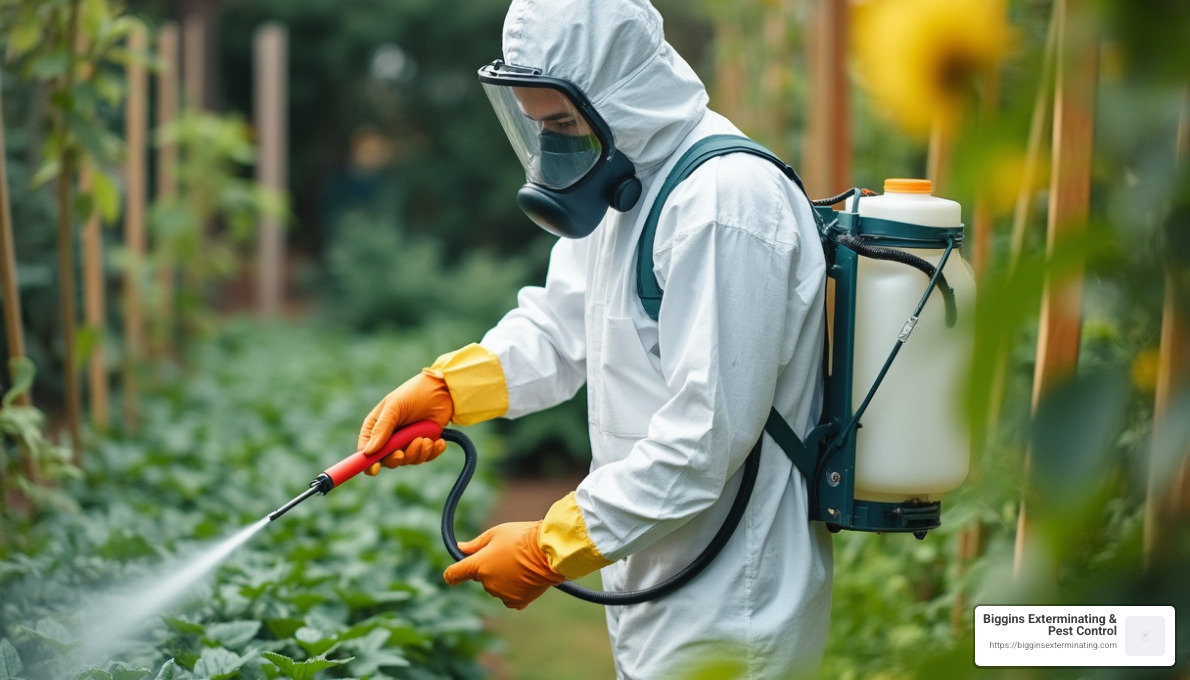
Protective equipment isn’t optional. Wear the recommended protective gear like gloves, long sleeves, and sometimes eye protection or masks. I know it can feel like overkill on a hot summer day, but I’ve seen the alternative, and trust me – a little discomfort beats chemical exposure every time.
Be strategic with application. Apply pesticides only in targeted areas rather than broadcasting throughout your home. Focus on cracks, crevices, and areas where pests hide or travel. This targeted approach is both safer and more effective.
Here’s one that scares me: never use outdoor pesticides indoors. Products designed for gardens or lawns can remain toxic longer in indoor environments without rain and sun to break them down. I’ve had to help families in Bedford and Lexington who made this mistake, and it’s a situation best avoided.
After application, keep people and pets away from treated areas for the recommended time period. This is especially important for crawling babies and curious pets who might ingest residue from floors or surfaces.
Proper storage and disposal matter too. Store pesticides in their original containers with labels intact, and keep them in a locked cabinet away from children and pets. In my 40+ years of experience, I’ve heard too many stories of accidental poisonings that could have been prevented with proper storage.
When it comes to disposal, never pour pesticides down drains, toilets, or into the ground. Many communities in Massachusetts offer household hazardous waste collection events – take advantage of these for safe disposal.
With our decades of experience serving communities throughout Massachusetts, we’ve unfortunately seen the consequences of improper pesticide use. If you’re unsure about handling chemical treatments, please consider consulting with professionals. Our team at Biggins Exterminating & Pest Control is always available to provide guidance on the safest, most effective approaches to pest management – often with solutions that use fewer chemicals than homeowners might apply themselves.
8. Implement Integrated Pest Management (IPM)
When it comes to effective pest control, nothing beats a thoughtful, comprehensive approach. That’s exactly what Integrated Pest Management (IPM) offers – a smarter way to deal with unwanted critters that minimizes risks to your family, home, and the environment.
As someone who’s been helping Massachusetts families tackle pest problems for over four decades, I’ve seen how IPM transforms homes from pest magnets into pest-free sanctuaries.
Benefits of IPM
IPM isn’t just another pest control method – it’s a complete philosophy that combines common sense with science. Think of it as a holistic approach that addresses the whole problem, not just the symptoms.
The beauty of IPM lies in its balanced approach. Instead of immediately reaching for the strongest chemicals, IPM starts with the least invasive methods and only escalates when necessary. This means less chemical exposure for your family and pets, which is especially important if you have little ones crawling around or furry friends who investigate everything with their noses.
Another fantastic benefit is the long-term effectiveness IPM provides. Rather than temporary fixes that leave you dealing with the same pests month after month, IPM addresses the root causes of infestations. We’ve helped families in Bedford who were stuck in an endless cycle of pest treatments until they switched to our IPM approach – they haven’t seen those pests in years now!
Your wallet will thank you too. By focusing on targeted treatments rather than blanket applications, you’ll save money over time. Plus, there’s the satisfaction of knowing you’re doing your part for environmental protection by reducing unnecessary chemical use in your home and yard.
How to Make IPM Work in Your Home
Starting with IPM is easier than you might think. The first step is always proper pest identification. You’d be surprised how many homeowners waste time and money treating for the wrong pest! Take clear photos of any critters you spot, or if you’re comfortable, capture a specimen in a jar for identification.
Next, become a bit of a detective by monitoring pest activity around your home. Notice when and where you’re seeing pests – is it always in the kitchen at night? Near the basement door after rain? These patterns help identify the source of your problem.
The heart of IPM is prevention. Remember all those tips about sealing entry points, proper food storage, and home maintenance we discussed earlier? Those are the building blocks of a successful IPM strategy. One family in North Reading eliminated their mouse problem completely just by sealing gaps around their foundation and installing door sweeps – no traps or poisons needed!
Being realistic about your pest situation is important too. Set reasonable thresholds for when action is needed. A single cockroach warrants immediate attention (where there’s one, there are usually many more hiding), but spotting one ant might just mean keeping an eye out for more before taking action.
When control measures are needed, start with the least toxic options. Physical removal, traps, or natural deterrents often solve the problem without introducing chemicals into your home. Only escalate to stronger methods if these gentler approaches aren’t effective.
Finally, pest management is an ongoing process. Evaluate and adjust your approach as needed. What works in summer might need tweaking in winter when pests are seeking warmth.
Regular inspections play a crucial role in successful IPM. They help catch potential problems before they become full-blown infestations. Learn more about how inspections protect your home in our detailed guide on The Importance of Regular Pest Inspections: Safeguarding Your Home and Health.
I’ll never forget a family in Lexington who called us about their annual ant invasions. Every spring, like clockwork, their kitchen would be overrun. After implementing an IPM approach – identifying entry points, fixing a moisture issue under their sink, and using targeted baits only where needed – they’ve enjoyed three ant-free years and counting. That’s the power of addressing the whole problem, not just the symptoms!
9. Monitor and Trap Pests
Keeping an eye out for unwelcome visitors is one of the most valuable home pest control tips I’ve learned in my 40+ years in this business. Think of monitoring and trapping as your early warning system—catch problems when they’re small, and you’ll save yourself a world of trouble down the road.
Monitoring Techniques:
You don’t need fancy equipment to be a good pest detective—just some awareness and regular habits. I always tell my clients in Wilmington and Andover to make a quick inspection part of their normal routine.
Visual inspections are your first line of defense. Take a flashlight and spend a few minutes each month checking your kitchen cabinets, under sinks, in the basement corners, and up in your attic. Look for anything unusual—it’s often the subtle signs that tip you off first.
What exactly should you look for? Learn to recognize the calling cards pests leave behind. Rodent droppings look like dark rice grains and are often found along walls. Gnaw marks on food packages or wood trim are another red flag. Those greasy smudge marks along baseboards? That’s the oil from rodent fur as they travel the same path repeatedly.
For insects, watch for shed skins, discarded wings (especially after termite swarms), or webbing in corners. And don’t ignore your nose—many pests have distinctive odors. A musty, ammonia-like smell often means mice, while cockroaches typically leave a more oily, unpleasant scent.
Simple monitoring tools can make a big difference. I’ve had clients in Bedford who place basic sticky traps in basement corners and check them weekly. It’s an easy way to catch problems early and identify exactly what you’re dealing with. For about $5-10, these traps can save you hundreds in potential damage.
Keeping a simple pest journal might sound excessive, but it works wonders. Just jot down what you see and when—you’ll quickly start noticing patterns. Maybe those ants only appear after rainy days, or perhaps the mouse droppings increase when the weather turns cold. These patterns help you target your prevention efforts more effectively.
Effective Trapping Strategies:
When it comes to trapping, matching the right trap to the right pest makes all the difference. Here’s what works best for common household invaders:
For rodent control, traditional snap traps remain surprisingly effective despite being around for over a century. The key is proper placement—always position them perpendicular to walls with the trigger end facing the wall. This works because mice and rats prefer traveling along walls and will approach the trap from that direction.
If you prefer more humane methods, live traps can capture without killing. Just remember that with live trapping comes responsibility—check traps daily (a forgotten mouse will suffer) and release captured animals at least a mile from your home to prevent return visits. One Lexington family I worked with successfully relocated a family of mice using humane traps, but they made sure to seal entry points before releasing them.
Quantity matters with rodent trapping. Don’t be stingy—set multiple traps rather than just one or two. Consider that a single female mouse can have 5-10 litters annually, with 5-6 pups per litter. That’s potentially 60 new mice a year from just one female! No wonder our Burlington clients who set six traps had much better results than those who set just one or two.
For insect management, options abound. Sticky traps work well for crawling insects like cockroaches and silverfish. Pheromone traps specifically target moths and certain beetles using their own chemical signals against them—they’re particularly effective for those annoying pantry moths that get into flour and cereals.
Light traps can help with flying insects, while bait stations offer a safe way to deploy insecticides without exposing your family or pets. These enclosed containers hold the bait inside where only target pests can access it—a much safer approach than broadcast spraying.
Understanding Pest Life Cycles:
Knowing a bit about pest biology gives you a huge advantage. Most pests follow predictable patterns that you can use to your benefit.
Seasonal awareness helps you stay ahead of problems. In our Massachusetts service area, we see rodents seeking shelter indoors every fall like clockwork. Ant activity typically surges in spring, especially after rainy periods. Knowing these patterns means you can proactively set traps or strengthen defenses before problems start.
The reproductive timing of pests should inform how quickly you respond to signs of their presence. When a Tewksbury client spots a single German cockroach, we treat it as an emergency because we know that female can produce up to 400 offspring in her lifetime. That’s not a problem that improves with procrastination!
Understanding vulnerable stages in pest life cycles can make your control efforts more effective. Many insects are easier to control as larvae than as adults. For example, addressing moth problems by targeting the worm-like larvae stage often works better than trying to catch the flying adults.
After decades helping families throughout North Reading and Woburn, I’ve seen that homeowners who implement regular monitoring catch problems early when they’re much simpler to address. One client in Burlington found mouse droppings during a routine check of their basement storage. By promptly setting traps and sealing entry points, they prevented what could have become a significant (and expensive) infestation.
Consistent monitoring isn’t about being paranoid—it’s about being prepared. A little vigilance today saves a lot of trouble tomorrow.
10. Know When to Call the Professionals
Let’s face it – there comes a point when DIY approaches reach their limits. As someone who’s helped Massachusetts homeowners with pest problems for over four decades, I’ve seen when it’s time to wave the white flag and call in reinforcements.
While the home pest control tips we’ve covered can tackle many common issues, certain situations demand professional expertise. Recognizing these scenarios can save you considerable frustration (and often money) in the long run.
Signs It’s Time to Call a Professional:
You might be wondering when exactly to make that call. In my experience, it’s time to reach out when you’re facing persistent infestations that simply won’t respond to your DIY efforts. We often hear from homeowners who’ve tried multiple store-bought solutions without success, only to find they were targeting the wrong pest entirely!
Large-scale infestations that have spread throughout your home are another clear indicator. What started as a few ants in the kitchen can quickly become a multi-room problem requiring professional intervention.
When dealing with dangerous pests like venomous spiders, stinging insects, or disease-carrying rodents, safety becomes paramount. I still remember helping a family in Lexington who finded a yellow jacket nest in their wall cavity – definitely not a DIY removal situation!
Structurally damaging pests like termites, carpenter ants, and powder post beetles require immediate professional attention. These destructive critters can cause thousands of dollars in damage if left unchecked. One Wilmington homeowner called us after finding what they thought were “just a few ants” – our inspection revealed extensive carpenter ant damage that had been developing for years.
If you’re experiencing recurring pest problems that return despite your best efforts, that’s usually a sign of a larger issue that needs professional assessment. Similarly, when pests are hiding in hard-to-reach areas like inside walls or under flooring, professionals have the specialized equipment and techniques to address these challenging locations.
Finally, if you’re concerned about safely using pesticides due to children, pets, or family members with health sensitivities, professional pest control offers peace of mind through targeted, minimal application methods.
Benefits of Professional Pest Control:
At Biggins Exterminating & Pest Control, we bring several advantages that DIY methods simply can’t match. Our technicians are trained to properly identify specific pest species – a crucial first step that many homeowners miss. What looks like “just an ant” to the untrained eye might actually be a carpenter ant capable of significant structural damage.
We conduct comprehensive inspections that often reveal hidden infestations and entry points overlooked during DIY attempts. Recently, a Burlington client had been battling mice for months before our inspection finded an entry point behind their dishwasher that they never would have found on their own.
Professional-grade products make a significant difference too. We have access to effective treatments that aren’t available to the general public, and more importantly, we know exactly where and how to apply them for maximum impact with minimal product use. This targeted approach is both more effective and better for your family’s health.
Beyond just eliminating current pests, we focus on preventive strategies to keep them from returning. Our technicians are thoroughly trained in safety protocols, ensuring treatments are applied properly and safely. And unlike many pest control companies, we don’t require long-term contracts – we prefer to earn your business through effective results rather than contractual obligations.
With over 40 years of experience serving communities throughout Massachusetts, including Wilmington, Andover, Bedford, Billerica, Burlington, Lexington, North Reading, Tewksbury, and Woburn, we’ve developed specialized knowledge of the unique pest challenges in our region. We understand the seasonal patterns, common entry points, and effective treatment methods for New England’s most problematic pests.
For more information about our comprehensive approach to residential pest control, visit our Residential Pest Control Services page.
When it comes to protecting your home and family from pests, sometimes the most cost-effective solution is calling professionals who can solve the problem correctly the first time.
Frequently Asked Questions about Home Pest Control Tips
How can I identify common household pests?
Nothing ruins a peaceful evening at home quite like spotting an unidentified critter scurrying across your kitchen floor. Knowing exactly what you’re dealing with is the first step toward effective pest control.
In my 40+ years helping Massachusetts homeowners, I’ve found that most household pests leave distinctive calling cards. Ants, ranging from tiny 1/16-inch pavement ants to larger 1/2-inch carpenter ants, typically travel in obvious trails. If you spot a line of black, brown, or reddish insects marching along your countertop, you’re likely dealing with ants. Carpenter ants deserve special attention—look for small piles of sawdust-like material around wooden structures, which indicates they’re tunneling into your home.
Cockroaches are another common unwelcome guest, especially German and American varieties. These light to dark brown insects (1/2 to 2 inches long) often leave behind droppings that resemble coffee grounds or pepper. If you notice a musty, unpleasant odor in your kitchen or bathroom alongside these droppings, cockroaches are the likely culprit.
The telltale signs of mice are quite distinctive—rod-shaped droppings about 1/8 to 1/4 inch long, gnaw marks on food packages or furniture, and nests made from shredded paper or fabric. You might also detect a musky odor in enclosed spaces where they’re active. House mice, with their gray-brown bodies measuring 2.5 to 3.5 inches, are the most common rodent invaders in Massachusetts homes.
Spiders announce their presence most obviously through their webs, though species like wolf spiders are active hunters that don’t build webs. Most house spiders in our region are harmless, though their presence often indicates other insects are in your home (their food source).
Perhaps the most dreaded household pest, bed bugs leave very specific evidence: rusty or reddish stains on bedding (from crushed bugs), shed skins around mattress seams, and a sweet, musty odor in heavily infested areas. If you’re waking up with itchy welts that weren’t there when you went to bed, these reddish-brown, apple seed-sized insects might be the cause.
If you’re still unsure what pest has taken up residence in your home, snap a clear photo or carefully capture a specimen. Our team at Biggins is always happy to help with identification—it’s the crucial first step toward effective treatment.
What are effective DIY pest control solutions?
You’d be surprised what everyday household items can become powerful allies in your fight against pests. Before reaching for commercial pesticides, consider these effective DIY approaches that many of our Wilmington and Andover clients have used successfully.
For ant problems, a simple 50/50 mixture of white vinegar and water sprayed along entry points and travel paths works wonders. The vinegar disrupts their scent trails and deters them from returning. For a more aggressive approach, mix borax with sugar in a 1:3 ratio—the sugar attracts the ants while the borax eliminates them. Just keep this mixture away from pets and children.
Spiders retreat quickly from the scent of vinegar, especially when improved with peppermint oil. A weekly spray around windowsills and doorways can significantly reduce their presence. I’ve had clients in Bedford who swear by the old-fashioned remedy of placing chestnuts in room corners to repel spiders, though regular vacuuming of webs and egg sacs remains the most reliable approach.
Battling flies in your kitchen? Create a simple trap by placing apple cider vinegar with a drop of dish soap in a small container. The vinegar attracts the flies, while the soap breaks the surface tension, causing them to sink. For a pleasant-smelling alternative, stick several cloves into half a lemon and place it near windows, or grow basil plants on your windowsills—flies hate the smell.
Mice have an intense aversion to peppermint. Cotton balls soaked in peppermint oil placed along baseboards and near suspected entry points can be remarkably effective at keeping them away. For existing problems, steel wool stuffed into holes provides a barrier they can’t chew through, while traditional snap traps baited with peanut butter remain the most reliable DIY solution.
For cockroach infestations, a mixture of boric acid and sugar sprinkled in cracks and under appliances can be effective, though use this cautiously if you have children or pets. Food-grade diatomaceous earth is a safer alternative that can be sprinkled in crevices where roaches travel. Some of our Lexington clients have had success with bay leaves placed in cabinets and pantries as a natural deterrent.
While these DIY solutions work well for minor pest issues, I’ve found they rarely resolve large or established infestations. If you’re seeing diminishing returns from your home remedies, it might be time to consider professional help.
When should I call a professional pest control service?
As much as I respect a good DIY approach to pest control (and have shared plenty of home pest control tips over the years), there are definitely situations where calling in the professionals isn’t just helpful—it’s necessary.
Termites and bed bugs top the list of pests that almost always require professional intervention. These persistent invaders require specialized treatment approaches that go beyond what’s available to homeowners. A single female termite can lay thousands of eggs annually, and by the time you notice their presence, they may have already caused significant structural damage. Similarly, bed bugs are masters of hiding and reproduction, making complete DIY elimination extremely difficult.
When pests have established a widespread presence throughout your home, professional-grade treatments become necessary. I remember visiting a home in Burlington where the owners had been battling an ant problem for months using store-bought sprays. When we inspected, we finded multiple colonies had established themselves inside the walls—a situation requiring targeted professional treatment to resolve.
Health concerns should also prompt a call to professionals. Certain rodents can transmit diseases like hantavirus or salmonellosis, while cockroach droppings are known to trigger asthma and allergies, especially in children. When pests pose health risks, quick and complete elimination becomes a priority that often requires professional expertise.
Perhaps the most common scenario I see is when homeowners have tried multiple DIY methods without success. If you’ve been battling the same pest problem for weeks with diminishing results, it’s probably time to call in reinforcements. Professional technicians have access to more effective products and application methods that can resolve persistent infestations.
Preventive protection through regular professional inspections is another valuable service. Many of our long-term clients in Woburn and Tewksbury schedule annual inspections to catch potential problems before they develop into full-blown infestations.
Structural pests like carpenter ants or powder post beetles require special attention because they can compromise your home’s integrity. These wood-destroying insects often require targeted treatments that penetrate deep into wooden structures—something difficult to achieve with consumer products.
Finally, if you’re concerned about using pesticides safely, especially in homes with children, pets, or family members with health sensitivities, professional technicians are trained in proper application methods that maximize effectiveness while minimizing exposure risks.
At Biggins Exterminating, we’re always happy to provide free inspections and honest assessments about whether your situation requires professional treatment. Sometimes we’ll even tell you that your DIY approach is working fine and to call us only if things change. After 40 years serving Massachusetts homes, we understand that building trust is more important than making a quick sale.
Conclusion
Implementing effective home pest control tips is about creating an environment where pests simply cannot thrive. By sealing entry points, maintaining cleanliness, managing food and moisture, and utilizing natural deterrents, you can significantly reduce the likelihood of pest problems in your home.
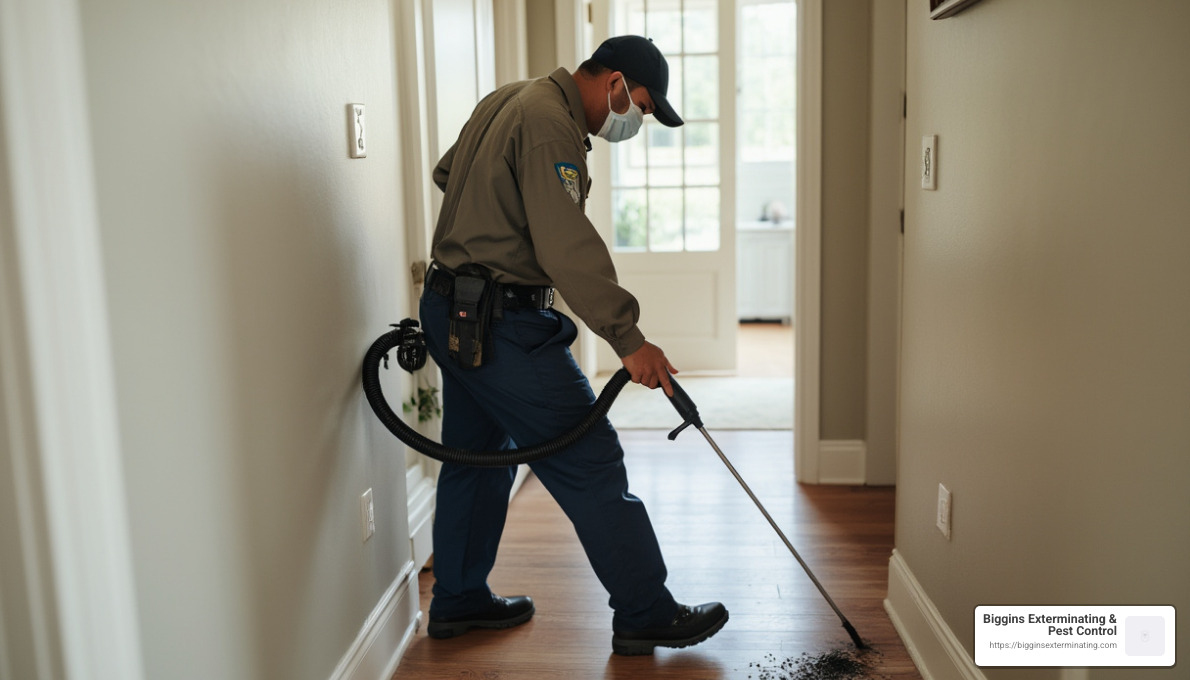
Your home is your sanctuary—a place where you and your family should feel comfortable and safe. When unwanted guests like mice, ants, or spiders move in, that peace can quickly disappear. The good news? You’ve now got a toolkit of proven strategies to keep them at bay.
Throughout my 40+ years helping Massachusetts families tackle pest problems, I’ve seen that consistency is key. A single afternoon of pest-proofing won’t provide lasting protection. Successful pest management is an ongoing process, not a one-time event. As seasons change, so do pest behaviors and pressures—what works in summer might need adjustment for fall or winter.
Many of our long-term clients in communities like Wilmington and Lexington have virtually eliminated their pest issues by adopting these preventive habits. They check for cracks and gaps each spring, maintain clean kitchens year-round, and keep their landscapes well-maintained. Their diligence pays off with pest-free living.
As the old wisdom goes:
“Pest control is not just about eliminating pests but preventing infestations by managing the environment.”
This approach isn’t just more effective—it’s often more affordable and environmentally friendly than dealing with full-blown infestations after they occur.
Of course, there are times when even the most diligent homeowner needs professional help. When that happens, our family at Biggins Exterminating & Pest Control is here to serve communities throughout Wilmington, Andover, Bedford, Billerica, Burlington, Lexington, North Reading, Tewksbury, and Woburn. We pride ourselves on offering reliable, contract-free pest control services backed by our satisfaction guarantee.
The peace of mind that comes with a pest-free home is truly invaluable. By implementing the home pest control tips outlined in this guide and knowing when to call professionals, you can protect your family, preserve your property, and enjoy your living space without those unwelcome guests.
For professional assistance with pest issues or to schedule a preventive inspection, learn more about our Residential Pest Control Services.