
Why Your Home Needs General Pest Control This Fall
General pest treatment is a comprehensive service that protects your home from common household pests like ants, spiders, cockroaches, and rodents through regular inspection, prevention, and targeted treatments. Here’s what it typically includes:
What General Pest Treatment Includes:
- Thorough inspection to identify pest activity and entry points
- Interior treatment of cracks, crevices, and hiding spots
- Exterior perimeter barrier to stop pests from entering
- Targeted baits and dusts in strategic locations
- Follow-up monitoring for long-term protection
Treatment Frequency: Most homes benefit from quarterly treatments (every 3 months), though some properties may need more frequent service during peak seasons.
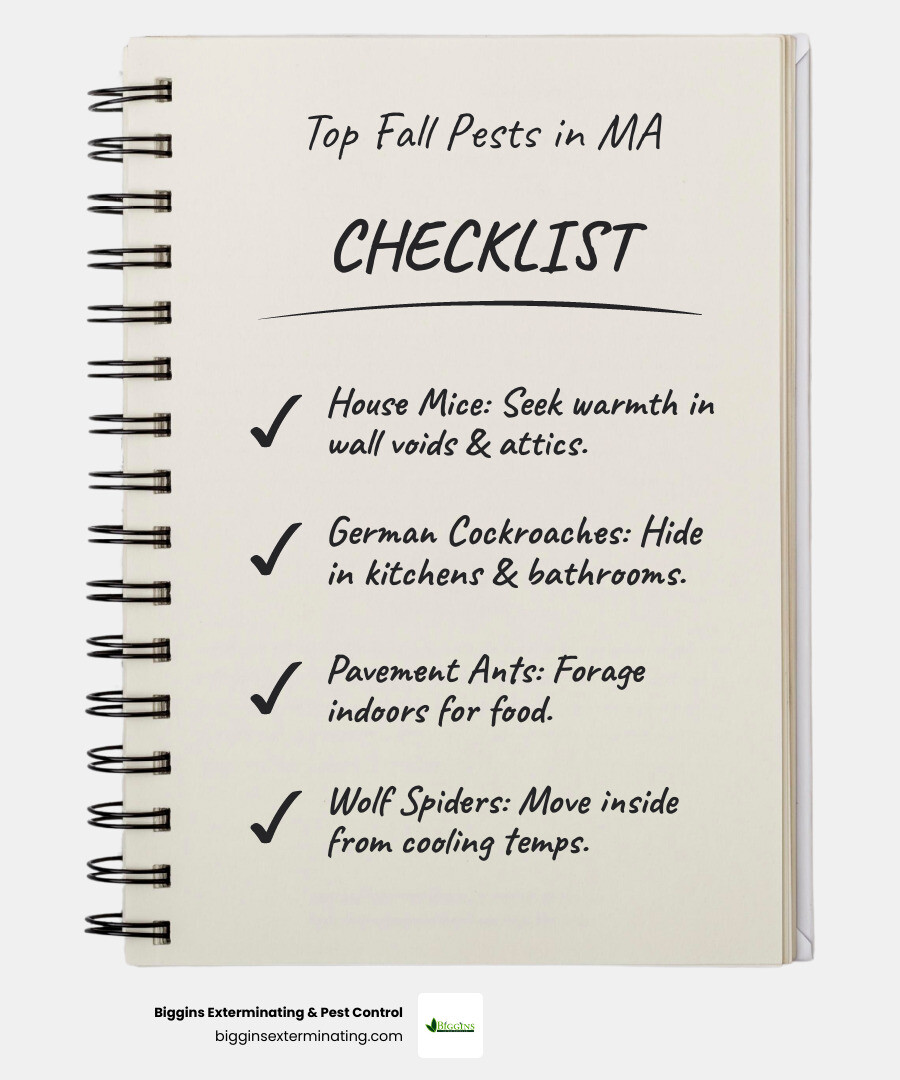
As temperatures drop here in Massachusetts, fall brings a new wave of pests seeking warm shelter inside your home. That scratching in your walls or the line of ants in your kitchen are warning signs that pests are making themselves comfortable in your space.
The good news is you don’t have to share your home with these uninvited guests. With professional general pest control, you can protect your family, prevent property damage, and enjoy peace of mind this fall and beyond.
I’m Stephen Biggins, and for over four decades, I’ve helped Massachusetts families maintain pest-free homes with general pest treatment programs at Biggins Exterminating. In this guide, I’ll explain what happens during a treatment and how you can help keep pests away between service visits.
What is General Pest Control and Why is it Crucial for Your Home?
General pest control is more than just reacting to a pest sighting—it’s about creating a protective shield around your home to keep your family healthy, your property intact, and your mind at ease. Think of it as preventive medicine for your house. You shouldn’t wait for a full-blown infestation to protect your home.
Pests bring real dangers into your home. Disease transmission is a serious concern, as rodents and cockroaches can carry bacteria like Salmonella and E. coli. They contaminate kitchen counters and food preparation surfaces. Cockroach droppings and shed skin also act as powerful allergens, triggering asthma and allergic reactions, especially in children.
Then there’s the property damage. Rodents’ teeth never stop growing, so they chew through everything from food packaging to wooden beams. What truly worries me after four decades in this business is rodents chewing through electrical wires. I’ve seen mice create serious electrical fire hazards by stripping wire insulation, which has led to devastating house fires.

Beyond these threats, there’s the importance of peace of mind for your family. Over 60% of homeowners consider pest control necessary for a healthy home. When you know your home is protected, you can relax without worrying about what’s crawling behind your walls. Our approach at Biggins Exterminating focuses on protecting both your family’s health and your home’s integrity. You can read more about The Role of Pest Control in Maintaining a Clean and Healthy Home on our website.
The Importance of a Proactive Approach
I always tell homeowners that the best time to deal with a pest problem is before it starts. As fall settles over Massachusetts, mice and rats migrate indoors for warmth. If your home isn’t sealed and protected, you’re leaving the door open for them.
Preventing infestations before they start is financially wise. Pest infestations cause an estimated $5 billion in property damage annually in the U.S. A quarterly general pest treatment plan costs a fraction of repairing damaged wiring or contaminated insulation.
Regular treatments also protect family health by stopping pest populations before they explode. A few mice in October can become dozens by January. This proactive approach provides long-term savings and helps maintain property value, as home inspectors look for signs of pest damage. Not sure if you have unwanted guests? Check out our guide on Signs That You Have a Pest Infestation.
Key Benefits of Regular Treatments
Think of regular general pest treatment as essential maintenance, like changing your car’s oil. It prevents bigger problems down the road.
- Consistent protection throughout the year: Our quarterly treatments in communities like Burlington and Lexington provide an overlapping, continuous barrier against pests.
- Breaking pest life cycles: By treating on a regular schedule, we interrupt the breeding cycles of cockroaches, ants, and spiders before their populations spiral out of control.
- Early detection of seasonal invaders: During our visits, we spot seasonal threats—like rodents and cluster flies in the fall—before they establish themselves in your walls and attics.
- Reduced stress: There’s incredible freedom in not having to worry about what’s making that sound in your ceiling at night. You have enough to do without adding pest patrol to your list.
Our team adapts each treatment to the season and your specific area. That’s the benefit of experience—we know what to expect and how to stay ahead of it. Learn more about why The Importance of Regular Pest Control Maintenance in Massachusetts is so critical for homeowners.
The Professional General Pest Treatment Process: What to Expect
When you schedule a general pest treatment with Biggins Exterminating, you get a methodical approach that begins with understanding your situation and ends with lasting protection. We don’t just prescribe a treatment; we first diagnose the problem to customize a solution for your home’s needs this fall.
Preparing Your Home for a General Pest Treatment
A little preparation helps make your treatment more effective. This isn’t about making your home spotless, but about giving us access to where pests hide.
- Clean surfaces: Clean countertops and floors before we arrive, but avoid mopping for about a week after treatment so the product isn’t washed away.
- Declutter: Clear loose items from floors, especially in kitchens, bathrooms, and storage areas. This exposes hiding spots for cockroaches, spiders, and other pests.
- Provide access: If possible, move furniture a few inches from walls so our technicians can treat the cracks and crevices where pests live.
- Protect aquatic pets: Cover aquariums and turn off air pumps. Let our technician know about any outdoor fishponds so they can take extra precautions.
- Store food: Place all food, including fruit bowls and open pantry items, in sealed containers or the refrigerator.
- Consider pets and children: Keep pet food and water bowls away from treatment areas. Let us know if you have pets with sensitivities or young children, and we will explain any specific precautions. We typically recommend keeping pets inside for at least two hours after an exterior spray.
For more guidance, see our Home Pest Control Tips.
During the Treatment: A Step-by-Step Guide
Our technicians follow a proven process honed over forty years of protecting Massachusetts homes.
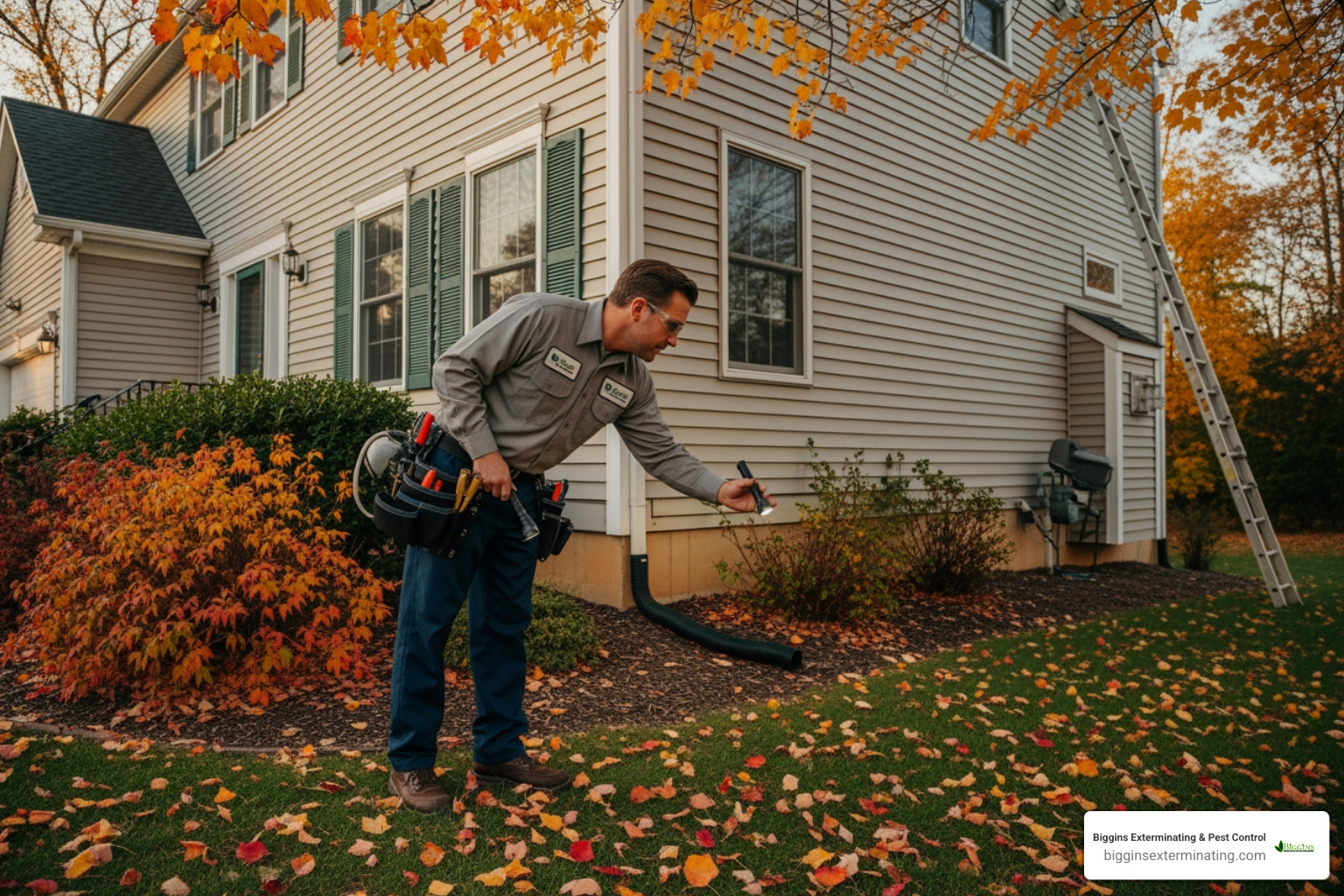
- Thorough Inspection: We start by walking your property, inside and out, to look for signs of pest activity and potential entry points like foundation cracks or gaps around pipes. This crucial first step is detailed in our Pest Control Inspection Complete Guide.
- Interior Crack and Crevice Treatment: We apply products in a targeted manner, focusing on cracks, crevices, under appliances, and behind toilets where pests hide. This minimizes exposure while maximizing effectiveness. We recommend that anyone with respiratory concerns, who is pregnant, or babies and toddlers stay away for at least two hours after treatment.
- Exterior Perimeter Barrier: This is a powerful part of your general pest treatment. We apply a liquid insecticide in a continuous band around your home’s foundation, doors, and windows to create an invisible fence that stops pests from getting inside. If it’s raining, we can complete the interior work and reschedule the exterior portion.
- Specialized Baits and Dusts: Depending on our findings, we may use baits and dusts in wall voids, attics, or other strategic locations. A helpful tip: leave spider webs intact before we arrive, as spiders will walk over the treated web.
During treatment, we ask that you stay inside but away from the work area with doors and windows closed until the spray has dried (about an hour).
After Your General Pest Treatment: Post-Service Care
Here’s what to expect after your service is complete.
- Temporary increase in pest activity: Don’t panic if you see more pests right after treatment. This is a good sign that the products are working and flushing them out of hiding.
- Drying time: Most treated areas dry within an hour, but we recommend keeping pets and children away from treated surfaces for one to two hours as a precaution.
- Avoid heavy cleaning: Hold off on mopping floors or scrubbing baseboards for about a week to allow the residual products to work. You can clean any runoff on windows after 24 hours.
- Follow-up and warranty: Our technicians will provide specific instructions for your home. At Biggins Exterminating, we back our work with warranties. If pests return between scheduled treatments, so do we—at no extra charge.
Good sanitation habits complement our professional work. The EPA offers excellent guidance in their resource on Preventing Pests at Home.
Common Pests Covered and Long-Term Management
Our general pest treatment services are designed to handle the most common household invaders in Massachusetts communities like Wilmington and Woburn. Homeowners most frequently need help with ants (65%), spiders (49%), cockroaches (34%), and rodents (31%). These pests are more than just an annoyance; they can threaten your health and damage your property.
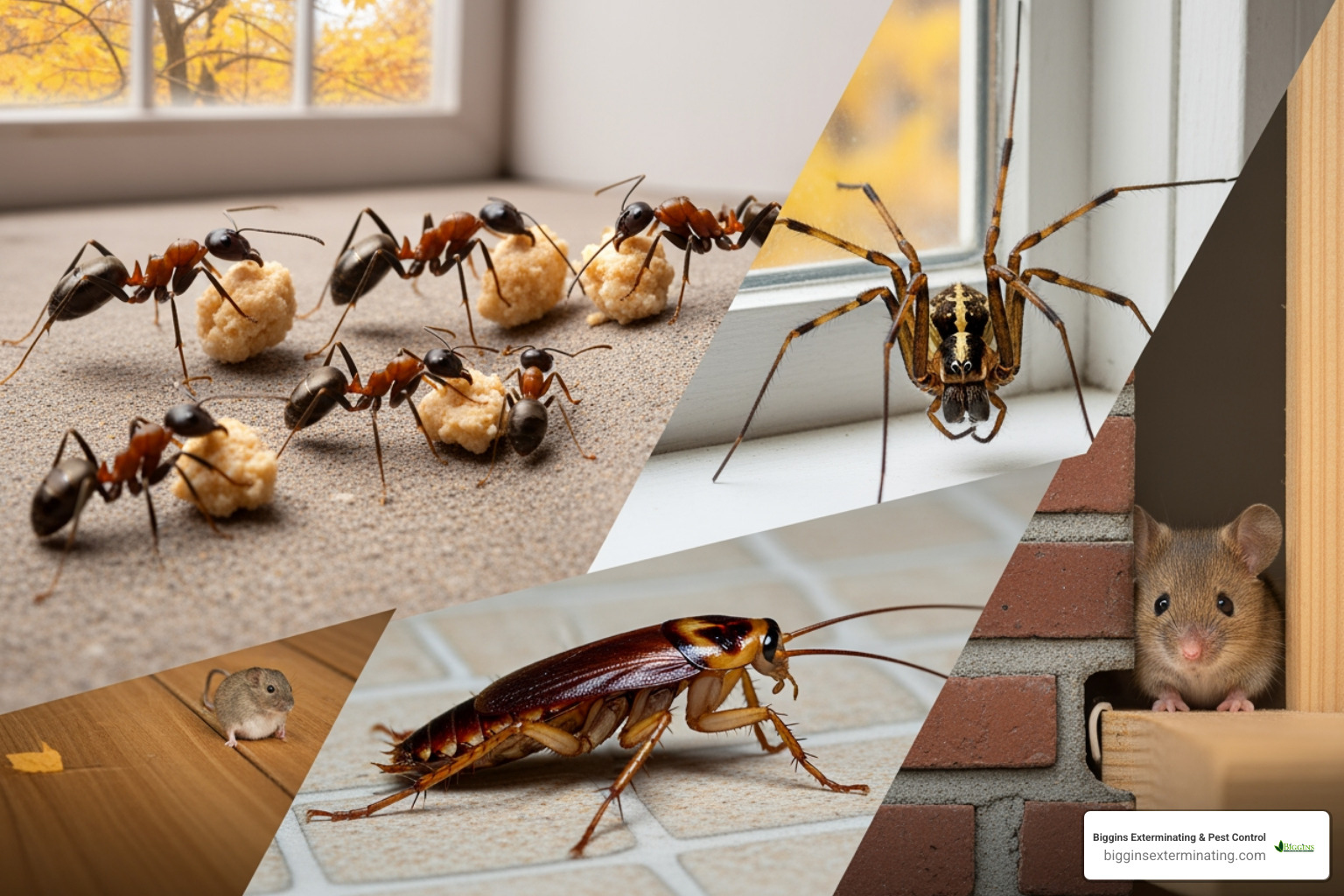
- Ants: These persistent invaders march into kitchens for food, especially in the fall as outdoor sources dwindle. We target their nests to disrupt the entire colony.
- Spiders: Spiders move indoors for warmth as temperatures drop. Our barrier treatments create a shield to keep them out of your living spaces.
- Cockroaches: A serious health concern, roaches spread bacteria and multiply rapidly in moist areas. Our targeted treatments reach their hiding and breeding spots.
- Mice and Rats: In the fall, rodents seek warmth and shelter in your home. They can transmit diseases and create fire hazards by chewing through electrical wires. Our approach combines baiting and exclusion to eliminate and prevent infestations.
For more on these pests, visit our page on The Most Common Pests Found in Massachusetts and How to Prevent Them. You can also learn about rodent behavior at Rodents Revealed.
Integrated Pest Management (IPM) for Lasting Results
We practice Integrated Pest Management (IPM), a sustainable strategy focused on long-term prevention with minimal environmental impact. This common-sense approach is built on three techniques: inspection, identification, and customized treatment. You can explore more about this approach at What is Integrated Pest Management? IPM Techniques.
Our IPM strategy includes:
- Exclusion techniques: Physically blocking pests by sealing cracks and gaps around your home.
- Sanitation improvements: Advising on cleanliness and proper food storage to remove pest attractants.
- Habitat modification: Making your property less hospitable to pests by trimming vegetation or removing standing water.
We also offer Green Pest Control options that align with IPM’s environmentally responsible focus.
Managing Common Pests Between Professional Visits
Your efforts between our visits can significantly boost the effectiveness of our treatments. Think of it as a partnership. For more tips, see our Residential Pest Control page.
- Seal cracks and crevices: Check for and seal gaps around pipes, foundations, and windows. A mouse can fit through a dime-sized hole.
- Eliminate food sources: Store food in sealed containers, clean up crumbs immediately, and don’t leave pet food out overnight.
- Reduce moisture: Fix leaky faucets and ensure proper drainage around your foundation. Cockroaches need water to survive.
- Store firewood properly: Keep woodpiles stacked away from your house and off the ground to avoid bringing pests inside.
- Declutter your home: Remove hiding spots like stacks of newspapers or cardboard boxes in the basement.
- Maintain your yard: Trim branches and shrubs away from the house to eliminate pest bridges.
Why Choose Professional Services Over DIY Methods?
When you see a pest, it’s tempting to grab a can of bug spray. It feels like a quick fix, but while that spray might kill a few visible pests, it rarely solves the underlying problem.
Think of it like a leaky roof. You could patch it yourself, but a professional roofer will find the source of the leak, fix the core issue, and guarantee their work. The same logic applies to pest control. About 14% of US households use professional pest control services annually for good reason.
| Factor | DIY Pest Control | Professional Pest Control |
|---|---|---|
| Cost | Lower initial cost (products) | Higher initial cost (service fee) |
| Effectiveness | Often temporary, targets visible pests only | Long-term, targets source, life cycle, and prevention |
| Safety | Risk of improper chemical use, misidentification | Trained technicians, approved products, safety protocols |
| Expertise | Limited knowledge of pest biology/behavior | Deep understanding of pests, advanced techniques |
| Equipment | Basic sprays, traps | Specialized tools, industrial-grade products, protective gear |
| Warranty | None | Often includes guarantees and follow-up services |
The biggest difference is expertise. A professional technician understands pest biology, knows where they hide, and can identify the specific species to stop them at the source. Store-bought products are less potent, and improper use can pose health risks to your family and pets.
A professional general pest treatment starts with a thorough inspection to identify entry points and assess the problem. This allows us to create a customized plan, not a one-size-fits-all solution from a spray can. As fall temperatures drop, a professionally applied perimeter defense is far more effective than a DIY spray.
We’ve seen the consequences when homeowners tackle serious pest problems on their own, which is why we’ve written about The Dangers of DIY Pest Control in Massachusetts.
Professional pest control is an investment in your home’s safety and your family’s health. We stand behind our work with warranties. If pests return, so do we. That peace of mind is worth far more than the few dollars saved with a DIY approach. Learn more about The Importance of Hiring a Professional Pest Control Service in Massachusetts on our website.
Frequently Asked Questions About General Pest Treatments
After four decades of helping Massachusetts families, I’ve heard just about every question imaginable about our general pest treatment services. I’m here to address the most common ones honestly.
How often should general pest control treatments be scheduled?
While there’s no single answer, we have a good idea of what works for most homes in our Massachusetts service areas.
For most properties, quarterly treatments (every three months) provide the ideal balance of protection and practicality. This schedule aligns with seasonal pest behavior—from spring ants to fall rodents seeking warmth. A consistent barrier is key to preventing infestations.
If your home is in an area with high pest pressure, such as near woods or commercial properties, bi-monthly service might be a better fit. Fall is an especially critical time for treatment, as pests become more aggressive in their search for shelter.
For an active infestation, we’ll likely start with an intensive treatment, followed by regular maintenance visits. We will assess your home’s unique situation and recommend a frequency that makes sense for your family and budget.
Are the treatments safe for my family and pets?
This is the most common question we get, and the answer is yes, our treatments are safe when applied correctly by trained professionals.
We use professional-grade products approved for residential use and apply them strategically. Instead of blanketing surfaces, we target cracks, crevices, and other areas where pests hide, minimizing exposure. Our technicians are trained in safe application methods to protect your family and pets.
For safety, we recommend keeping pets and children away from treated surfaces until they are completely dry, which usually takes one to two hours. If you have any concerns about sensitivities, respiratory issues, or pregnancy, please let us know. We can adjust our approach and take extra precautions to ensure everyone’s peace of mind.
We have specific protocols for homes with pets, which you can read about on our Safe Pest Control for Pets page. We’re also happy to discuss Eco-Friendly Pest Control Near Me options. Your comfort and safety are our top priorities.
What does a general pest treatment cost?
Providing an exact cost without seeing your property would be irresponsible, as every home is different.
Based on internet data, average costs for general pest control treatments across the US range from $200 to $1500. That’s a wide range because several factors influence the price.
Please note: These are average costs based on internet data and not actual costs for Biggins Exterminating services.
Key factors include:
- Property size: A larger home requires more time and product to treat.
- Type and severity of infestation: A severe or complex infestation requires more intensive work than a preventive treatment. Specialized pests like termites or bed bugs fall outside general pest control and have different pricing.
- Treatment frequency: Ongoing service plans are often more cost-effective than one-time treatments, and we offer discounts for customers who sign up for regular service.
We believe in transparency. After a thorough inspection of your property, we will provide a detailed, accurate estimate with no hidden fees. For more general information, visit our Pest Control Services Cost page. For a quote customized to your home, give us a call.
Conclusion
As fall arrives in Massachusetts, protecting your home from invading pests is more important than ever. A professional general pest treatment does more than eliminate pests—it creates a protective shield that safeguards your family’s health, preserves your property, and provides priceless peace of mind.
At Biggins Exterminating, a family-owned company with over 40 years of experience, we understand the unique pest challenges our neighbors face in communities like Andover, Billerica, and Burlington. We’re proud to offer reliable pest control without contracts, and we back our work with solid warranties because your satisfaction is our priority.
Don’t wait for pests to make themselves comfortable in your home this fall. Let’s work together to keep your home exactly as it should be: a safe, healthy space for your family.
Take the first step toward a pest-free home with our expert pest control and exterminating services.
