
First Clues: Recognizing the Signs of an Infestation
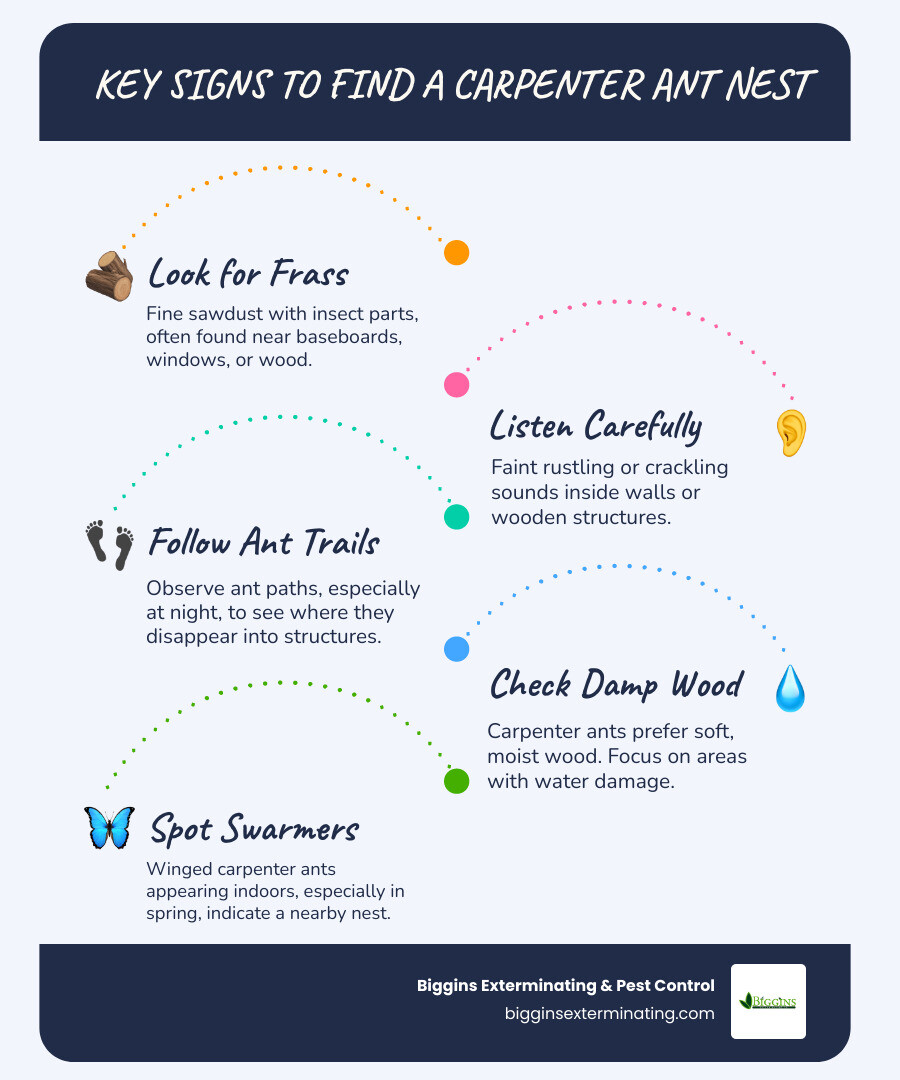
When you need to find carpenter ant nest in your home, here are the quickest ways to start your search:
- Look for frass: This is fine sawdust, often with insect parts, pushed out from their nests. You’ll see small piles near baseboards, window sills, or wood.
- Listen carefully: A faint rustling or crackling sound inside walls or wooden structures can mean ants are active inside. Some say it sounds like “Rice Krispies.”
- Follow trails: Observe ants, especially at night. They follow established paths to and from their nest. Try to see where they disappear.
- Check damp wood: Carpenter ants love soft, moist wood. Focus your search on areas with water damage, like around leaky pipes, windows, or roofs.
- Spot swarmers: Winged carpenter ants appearing indoors, especially in spring or early summer, strongly suggest a thriving nest is nearby.
These quick checks can help you pinpoint the general area of an infestation.
Carpenter ants are a major headache for homeowners. Unlike termites, they don’t eat wood. Instead, they excavate it to create nests, which can weaken your home’s structure over time. Finding their main colony, or even a satellite nest, is the most important step to stopping the damage.
I’m Stephen Biggins, owner of Biggins Exterminating Co. With over 40 years of experience, our team has become experts in helping homeowners like you find carpenter ant nest locations and solve these complex pest problems.
Quick find carpenter ant nest definitions:
Before you can find the nest, it’s crucial to know what you’re looking for. Carpenter ants leave behind distinct clues that point toward their hidden homes.
Carpenter Ant Identification: Who Are We Looking For?
First, identify your target. Carpenter ants are large, up to half an inch long, and are usually black, but can be red, brown, or a combination of colors. A key feature is their narrow, “wasp-waist” and antennae with a distinct elbow bend. If you’re seeing large ants with these characteristics, it’s time to investigate.
Winged Ants (Swarmers): The Alarming Signal
An alarming sign of an established colony is the appearance of winged ants, or “swarmers.” These are reproductive ants that emerge from a mature colony (typically over two years old) to mate and establish new ones. Finding them indoors, especially in spring or early summer, strongly suggests a nest is inside your home. For more on these airborne invaders, check out our article: Do Carpenter Ants Have Wings?.
Frass (Wood Shavings): The Tell-Tale Trail
Carpenter ants excavate wood, they don’t eat it. As they tunnel, they push out fine sawdust called “frass.” This frass looks like a small pile of wood shavings and may contain debris like insulation or insect parts.
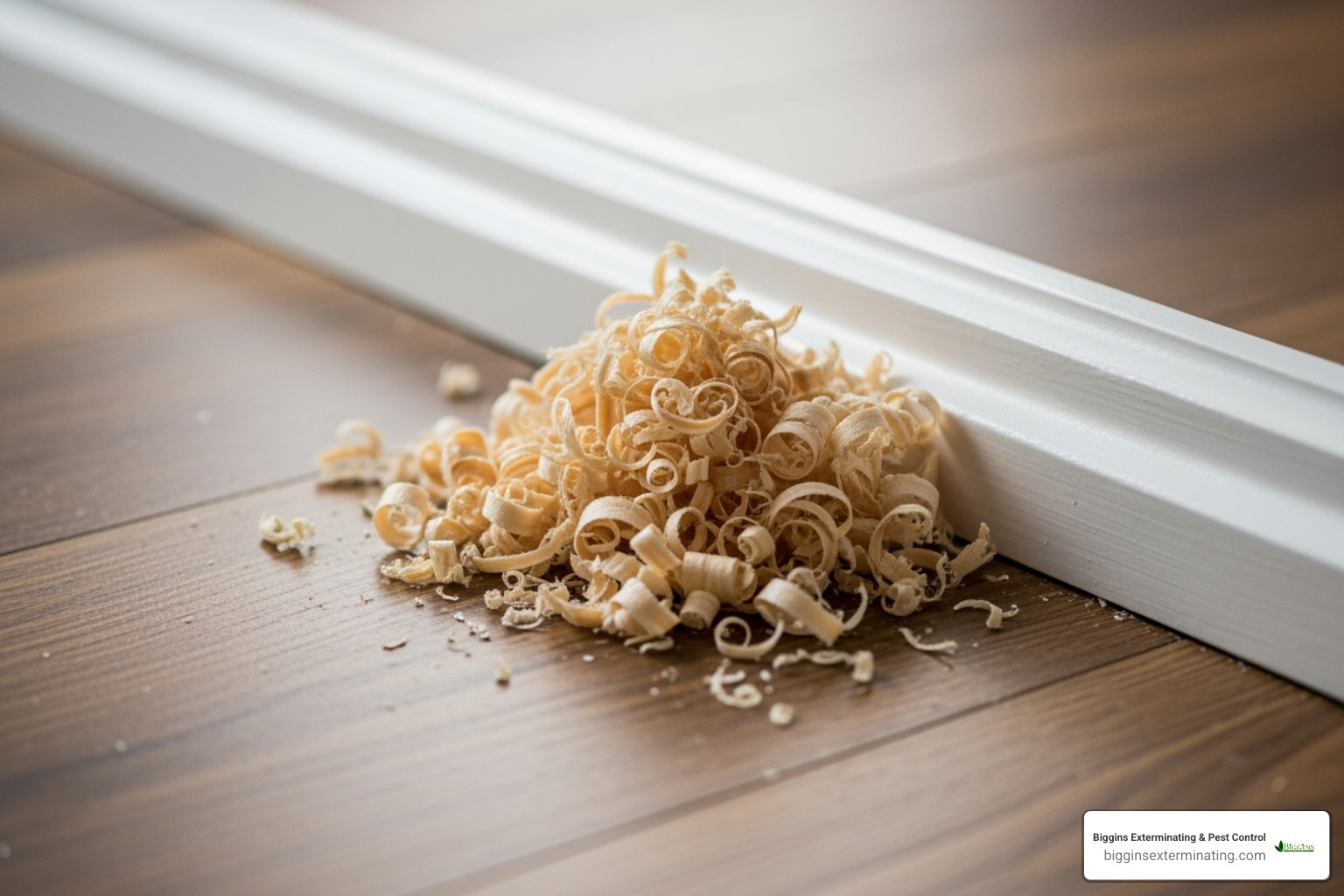
Finding frass near baseboards, window sills, or door frames is a classic sign of a nearby nest. Unlike termite droppings (small pellets), frass contains wood fragments. It’s their construction waste and a huge clue!
Faint Rustling Sounds: Listen Closely
If you have a large colony within your walls, you might hear them. People describe the sound as a faint rustling or crackling, caused by the ants moving and excavating wood. Tapping on a suspected wooden surface and then pressing your ear against it can sometimes amplify these subtle sounds, helping you pinpoint their location.
Seasonal Activity: When Are They Most Active?
Carpenter ants are most active at night, making it the best time for observation. In the spring, as temperatures rise, colonies become more active and winged swarmers may emerge. As fall approaches, they forage actively to store food before winter dormancy (a state called diapause). If you see ants frequently during these seasons, it’s worth investigating.
Your Step-by-Step Guide to Find a Carpenter Ant Nest
Now that you know the signs, it’s time to hunt for the nest. This requires patience and keen observation, but a systematic approach will help you find their hidden stronghold.
Nighttime Activity: The Best Time to Observe
Carpenter ants are nocturnal, so the best time to observe them is after dark. Use a flashlight with a red filter (like red cellophane) to avoid scaring them. Watch carefully for foraging ants, noting where they enter or exit structures or specific areas within a room.
Following Ant Trails: The Breadcrumb Method
Carpenter ants follow established pheromone trails between their nest and food sources, which can be up to 300 feet long. If you see ants, patiently follow them. They often travel along baseboards, pipes, or electrical wires. These well-worn paths will lead you closer to their nest.
Using Bait: Lure Them Home
To help you find carpenter ant nest locations, use bait. Place a small amount of something sweet like honey or a protein source like canned tuna near ant activity. The ants will carry it back to their colony, allowing you to follow them directly to the nest. Do not use any insecticides near the bait, as this will deter them. For more general strategies, check out our guide on How to Kill Carpenter Ants.
Moisture Sources: Their Favorite Hangouts
Carpenter ants prefer moist or decaying wood because it’s softer and easier to excavate. Focus your search on any areas in your home with moisture problems or where condensation is common. Wood damaged by moisture or fungi is an open invitation for them, so inspecting these areas should be a top priority.
Indoor Clues to Help You Find a Carpenter Ant Nest
When searching indoors, focus on quiet, hidden spaces, especially those prone to dampness. Common indoor nesting spots include:
- Wall voids, especially in bathrooms and kitchens near leaky pipes.
- Attics and crawl spaces, which are susceptible to moisture from leaky roofs or poor ventilation. Learn more here: Ants in Attic Insulation.
- Under insulation, where satellite nests are often found.
- Hollow doors, which provide a sheltered, easy-to-access space.
- Window and door frames, where wood is vulnerable to moisture from rain or condensation.
- Behind bathroom tiles or around leaky pipes, which create perfect nesting conditions.
As we often find, carpenter ants can cause significant damage behind the scenes. Here’s what an exposed nest gallery might look like:
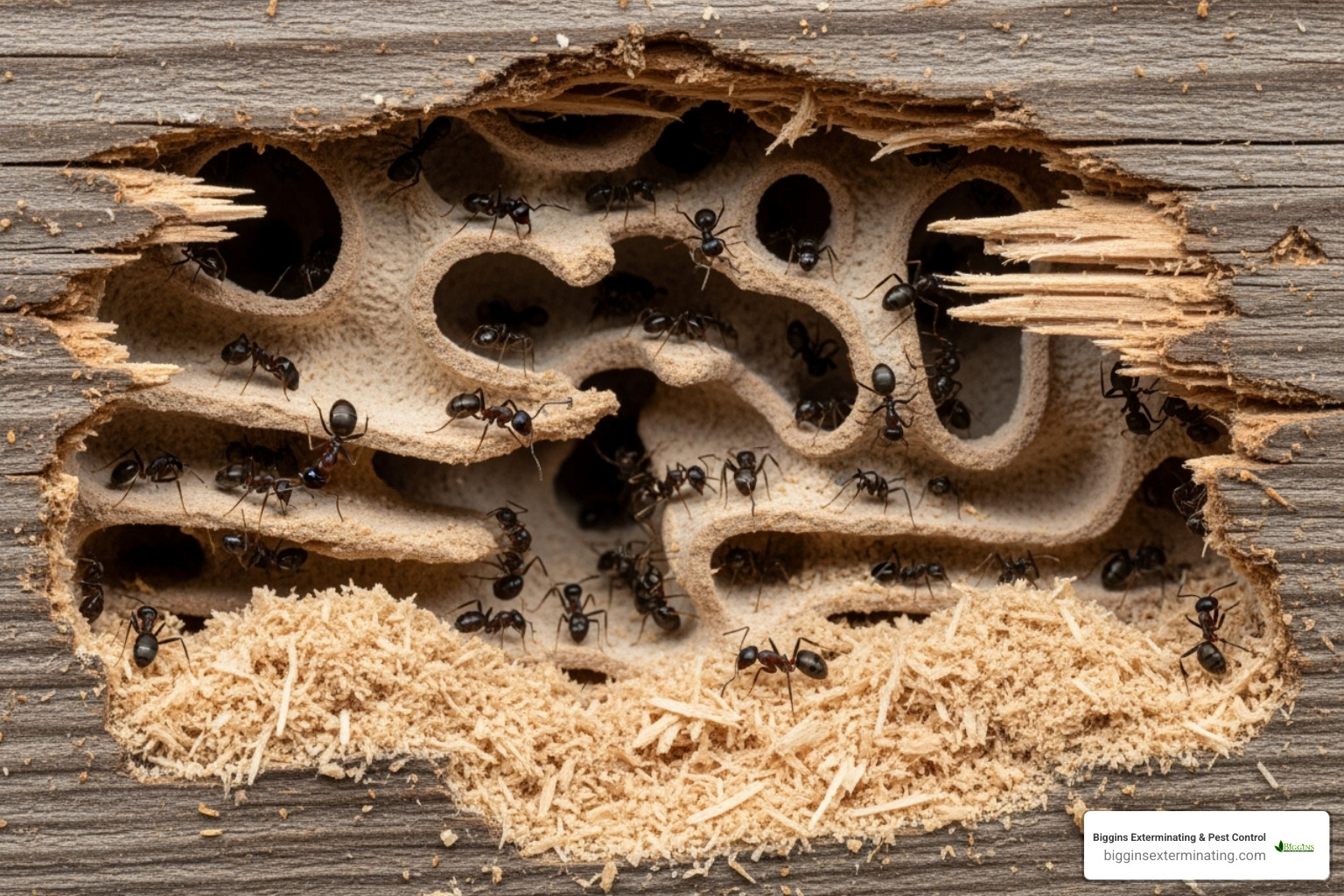
Tapping on suspected wooden surfaces and listening for a hollow sound or rustling can help confirm a nest.
Outdoor Search: How to Find a Carpenter Ant Nest on Your Property
Don’t forget to search outside. The main “parent” colony is often outdoors, with satellite colonies moving inside. Check these spots:
- Rotting tree stumps and woodpiles (especially those on the ground near the house).
- Under large stones or in landscape timbers where moisture collects.
- Porches and decks, especially those with moisture damage.
- Tree branches touching your home, which ants use as bridges to your roof or attic. Ants marching on tree trunks can indicate a nest in the tree itself.
Inspecting these outdoor areas is crucial, as eliminating the parent colony is key to long-term control. For more tips, see our article: Natural Ant Control Outside.
Carpenter Ants vs. Termites: Know Your Enemy
It’s easy to confuse carpenter ants with termites, but telling them apart is vital for effective treatment. Misidentification leads to wasted time, money, and continued damage. Let’s break down the key differences.
Appearance: Look Closely!
- Carpenter Ants: Large (up to 1/2 inch), typically black or red/black. They have a distinct, narrow “wasp waist” and “elbowed” antennae.
- Termites: Lighter in color (pale/whitish). They have a broad, straight waist and straight antennae.
Wings: Not All Wings Are Created Equal
Both pests have winged swarmers, which causes confusion. Here’s how to tell them apart:
- Carpenter Ant swarmers have two pairs of unequal-sized wings (the front pair is longer).
- Termite swarmers have two pairs of equal-sized wings.
Diet: The Big Difference
This is the most crucial difference and relates directly to the damage they cause.
- Carpenter Ants don’t eat wood. They excavate wood to create smooth, clean tunnels for their nests. They eat other insects, honeydew, and sweet or protein-rich foods.
- Termites consume wood (cellulose) as their primary food source, hollowing it out from the inside.
Evidence: What They Leave Behind
The mess they leave is another huge clue.
- Carpenter Ants leave piles of sawdust-like frass (wood shavings and debris) near small “kick-out holes.” Their galleries are smooth and clean.
- Termites leave mud tubes on foundation walls or beams. Their galleries are rough and messy, often filled with mud or soil.
The takeaway is simple: sawdust (frass) indicates carpenter ants; mud tubes indicate termites.
For a more in-depth guide, check out our article: How to Distinguish Carpenter Ants from Termites: Identifying the Menace in Your Home.
Here’s a quick visual to help you remember the differences:
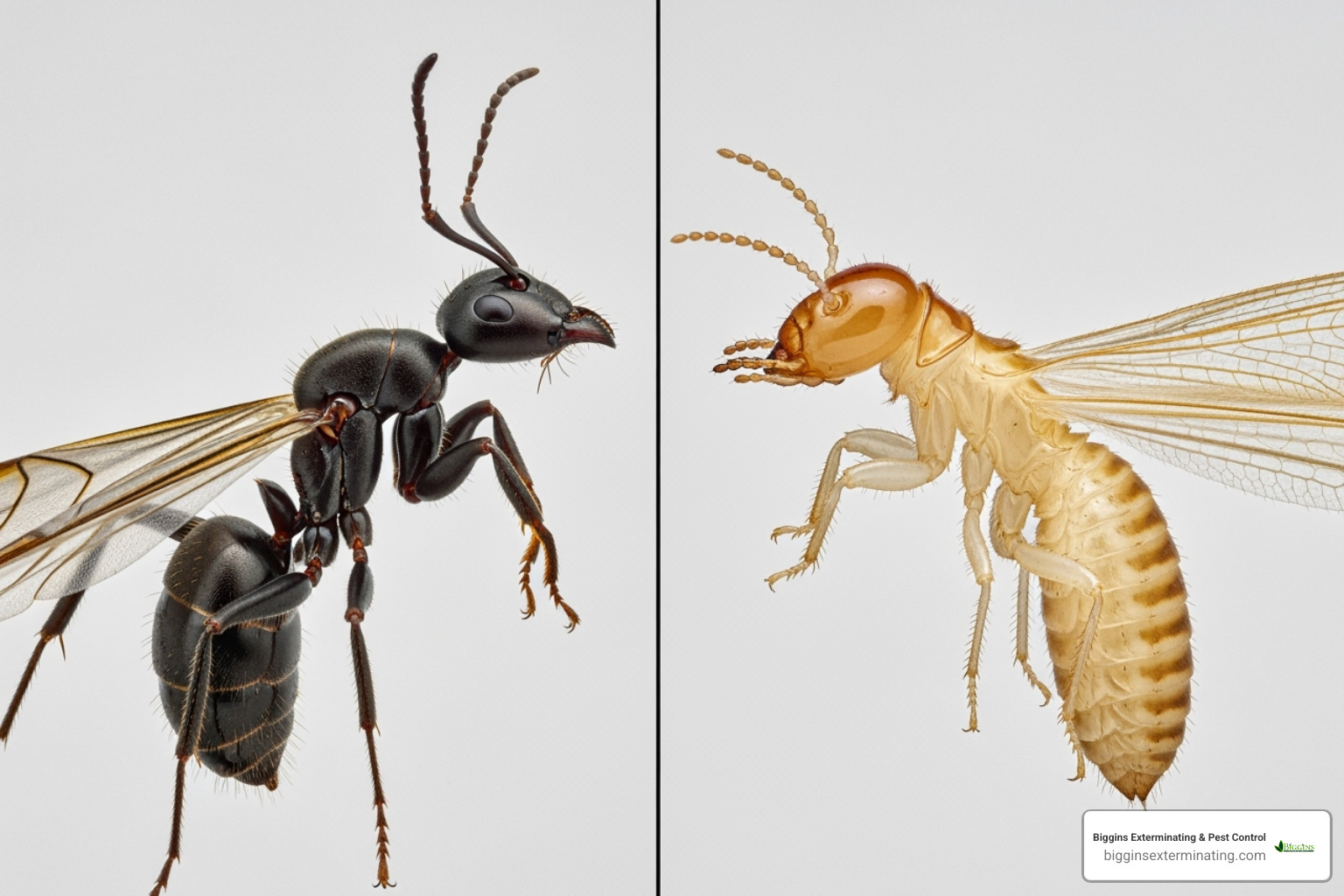
Knowing these characteristics is the first step toward effective pest management. Get the identification right, and you’re on your way to tackling the problem.
The Aftermath: Damage, Prevention, and Professional Help
Once you’ve identified carpenter ant activity, it’s time to understand the potential damage, future prevention, and when to call a professional.
How Nests Are Made and the Damage They Cause
Carpenter ants use their strong jaws to excavate tunnels, or “galleries,” inside wood. They prefer damp wood but can expand into sound, dry wood, creating complex nests within your home’s structure. A key trait is their smooth, clean galleries. They push out all excavated wood as frass through small “kick-out” holes, which is a major clue when you’re trying to find carpenter ant nest locations.
Though they don’t eat wood, their constant tunneling weakens structures over time, leading to significant damage. This damage can take years to become noticeable but can result in sagging floors, warped door frames, or compromised beams. Early detection is critical. For a visual of what severe damage can look like, check out examples of visible damage to wooden structures.
Prevention: An Ounce of Prevention…
The best defense against carpenter ants is prevention. Since they are drawn to moisture, controlling dampness is your top priority. Here are key preventative steps:
- Fix Leaks: Promptly repair leaky pipes, roofs, and faulty flashing.
- Ensure Ventilation: Keep attics, basements, and crawl spaces well-ventilated to prevent moisture buildup.
- Seal Entry Points: Seal cracks in the foundation and gaps around pipes, windows, and doors.
- Store Firewood Properly: Keep firewood on a raised structure away from the house.
- Trim Vegetation: Keep tree branches and shrubs trimmed back from your home’s exterior.
- Clean Gutters: Regularly clean gutters to prevent water from pooling near the foundation.
For more detailed tips, you can review the fact sheet from Health Canada.
When to Call a Professional: Knowing When to Surrender (to the Experts!)
While DIY efforts are great, some infestations are too large, established, or hidden for a homeowner to handle. That’s when it’s time to call the experts at Biggins Exterminating.
Here’s when bringing in a professional is essential:
- Large or widespread infestations: Seeing many ants in multiple areas of your home suggests a major colony that requires professional treatment.
- Multiple nests: Carpenter ants often have a main nest and several satellite nests. Professionals can locate and treat all of them to solve the problem completely.
- Inaccessible locations: Nests in wall voids, attics, or crawl spaces are hard to reach and treat without specialized equipment. Attempting it yourself can be costly and dangerous.
- Suspected structural damage: If you see signs of structural damage like sagging floors or warped wood, a professional should assess the damage and ensure the infestation is eliminated before repairs.
- Persistent problems: If ants keep returning despite your efforts, the source hasn’t been fully addressed. Our team can develop a custom solution for stubborn infestations.
We’re a family-owned business with over 40 years of experience serving homeowners in Wilmington, MA, and surrounding areas including Andover, Bedford, Billerica, Burlington, Lexington, North Reading, Tewksbury, and Woburn. We offer reliable pest control services with warranties and a commitment to your satisfaction, without locking you into contracts. To learn more, visit our page: Can Pest Control Get Rid of Carpenter Ants?.
Conclusion: Winning the War Against Carpenter Ants
You now know how to recognize the signs of carpenter ants—from their appearance and the frass they leave behind to rustling sounds and winged swarmers. You also have the steps to find carpenter ant nest locations by observing them at night, following trails, using bait, and checking moisture-damaged areas.
When it comes to carpenter ants, early action is absolutely crucial. The sooner you pinpoint and address their nests, the less opportunity they’ll have to cause significant, costly damage to your home’s wooden structures. It’s a race against time to protect your biggest investment.
While you can find carpenter ant nest locations, completely eliminating an established colony is challenging. They are experts at hiding, often establishing multiple “satellite” nests in inaccessible spots like deep within wall voids or attics. Simply spraying the ants you see won’t touch the hidden queen or the rest of the colony. That’s why DIY methods, while great for initial detection, often fall short of providing a long-term solution.
This is where Biggins Exterminating & Pest Control comes in. For over 40 years, our family-owned business has been helping homeowners just like you in Wilmington, MA, and the surrounding communities. We have the specialized tools, knowledge, and experience to not only locate every hidden nest but to implement a comprehensive treatment plan that ensures long-term protection for your home. We understand the peace of mind that comes with a pest-free home, and that’s what we’re dedicated to delivering.
Don’t let these wood-destroying insects chew away at your peace of mind or your property value. If you suspect you have a carpenter ant problem, or if you feel overwhelmed, please don’t hesitate to reach out. We’re ready to help you win this war, once and for all.
Contact us for professional Carpenter Ants Pest Control today. Let’s make sure your home stays safe and sound.
