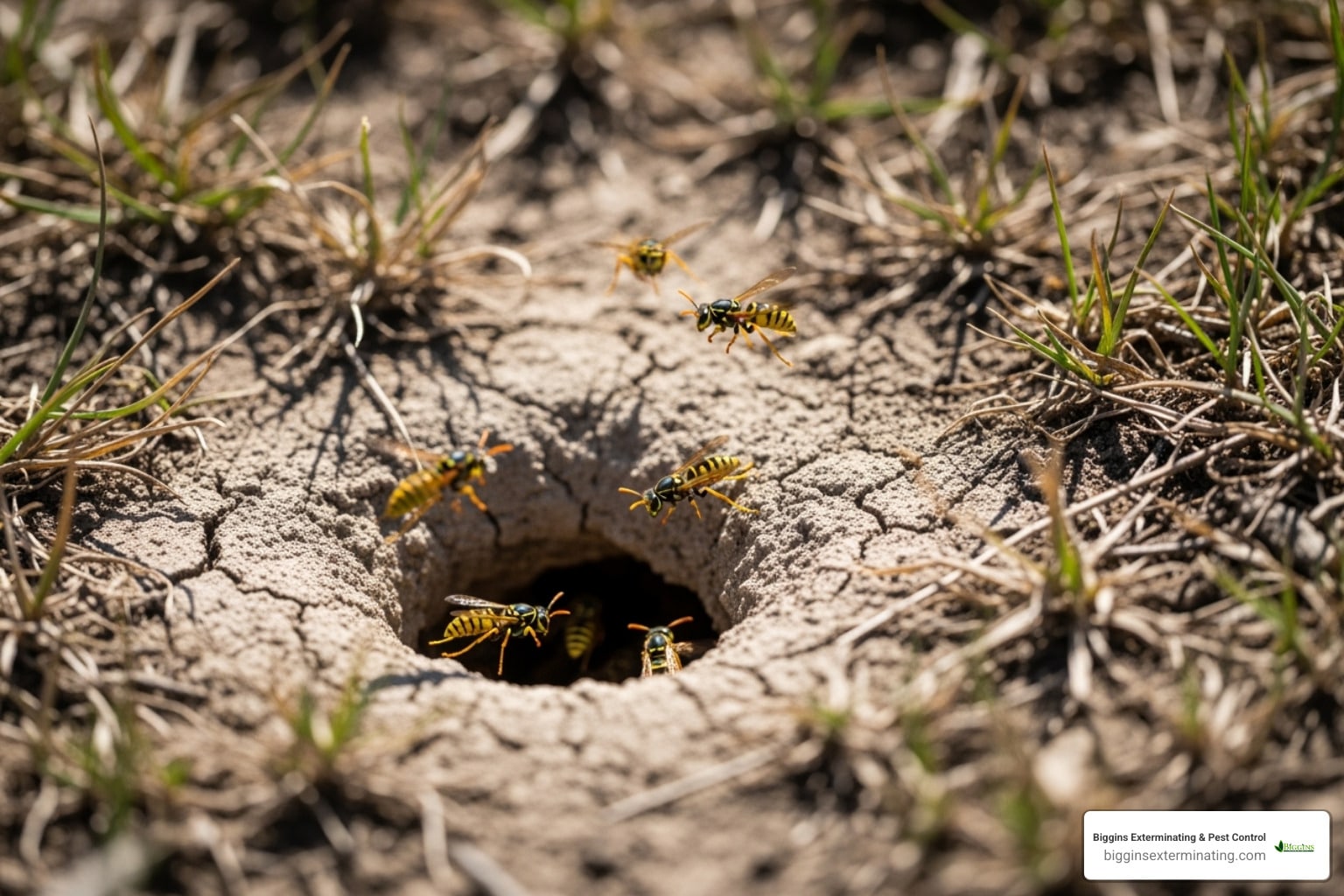
Why Yellow Jackets Are More Than Just a Summer Nuisance: Exterminating Yellow Jackets
Understanding the Enemy: Identifying Yellow Jackets and Their Nests
Before you can win the battle, you have to know your opponent. Yellow jackets are social wasps about ½–1 inch long, marked with the familiar black-and-yellow bands and a narrow waist. Their bodies are smooth and glossy (unlike fuzzy honeybees) and the wings fold length-wise when they rest. For a concise scientific overview, see the Wikipedia entry on yellow jackets.
A single queen starts a colony each spring; by late summer the population can explode to 2,000–3,000 workers, which is why early action is so important. Workers forage for sweets (nectar, ripe fruit, spilled soda) and proteins (other insects, meat scraps). As natural food dwindles in fall they become even more aggressive while trying to feed the queen. In cold New England winters every member of the colony dies except the newly-mated queen, who hibernates and restarts the cycle next year.
How to Locate a Yellow Jacket Nest
Yellow jackets rarely build the obvious hanging “hives” some wasps make. Instead, watch the insects themselves: a steady in-and-out flight path almost always exposes their entrance.
Common nesting spots include:
- Underground burrows – abandoned rodent holes, the base of trees, cracks under sidewalks.
- Aerial paper nests – in shrubs, low tree branches, or tucked under porch roofs.
- Structural voids – wall or ceiling cavities, attics, gaps in siding, or under eaves.
- Miscellaneous hollows – fence posts, play equipment, or beneath patio furniture.
Follow a single wasp back to the opening and listen for the low buzz that betrays a hidden colony. There may be secondary ventilation holes you cannot see.
Why Yellow Jackets Are a Dangerous Pest
Unlike honeybees, a yellow jacket can sting repeatedly, injecting venom each time. Disturb the nest and the colony may respond en masse, sometimes pursuing a threat for surprising distances. Stings cause immediate pain, swelling and itching; in people with allergies they can trigger life-threatening anaphylaxis. Even squashing a single wasp releases alarm pheromones that summon reinforcements.
For more details on dealing safely with other stinging insects, see our guide on Hornets and Wasps: Identifying Nests and Ensuring Safety and our overview of hornet and wasp removal.
Safety First: Essential Precautions Before You Begin
Before you even think about exterminating yellow jackets yourself, safety must be your absolute top priority. These aren’t your friendly neighborhood pollinators; they are highly aggressive defenders of their nests. We always recommend extreme caution and, in many cases, professional assistance. However, if you decide to attempt a DIY method, here’s how to minimize the risks and keep yourself safe.
First, let’s talk about your “suit of armor.” You need to cover every single inch of exposed skin. This means wearing a thick, baggy long-sleeved shirt or jacket. The baggier, the better, because it creates a crucial barrier between the fabric and your skin, making it much harder for stingers to reach you. Pair this with thick, baggy long pants. Don’t forget your hands and feet: use sturdy gloves that cover your wrists and wear closed-toe shoes or boots. Most importantly, protect your face and head! A beekeeping veil, a hat with netting, or even a large mask paired with safety glasses can offer vital protection.
Next, timing is absolutely everything when dealing with these pests. Yellow jackets are least active when it’s cool and dark. So, the best time to approach a nest is at dusk or dawn. This is when most of the colony’s workers are back inside the nest, and their activity levels are significantly lower. Avoid treating during the day when they are out foraging, as you’ll only stir up a portion of the colony, leaving many to return and rebuild. If possible, choose a day when the temperature is around 50 degrees Fahrenheit or cooler. This makes them even more sluggish and less likely to react aggressively. And here’s a neat trick: if you’re treating at night, use a flashlight covered with red cellophane. Insects, including yellow jackets, don’t perceive red light, so it won’t alert them to your presence!
Always, always plan your escape route before you even get close to the nest. This is non-negotiable. Before you approach, identify a clear, unobstructed path to safety. This could be a nearby building, your car, or even a dense area of vegetation that you can duck into. Make absolutely sure nothing will trip you or block your way if you need to retreat quickly. If a colony is disturbed, remember to cover your face with your hands and slowly, calmly retreat. Whatever you do, do not run, as sudden movements can further agitate them and trigger a more aggressive response.
Finally, allergy awareness is paramount. If anyone in your household has a known allergy to bee, wasp, or hornet stings, DIY removal is generally not recommended. The risk of a severe reaction, like anaphylactic shock, is simply too high. If you do proceed with DIY and there’s any allergy concern (even if it’s not yours), have an epinephrine auto-injector (EpiPen) readily available and ensure someone knows how to use it. Seek immediate medical attention if a severe reaction occurs.
Yellow jackets can be incredibly resilient and aggressive. Approaching their nest, even with all these precautions, carries inherent risks. Our primary concern is always your safety.

A Guide to Exterminating Yellow Jackets: DIY Methods
So, you’ve decided to roll up your sleeves and take on that yellow jacket nest yourself? We get it – sometimes a smaller, more accessible problem feels like something you can tackle. While we always emphasize safety first, for those determined DIYers, there are a few methods that can work for smaller infestations. Just remember, each approach has its own strengths and weaknesses, so picking the right one for your specific situation is key.
To help you steer your options, here’s a quick overview:
| Method | Pros | Cons | Best Use Cases |
|---|---|---|---|
| Aerosol Insecticide Sprays | Quick knockdown, long-distance application | Consumable, may not penetrate large nests | Visible aerial nests |
| Insecticidal Dusts | Carried into colony, long-lasting effect | Requires careful application, potential for wind drift | Ground nests, wall voids |
| Soapy Water Solution | Non-toxic, breaks down exoskeleton | Requires large volumes, less effective on large/aerial nests | Small, accessible ground nests |
Method 1: Aerosol Insecticide Sprays
These are likely what you picture when you think about tackling a wasp nest! Aerosol insecticide sprays offer a quick knockdown effect, meaning they work fast to incapacitate the yellow jackets. Many also come with a jet stream applicator, allowing for long-distance application, which is fantastic for keeping you a bit further from the action. They’re generally best for visible aerial nests that you can see and spray directly.
However, they do have their downsides. Aerosol sprays are consumable, meaning once the can is empty, you’ll need another. And for larger, more established nests, they may not penetrate large nests deep enough to reach and eliminate the entire colony, leaving some yellow jackets to rebuild. Always ensure you’re using a product specifically designed for wasps and hornets. If you’re dealing with a general wasp issue, our guide on Wasps Pest Control has more helpful tips.
Method 2: Insecticidal Dusts
If you’re dealing with a hidden nest, like one in the ground or inside a wall, insecticidal dusts might be your best bet. These dusts are incredibly effective because the yellow jackets themselves become part of the solution! When applied to the nest entrance, the tiny dust particles cling to the yellow jackets as they enter and exit. They then carry the dust into the colony, spreading it throughout the nest and contaminating other wasps, including the queen. This method offers a long-lasting residual effect, meaning it continues to work even after your initial application.
The trick with dusts is that they require careful application to ensure proper distribution without stirring up the nest too much. There’s also the potential for wind drift, so you’ll want to apply them on a calm day to ensure the product goes exactly where you intend it to.
Method 3: The Soapy Water Solution
Looking for a more eco-friendly, non-toxic approach? For smaller, easily accessible ground nests, a strong soapy water solution can be surprisingly effective. The soap breaks down the waxy coating on the yellow jacket’s exoskeleton, which interferes with their ability to breathe, essentially suffocating them.
To use this method, mix a generous amount of dish soap (about ¼ cup per gallon) into a bucket of water. Then, carefully pour or spray the solution directly into the nest entrance. The main drawbacks are that it requires large volumes of water to fully soak the nest, and it’s less effective on large or aerial nests where you can’t easily drench the entire structure. Plus, you need to get quite close, which increases the risk of stings.
Method 4: Natural and Organic Options for discouraging yellow jackets
While these methods won’t exterminate an existing nest, they can be great for discouraging yellow jackets from setting up shop on your property in the first place, or for keeping them away from specific areas. Think of them as your first line of defense!
One key strategy is creating physical barriers by sealing entry points around your home. This means caulking cracks in foundations, repairing screens, and ensuring there are no inviting gaps under eaves or around pipes. Another big one is removing attractants. Yellow jackets love a good meal, so make sure to cover trash cans tightly, clean up spills immediately, and remove fallen fruit from your yard. They also need water, so reducing moisture and fixing leaks can help make your property less appealing.
Some people find success with planting yellow jacket-repellent plants like mint, marigold, and basil around outdoor living spaces. The strong scents from these plants are believed to deter these buzzing pests. Similarly, using essential oil deterrents such as peppermint oil around outdoor areas can create a scent barrier that yellow jackets prefer to avoid. While these natural options are excellent for prevention and discouraging foraging, they aren’t a direct solution for an active, aggressive nest.
How can you effectively locate a yellow jacket nest, especially if it’s hidden?
Locating a yellow jacket nest is the crucial first step in exterminating yellow jackets. It can be a bit of a detective’s job, especially if the nest is hidden, but observing their behavior will give you the best clues.
- Observe Flight Paths: The most effective way to find a nest is to watch where the yellow jackets are flying. They tend to have consistent entry and exit points. On a sunny day, spend some time observing their activity around your property. Look for a steady stream of yellow jackets entering or leaving a particular spot. This could be a small hole in the ground, a crack in your foundation, a gap in your siding, or an opening under the eaves of your roof.
- Listen for Buzzing: If you suspect a nest is hidden within a wall void, attic, or other enclosed space, listen carefully for buzzing sounds, especially during quieter times of the day or night. The “evil buzz,” as one homeowner described it, can be a clear indicator of a nest’s presence.
- Check Common Nesting Sites:
- Ground Nests: These are very common. Yellow jackets often use abandoned rodent burrows, tree roots, or even small depressions in the ground. Look for a nickel-sized opening with a lot of activity around it. You might see small particles of dirt piled up around the entrance.
- Aerial Nests: While less frequent for yellow jackets compared to other wasps, they can build paper nests in bushes, dense shrubs, low-hanging tree branches, or under structures like sheds, porches, or eaves.
- Wall Voids & Attics: This is one of the trickiest places. Yellow jackets can chew through drywall to enter living spaces if they nest in attics or walls. Look for activity around window frames, soffits, and any small openings on your home’s exterior. One homeowner found a nest hidden between wall boards after an attic search, highlighting how well-concealed they can be.
- Follow Individual Wasps: If you spot a lone yellow jacket foraging, try to follow its flight path back to its nest. They are very efficient and will typically fly directly back to their colony.
Yellow jackets are social wasps, so if you spot one, an entire colony won’t be far away. Pinpointing that single busy entry point is key, as you won’t see a visible “hive” like you might with some other stinging insects. Be patient, be observant, and never disturb a suspected nest while trying to locate it.
What essential safety precautions should be taken before attempting to exterminate yellow jackets?
Safety is paramount when dealing with yellow jackets. Their aggressive nature means that even a small disturbance can trigger a swarm attack. We cannot stress enough the importance of taking every possible precaution before attempting any extermination.
- Wear Full Protective Clothing: This is your armor against multiple stings.
- Thick, Baggy Layers: Don a thick, long-sleeved shirt or jacket and long, baggy pants. Baggy clothing creates a space between the fabric and your skin, making it harder for stingers to penetrate.
- Gloves: Use sturdy gloves that extend over your wrists.
- Footwear: Wear closed-toe shoes or boots.
- Head and Face Protection: This is critical. A beekeeping veil, a hat with netting, or even a large mask paired with safety glasses can shield your face and neck from painful stings.
- Think of it this way: if any skin is showing, it’s a target.
- Choose the Right Time: Timing is everything for effective and safe treatment.
- Dusk or Dawn: Yellow jackets are least active and most are inside the nest just after dusk or before sunrise. This is when they are dormant and less likely to swarm. The ambient temperature also plays a role; they are less active when it’s around 50 degrees Fahrenheit.
- Night Treatment: If treating at night, use a flashlight covered with red cellophane. Yellow jackets, like many insects, cannot perceive red light, so it won’t alert them to your presence.
- Plan Your Escape Route: Before you even approach the nest, identify a clear, unobstructed path to safety.
- Ensure there are no obstacles that could trip you if you need to retreat quickly.
- If you accidentally disturb the nest, cover your face with your hands and slowly, calmly retreat from the area. Do not run, as rapid movements can further agitate them and encourage pursuit.
- Allergy Awareness: This cannot be overemphasized.
- If you or anyone in your household has a known severe allergy to bee, wasp, or hornet stings, we strongly advise against DIY extermination. The risk of anaphylactic shock is too high.
- If you proceed and there’s any allergy concern, have an epinephrine auto-injector (EpiPen) immediately accessible and ensure someone nearby knows how to administer it.
- Read Product Instructions: If using chemical treatments, always read and follow the manufacturer’s instructions carefully. Pay attention to safety warnings, application methods, and disposal guidelines. Never spray near water sources or areas where food is prepared or consumed.
Yellow jackets are notoriously aggressive, especially when their nest is threatened. Taking these precautions seriously can significantly reduce your risk of painful stings.
A Guide to Exterminating Yellow Jackets: DIY Methods
Alright, for those of you who are ready to roll up your sleeves and take on a yellow jacket nest yourself, there are indeed a few DIY methods that can work wonders for smaller, more accessible infestations. But a quick reminder from your friends at Biggins Exterminating: please, please, pair these methods with the essential safety precautions we just talked about. Never, ever attempt to tackle these aggressive pests without your full protective gear and a clear escape plan in mind. Your safety is always our number one concern!
To help you choose the best approach for your specific yellow jacket problem, here’s a quick comparison of the most common DIY methods:
| Method | Pros | Cons | Best Use Cases |
|---|---|---|---|
| Aerosol Insecticide Sprays | Quick knockdown, long-distance application, easy to use | Consumable (one-time use), may not penetrate large or hidden nests, can be hazardous if misused | Visible aerial nests, smaller, exposed nests |
| Insecticidal Dusts | Carried into the colony for wider kill, long-lasting residual effect | Requires careful application (e.g., puffing into an opening), potential for wind drift, can be messy | Ground nests, wall voids, hidden structural nests |
| Soapy Water Solution | Non-toxic, eco-friendly, breaks down exoskeleton for quick kill | Requires large volumes of water, less effective on large or aerial nests, needs direct contact | Small, accessible ground nests, individual yellow jackets |
Method 1: Aerosol Insecticide Sprays
Aerosol insecticide sprays are probably what first comes to mind when you think about tackling a wasp nest. These cans offer a quick knockdown effect, meaning the yellow jackets you hit directly will fall fast. Many sprays also offer a long-distance application, which is fantastic for keeping you further away from the nest’s angry inhabitants. They’re best suited for visible aerial nests – think a small paper nest hanging under an eave or in a bush where you can clearly see the opening.
However, these sprays are consumable, meaning once the can is empty, it’s done. For larger nests, or those hidden deep within a void, a single can (or even several) may not penetrate enough to reach and eliminate the entire colony, leaving you with a very upset and still-active nest. Always aim for the nest’s entrance at the recommended safe distance. For more general information on controlling wasps, check out our guide on Wasps Pest Control.
Method 2: Insecticidal Dusts
When it comes to ground nests or those sneaky ones hiding in wall voids, insecticidal dusts are often the champion. The magic of dusts is that they are carried into the colony. When a yellow jacket walks through the dust at the nest’s entrance, the tiny particles cling to its body. As it moves deeper into the nest, these particles are spread to other yellow jackets and even the queen, effectively contaminating and eventually eliminating the entire colony. This gives dusts a fantastic long-lasting residual effect.
However, dusts require careful application. You typically need to puff or apply the dust directly into the nest’s entry point, often requiring specific applicators. There’s also the potential for wind drift, meaning the dust could blow away from the target or onto unintended areas, so always apply on a calm day.
Method 3: The Soapy Water Solution
Looking for a truly non-toxic approach? Then a simple soapy water solution might be your go-to, especially for smaller, accessible ground nests. The way this works is quite clever: the soap in the water breaks down the yellow jacket’s exoskeleton, which is designed to keep moisture in. Once that protective layer is compromised, the insect essentially suffocates and drowns very quickly. It’s an effective, environmentally friendly option.
The main downsides are that it requires large volumes of water (and thus, soap) for effectiveness, and it’s less effective on large or aerial nests because you need to thoroughly soak the entire nest and all its inhabitants. It’s generally best for a very localized, small nest that you can easily and safely douse completely.
Method 4: Natural and Organic Options for discouraging yellow jackets
While the previous methods focus on direct extermination, there are also natural and organic options that can help in discouraging yellow jackets from settling in your yard in the first place. Think of these as preventative measures and deterrents. One key strategy is to use physical barriers and seal entry points. Check your home for any cracks or gaps in siding, around windows, or under eaves, and caulk them up. Repair any torn window screens.
Another major step is removing attractants. Yellow jackets are scavengers, so keep trash cans tightly covered, clean up food spills immediately after outdoor meals, and remove any fallen fruit from trees in your yard. Don’t forget to reduce moisture sources, as they need water too – fix leaky outdoor faucets or irrigation.
You can also try planting yellow jacket-repellent plants around your outdoor areas. Certain herbs and flowers like mint, marigold, and basil are often cited as deterrents. While not a guaranteed solution, they can make your yard less appealing. Similarly, some people use essential oil deterrents like peppermint oil. You can mix a few drops of peppermint oil with water in a spray bottle and spray it around outdoor dining areas or potential nesting spots. These natural methods are primarily for discouraging, not for eliminating an active, large nest.