
Why Underground Yellow Jacket Nests Pose a Serious Threat
Learning how to exterminate yellow jackets underground safely is crucial for protecting your family from these aggressive wasps that build hidden colonies beneath your feet. These dangerous pests create nests in abandoned rodent burrows, under thick grass, and along foundation edges – making them nearly impossible to spot until someone accidentally steps on them.
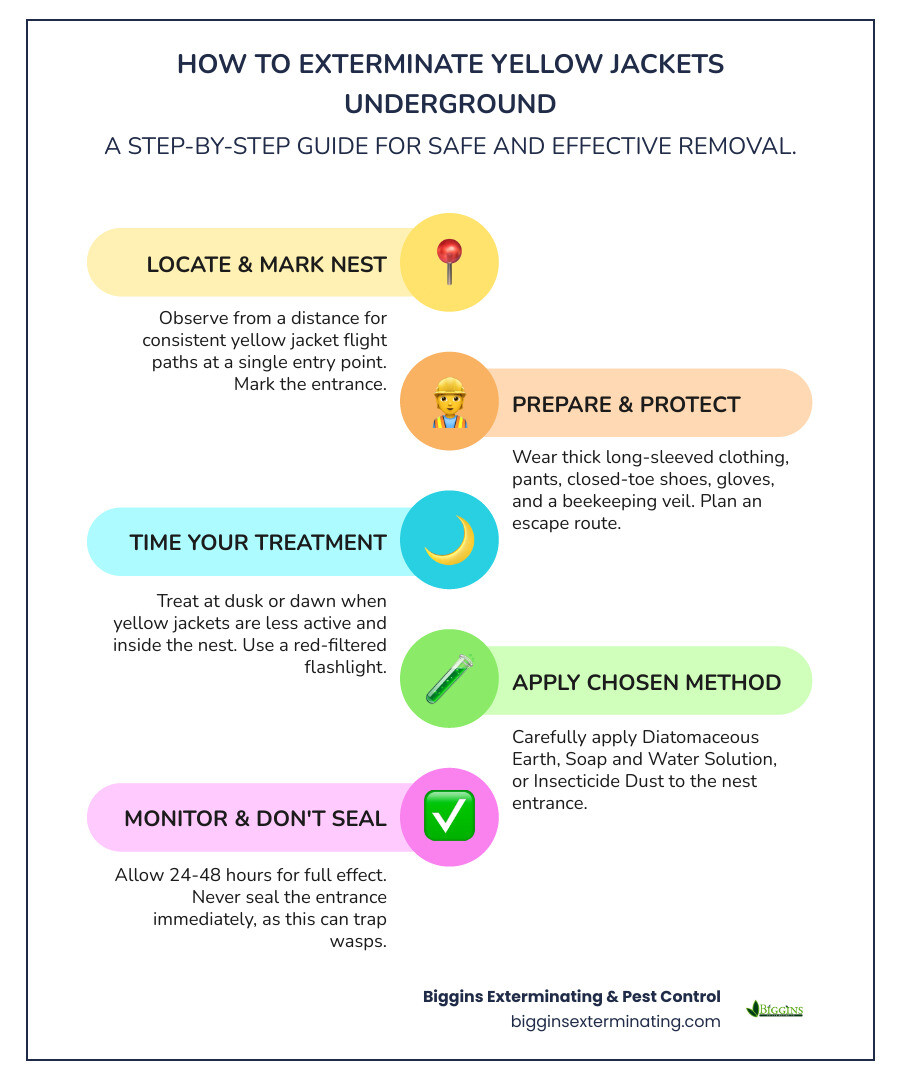
Quick Methods to Exterminate Yellow Jackets Underground:
- Diatomaceous Earth – Apply food-grade powder at night around nest entrance
- Soap and Water Solution – Pour large volume of soapy water into hole at dusk
- Insecticide Dust – Use commercial wasp dust with bellows applicator after dark
- Professional Treatment – Safest option for large nests or allergic individuals
Essential Safety Steps:
- Wear thick, protective clothing covering all skin
- Treat only at dusk when yellow jackets are less active
- Plan escape route before approaching nest
- Never seal entrance immediately after treatment
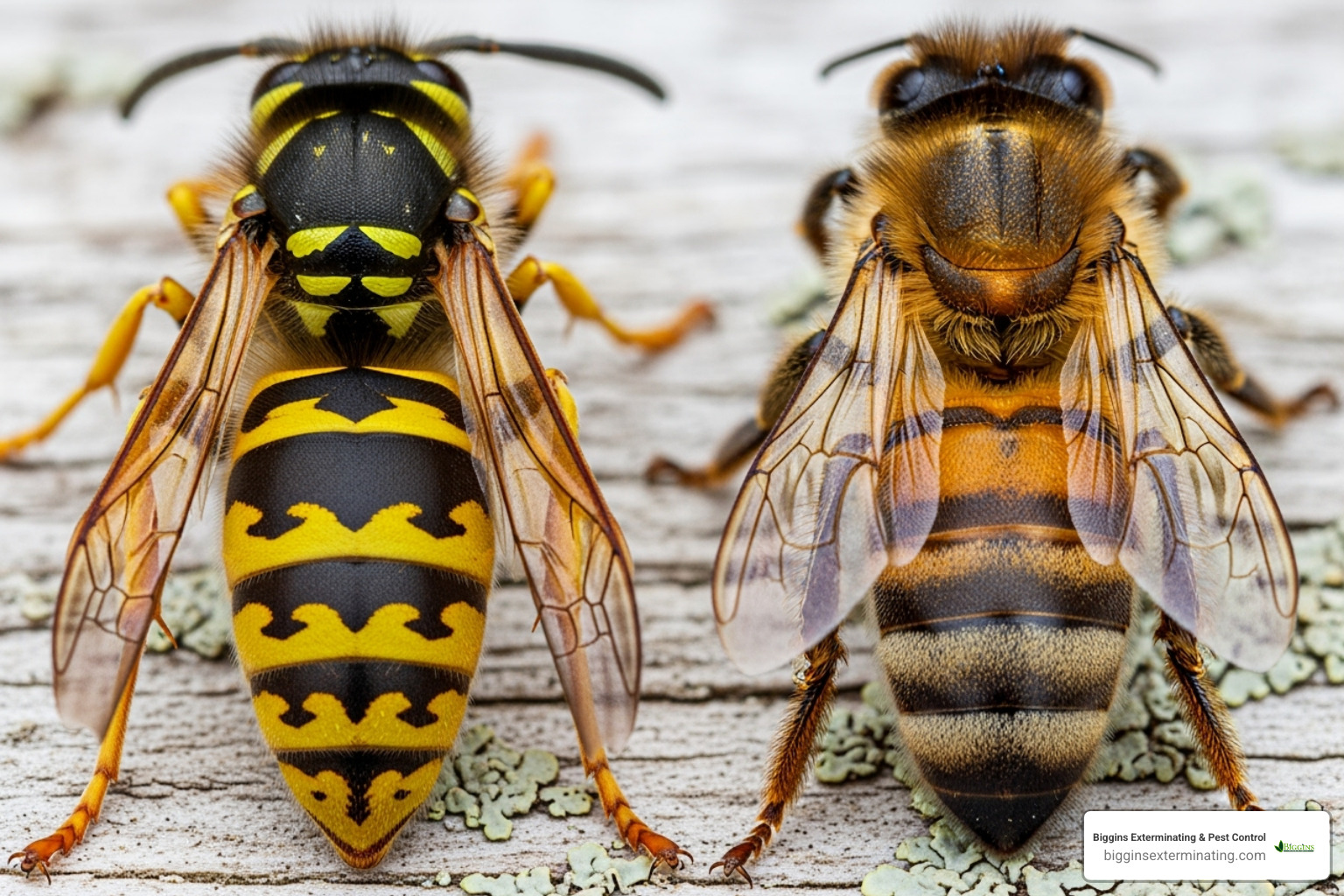
Unlike honeybees, yellow jackets are smooth-bodied aggressive scavengers that can sting repeatedly without dying. A single underground nest can house up to 4,000 yellow jackets by late summer, making accidental encounters extremely dangerous. Many homeowners find these hidden colonies the hard way – while mowing the lawn or when children are playing outside.
The research shows that one person was stung 70 times after stepping on a hidden nest, highlighting why proper identification and safe elimination methods are essential. These wasps release alarm pheromones when threatened, calling in reinforcements from the entire colony to attack perceived threats.
As Stephen Biggins from Biggins Exterminating, I’ve helped Massachusetts families safely exterminate yellow jackets underground for over 40 years, including countless emergency calls from homeowners who finded nests the dangerous way. My experience has taught me that while DIY methods can work, understanding the risks and proper techniques is absolutely critical for your safety.
Exterminate yellow jackets underground word roundup:
Identifying the Threat: Yellow Jackets and Their Underground Lairs
Before you can exterminate yellow jackets underground, it’s crucial to identify them correctly. Yellow jackets are not bees; they are a type of wasp from the Vespula and Dolichovespula genera. They are identifiable by their bright yellow and black patterns, smooth bodies, and a distinct, narrow waist. Measuring about 1/2 to 3/4 inch long, they look more streamlined than their fuzzy honeybee relatives.
Yellow jackets are aggressive scavengers attracted to sweets and proteins, which is why they often disrupt picnics and barbecues. While beneficial in preying on other insects, their presence is a nuisance and a danger. Our team at Biggins Exterminating frequently handles wasp-related emergencies in communities like Andover, Bedford, and Burlington, MA. If you’re dealing with a wasp problem, see More info about our wasp services.
Why Underground Nests Are So Dangerous
Underground nests are particularly dangerous because they are hidden. Yellow jackets build their colonies in concealed locations like abandoned rodent burrows or cavities in retaining walls, making accidental findy common. The primary danger is accidentally disturbing a nest while performing routine yard work or during outdoor recreation. Stepping on a hidden nest is the most common cause of stings.
When threatened, yellow jackets become highly defensive. They can sting repeatedly and release an alarm pheromone that summons the entire colony to attack, leading to multiple painful stings.
By late summer, a single colony can contain up to 4,000 workers, and sometimes more. A small hole in the ground can be the entrance to a massive underground nest, making it difficult to assess the true risk. Residents in Tewksbury and Wilmington, MA, can attest to how quickly a hidden nest can turn a peaceful day into an emergency.
Preparation and Safety: Your First Line of Defense
When you exterminate yellow jackets underground, safety is non-negotiable. This is a dangerous task that requires careful preparation to prevent serious injury. A cautious, well-prepared approach is critical for success.
First, proper protective gear is your primary defense. Biggins Exterminating insists on full coverage to prevent stings. Wear thick, long-sleeved clothing (like denim or canvas), long pants, and closed-toe shoes or boots. Protect your hands with leather or rubber gloves and your head and face with a beekeeping veil or head net and safety goggles.
- Essential Protective Gear:
- Thick, Long-Sleeved Clothing
- Long Pants
- Closed-Toe Shoes or Boots
- Leather or Rubber Gloves
- Beekeeping Veil or Head Net
- Safety Goggles
Before approaching the nest, plan a clear escape route. A quick retreat path is crucial if the situation escalates. Timing is also critical. The best time to treat a nest is at dusk or dawn when yellow jackets are less active and most are inside. This minimizes the number of flying defenders. If using a flashlight, cover it with a red filter, as yellow jackets are less sensitive to red light. For comprehensive hornet and wasp issues, consider our hornet and wasp removal services.
How to Safely Locate the Nest
Locating the nest requires patient observation, not bravery. Never approach without full protective gear and a plan. To safely find the nest:
- Observe from a distance: From at least 20 feet away, watch for consistent “airport activity”—a steady stream of yellow jackets entering and exiting a single hole. This flight path will reveal the entrance.
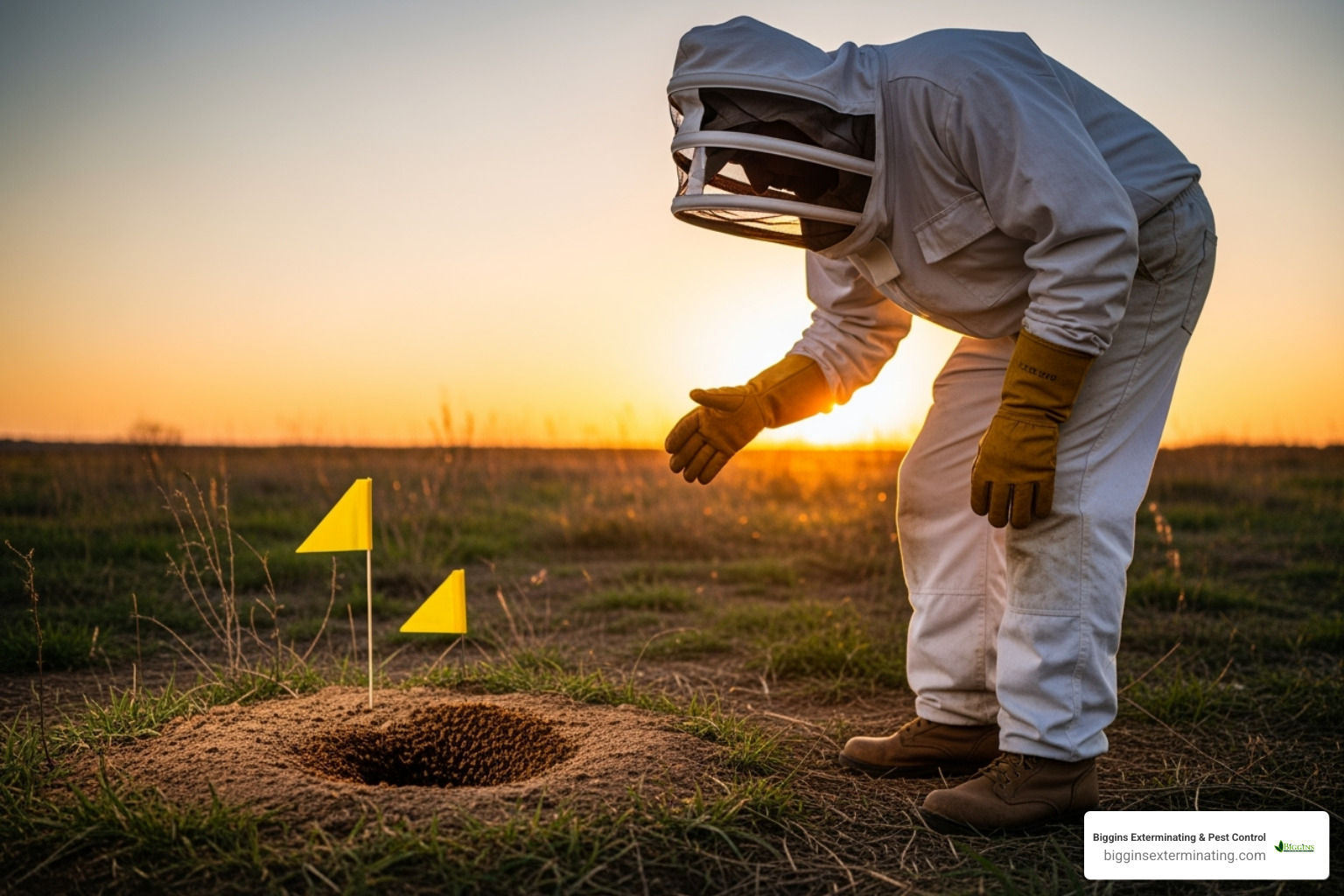
- Mark the entrance: During the day, mark the hole with a rock or stick so you can easily find it at dusk for treatment.
- Keep your distance: Do not get close during observation to avoid provoking an attack.
- Assess the risk: Consider the nest’s location. If it’s in a high-traffic area near people or pets, it’s a hazard that needs to be removed. If it’s in a remote, undisturbed corner, you might be able to leave it, as colonies die off in winter and are not reused. If it poses a threat, it’s time to exterminate yellow jackets underground.
How to Exterminate Yellow Jackets Underground: A Guide to DIY Methods
Once you’ve located the nest and put on your protective gear, you can consider several DIY methods to exterminate yellow jackets underground. These treatments vary in effectiveness and carry inherent risks, so always prioritize safety and proceed with caution.
Eco-Friendly Method 1: Using Diatomaceous Earth
Diatomaceous Earth (DE) is an eco-friendly powder made from crushed fossils. Its sharp particles scratch the yellow jackets’ exoskeletons, causing them to dehydrate and die. This mechanical method is a popular non-chemical option.
Application: At night, use a powder duster (like this one from Amazon: diatomaceous earth) to apply a generous amount of food-grade DE in and around the nest entrance. Do not seal the hole; returning wasps will track the dust into the colony. Reapply after rain, as moisture makes DE ineffective. Avoid inhaling the dust during application. For more tips, see our guide on exterminating yellow jackets.
Eco-Friendly Method 2: The Soap and Water Solution
A simple and effective method uses a solution of dish soap and water. The soap breaks down the wasps’ waxy exoskeleton, impairing their ability to breathe and fly, which causes them to drown.
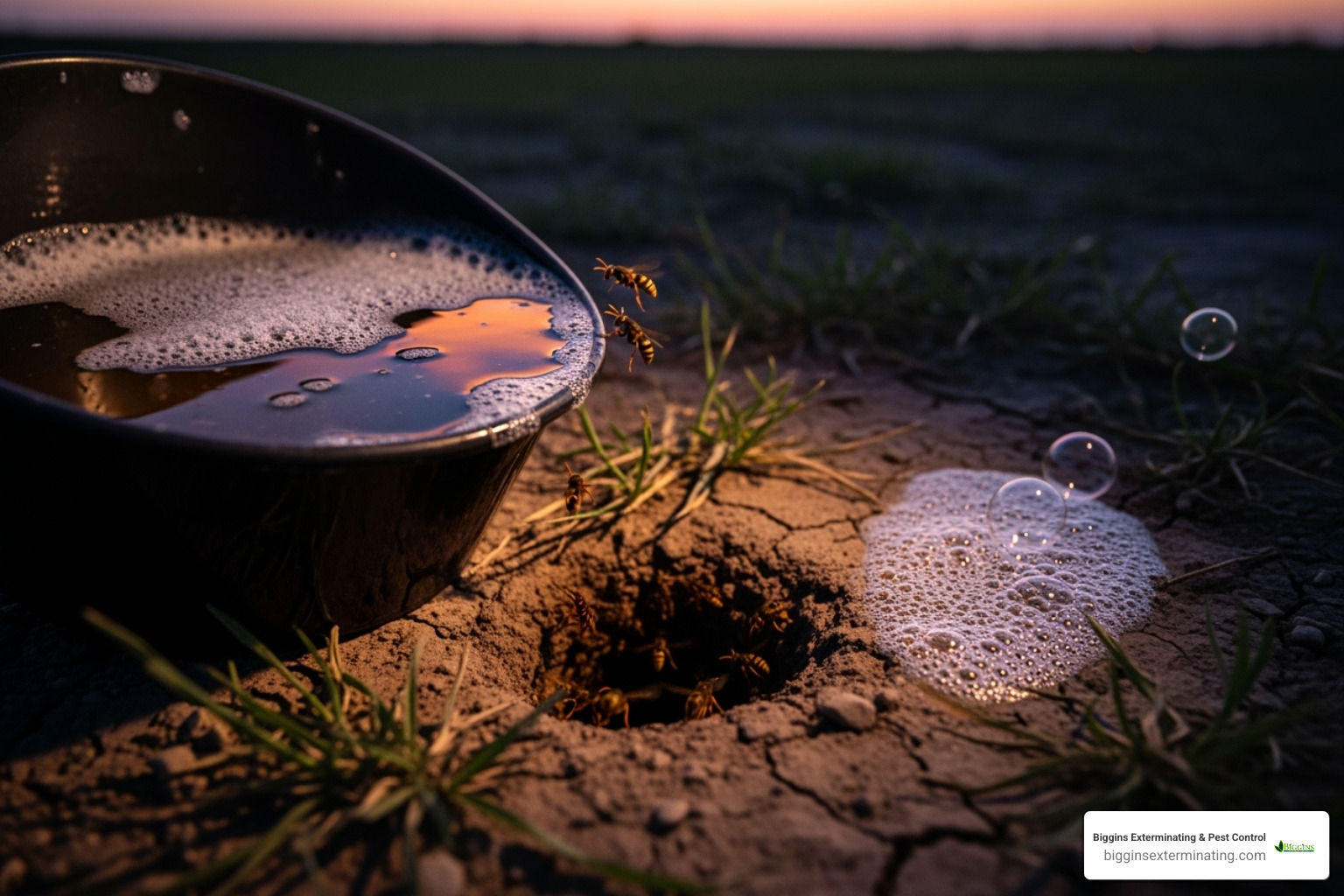
Application: Mix about 3 tablespoons of liquid dish soap per gallon of water. At night, quickly pour a large bucket of the soapy solution directly into the nest entrance to saturate the colony. For deeper penetration, you can squirt dish soap into the hole before adding water. Larger nests may require this treatment for a few consecutive nights.
Chemical Method: Using Insecticide Dusts to Exterminate Yellow Jackets Underground
Insecticidal dusts offer a highly effective and fast-acting chemical solution. The dust clings to yellow jackets as they enter and exit the nest, and they carry it deep inside, contaminating the entire colony, including the queen and larvae. Products like 5% Sevin dust or Bayer Tempo 1% dust are popular choices.
Application: Apply dusts at night using a bellow duster to puff the product directly into the nest entrance. Coat the opening thoroughly so returning wasps pick up the dust. Always read and follow all label instructions for application rates and safety precautions. Allow 24-48 hours for the dust to work; some activity may persist for a day. Dusts are more effective than aerosol sprays for underground nests. Our professional team at Biggins Exterminating uses professional-grade dusts for effective treatments in areas like Lexington and North Reading, MA. For more on this topic, see our page on pest control hornet’s nest removal.
Common Mistakes and When to Call a Professional
While DIY methods to exterminate yellow jackets underground can work, a misstep can be dangerous. Knowing when to call a professional is a sign of wisdom, not weakness.
Common DIY Mistakes
Several common DIY mistakes can worsen the problem:
- Treating during the day: Yellow jackets are highly active during the day, increasing your risk of being stung. Always treat at dusk or dawn.
- Using gasoline or flammable liquids: This is extremely dangerous, creating a fire hazard and polluting the environment. It is also often illegal.
- Sealing the entrance too soon: Trapped survivors may chew a new exit, possibly into your home. Allow the treatment 24-48 hours to work before sealing the hole.
- Neglecting protective gear: Never approach a nest without full protective clothing, gloves, and a veil. A few minutes of preparation can prevent dozens of painful stings.
When to Call a Professional
DIY is not always the best option. Call a professional in these situations:
- Large or inaccessible nests: If a nest is very large or located in a difficult spot like a wall void or under a deck, professionals have the equipment and expertise for safe removal.
- Known allergies: If anyone in your home is allergic to stings, do not attempt DIY removal. The risk of a severe allergic reaction is too high, even with an epinephrine auto-injector available.
- Failed DIY attempts: If your efforts have failed, the remaining wasps may be more agitated. A professional can ensure the colony is fully eliminated.
- Peace of mind: Dealing with aggressive wasps is stressful. For guaranteed safety and effectiveness, trust a professional. The Biggins Exterminating team has over 40 years of experience in towns like Wilmington and Woburn, MA. Learn more about why professional hornet and wasp nest removal is essential.
Long-Term Prevention: Keeping Your Yard Yellow Jacket-Free
After you exterminate yellow jackets underground, the next step is prevention. Making your yard less inviting to future colonies is the best way to avoid a repeat problem.
Reducing Food Attractants
Yellow jackets are opportunistic scavengers attracted to sweets and proteins. To make your yard less appealing, manage food sources carefully:
- Use trash cans with tight-fitting lids and rinse recyclables.
- Cover food and drinks during outdoor meals and clean up promptly.
- Clean up spilled drinks, food crumbs, and pet food.
- Regularly pick up fallen fruit from trees.
- Avoid wearing strong floral scents and brightly colored clothing, which can attract them.
Eliminating Nesting Sites
Yellow jackets seek sheltered places for their nests. You can discourage them by eliminating potential nesting sites:
- Fill in old rodent burrows and other holes in your lawn and garden.
- Seal cracks and gaps in your home’s foundation and exterior walls, especially in early spring before queens emerge from hibernation to build new nests.
- Clear away wood piles and other debris that could provide shelter.
- Consider trapping overwintering queens in early spring with baited traps to prevent new colonies from forming.

By putting these prevention strategies into practice, you are actively creating a more enjoyable, stress-free, and safer outdoor space for your family.
Frequently Asked Questions about How to Exterminate Yellow Jackets Underground
Homeowners in areas like Wilmington, Billerica, and Woburn, MA, often have questions about underground yellow jacket nests. Here are answers to some common queries.
Do yellow jackets reuse their underground nests each year?
No. Yellow jacket colonies are annual, meaning the workers die off in the fall. Only new queens survive the winter to start new nests in different locations the following spring. However, it is wise to fill in old nest holes to prevent a new queen from using the same convenient spot.
How long does it take for a treatment to exterminate yellow jackets underground?
The time frame depends on the method and the size of the nest:
- Insecticide dusts: Typically take 24 to 48 hours to eliminate the colony.
- Soap and water solution: Can have immediate effects, but may require re-treatment over several nights for larger nests.
- Diatomaceous earth: This is a slower method, taking several days to a week for full effect.
After any treatment, monitor the nest entrance for several days. Do not assume the colony is gone until you see a complete lack of activity.
Is it safe to mow my lawn after treating an underground yellow jacket nest?
No, not immediately. We strongly advise waiting until you have confirmed there is zero activity at the nest entrance for at least 3 to 5 days. The vibrations from a lawnmower can provoke any surviving yellow jackets, leading to stings. It is better to be safe and wait.
Conclusion: Reclaim Your Yard Safely
Phew! Dealing with yellow jackets, especially those sneaky underground nests, can feel like a real battle, can’t it? But you’ve armed yourself with some serious knowledge today. We’ve walked through the whole journey together, from understanding why these aggressive little buzzers are such a threat with their hidden homes, to gearing up like a pro for safety.
We’ve explored how to safely exterminate yellow jackets underground using various DIY methods, whether you prefer the eco-friendly approach of diatomaceous earth or soap and water, or the more potent insecticide dusts. And just as importantly, we’ve talked about how to avoid those common pitfalls that can turn a tricky situation into a downright dangerous one. Prevention is your best friend for keeping your yard yellow jacket-free in the long run!
But here’s the honest truth: while DIY efforts can be effective, those hidden underground nests are no joke. Their aggressive nature and the potential for multiple, painful stings mean that knowing your limits is absolutely vital. If you’re facing a massive colony, the nest is in a super tricky spot, or if anyone in your family has known allergies to stings, trying to tackle it yourself might just not be the safest choice. Your peace of mind, and more importantly, your safety, are paramount.
For guaranteed safety and effectiveness, especially when you’re dealing with a stubborn infestation or just want the job done right without the worry, considering professional help is often the smartest move. That’s where Biggins Exterminating comes in. We’re a family-owned company, and we’ve been helping families like yours in places like Andover, Bedford, and Woburn, MA, safely reclaim their outdoor spaces for over 40 years. We pride ourselves on offering reliable pest and rodent control services—no contracts, just honest work, warranties, and a commitment to your satisfaction.
So, if you’re ready to say goodbye to those unwanted buzzing guests and enjoy your yard again, let us lend a hand. We’re here to help you get rid of those yellow jackets safely and effectively. For more information about how we can help, please visit our wasps pest control page. Let’s make your yard a happy, sting-free zone once more!
