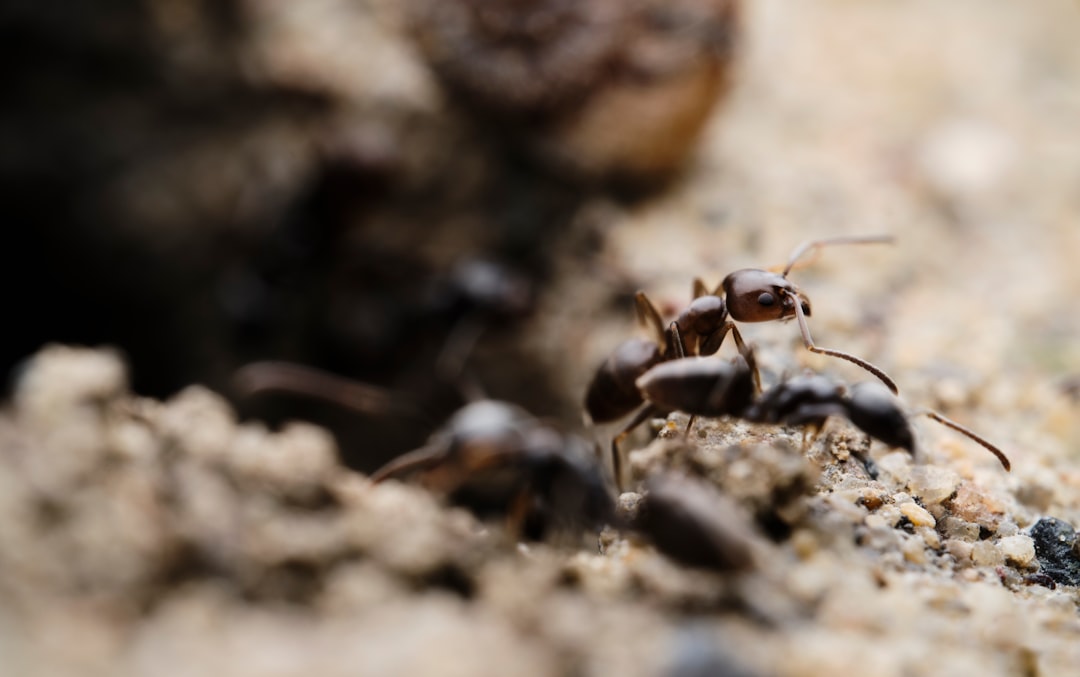
Why Effective Ant Control Requires a Strategic Approach
Effective ant control is more than just spraying the ants you see; it requires a strategic plan to eliminate the entire colony and prevent them from returning. The biggest mistake is focusing only on visible ants, which are just scouts for a much larger colony hidden from view.
Key Principles for Success:
- Target the Colony: Killing individual ants won’t stop the queen, who can lay thousands of eggs. The goal is to eliminate the source.
- Use the Right Bait: Different ant species have different diets. Using a slow-acting bait allows worker ants to carry the poison back to the nest, wiping out the entire colony.
- Be Proactive: Maintain a clean home and seal entry points to make your property less attractive to new ant colonies.
By the time you see ants in your home, a large colony with thousands of members may already be established nearby. Some species, like Pharaoh ants, can even split into multiple colonies if treated incorrectly, making the problem worse.
I’m Stephen Biggins, and for over 40 years, our family-owned business has provided effective ant control to Massachusetts homeowners. My experience shows that success depends on patience, correct ant identification, and a combination of proven treatment methods.
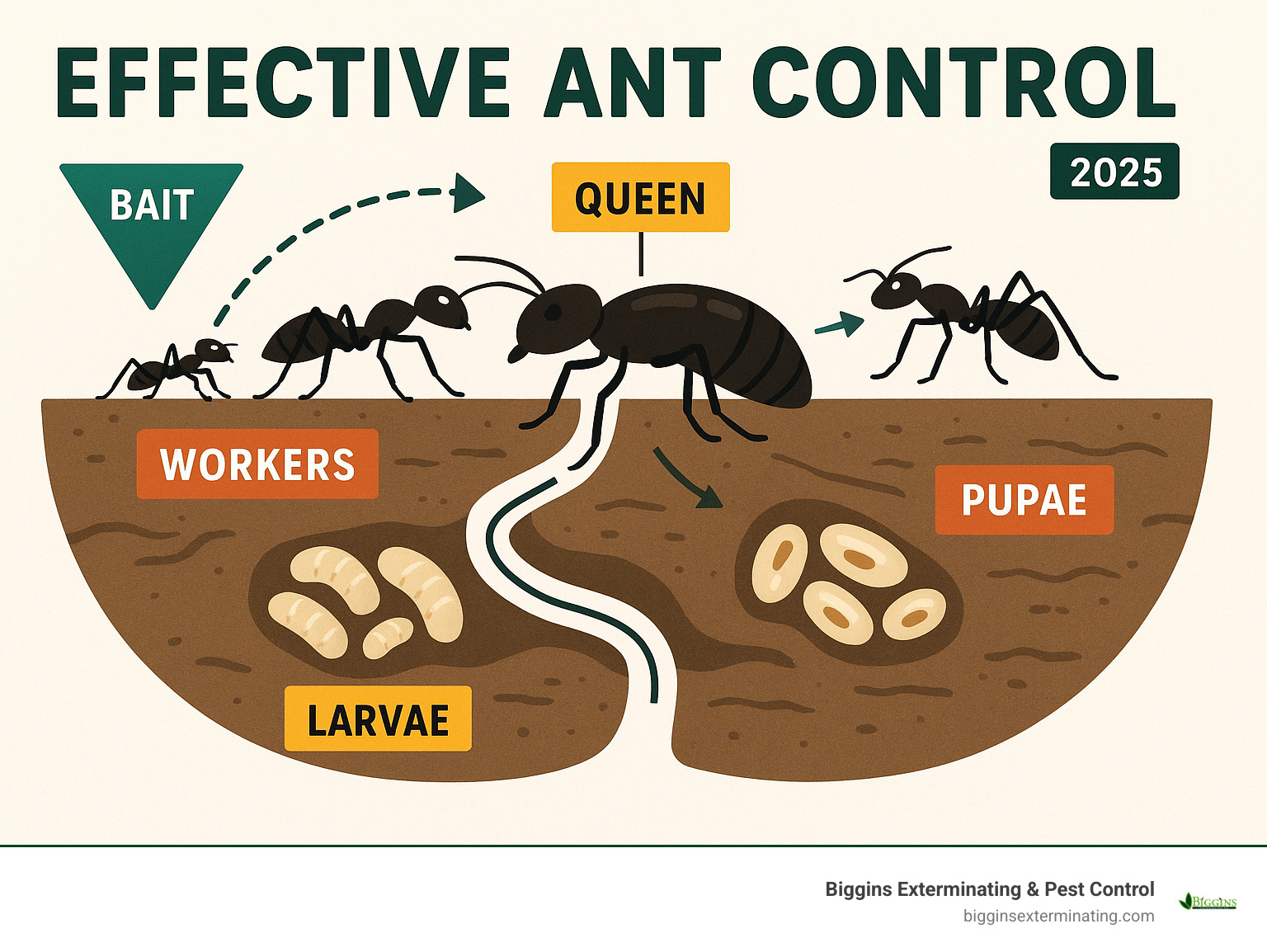
Effective ant control terms at a glance:
Understanding Your Opponent: Identifying Ants and Their Behavior
Effective ant control begins with proper identification, as different species require different strategies. While all ants have elbowed antennae and a pinched waist, their behaviors, diets, and nesting habits vary significantly. Here are some common species in Massachusetts:
- Carpenter ants: These large ants (1/4 to 1/2 inch) can be black, red, or a mix of colors. They don’t eat wood but excavate it to build nests, leaving behind sawdust-like material called frass. This can cause serious structural damage, so learning about Carpenter ants is crucial.
- Pavement ants: Small (1/16 to 1/8 inch) and dark brown or black, these ants are often seen on sidewalks and driveways. They nest under pavement but will readily enter homes for food.
- Odorous house ants: These tiny (1/16 to 1/8 inch) dark ants release a rotten coconut smell when crushed. They are common invaders, especially after rain, and are attracted to sweets.
- Sugar ants: This is a general term for various small ants that seek out sweet foods. Their colonies often have multiple queens, which allows for rapid population growth. Our guide on Sugar ants offers targeted solutions.
Ants are highly organized. Foragers leave a chemical pheromone trail to guide other workers to food and water. This explains why you see them marching in a line. Their nesting habits also differ, with some preferring soil, others wood, and some even establishing colonies in unusual places like ants in attic insulation.

Why Identification Matters
A one-size-fits-all approach rarely works. Knowing your enemy is key to effective ant control:
- Different Diets: Carpenter ants prefer protein, while sugar ants want sweets. Using the wrong bait is ineffective.
- Nesting Locations: Knowing whether ants nest in wood, soil, or wall voids helps target treatments correctly.
- Treatment Strategy: Using a repellent spray on certain species, like Pharaoh ants, can cause the colony to split (“bud”), spreading the infestation.
Homeowners often confuse ants with termites. Our guide on How to distinguish Carpenter Ants from Termites can help you tell them apart.
Following the Trail
Ants communicate using invisible pheromone trails that act like a GPS, guiding workers from the nest to a food source and back. A single scout can find food and create a trail that leads to a full-scale invasion.
Disrupting these trails is a key part of control. Wiping surfaces with soapy water or a vinegar solution can erase the chemical path, confusing the ants. Ants also seek water indoors, especially during very dry or wet weather. Research shows that ants enter homes during dry weather in search of moisture. Observing ant trails can help you find their entry points and lead you toward the nest, which is a crucial first step in your control strategy.
Your Arsenal: A Guide to Different Types of Ant Killers
To achieve effective ant control, you need the right tools. Ant killers fall into two main categories: baits, which provide long-term colony elimination, and contact killers, which offer immediate but temporary relief. While contact killers are satisfying, baits are the key to eliminating the problem at its source: the queen.
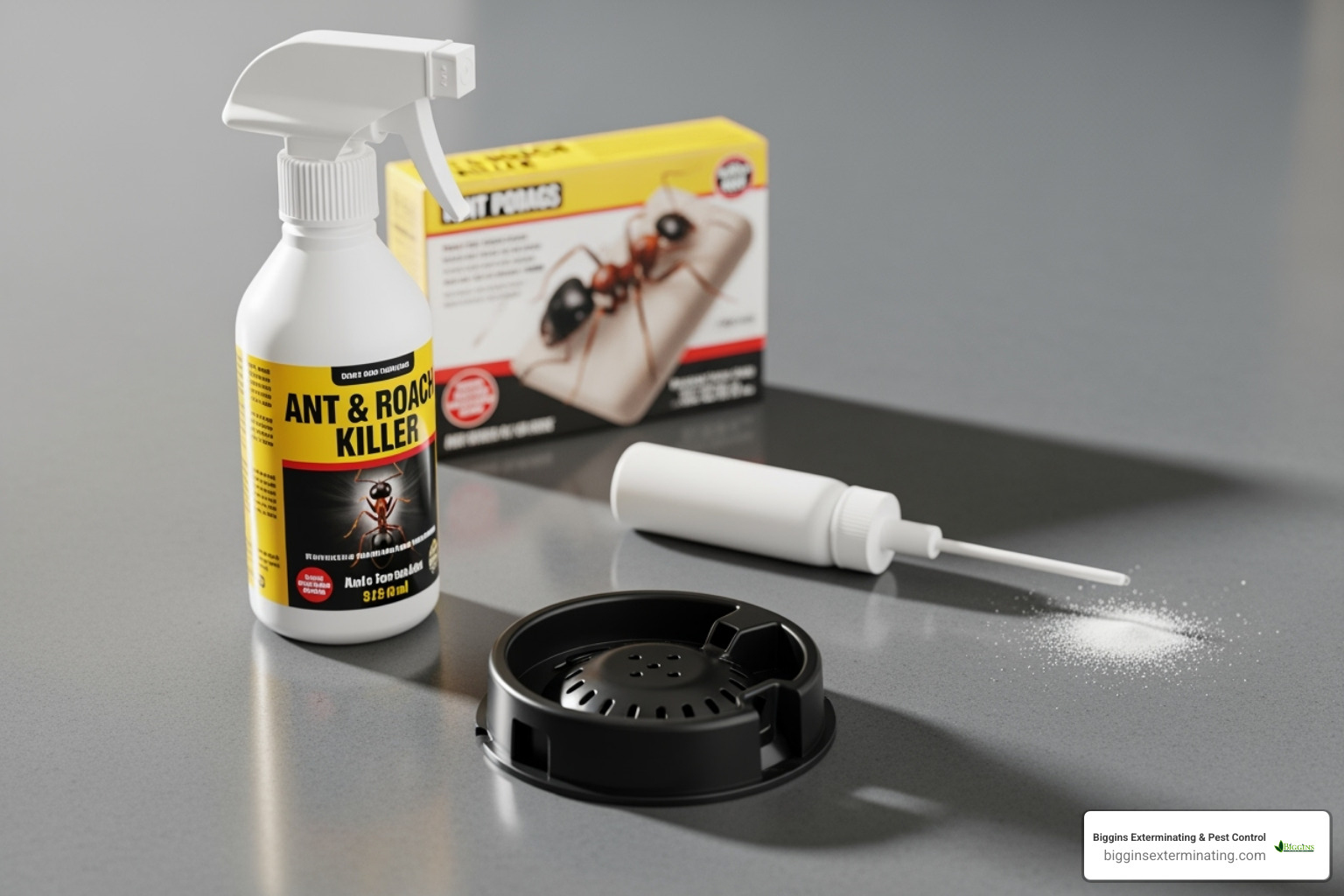
Choosing the Right Product for effective ant control
Selecting the best ant killer depends on several factors:
- Indoor vs. Outdoor Use: Outdoor products are designed to withstand weather, while indoor products are formulated for use inside your living space. For more on this, see our guide to Indoor Ant Control.
- Ant Species: Match the bait to the ant’s diet (e.g., sweet baits for sugar ants, protein baits for carpenter ants).
- Safety: Always prioritize the safety of children and pets. Use child-resistant bait stations or consider natural alternatives.
- Severity: A few ants may only require cleaning and deterrents, but a large infestation requires a more robust approach.
Slow-Acting Baits: The Key to Colony Collapse
Baits are the most effective tool for long-term control. Foraging ants carry the poisoned bait back to the nest and share it with the colony, including the queen. This “Trojan horse” method is the secret to total elimination.
- Liquid and Gel Baits: These are often sugar-based and are highly attractive to many household ants. They can be applied in bait stations or in cracks and crevices along ant trails.
- Granular Baits: Typically used outdoors, these can be spread around your home’s perimeter or on ant mounds to provide long-lasting control.
The active ingredients, such as borax, fipronil, or hydramethylnon, are slow-acting poisons. This delay is crucial, as it gives ants time to transport the bait back to the nest before they die. Be patient—it can take a few weeks to see the full results.
Contact Killers: For Immediate On-the-Spot Control
Contact killers, like sprays and powders, kill ants immediately on contact by disrupting their nervous system. While they provide instant results for visible ants, they have major limitations for effective ant control. They do not reach the hidden nest or the queen, meaning the colony will survive and continue to send out more ants. Using certain sprays can also cause some ant species to scatter and form new colonies, making the problem worse.
Natural and Pet-Safe Ant Control Methods
For those seeking eco-friendly options, several natural methods can help deter ants:
- Diatomaceous Earth: This fine powder damages the exoskeletons of ants, causing them to dehydrate. Use food-grade DE for safety.
- Essential Oils: Strong scents from oils like peppermint, tea tree, and cinnamon can repel ants and disrupt their pheromone trails. A 2020 study confirmed peppermint oil’s effectiveness against certain ants. Other useful oils include lemon eucalyptus and clove.
- Vinegar and Soapy Water: A 1:1 solution of white vinegar and water or a simple mix of dish soap and water can be sprayed on ants to kill them and wipe away their trails.
These methods are great for prevention and managing small issues. For more ideas, see our guide on Natural Ant Control Outside.
The Battle Plan: Proper Application for Effective Ant Control
Having the right products is only half the battle; using them correctly is what ensures effective ant control. We recommend an Integrated Pest Management (IPM) approach, which focuses on using the safest, most targeted solutions first. IPM combines knowledge of ant behavior with smart, sustainable control methods, rather than immediately resorting to harsh chemicals. You can learn more about The Role of Integrated Pest Management in Massachusetts.
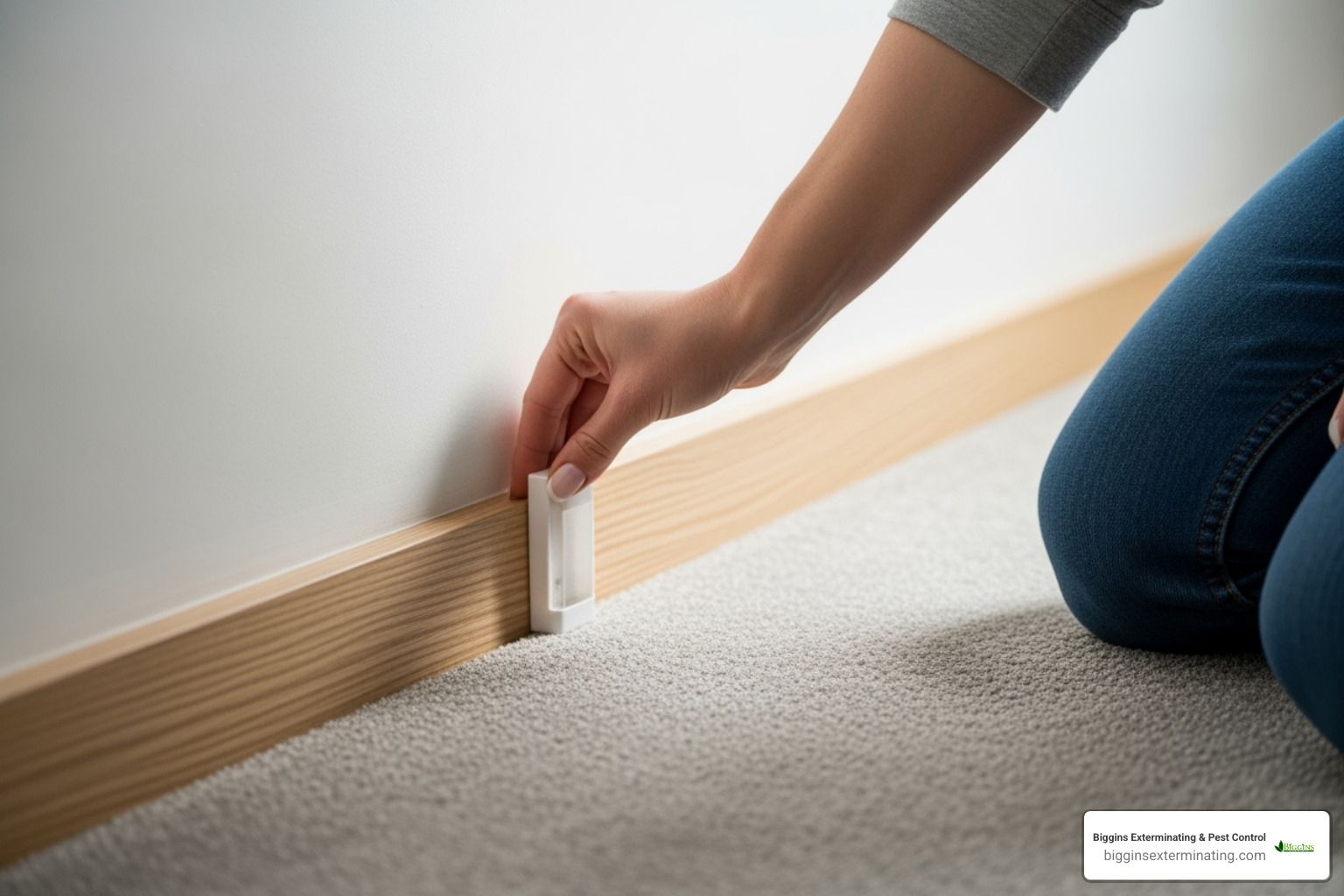
Applying Baits for Maximum Impact
For baits to work, they must be placed strategically:
- Place baits directly in active ant trails. This ensures foragers find the bait quickly.
- Do not disturb the ants or spray them near the bait stations. You need them to carry the bait back to the colony.
- Be patient. Slow-acting baits can take several days or weeks to eliminate the entire colony. Don’t give up too soon.
- Replace baits as they empty. A continuous supply is needed to ensure all ants get a share.
- Protect outdoor baits from rain and sun by placing them in covered areas or weatherproof stations.
Using Sprays and Powders Safely
While baits are for colony elimination, sprays and powders can create defensive barriers. Always prioritize safety:
- Create a perimeter treatment around your home’s foundation to stop ants from entering.
- Treat cracks and crevices indoors where you see ants traveling.
- Ensure proper ventilation by opening windows and doors when using sprays indoors.
- Wear protective gear, including gloves and safety glasses, and wash your hands after application.
- Always read the product label. It is your guide to safe and effective use and is a legal requirement. Pay attention to signal words like CAUTION, WARNING, and DANGER, which indicate the product’s toxicity level.
- Keep children and pets away from treated areas until they are completely dry. Store all products securely out of reach.
Fortifying Your Defenses: Long-Term Ant Prevention
True victory in effective ant control comes from preventing ants from returning. Building a strong defense around your home is easier than eliminating an established infestation.
Top 5 Ant Prevention Strategies:
- Maintain cleanliness: Don’t leave out food sources.
- Seal entry points: Block their paths into your home.
- Control moisture: Eliminate their water supply.
- Manage landscaping: Remove “bridges” to your house.
- Store food properly: Use airtight containers.
Inside the Home: Creating an Ant-Unfriendly Zone
Make your home, especially the kitchen, an unattractive place for ants.
- Clean spills immediately and wipe down counters and floors regularly to remove food residue.
- Store all food, including pet food, in airtight containers. Ants can easily get into cardboard boxes and bags.
- Manage pet food by picking up bowls after feeding time and cleaning the area.
- Fix leaky pipes and address any moisture issues under sinks or in bathrooms. Ants need water to survive.
- Vacuum regularly to remove crumbs and disrupt invisible pheromone trails.
If you’ve taken these steps and still have issues, our House Ant Exterminator services can help find the source of the problem.
Outside the Home: Your First Line of Defense
Preventing ants from getting inside starts with maintaining your home’s exterior.
- Trim vegetation so that tree branches and shrubs are at least a foot away from your house.
- Clear yard debris like leaf piles and logs, which can harbor ant colonies. Store firewood off the ground and away from the foundation.
- Seal foundation cracks and gaps around windows, doors, and utility lines with caulk to block entry points.
- Repair or replace damaged window screens to close another common access point.
- Keep garbage cans tightly sealed and clean them regularly to avoid attracting ants.
When to Call for Reinforcements: Professional Ant Extermination
Sometimes, despite your best efforts, an ant infestation persists. If DIY methods have failed or the problem is growing, it’s time to call for professional pest control services. For some infestations, especially those involving destructive species, effective ant control requires professional expertise and tools.
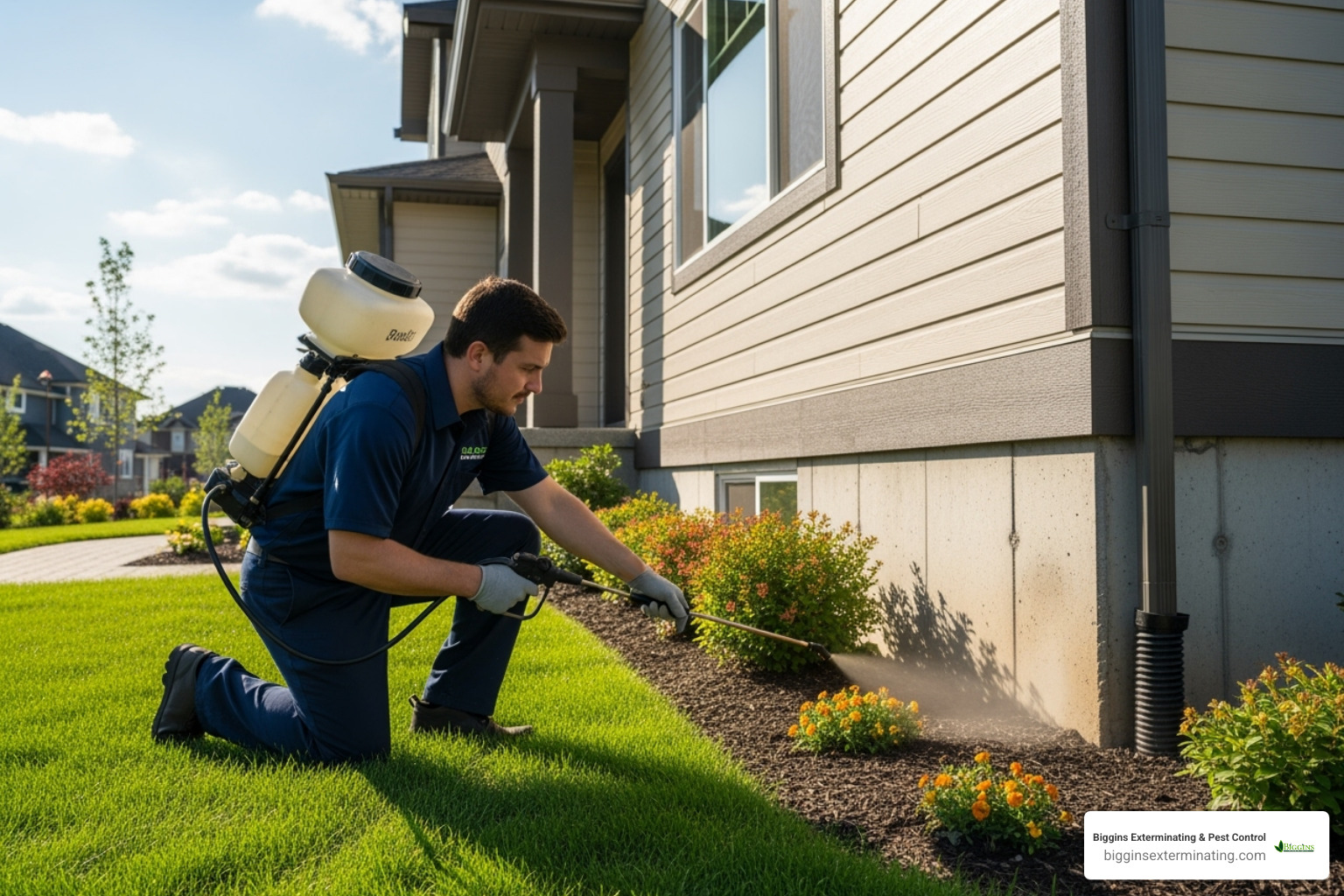
Professional extermination brings a level of knowledge and commercial-grade products unavailable to the public. To understand the benefits, see The Importance of Hiring a Professional Pest Control Service in Massachusetts.
Signs You Need a Professional for effective ant control
It’s time to call for backup if you notice these signs:
- DIY methods fail: You’ve tried baits and sprays for weeks with no lasting results.
- The infestation is spreading: Ants are appearing in more rooms or in greater numbers.
- You have carpenter ants: These wood-destroying pests can cause structural damage and require immediate, professional attention. Learn more about how to kill carpenter ants.
- You can’t find the nest: Professionals have the tools and experience to locate hidden nests in walls or under foundations.
- Ants are near electrical outlets: This is a safety hazard and requires specialized treatment.
What to Expect from a Professional Service
A professional service like Biggins Exterminating provides a strategic approach to effective ant control:
- Comprehensive Inspection: We identify the ant species, locate nests and entry points, and assess the extent of the infestation.
- Custom Treatment Plan: We create a targeted plan based on our findings, your home’s layout, and your family’s needs.
- Professional-Grade Products: We use powerful, long-lasting treatments that are more effective than consumer products and require licensed application.
- Safety First: Our trained technicians follow strict safety protocols to protect your family and pets.
- Follow-Up and Warranty: We ensure the problem is solved, offering follow-up visits and a service warranty for your peace of mind.
Professional ant control costs can vary. Based on general internet data, initial treatments can range from $150 to $500, while annual prevention plans might cost between $400 and $1,200 or more. These are industry averages and not a quote for Biggins Exterminating services.
Conclusion
Achieving long-term, effective ant control requires a comprehensive strategy. It begins with identifying your specific ant species, which allows you to select the right tools for the job. While baits are your best weapon for eliminating the entire colony, your battle plan must also include proper application and, most importantly, consistent prevention.
Your comprehensive approach should include:
- Identify: Know the ant species to understand its behavior.
- Prevent: Use cleanliness, exclusion, and moisture control to make your home less inviting.
- Treat: Apply the right products correctly for maximum impact, using baits to target the source.
Some ant infestations are too large or complex for DIY methods. When you’re facing a persistent problem or destructive pests like carpenter ants, professional help is the surest path to success.
For homeowners in Wilmington, MA, and surrounding communities like Andover, Bedford, and Burlington, Biggins Exterminating offers reliable, no-contract solutions backed by over 40 years of experience. We know how to achieve lasting effective ant control for your home.
Don’t let ants take over your home. Contact our local ant exterminators today for a consultation and let us help you reclaim your peace of mind.