
Don’t Let the Bugs Bite Your Sills with These Window Ant Control Tips
Why Ants March Through Your Windows Every Summer

Ants getting in through window frames is one of the most common warm-weather pest complaints we hear from Massachusetts homeowners. Here’s the short answer on how to stop them:
- Clean window sills with soapy water or white vinegar to erase pheromone trails
- Seal all gaps and cracks around window frames with exterior-grade silicone caulk
- Replace worn weatherstripping and repair any damaged screens
- Remove attractants — fix moisture leaks, keep crumbs off sills, trim vegetation touching the house
- Bait near active trails so worker ants carry poison back to the colony
- Call a professional if carpenter ants are involved or the infestation keeps coming back
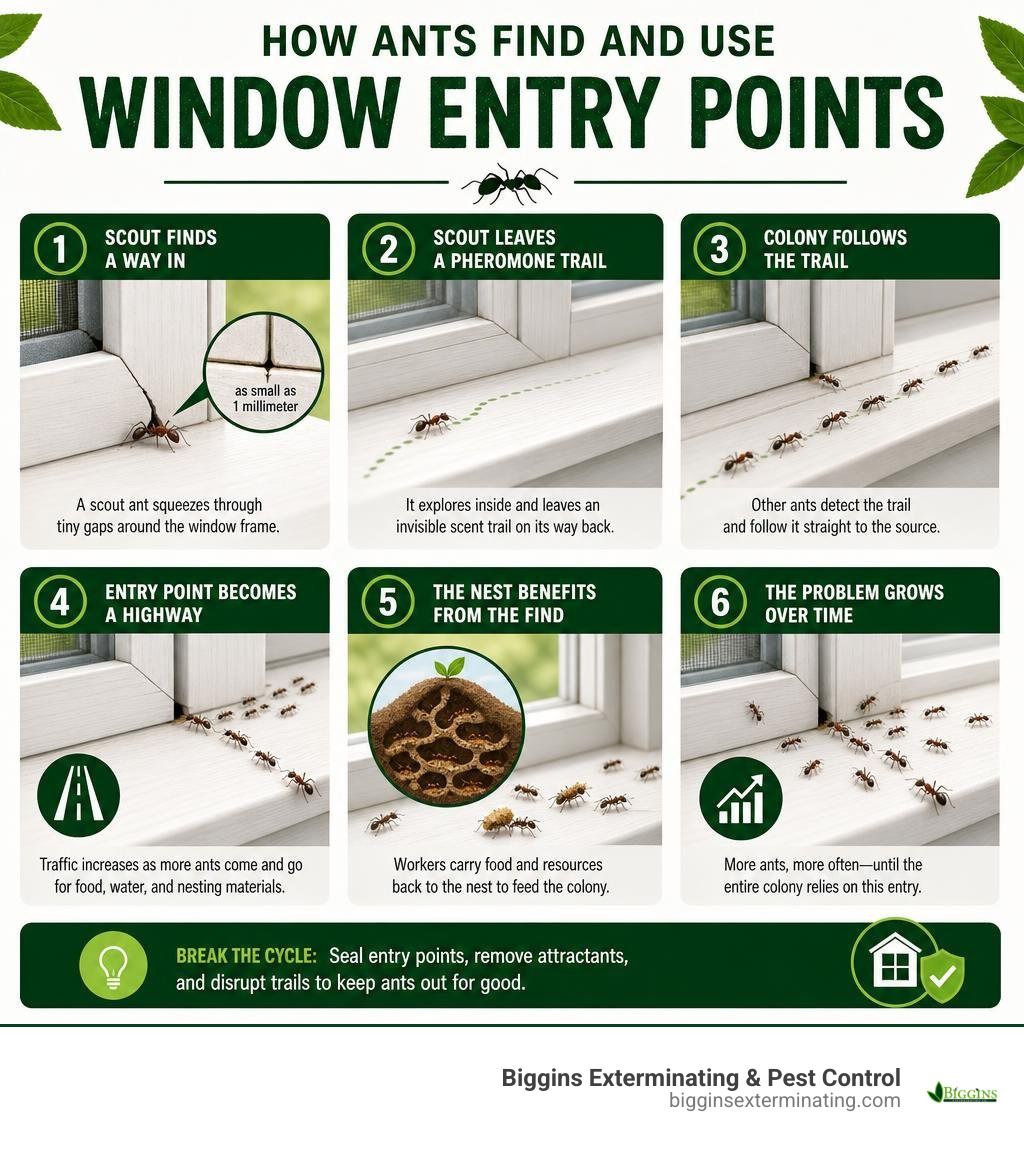
Ants are most active from March through October, and window frames are a top target. Scout ants sneak through openings as small as 1 millimeter — a gap you’d barely notice — then leave an invisible pheromone trail that guides the whole colony straight inside.
Once that trail is established, simply swatting or spraying the ants you can see won’t solve the problem. The colony keeps sending more.
I’m Stephen Biggins, owner of Biggins Exterminating Co., a family-owned Massachusetts pest control company serving Wilmington and surrounding communities since 1982. Over more than four decades, I’ve inspected hundreds of homes dealing with ants getting in through window frames — and I’ve seen how a small gap or a little moisture damage can turn into a serious infestation fast. Let’s walk through exactly how to stop it.
Why You Have ants getting in through window Frames
If you’ve ever sat down with a cup of coffee only to watch a miniature military parade march across your windowsill, you’ve probably wondered: Why my windows?
Windows are structural transitions. Over time, the natural settling of your home, combined with New England’s harsh winter freeze-and-thaw cycles, causes window frames to shift. This shifting creates microscopic gaps between the window frame and the siding or interior drywall. These gaps are literal open doors for foraging pests.
But physical access is only half the story. Ants are drawn to windows by three primary attractants:
- Moisture and Condensation: Rainwater can seep into window joints, and interior humidity often condenses on glass panes. This creates a highly attractive, localized water source.
- Wood Damage and Rot: Older wooden windows are highly susceptible to moisture damage. Damp, decaying wood is soft, making it incredibly easy for certain ant species to excavate and build nests.
- Scent Trails and Kitchen Odors: Kitchen-facing windows are the most targeted of all. When you cook, warm air carrying food smells drafts out of window seams. Scout ants detect these odors, find a way in, and immediately lay down a pheromone trail. Once that trail is established, hundreds of workers will follow it.
To learn more about how these trails work and why they are so hard to disrupt, check out this guide on Are Ants Marching Through Your Windows? Here’s How to Stop Them!.
The Danger of Carpenter Ants vs. Common House Ants
Understanding what kind of ant is crawling on your window sill is the single most important step in choosing a treatment. Treating a harmless sugar ant infestation requires a completely different approach than tackling destructive carpenter ants.

If you have common house ants, they are mostly a nuisance. They are searching for food and water to feed a nest that is likely located outdoors in your yard or under your concrete slab. You can read more about managing these common indoor invaders in our guide to Indoor Ant Control.
Carpenter ants, however, are a completely different story. They are wood-boring pests. They do not actually eat the wood (like termites do), but they chew through it to create hollow galleries and pathways for their satellite nests. If left unchecked, they can completely hollow out the structural wood framing around your windows, leading to thousands of dollars in structural damage.
Spotting ants getting in through window Sills
When inspecting your window sills, look closely at the size, color, and behavior of the ants, as well as any debris they leave behind.
- Carpenter Ants: These are the giants of the ant world, measuring up to 5/8 of an inch. They are typically black or dark red and are highly active at night. A telltale sign of their presence is frass—a mixture of sawdust, wood shavings, and dead insect parts that they push out of their nesting holes.
- Odorous House Ants: Smaller (about 1/8 inch) and dark brown. If you crush one, it releases a distinct, unpleasant odor resembling rotten coconuts.
- Pharaoh Ants: Tiny, light yellow or orange ants. They are notorious for “budding”—if you spray them with a typical DIY liquid insecticide, the colony senses a threat and splits into multiple new colonies, making the infestation significantly worse.
- Sugar/Pavement Ants: Small, dark brown ants that love sweet foods and grease.
| Feature | Carpenter Ants | Common Sugar / Pavement Ants |
|---|---|---|
| Size | Large (1/4 to 5/8 inch) | Small (1/12 to 1/8 inch) |
| Color | Solid black, dark brown, or red/black | Light brown to dark black |
| Primary Diet | Honeydew, insects, sweet proteins | Sugar, grease, crumbs, dead insects |
| Nest Location | Inside damp wood, wall voids, hollow doors | Soil, under pavement, wall voids |
| Telltale Sign | Piles of sawdust-like “frass” | Clean, distinct trails leading to food |
| Damage Level | High (Destroys structural wood) | None (Nuisance only) |
Structural Damage from Wood-Boring Pests
Carpenter ants are the number one pest treated in Massachusetts from April through July, which perfectly aligns with their peak nesting season. They love damp wood, making water-damaged window frames a prime nesting spot.
When rainwater leaks behind a window casing, the wood begins to rot. Carpenter ants find this soft wood, move in, and begin chewing out galleries to establish a satellite colony. Because these nests are hidden deep inside the window frame and wall voids, you might only see a few foraging ants on the sill, completely unaware of the extensive structural damage occurring behind the drywall.
If you live in Andover, MA, and suspect these wood-destroying pests have targeted your home, don’t wait for the damage to worsen. Reach out to our local team at Ant Exterminator in Andover MA for a thorough inspection.
Step-by-Step Window Ant Prevention
The most effective way to handle ants getting in through window frames is to make it physically impossible for them to enter. This is known as pest exclusion, and it is a core pillar of Integrated Pest Management (IPM).
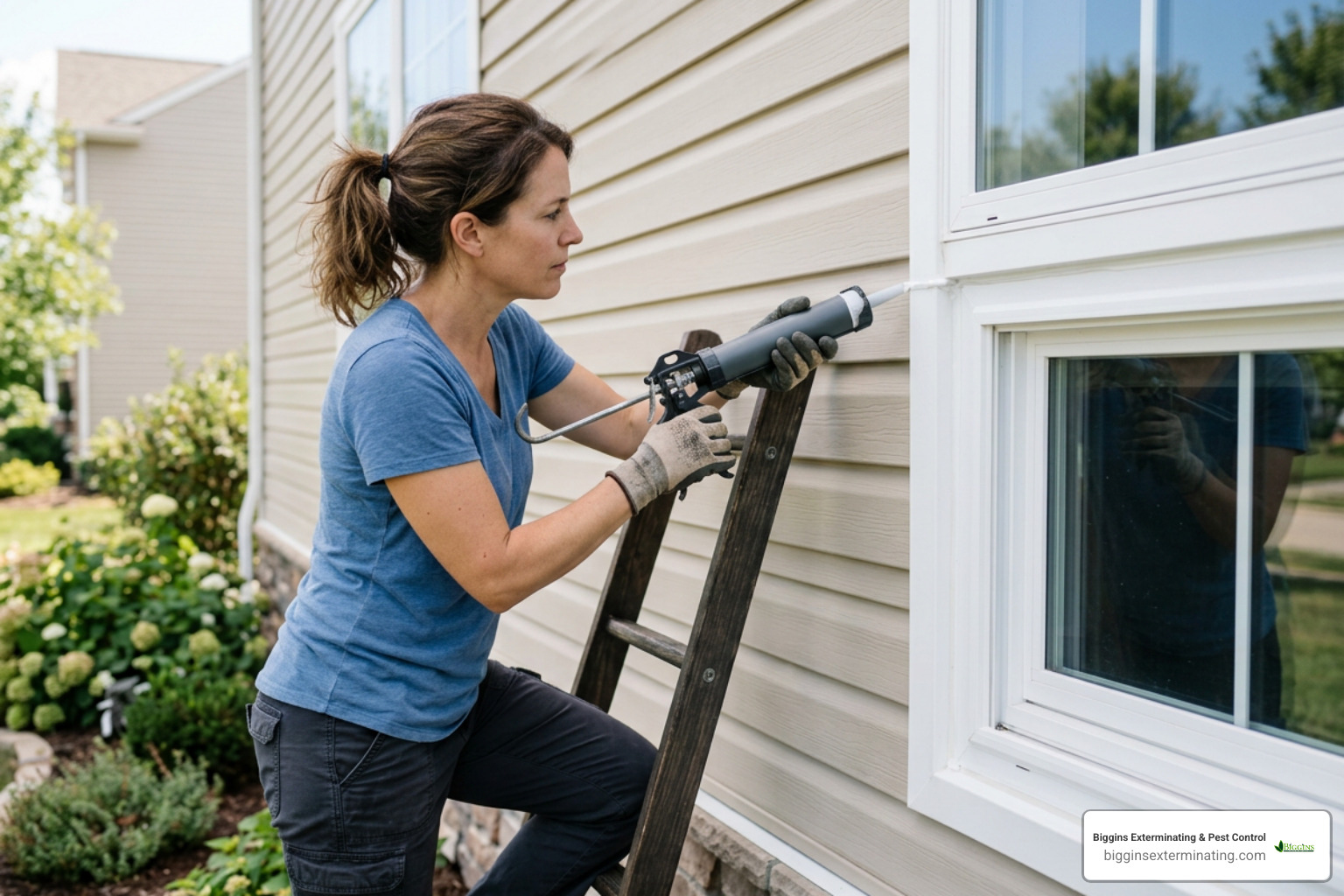
Before you start sealing, you also want to make sure your outdoor environment isn’t inviting pests right up to your glass. You can find detailed steps on managing your yard to deter pests in our resource on Natural Ant Control Outside.
Sealing Gaps to Prevent ants getting in through window Screens
To properly ant-proof your windows, grab a flashlight, a caulking gun, and follow these steps:
- Inspect the Frame: Head outside and inspect the perimeter of your window frames. Look for gaps where the window frame meets your siding, cracks in the wood, or old, peeling caulk.
- Apply Caulk: Use a high-quality, exterior-grade 100% silicone or silicone-latex caulk. Apply a continuous, unbroken bead along all joints, gaps, and seams.
- Check the Weatherstripping: Open the window and inspect the weatherstripping. If it is compressed, cracked, or missing, replace it. The window should seal tightly when closed.
- Repair the Screens: Check window screens for even the tiniest tears or loose mesh around the splines. Ants can easily squeeze through a torn screen.
- Trim the Vegetation: Ants frequently use trees, shrubs, and overgrown ivy as natural bridges to bypass your foundation and climb directly onto your windows. Ensure there is at least a 3-foot gap between your home’s exterior walls and any plants or branches.
For more detailed tips on window sealing and maintenance, review How To Keep Ants From Coming In Your Window? (Top Tips).
Natural Repellents and Barriers
If you want an extra layer of defense to keep ants from crossing your newly sealed windows, you can use natural repellents. While these won’t destroy a hidden nest, they are excellent at disrupting scent trails and discouraging new scouts from exploring.
- Peppermint Oil Spray: Mix 10 to 15 drops of pure peppermint essential oil with one cup of water in a spray bottle. Spray it along your window sills and frames. Ants detest the strong scent, which also masks their pheromone trails.
- White Vinegar: Wipe down your window sills with a 50/50 mix of white vinegar and water. This is one of the easiest ways to instantly neutralize active scent trails.
- Diatomaceous Earth (DE): This is a natural powder made from fossilized algae. When ants walk through food-grade diatomaceous earth, the microscopic, razor-sharp particles lacerate their waxy exoskeletons, causing them to dehydrate and die.
To learn how to safely and effectively apply this mineral barrier around your home, read Sprinkle This Around Door And Window Frames To Keep Ants Out Of Your Home – AOL.
When to Call a Professional Exterminator
While DIY caulking and natural sprays are great for minor nuisance ant issues, there are times when household remedies simply won’t cut it.
You should skip the store-bought sprays and call in a professional if:
- You suspect carpenter ants: Because these pests live deep inside the wood and can cause severe structural damage, they require specialized, targeted treatments to ensure the entire colony—including the queen—is eliminated.
- The infestation keeps returning: If you clean the trails, seal the gaps, and the ants return a week later, it means there is a hidden nest inside your wall voids or a major colony just outside your foundation.
- You are dealing with Pharaoh ants: As mentioned earlier, standard sprays will cause these ants to split their colony, turning one problem into three.
- You can’t find the source: An experienced exterminator spends 80% of their time inspecting and only 20% treating. We have the training and tools to track ants back to their exact nesting sites.
At Biggins Exterminating, we have over 40 years of experience helping Massachusetts families keep their homes pest-free. We don’t lock you into long-term contracts; we simply provide reliable, high-quality service backed by our personal warranty. Learn more about our specialized approach on our Professional Ant Control Services page.
Frequently Asked Questions
Why are ants suddenly coming through my closed window?
Even when a window is completely closed, it is rarely airtight. Over time, temperature changes and settling cause tiny hairline cracks to develop in the caulk and wood joints. During periods of extreme weather—such as heavy summer rains or severe droughts—ants will actively seek shelter, warmth, or water, exploiting these microscopic gaps to get inside.
How do I know if the insects on my window sill are ants or termites?
Both pests can swarm and develop wings, but you can tell them apart by looking at three key physical features:
- Waist: Ants have a pinched, narrow waist. Termites have a broad, straight waist.
- Antennae: Ants have bent (elbowed) antennae. Termite antennae are completely straight and look like tiny beads.
- Wings: Winged ants have two pairs of wings of unequal size. Swarming termites have two pairs of wings that are exactly the same size and length.
Will vinegar permanently get rid of window ants?
No. Vinegar is an excellent tool for wiping away pheromone trails and killing individual ants on contact, but it does not affect the nest. Because the queen and the rest of the colony remain safe underground or inside your walls, they will simply send out new scouts to find alternative entry points once the vinegar scent fades.
Conclusion
Dealing with ants getting in through window frames can be incredibly frustrating, but with a systematic approach of cleaning, sealing, and removing outdoor attractants, you can successfully defend your home.
If you’ve tried the DIY route and are still seeing trails of ants marching across your sills, it’s time to bring in the experts. Biggins Exterminating & Pest Control is a local, family-owned and operated Massachusetts company with more than four decades of trusted experience. We proudly serve homeowners across Wilmington, Andover, Bedford, Billerica, Burlington, Lexington, North Reading, Tewksbury, and Woburn.
We treat your home like our own—with care, professionalism, and honesty. Contact us today to schedule your inspection and learn more about our contract-free Effective Ant Control services!
