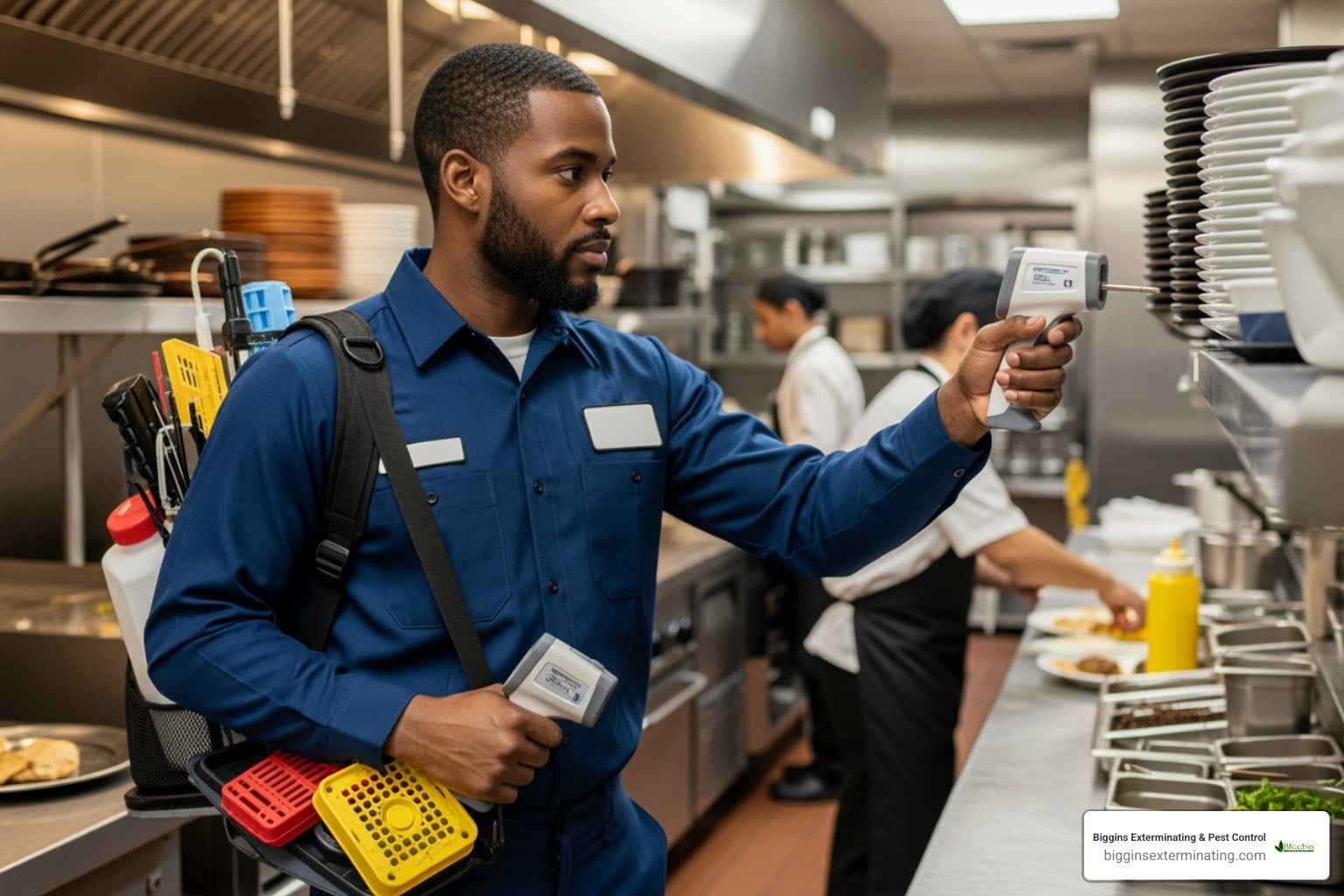
Why Your Business Needs Professional Pest Control
Commercial exterminating companies provide specialized pest management services designed to protect businesses from the financial, reputational, and health risks associated with pest infestations. These professional services go far beyond basic extermination to offer comprehensive Integrated Pest Management (IPM) programs that prevent pest problems before they start.
Top Commercial Exterminating Companies Offer:
- Customized IPM programs custom to your specific industry and facility
- 24/7 emergency response for urgent pest situations
- Regulatory compliance support including documentation for health inspections
- Comprehensive pest solutions covering rodents, insects, birds, and wildlife
- Ongoing monitoring and prevention to maintain pest-free environments
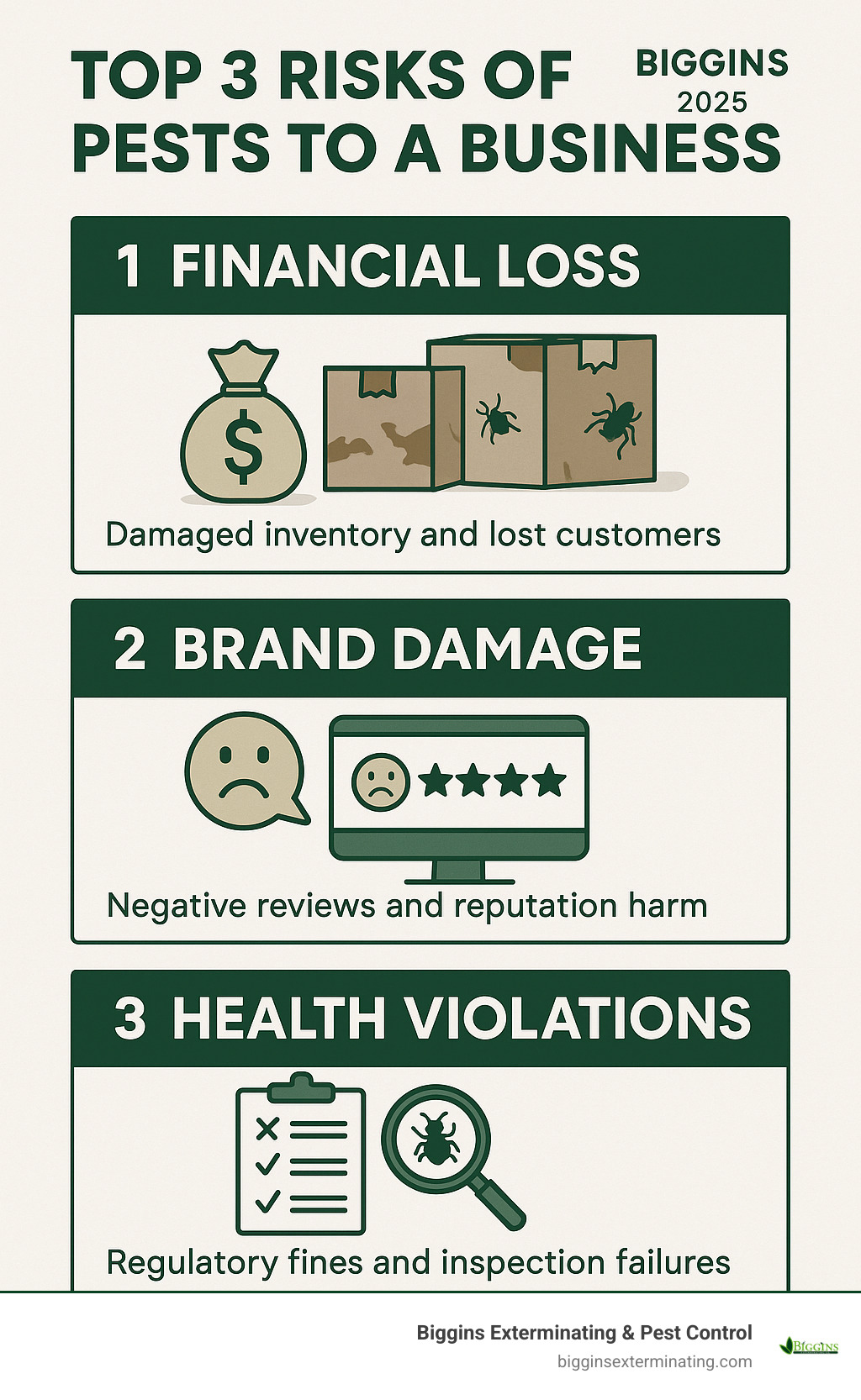
The stakes are high when pests invade your business. A single pest sighting can trigger health department violations, damage your brand reputation, and result in thousands of dollars in lost revenue. Research shows that businesses in food processing, healthcare, and hospitality face the highest risks, but every commercial property needs professional protection.
Modern commercial pest control has evolved from simple “spray and pray” methods to sophisticated IPM approaches. These programs focus on prevention first, using targeted treatments only when necessary. Professional companies provide detailed documentation, electronic reporting systems, and compliance support that many businesses need for third-party audits.
The best commercial exterminating companies offer more than just pest elimination. They provide washroom care, odor control, disinfection services, and wildlife management – becoming true facility hygiene partners for their clients.
I’m Stephen Biggins, and I’ve spent over four decades helping businesses maintain pest-free environments through our family-owned company. My experience with commercial exterminating companies has shown me that the right partner makes all the difference in protecting your business investment and reputation.
Relevant articles related to commercial exterminating companies:
The High Stakes of a Pest-Free Business
When pests invade your business, they don’t just create an uncomfortable environment—they threaten everything you’ve worked to build. The consequences of a pest problem extend far beyond the initial “ick factor” and can devastate your operation in ways that might surprise you.
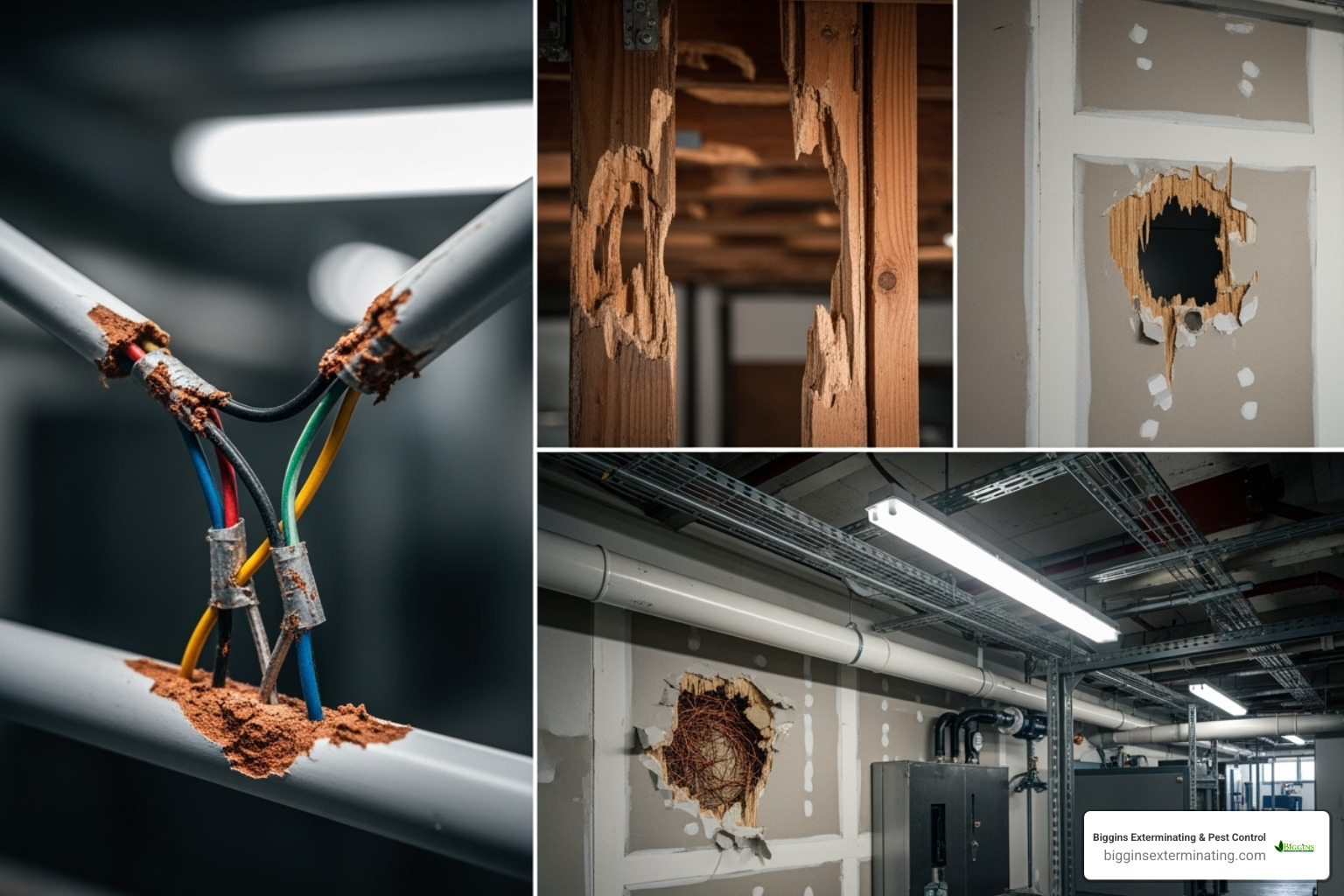
Financial impact hits businesses immediately and can continue for months or even years. Damaged inventory, spoiled food products, and contaminated goods create direct losses that add up quickly. Rodents love to chew through electrical wiring, which can lead to expensive repairs and even fire hazards. In food-related businesses, a single contamination event can trigger costly product recalls and lost sales.
The reputational damage from pest sightings can be devastating in today’s digital world. One customer spotting a cockroach in your restaurant or a mouse in your retail store can result in viral social media posts and scathing online reviews. These negative experiences spread faster than good news, and rebuilding customer trust can take years of consistent effort.
Health and safety risks pose serious threats to both employees and customers. Cockroaches spread dangerous pathogens like Salmonella and E. coli, while rodents can transmit serious diseases including Hantavirus and Leptospirosis. Their droppings and urine also trigger allergies and asthma attacks. Stinging insects create immediate dangers, especially for people with allergies.
Regulatory fines and legal action can shut down your business entirely. Health departments don’t take pest violations lightly, especially in food service and healthcare facilities. These violations can result in hefty fines, forced closures, and even lawsuits from affected customers or employees.
Structural damage to property often goes unnoticed until it becomes expensive to repair. Termites and carpenter ants can compromise building integrity by destroying wooden structures. Even seemingly minor pests like silverfish can damage important documents, books, and storage materials over time.
Employee morale suffers significantly in pest-infested workplaces. No one wants to work in an environment where they constantly worry about encountering rodents or insects. This leads to increased absenteeism, difficulty retaining good staff, and reduced productivity across your entire operation.
Negative online reviews amplify every pest problem exponentially. A single review about a pest sighting can reach thousands of potential customers instantly, deterring new business and eroding your existing customer base. These reviews often rank highly in search results, making them particularly damaging to your business.
Professional commercial exterminating companies understand these interconnected risks and provide comprehensive solutions that protect your business on multiple fronts. For more detailed information about specific pest threats, read our article on the Dangers of Rodents in Your Business.
Industries at High Risk
While every business can face pest problems, certain industries are particularly vulnerable due to their operations, stored materials, or high customer traffic. These sectors require vigilant pest control and often benefit most from comprehensive services provided by commercial exterminating companies.
Food and beverage processing facilities face the highest risk levels. Raw ingredients and finished products attract rodents, cockroaches, flies, and stored product pests. These businesses must comply with stringent third-party audits like AIB, BRC, and SQF, where a single pest sighting can trigger product recalls and massive financial losses.
Restaurants and foodservice establishments deal with constant exposure to food, grease, and organic waste. A pest sighting can instantly destroy a restaurant’s reputation, trigger health code violations, and drive away customers permanently. The combination of attractive food sources and high customer visibility makes pest control absolutely critical.
Healthcare facilities and hospitals require zero-tolerance approaches to pest management. Vulnerable patient populations and sterile environments cannot accommodate any pest presence. Hospitals, clinics, and nursing homes need specialized pest control to maintain patient safety and regulatory compliance.
Hospitality and hotels face unique challenges, especially with bed bugs that spread rapidly through guest rooms. A bed bug outbreak can devastate occupancy rates and generate lasting negative reviews. Other pests like ants, cockroaches, and rodents also threaten guest satisfaction and repeat business.
Property management and multi-residential buildings present complex pest control challenges. Pests like ants, roaches, and rodents spread quickly between units, leading to tenant complaints and high turnover rates. We understand these unique challenges—learn more about Pest Control for Property Managers.
Warehousing and logistics operations offer ideal conditions for pest infestations. Large spaces with stored goods provide abundant harborage and food sources for rodents, cockroaches, and various insects. Pest damage to inventory and supply chain disruptions can be extremely costly.
Retail stores attract pests seeking food crumbs and shelter, even in non-food environments. Clothing and furniture stores can even face bed bug problems. Pest sightings create unappealing shopping environments that drive customers away.
Office buildings might seem low-risk, but they commonly harbor rodents and ants attracted to food crumbs and comfortable shelter. While perhaps less critical than food-related businesses, pest issues still impact employee comfort and company image.
Educational facilities including schools, universities, and colleges see high traffic volumes and often include cafeterias and dormitories. These environments require comprehensive pest management to protect student and staff health while maintaining learning environments.
For all these industries, partnering with experienced commercial exterminating companies isn’t just helpful—it’s essential for long-term success and protection.
Understanding Integrated Pest Management (IPM) in a Commercial Setting
Gone are the days when pest control meant simply spraying chemicals and hoping for the best. Today’s commercial exterminating companies have evolved to accept a far more sophisticated approach called Integrated Pest Management (IPM). This isn’t just industry jargon – it’s a game-changing strategy that smart business owners are using to protect their properties while being mindful of their employees, customers, and the environment.
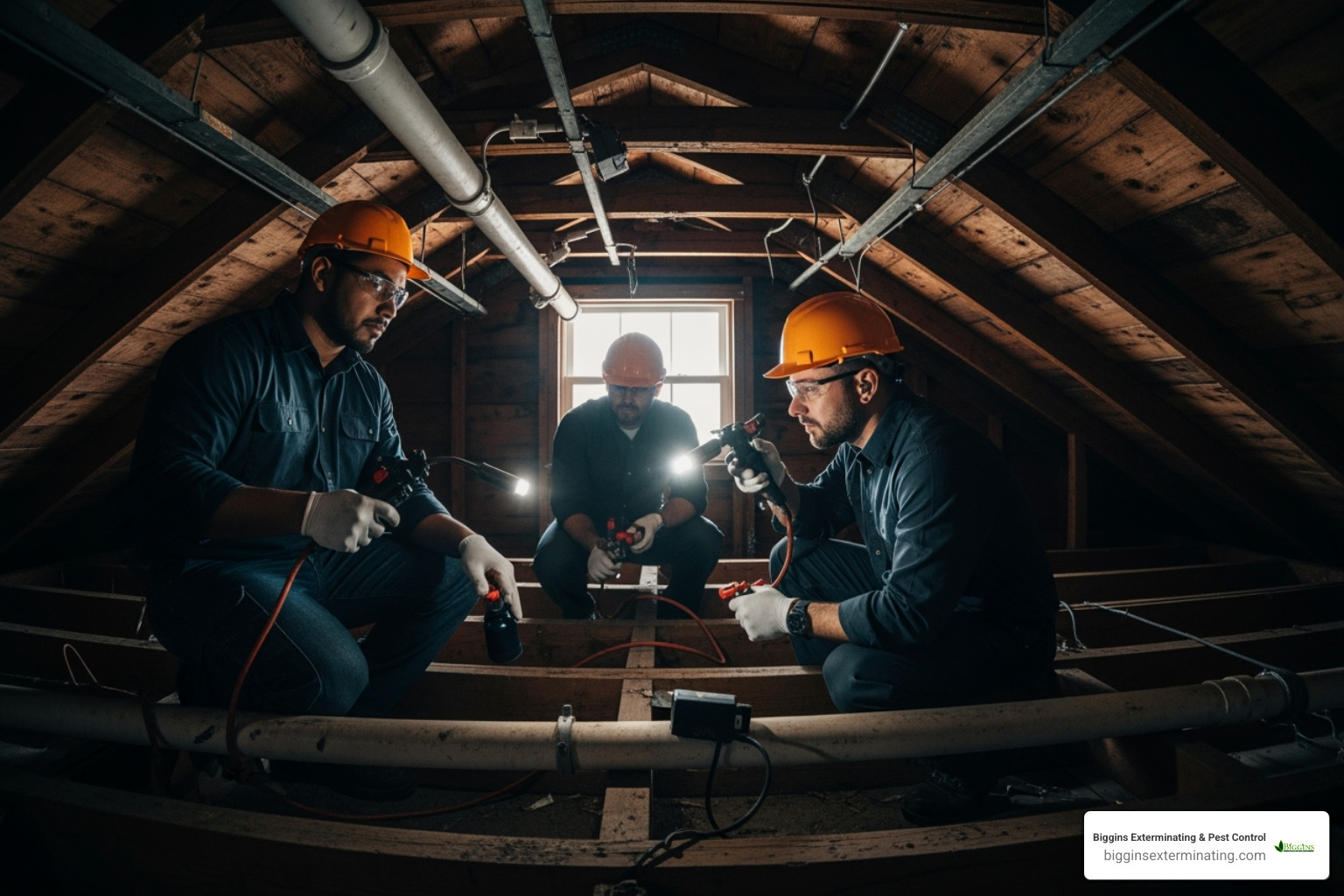
Think of IPM as the difference between putting a band-aid on a wound versus actually healing it. Traditional pest control often focused on the “spray and pray” method – chemicals first, questions later. IPM takes a completely different approach by asking the important questions: Why are pests here? What’s attracting them? How can we prevent them from coming back?
IPM is built on four key principles that make it so effective for commercial properties. First, it’s a proactive approach that identifies potential pest problems before they become expensive infestations. Second, it focuses on long-term prevention rather than just eliminating current pests. Third, it maintains an environmental focus by minimizing risks to people, property, and the surrounding ecosystem. Finally, it achieves reduced chemical reliance by using pesticides only when necessary and in the most targeted, effective ways possible.
The beauty of IPM is that it treats your business like the unique environment it is. A restaurant kitchen has different pest pressures than a hotel lobby or a warehouse. Professional commercial exterminating companies understand these differences and create customized strategies that address your specific challenges. For a deeper dive into these principles, the EPA provides excellent resources in their guide to An Introduction to Integrated Pest Management.
The Core Components of an IPM Program
Understanding how IPM works in practice helps explain why it’s become the gold standard for commercial pest control. Unlike traditional methods that rely heavily on chemical treatments, IPM follows a systematic approach that addresses pest problems at their source.
The process begins with thorough inspection – not just a quick walkthrough, but a comprehensive assessment of your entire facility. Professional technicians examine every potential entry point, food source, and harborage area. They’re looking for the conditions that attract pests, not just the pests themselves.
Accurate identification comes next. Different pests require different strategies, and what works for ants might be completely wrong for cockroaches. This step ensures that any treatment is targeted and effective rather than using a one-size-fits-all approach.
Ongoing monitoring is where IPM really shines. Instead of waiting for pest problems to become obvious, monitoring systems track pest activity levels continuously. This might include sticky traps, pheromone monitors, or regular inspection schedules that catch problems early.
Exclusion techniques focus on keeping pests out in the first place. This involves sealing cracks and crevices, installing door sweeps, repairing screens, and addressing structural issues that create entry points. It’s much easier to keep pests out than to eliminate them once they’re established.
Sanitation improvements address the root causes that attract pests. This might involve recommendations for cleaning procedures, waste management, or storage practices that eliminate food and water sources pests need to survive.
When targeted, low-impact treatments are necessary, they’re applied precisely where needed rather than broadly throughout the facility. This approach is more effective and reduces exposure to chemicals for your staff and customers.
Finally, detailed documentation ensures that every aspect of the program is tracked and measured. This isn’t just good business practice – it’s essential for regulatory compliance and continuous improvement.
| Feature | Traditional Pest Control | Integrated Pest Management (IPM) |
|---|---|---|
| Approach | Reactive – responds to problems | Proactive – prevents problems |
| Chemical Use | Heavy reliance on pesticides | Minimal, targeted chemical use |
| Focus | Elimination of current pests | Long-term prevention and control |
| Methods | Primarily chemical treatments | Multiple strategies working together |
| Environmental Impact | Higher chemical exposure | Lower environmental impact |
| Cost Effectiveness | Short-term solutions | Long-term value and sustainability |
| Documentation | Basic service records | Comprehensive monitoring and reporting |
This systematic approach is why the best commercial exterminating companies have made IPM their standard practice. It’s not just better for the environment – it’s more effective, more sustainable, and ultimately more cost-effective for your business.