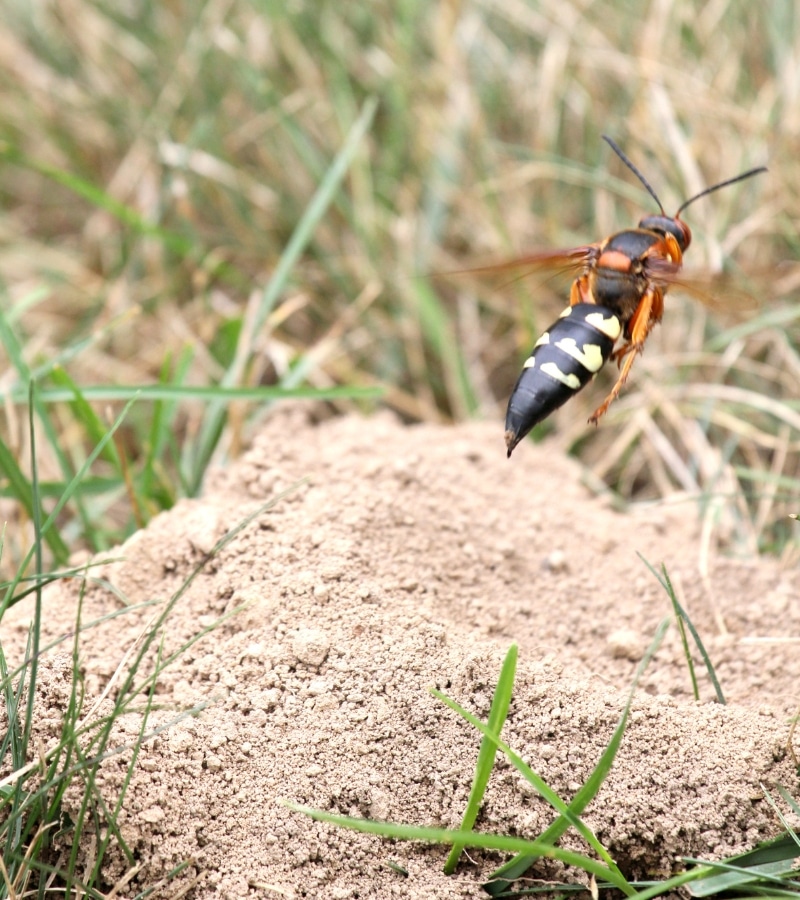
Cicada killer wasp nest can be a surprising findy for many homeowners. Known for their intimidating size, these solitary wasps are the architects of intricate underground tunnels throughout the summer months. While they may appear threatening, these insects are actually more bark than bite.
Here are a few quick facts you might find useful about cicada killer wasp nest:
- Size: Females can reach up to 1¾ inches, making them some of the largest wasps.
- Nesting: They dig tunnels about a foot deep with multiple chambers, where they lay eggs.
- Behavior: Males are aggressive but cannot sting, while females sting only when provoked.
Cicada killers are solitary, meaning they don’t form large colonies like other wasp species. Despite their fierce reputation, they primarily use their size to scare away predators. Their life revolves around hunting cicadas, which they use to nourish their young.
As Stephen Biggins, the owner of Biggins Exterminating, I have dedicated my career to understanding and managing these intriguing insects. With my experience in pest control, I’ve learned that while ‘cicada wasp nest’ can be a nuisance, they rarely pose a threat to humans. I look forward to sharing more about their unique behaviors and how we can safely coexist with them.
What is a Cicada Wasp Nest?
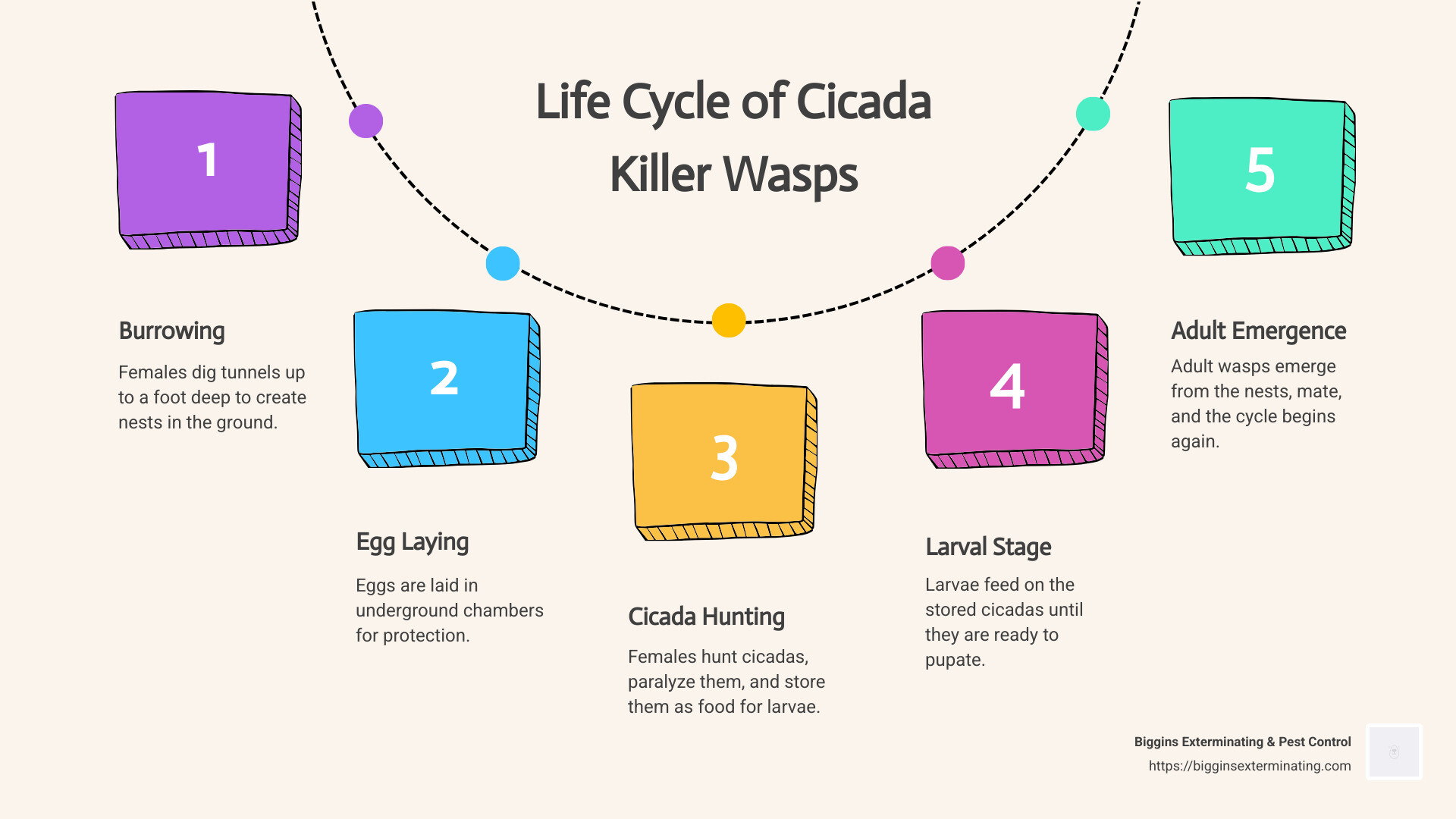
A cicada wasp nest is a marvel of natural engineering, expertly crafted by the female cicada killer wasp. These nests are underground burrows that serve as both a nursery and a pantry for their young.
Structure of the Nest
The nest begins with a tunnel entrance, usually around 1-1½ inches in diameter. This tunnel can extend up to two feet long and about a foot deep. At the end of this tunnel, the female digs several chambers. Each chamber is an individual cell where she will deposit her eggs.
These chambers are not just empty spaces; they are carefully stocked with paralyzed cicadas, which serve as food for the larvae once they hatch. The female wasp seals each chamber after laying an egg, ensuring her offspring have a safe and nourishing environment to grow.
Location and Environment
Cicada wasps are commonly found in the eastern United States. They prefer environments with warm, sandy soil that make it easy for them to dig their nests. These areas are often in full sunlight, which helps maintain the right temperature for their developing larvae.
You’ll often find these nests near trees or shrubs where cicadas are abundant. The presence of cicadas is crucial, as they are the primary food source for the wasp larvae. The nests are easily identified by the small mounds of dirt surrounding the entrance, which the female wasp kicks out while digging.
In these regions, the wasps typically emerge in July, aligning perfectly with the peak cicada population. This synchronization ensures that the female wasps have plenty of prey to stock their nests.
Understanding the structure and preferred environment of a cicada wasp nest not only highlights the fascinating life of these wasps but also provides insights into how we can manage our interactions with them.
Next, we’ll dive into the life cycle of cicada wasps, exploring how they transition from egg to adult and their unique hunting and feeding behaviors.
The Life Cycle of Cicada Wasps
The life cycle of cicada wasps is a fascinating journey from egg to adult. Each stage is finely tuned to ensure survival in their natural habitat.
Hunting and Feeding
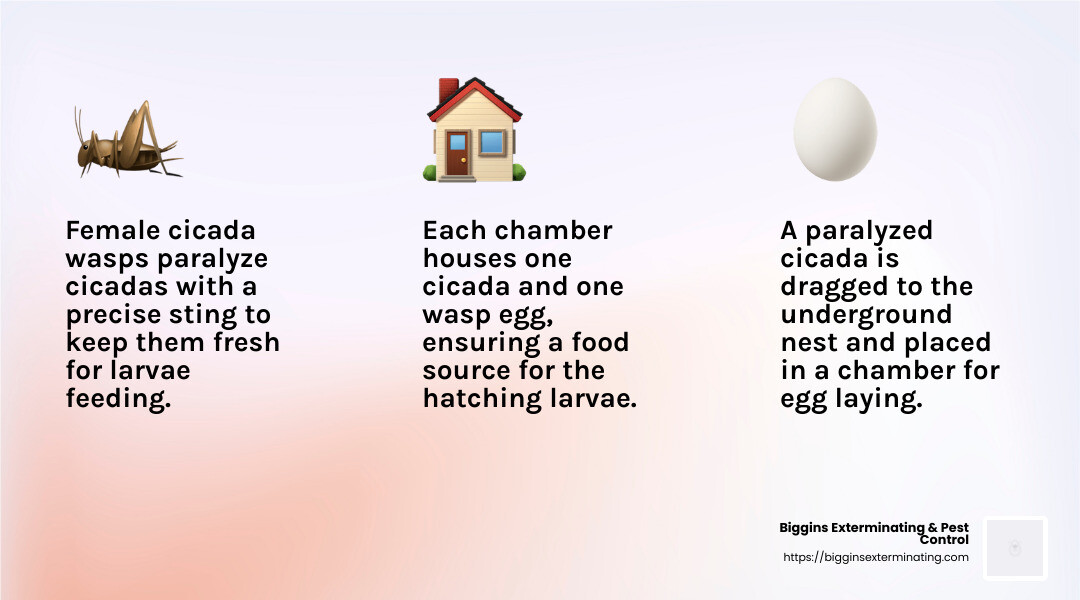
The female cicada wasp is a skilled hunter. Her primary prey is the cicada, which she paralyzes with a precise sting. This sting doesn’t kill the cicada; instead, it immobilizes it, keeping it fresh for her larvae to feed on.
Once a cicada is paralyzed, the female carries it back to her underground nest. This is no small feat, as cicadas can be quite large compared to the wasp. She drags the cicada into one of the chambers she has prepared, lays an egg on it, and seals the chamber. This ensures her offspring have a ready supply of food when they hatch.
Emergence and Mating
The life cycle continues as the eggs hatch into larvae. These larvae feed on the paralyzed cicadas, consuming them from the inside. This might sound grim, but it’s an efficient way for the wasp larvae to get the nutrients they need to grow.
After feeding, the larvae spin a tough, brown cocoon where they will overwinter. As summer approaches, they undergo pupation—a change stage where they develop into adult wasps. This process usually takes about a month, with adults emerging in July.
Once they emerge, male cicada wasps become territorial. They patrol the area around the nest, often engaging in aerial displays to ward off rivals. Although they may seem aggressive, male wasps don’t have a stinger and pose no real threat to humans.
Females, on the other hand, focus on mating and preparing for the next generation. After mating, the cycle begins anew as females start digging new nests and hunting cicadas to provision their future offspring.
Understanding the life cycle of the cicada wasp gives us a clearer picture of their role in the ecosystem and how they interact with their environment. In the next section, we’ll explore whether cicada wasps are dangerous and how to manage them effectively.
Are Cicada Wasps Dangerous?
Cicada wasps might look intimidating due to their size, but their danger to humans and pets is often misunderstood.
Interaction with Humans
Cicada wasps are generally not aggressive towards humans. Male cicada wasps, despite not having stingers, are known for their bold behavior. They may swarm around people as an intimidation tactic, especially if they feel their territory is threatened. This can be startling, but they are harmless since they cannot sting.
Female cicada wasps do have stingers, but stings are rare because they prefer avoiding confrontation. Their sting is primarily used for hunting cicadas, not for defense. If a person is stung, the pain is usually mild, similar to a bee sting. However, some individuals may experience allergic reactions, which can include redness, swelling, and in severe cases, difficulty breathing. If you suspect an allergic reaction, seek medical attention immediately.
To minimize interactions, it’s wise to avoid areas where cicada wasps are active, especially during their peak season in the summer. Understanding their behavior can help reduce unnecessary fear and encourage coexistence.
Pets and Cicada Wasps
Pets, especially those that spend a lot of time outdoors, might encounter cicada wasps more frequently. Dogs and cats might be curious and try to play with or eat these wasps, increasing their risk of getting stung.
A sting can be a painful experience for pets, leading to symptoms like swelling or redness, particularly if stung on the face or mouth. For most pets, a sting serves as a warning, and they tend to avoid these wasps in the future. However, if your pet gets stung and shows signs of an allergic reaction, such as excessive swelling or trouble breathing, contact your veterinarian right away.
Keeping an eye on your pet when they are outside and steering them away from areas with visible cicada wasp nests can help ensure their safety. If cicada wasps are a recurring issue, consider consulting a professional pest control service to manage the situation effectively.
In the next section, we’ll discuss how to manage cicada wasp nests and explore both DIY methods and professional pest control services.
Managing Cicada Wasp Nests
Dealing with cicada wasp nests can be a challenge, especially if they are located in high-traffic areas of your yard. Fortunately, there are effective strategies for managing these nests, whether you prefer a DIY approach or professional assistance.
DIY Control Methods
If you’re up for tackling the problem yourself, there are several methods you can try:
-
Insecticides: Using dust formulations around and into the entrance hole of the nest can be effective. It’s best to apply these in the early summer, just before sunset or sunrise, when the wasps are less active. Products containing carbaryl, bendiocarb, or pyrethroids are often recommended, but always read and follow label instructions carefully.
-
Physical Removal: For those who are more adventurous, a butterfly net or a tennis racket can be used to physically remove wasps. This method requires protective clothing and gear to prevent stings.
-
Environmental Modifications: Modifying the environment can also help deter cicada wasps. Since they prefer sandy soils for nesting, consider thickening the lawn or adding mulch to discourage them from digging.
Professional Pest Control Services
For those who prefer to leave it to the experts, Biggins Exterminating & Pest Control offers comprehensive pest management solutions. With over 40 years of experience, they are well-equipped to handle cicada wasp nests efficiently and safely.
-
Nest Identification: Their team will accurately identify and assess the situation, ensuring that all nests are located and properly treated.
-
Early Summer Mitigation: Timing is crucial. By addressing the problem early in the season, Biggins can prevent larger infestations and reduce the chance of wasps returning next year.
-
Customer Satisfaction: Biggins prides itself on excellent customer service. Their clients appreciate the quick response times, thorough treatments, and friendly technicians. Many homeowners in areas like Wilmington, MA, and surrounding locations have shared positive reviews about their experiences.
Choosing professional pest control not only ensures the problem is handled correctly but also provides peace of mind knowing your yard is safe and enjoyable for your family and pets.
In the next section, we’ll answer some frequently asked questions about cicada wasp nests, including what to do if you find one and how to prevent them from returning.
Frequently Asked Questions about Cicada Wasp Nests
What should I do if I find a cicada wasp nest?
Finding a cicada wasp nest in your yard can be surprising, but it’s important to stay calm. The first step is to avoid disturbing the nest, as this can provoke the wasps. Instead, consider the following actions:
-
Observe from a Distance: Cicada wasps are not aggressive, but it’s wise to keep a safe distance to avoid accidental stings.
-
Consult a Professional: If the nest is in a high-traffic area or you’re uncomfortable dealing with it, contacting Biggins Exterminating & Pest Control is a good idea. Their experienced team can handle the situation safely and effectively.
-
DIY Caution: If you’re considering a DIY approach, ensure you follow recommended safety precautions and use appropriate insecticides, as mentioned earlier.
How can I prevent cicada wasps from nesting in my yard?
Preventing cicada wasps from establishing nests in your yard involves a few proactive steps:
-
Lawn Maintenance: Keep your lawn thick and healthy. Regular mowing at a higher setting (3 to 4 inches) can deter wasps from digging.
-
Watering: Ensure your lawn is well-watered. Cicada wasps prefer dry soil, so maintaining a moist environment can be unappealing to them.
-
Mulching: Apply mulch in garden beds and under shrubs to discourage nesting.
-
Professional Advice: For custom prevention strategies, consult with Biggins Exterminating & Pest Control. They can provide specific recommendations based on your yard’s conditions.
Are cicada wasps beneficial to the environment?
Yes, cicada wasps play a significant role in the ecosystem. Here’s how:
-
Natural Pest Control: They help control cicada populations, which can be beneficial for trees and plants.
-
Pollination: While foraging for nectar, cicada wasps also aid in pollinating flowers, contributing to plant reproduction.
Understanding the ecological benefits of cicada wasps can help us appreciate their presence. However, if they become a nuisance, it’s best to manage them carefully to maintain a balance between human comfort and environmental health.
In the upcoming sections, we’ll continue to explore more about cicada wasps and their impact on your home and garden.
Conclusion
Cicada wasp nests, with their intricate underground tunnels and chambers, are fascinating yet sometimes concerning structures for homeowners. These nests, primarily found in warm, sandy soils across the eastern U.S., provide a habitat for the solitary cicada wasps. While these wasps are beneficial for controlling cicada populations and aiding in pollination, their presence in residential areas can be unsettling.
When it comes to managing cicada wasp nests, it’s crucial to weigh the benefits and potential nuisances they bring. While they are generally not aggressive, their large size and the potential for stings, especially around pets or children, can cause anxiety. This is where effective pest control comes into play.
At Biggins Exterminating & Pest Control, we specialize in offering professional and reliable pest management solutions. With over 40 years of experience, our family-owned company is well-equipped to address any concerns you might have about cicada wasp nests on your property. We understand the importance of maintaining a safe and comfortable environment for you and your family without disrupting the ecological balance.
Our team provides comprehensive services custom to your needs, ensuring customer satisfaction without the need for long-term contracts. If you’re facing a cicada wasp issue, or if you simply want to prevent future infestations, reach out to us for expert advice and solutions.
For more information on our services, visit our Cicada Killers Pest Control page. Our team is ready to assist you in managing cicada wasp nests effectively, keeping your home and garden safe and serene.