
Cicada killer treatment is a hot topic for homeowners concerned with maintaining a peaceful, pest-free environment. These large wasps, while intimidating, are generally harmless to humans. To quickly address your concerns, here’s what you need to know:
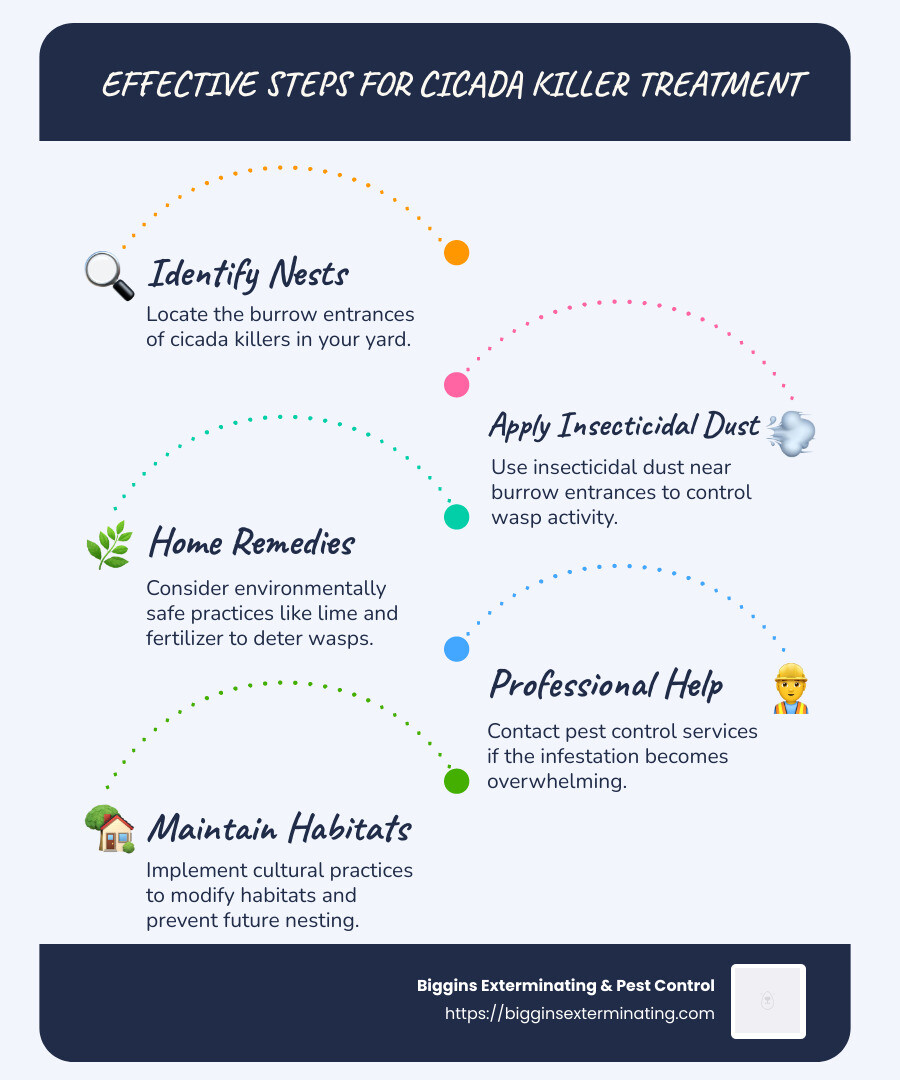
- Apply insecticidal dust near burrow entrances to manage wasp activity effectively.
- If cicada killers become overwhelming, contact professional pest control services for custom solutions.
- Consider environmentally safe practices like nest relocation and habitat modification.
Understanding these aspects is crucial for effective cicada killer management.
Cicada killer wasps are often mistaken for European hornets due to their large size and buzzing presence. However, unlike their aggressive counterparts, cicada killers are solitary and prefer to go about their business without bothering humans. Their primary focus is hunting cicadas, which they use to feed their larvae, an essential part of their lifecycle.
As the Owner of Biggins Exterminating Co., I bring over four decades of experience in pest control. Throughout my career, I’ve specialized in various pest issues, cicada killer treatment included, and strive to provide reliable, family-centered solutions for homeowners across Massachusetts.
Cicada killer treatment helpful reading:
– cicada killer repellent
– cicada wasp nest
Understanding Cicada Killers
Cicada killer wasps are fascinating creatures, often misunderstood due to their intimidating size and appearance. Let’s break down what makes these wasps unique and how they fit into their environment.
Appearance
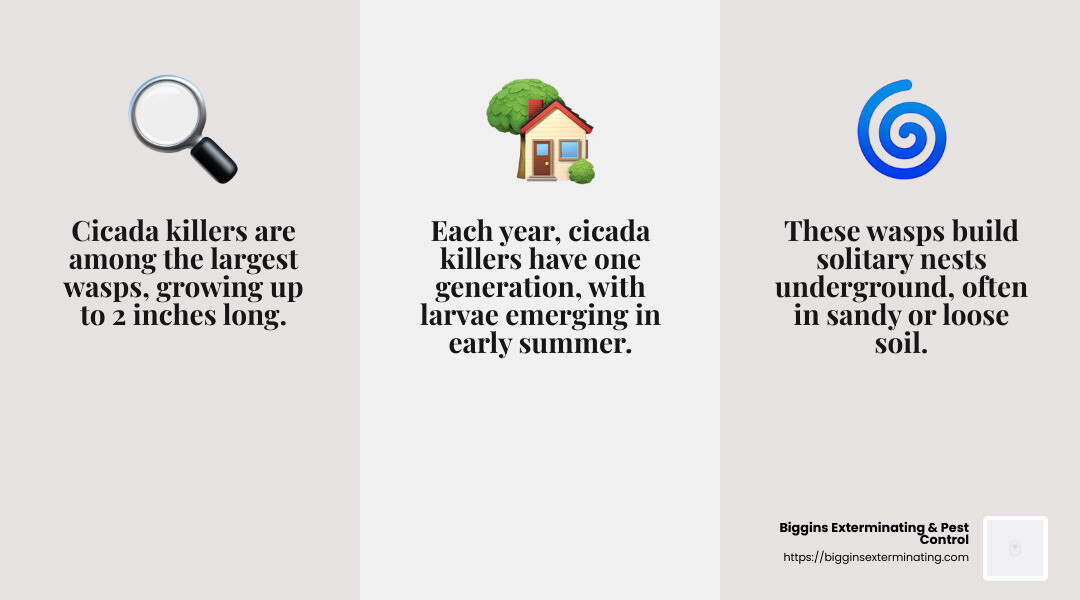
Cicada killers are among the largest wasps, with adults reaching about 2 inches in length. They have a distinctive look, with a black abdomen adorned with yellow markings on three segments. Their six legs are pale red to orange, and their wings are a shaded brown color. Despite their size, they are not aggressive towards humans, which often surprises those who encounter them.
Habitat
These wasps are solitary and prefer to build their nests underground, making them different from colony-dwelling species. The nests, or burrows, are typically about a foot deep and have multiple cells for the eggs. You’ll often find these burrows in sandy or loose soil areas such as:
- Edges of concrete slabs
- Golf course sand traps
- Lawns
- Sandy playground areas
- Sparsely vegetated slopes
The presence of a “U”-shaped mound of excavated soil at the burrow entrance is a telltale sign of a cicada killer’s construction work.
Life Cycle
The life cycle of cicada killers is intriguing. It begins with the female wasp digging burrows and preparing cells for her offspring. She hunts cicadas, stings and paralyzes them, and places them in the burrow with her eggs. Once the eggs hatch, the larvae feed on the cicadas. This process ensures that the next generation has a strong start.
In the spring, the larvae enter the pupal stage and emerge as adults in early summer. After mating, males die, while females continue the cycle, laying eggs and providing for the next generation. Each year sees only one generation of cicada killers, making their presence a seasonal event.
Understanding these aspects of cicada killer wasps helps explain their presence and behavior. With this knowledge, homeowners can better appreciate these wasps’ role in the ecosystem while managing their presence effectively.
Next, we’ll explore Cicada Killer Treatment Options, discussing both cultural practices and specific products like Sevin and Bifen LP Granules to help manage and prevent infestations.
Cicada Killer Treatment Options
When it comes to cicada killer treatment, there are several effective strategies you can employ. These range from cultural practices to the use of specific insecticides. Let’s explore some of the best options available.
Cultural Practices
One of the most sustainable ways to manage cicada killer populations is through cultural practices. This involves making your yard less appealing to these wasps. Since cicada killers prefer sandy or loose soil, maintaining a healthy, dense lawn can deter them. Here are some tips:
- Regular Watering and Fertilization: Keeping your lawn well-watered and fertilized encourages thick grass growth, making it less inviting for wasps to nest.
- Soil Amendments: Applying lime and other soil amendments can improve soil quality and discourage wasp burrowing.
Implementing these practices consistently over one or two seasons can significantly reduce cicada killer activity.
Insecticidal Dust
For those who prefer a more direct approach, insecticidal dust can be effective. Products like Sevin dust can be applied directly to the entrance of wasp burrows. Ensure you follow all label instructions and safety precautions when using these products. Here’s how to apply it:
- Identify the Nest: Look for the characteristic “U”-shaped mound of soil.
- Apply Dust: Use a duster to apply the insecticidal dust into the burrow entrance during the evening when wasps are less active.
- Monitor: Check the treated areas regularly to ensure effectiveness.
Sevin
Sevin, available in both liquid and dust form, is a popular choice for controlling cicada killers. It’s important to apply it carefully and as directed. Some users have reported success by mixing a concentrated Sevin solution and spraying it directly into the burrow.
- Application Tip: Apply during cooler parts of the day to minimize wasp activity and maximize safety.
Bifen LP Granules
Another effective product is Bifen LP Granules, which can target larvae in the soil. This treatment can help prevent future generations of wasps from emerging. Here’s how to use it:
- Spread Granules: Evenly distribute the granules over the affected area.
- Water In: Lightly water the area to activate the granules and allow them to penetrate the soil.
- Repeat as Needed: Reapply according to the product instructions, especially after heavy rain.
Using a combination of these methods can offer a comprehensive approach to managing cicada killer populations in your yard. By understanding and implementing these treatment options, you can effectively reduce the presence of these intimidating, yet fascinating, wasps.
Next, we’ll dig into DIY Cicada Killer Treatment options, exploring home remedies and other practical solutions for tackling these wasps on your own.
DIY Cicada Killer Treatment
If you’re dealing with cicada killers and prefer a hands-on approach, there are several DIY cicada killer treatment options you can try. These methods focus on home remedies and easy-to-apply solutions that can help manage these wasps effectively.
Home Remedies
Many homeowners have found success using simple, natural methods. Here are a few you can try:
- Soapy Water: A mixture of water and dish soap can be sprayed directly into the wasps’ burrow. The soap helps to suffocate the wasps, making it an effective and non-toxic solution.
- Ammonia: Pouring ammonia into the burrow can also deter wasps. Be cautious and ensure proper ventilation when using this method.
These remedies are best applied during the evening when wasps are less active, reducing the risk of stings.
Lime and Fertilizer
Improving your lawn’s health can naturally deter cicada killers. Here’s how lime and fertilizer can help:
- Lime Application: Lime can balance soil pH, making it less attractive for wasp nesting. Apply lime according to soil test recommendations for best results.
- Fertilization: Regular fertilization promotes a dense lawn, which cicada killers find difficult to burrow into. Use a balanced fertilizer to encourage healthy grass growth.
Consistent application of lime and fertilizer can make your yard less inviting to these wasps over time.
Pyrethrin Liquid
Pyrethrin, derived from chrysanthemum flowers, is a natural insecticide that can be effective against cicada killers. Here’s how to use it:
- Mix and Spray: Follow the product instructions to mix a pyrethrin solution. Spray it directly into the wasp burrows during cooler parts of the day.
- Safety First: Always wear protective clothing and follow safety guidelines when handling insecticides.
Using pyrethrin can provide a more natural approach to control while still being effective.
By combining these DIY methods, you can take proactive steps to manage cicada killer populations in your yard. Up next, we’ll explore Professional Cicada Killer Treatment options, highlighting expert solutions from Biggins Exterminating & Pest Control.
Professional Cicada Killer Treatment
When DIY methods aren’t enough, it’s time to call in the experts. Biggins Exterminating & Pest Control offers comprehensive cicada killer treatment options custom to your specific needs. Their professional pest management strategies ensure effective and safe removal of these pesky wasps.
Expert Solutions
Biggins Exterminating is renowned for its expertise in handling cicada killer infestations. Here’s why their approach stands out:
-
Thorough Inspection: Their team begins with a detailed inspection of your property to identify nesting sites and assess the infestation level.
-
Customized Treatment Plans: Based on the inspection, they develop a custom plan using the most effective methods and products. This can include targeted insecticidal treatments like Sylo, which is applied directly to the nests.
-
Eco-Friendly Practices: Biggins prioritizes environmentally friendly solutions that minimize harm to the ecosystem. They use advanced pest management technologies to ensure safety and effectiveness.
-
Preventive Measures: Beyond eradication, they offer advice on preventing future infestations. This includes tips on lawn care and maintenance to make your yard less inviting to cicada killers.
Professional Pest Management
Choosing professional services like those offered by Biggins Exterminating not only addresses the current problem but also helps prevent future issues. Here’s what you can expect from their pest management:
-
Safety and Precision: Their trained technicians handle chemicals and equipment safely, reducing risks to your family and pets.
-
Long-Term Solutions: With their expertise, Biggins focuses on both immediate removal and long-term prevention, saving you from recurring problems.
-
Customer Satisfaction: Biggins is committed to customer satisfaction, ensuring open communication and transparency throughout the process.
By opting for professional treatment, you ensure a thorough and effective solution to your cicada killer problem. Next, we’ll address some Frequently Asked Questions about Cicada Killer Treatment to further guide you in managing these wasps.
Frequently Asked Questions about Cicada Killer Treatment
Are cicada killer wasps dangerous?
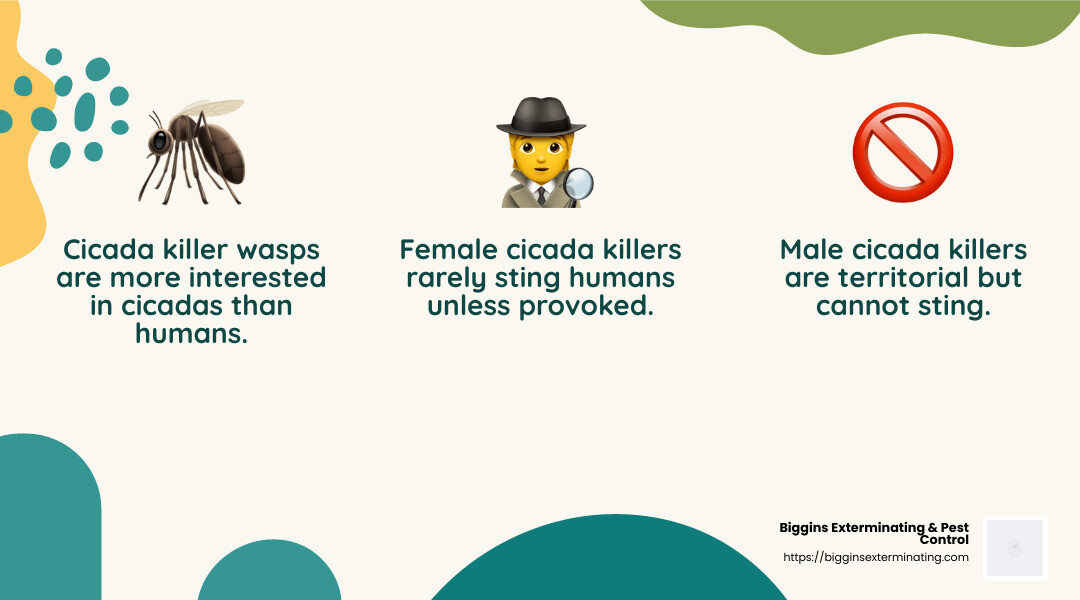
Cicada killer wasps are generally not dangerous to humans. Males are territorial and may appear aggressive, but they lack stingers and can’t cause harm. Females have stingers, but they are not prone to sting humans unless provoked. In fact, they are more focused on hunting cicadas to feed their young.
How to locate and treat cicada killer nests?
To effectively manage cicada killer infestations, identifying their nests is crucial. Look for U-shaped mounds of soil in areas like lawns, sandy playgrounds, or golf course sand traps. These are signs of burrows where females have laid their eggs.
Treatment Application Steps:
-
Locate the Nest: Identify the burrow entrances by spotting loose soil or mounds.
-
Apply Insecticide: Use targeted insecticides like Sylo or insecticidal dust directly into the nest entrance. This method is more effective than general spraying.
-
Follow Instructions: Always read and follow the product’s label directions for safe and effective use.
By treating the nests directly, you can effectively reduce the cicada killer population.
What are the costs associated with cicada killer treatment?
The cost of cicada killer treatment can vary widely based on the extent of the infestation and the methods used. For DIY treatments, expect to spend anywhere from $20 to $100 on insecticides and application tools. Professional services, like those offered by Biggins Exterminating, typically range from $150 to $500, with prices potentially reaching up to $1,500 for severe infestations.
These prices are average estimates derived from internet data and do not represent actual costs for Biggins Exterminating services. Always consult with the service provider for precise pricing custom to your specific situation.
Next, we’ll explore the Conclusion to discuss the benefits of choosing Biggins Exterminating & Pest Control for your pest management needs.
Conclusion
Choosing the right partner for pest control can make all the difference in ensuring a safe and comfortable home environment. At Biggins Exterminating & Pest Control, we pride ourselves on our customer satisfaction and extensive pest control expertise.
With over 40 years of experience, our family-owned business has been a trusted name in Wilmington, MA, and surrounding areas. We understand the unique challenges homeowners face with pests like cicada killers, and we’re here to help with custom solutions that fit your needs.
Our approach is simple: provide reliable pest control services without the need for contracts, offer warranties for peace of mind, and ensure every customer is satisfied with our work. This commitment is what sets us apart and why our clients keep coming back.
We believe in using the most effective and least toxic methods available, prioritizing the safety of your family and pets. Our team is trained to identify and treat pest issues accurately, ensuring that we not only eliminate the current problem but also prevent future infestations.
When it comes to cicada killer treatment, trust the experts at Biggins Exterminating & Pest Control to deliver quality results. We offer competitive pricing and flexible service options to meet your needs.
For a pest-free home, contact us today and experience the difference our expert team can make. Visit our Cicada Killers Pest Control page to learn more and get started with our services.
