Why Carpenter Ant Prevention Matters for Your Home
Carpenter ant prevention is crucial for protecting your home from structural damage and costly repairs. These wood-destroying pests don’t eat wood like termites, but they excavate galleries and tunnels that can weaken wooden structures over time.
Quick Carpenter Ant Prevention Essentials:
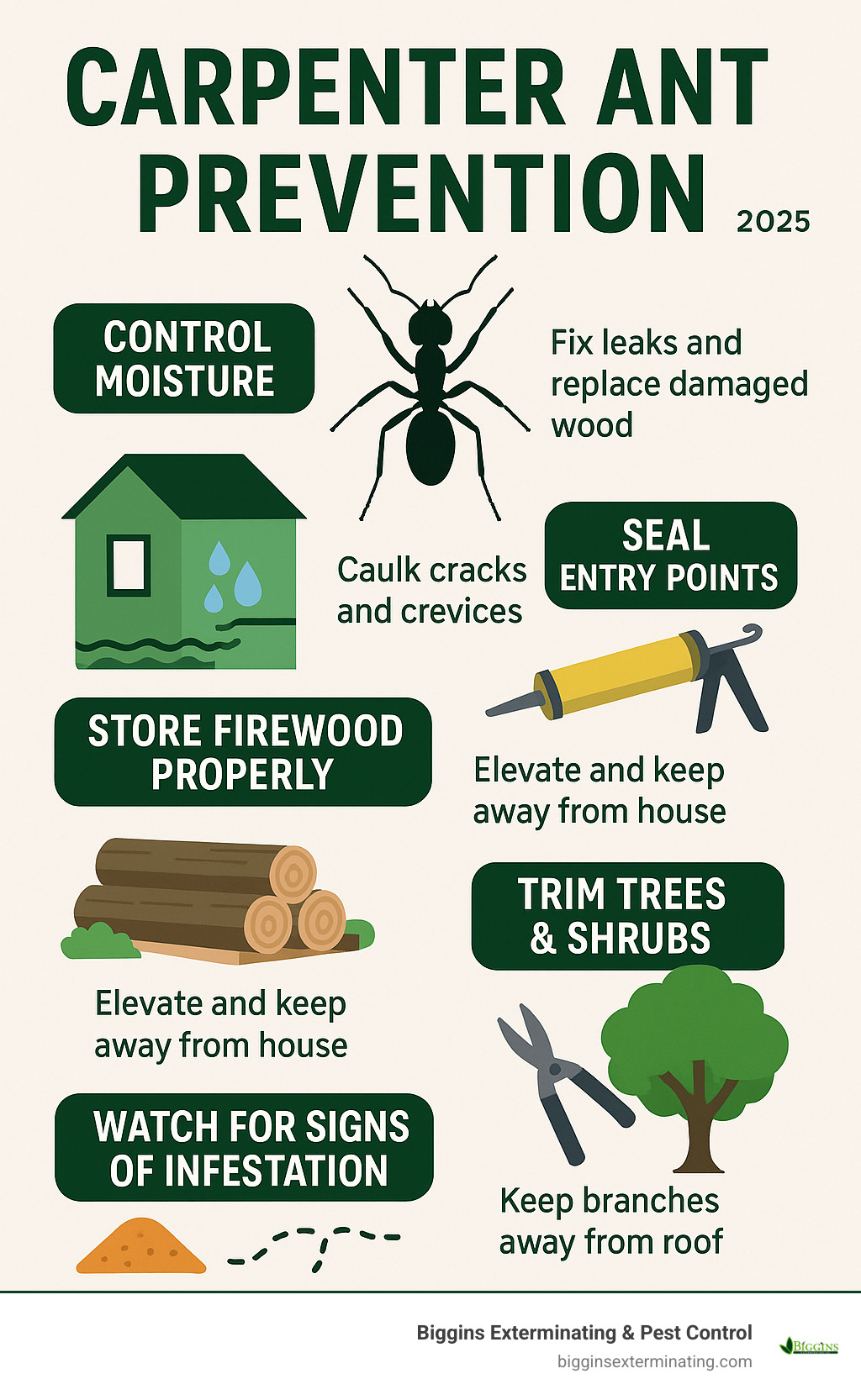
- Control moisture – Fix leaks, improve ventilation, replace water-damaged wood
- Seal entry points – Caulk cracks around foundations, windows, and utility lines
- Maintain your yard – Trim branches away from house, store firewood properly
- Remove attractants – Clean up food sources, eliminate decaying wood
- Monitor for signs – Watch for sawdust piles, rustling sounds, or ant trails
Carpenter ants are among the most common structural pests found in and around homes. They prefer damp or decaying wood but can spread to sound timber as colonies grow. A mature colony can contain several thousand ants, and workers can travel up to 100 yards from their nest searching for food.
The key difference between prevention and elimination is timing and cost. Prevention focuses on making your home unattractive to carpenter ants before they establish colonies. Once they’ve moved in and started excavating, you’re looking at potential structural repairs alongside pest control treatment.
I’m Stephen Biggins of Biggins Exterminating. With over four decades of experience, I’ve helped countless Massachusetts homeowners with effective carpenter ant prevention. My experience shows that proactive prevention is always more cost-effective than dealing with an established infestation.
Carpenter ant prevention further reading:
Identifying Carpenter Ants and Spotting an Infestation
Spotting a large black ant in your kitchen could mean a carpenter ant scout is visiting. Carpenter ant prevention starts with proper identification, as these are not typical picnic ants.
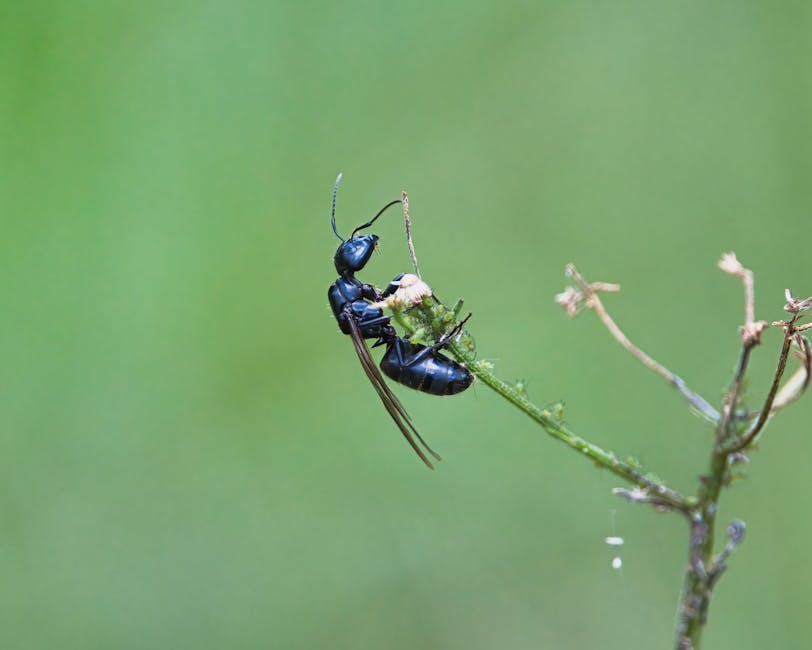
Carpenter ants are the bodybuilders of the ant world – they’re big, ranging from 1/4 to 3/4 inches long, with some queens reaching a full inch. Most are black or dark reddish-brown, and they have that classic “pinched waist” look that makes them easy to spot. Their elbowed antennae are another dead giveaway – they bend like a tiny elbow joint.
These ants don’t eat wood like termites. Instead, they excavate smooth tunnels and galleries for their nests, hollowing out your wooden structures.
Moisture is their best friend. They prefer damp or decaying wood to start colonies but will expand into dry, sound wood. They nest in wall voids, hollow doors, attics, and even insulation.
Carpenter Ant vs. Termite: Telling Them Apart
It’s easy to confuse carpenter ants and termites, especially winged swarmers. Both damage homes but require different treatments.
| Feature | Carpenter Ant | Termite |
|---|---|---|
| Body Shape | Constricted, “wasp-like” waist | Broad, uniform waist |
| Antennae | Elbowed (bent) | Straight |
| Wings (if present) | Front wings longer than hind wings | All four wings are equal in length and size |
| Wood Damage | Smooth, clean “galleries” (tunnels) | Mud tubes or chewed, rough wood |
| Evidence | Sawdust-like shavings (frass) with insect parts | Small, 6-sided fecal pellets or mud tubes |
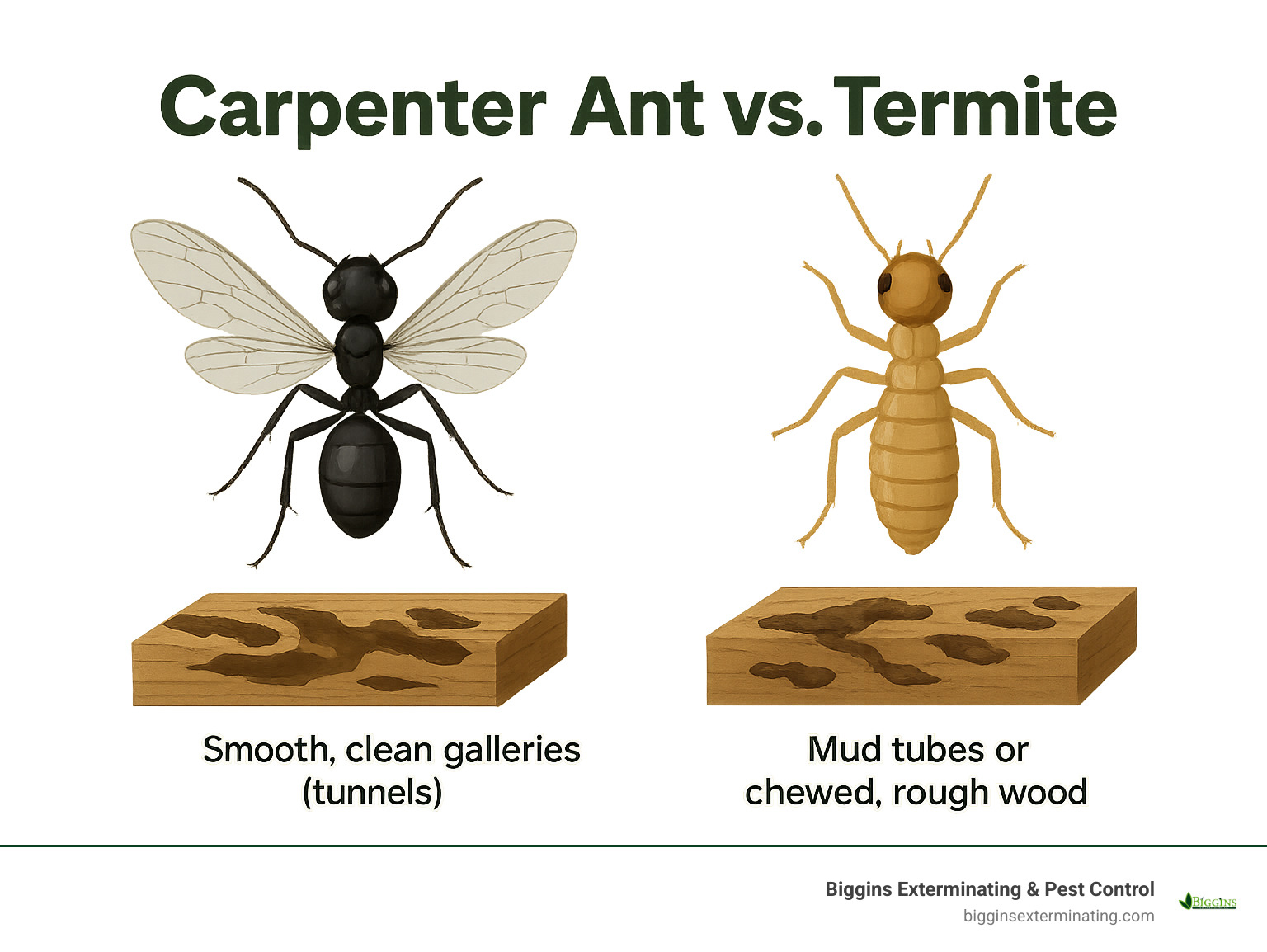
Remember the difference: Carpenter ants have narrow, “wasp-like” waists, while termites are broad and uniform. Carpenter ants leave sawdust-like frass; termites leave mud tubes or tiny pellets.
For more detailed comparisons, check out these key differences between ants and termites to make sure you’re identifying the right pest.
Telltale Signs of a Carpenter Ant Problem
Carpenter ants are mostly active at night, but they leave clues if you know what to look for.
Seeing worker ants regularly is a red flag, especially large black or reddish-black ants (1/4 to 5/8 inch long) indoors in the evening. More than 10-12 ants in a single evening suggests a nearby nest. Workers can travel up to 300 feet from their colony for food.
Winged swarmers appearing indoors, especially in late winter or early spring, are a sure sign of an established colony in your home.
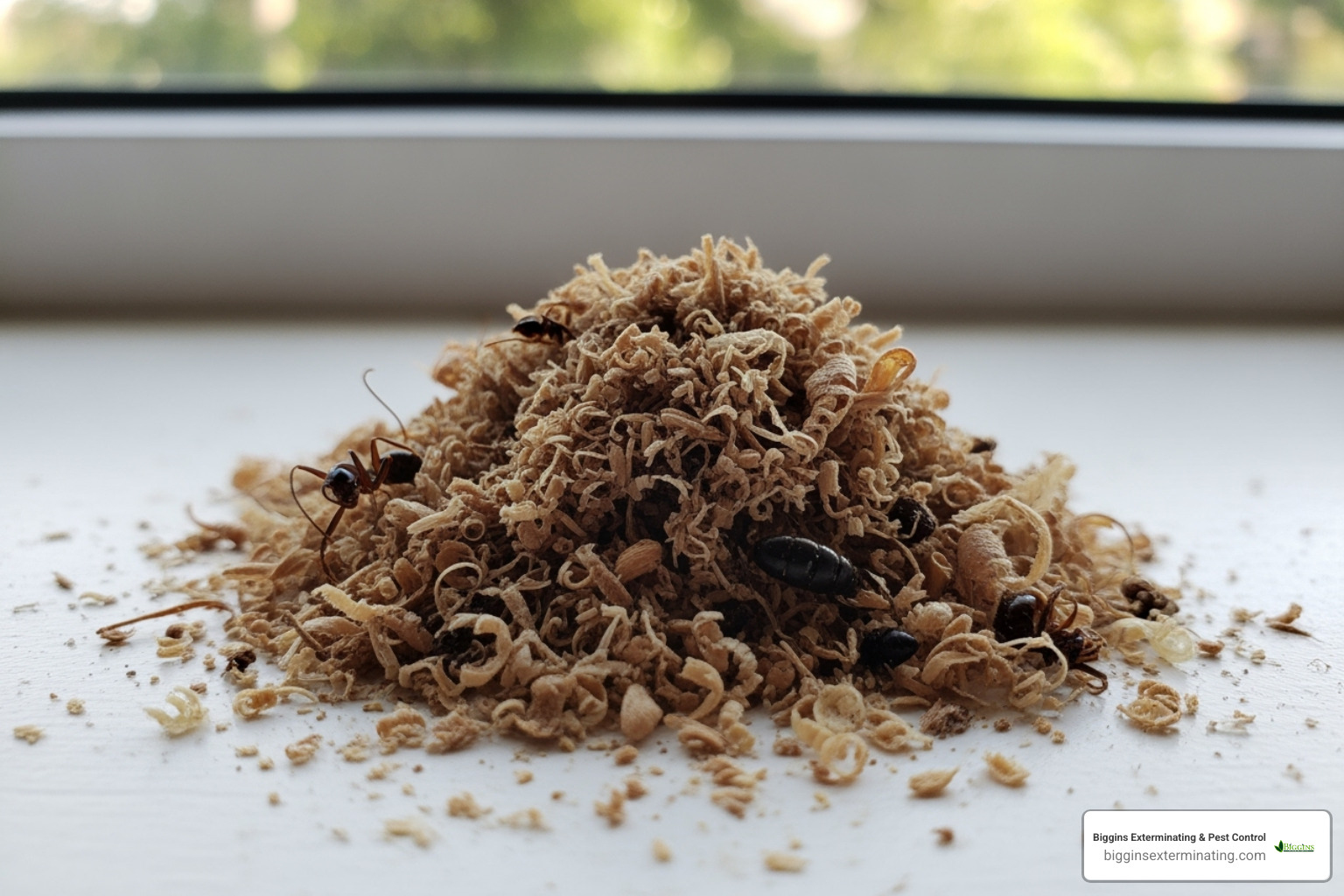
Sawdust-like piles called frass are probably the most obvious calling card carpenter ants leave behind. Unlike regular sawdust, this material contains bits of insect parts and pupal casings mixed in. You’ll typically find these piles near window sills, door frames, or baseboards where they’ve been excavating.
At night, you might hear faint rustling sounds from within walls or wooden structures. This is the sound of ants excavating.
Look for small, perfectly round holes about 1/8 inch in diameter in wooden surfaces. These are either entry points or “kick-out holes” where the ants push out their excavated material.
Following ant trails can be like playing detective. These organized insects establish specific routes between their nests and food sources. Grab a flashlight after dark and trace their movements – you might find exactly where they’re coming from.
Understanding the difference between parent nests and satellite nests is crucial for effective carpenter ant prevention. The main colony usually lives outdoors in moist, decaying wood like old tree stumps or woodpiles. But they often establish satellite nests indoors in drier locations like wall voids, insulation, or around areas with occasional moisture like bathrooms.
You can learn more on identifying infestations to get a complete picture of what to watch for.
What Attracts Carpenter Ants to Your Home?
Carpenter ants have specific needs. Understanding what attracts them is key to effective carpenter ant prevention.
Moisture tops their list of must-haves. These ants are drawn to any wood that’s been exposed to water because damp wood is much easier to excavate than dry timber. Common moisture sources include leaky roofs, pipes, or appliances, poorly ventilated spaces that create condensation, clogged gutters that overflow and soak into fascia boards, and wood-to-soil contact around foundations that allows moisture to wick up.
Decaying wood is like a luxury hotel to carpenter ants. Whether it’s a rotting stump in your yard, an old fence post, or water-damaged structural timbers, any softened wood becomes prime real estate for colony expansion.
Carpenter ants still need to eat. They love honeydew from aphids—a sugary liquid produced by plant-sucking insects. Aphid-infested plants near your home are a major attractant.
They also love anything sweet like spilled soda, fruit, syrup, or honey. Protein sources including other insects and sometimes meat or pet food round out their diet. Pet food left out overnight is particularly attractive to foraging ants.
Even the most moisture-free home won’t stay ant-free if there are easy entry points available. Cracks and gaps in foundations, walls, or around windows and doors provide convenient access. Unsealed utility entry points where pipes, wires, or cables enter your house are like leaving the front door open.
Overhanging tree branches or shrubs that touch your home create natural bridges for ants to walk directly onto your roof or siding. Firewood stored too close to the house can harbor existing nests and provide direct access to your home’s exterior.
By eliminating these attractants, you’re making your home far less appealing to these unwanted tenants.
Your Ultimate Carpenter Ant Prevention Checklist
Now that you can identify carpenter ants and their attractants, it’s time for a solid carpenter ant prevention plan. Maintaining these barriers makes it less likely pests will move in.
Prevention is easier and cheaper than elimination. Basic maintenance and vigilance can save thousands in potential repairs.
Key Structural and Environmental Carpenter Ant Prevention
Your home’s structure is your first line of defense. Carpenter ants are persistent but practical; they want easy access to moisture and soft wood. Make your home less appealing, and they’ll look elsewhere.
Moisture control is critical. Carpenter ants are drawn to damp spots, so repairing any leaks you find, no matter how small, is essential. Even a minor drip can create the perfect conditions for carpenter ants.
Improving ventilation in damp areas makes a huge difference. Your basement, crawl space, and attic need good airflow to stay dry. Consider adding exhaust fans or dehumidifiers in particularly humid spots.
If you find water-damaged wood anywhere in your home, replace it promptly. Soft, spongy wood is a “Vacancy” sign for carpenter ants. Address both the wood damage and the underlying moisture source to prevent future issues.
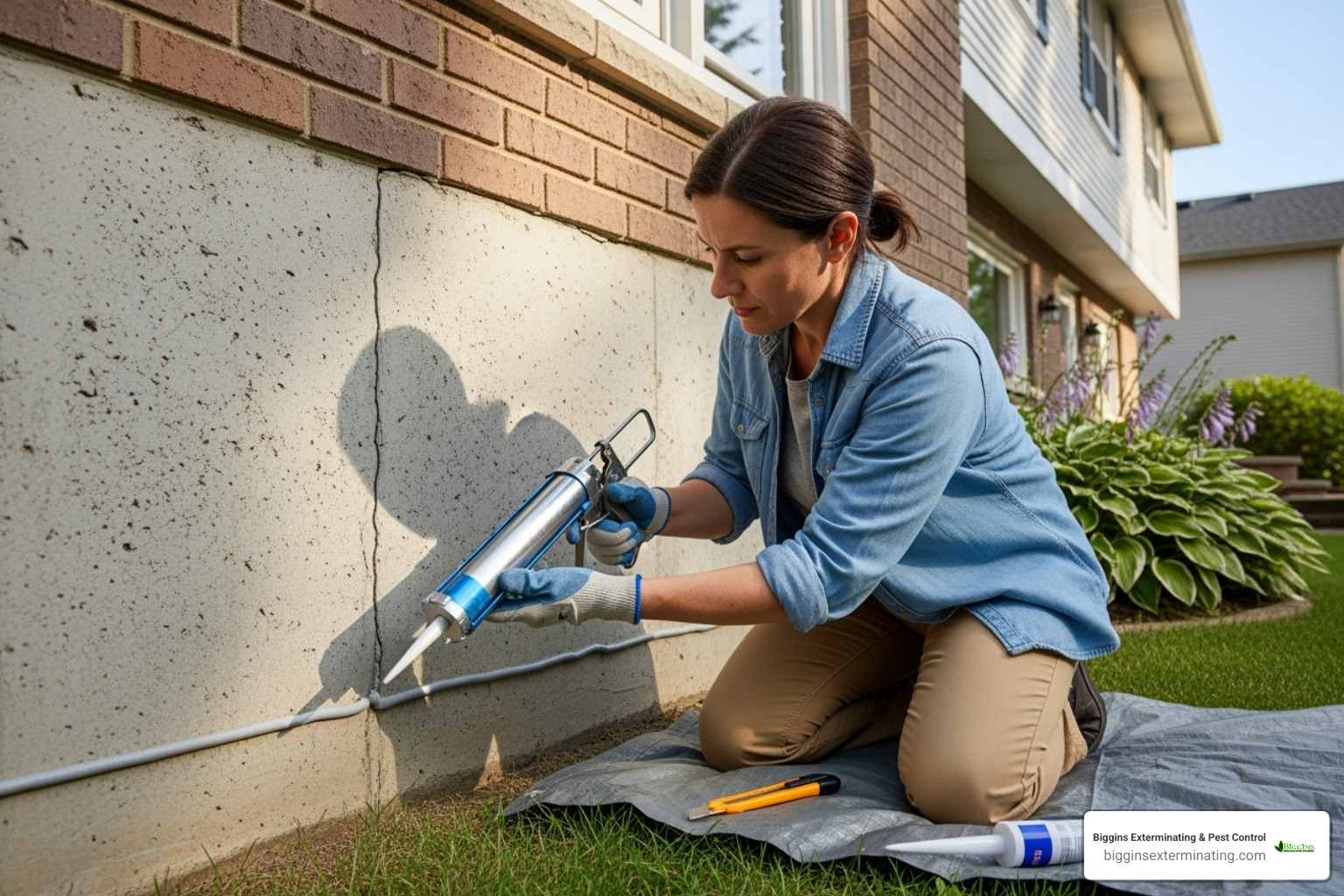
Sealing cracks and crevices might seem tedious, but it’s incredibly effective. Carpenter ants can squeeze through surprisingly tiny openings. Focus on your foundation and exterior walls first – use high-quality silicone caulk to seal any gaps you find. Don’t forget about windows and doors – make sure the frames are properly sealed and that weather stripping is in good condition.
Utility line entry points are often overlooked but critical. Seal gaps where pipes, wires, or cables enter your home, as these are like secret doorways for ants.
Here are the most common entry points to check and seal: cracks in the foundation, gaps around window and door frames, unsealed utility penetrations, unscreened vents, gaps in siding or fascia boards, and openings around chimneys or skylights.
Yard and Landscape Maintenance for Carpenter Ant Prevention
Your yard can either invite carpenter ants to your door or keep them at a respectful distance. Smart landscape maintenance is a crucial part of carpenter ant prevention.
Trimming trees and shrubs away from your house eliminates the “ant highways” that lead directly to your roof and siding. Keep all vegetation at least three feet from your home’s exterior.
A common mistake is storing firewood against your house. It’s a convenient but open invitation for carpenter ants. Keep firewood at least 20 feet away from your home and store it on a raised platform off the ground. Only bring inside what you plan to burn immediately.

Removing old stumps and decaying logs eliminates potential parent colonies from your property. That rustic tree stump could be housing a parent colony of thousands of ants. Remove any rotting wood in your yard.
Mulch management requires a delicate balance. Mulch is great for your plants, but deep mulch beds right against your foundation create moisture problems. Keep mulch at least six inches away from your foundation and maintain it at a reasonable depth of 2-3 inches maximum.
Don’t forget about cleaning your gutters regularly. Clogged gutters cause water to overflow and soak into your fascia boards and roof eaves – exactly the damp conditions carpenter ants seek out. Proper drainage away from your foundation is equally important. Make sure rainwater flows away from your house, not toward it.
These yard maintenance practices are an investment in your home’s long-term protection and a key part of effective carpenter ant prevention.
Dealing with an Active Infestation: When to Call a Professional
Despite your best carpenter ant prevention efforts, sometimes these determined little invaders still find their way into your home. Don’t feel defeated—it happens to the best of us! The key is knowing how to assess what you’re dealing with and when it’s time to bring in the professionals.
If you spot just a few random ants wandering around your kitchen counter, you might be looking at scouts from an outdoor colony. These occasional visitors can often be managed with some targeted cleaning and sealing obvious entry points. But here’s where things get tricky—if you’re consistently seeing ant activity, finding those telltale piles of sawdust, or finding winged ants indoors, you’re likely dealing with a full-blown infestation with an established nest somewhere in your home.
Here’s the reality check: spraying the ants you see crawling around is like trying to empty the ocean with a teacup. Those foraging workers represent maybe 5-10% of the total colony. The other thousands of ants, including the queen, are safely tucked away in their nest, completely unaffected by your surface treatments. Even worse, foraging ants don’t carry enough insecticide back to their nests to make a meaningful impact on the colony.
Professional help is recommended for effective, long-term results because carpenter ant colonies are masters of hide-and-seek. A mature colony can house several thousand ants spread across multiple satellite nests, often hidden deep within wall voids, behind insulation, or in other completely inaccessible areas. I’ve seen homeowners spend months battling visible ants while the real problem—a thriving colony in their attic or basement walls—continues growing stronger.
Professional pest control technicians bring specialized equipment and decades of experience to the table. They can accurately identify whether you’re dealing with carpenter ants, termites, or another wood-destroying pest—each requiring completely different treatment approaches. They know how to locate hidden nests using moisture meters, listening devices, and behavioral knowledge that comes from years in the field. Most importantly, they can apply targeted treatments that actually reach the source of the problem, delivering professional-grade products directly into nests or using strategic baiting systems that the ants themselves carry back to eliminate the entire colony.
While DIY methods like boric acid or diatomaceous earth can provide some localized control, they rarely address the complete picture, especially when dealing with multiple satellite nests or hard-to-reach primary colonies. For established infestations, professional expertise offers your best shot at complete eradication and genuine peace of mind.
What to Expect from Professional Carpenter Ant Control
When you call us at Biggins Exterminating & Pest Control for a carpenter ant problem, you’re getting more than just a spray-and-pray approach. As a family-owned business that’s been protecting Massachusetts homes for over 40 years, we’ve refined our process to deliver thorough, lasting results.
Your service begins with a comprehensive inspection where our experienced technicians examine every inch of your property, inside and out. We’re looking for frass piles, ant trails, moisture damage, potential entry points, and any other clues that reveal where these ants are living and how they’re getting around. We’ll also ask you detailed questions about when and where you’ve been seeing activity—your observations are incredibly valuable in solving the puzzle.
Locating nests is where our experience really shines. We check all the usual suspects: wall voids, attics, crawl spaces, areas around plumbing, window sills, and anywhere moisture might have created ideal nesting conditions. Sometimes we’ll use specialized listening equipment to detect the faint rustling sounds of ant activity within walls, or moisture meters to identify damp wood that attracts these pests.
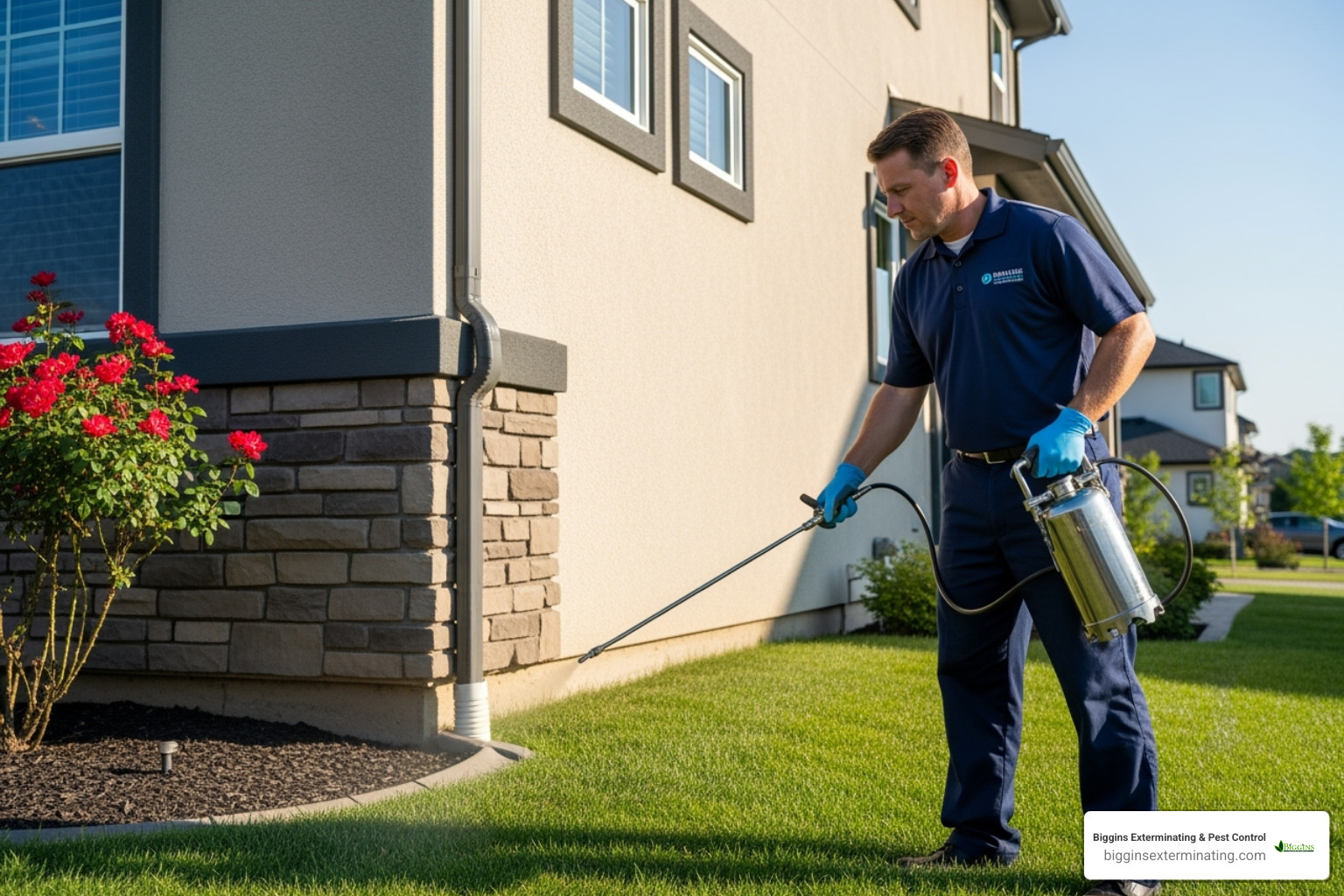
Based on what we find, we develop a customized treatment plan custom to your specific situation. This might involve direct nest treatments where we apply professional-grade insecticides right into the colonies we’ve located—by far the most effective elimination method. We might also use strategic baiting with slow-acting products that foraging ants carry back to share with their nestmates, effectively spreading the treatment throughout the entire colony. Perimeter treatments create a protective barrier around your home’s exterior to prevent new invasions.
But here’s what sets us apart: we don’t just treat the ants and walk away. We’ll advise you on addressing underlying moisture issues that attracted the carpenter ants in the first place. Whether it’s recommending repairs to fix leaks or suggesting ventilation improvements, we help you implement long-term carpenter ant prevention strategies.
Our safe and effective solutions prioritize your family’s well-being while delivering professional results. All our technicians receive extensive training in proper application methods and safety protocols. We stand behind our work with solid warranties and often schedule follow-up visits to ensure complete eradication. Our goal is providing lasting relief without locking you into long-term contracts.
Since we’re discussing wood-destroying pests, it’s worth mentioning that our expertise extends beyond carpenter ants. You can learn about our termite control services as well—another serious threat to your home’s structural integrity that requires professional attention.
Frequently Asked Questions about Carpenter Ant Prevention
Over my four decades helping Massachusetts homeowners with pest control, I’ve noticed the same questions come up again and again when it comes to carpenter ant prevention. Let me share some honest answers that will help you better understand these persistent pests and what you can expect.
How long does it take for carpenter ants to cause significant damage?
Here’s some reassuring news: carpenter ants are slow workers when it comes to structural damage. We’re talking years, not months before you’ll see anything that threatens your home’s integrity. This gives you plenty of time to catch and address problems before they become costly nightmares.
The timeline really depends on what’s happening behind the scenes. A small, newly established colony might take several years just to grow large enough to cause noticeable damage. But a mature colony with thousands of ants – that’s a different story. These established colonies can have multiple satellite nests working simultaneously, which accelerates the excavation process.
Location matters tremendously. Ants tunneling through a decorative trim piece around your window? Not a huge concern structurally. But if they’ve set up shop in your floor joists or support beams, that’s when damage becomes more serious more quickly.
The most destructive infestations are the ones that go undetected for years. I’ve seen cases where homeowners had no idea carpenter ants were busy at work in their wall voids or attic spaces. By the time they finded the problem, extensive tunneling had compromised the wood’s strength. This is exactly why understanding the warning signs is so crucial for effective carpenter ant prevention.
Do carpenter ants pose any health risks?
This is one area where I can put your mind at ease. Carpenter ants are not known to transmit diseases to humans. Unlike some other pests that can carry dangerous pathogens, these ants are primarily a structural threat, not a health threat.
That said, they’re not completely harmless. Carpenter ants can inflict a painful bite if they feel threatened. Their jaws are surprisingly strong – they need them to chew through wood, after all! The bite feels like a sharp pinch and can be quite uncomfortable.
Some carpenter ant species take it a step further by injecting formic acid into the bite wound. This creates a mild burning sensation that typically lasts just a few minutes. It’s similar to what you might experience from other ant bites, and while unpleasant, it’s rarely cause for medical concern unless you have an unusual allergic reaction.
The bottom line? The real concern with carpenter ants isn’t your health – it’s your home’s structural integrity and your wallet when repair time comes.
Can carpenter ants come back after treatment?
I wish I could tell you that once they’re gone, they’re gone forever, but that wouldn’t be honest. Yes, carpenter ants can return after treatment, and understanding why helps you prevent it from happening.
Often, the issue is that the parent colony lives outdoors – maybe in that old tree stump you’ve been meaning to remove or in a woodpile near your house. Even if we successfully eliminate all the indoor satellite nests, that outdoor parent colony can eventually send new workers to re-establish indoor nests if conditions remain favorable.
New colonies can also move into the neighborhood. During swarming season, winged reproductive ants fly around looking for prime real estate to establish new colonies. If your home still offers what they’re looking for – moisture, easy entry points, food sources – you could find yourself dealing with entirely new tenants.
This is where ongoing carpenter ant prevention becomes absolutely critical. Addressing moisture issues is key – fix those leaky pipes, improve ventilation in damp areas, and replace any water-damaged wood. Keep sealing entry points as part of your regular home maintenance routine, especially after seasonal weather changes that can create new cracks.
The homeowners who stay ant-free long-term are the ones who treat prevention as an ongoing process, not a one-time fix. It’s like maintaining your car – a little regular attention prevents big problems down the road.
Protect Your Home with Professional Pest Control
After walking through everything from identifying carpenter ants to implementing solid prevention strategies, I hope you feel more confident about protecting your home from these wood-destroying pests. The heart of effective carpenter ant prevention really comes down to three main pillars: controlling moisture around your property, sealing up those sneaky entry points, and maintaining your yard to eliminate the conditions that roll out the welcome mat for these unwanted guests.
Here’s the thing about carpenter ants – they’re persistent, but they’re also predictable. They need moisture-softened wood to establish their nests, they need food sources to sustain their colonies, and they need easy access to get inside your home. When you eliminate these three things, you’re essentially putting up a “No Vacancy” sign that they can’t ignore.
Vigilance is your secret weapon in this ongoing battle. I always tell homeowners that a quick monthly walk-around of their property, looking for signs of moisture damage, checking that caulk lines are intact, and keeping an eye out for ant trails or sawdust piles, can save thousands of dollars in structural repairs later. It’s like changing the oil in your car – a small investment of time that prevents much bigger problems down the road.
At Biggins Exterminating & Pest Control, we’ve seen how devastating an undetected carpenter ant infestation can become. Over our 40+ years serving Massachusetts families, we’ve helped countless homeowners in Wilmington, Andover, Bedford, Billerica, Burlington, Lexington, North Reading, Tewksbury, and Woburn protect their most valuable investment – their homes.
What sets us apart is our commitment to long-term solutions without the long-term contracts. We believe in doing the job right the first time, backing our work with solid warranties, and building relationships with our customers based on results, not paperwork. When you call us, you’re not just getting a pest control service – you’re getting a local family business that understands how important your home is to you and your family.
Don’t wait until you hear rustling in your walls or find piles of sawdust on your windowsills. Whether you’re dealing with an active infestation or want to bulletproof your home against future carpenter ant problems, we’re here to help with practical solutions that work.
Contact us today for a free estimate and expert carpenter ant solutions.