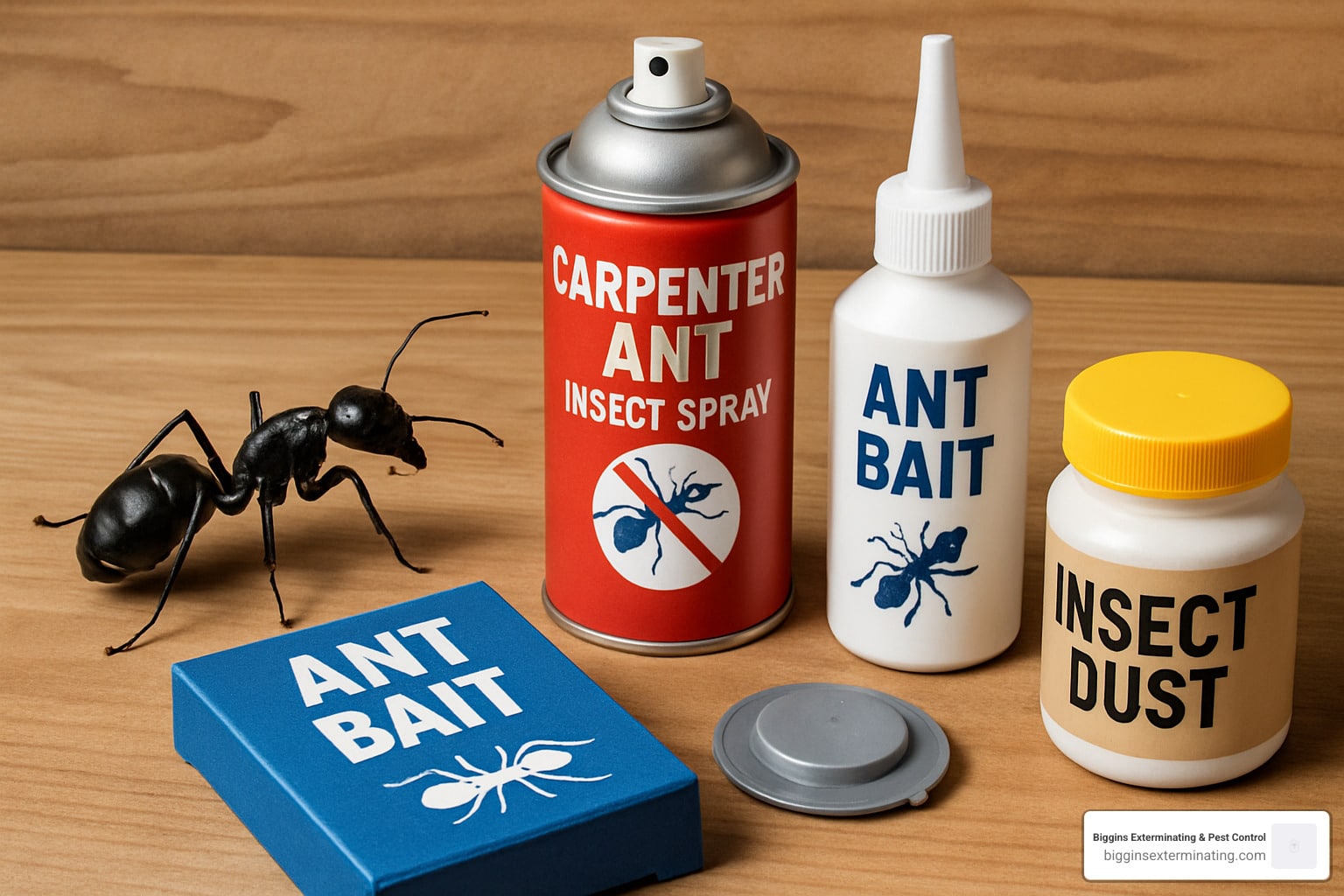
Understanding Your Carpenter Ant Control Options
Looking for the most effective carpenter ant pest control products? Here’s a quick summary of the top options:
| Product Type | Best For | Active Ingredients | Duration | Average Price Range |
|---|---|---|---|---|
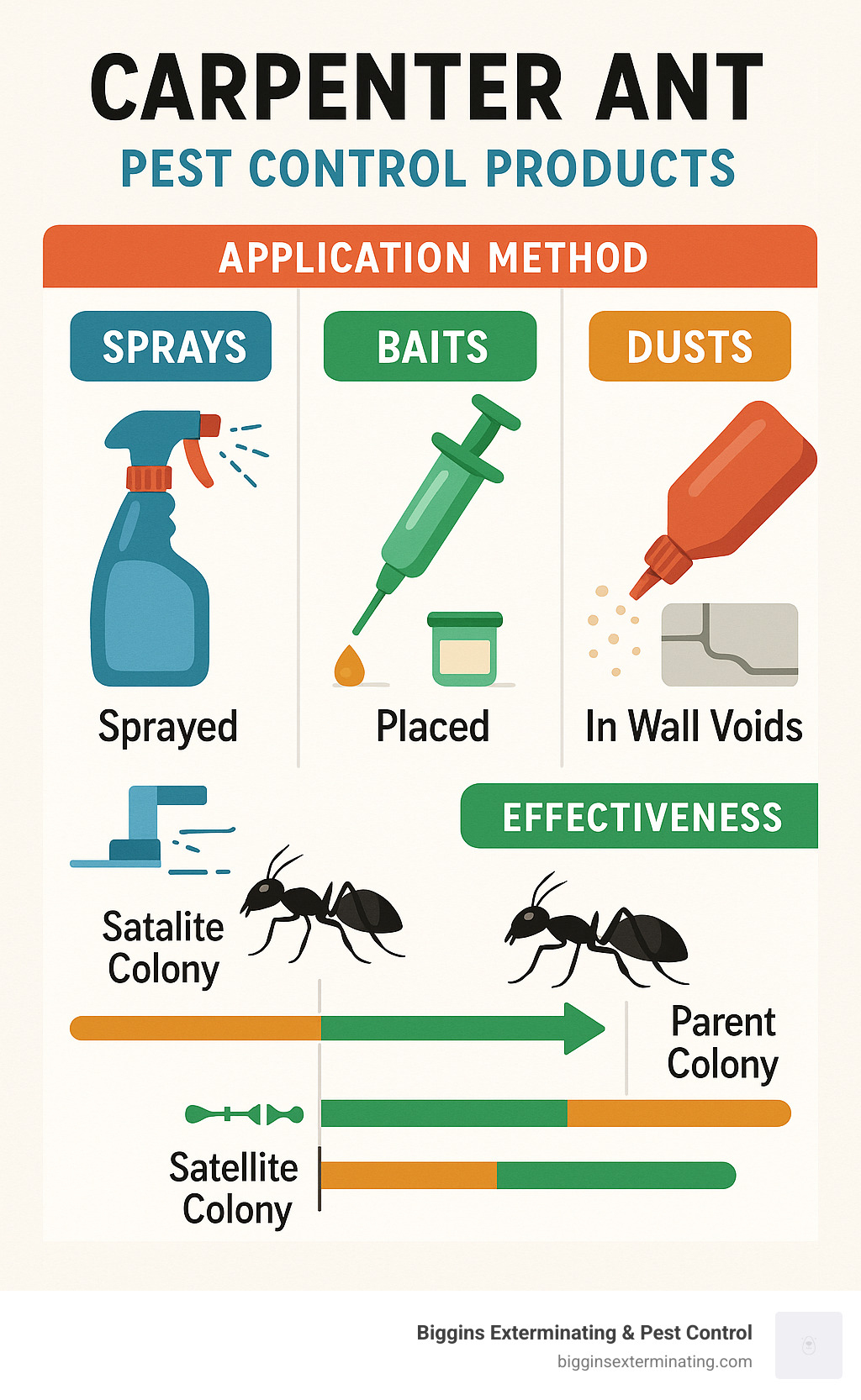
| Non-repellent Sprays | Professional treatment, severe infestations | Fipronil | 1-3 months | $35-$150 |
| Ready-to-Use Sprays | DIY homeowners, spot treatment | Deltamethrin, Bifenthrin | 2-4 weeks | $10-$40 |
| Protein Granular Baits | Colony elimination, outdoor use | Abamectin | 30+ days | $15-$90 |
| Sugar Gel Baits | Indoor trails, cracks and crevices | Indoxacarb, Imidacloprid | 2-4 weeks | $8-$30 |
| Insecticidal Dusts | Wall voids, hard-to-reach areas | Boric acid, Diatomaceous earth | 6-12 months | $8-$50 |
Dealing with carpenter ant pest control products can feel overwhelming when you’re trying to protect your home from these wood-destroying pests. Unlike termites, carpenter ants don’t eat wood – they excavate it to build nests, leaving behind telltale sawdust-like frass and potentially causing serious structural damage to your home. Finding the right product depends on the severity of your infestation, the location of the ants, and whether you need immediate results or long-term protection.
Carpenter ants are particularly challenging because they often establish satellite colonies inside homes while maintaining larger parent colonies outdoors. This means effective control requires a strategic approach using the right products for your specific situation. The most successful treatments typically combine several product types for both immediate relief and lasting protection.
I’m Stephen Biggins, owner of Biggins Exterminating Co., and I’ve been helping homeowners battle carpenter ant infestations since 1982, testing and comparing countless carpenter ant pest control products to develop the most effective elimination strategies for Massachusetts homes.
Terms related to carpenter ant pest control products:
– do carpenter ants bite
– carpenter ant infestation in house
– carpenter ant service
Carpenter Ants 101: Identification, Damage & Behavior
Before we dive into the best carpenter ant pest control products, let’s get to know our enemy a little better. Those large black or reddish-black ants marching across your kitchen counter aren’t just ordinary ants – they’re potential home-wreckers!
Unlike termites, carpenter ants don’t actually eat wood. Instead, they’re more like tiny excavators, carving out intricate galleries inside wood to create their nests. The telltale sign of their handiwork? Small piles of sawdust-like material called frass that they push out of their tunnels. You’ll often spot these little debris piles near baseboards, under window sills, or along door frames.
Got wood that sounds hollow when you tap on it? That’s not a good sign. Carpenter ants have likely been busy remodeling inside. They typically start their destruction in damp, decaying wood (think areas with leaky pipes or poor ventilation), but they won’t stop there. As their colony grows, they’ll happily move into perfectly sound, dry wood too.
“Most homeowners miss the early signs because carpenter ants are night owls,” says our senior technician with over 30 years of experience. “They do most of their foraging after dark, when we’re asleep and the house is quiet.”
One particularly sneaky aspect of carpenter ant behavior is their satellite nesting. While the main colony (complete with the queen) typically lives outdoors in tree stumps or woodpiles, they’ll establish smaller satellite colonies inside your home. These indoor nests contain workers, larvae, and pupae – a full branch office of their destructive enterprise.
More info about How to Distinguish Carpenter Ants from Termites
Spotting an Infestation
Catching carpenter ants early can save your home and your wallet. Here’s what to watch for:
When spring arrives, be on the lookout for winged swarmers – the reproductive ants from mature colonies looking to establish new territories. Finding these flying ants indoors strongly suggests you’ve got an established nest nearby.
Place your ear against a wall and listen carefully, especially at night. That faint rustling in walls or subtle chewing noise is the sound of thousands of tiny mandibles excavating your home’s framework.
Check wooden surfaces for small, clean-cut kick-out holes where ants push out frass and debris. And pay attention to consistent ant trails along baseboards or window frames – these highways between nest and food source are a major red flag.
“I ignored what looked like sawdust under my bathroom sink for months,” one Massachusetts homeowner told us. “By the time I realized it was carpenter ant frass, they had already damaged the cabinet and started on the wall behind it.”
Why Carpenter Ants Are a Problem
These industrious insects create several serious headaches for homeowners:
The most obvious concern is structural weakening. Year after year, as carpenter ants expand their network of tunnels and galleries, they can compromise the integrity of wooden beams, supports, and other critical components of your home.
This damage often remains hidden inside walls until it becomes severe, leading to hidden costs that can be substantial when repairs finally become necessary. One client in Wilmington ignored occasional carpenter ant sightings for three years – a decision that ultimately cost over $12,000 in repairs to a damaged load-bearing beam and several floor joists.
Carpenter ant damage can also lead to significant resale value loss. When home inspectors find these wood-destroying insects, it can complicate selling your home or require substantial price reductions.
Unlike some pests that cause a fixed amount of damage and move on, carpenter ant colonies continuously expand their territory, resulting in progressive damage that worsens over time if left untreated.
The good news? With the right carpenter ant pest control products and proper application techniques, you can evict these unwanted tenants before they cause serious structural damage to your home. In the following sections, we’ll explore the most effective options for tackling carpenter ants at every stage of infestation.
Modes of Action in Carpenter Ant Pest Control Products
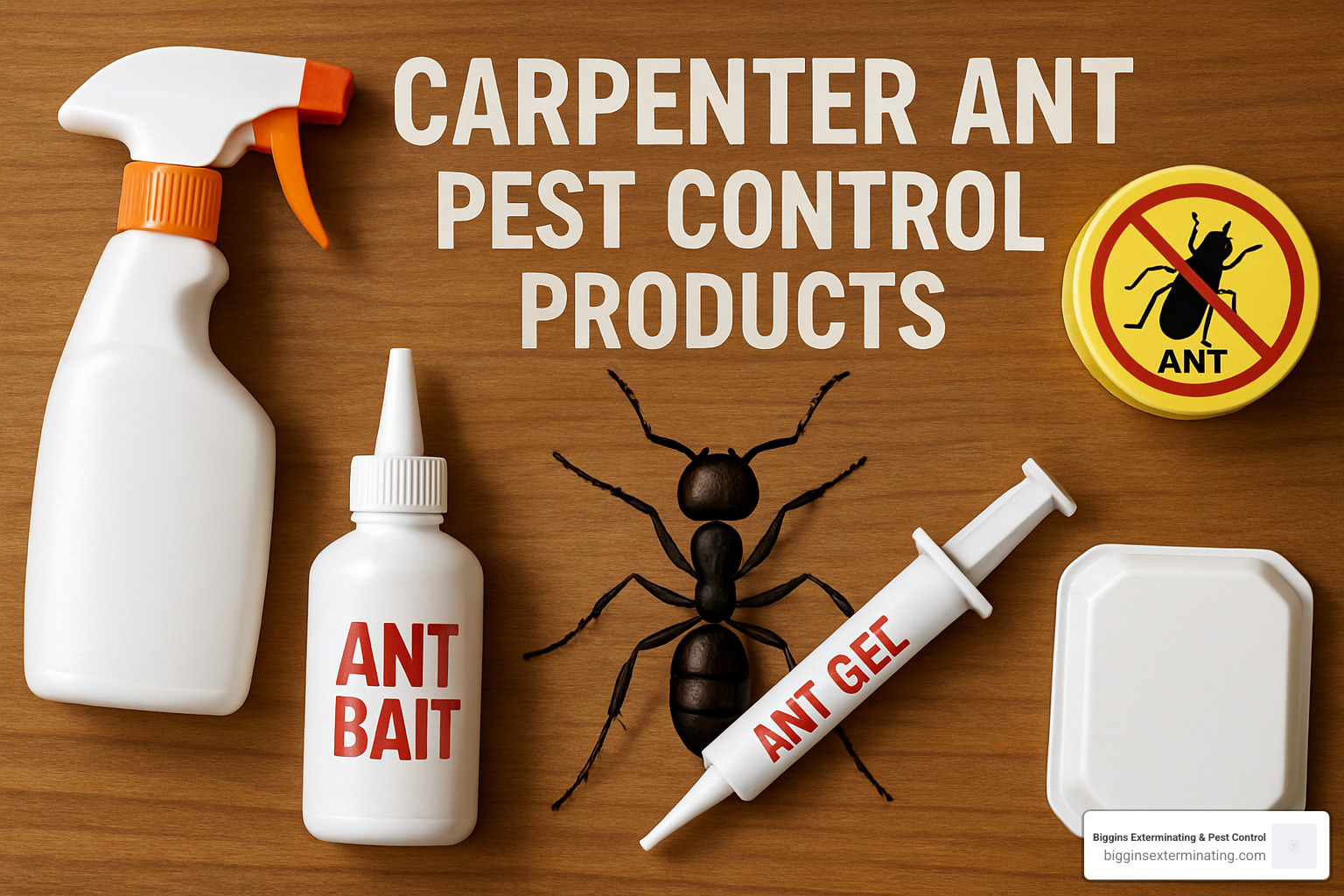
When selecting carpenter ant pest control products, understanding how they work isn’t just helpful—it’s essential for getting rid of these wood-destroying pests once and for all. There are three main ways these products attack ant problems, and knowing the difference can save you time, money, and a whole lot of frustration.
Contact Kill Explained
Contact kill insecticides are the instant gratification option in your pest control toolkit. They do exactly what the name suggests—kill ants the moment they touch the product.
These fast-acting formulations contain ingredients like deltamethrin or bifenthrin that immediately attack the ant’s nervous system. When you spray that carpenter ant marching across your kitchen counter, the satisfying results happen right before your eyes—paralysis followed by death.
“I used a contact spray around my kitchen doorframe where I kept seeing ants entering,” shared one of our Burlington customers. “It knocked them down immediately, which was satisfying, but they came back a week later from a different spot.”
And therein lies the limitation of contact killers. While they provide immediate knockdown and can be perfect for visible ant trails or creating quick barriers, they only affect the ants they directly touch—usually just 5-10% of the colony. Think of them as the first line of defense, not the complete solution. For thorough protection, you’ll need to follow the label precautions carefully and combine contact killers with other approaches.
Bait & Colony Elimination
If contact killers are the sprinters of ant control, baits are the marathon runners—slower but ultimately more effective at winning the race. Baits are arguably the most powerful weapons in your carpenter ant control arsenal because they exploit something fundamental to ant society: food sharing.
“The delayed action is intentional,” explains our technician with a smile. “If the poison worked too quickly, foraging ants would drop dead before making it home with the groceries. The goal is to let them share the toxic meal with the entire family—including the queen.”
These cleverly designed products contain attractants (either protein or sugar-based) combined with slow-acting insecticides like abamectin. Worker ants collect what they believe is a delicious meal and bring it back to share with their nest mates. The poison gradually spreads throughout the colony through this food-sharing behavior, eventually reaching the all-important queen.
A Lexington homeowner’s experience captures the beauty of this approach: “After struggling with recurring carpenter ants for two summers, I tried protein granular bait around my foundation and sugar bait indoors. Within two weeks, I stopped seeing ants completely, and they haven’t returned in over a year.”
Residual Protection
The third critical mode of action comes from residual insecticides—the security guards of carpenter ant pest control products. These formulations create invisible barriers that continue killing ants for weeks or even months after you’ve applied them.
What makes residual products so effective is their staying power. The active ingredients bond to treated surfaces, remaining potent through multiple ant contacts. When ants cross these treated areas, they pick up a lethal dose that eventually kills them, even if the effects aren’t immediate.
“In Massachusetts, we typically recommend applying residual sprays in early spring before carpenter ant activity peaks,” notes our senior technician. “This proactive approach can prevent infestations before they become established.”
Residual products shine when used for perimeter treatments around foundations, creating protective zones around entry points, and providing long-term protection in hard-to-reach areas. However, they do require careful planning for reapplication intervals and consideration of weather resistance, as rain and sun exposure can degrade their effectiveness over time.
For comprehensive carpenter ant control, the most successful approach typically combines all three modes of action—contact kill for immediate relief, baits for colony elimination, and residual products for long-term protection. This integrated strategy addresses both the ants you see and the much larger population you don’t.
[TABLE] comparing contact, bait, residual
Professional Non-Repellent Spray Concentrates (Fipronil)
When you’re facing a serious carpenter ant problem, professional-grade non-repellent sprays containing fipronil often deliver the knockout punch you need. These powerful concentrates work differently than regular pesticides – and that’s what makes them so effective.
Unlike repellent sprays that ants can sense and avoid, non-repellents are completely undetectable to these wood-destroying pests. The ants walk right through treated areas, pick up the insecticide, and go about their business as usual. What makes this approach so clever is what happens next: before dying, each affected ant can transfer the chemical to multiple nestmates through normal contact and grooming.
“We call this the ‘transfer effect,’ and it’s like getting the ants to do the extermination work for you,” explains our senior technician. “One treated ant can affect dozens of others, reaching deep into the colony where sprays can’t penetrate. It’s why non-repellents are the backbone of our professional carpenter ant treatments.”
This approach is particularly effective for creating a protective trench around your home’s perimeter, treating indoor wall voids where nests hide, and providing month-plus residual protection for your home’s structure. Scientific research on residual sprays consistently shows these products offer superior long-term control compared to consumer options.
Pros & Cons
The benefits of professional non-repellent concentrates are substantial. They provide deep penetration into colonies through the transfer effect, offer long-lasting protection (typically 1-3 months), are completely odorless once dry, and work effectively on multiple surfaces including wood, concrete, and soil.
However, these products do have drawbacks. They require careful mixing and proper application equipment, which means you’ll need to be comfortable following dilution instructions. They’re also more expensive than consumer-grade alternatives, though the results often justify the cost. You’ll need proper personal protective equipment during application, and in some states, these products aren’t readily available without a license. There are also potential environmental concerns if they’re not applied according to label directions.
A customer from Andover told us: “I was hesitant about the higher cost of the professional-grade spray, but after watching carpenter ants literally disappear from my property within days – and stay gone for the entire summer – I’m convinced it was worth every penny.”
Best Application Tips
For the best results with non-repellent concentrates, follow these professional techniques:
Create a continuous foundation band by applying a 2-3 foot band up your exterior walls and about 1 foot out from the foundation. This creates an invisible barrier ants can’t detect but can’t escape.
For indoor problems, inject the diluted concentrate into wall voids where carpenter ants are suspected. Listen for rustling sounds in walls to pinpoint nest locations.
Always apply in dry weather conditions, with no rain expected for at least 24 hours. This allows the product to properly dry and bond to surfaces for maximum effectiveness.
Follow label directions precisely – mixing ratios and application rates aren’t just suggestions, they’re critical for both safety and effectiveness. The label is literally the law when it comes to pesticide application.
For the most thorough approach, our technicians recommend combining perimeter treatments with targeted void treatments directly at identified nest areas. This one-two punch dramatically increases success rates.
“After trying three different consumer sprays with minimal results, we finally called Biggins,” shared a North Reading homeowner. “Their technician applied a professional non-repellent around our foundation and into the wall void where we heard activity. We haven’t seen a single carpenter ant in our kitchen since – that was two seasons ago!”
Ready-to-Use Perimeter Sprays (Bifenthrin/Deltamethrin)
If you’re looking for a DIY solution to your carpenter ant problem, ready-to-use (RTU) perimeter sprays might be just what you need. These convenient products come pre-mixed with active ingredients like bifenthrin or deltamethrin, making them perfect for homeowners who want effective protection without the hassle of mixing concentrates.
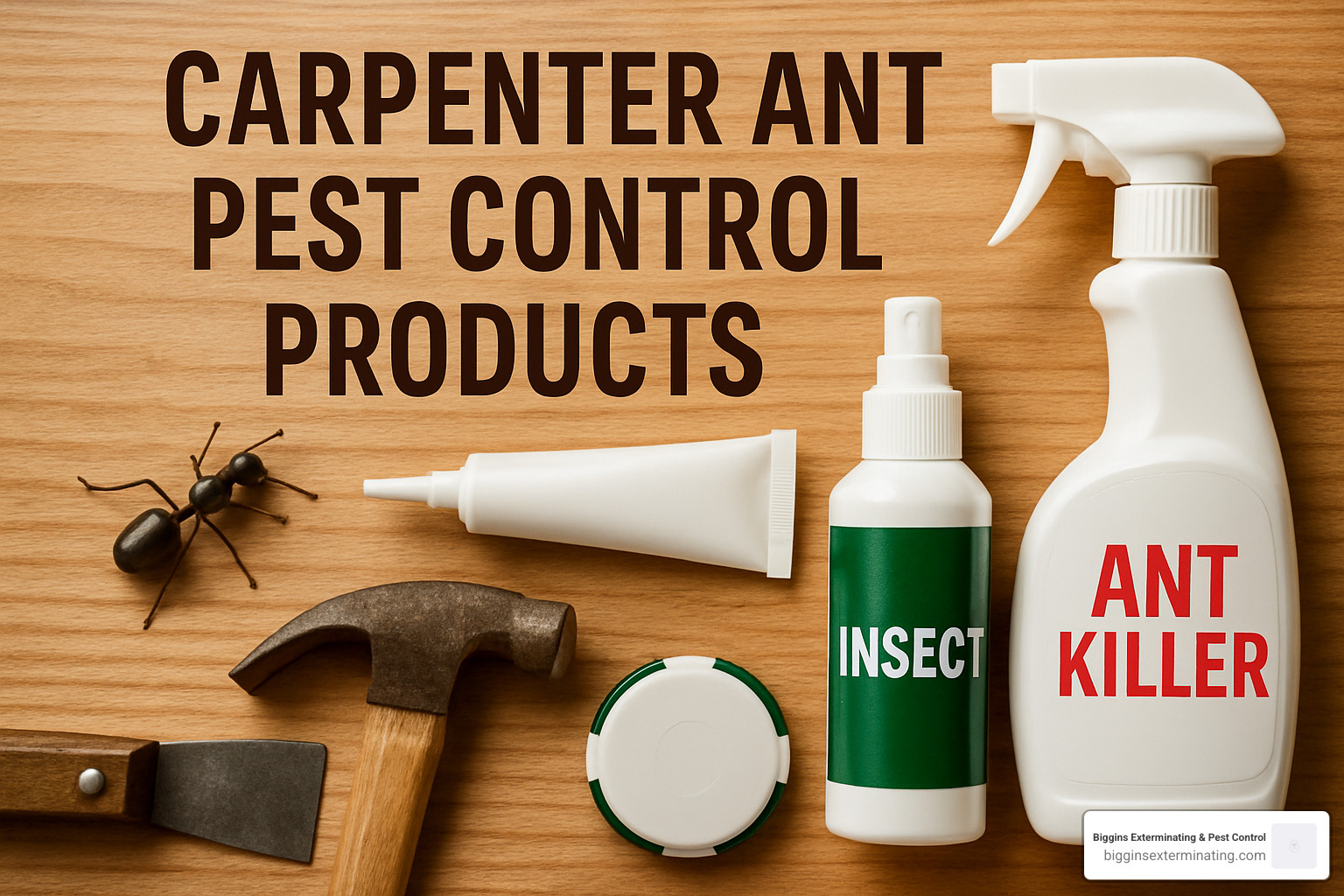
“I always tell my weekend warrior customers that RTU sprays are like the ‘grab-and-go’ option in your carpenter ant pest control products arsenal,” says our veteran technician with a smile. “Just pick it up, point, and spray—no chemistry degree required!”
These user-friendly products typically come in trigger spray bottles or battery-powered sprayers, creating a protective barrier that both kills ants on contact and provides ongoing protection. Some of the most popular options include Ortho Home Defense Insect Killer (4.2/5 stars from over 13,000 reviewers), Spectracide Terminate Ready-to-Use Spray (4.0/5 stars), and TERRO Carpenter Ant & Termite Killer Aerosol (4.4/5 stars).
Pros & Cons
The beauty of RTU sprays lies in their simplicity. There’s no mixing required—just grab the bottle and start spraying. Most come with comfortable trigger or wand applicators that help you reach those tricky spots around your foundation. The formulations are typically quick-drying, which means less waiting around before your kids or pets can return to treated areas.
These products are also quite versatile, working well for both indoor perimeter treatments (along baseboards and window frames) and outdoor applications. Plus, they’re generally cost-effective compared to professional concentrates, making them perfect for budget-conscious homeowners.
Of course, there are some drawbacks. The residual protection is shorter than professional products—typically lasting 2-4 weeks instead of months. This means you’ll need to reapply more frequently, especially during peak carpenter ant season. Some homeowners also find that the bottle weight can make application tiring when treating larger homes, and certain formulations may stain some surfaces like painted baseboards or wallpaper.
Best Application Tips
For maximum effectiveness with your RTU perimeter spray, follow what I call the “3-1 rule”—apply the product 3 feet up your walls and 1 foot out from your foundation. This creates a comprehensive barrier that carpenter ants can’t easily bypass.
Pay special attention to door and window frames, as these are common entry points for carpenter ants. I’ve found that treating these areas thoroughly can make a significant difference in keeping ants at bay.
For ongoing protection, consider implementing a quarterly rotation of applications, with more frequent treatments during spring and summer when carpenter ant activity peaks in Massachusetts.
“I’ve been using the same RTU spray around my Cape-style home for years,” shares a happy customer from Woburn. “It takes me about 30 minutes every three months, and I haven’t seen a carpenter ant inside since I started this routine. Best $20 I spend each season!”
Consistency is key with these products. Create a complete barrier around your entire home, and don’t forget those utility penetrations where pipes and wires enter your house—carpenter ants love these hidden highways!
For more comprehensive protection, consider pairing your perimeter spray with other carpenter ant pest control products like baits for a more complete approach to elimination.
Protein-Based Granular Baits (Abamectin)
When you’re serious about eliminating an entire carpenter ant colony—not just the scouts you see wandering around your kitchen—protein-based granular baits are your secret weapon. These clever little granules might not look impressive, but they’re one of the most effective carpenter ant pest control products for total colony elimination.
These baits work through a brilliant bit of ant sociology. The granules contain protein attractants (which carpenter ants find irresistible) combined with abamectin, typically at a 0.011% concentration. This delayed-action insecticide is the perfect trojan horse—it works slowly enough that foraging ants have plenty of time to carry the bait back to their nest and share it throughout the colony through food exchange, a process called trophallaxis.
“Protein baits are like sending a gift basket to the ant colony—except this gift slowly eliminates the entire family tree,” jokes our senior technician. “The beauty is that the ants do all the work for you, distributing the treatment to places you could never reach with a spray.”
Among professionals, Advance Carpenter Ant Bait has earned a reputation as the gold standard in this category. Its specially formulated protein matrix is particularly appealing to carpenter ants, making it exceptionally effective at colony elimination.
Scientific research on ant baits
Pros & Cons
Pros:
The greatest strength of protein baits is their ability to reach the queen, which is essential for eliminating the colony. They’re also fantastic for hard-to-reach nests hiding inside walls or ceiling voids. Unlike some treatments, these baits have minimal odor once placed, making them pleasant to use around your home. They’re versatile too—you can broadcast them over larger areas or use them in targeted applications. Perhaps most importantly, they work beautifully as part of an integrated approach with other treatment methods.
Cons:
The biggest weakness is their vulnerability to rain and moisture—a sudden downpour can wash away your treatment and your money. Their effectiveness also depends on the ants’ current feeding cycle, as colonies alternate between protein and sugar preferences. Don’t expect overnight results, as it typically takes 1-2 weeks to see significant colony decline. Placement requires some strategy for maximum uptake. And while the odor is minimal, some people notice a slight fishy smell when getting up close and personal with the granules.
Best Application Tips
For the best results with protein-based granular baits, timing and placement are everything. Apply your bait at sunset when carpenter ants are just beginning their nightly foraging—this ensures they’ll find fresh bait when they’re most active. Always apply to dry soil, checking the weather forecast to ensure no rain for at least 24-48 hours.
During active infestations, don’t set it and forget it. Check your bait placement areas weekly and refresh as needed—ants can quickly deplete an attractive bait source. For comprehensive control, combine protein baits with sugar-based gel baits, as carpenter ants naturally cycle between protein and carbohydrate preferences throughout the season.
“I always tell homeowners to think like an ant detective,” shares our technician. “Follow their trails and place bait directly in their path. You want to make it as easy as possible for them to find your offering.”
A delighted customer from Billerica told us: “I noticed carpenter ants traveling between my deck and a tree about 20 feet away. After sprinkling Advance bait around the tree base and along their highway, I watched their numbers dwindle over the next week. By the two-week mark, it was like they’d never existed. Best $25 I’ve ever spent on carpenter ant pest control products!”
Sugar-Based Gel Baits (Indoxacarb/Imidacloprid)
When it comes to indoor carpenter ant control, sugar-based gel baits are truly a homeowner’s best friend. These sweet-matrix formulations are particularly effective when strategically placed in cracks, crevices, and along active ant trails where you’ve spotted those unwelcome guests.
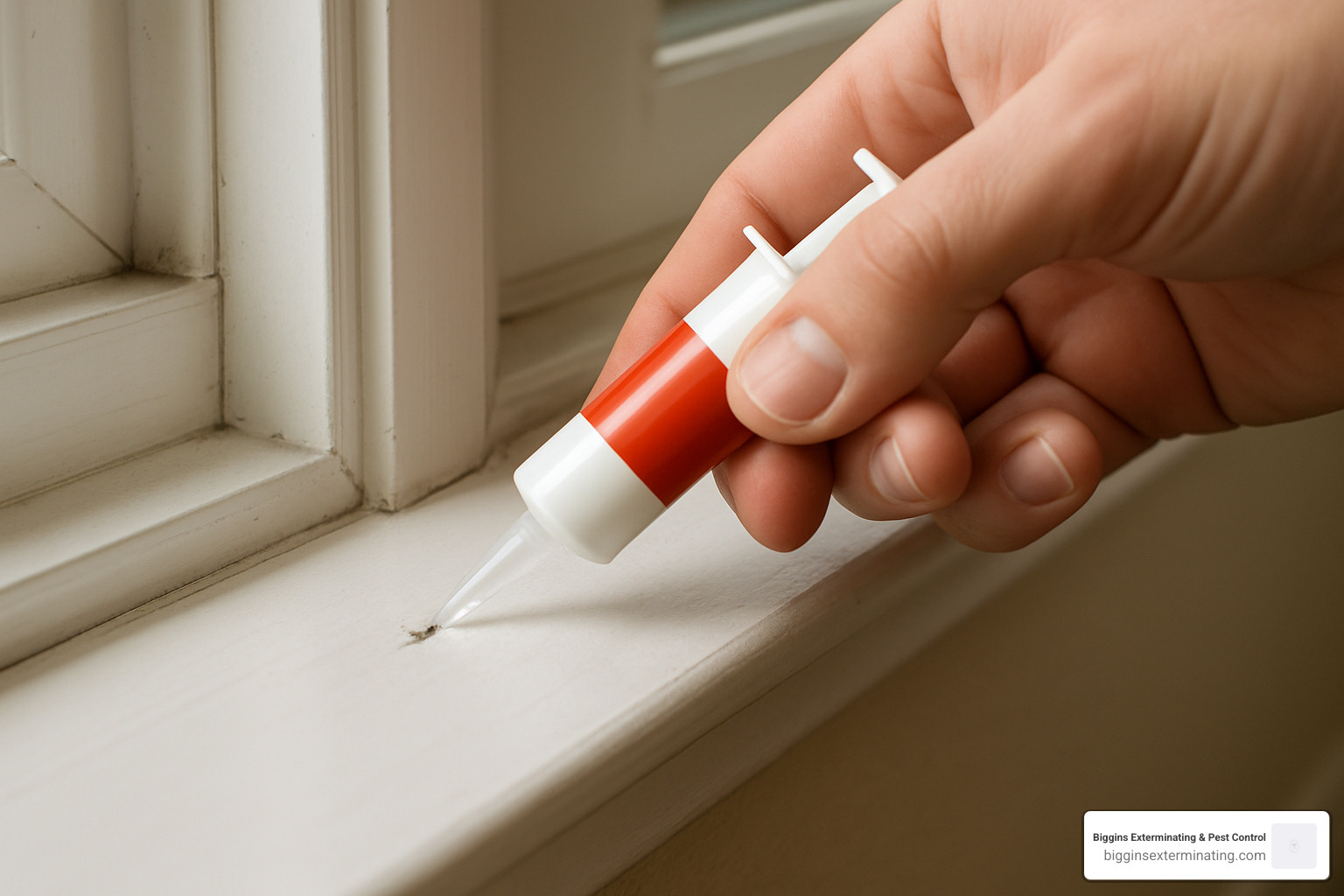
“Sugar-based gel baits hit the sweet spot—literally—for indoor carpenter ant control,” explains our senior technician with a smile. “They come in convenient syringe-tubes that allow for dripless, precise application exactly where you need it.”
These carpenter ant pest control products contain active ingredients like indoxacarb or imidacloprid mixed with irresistible sweet attractants. Carpenter ants cycle between protein and sugar feeding phases, so timing your gel bait application during their sugar-craving period can dramatically improve results.
Popular options that our customers have found success with include:
– Maxforce Ant Bait Gel, which consistently earns high marks for its attractiveness to carpenter ants
– Advion Ant Gel, known for its impressive colony elimination capabilities
– TERRO Liquid Ant Bait stations, which offer a mess-free pre-filled option
Pros & Cons
The beauty of sugar-based gel baits lies in their precision and attractiveness. They’re highly appealing to carpenter ants during sugar-feeding cycles, making them almost irresistible when properly placed. The precise application system allows you to target exact locations without messy overspray or drift.
These products also feature minimal odor compared to many other treatment options, making them perfect for indoor use in kitchens, bathrooms, and living spaces. The no-mix, ready-to-use format means you can start treatment immediately upon finding ant activity.
On the downside, gel baits can dry out in low-humidity environments, reducing their effectiveness over time. You’ll also need to monitor and potentially refill bait locations as consumption occurs. Outdoor applications can be vulnerable to weather conditions, and occasionally you may need to try different formulations if ants seem to ignore your initial bait choice.
“I was skeptical about gel baits until I tried them in my own home,” shares a customer from Winchester. “I had carpenter ants coming in near my sliding door, and within 24 hours of applying the gel, I could literally see them gathering around it like it was an all-you-can-eat buffet. Within a week, they were completely gone.”
Best Application Tips
For maximum effectiveness with sugar-based gel baits, apply pea-sized dots rather than large globs. Small, numerous placements create more opportunities for ants to find the bait and distribute it throughout the colony.
Focus on trail interception points where ant pathways cross structural elements like baseboards, door frames, or window sills. These high-traffic areas ensure maximum exposure to foraging ants.
Be sure to monitor consumption daily during active infestations. If bait is being rapidly consumed, that’s a good sign—add more in the same locations to maintain a steady supply until activity ceases.
For comprehensive control, alternate with protein baits or use both simultaneously. Since carpenter ants switch between food preferences, this dual-bait approach ensures you’re covered regardless of their current feeding cycle.
Lastly, keep repellent sprays well away from bait placements. Repellent chemicals can contaminate baits and deter ants from taking them, undermining your control efforts.
A Massachusetts homeowner recently told us: “The trick with gel baits is patience. I placed them along the carpenter ant trail near my kitchen window and resisted the urge to spray the ants I saw. Within three days, traffic had noticeably decreased, and by the end of the week, they were completely gone. The colony elimination was worth the short wait!”
Insecticidal Dusts & Foams (Boric Acid/Fipronil)
When carpenter ants establish nests deep within your walls, wood beams, or other hard-to-reach spaces, insecticidal dusts and foams become your secret weapon. These specialized carpenter ant pest control products can penetrate where sprays and baits simply can’t reach.
“I like to think of dusts and foams as our special forces,” shares our senior technician with a smile. “When ants are hiding deep in structural voids, these products can go in after them and deliver long-lasting control.”
These formulations work differently than liquid treatments. Dusts cling to the carpenter ants’ bodies as they crawl through treated areas. The ants then carry the dust throughout their galleries, spreading it to nestmates. Foams, on the other hand, expand after application, filling voids completely and reaching nooks and crannies that would otherwise remain untreated.
The most effective products in this category contain active ingredients like boric acid, which offers excellent residual control though it works somewhat slowly, or diatomaceous earth, which physically damages ant exoskeletons. For professional-grade treatments, fipronil-based foams and deltamethrin dusts deliver exceptional results.
Pros & Cons
The beauty of dust and foam treatments lies in their ability to reach the heart of carpenter ant nests. Once applied properly, these products can remain effective for 6-12 months, providing long-term protection against reinfestation.
Unlike repellent products, quality dusts and foams have low repellency, meaning ants don’t detect them and avoid treated areas. This allows the insects to continue moving through their galleries, picking up the insecticide and spreading it throughout the colony.
However, these products aren’t without drawbacks. Application can be messy and requires careful technique to avoid dust becoming airborne in your living spaces. You’ll need specialized equipment like dusters or foam applicators, and proper personal protective equipment is absolutely essential during application.
“I always tell homeowners to leave dust applications to professionals unless they’re comfortable with the equipment and safety precautions,” our technician advises. “The effectiveness really depends on proper placement and application technique.”
Best Application Tips
For those tackling a carpenter ant infestation with dusts or foams, the golden rule is “less is more.” A light dusting is far more effective than heavy application, as ants will simply avoid walking through thick piles of dust.
When treating wall voids, professionals typically drill small access holes approximately 8-10 inches apart along the affected area. After carefully injecting the dust or foam, these holes should be properly sealed to prevent any product from escaping into living spaces.
For maximum effectiveness, pair void treatments with perimeter barrier sprays. This two-pronged approach addresses both existing nests and prevents new invaders from establishing colonies.
A Tewksbury homeowner shared her experience: “After months of hearing rustling in my bathroom wall, I finally called Biggins. Their technician drilled tiny holes that were barely noticeable and injected some kind of special dust. It’s been over a year now, and those carpenter ants haven’t made a peep since. Worth every penny!”
Proper safety can’t be overstated when working with these products. Always wear appropriate respiratory protection, gloves, and eye protection during application. If you’re uncertain about safely applying these products yourself, professional application ensures both effectiveness and peace of mind.
Buying Guide, Safety & Prevention Tips
When it comes to carpenter ant pest control products, finding the right solution is only half the battle. Using these products safely and effectively is what truly makes the difference between temporary relief and long-term protection for your home.
Child & Pet Safety
Your family’s safety should always come first when dealing with pest control. I’ve seen too many homeowners rush into treatments without considering the potential risks to their loved ones – including the furry ones!
Always start by thoroughly reading the product label – it’s not just a suggestion, it’s actually a legal document containing crucial safety information. Store your carpenter ant pest control products in their original containers and keep them locked away from curious hands and paws.
“I always recommend applying treatments when the house will be empty for a few hours,” shares our senior technician. “This simple timing strategy gives products time to dry completely before family members return home.”
For households with young children or pets, consider using enclosed bait stations rather than exposed baits. These provide effective treatment while minimizing the risk of accidental contact. And remember to always wash your hands thoroughly after handling any pest control products – a simple step that many homeowners forget in their eagerness to solve their ant problem.
Personal Protective Equipment (PPE)
I’ve seen many DIY enthusiasts skimp on safety gear, only to regret it later. When applying carpenter ant pest control products, proper protection isn’t optional – it’s essential.
Chemical-resistant gloves keep potentially harmful substances off your skin, while eye protection prevents splashes from causing serious injury. Long sleeves, pants, and closed-toe shoes provide additional barriers, and when working with dusts or aerosols, respiratory protection prevents inhalation of airborne particles.
“The five minutes it takes to gear up properly can save you hours of discomfort or even a trip to the doctor,” notes our technician. “We never compromise on PPE, and homeowners shouldn’t either.”
Moisture Control & Prevention
The most effective carpenter ant strategy isn’t just about treatment – it’s about making your home less attractive to these moisture-loving pests in the first place.
Fixing leaky pipes quickly is one of the most important preventive steps you can take. A slow drip under your sink might seem minor, but to carpenter ants, it’s like a flashing “vacancy” sign. Ensuring proper ventilation in humid areas like bathrooms, attics, and crawl spaces prevents the condensation that leads to wood decay – a carpenter ant’s favorite condition.
Your home’s exterior needs attention too. Well-maintained gutters direct water away from your foundation instead of creating damp conditions around your home. Creating a 2-foot vegetation-free zone around your house eliminates bridges that ants use to access your home, while storing firewood liftd and at least 20 feet from structures removes potential nesting sites.
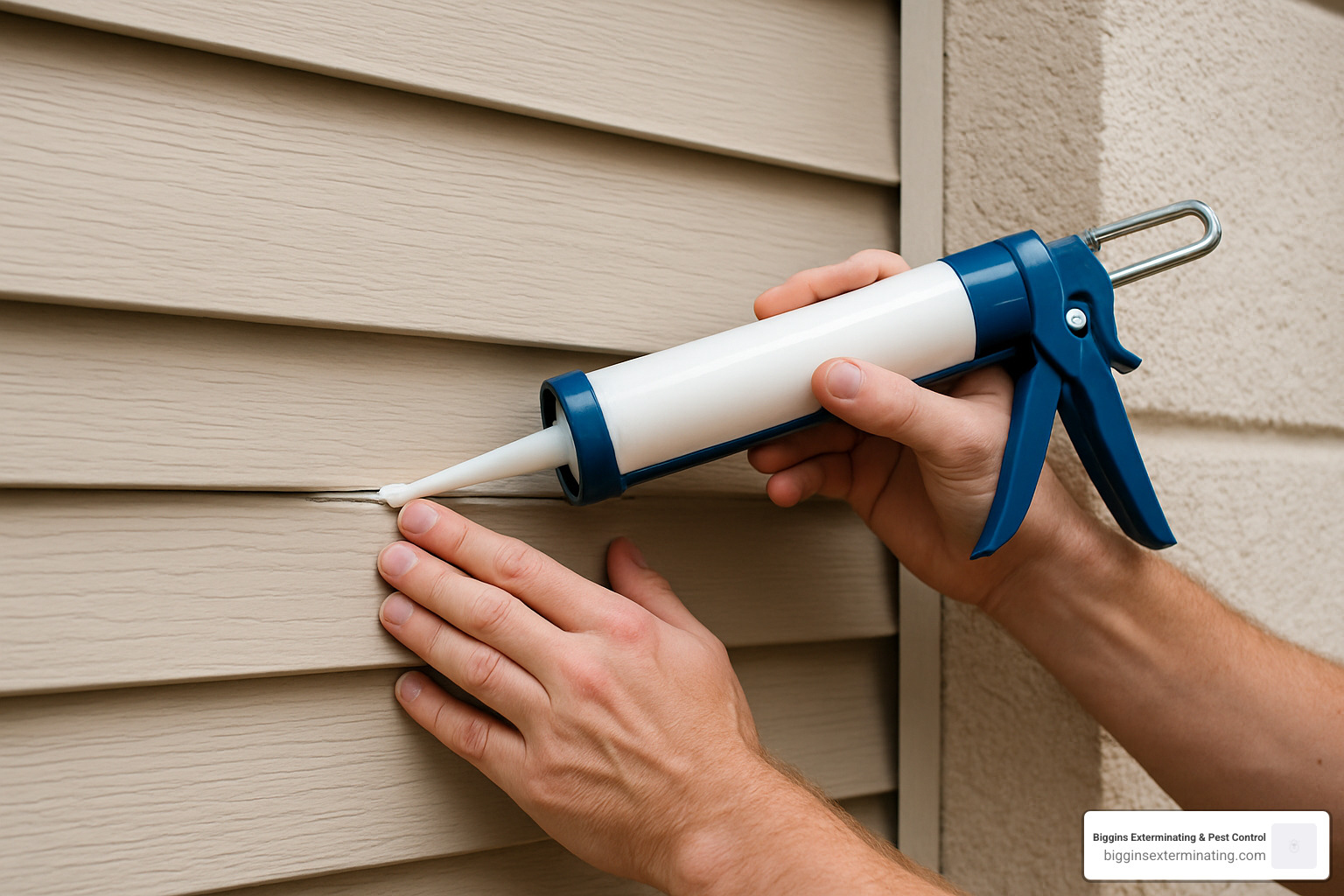
Don’t forget to seal entry points – even a gap the width of a credit card is enough for carpenter ants to enter your home. Caulking cracks around windows, doors, and utility penetrations creates an effective barrier against these persistent pests.
More info about Pest Control for Carpenter Ants
Ready-to-Use vs Concentrate
The choice between ready-to-use products and concentrates often comes down to the scale of your problem and your comfort level with mixing chemicals.
Ready-to-use formulations offer convenience and simplicity – just grab and spray. They’re perfect for smaller jobs or occasional spot treatments, with no measuring or mixing required. While they cost less upfront, they actually work out more expensive per treated area, making them less economical for large properties or ongoing maintenance.
Concentrates, on the other hand, represent better long-term value despite their higher initial cost. “A single bottle of professional concentrate can make up to 25 gallons of spray solution,” explains our technician. “That’s enough to treat the perimeter of most homes multiple times.” They also typically have a longer shelf life when stored properly, making them ideal for ongoing maintenance.
Longevity & Reapplication
Understanding how long your carpenter ant pest control products will remain effective helps you develop a realistic treatment schedule.
Ready-to-use perimeter sprays typically provide about 2-4 weeks of protection, while professional non-repellent concentrates can remain active for 1-3 months. Granular baits stay effective for around 30 days if they remain dry, while gel baits work for 1-2 weeks before drying out or being consumed. For long-lasting protection, insecticidal dusts are hard to beat, remaining active for 6-12 months in undisturbed areas.
Here in Massachusetts, our weather significantly impacts treatment longevity. Heavy New England rains, snow, and humidity can degrade outdoor treatments faster than in drier climates, sometimes necessitating more frequent reapplication during wet seasons.
Average DIY Cost Range*
When budgeting for DIY carpenter ant control, costs vary widely depending on product type and the severity of your infestation:
Ready-to-use sprays typically run $10-$40 per bottle, treating approximately 2,000 square feet. Professional concentrates range from $35-$150 per bottle but make 4-25 gallons of spray solution. For protein granular baits, expect to pay $15-$90 per container, while gel baits cost $8-$30 per tube. Insecticidal dusts generally range from $8-$50 per container.
*These price ranges reflect internet data and market averages, not Biggins Exterminating service costs. High-end prices may be 3× or more than average pricing depending on brand and formulation.
Most homeowners tackling carpenter ants effectively should budget between $75-$225 for a complete treatment program. This might sound substantial compared to a single product, but considering the potential structural damage carpenter ants can cause, it’s actually quite reasonable protection for your home investment.
“The most successful DIY approach we see combines several product types,” shares our expert. “A perimeter spray for immediate protection, baits for colony elimination, and perhaps dusts for known nest locations. This integrated approach mimics our professional treatments and gives homeowners the best chance at complete control.”
Frequently Asked Questions about Carpenter Ant Pest Control Products
Do these products harm pets or kids?
The safety of your family and furry friends is always a top concern when dealing with carpenter ant pest control products. The good news is that when used properly, modern formulations are designed with safety in mind.
“I always tell homeowners that the label is literally the law,” shares our senior technician with a smile. “Most problems happen when people get creative and ignore those directions.”
Most products become relatively safe after drying completely, but during application, keep curious little ones and pets away from the area. Many of my customers find bait stations particularly helpful in homes with children or pets since they contain the product while still allowing ants access.
Liquid sprays need time to dry—usually a few hours—before allowing family members back into treated areas. And always store your carpenter ant pest control products in their original containers in a locked cabinet or high shelf where little hands (or paws) can’t reach them.
One Massachusetts customer told me, “I was worried about my golden retriever who investigates everything, but following the waiting period on the label worked perfectly. He’s fine, and the ants are gone!”
How long until I see results?
Patience is definitely a virtue when it comes to carpenter ant control! Different products work on different timelines:
With contact sprays, you’ll enjoy the satisfaction of seeing ants drop within minutes—it’s quite dramatic and immediately gratifying. However, these quick-kill products only affect the ants you can see, which is typically just 5-10% of the colony.
For lasting results, carpenter ant pest control products that target the entire colony take longer but provide better outcomes. Protein granular baits usually show noticeable reduction within 3-7 days, with complete elimination taking 1-2 weeks. Gel baits work similarly, with visible improvements in 2-5 days.
“I had a customer in Andover who called me in a panic three days after applying bait,” recalls our technician. “She was seeing MORE ants, not fewer! I explained that this was actually a good sign—the bait was working so well that ants were being drawn to it from throughout the colony. By the end of the week, her ant problem was completely resolved.”
Residual sprays typically show results within 1-3 days, while dusts and foams work gradually over 1-2 weeks as ants move through treated areas. The most successful treatments often combine quick-acting products for immediate relief with slower colony eliminators for long-term results.
When should I call a professional?
While DIY treatments can be effective for minor carpenter ant problems, some situations definitely call for professional expertise.
If you’ve tried multiple DIY treatments but keep seeing carpenter ants returning, that’s a clear sign you need professional help. These persistent infestations often indicate a hidden parent colony that requires specialized techniques to locate and eliminate.
Structural damage is another red flag—if you’re seeing hollow-sounding wood, visible galleries, or actual damage to your home’s structure, please don’t wait. The longer carpenter ants remain active, the more extensive (and expensive) the damage becomes.
Homes with certain characteristics also benefit from professional treatment: properties with mature trees near the structure, log cabins, historic homes with significant woodwork, or buildings with known moisture issues all present special challenges for carpenter ant control.
“One of our customers in Winchester tried DIY treatments for nearly a year before calling us,” shares our technician. “When we conducted our inspection, we finded five separate satellite colonies throughout the home and significant damage to a load-bearing beam. Had they called earlier, they could have avoided thousands in repairs.”
At Biggins Exterminating, we often find that customers have spent hundreds of dollars on various carpenter ant pest control products without success before calling us. Our comprehensive approach not only eliminates current infestations but helps prevent future problems through expert advice on structural modifications and maintenance practices specific to your property.
Professional pest control isn’t just about applying stronger chemicals—it’s about having the experience to identify the root causes of infestations and the knowledge to implement the most effective solution for your specific situation.
Conclusion
When battling carpenter ants, I’ve learned through years of experience that there’s rarely a one-and-done solution. The most successful approaches combine multiple carpenter ant pest control products in a thoughtful strategy that tackles both your immediate ant problem and helps prevent future invasions.
Think of carpenter ant control like defending your castle – you need different types of protection working together. Start with a thorough inspection to understand where these wood-destroying invaders are coming from and where they might be nesting. This detective work pays dividends when it comes time to apply treatments.
Once you know what you’re dealing with, create your defense plan. Apply contact and residual sprays around your home’s perimeter and at those entry points you’ve identified. These create your first line of defense. Then, strategically place protein and sugar baits based on the ant behavior you’ve observed – remember, carpenter ants switch between protein and sugar feeding cycles, so offering both increases your chances of success.
If you’ve been lucky enough to locate actual nest sites in wall voids or wood galleries, that’s when specialized dusts or foams become your secret weapon. These products can reach deep into hidden nesting areas where sprays simply can’t penetrate.
“The biggest mistake I see homeowners make is treating for carpenter ants once and assuming the problem is solved,” notes our senior technician. “Successful control requires both immediate treatment and addressing the conditions that attracted them in the first place.”
Addressing moisture issues is absolutely critical for long-term success. Fix those leaky pipes, improve ventilation in damp areas, and trim back vegetation touching your home. Then stay vigilant with regular monitoring, especially in spring when carpenter ant activity typically increases.
Safety should always be your priority when using any pest control products. Read and follow all label instructions carefully, use appropriate protective equipment, and consider the impact on your family, pets, and the environment.
For residents of Wilmington, Bedford, Burlington, Woburn, Lexington, and surrounding Massachusetts communities, Biggins Exterminating & Pest Control offers professional carpenter ant treatments backed by over 40 years of local experience. Our family-owned business provides reliable, warranty-backed service without requiring long-term contracts.
Whether you choose to tackle carpenter ants yourself or call in professional help, addressing these destructive pests promptly can save you thousands in potential structural repairs and protect your most valuable investment—your home.
More info about our carpenter ant services