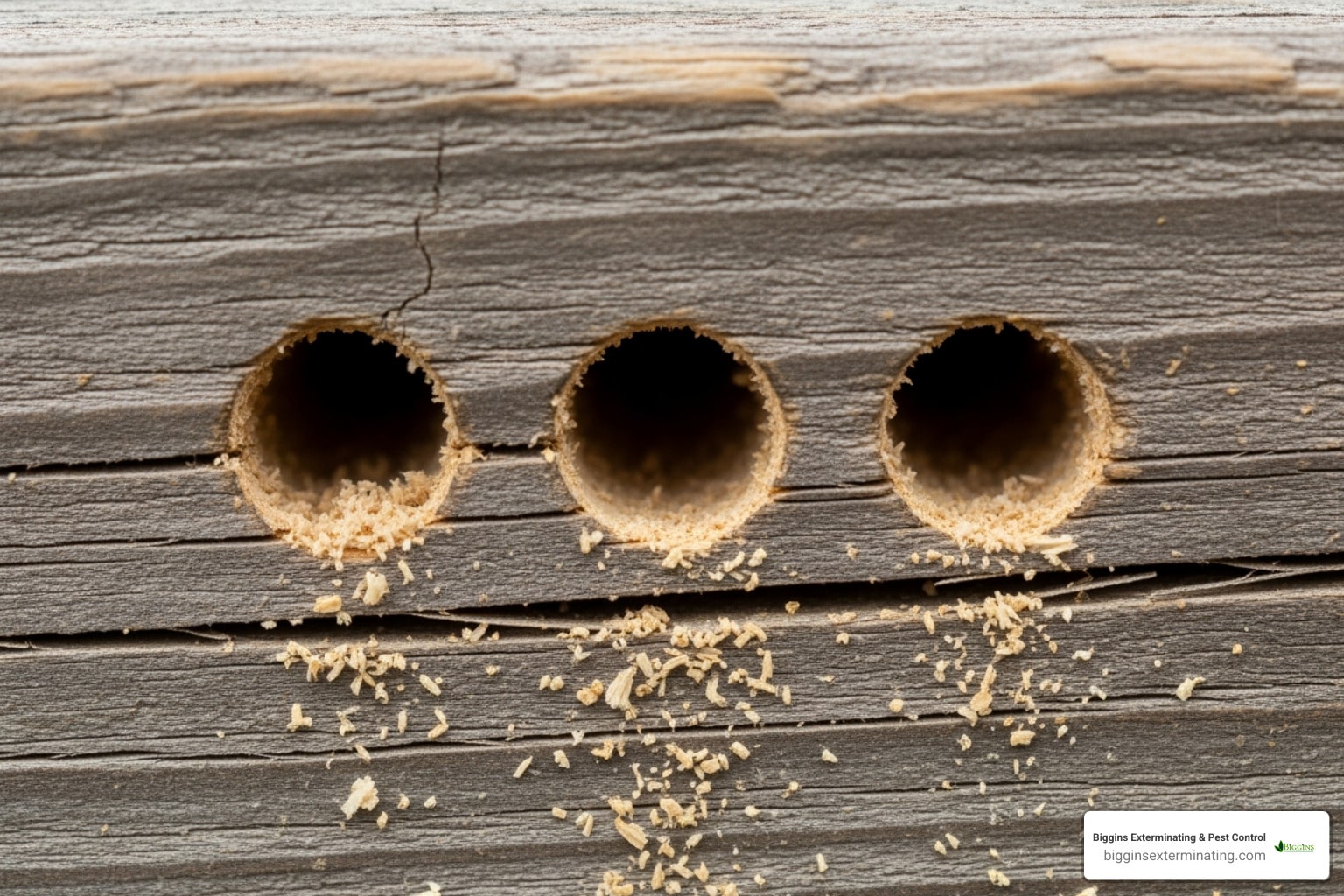
Why Carpenter Bee Holes Are More Than Just Cosmetic Damage
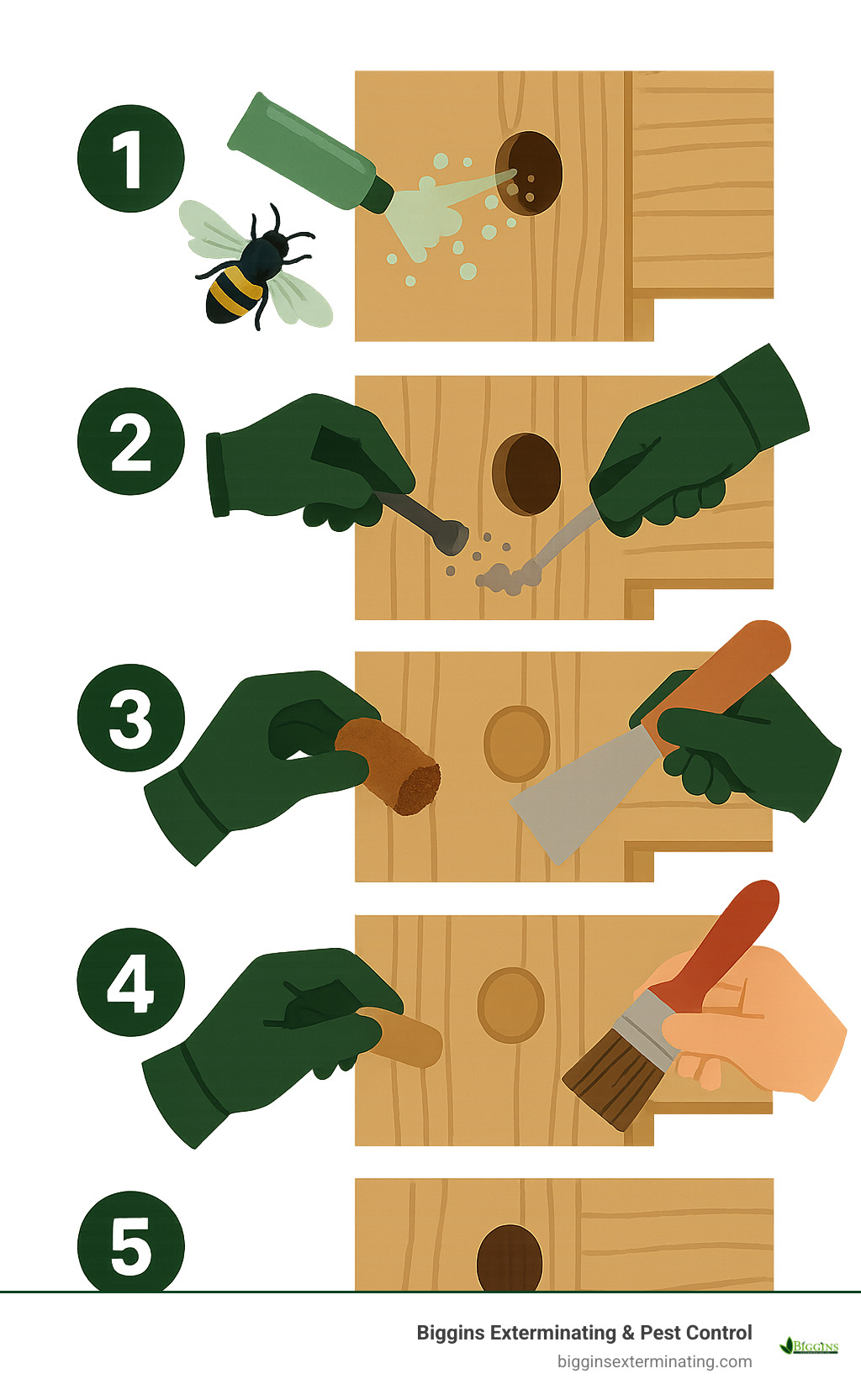
The best way to fill carpenter bee holes involves a systematic approach: treat the nest first, clean out debris, insert a hard plug like steel wool or cork, apply wood putty, sand smooth, and finish with paint or stain.
Quick Answer – Best Method to Fill Carpenter Bee Holes:
- Treat the nest with insecticidal dust first
- Clean out sawdust and debris from the hole
- Insert hard plug – steel wool or cork (bees can’t chew through)
- Apply wood putty over the plug for a smooth finish
- Sand and paint to match your home’s exterior
Those perfect half-inch holes you see in your deck railings, eaves, and fence posts aren’t just unsightly – they’re the beginning of a bigger problem. Left untreated, carpenter bee damage attracts woodpeckers, allows moisture to seep in, and creates weak spots in your home’s structure.
Many homeowners make the mistake of simply squirting caulk into the holes, only to find new holes nearby the following spring. The key is understanding that carpenter bees will chew right through most common fillers – that’s why the material you choose matters just as much as your technique.
I’m Stephen Biggins, and over four decades of pest control experience has taught me that the best way to fill carpenter bee holes requires treating the cause, not just the symptom. At Biggins Exterminating, we’ve helped countless Massachusetts homeowners solve carpenter bee problems using proven methods that actually work.
Quick best way to fill carpenter bee holes definitions:
Why You Must Fill Carpenter Bee Holes
I’ll be honest with you – those neat little half-inch holes in your deck railing might look harmless, but they’re actually the start of a much bigger headache. Carpenter bees aren’t just making tiny doorways; they’re creating entire apartment complexes inside your wood.
Unlike termites that munch on wood like it’s their favorite snack, carpenter bees bore straight into your wooden structures to create nesting galleries for their babies. These tunnels start with that perfect round entrance hole, then take a sharp 90-degree turn and run along the wood grain for several inches. Think of it like a carpenter bee highway system running through your home’s structure.
The real trouble starts when these “small” holes turn into big problems.
Structural weakening is probably my biggest concern when I see carpenter bee damage. One hole? Not a huge deal. But when bees return year after year to the same spot (and they love to do that), you end up with wood that looks like Swiss cheese. I’ve seen deck posts and fascia boards that were so riddled with tunnels they could barely support their own weight, let alone the structure they were supposed to hold up.
Then there’s the fecal stains – those yellowish-brown streaks you see below the holes. Not exactly the curb appeal you’re going for, right? These stains are tough to clean off and they’re like a neon sign advertising “Active carpenter bee neighborhood!”
Moisture damage is another sneaky problem. Those open holes are like tiny funnels directing water straight into your wood. Once moisture gets in, wood rot follows close behind. What started as a simple hole-filling job can quickly turn into replacing entire sections of your home’s structure.
Here’s where things get really interesting – carpenter bees are like the dinner bell for woodpeckers. These birds know there are tasty larvae inside those tunnels, so they’ll peck away at your wood to get to them. I’ve seen woodpecker damage that makes the original bee holes look tiny by comparison. Wasps and other insects also get attracted to the area, turning your carpenter bee problem into a general pest convention.
Carpenter bees have expensive taste – they prefer unfinished wood and softwoods, which means your unpainted eaves, deck railings, and wooden siding are prime real estate. They’re also smart enough to pick the warmest spots, usually the sunny southern side of your house.
The bottom line? What looks like minor cosmetic damage today can become a major structural and financial problem tomorrow. That’s exactly why knowing the best way to fill carpenter bee holes isn’t just about making your home look good – it’s about protecting your investment.
The Right Time of Year to Make Repairs
Timing can make the difference between a successful repair and watching carpenter bees chew right back out of your freshly filled holes. I’ve seen too many homeowners waste time and materials because they tried to fix the problem at the wrong time of year.
Understanding the carpenter bee life cycle is your secret weapon here. These industrious insects emerge from their winter hiding spots in spring – anywhere from late February in warmer areas to May here in Massachusetts. The females immediately get to work, either boring fresh holes or expanding last year’s tunnels to create perfect nurseries for their eggs.
This spring activity period lasts about 2-3 weeks after they emerge, and it’s when you’ll see the most buzzing around your deck railings and eaves. The males might seem aggressive (they’re just protecting their territory), but they can’t actually sting you.
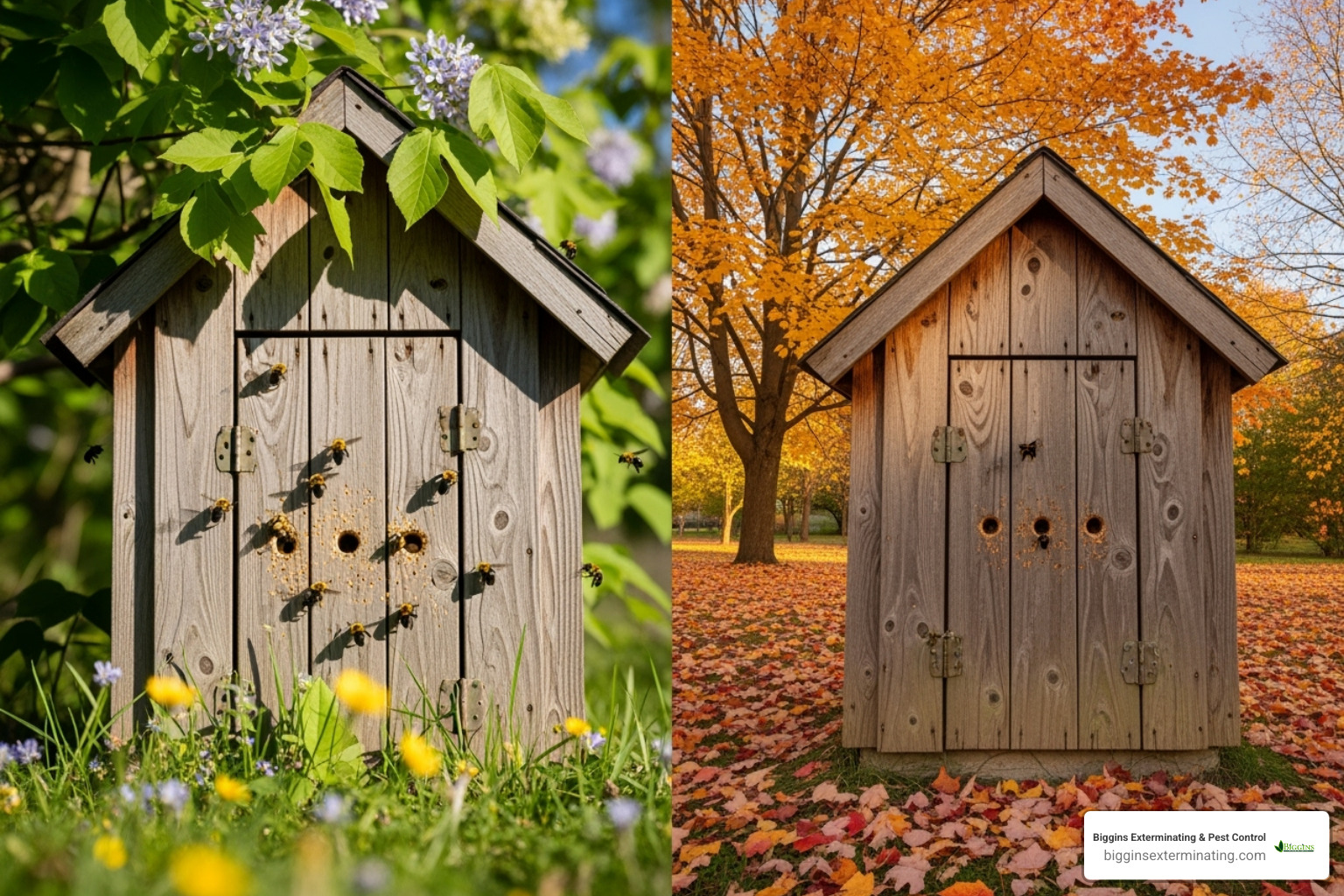
The best way to fill carpenter bee holes depends heavily on when you tackle the job. I recommend two optimal windows:
Early spring can work if you catch the activity before the females have established their nests. This proactive approach helps discourage them from choosing your home as their maternity ward. However, you need to move quickly – once they’ve committed to a spot and laid eggs, you’ll need to wait.
Fall and winter is actually the sweet spot for repairs. By late fall, the adult bees have finished their work and died off naturally. Any larvae have developed into pupae or young adults, but they’re dormant for the winter. This is when the best way to fill carpenter bee holes really shines – you can trap any remaining insects inside with your treatment, preventing next spring’s emergence.
Here’s what I’ve learned from decades of experience: never try to fill active nests during summer. You’ll just end up with angry bees and new exit holes when they chew their way out. Plus, young carpenter bees are surprisingly good at drilling through poorly applied fillers.
Proactive maintenance is your best friend. Walk around your property in early spring and late fall, looking for those telltale half-inch holes and yellowish stains. Catching the problem early means easier repairs and less damage to your home’s structure.
Step 1: Treat the Nest Before You Fill the Hole
Here’s where many homeowners go wrong – they grab a tube of caulk and start filling holes without dealing with what’s inside first. I’ve seen this mistake countless times over my 40 years in pest control, and it never ends well.
You absolutely must eliminate the carpenter bees and any larvae inside the hole before you attempt to fill it. This isn’t just a suggestion – it’s the foundation of the best way to fill carpenter bee holes.
Think about it this way: if you seal a carpenter bee inside its tunnel, what do you think it’s going to do? Sit there politely and accept its fate? Not a chance. These bees are master wood-borers, and they’ll simply chew a new exit hole right next to your “repair.” You’ll wake up to find fresh sawdust and a brand-new hole, often within days.
But it’s not just the adult bees you need to worry about. Even if the adult bee has moved on, there might be eggs and larvae developing inside those tunnels. Trapped larvae will emerge as new bees in the spring, creating fresh holes and starting the cycle all over again.
The worst part? If you fill the hole with caulk or expanding foam before treating it, you’re actually making the problem worse. You’ve created a barrier that prevents insecticide from reaching the developing larvae, essentially giving them a safe haven to mature.
The solution is insecticidal dust. Products like Drione Dust work beautifully because they coat the internal surfaces of the tunnel and remain active for months. When larvae eventually crawl through the dust, they pick up a lethal dose. It’s like setting a trap that works even while you sleep.
Safety comes first when applying any insecticide. Always wear protective gear including gloves, eye protection, and a face mask. Read and follow the manufacturer’s instructions carefully – this isn’t the time to wing it. For more detailed guidance on safe pesticide use, you can consult resources from the National Pesticide Information Center or review the Environmental Protection Agency’s tips on pesticide safety.
Using a puffer duster (also called a bulb duster), gently puff the insecticidal dust directly into the carpenter bee hole. You want to get that dust as far into the tunnel as possible, coating the walls where bees and larvae will come into contact with it.
Here’s the hard part – you need to wait. If possible, give the treatment a few days to work before sealing the holes. This allows any active bees to encounter the dust and ensures the treatment has time to eliminate existing occupants. If you still see bees flying around, reapply the dust.
Some folks try alternative methods like spraying bleach or WD-40 into the holes, or stuffing alcohol-soaked cotton balls deep into the tunnels. While these can provide a quick kill, they don’t offer the long-lasting protection that insecticidal dusts provide.
If you’re uncomfortable handling insecticides or dealing with active nests, don’t hesitate to call a professional. Improper DIY pest control can be both dangerous and ineffective – and nobody wants to repeat this whole process next spring.
The Best Way to Fill Carpenter Bee Holes: A Step-by-Step Guide
Once you’ve successfully treated the carpenter bee nests and eliminated any active bees or larvae, it’s time to repair the damage. This step is crucial not only for aesthetic reasons but also for protecting your wood from further decay and deterring future infestations.
Choosing the Right Filler Material
Here’s where many homeowners go wrong. I’ve seen countless attempts using simple caulk or spray foam, only to find fresh holes nearby the following spring. The problem? Carpenter bees are persistent chewers, and they’ll work their way through soft materials like they’re made of butter.
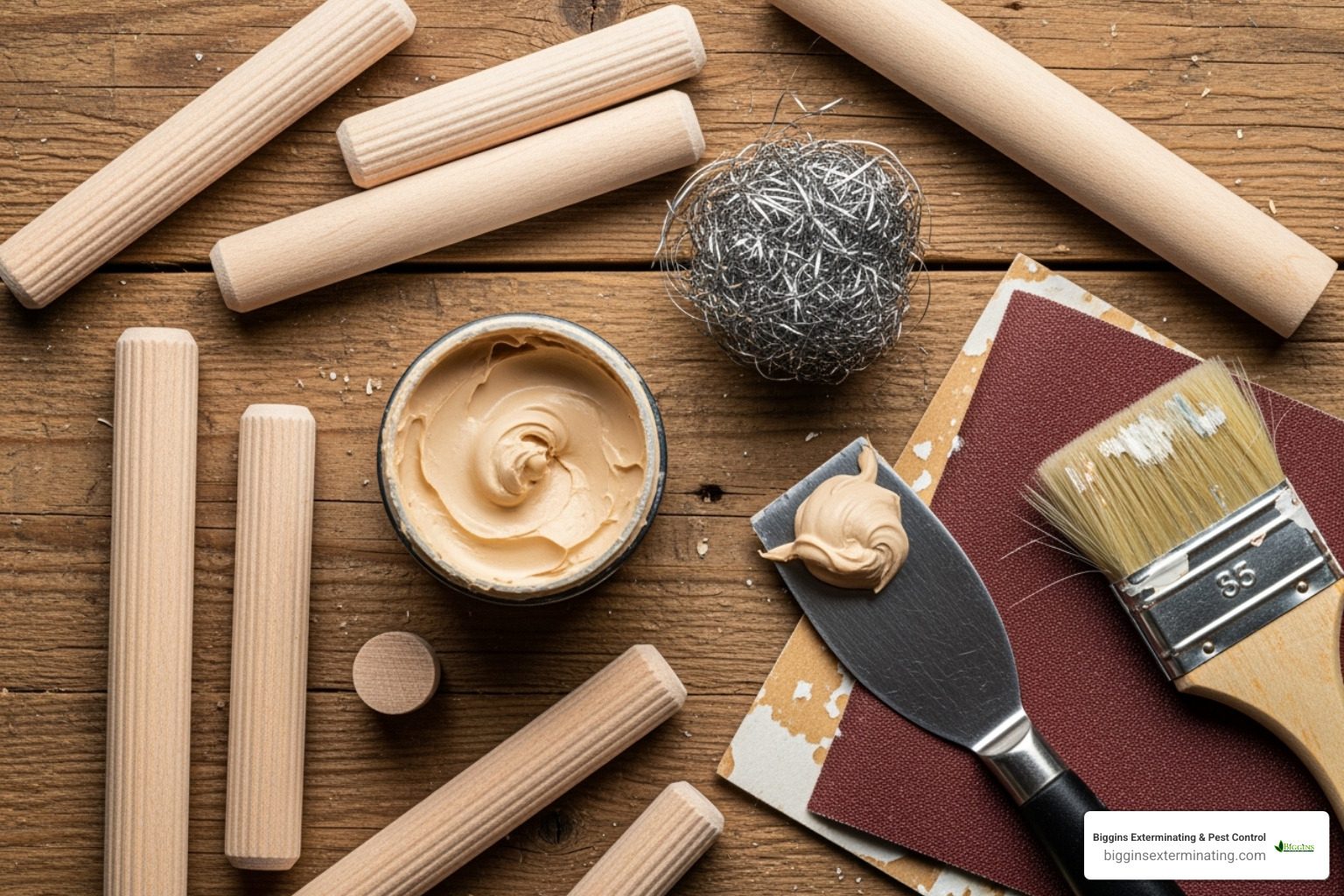
The best way to fill carpenter bee holes starts with understanding what materials actually work. Wood dowels and corks are your strongest allies here. These create a solid barrier that’s tough for bees to chew through, and they allow any remaining insecticide dust to do its job on developing larvae. The downside? They require a bit more work to fit properly, but trust me – it’s worth the extra effort.
Steel wool and aluminum foil are fantastic deterrents because carpenter bees absolutely hate metal. I’ve watched bees encounter steel wool and immediately give up their drilling attempts. The catch is that you’ll need to cover these with wood putty for a finished look, and steel wool can rust if not properly sealed.
Wood putty and filler work beautifully for creating that smooth, paintable surface you want. They sand easily and can be colored to match your wood perfectly. But here’s the critical point – never use wood putty alone. Without a hard plug underneath, it’s like putting a Band-Aid on a leak. The bees will chew right through it.
Now, about caulk and expanding foam – please don’t use these. I know they seem convenient, but they’re essentially carpenter bee snacks. They shrink over time, trap moisture that leads to rot, and prevent insecticide from reaching any larvae still inside the tunnels. Save your money and skip these entirely.
Your Step-by-Step Guide for the Best Way to Fill Carpenter Bee Holes
After forty years in pest control, I’ve refined this process to what actually works in the real world. Here’s your roadmap to permanent repairs:
Start with treatment – I can’t stress this enough. Even if you think the holes are old, treat them with insecticidal dust first. Wait a few days for the treatment to work its magic.
Clean house next. Use a wire or small brush to clear out all the sawdust, bee droppings, and debris from the tunnel. A clean hole means better adhesion for your repair materials.
Insert your hard plug – this is your main defense line. If you’re using steel wool, stuff it firmly into the hole, pushing it as deep as possible. For wooden dowels, cut them to about ¾-inch lengths, coat with wood glue, and tap them flush with the surface. The goal is creating a barrier that says “no vacancy” to future bees.
Apply wood putty over your plug to create that smooth, professional finish. Fill the hole completely, even slightly overfilling to account for shrinkage. Use a putty knife to level it with the surrounding wood.
Sand it smooth once the putty is completely dry. Fine-grit sandpaper works best here – you want the repair to feel seamless when you run your hand over it.
Finish with paint or stain to match your home’s exterior. This final step isn’t just about looks – it’s additional protection against moisture and future bee activity.
Making Your Repair Invisible
The difference between a good repair and a great one is in the finishing touches. Nobody wants their home to look like a patchwork quilt of repairs.
Pre-staining your putty before application works wonders if you’re planning to stain the wood. Mix a bit of stain right into the putty to help it absorb the final coat more evenly. It’ll blend in like a natural wood knot.
For custom color matching, especially on cedar or other distinctive woods, try mixing fine sawdust from the same wood type with wood glue. This creates a filler that takes stain beautifully and practically disappears into the surrounding wood.
Wood markers and pencils are perfect for small touch-ups after the putty has dried. They’re especially handy for mimicking wood grain patterns or adding subtle color variations.
When painting the repair, always use a high-quality exterior paint that matches your existing color perfectly. A coat of primer first ensures better adhesion and a uniform finish that’ll last for years.
The goal is making your repair so seamless that even you forget where the holes used to be. With the right materials and a little patience, your home will look as good as new – and those carpenter bees will have to find somewhere else to set up shop.
How to Prevent Future Carpenter Bee Infestations
Filling those holes is just the beginning of your carpenter bee journey. Think of it like patching a leak in your roof – if you don’t address what caused the problem in the first place, you’ll be back up there with your putty knife next spring!
The good news? Carpenter bees are actually pretty predictable creatures. They have preferences, and once you understand what attracts them to your home, you can make your property a lot less appealing to these wood-boring guests.
Paint and stain are your best friends when it comes to long-term prevention. Carpenter bees have a strong preference for unfinished, weathered wood – it’s like choosing between a tough steak and a soft dinner roll. Fresh paint or stain creates a barrier that makes boring much more difficult for them.
We recommend resealing decks, windowsills, and other exposed wood surfaces every two years. It might seem like a lot of work, but it’s much easier than dealing with new holes every spring. Plus, your home will look great!
Natural and chemical deterrents can provide an extra layer of protection. Citrus oil sprays work well for some homeowners, though you’ll want to avoid anything sugary like apple cider vinegar – that just attracts other pests. For a more long-lasting solution, products containing boric acid can be soaked into unfinished wood to create a deterrent that lasts for years.
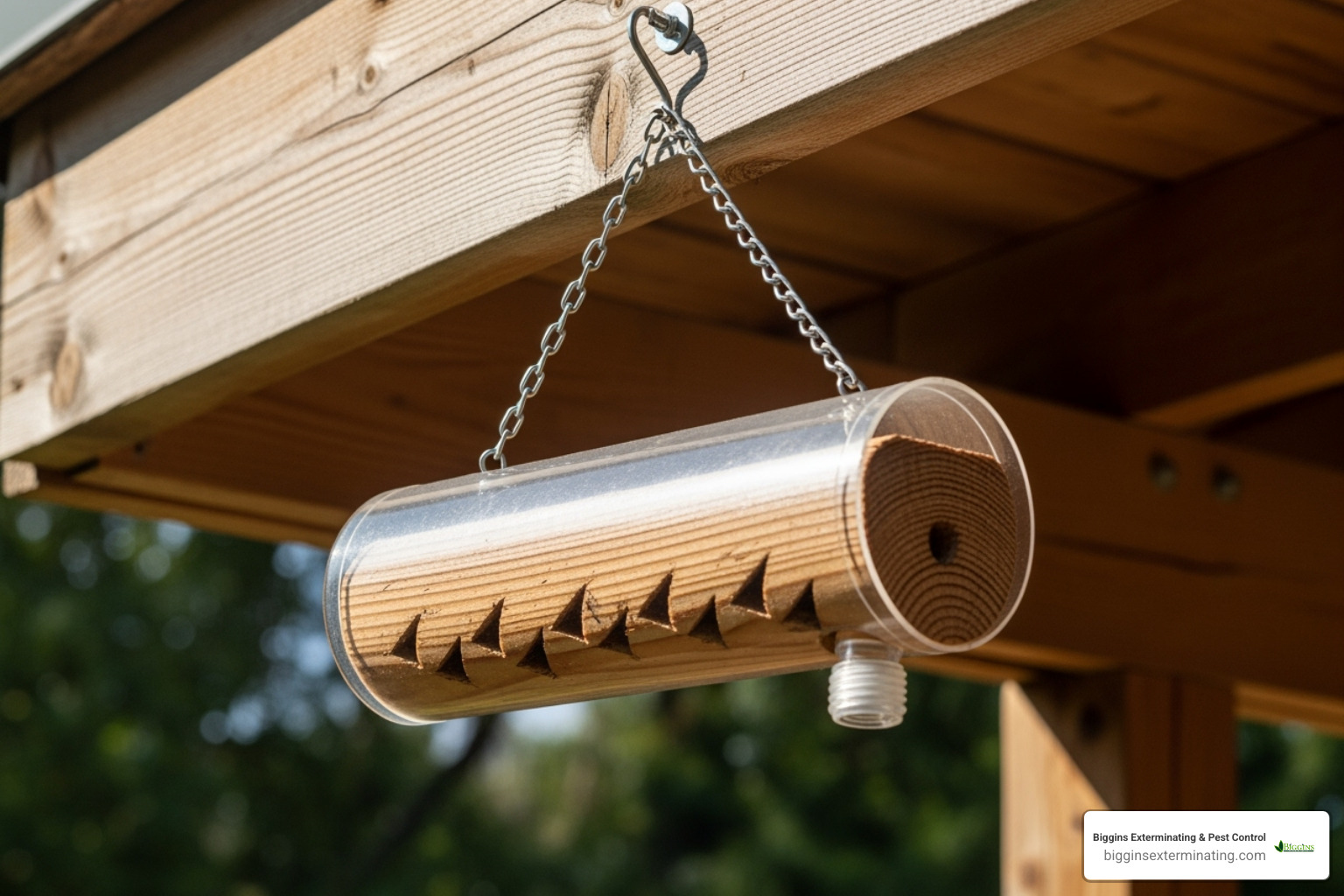
Carpenter bee traps are incredibly effective when placed strategically around your home. Set them up in early spring at building corners, peaks, and on the sunny side of your structure. These traps work by mimicking the dark tunnel entrance that female bees are looking for, then capturing them before they can establish new nests.
Keep your wood in good condition by promptly repairing or removing any rotten or soft wood. Carpenter bees are opportunistic – they’ll always choose the path of least resistance. Decaying wood is like putting out a welcome mat for them.
If you’re dealing with repeated infestations in the same area, consider switching to alternative materials like PVC, composite materials, or metal flashing. Carpenter bees simply can’t bore into these surfaces, making them a permanent solution for problem areas.
Here’s something important to remember: carpenter bees are valuable pollinators, especially for plants like tomatoes and eggplants. While they can be frustrating when they’re drilling holes in your deck, bee populations worldwide are declining. When possible, consider using non-lethal traps first, or even creating alternative nesting sites away from your home.
By combining the best way to fill carpenter bee holes with these preventative measures, you’re setting yourself up for long-term success. It’s about creating an environment where carpenter bees would rather nest somewhere else – and trust me, there are plenty of other places they’d be happy to call home!
When to Call a Professional for Carpenter Bee Problems
Sometimes, despite your best efforts, carpenter bee problems can overwhelm even the most dedicated DIY enthusiast. While the methods we’ve shared are effective for most homeowners, there are situations where professional expertise becomes the best way to fill carpenter bee holes and protect your home long-term.
Severe or widespread infestations often require more than weekend warrior tactics. When you’re counting holes in the dozens rather than singles, or when the damage spans multiple structures around your property, it’s time to call in reinforcements. We’ve seen cases where homeowners find extensive tunnel networks that have been developing for years, especially in high-ceiling areas with exposed beams that are difficult to inspect regularly.
Hard-to-reach nests present both a safety challenge and a practical one. Carpenter bees love to target eaves, soffits, and other liftd areas that require ladders or specialized equipment to access safely. Our technicians have the proper tools and training to handle these challenging locations without putting anyone at risk.
If you’re dealing with recurring problems despite following proper treatment protocols, there’s likely an underlying issue that needs professional assessment. Sometimes it’s untreated wood that keeps attracting new bees, or structural elements that aren’t visible from ground level. A trained eye can spot these problem areas and recommend targeted solutions.
Structural damage concerns definitely warrant professional attention. While carpenter bees rarely cause catastrophic damage overnight, years of accumulated tunneling can weaken important structural elements. We can assess the extent of the damage and work with other professionals if needed to ensure your home remains safe and sound.
Don’t hesitate to call if you’re simply uncomfortable with the treatment process or want the peace of mind that comes with professional service. Handling insecticides and working at heights isn’t for everyone, and there’s no shame in wanting the job done right the first time.
At Biggins Exterminating & Pest Control, we’re a family-owned business with over 40 years of experience helping homeowners in Andover, Bedford, Billerica, Burlington, Lexington, North Reading, Tewksbury, Wilmington, and Woburn, MA. We offer reliable pest control services without requiring contracts, and we back our work with warranties. If carpenter bees are making your home their home, give us a call – we’re ready to show them the door for good!