
Why Finding the Best Rated Termite Companies Matters for Your Home
When you need best rated termite companies, you’re facing a problem that costs American homeowners about $5 billion in damage every year. These silent destroyers can eat through your home’s structure for months or years before you notice any signs.
Top-Rated Termite Companies at a Glance:
- National Leaders: Companies serving 45+ states with $250,000+ damage guarantees
- Regional Specialists: Local experts with 15+ years experience and eco-friendly options
- Treatment Range: $330-$3,000+ depending on infestation size and method
- Warranty Length: 1-7 years with free retreatment policies
- Safety Focus: EPA-approved treatments safe for families and pets
The challenge isn’t just finding any termite company – it’s finding one that will eliminate your problem the first time, stand behind their work with solid guarantees, and treat your home like their own. With treatment costs ranging from a few hundred to several thousand dollars, choosing the wrong company can be an expensive mistake.
According to industry data, the average termite treatment costs around $767, but severe infestations requiring fumigation can exceed $3,000. Most professional liquid treatments last about 5 years, while bait stations need annual maintenance.
I’m Stephen Biggins, and I’ve been helping Massachusetts homeowners protect their properties from termites and other pests since taking over our family business in 1982. Through decades of experience evaluating best rated termite companies and their methods, I’ve learned what separates truly effective providers from those who just make big promises.
Best rated termite companies definitions:
– ant exterminator wilmington ma
– bee exterminator wilmington ma
– best pest solutions
How We Ranked the Best Rated Termite Companies
Finding the right termite company shouldn’t feel like a guessing game. After four decades in the pest control business, I’ve learned that the companies worth your trust share certain qualities that you can actually measure and verify.
When we evaluated termite control providers, we focused on what really matters when these destructive pests threaten your home. Service breadth topped our list because different termite situations require different solutions. The best companies don’t just offer one treatment method – they provide liquid barriers, bait stations, fumigation, and spot treatments depending on what your specific situation demands.
Guarantee strength separates the professionals from the pretenders. We looked closely at warranty length, damage coverage limits, and retreat policies. A company that stands behind their work with a 5-7 year warranty and substantial damage coverage clearly believes in their methods.
Customer reviews tell the real story, but we dug deeper than star ratings. We examined verified customer satisfaction scores and how companies handle complaints when things don’t go perfectly. The best rated termite companies don’t just collect positive reviews – they actively resolve problems when they arise.
Treatment methods matter enormously for your family’s safety and the environment. We prioritized companies using EPA-approved products and offering eco-friendly options when appropriate. Professional certifications like NPMA membership and GreenPro certification indicate a company invests in ongoing education and industry standards.
Regional coverage and local expertise can’t be overlooked. Termite species vary by location, and local regulations affect treatment options. Companies that understand your area’s specific challenges provide better solutions than those using one-size-fits-all approaches.
Why These Are the Best Rated Termite Companies in 2024
The best rated termite companies in 2024 have evolved far beyond the “spray and pray” approach that was common years ago. These companies now provide comprehensive inspection processes that examine both your home’s interior and exterior.
What really sets today’s top companies apart is their commitment to education. They provide detailed written reports explaining exactly what they found, where they found it, and why they recommend specific treatments. This transparency helps you make informed decisions rather than feeling pressured into expensive solutions you don’t understand.
Modern warranty coverage has also dramatically improved. While basic one-year guarantees used to be the norm, today’s leading companies offer comprehensive 5-7 year warranties with damage coverage reaching up to $250,000 in some cases.
Choosing Among the Best Rated Termite Companies Near You
When you’re ready to choose from best rated termite companies in your area, start with the basics that some homeowners unfortunately skip. Verify their licensing and insurance status before you even schedule an inspection.
Every state requires pest control operators to hold valid licenses, and reputable companies carry both general liability and workers’ compensation insurance. Contact your state’s regulatory agency to confirm the company’s license is current and review any complaints or violations on file.
Local regulations can significantly impact both your treatment options and costs. Some municipalities restrict certain treatment methods or require additional permits for fumigation. The best companies already know these local requirements and factor them into their recommendations and pricing from the start.
Side-by-Side Comparison of Top Termite Services
When you’re choosing between best rated termite companies, understanding the different treatment approaches becomes crucial for making the right decision. Each method has its place, and the best companies know exactly which treatment fits your specific situation.
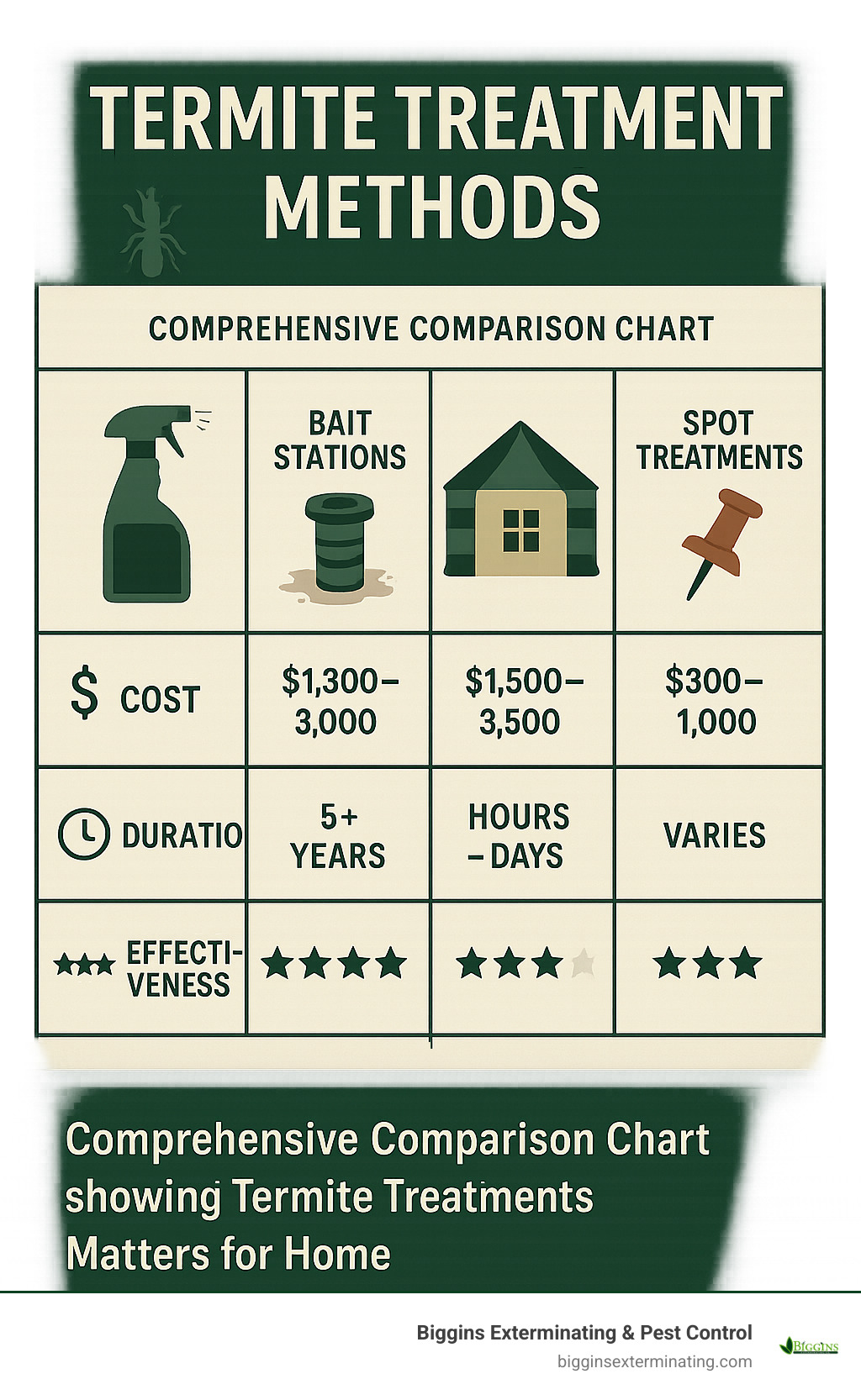
Liquid barrier treatments typically cost between $800-$2,400 and create a protective zone around your home’s foundation that lasts 5-7 years. This method works exceptionally well for subterranean termites – the kind that build mud tubes and attack your home from the ground up.
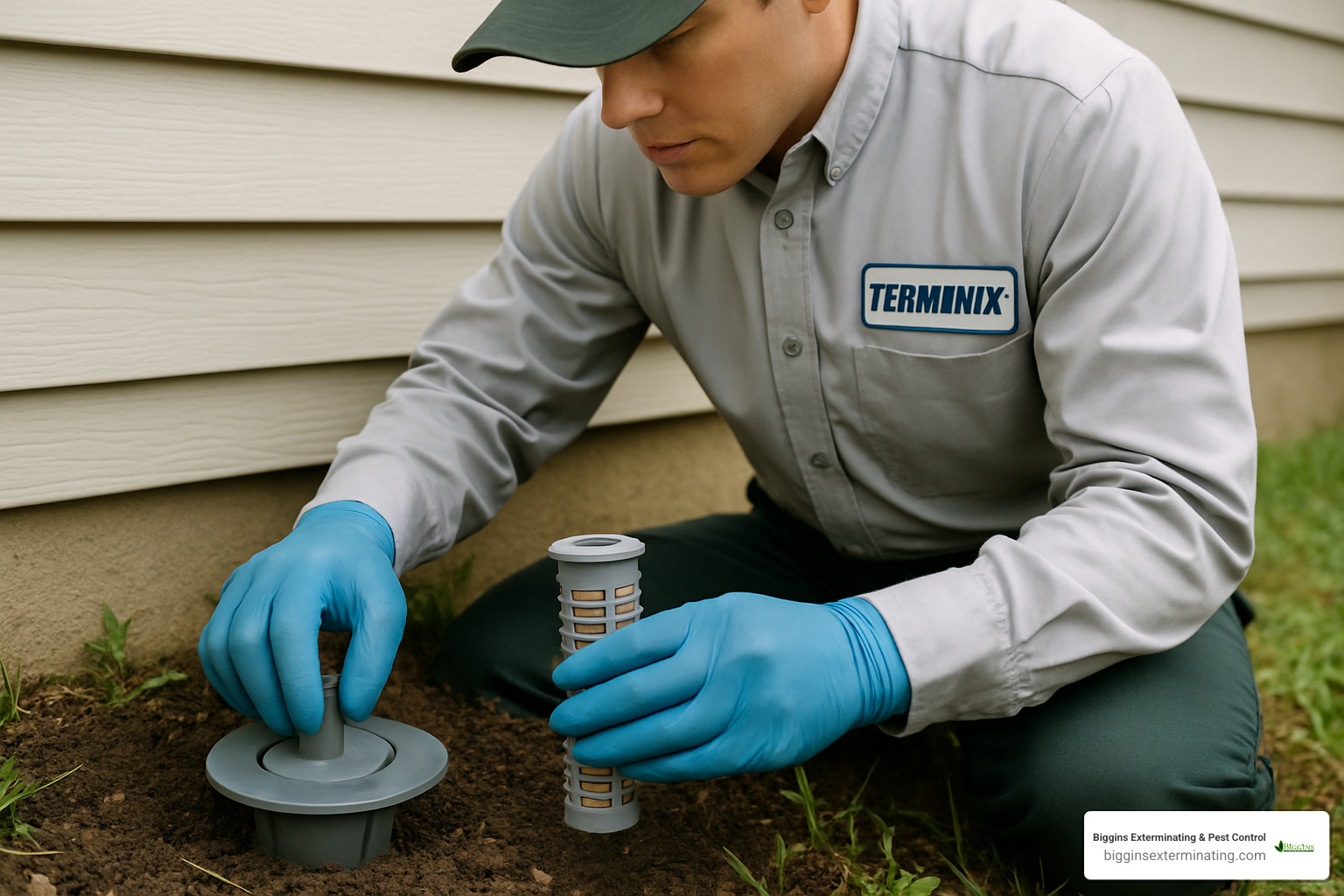
Bait stations offer a more environmentally friendly approach, with costs ranging from $400-$1,200 annually. These systems work by attracting termites to poisoned bait that they carry back to the colony. While this method takes longer to show results, it’s particularly effective for active infestations.
For drywood termites that live inside your wood structures, fumigation remains the gold standard. At $1,200-$4,500, it’s the most expensive option, but it completely eliminates the entire colony. The trade-off is significant – you’ll need to vacate your home for several days.
Spot treatments work well for small, localized infestations and cost $200-$800. These targeted applications cause minimal disruption but only address the specific areas treated.
These are average costs based on internet data and not actual costs for Biggins Exterminating services.
The most effective companies don’t just offer one solution – they evaluate your specific termite species, infestation severity, and home construction before recommending the best approach. According to the EPA’s guidance on termite control, combining multiple treatment methods often provides the strongest long-term protection.
Service, Guarantee & Satisfaction Metrics
The strongest companies in the industry have revolutionized their guarantee structures to give homeowners real peace of mind. Today’s best rated termite companies typically offer three essential components: money-back satisfaction promises, unlimited retreatment policies, and substantial damage coverage.
Most top providers now include 30-day money-back guarantees if you’re not completely satisfied with their initial service. Retreat policies separate the good companies from the great ones. The industry leaders offer unlimited retreatments during your warranty period at no extra cost.
Damage coverage represents the biggest difference between companies. While some offer minimal protection or none at all, the top providers now back their work with coverage up to $250,000 for new termite damage that occurs during the warranty period.
Customer satisfaction scores tell the story clearly – top-rated companies consistently maintain ratings above 4.5 out of 5 stars, with the very best exceeding 4.8.
Scheduling & Quote Process
The best termite companies have made getting help as easy as possible. Most now offer online booking systems that let you schedule inspections at your convenience, with many providing same-day or next-day availability when you find a potential problem.
Today’s reputable companies perform comprehensive on-site inspections that give you a real picture of what you’re dealing with. These thorough assessments include both interior and exterior examinations, covering crawl spaces, basements, attics, and every accessible area where termites might be active.
During the inspection, the best companies provide written reports with photographs documenting any termite activity or damage they find. Quality providers take time to educate you about what they’re looking for, explain any problems they find, and answer your questions thoroughly.
For more information about professional pest inspection services, visit our guide on the importance of regular pest inspections.
Understanding Termite Treatment Options
Modern termite control offers several effective treatment methods, each designed for specific situations and termite species. Understanding these options helps you evaluate whether a company is recommending the most appropriate solution for your problem.
Liquid Barrier Treatments create a protective zone around your home’s foundation using liquid termiticides applied to the soil. This method typically costs $3-$4 per linear foot and provides 5-7 years of protection against subterranean termites.
Bait Stations use cellulose baits treated with slow-acting insecticides that termites carry back to their colonies. While slower to show results, bait systems effectively eliminate entire colonies and cost significantly less than liquid treatments.
Fumigation involves sealing the entire structure and introducing gas that penetrates all wood surfaces. This method effectively eliminates drywood termites throughout the structure but requires temporary evacuation.
Spot Treatments target specific areas of activity using localized applications of termiticides, foams, or dusts. These treatments work well for small, contained infestations and cause minimal disruption to daily life.
Pros & Cons of Each Treatment
Liquid Barrier Treatments:
– Pros: Long-lasting protection, comprehensive coverage, effective against subterranean termites
– Cons: Requires extensive trenching, higher upfront cost, potential disruption to landscaping
– Cost Range: $800-$2,400* for average homes
– Family Safety: EPA-approved chemicals with minimal exposure risk after application
Bait Station Systems:
– Pros: Environmentally friendly, eliminates entire colonies, minimal home preparation needed
– Cons: Slower results, requires ongoing monitoring, annual maintenance costs
– Cost Range: $400-$1,200* for initial installation plus annual fees
– Family Safety: Extremely safe, stations are tamper-resistant and pet-friendly
Fumigation:
– Pros: Complete elimination of drywood termites, reaches all areas of structure
– Cons: Requires evacuation, expensive, extensive preparation needed
– Cost Range: $1,200-$4,500* depending on home size
– Family Safety: Safe when proper procedures are followed, but requires temporary relocation
*These are average costs based on internet data and not actual costs for Biggins Exterminating services.
Prevention Tips After Treatment
Successful termite control extends beyond the initial treatment. The best companies provide comprehensive prevention guidance to help homeowners avoid future infestations.
Moisture Control represents the most critical prevention factor. Termites need moisture to survive, so eliminating water sources around your home significantly reduces attraction. Fix leaky pipes, improve drainage around foundations, and ensure proper ventilation in crawl spaces and basements.
Wood Clearance involves maintaining at least 6 inches of clearance between soil and any wood portions of your home’s structure. Remove wood debris, old stumps, and construction materials from around your foundation.
Annual Inspections help detect new termite activity before it becomes a major problem. Professional inspections cost $75-$150 but can save thousands in damage repair costs.
For detailed information about termite prevention strategies, check our comprehensive guide on termite barrier treatment.
Cost, Guarantees & Certifications Explained
When you’re dealing with termites, understanding the financial side helps you make smart decisions and avoid getting taken advantage of. I’ve seen homeowners pay way too much for basic treatments, and I’ve also seen them choose the cheapest option only to need retreatment within a year.
Average inspection costs typically run $75-$150 for basic inspections, though many best rated termite companies offer free inspections when treatment is needed. If you’re buying or refinancing a home, expect to pay $100-$200 for the detailed inspection required by lenders.
The treatment costs vary dramatically based on what you’re dealing with. Basic exterior liquid treatments might cost $330-$820, while comprehensive liquid barrier systems range from $800-$2,400. Bait station installations typically run $400-$1,200, and fumigation can cost anywhere from $1,200-$4,500. Spot treatments for small areas usually cost $200-$800.*
*These are average costs based on internet data and not actual costs for Biggins Exterminating services.
Several factors affect what you’ll actually pay. Home size obviously matters – a 1,200 square foot ranch costs less to treat than a 3,000 square foot colonial. Construction type plays a role too. Accessibility can drive up costs if technicians need special equipment to reach treatment areas.
The severity of your infestation makes a huge difference. A small colony found early might need only spot treatment, while a mature colony that’s been feeding for years could require comprehensive fumigation.
When evaluating companies, look for NPMA certifications. The National Pest Management Association sets standards for professional service and continuing education. GreenPro certification identifies companies committed to environmentally responsible pest management.
Don’t forget to verify insurance coverage. Reputable companies carry both general liability and workers’ compensation insurance. They should provide certificates of insurance upon request.
For more information about our termite control services and certifications, visit our termite pest control page.
How Long Treatments Last & When to Repeat
Understanding treatment longevity helps you plan ahead and budget for future pest control needs. Nobody wants to be surprised by the need for retreatment just a year or two after paying for what they thought was a long-term solution.
Five-year liquid treatments represent the industry standard for soil-applied termiticides. Modern liquid treatments using fipronil or imidacloprid typically provide 5-7 years of protection when properly applied.
The actual lifespan depends on several factors. Heavy rainfall can dilute soil treatments faster than normal. Construction work or extensive landscaping can disrupt the chemical barrier.
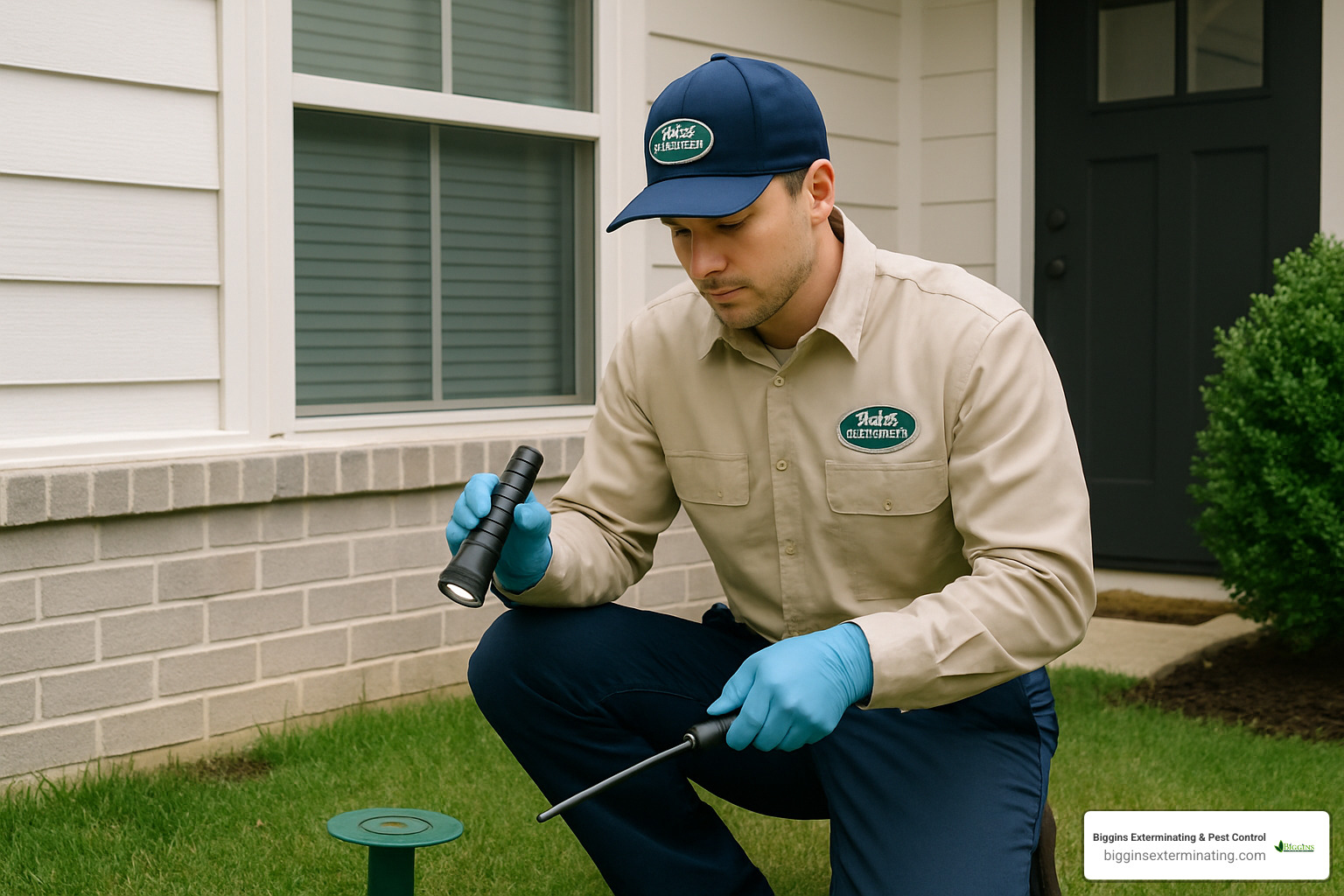
Bait stations require annual maintenance to stay effective. The bait needs to be fresh and attractive to termites, which means regular monitoring and replacement. Most companies include this annual maintenance in their service agreements.
Maintenance plans offered by the best rated termite companies provide ongoing protection and peace of mind. These plans typically include annual inspections, bait station maintenance, and priority scheduling if new problems arise.
Safety for Pets & Families
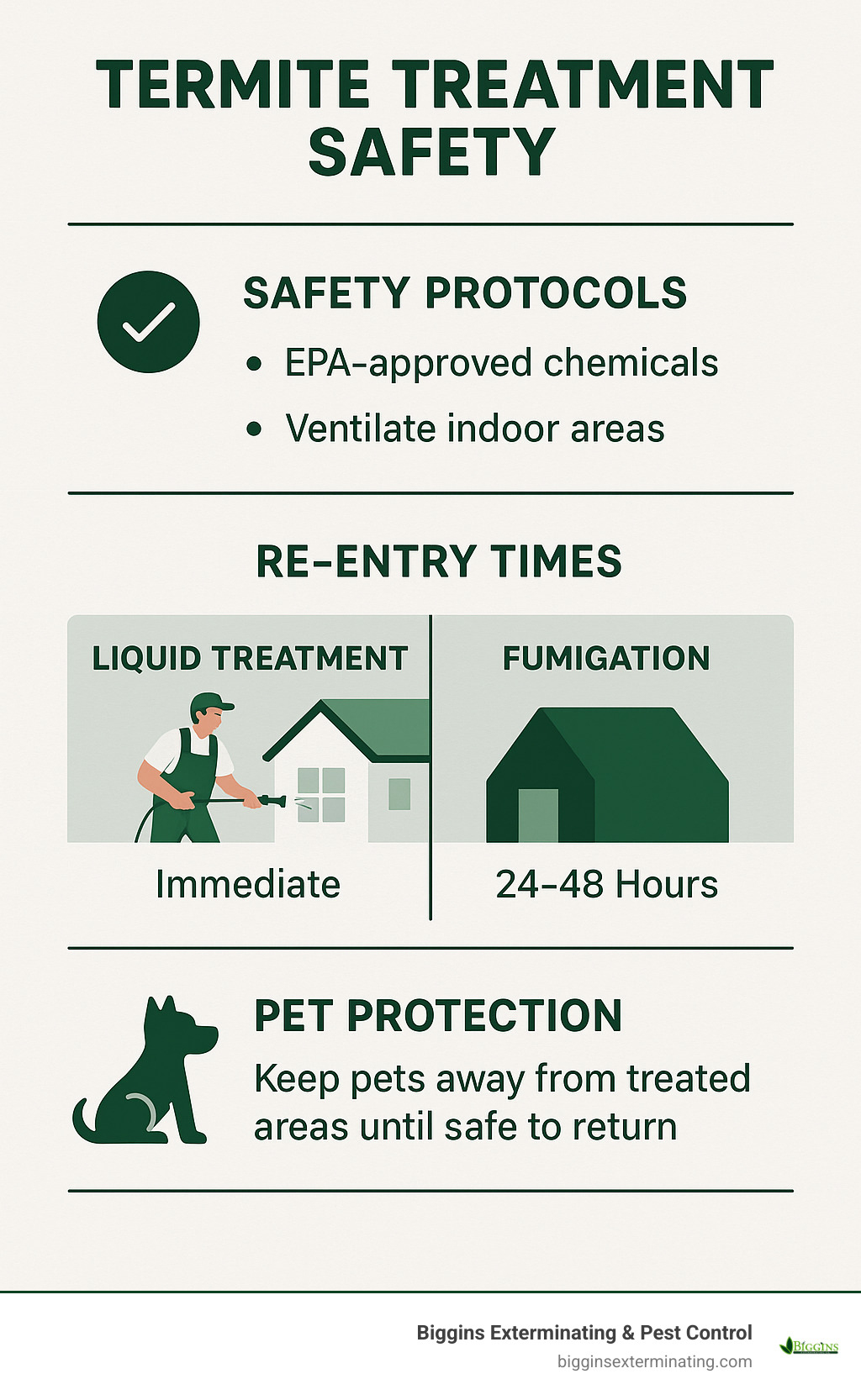
As a father and grandfather, I understand concerns about chemical safety around families and pets. The good news is that modern termite treatments use EPA-approved chemicals that pose minimal risk when applied correctly by trained professionals.
Products like fipronil, imidacloprid, and chlorantraniliprole have undergone extensive testing for safety and environmental impact. These aren’t the harsh chemicals used decades ago. Today’s termiticides are designed to be highly effective against termites while posing minimal risk to mammals.
Most liquid barrier treatments occur outside your home and don’t require special ventilation or preparation. The chemicals are applied to soil around your foundation, not inside your living spaces.
Re-entry times vary by treatment method. Most exterior liquid treatments allow immediate re-entry to your home. Indoor treatments might require waiting a few hours for products to dry and odors to dissipate. Fumigation is the exception – it requires 24-48 hours before residents can safely return home.
The key is working with companies that follow proper application procedures and use products according to label directions. Professional applicators know how to minimize exposure while maximizing effectiveness.
For comprehensive information about pesticide safety in pest control, consult the EPA’s tips for selecting pest control services.
Frequently Asked Questions About Termite Control
What signs show I have termites?
Spotting termite activity early can save you thousands of dollars in repair costs. These destructive pests often work quietly for months before homeowners notice anything wrong, but there are telltale signs if you know what to look for.
The most obvious visual clues include small pinholes in drywall or tiny tunnels carved into wood surfaces. You might also notice paint that bubbles or looks water-damaged even though there’s no moisture source nearby. When you tap on wooden surfaces around your home, listen for hollow sounds that indicate the wood has been eaten from the inside out.
Sawdust-like debris called frass often appears near wooden structures where drywood termites are active. This fine, powdery material is actually termite droppings and wood particles pushed out of their tunnels.
Spring brings another major warning sign – swarms of flying insects around your property. These reproductive termites leave their colonies to start new ones, and finding piles of tiny wings near windows or doors means they’ve likely found your home appealing.
Don’t ignore structural changes either. Doors or windows that suddenly stick or floors that feel spongy might indicate termite damage to the underlying wood structure. Mud tubes running from soil to wooden parts of your home are highways subterranean termites build to travel safely.
If you spot any of these warning signs, contact a professional immediately. Termites never sleep – they work around the clock, and every day of delay means more damage and higher repair costs.
Are treatments covered by homeowners insurance?
Here’s the frustrating truth most homeowners find too late: standard homeowners insurance policies don’t cover termite treatments or damage repairs. Insurance companies view termite control the same way they see routine maintenance like changing your air filters or cleaning gutters – it’s your responsibility as a homeowner.
This means you’ll be paying out of pocket for preventive treatments, damage repairs, and structural restoration. Even if termites cause thousands of dollars in damage to floor joists, wall studs, or other structural elements, your insurance company will likely deny the claim.
There are extremely rare exceptions where coverage might apply. If a covered event like storm damage creates entry points that termites use to invade your home, some policies might cover the resulting damage. But don’t count on it – these situations are unusual and require extensive documentation.
Smart financial planning makes termite problems less stressful. Set aside money annually for preventive treatments and potential repairs. Many best rated termite companies offer financing options for major treatments, making comprehensive protection more affordable.
Preventive treatments cost a fraction of what you’ll spend repairing termite damage. A $800 liquid barrier treatment* can save you from $10,000+ in structural repairs down the road.
*These are average costs based on internet data and not actual costs for Biggins Exterminating services.
What questions should I ask before hiring?
Choosing the right termite control company requires asking smart questions that reveal their true expertise and professionalism. The answers you get will help you separate genuine professionals from companies that make big promises but deliver poor results.
Start with their background and credentials. How long have they specifically treated termites? General pest control experience doesn’t automatically translate to termite expertise. Ask about their technicians’ certifications and whether they’re properly licensed and insured in your state.
Understanding their process reveals a lot about their thoroughness. Will they inspect both interior and exterior areas, including crawl spaces, basements, and attics? What specific treatment method do they recommend and why? The best companies explain their reasoning clearly and match treatments to your specific situation.
Safety questions matter tremendously for your family’s wellbeing. How will they prepare your home for treatment? What precautions should you take during and after the process? Professional companies provide detailed safety instructions and use EPA-approved products according to strict guidelines.
Don’t forget the financial details. Ask for written estimates that break down all costs and explain exactly what’s included. What warranty comes with their work? If termites return during the warranty period, what happens next?
Watch out for major red flags that indicate unprofessional companies. Door-to-door salespeople offering instant discounts often represent fly-by-night operations. Companies that quote prices without thorough inspections can’t possibly provide accurate estimates.
The best rated termite companies answer all your questions patiently, provide references from recent customers, and never pressure you to sign contracts immediately. They understand that termite control is a significant investment and want you to feel confident in your decision.
Conclusion & Next Steps
Finding the right termite protection for your home doesn’t have to feel overwhelming. The best rated termite companies share common traits: they take time to understand your specific situation, explain their recommendations clearly, and back their work with solid guarantees that give you real peace of mind.
After four decades of helping Massachusetts families protect their homes, I’ve learned that the best termite control combines proven treatment methods with genuine care for customers. It’s not just about eliminating the current problem – it’s about creating a long-term protection plan that keeps your family safe and your investment secure.
The difference between a good company and a great one often comes down to what happens after the initial treatment. Great companies stay in touch, honor their warranties without hassle, and treat follow-up concerns as opportunities to strengthen customer relationships.
Your path forward starts with taking action sooner rather than later. Schedule professional inspections if you’ve spotted any warning signs – those mud tubes, discarded wings, or hollow-sounding wood won’t fix themselves. Get detailed written estimates from multiple licensed companies, and don’t be afraid to ask tough questions about their experience, methods, and guarantees.
Verify everything before you sign anything. Check licensing and insurance status, read recent customer reviews, and compare not just prices but the complete value package including warranty length and coverage limits. The cheapest option often becomes the most expensive when treatments fail or companies don’t honor their commitments.
Choose a company that educates rather than just sells. The best providers want you to understand why they recommend specific treatments and how you can prevent future problems. They should explain the process clearly, discuss timeline expectations honestly, and provide realistic cost estimates without pressure tactics.
At Biggins Exterminating & Pest Control, we’ve built lasting relationships with families throughout Andover, Bedford, Billerica, Burlington, Lexington, North Reading, Tewksbury, Wilmington, and Woburn by treating every home like it’s our own. Our family business succeeds when your family feels secure in their home.
Don’t let termites work in silence while you wait and worry. Whether you need immediate treatment for active termites or want to establish a prevention plan for long-term protection, professional termite control provides the expertise and peace of mind that every homeowner deserves.
For comprehensive information about our pest control services and to schedule your inspection, visit our pest exterminators in Wilmington, MA page. We’re here to answer your questions and provide the honest, effective termite protection your home needs.
