
Finding the Best Pest Solutions for Your Home
Best pest solutions involve a combination of professional treatments, DIY methods, and preventative strategies custom to your specific pest problems. Here’s a quick overview:
- Professional pest control services – Best for serious infestations, termites, and long-term protection
- DIY treatments – Suitable for minor issues with ants, spiders, and flying insects
- Preventative measures – Sealing entry points, proper food storage, and yard maintenance
- Integrated Pest Management (IPM) – A comprehensive approach combining multiple methods
- Green/eco-friendly options – Less toxic alternatives using botanical oils and natural predators
Dealing with unwanted pests is a common challenge for homeowners and businesses alike. Whether you’re battling ants in your kitchen, rodents in your attic, or termites threatening your property’s structure, finding the right pest solution can mean the difference between temporary relief and long-lasting protection.
The pest control industry offers various approaches, from traditional chemical treatments to newer eco-friendly alternatives, each with its own benefits and limitations. The best solution for your situation will depend on multiple factors, including the type of pest, severity of infestation, and your personal preferences regarding safety and environmental impact.
Most homeowners don’t realize that effective pest management isn’t just about eliminating current problems—it’s about creating a comprehensive strategy to prevent future invasions. This guide will walk you through everything you need to know about identifying, treating, and preventing pest issues.
I’m Stephen Biggins, owner of Biggins Exterminating Co., with over four decades of experience providing best pest solutions throughout Massachusetts since our family business began in 1982. Our company specializes in developing customized pest control strategies that prioritize both effectiveness and customer safety.
Terms related to best pest solutions:
– ant exterminator wilmington ma
– bee exterminator wilmington ma
– mice exterminator wilmington ma
Know Your Enemy: Most Common Pests & Their Risks
Let’s face it – knowing what you’re up against is half the battle when it comes to pest control. As we like to say at Biggins, you can’t solve a problem you haven’t properly identified. Here’s a friendly guide to the unwelcome critters we most commonly encounter in Massachusetts homes and businesses:
Ants
Would you believe there are over 700 ant species in the U.S. alone? Thankfully, only about 25 regularly invite themselves into our homes. These tiny invaders live in highly organized colonies with complex social structures – which is exactly why that random spray from under your sink rarely solves the problem permanently. In Massachusetts, we mostly deal with carpenter ants (the wood-destroyers), pavement ants (sidewalk dwellers that venture indoors), and odorous house ants (which emit that peculiar smell when squished).
Termites
There’s a good reason why termites earn the nickname “silent destroyers.” These relentless pests cause over $5 billion in property damage annually across the United States, working around the clock to feast on wood, flooring, and even wallpaper – all while remaining largely unseen. Eastern subterranean termites are our most common local variety, and they’re particularly fond of Massachusetts homes.
Rodents
Mice and rats are much more than just a startling sight in your kitchen. These furry intruders pose serious health risks by transmitting diseases through their droppings, urine, and saliva. They’re also notorious food contaminators and can create dangerous fire hazards by chewing through electrical wiring. I’ve personally seen the aftermath of rodent-caused electrical fires that could have been prevented with proper pest management.
Cockroaches
If there were an award for resilience in the insect world, cockroaches would win hands-down. These hardy pests carry various pathogens and are known triggers for allergies and asthma attacks, especially in children. German cockroaches (smaller, light brown) and American cockroaches (larger, reddish-brown) are the main culprits in our region, with multi-unit buildings and restaurants being particular hotspots.
Bed Bugs
The midnight snackers of the pest world, bed bugs feed on human blood while we sleep. These nocturnal parasites are extraordinarily difficult to eliminate once established. And contrary to popular belief, they don’t care about cleanliness – bed bugs are equal opportunity invaders, just as likely to set up shop in a five-star hotel as in a college dorm.
Mosquitoes
Beyond the itchy welts and ruined summer evenings, mosquitoes in Massachusetts can transmit serious illnesses like West Nile Virus and Eastern Equine Encephalitis (EEE). In recent years, we’ve seen several EEE cases in our state, reminding us that these tiny biters deserve serious attention.
Wildlife
From squirrels and raccoons to skunks and opossums, wildlife critters often seek shelter in our homes’ cozy spots like attics, crawl spaces, and under decks. While they might look cute from a distance, they can cause significant damage and potentially spread diseases like rabies.
The risks associated with these pests generally fall into two important categories:
Health Hazards:
Pests don’t just gross us out – they can make us sick. Rodents spread hantavirus and salmonellosis, ticks carry Lyme disease, cockroaches trigger asthma, and some spiders deliver venomous bites. Beyond physical ailments, persistent pest problems often lead to significant mental stress and anxiety for homeowners.
Property Damage:
Your home is likely your biggest investment, and pests can threaten its integrity. Termites and carpenter ants silently weaken structural wood, rodents chew through electrical wiring creating fire hazards, wildlife contaminate insulation, and various pests damage personal belongings from clothing to furniture.
In Massachusetts, pest activity follows fairly predictable seasonal patterns:
Spring: As temperatures warm, ant colonies become more active, and termite swarms emerge looking to establish new colonies. This is when many homeowners first notice they have an issue.
Summer: Our humid summers create peak conditions for mosquitoes, flies, and stinging insects like wasps and hornets. Outdoor activities often bring these seasonal pests to our attention.
Fall: As temperatures drop, rodents and spiders begin seeking warmth indoors. This is when many of our clients notice increased activity around entry points.
Winter: While outdoor pest activity slows, overwintering pests like cluster flies and rodents remain active inside heated structures, sometimes becoming more noticeable during the colder months.
Identifying Pest Activity
Catching pest problems early can save you thousands in damage and treatment costs. Here are the telltale signs we teach our clients to watch for:
Droppings: Those small, dark pellets along baseboards, in cupboards, or near food sources often indicate rodent visitors. Cockroach droppings look more like coffee grounds or black pepper.
Nests: Keep an eye out for collections of shredded paper, fabric, or dried plant material in hidden areas. Rodents are particularly fond of creating nests behind appliances or inside wall voids.
Gnaw Marks: Fresh chew marks on wooden structures, food packaging, or electrical wires are a clear sign of rodent activity that shouldn’t be ignored.
Rustling Sounds: Those scratching, scurrying, or squeaking noises, especially at night, usually indicate unwanted houseguests in your walls, ceilings, or attics.
Foul Odors: A musty, ammonia-like smell often accompanies mouse infestations, while cockroaches produce a distinctive oily, sweet odor that’s hard to miss in heavily infested areas.
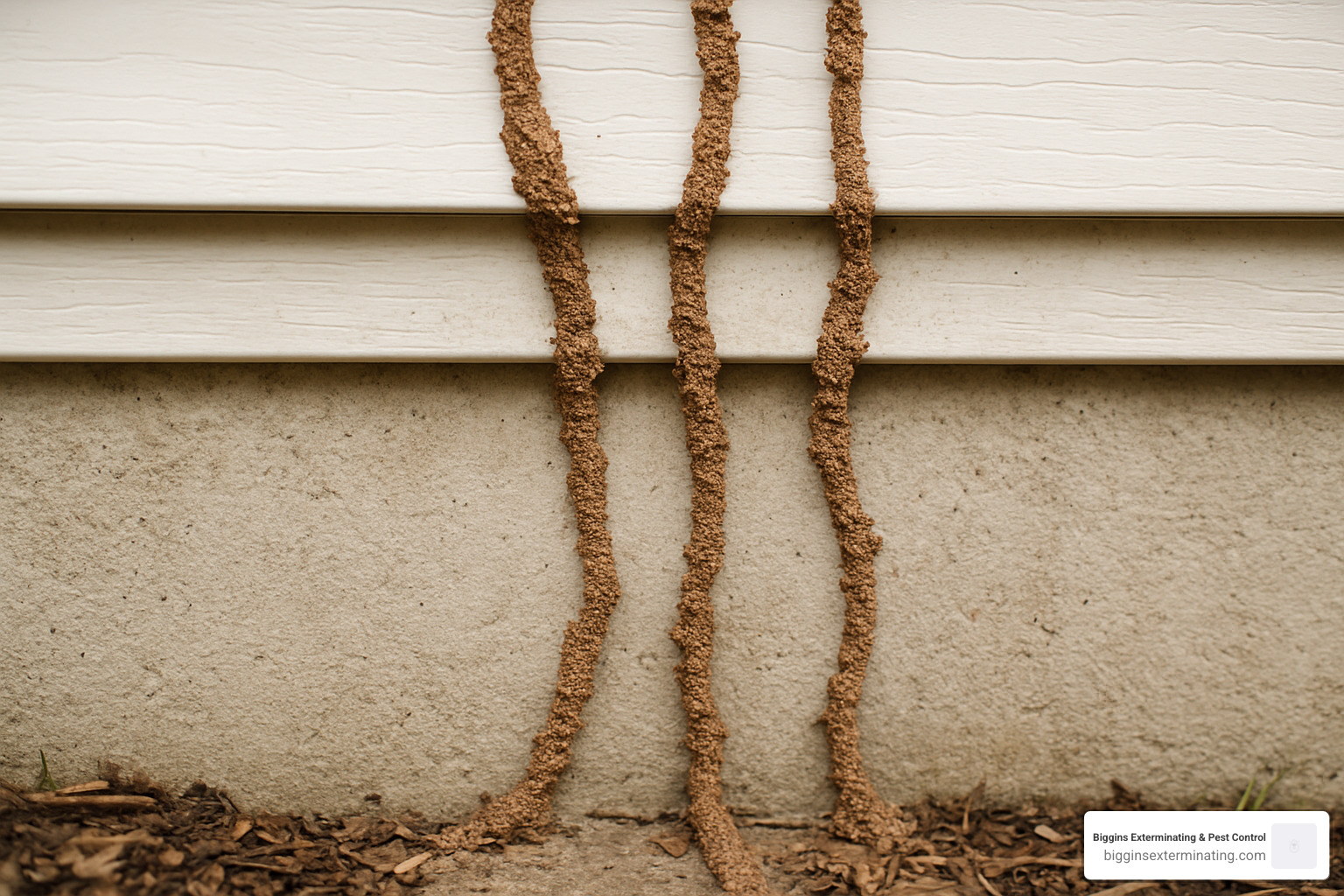
One of our long-time clients in Woburn finded a termite infestation after noticing what looked like “mud tubes” along their foundation wall – a classic sign of subterranean termite activity. Their early detection saved them thousands in potential structural repairs. This is why we always say that knowing what to look for is your first line of defense in protecting your home with the best pest solutions.
The Science Behind Pest Control Methods
When it comes to tackling those unwanted houseguests, modern pest management isn’t just about spraying chemicals anymore. There’s actually fascinating science behind how we deal with pests today. Let me walk you through the different approaches that make up best pest solutions for your home or business.
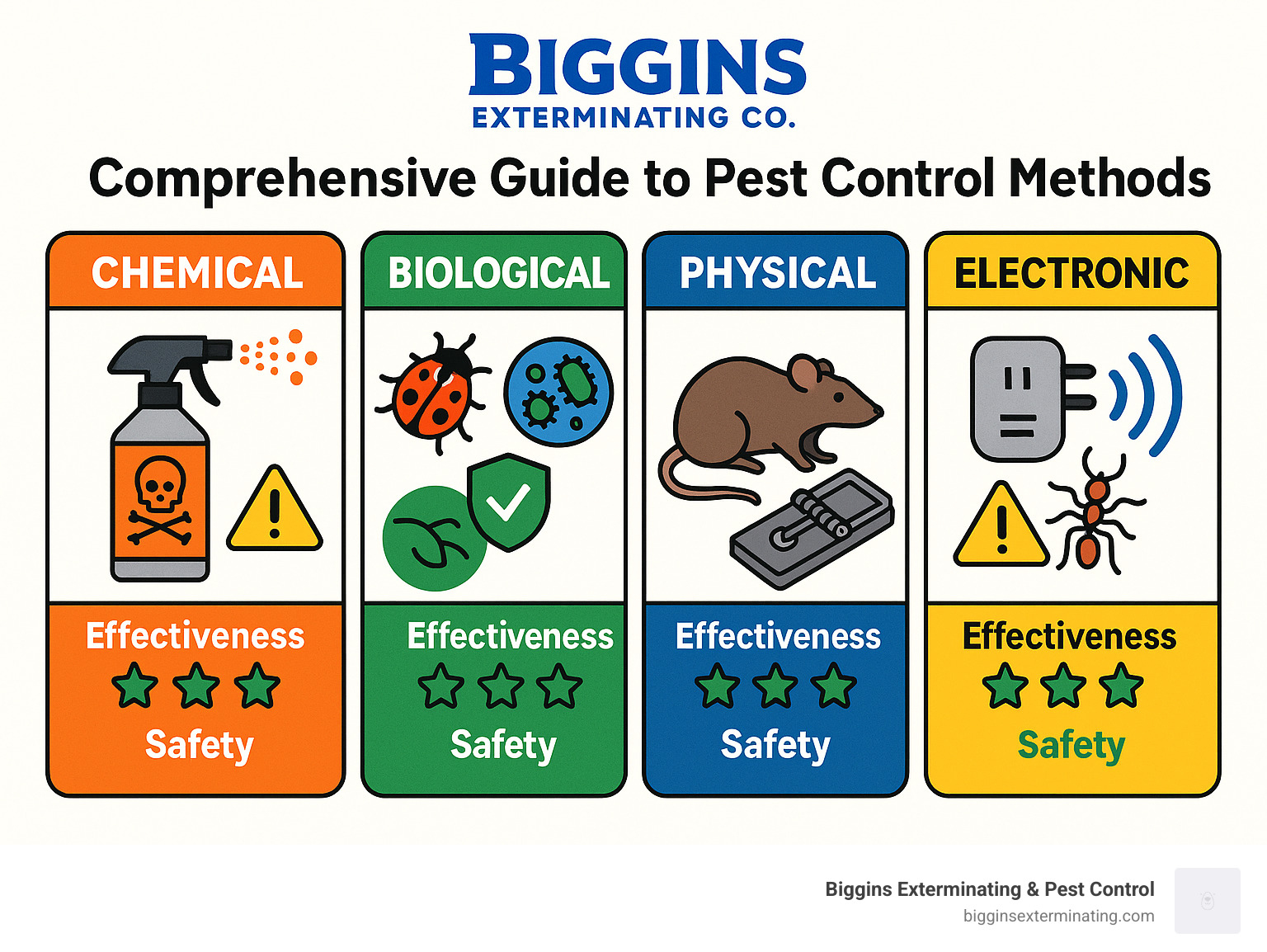
Chemical Control
Chemical treatments remain the backbone of professional pest control, but they’ve come a long way from the harsh chemicals of yesteryear. Today’s products are more targeted and safer when properly applied.
“Many homeowners are surprised to learn that the products we use today are much more sophisticated than what their parents might remember,” says Stephen Biggins. “Modern formulations target specific pest behaviors while minimizing risks to people, pets, and the environment.”
These treatments include residual sprays that create invisible barriers around your home, strategically placed baits that pests carry back to their colonies, specialized dusts that penetrate deep hiding spots, and in extreme cases like severe termite infestations, whole-structure fumigation.
At Biggins Exterminating, we’re careful to select products that balance effectiveness with safety, and we follow strict EPA guidelines for every application. It’s not just about eliminating pests—it’s about doing so responsibly.
Biological Control
Mother Nature has her own pest control system, and biological control methods tap into these natural relationships. Think of it as enlisting nature’s own pest fighters to do the work for you.
This approach uses living organisms like beneficial insects (ladybugs that feast on aphids, for example), microbial pesticides derived from naturally occurring bacteria, and even microscopic nematodes that target soil-dwelling pests.
While biological controls are wonderfully environmentally friendly, they typically work best as part of a broader strategy rather than a standalone solution. They’re like having a helpful ally in the fight, rather than the entire army.
Physical Control
Sometimes the simplest approaches are the most effective. Physical control methods create actual barriers between pests and your home:
Traps catch pests mechanically, from the classic snap trap to modern glue boards and humane live-capture devices. Exclusion techniques seal entry points that pests use to access your home. And temperature treatments use extreme heat or cold to eliminate pests like bed bugs without chemicals.
These methods are often ideal for homes with children and pets since they don’t involve chemical applications. One of our clients in Reading successfully eliminated a mouse problem just by sealing entry points and strategically placing a few traps—proof that sometimes the old-school approaches work beautifully.
Electronic Repellents
You’ve probably seen those plug-in devices that claim to repel pests with ultrasonic sound waves. While they’re marketed as miracle solutions, I have to be honest with you—the scientific evidence supporting their effectiveness is pretty limited.
In our four decades of experience, we’ve found these devices may provide temporary results at best. Pests typically acclimate to the sounds within a short period. They’re not entirely useless, but they certainly shouldn’t be your only line of defense.
Integrated Pest Management (IPM)
If there’s a gold standard in modern pest control, it’s definitely Integrated Pest Management. IPM isn’t just one technique—it’s a comprehensive approach that combines multiple strategies to provide long-term solutions with minimal environmental impact.
The EPA’s four-step IPM framework includes setting action thresholds (determining when a pest population requires intervention), careful monitoring and identification, implementing preventative measures, and applying appropriate control methods—starting with the least risky options first.
“At Biggins, we were practicing IPM principles long before they became industry buzzwords,” notes Stephen Biggins. “It just made sense to address the root causes of pest problems rather than just treating symptoms.”
Eco-Friendly Alternatives
The growing focus on environmental health has sparked wonderful innovations in green pest control. These methods offer effective control while minimizing environmental impact:
Botanical oils derived from plants like neem, rosemary, and peppermint can repel or even kill certain pests. Diatomaceous earth, a powder made from fossilized algae, damages insects’ exoskeletons without toxic chemicals. Boric acid, a mineral-based substance, effectively targets cockroaches and ants. And exclusion techniques physically block pests from entering your home in the first place.
These approaches form the foundation of our eco-friendly pest control services, which have become increasingly popular among families with young children, pet owners, and environmentally conscious customers.
“The green pest control movement has transformed our industry for the better,” says Stephen Biggins. “Today’s eco-friendly solutions can be just as effective as traditional methods when properly applied as part of a comprehensive strategy. It’s not just about being ‘green’ for marketing purposes—these methods genuinely work when used correctly.”
Understanding these different approaches helps you make informed decisions about the best pest solutions for your specific situation. Whether you’re dealing with ants in the kitchen or termites threatening your home’s structure, there’s a scientifically-backed approach that can help—often, it’s a combination of several methods that provides the most effective and lasting results.
Spotting an Infestation & Deciding on DIY vs Professional Help
Ever walked into your kitchen and spotted a line of ants marching across your counter? Or heard mysterious scratching in your walls at night? These moments leave many homeowners wondering: “Can I handle this myself, or do I need to call in the pros?”
The answer isn’t always straightforward, but I’ll help you steer this decision with confidence.
Warning Signs of Serious Infestations
When it comes to pest problems, timing is everything. Early intervention can mean the difference between a quick fix and a costly nightmare.
Multiple sightings during daylight hours often signal trouble. Most pests are nocturnal, so seeing them in broad daylight usually means they’re overcrowded in their hiding spots—a clear red flag that you’re dealing with a large population.
Evidence of reproduction like nymphs, larvae, or eggs indicates the problem is actively growing. Finding tiny white eggs in cracks or crevices or seeing baby roaches scurrying about means the infestation is establishing itself for the long haul.
Widespread evidence across multiple areas of your home suggests the problem has already taken hold. When you’re finding droppings in both your kitchen and attic, or damage in several rooms, the pests have likely spread throughout your home.
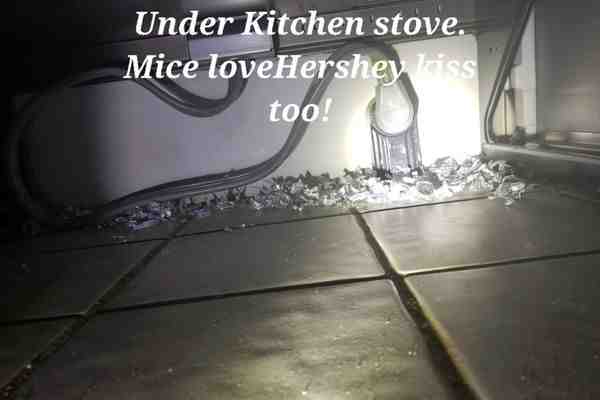
“I once had a customer who thought they just had a ‘few mice’ in their pantry,” recalls Stephen Biggins. “When we inspected their home, we found droppings in every room of the house. What seemed minor was actually a full-house infestation that had been growing for months.”
Recurring problems despite your best DIY efforts often indicate you’re only treating the symptoms, not the source. Those persistent ants might be coming from a colony with thousands of members hiding deep within your walls.
Structural damage is perhaps the most serious warning sign. Wood destruction, damaged wiring, or compromised building materials aren’t just costly to repair—they can create dangerous living conditions.
When DIY Might Be Sufficient
For minor, isolated pest issues, rolling up your sleeves and handling it yourself can make sense:
A few ants in the kitchen might be resolved with some careful cleaning and a store-bought bait station. Those occasional house spiders can often be managed with regular vacuuming and removing webs. A small number of flying insects might be eliminated with a flyswatter and removing attractants. And a single rodent might be caught with a well-placed trap.
In these cases, over-the-counter products, simple traps, or basic exclusion methods may do the trick. But before you go the DIY route, be aware of the dangers associated with DIY pest control.
Many homeowners misidentify pests, leading to ineffective treatments. That “carpenter ant” might actually be a termite, requiring a completely different approach. Improper application of store-bought chemicals can create health risks for your family and pets. And many DIY solutions provide only temporary results without addressing the root cause of your pest problem.
There’s also the concern of pests developing resistance to commonly available products, making future control more difficult.
“I tried handling a mouse problem myself for months,” shared a customer from Billerica. “I set traps and used store-bought repellents. I caught a few, but they kept coming back. When Biggins inspected my home, they found an entire nest in my wall void that I never would have finded. Their comprehensive approach solved the problem permanently.”
When to Call a Pro
Some situations clearly call for professional intervention. Here’s when you shouldn’t hesitate to pick up the phone:
Structural pests like termites, carpenter ants, and powder post beetles require specialized treatments. These wood-destroying organisms can cause devastating damage if left unchecked. The average cost for termite damage repairs ranges from $600 to over $10,000 depending on the extent of the infestation.
Rapid spread pests such as bed bugs, cockroaches, and rodents can quickly establish large populations. A female mouse can produce up to 10 litters per year with 5-6 pups each time—that’s potentially 60 new mice annually from just one female!
Many of the most effective treatments require regulated chemicals that only licensed applicators can legally purchase and apply. These professional-grade products offer results that consumer options simply can’t match.
When health concerns enter the picture—like rodents in food preparation areas or stinging insects for someone with allergies—immediate professional attention is warranted. Some pest-borne diseases are serious business, and proper elimination becomes a health priority.
Recurring problems despite DIY attempts often indicate a deeper issue that requires professional diagnosis. As Stephen Biggins explains, “What many homeowners don’t realize is that visible pests typically represent only 10-20% of the actual population. Professional pest control addresses the source of the problem, not just the symptoms.”
Preparing for a Service Visit
Once you’ve decided to bring in the best pest solutions experts, proper preparation ensures you get the most from your service:
Declutter your home to provide access to key treatment areas. Remove items from floors, countertops, and under sinks where pests commonly hide.
Move furniture away from walls so technicians can treat baseboards and wall voids thoroughly. Even a few inches of space can make a significant difference in treatment effectiveness.
Secure pets and their food bowls during and immediately after service. While modern pest control products are designed with safety in mind, it’s best to take precautions with your furry family members.
Identify access points where you’ve seen pest activity to help guide the inspection. Your observations can provide valuable clues that help technicians pinpoint problem areas.
Ask questions about the treatment process. Good pest control providers welcome questions about their methods, materials, and safety protocols.
“Following Biggins’ pre-treatment checklist made the service much more effective,” noted a customer from Tewksbury. “The technician was able to access all the critical areas, and we haven’t seen a single ant since the treatment.”
A little preparation goes a long way toward ensuring your pest problem becomes a thing of the past. After all, the goal isn’t just to eliminate today’s pests but to prevent tomorrow’s invasion too.
Best Pest Solutions: How to Choose & What to Expect
Finding the right pest control service can feel overwhelming, but it doesn’t have to be. As someone who’s been in this industry for decades, I’ve seen how the right partnership makes all the difference in getting your home pest-free – and keeping it that way.
Licensing and Credentials
Always start by checking that a company has proper licensing and insurance. Here in Massachusetts, pest control operators must be licensed through the Department of Agricultural Resources – it’s not just a nice-to-have, it’s the law.
When you’re vetting potential companies, don’t be shy about asking for:
“Could I see your state licensing information?”
“Do you carry comprehensive insurance coverage?”
“What industry certifications do your technicians hold?”
Reputable companies like ours take pride in our credentials. At Biggins Exterminating, our technicians go through extensive training beyond what the state requires. We believe that staying current with the latest pest control methods is essential for providing best pest solutions to our customers.
Service Guarantees for Best Pest Solutions
The confidence a company has in their work shows in their guarantees. The strongest pest control providers stand firmly behind their treatments with meaningful assurances.
Most quality companies offer free re-treatments if pests return between scheduled visits. Some provide money-back guarantees for certain services, while others promise rapid response times for emergency situations.
I remember helping a family in Reading who was skeptical about pest control after a bad experience with another company. When I explained our service guarantee, the wife smiled and said, “That’s what I needed to hear – someone who stands behind their work.” Six months later, they’re still pest-free and have referred three neighbors to us.
Treatment Plans and Approach
Every home is unique, and so is every pest problem. Be wary of companies that offer one-size-fits-all solutions without a thorough inspection first.
The best pest solutions providers will:
- Conduct a detailed inspection before suggesting treatments
- Provide a clear, written treatment plan
- Explain their approach using Integrated Pest Management principles
- Customize solutions to your specific situation
- Offer preventative options to keep pests from returning
Your technician should be able to explain, in simple terms, exactly what they’re doing and why it’s the right approach for your specific pest issue.
Costs and Value
Pest control pricing varies widely depending on several factors. Based on industry averages (not Biggins Exterminating pricing), you might expect to pay:
- One-time general pest treatments: $100-$500
- Annual pest control plans: $400-$1,200
- Termite treatments: $600-$3,000
- Bed bug treatments: $300-$1,800
- Wildlife removal: $150-$1,500
The cheapest option rarely delivers the best pest solutions in the long run. I’ve seen countless homeowners waste money on multiple “budget” treatments when a single professional service would have solved the problem permanently.
When comparing costs, consider the long-term effectiveness, safety protocols, and service guarantees – not just the bottom-line price.
Eco-Friendly vs. Traditional Methods
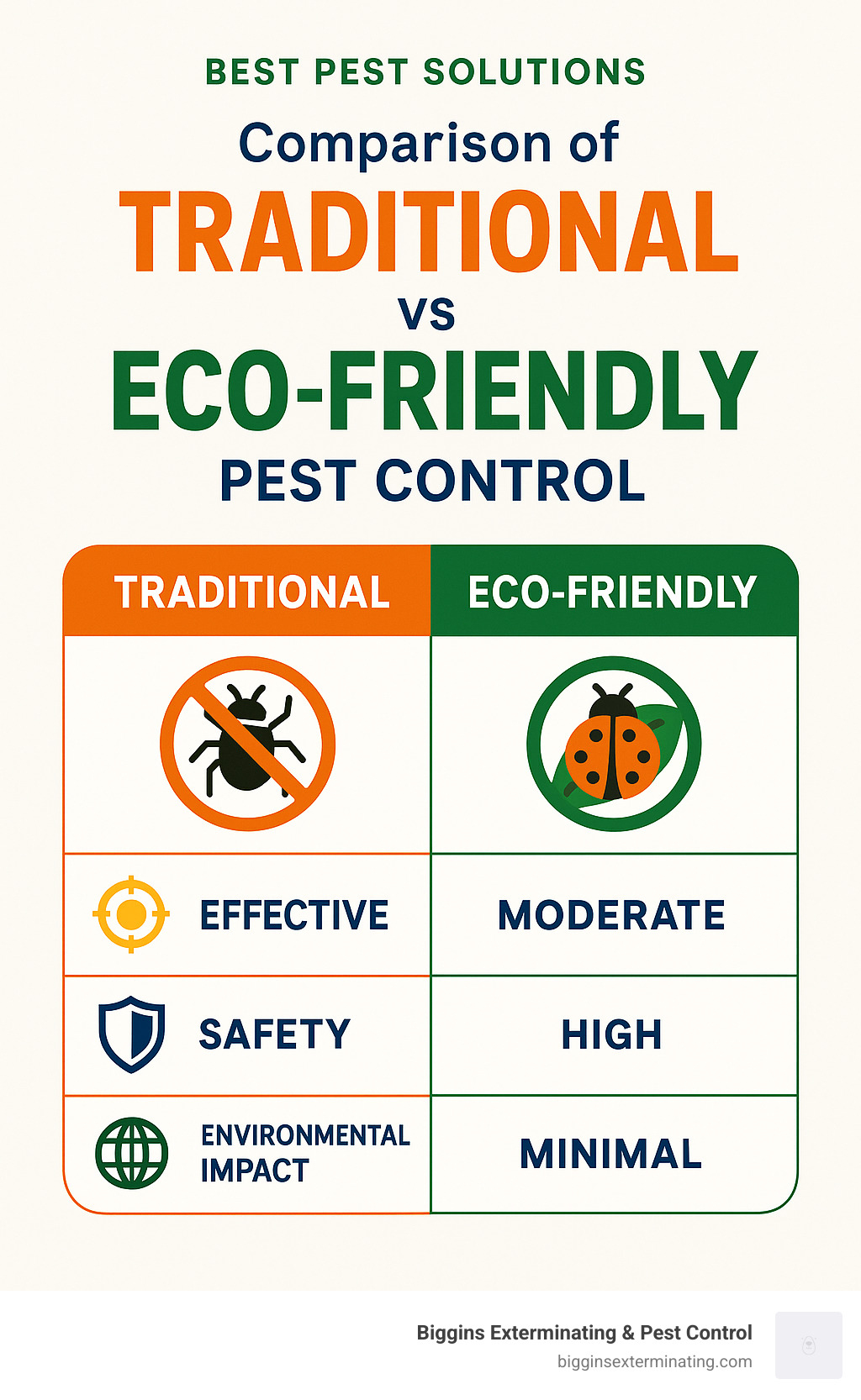
This is where personal priorities often come into play. Traditional methods typically provide faster results and longer protection, usually at a lower cost. They use well-established products with proven track records.
Green pest control, on the other hand, offers reduced environmental impact and lower toxicity concerns, making it ideal for families with young children and pets. These methods often focus more on prevention and may require more frequent applications.
“We switched to your eco-friendly option after our first grandchild was born,” a Winchester customer told me recently. “I love that we’re protecting our home without worrying about chemicals around the baby.”
At Biggins Exterminating, we’re happy to discuss both approaches and help you choose based on your specific concerns and priorities.
Customer Reviews and Reputation
A company’s reputation speaks volumes. Take time to research through:
- Online reviews on Google, Yelp, and the Better Business Bureau
- References from neighbors or friends
- How long they’ve been serving your community
A company that’s survived decades in this industry (like our 40+ years) has likely done so by consistently delivering results and treating customers right.
For more detailed guidance, check out our guide on how to choose the right pest control service. You can also use services like Porch to find and compare local contractors.
Understanding Service Guarantees for Best Pest Solutions
Service guarantees provide peace of mind that you’re making a protected investment. The most common types include:
Free Re-treatments: If pests return between scheduled visits, the company returns at no additional charge. This should be standard with any annual service plan.
Money-Back Guarantees: Some companies offer partial or full refunds if treatments don’t resolve the problem after multiple attempts. Always read the fine print on these.
Response Time Guarantees: Particularly important for businesses, these guarantees promise service within a specific timeframe after you report a problem.
One of our North Reading customers shared, “When we noticed ants returning after our initial treatment, Biggins came back the very next day at no charge and completely resolved the issue. Their guarantee gave us total peace of mind.”
Evaluating Costs of Best Pest Solutions
Understanding how pest control services are priced helps you budget appropriately:
Annual Plans: Typically range from $400-$600 on average and include regular preventative treatments (usually quarterly) plus free service calls between visits.
Pay-Per-Visit: One-time treatments without contracts may cost $100-$300 per visit depending on the pest and property size.
Specialized Treatments: Termite treatments can range from $600 for localized treatments to over $10,000 for whole-house fumigation of severe infestations.
When reviewing quotes, make sure you understand what pests are covered, how many treatments are included, what guarantees apply, and whether there are additional charges for certain pests.
Coverage & Frequency of Best Pest Solutions
Most residential pest control plans follow one of these schedules:
Quarterly Service: Most common and typically provides excellent year-round protection against seasonal pest pressures.
Bi-monthly: Every two months, recommended for properties with historical pest issues or high-risk environments.
Monthly: Primarily for commercial properties with strict requirements, like restaurants or healthcare facilities.
One-time: Targeted treatments for specific pest problems without ongoing prevention.
Standard plans usually cover common household pests like ants, spiders, roaches, and rodents. However, certain pests often require specialized treatments that may incur additional costs, including termites, bed bugs, wildlife, and stinging insect nests.
Before signing any contract, ask specifically which pests are included in your plan and which would require additional services.
Comparing Traditional vs Green Plans
The choice between traditional and green pest control often reflects your personal values:
Traditional Plans typically use synthetic pesticides with longer residual protection, requiring less frequent application at a generally lower cost.
Green Plans use botanical-based products and non-chemical methods, focusing heavily on exclusion and habitat modification. They may require more frequent service and often come at a slightly higher price point.
Many of our customers choose a middle ground, using green methods for interior spaces while employing traditional products for exterior perimeter treatments.
“The effectiveness of green pest control has improved dramatically in recent years,” I often tell customers. “Today’s botanical formulations can provide excellent results without the environmental concerns of traditional pesticides.”
Prevention & Long-Term Maintenance
The most cost-effective pest control strategy is prevention. Here’s how to maintain a pest-free environment after treatment:
Sanitation
- Store food in airtight containers
- Clean up spills and crumbs promptly
- Take out garbage regularly
- Reduce clutter where pests can hide
- Keep pet food dishes clean and store food in sealed containers
Exclusion Repairs
- Seal cracks and gaps in the foundation and exterior walls
- Install door sweeps on exterior doors
- Repair damaged window and door screens
- Cap chimneys and vents with appropriate screening
- Seal utility penetrations where pipes or wires enter the home
Landscape Management
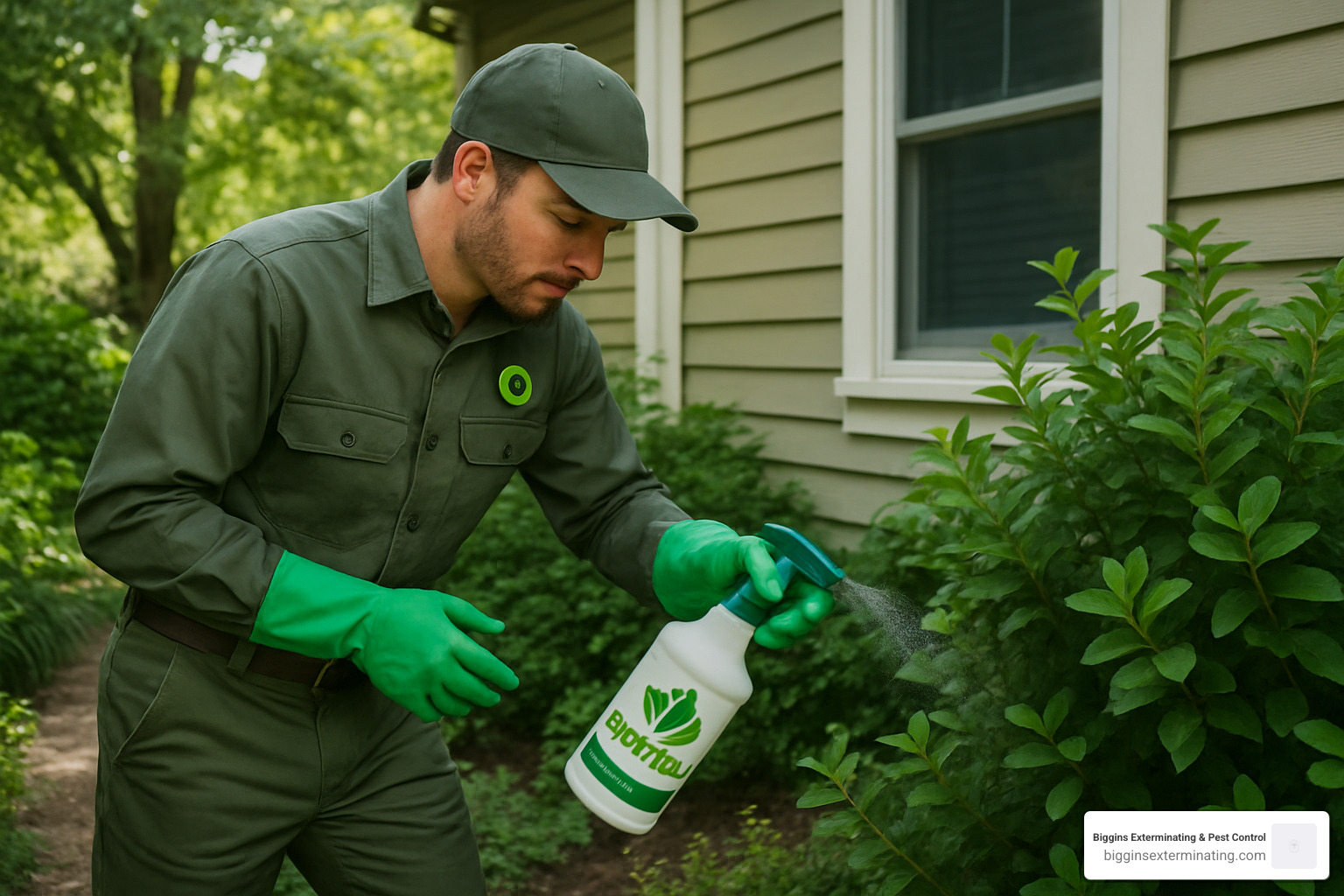
- Keep vegetation trimmed back from the house (at least 18 inches)
- Store firewood away from the structure
- Manage moisture issues by fixing leaky pipes and improving drainage
- Remove standing water where mosquitoes can breed
- Keep gutters clean and functioning properly
Monitoring
- Install and regularly check monitoring stations for early detection
- Look for signs of pest activity during seasonal home maintenance
- Be vigilant after weather changes that might drive pests indoors
- Document any pest sightings to help identify patterns
Regular Professional Inspections
Even with diligent prevention, professional quarterly inspections provide an extra layer of protection. Trained technicians can spot early warning signs that homeowners might miss and address small issues before they become major problems.
For more information on maintaining a pest-free home, see our article on the benefits of regular pest control maintenance.
“The most successful pest management programs are partnerships between homeowners and professionals,” says Stephen Biggins. “We provide the expertise and treatments, while customers help maintain conditions that discourage pest activity.”
A Burlington customer shared this success story: “After years of battling seasonal ant invasions, we started Biggins’ quarterly maintenance program. The combination of their treatments and following their prevention advice has kept our home pest-free for three years running. The peace of mind is worth every penny.”
Frequently Asked Questions about Pest Control
How often should treatments be performed?
When it comes to protecting your Massachusetts home from pests, timing is everything. For most residential properties in our region, quarterly treatments hit the sweet spot for year-round protection. This four-times-yearly schedule aligns perfectly with our New England pest cycles:
Spring treatments (March-May) catch emerging ants, termite swarmers, and those pests that have been hiding in your walls all winter. Summer applications (June-August) tackle the mosquitoes, flies, and those pesky stinging insects that can ruin your backyard barbecues. Fall services (September-November) create barriers against rodents and insects seeking winter shelter in your cozy home. Winter treatments (December-February) address indoor pests while preparing your home for the spring invasion.
For businesses, especially restaurants or healthcare facilities where pest tolerance is zero, monthly or bi-monthly service often makes more sense. As Stephen Biggins often tells our commercial clients, “In food service, prevention isn’t just about comfort—it’s about compliance and reputation.”
Are ultrasonic repellents really effective?
I wish I could tell you that those plug-in ultrasonic devices live up to their packaging promises, but I’d be doing you a disservice. Despite compelling marketing claims, the scientific evidence supporting these devices is shaky at best.
A noteworthy 2015 study in the Journal of Economic Entomology found commercial ultrasonic devices had minimal impact on German cockroach behavior. Similarly, rodent studies consistently show these devices deliver disappointing long-term results. Mice and rats are surprisingly adaptable creatures—they quickly become accustomed to the sounds these devices emit.
If you’ve already invested in ultrasonic repellers, don’t throw them away, but understand their limitations. Consider them a supplementary tool rather than your primary defense. Most importantly, continue implementing proven prevention methods like proper food storage and sealing entry points. As we like to say at Biggins, “Ultrasonic devices might help a little, but they won’t replace good old-fashioned exclusion work.”
What pests are usually covered by standard plans?
Most best pest solutions packages include coverage for common household invaders. Standard plans typically address ants (though carpenter ants may require specialized treatment), spiders, cockroaches, silverfish, earwigs, millipedes, centipedes, house crickets, and what we call “occasional invaders” like pillbugs and clover mites.
However, certain pests require specialized approaches due to their biology, behavior, or the extensive damage they can cause. These typically incur additional fees and include:
Termites, bed bugs, wildlife (squirrels, raccoons, bats), carpenter ants, wood-boring beetles, stinging insect nests, and mosquitoes (which are often offered as a separate seasonal service).
At Biggins Exterminating, we believe transparency builds trust. Before signing up for any service, we’ll clearly explain what’s covered and what might require additional treatment. We’ve found that customers appreciate knowing exactly what they’re paying for—no surprises or hidden charges down the road.
How do I know if my pest control company is using safe methods?
Safety concerns are completely valid when it comes to pest control treatments. After all, these products are designed to eliminate living organisms. A reputable pest control provider should welcome your questions about their methods and materials.
Look for a company that readily provides Safety Data Sheets (SDS) upon request, uses only EPA-registered materials applied according to label directions, and can clearly explain their application protocols. Quality providers offer green or low-toxicity options and take time to address your specific health or environmental concerns.
One Wilmington customer recently told me, “What I appreciated most was how the technician explained everything they were using around my children’s rooms and even showed me the product labels.” This level of transparency should be standard practice.
Never hesitate to ask questions—professional technicians should be knowledgeable about their materials and eager to discuss safety considerations. Your comfort and confidence in the treatment are just as important as eliminating the pests.
What should I do between professional treatments?
The most successful pest control isn’t a one-and-done affair—it’s a partnership between professionals and homeowners. Between your scheduled visits, several simple habits can dramatically boost your protection:
Promptly address any water leaks or moisture issues, as pests are drawn to water sources even more quickly than food in many cases. Seal new cracks or gaps that develop in your foundation or exterior walls—even openings as small as a pencil diameter can admit mice. Maintain cleanliness in kitchen and food storage areas, paying special attention to pet food, which attracts everything from ants to rodents.
Reducing clutter in storage areas, attics, and basements eliminates hiding spots for pests. Report any pest sightings to your provider right away—early intervention prevents small problems from becoming infestations. And always follow any specific recommendations from your technician, who knows your property’s unique challenges.
As one of our long-term Reading customers puts it, “The quarterly treatments keep pests away, but it’s the habits we’ve developed between visits that have kept our home completely pest-free for years.” This partnership approach creates the most effective best pest solutions for your home or business.
Conclusion
Finding the best pest solutions for your home or business doesn’t have to feel like an uphill battle. With the right knowledge and professional support, you can take control of pest issues while protecting what matters most—your property, your health, and your peace of mind.
After helping Massachusetts families solve pest problems for over four decades, we’ve learned that successful pest management comes down to a few essential principles:
Early identification makes all the difference. Spotting signs of pest activity before a full-blown infestation develops can save you thousands in potential damage and treatment costs. Those tiny droppings or subtle scratching sounds deserve immediate attention!
Integrated Pest Management truly works. By combining multiple strategies—from exclusion to targeted treatments—IPM addresses not just the symptoms but the underlying causes of pest problems. This comprehensive approach delivers more sustainable results than quick fixes ever could.
Professional expertise pays off in the long run. While DIY methods might seem cost-effective initially, they often lead to recurring problems and frustration. A trained professional sees what homeowners miss and has access to more effective solutions.
Prevention beats reaction every time. The most cost-effective strategy isn’t about waiting for pests to appear—it’s creating conditions that discourage them from moving in. Simple maintenance like sealing entry points and managing moisture can prevent major headaches down the road.
Regular maintenance creates a protective shield. Seasonal treatments aligned with pest activity cycles provide continuous protection against the ever-changing threats that come with each season in New England.
At Biggins Exterminating & Pest Control, our family-owned business has been a trusted partner for Massachusetts residents since 1982. We proudly serve communities throughout Middlesex County, including Wilmington, Andover, Bedford, Billerica, Burlington, Lexington, North Reading, Tewksbury, and Woburn.
What makes our approach different is our commitment to customized solutions. We understand that cookie-cutter approaches don’t work when every home, every infestation, and every customer’s needs are unique. Our technicians take the time to assess your specific situation before recommending a custom strategy.
Unlike many national chains that lock you into lengthy service contracts, we believe in earning your business the old-fashioned way—through effective results and genuine service. Our work comes with a satisfaction guarantee because we stand behind everything we do.
Our technicians aren’t just licensed professionals—they’re your neighbors who understand the unique pest challenges of our New England climate. They know which pests emerge when the snow melts and which ones seek shelter when fall temperatures drop.
For more information about our services or to schedule a consultation, visit our website or give us a call today. We’re always happy to answer questions about pest exterminators in Wilmington and surrounding areas.
When it comes to protecting your home from unwanted invaders, professional expertise makes all the difference between temporary fixes and lasting solutions. Let us help you create a pest-free environment where you can truly relax and feel at home.